Browse by topic
- ›Co-ownership: how title is held
- ›Procedure: how a partition action works
- ›Manner of partition: sale, division or appraisal
- ›Strategy: buyouts, defenses and settlement
- ›Offsets and money: who gets what
- ›Key partition terms in plain English
- ›Common questions about partition law
- ›All Legal Explainers
- ›Have a question about your own property?
Partition law is the set of rules California uses when people who own property together cannot agree on what to do with it. This page explains the main ideas in plain English and sorts every Talkov Law explainer into five topics, so you can find the concept you are trying to understand.
Start with the idea that matches your question:
Co-ownership: how title is held
California Civil Code section 682 (Civil Code 682) lists four ways several people can own property: joint interest, partnership interests, interests in common, and the community interest of spouses. Most partition cases involve two of them, tenancy in common and joint tenancy.
Tenants in common can hold unequal shares and there is no right of survivorship. Joint tenants hold equal shares with a right of survivorship, and under Civil Code 683 a joint tenancy must be expressly declared in the deed or will.
The key rule: when the deed or will does not say otherwise, co-owners are tenants in common by default (Civil Code 686’s default rule). See the full guide to co-ownership in California.
Explainers on this topic
-
Undivided Interest in California: What It Means for Co-Owners
-
Resulting Trust in California: How to Prove Your Share in a Partition
-
Proposition 19 and Inherited Property for Co-Owning Siblings
-
What Is Clear and Convincing Evidence in California Law?
-
Escrow Vesting Worksheet and How Co-Owners Hold Title
-
Transfer on Death Deed With Multiple Beneficiaries in California
-
Abandoned Property Partition Action: What to Do When a Co-Owner Walks Away
-
Does a No Contest Clause in a Trust Prevent a Partition?
-
Taxes on Co-Owned Property in California: What Co-Owners Face in a Buyout or Forced Sale
-
Right of Survivorship in California: How It Affects Co-Ownership and Partition Actions
-
Will Each Co-Owner be Required to Disclose Material Defects About the Property?
-
Buying and Selling Fractional Interests in Real Estate: Immediate Cash or Full Value?
-
What Happens If Your Co-Owner Dies During a Partition Action?
-
What Happens When a Joint Tenant Transfers Their Interest? Understanding Joint Tenancy in California
-
Quiet Title and Partition Actions for Co-Ownership Disputes
-
What is Tenancy in Common?
-
Affidavit of Death of a Joint Tenant (Probate Code § 210)
-
Should I Use an Escrow for my Co-owner Buyout?
-
TIC Agreements (Tenant-in-Common) in California
-
Title Insurance in a Partition Action
-
Unclear Ownership Interests on Deeds with Multiple Co-Owners
-
Joint Tenants vs Tenants in Common – What’s the Difference?
-
The Impact of an Unrecorded Deed in California Partition Actions
-
Joint Tenancy in California
-
Mortgage Assumptions in Partition Actions
-
How Can I Calculate My Share in a Partition?
-
Equitable Title vs. Legal Title: Ownership vs. Deed
-
Partition of Real Property Act – California – The Ultimate Guide
-
Can I Collect Rental Value from my Co-Owner in a Partition Action?
-
Quitclaim Deed in California: What to Do When a Co-Owner Won’t Sign
-
What Is Ouster? Definition and Meaning in California Property Law
-
Adverse Possession and Co-Ownership
-
How to Sever Joint Tenancy in California – Civil Code 683.2
-
Family Code 1100(b): A Spouse Can Give Away Only Half of the Community Property
-
What Is a Constructive Trust in California?
-
Title vs. Deed: What’s the Difference?
Procedure: how a partition action works
A partition action is the lawsuit a co-owner files to force a sale or division of co-owned property. Under California Code of Civil Procedure section 872.210 (CCP 872.210), a co-owner of real property can bring the case.
At trial, the court decides whether the plaintiff has the right to partition and what each owner’s interest is. Those findings go into an interlocutory judgment, and the property is then sold or divided according to it.
The key rule: partition between co-owners is “as of right unless barred by a valid waiver” (CCP 872.710). The partition procedures hub walks through each stage.
Explainers on this topic
-
Trial Preference in a California Partition: Trial Within 120 Days Under CCP 36
-
Can My Co-Owner Buy Me Out If I File for Partition?
-
Is It Better to Be a Plaintiff in a Partition?
-
How To File a Partition Action in California
-
How Does a Partition Referee Sell Property in California?
-
What is a Case Management Conference in a Partition Action?
-
How to Prove Unpaid Rent in a California Partition Action
-
What is Owelty in Partition Law?
-
Does a Partition Action Result in a Jury Trial?
-
How Does the Partition Referee Get Paid?
-
Can You Make Property Improvements During a Partition?
-
What Does a Notice of Private Sale Mean in a Partition Action?
-
Partition Referees in California
-
Co-Ownership Dispute Resolution: How Assertive Should You Be?
-
Realtors in a Partition: Who Picks the Agent, and Can a Realtor Be the Referee?
-
Title Insurance in a Partition Action
-
Should I Tell My Co-owner That I Am Suing Them for Partition?
-
Can I Partition a Rental Property With Tenants? A Guide for Co-Owner Landlords
-
What is a Receiver in a Partition Action?
-
Will a Partition Sale Yield Fair Market Value for a Property?
-
Is There a Statute of Limitations on a Partition Action?
-
What Are Examples of a Partition Action in California?
-
Partition of Personal Property
-
How to Win a Partition Action
-
Absolute Right to Partition in California: Why Your Co-Owner Can’t Say No
-
What Is a Lis Pendens in California? Meaning, Effect and Removal
Manner of partition: sale, division or appraisal
There are three ways a court can end a co-ownership. Partition in kind physically divides the property among the owners, and it is the starting rule under CCP 872.810. Partition by sale sells the property and divides the proceeds.
Partition by appraisal lets one owner acquire another’s interest at an appraised value. Under CCP 873.910, it is available when the parties agree to it and their interests are undisputed or already decided.
The key rule: the court orders a sale when the owners agree to one or when a sale would be more equitable than dividing the property (CCP 872.820’s rule on sale and division of proceeds). For a house, that is the usual result.
Explainers on this topic
-
Escrow Vesting Worksheet and How Co-Owners Hold Title
-
Can I Keep One Property and Sell the Other in a Partition?
-
How Does a Partition Referee Sell Property in California?
-
Co-Listing as a Solution to Settle Co-Owned Property Disputes
-
Will Each Co-Owner be Required to Disclose Material Defects About the Property?
-
Can You Use a 1031 Exchange in a California Partition Action?
-
Can I Pick the Realtor in a Partition Action?
-
What is Owelty in Partition Law?
-
My Co-owner Asked for Partition by Sale. Can I Buy Out my Co-owner?
-
How Does the Partition Referee Get Paid?
-
What Does a Notice of Private Sale Mean in a Partition Action?
-
TIC Agreements (Tenant-in-Common) in California
-
Can a Co-Owner Buy the Property in the Partition Action?
-
Mortgage Assumptions in Partition Actions
-
Are There Any Specific Rules for Partitioning Agricultural Land?
-
Will a Partition Sale Yield Fair Market Value for a Property?
-
Partition of Real Property Act – California – The Ultimate Guide
-
Partition by Sale in California
-
Partition in Kind in California
-
Partition by Appraisal in California
-
Manner of Partition Actions (By Sale, In Kind, & By Appraisal)
-
How to Force the Sale of Jointly Owned Property in California
-
Partition by Sale vs. Partition In-Kind [California Real Estate]
Strategy: buyouts, defenses and settlement
Knowing the law is only half of a partition case. The other half is deciding how to use it: whether to offer a co-owner buyout, when to settle, and whether you need an attorney.
If you are on the receiving end of a case, the main defense is a valid waiver of the right to partition, which is the exception written into CCP 872.710. Disagreeing with the sale is not a defense.
The key rule: because the right to partition is so strong, most strategy is about the terms of the exit, not whether there will be one. See the defenses to a partition action.
Explainers on this topic
-
Can You Settle or Dismiss a Partition Action After Filing?
-
Do You Need a Lawyer for a Partition Action in California?
-
Can My Co-Owner Buy Me Out If I File for Partition?
-
Is It Better to Be a Plaintiff in a Partition?
-
Does a No Contest Clause in a Trust Prevent a Partition?
-
Co-Listing as a Solution to Settle Co-Owned Property Disputes
-
The Hidden Dangers of DIY Co-Ownership Settlement Agreements
-
What Information Should a Co-owner Gather for a Partition Action
-
Can I Pick the Realtor in a Partition Action?
-
My Co-owner Asked for Partition by Sale. Can I Buy Out my Co-owner?
-
What Is a Partition Lawyer and What Do They Do in California?
-
Rising Interest Rates on Co-Owner Buyouts in a Partition
-
Should I Use an Escrow for my Co-owner Buyout?
-
Co-Ownership Dispute Resolution: How Assertive Should You Be?
-
Can a Co-Owner Buy the Property in the Partition Action?
-
Should I Tell My Co-owner That I Am Suing Them for Partition?
-
How Long Does a Partition Action Take?
-
Who Pays for a Partition Action?
-
Should I Communicate with the Opposing Party During a Partition
-
Can a Partition Action Be Avoided Through Negotiation or Mediation?
-
Waiver of Right to Partition in California
-
Is There a Statute of Limitations on a Partition Action?
-
Absolute Right to Partition in California: Why Your Co-Owner Can’t Say No
-
What is the Cost of Partition Action in California?
Offsets and money: who gets what
Sale proceeds are divided by ownership interest, but that is only the starting point. Under California Code of Civil Procedure section 872.140 (CCP 872.140), the court “may, in all cases, order allowance, accounting, contribution, or other compensatory adjustment among the parties according to the principles of equity.”
In practice that means credits for mortgage payments, property taxes, insurance and necessary repairs one owner covered for the others, and charges for rent a co-owner collected. A co-owner kept out of the property can also claim rental value after an ouster under Civil Code 843.
The key rule: the adjustments are decided by the court on the evidence, so records of who paid what matter. See the guide to partition offsets and accounting.
Explainers on this topic
-
Proposition 19 and Inherited Property for Co-Owning Siblings
-
Abandoned Property Partition Action: What to Do When a Co-Owner Walks Away
-
Taxes on Co-Owned Property in California: What Co-Owners Face in a Buyout or Forced Sale
-
Can You Use a 1031 Exchange in a California Partition Action?
-
Down Payment Gifts in Partition Actions
-
How to Prove Unpaid Rent in a California Partition Action
-
Proving Mortgage Payments in a Partition Action Accounting
-
Can You Make Property Improvements During a Partition?
-
Rising Interest Rates on Co-Owner Buyouts in a Partition
-
Can a Partition Prevent a Foreclosure?
-
Who Pays for a Partition Action?
-
Can I Partition a Rental Property With Tenants? A Guide for Co-Owner Landlords
-
Co-Owners’ Right to Encumber Property in California
-
Unequal Down Payments and Ownership Interests in Property Co-Ownership Disputes (Partition Actions)
-
Can I Collect Rental Value from my Co-Owner in a Partition Action?
-
I Paid for Repairs or Improvements on Co-Owned Property. Do I Get It Back?
-
What is the Cost of Partition Action in California?
Key partition terms in plain English
| Term | What it means | Where it comes from |
|---|---|---|
| Partition action | The lawsuit a co-owner files to force a sale or division of co-owned property | CCP 872.210 |
| Tenancy in common | Co-ownership with possibly unequal shares and no right of survivorship; the default form | Civil Code 686 |
| Joint tenancy | Co-ownership in equal shares with a right of survivorship, expressly declared in the deed or will | Civil Code 683 |
| Partition in kind | Physically dividing the property among the owners | CCP 872.810 |
| Partition by sale | Selling the property and dividing the proceeds by ownership interest | CCP 872.820 |
| Partition by appraisal | One owner acquires another’s interest at an appraised value, by agreement | CCP 873.910 |
| Ouster | Wrongfully excluding a co-owner from the property | Civil Code 843 |
| Offsets | Credits and charges the court applies before the proceeds are split | CCP 872.140 |
Common questions about partition law
What is partition law in California?
Partition law is the set of statutes and court decisions that govern how co-owned property is sold or divided when the owners cannot agree. The statutes are in the California Code of Civil Procedure beginning at section 872.010.
What is the difference between joint tenancy and tenancy in common?
Joint tenants own equal shares with a right of survivorship, and the joint tenancy must be expressly declared in the deed or will (Civil Code 683). Tenants in common can own unequal shares with no right of survivorship, and tenancy in common is the default when the deed does not say otherwise (Civil Code 686).
Will the court sell the property or divide it?
Physical division is the starting rule under CCP 872.810. The court orders a sale instead when the owners agree to one or when a sale would be more equitable than dividing the property (CCP 872.820).
What are offsets in a partition action?
Offsets are the credits and charges the court can apply among the co-owners before the proceeds are divided. Under CCP 872.140, the court may order an accounting and compensatory adjustment according to the principles of equity, which often covers mortgage payments, property taxes, insurance and necessary repairs.
For the statute text itself, see the California partition statutes. For the court decisions, see the California partition cases.
All Legal Explainers
-
Can You Settle or Dismiss a Partition Action After Filing?
Yes. Co-owners can settle a California partition action at any point after filing, by a buyout, refinance or agreed sale. Filing does not force a court sale, and…
-
Trial Preference in a California Partition: Trial Within 120 Days Under CCP 36
A co-owner over 70 can force a partition to trial within 120 days under CCP 36. Here is who qualifies, what the court must find, and how it…
-
Undivided Interest in California: What It Means for Co-Owners
An undivided interest is a co-owner’s percentage share of an entire property, not a specific part of it. When co-owners disagree, a partition action converts undivided interests into…
-
Resulting Trust in California: How to Prove Your Share in a Partition
A resulting trust is how California law protects someone who paid for real estate titled in another person’s name. If you put money toward the purchase, you may…
-
Proposition 19 and Inherited Property for Co-Owning Siblings
When siblings inherit a parent’s California home, one sibling’s qualifying occupancy can preserve the Proposition 19 exclusion for all inherited shares, subject to the value cap and filing…
-
What Is Clear and Convincing Evidence in California Law?
Clear and convincing evidence means a fact is highly probable, not just more likely true than not. California requires it before a court will rule that a deed…
-
Do You Need a Lawyer for a Partition Action in California?
An individual co-owner can represent themselves in a California partition action, but a company, executor, or trustee must hire a lawyer.
-
Escrow Vesting Worksheet and How Co-Owners Hold Title
The vesting worksheet signed during escrow is usually why a deed says joint tenants or tenants in common. Co-owners who say they never agreed usually signed it, and…
-
Transfer on Death Deed With Multiple Beneficiaries in California
A California transfer on death deed can name several beneficiaries. When the owner dies, they inherit the house together in equal shares. If they cannot agree on keeping,…
-

Can My Co-Owner Buy Me Out If I File for Partition?
Not just because you filed. In California, a co-owner’s buyout right opens only after someone requests partition by sale, and only for property held as tenants in common.
-

Can I Keep One Property and Sell the Other in a Partition?
Yes. When co-owners share two or more properties, a partition can sell one first and let you use your share of that sale to keep the other. This…
-
Is It Better to Be a Plaintiff in a Partition?
Usually, yes. Filing first in a partition action gives you control over the timeline, the court, the lis pendens, and how the case is framed, advantages the responding…
-

Abandoned Property Partition Action: What to Do When a Co-Owner Walks Away
A co-owner who abandons a California property keeps their ownership rights. But the co-owner left paying the mortgage and upkeep can use a partition action to force a…
-
Does a No Contest Clause in a Trust Prevent a Partition?
Almost certainly not. California law sharply limits no contest clauses, so a beneficiary who files a partition action over inherited property shared with other beneficiaries rarely risks their…
-
How To File a Partition Action in California
A partition action lets a California co-owner force the sale of jointly owned property through the court. This guide walks through the steps, from filing to sale.
-
How Does a Partition Referee Sell Property in California?
When a court orders a partition by sale, a neutral partition referee carries it out, from hiring a broker to closing escrow. Here is how the referee must…
-
Taxes on Co-Owned Property in California: What Co-Owners Face in a Buyout or Forced Sale
Taxes cause many co-owner disputes in California: unpaid property taxes, reassessment after a buyout, capital gains and withholding at sale. Here is how each one is handled when…
-
Right of Survivorship in California: How It Affects Co-Ownership and Partition Actions
Right of survivorship lets a surviving co-owner automatically take a deceased co-owner’s share without probate, but only if title is held the right way. When the deed is…
-

Co-Listing as a Solution to Settle Co-Owned Property Disputes
When co-owners agree to sell but can’t agree on a listing agent, co-listing lets each co-owner choose an agent they trust to handle the sale together.
-
Will Each Co-Owner be Required to Disclose Material Defects About the Property?
Yes. Each co-owner of California real property must disclose known material defects that could affect its value, although some court-ordered sales are exempt from the statutory disclosure requirements.
-
Can You Use a 1031 Exchange in a California Partition Action?
Yes, if the co-owned property is an investment or business property. Sale proceeds held by the court do not by themselves defeat the exchange, but the court’s restriction…
-
What is a Case Management Conference in a Partition Action?
A case management conference is a hearing to keep a California partition action moving. Contrary to what many co-owners expect, the judge does not rule on the merits…
-

Buying and Selling Fractional Interests in Real Estate: Immediate Cash or Full Value?
Whether you inherited a share of a property or co-own with a former partner, disagreements can trap your equity. A partition action or a sale of your fractional…
-
What Happens If Your Co-Owner Dies During a Partition Action?
When a co-owner dies mid-case, your next steps depend on whether they had an attorney, how they held title, and where the case stands. Here is what to…
-

The Hidden Dangers of DIY Co-Ownership Settlement Agreements
Writing your own co-ownership settlement agreement can seem like a cheap way to avoid litigation. Without a partition attorney, co-owners often set themselves up for serious legal and…
-
What Information Should a Co-owner Gather for a Partition Action
The evidence you gather can decide the offsets you receive and your credibility in a partition action. Here are the records co-owners should collect before filing.
-
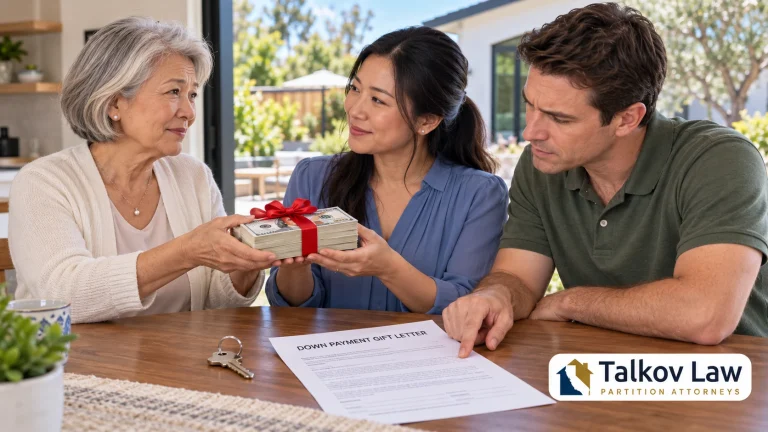
Down Payment Gifts in Partition Actions
When one co-owner’s family gives money toward the down payment, it can become a major dispute in a partition action. Here is how courts treat down payment gifts.
-
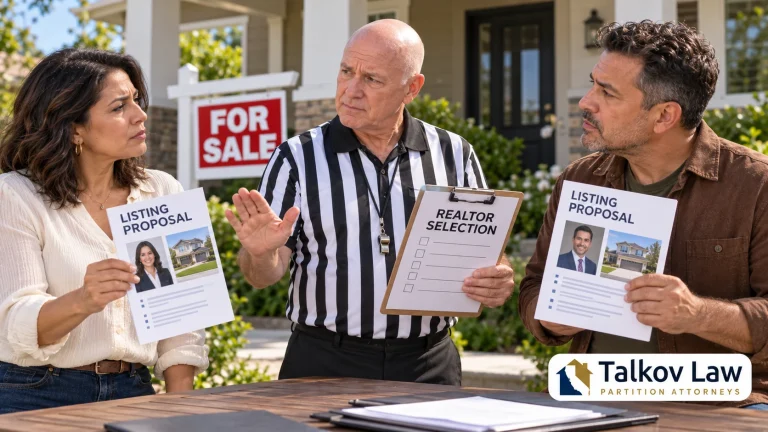
Can I Pick the Realtor in a Partition Action?
Co-owners can play an important role in choosing the Realtor in a partition sale, but they don’t necessarily have the final say. Here is how the choice gets…
-
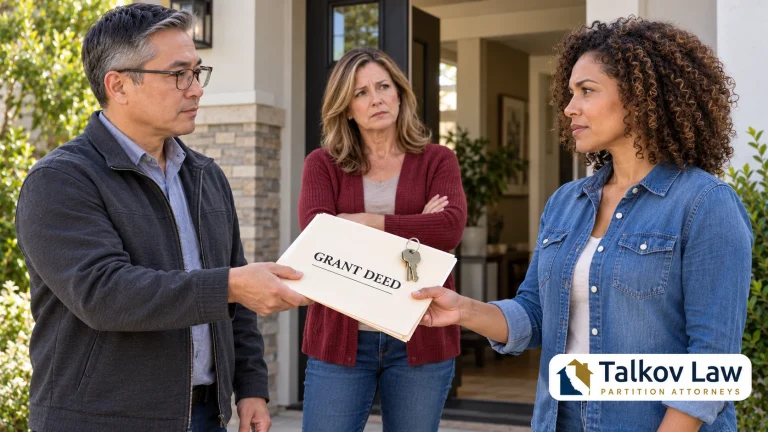
What Happens When a Joint Tenant Transfers Their Interest? Understanding Joint Tenancy in California
Joint tenancy includes the right of survivorship. But if one joint tenant transfers their interest during their lifetime, the joint tenancy is severed and survivorship is lost for…
-
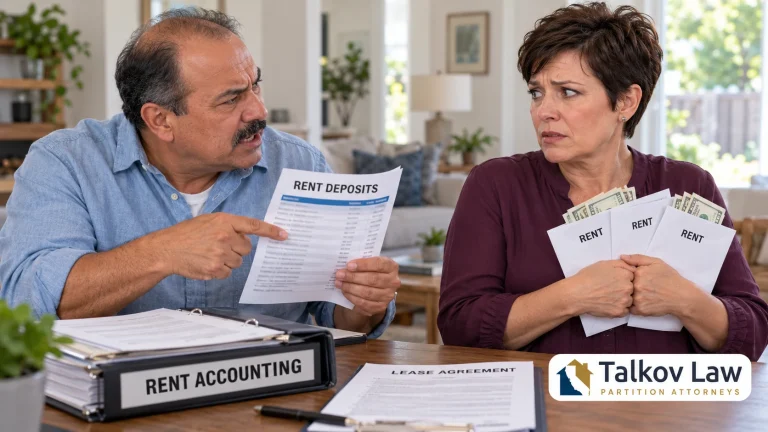
How to Prove Unpaid Rent in a California Partition Action
If a co-owner collected all the rent from a shared property, sometimes for years, a partition action lets you recover your share. Here is how to prove it.
-
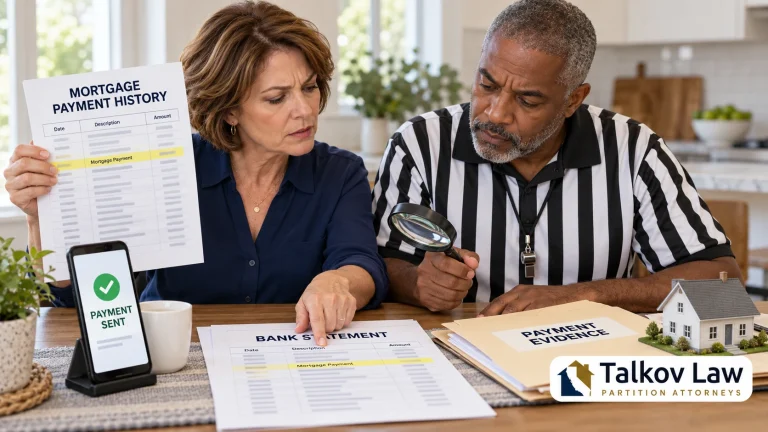
Proving Mortgage Payments in a Partition Action Accounting
The court or partition referee may need proof of who paid the mortgage to divide the sale proceeds. Here is how to gather and organize those records, including…
-
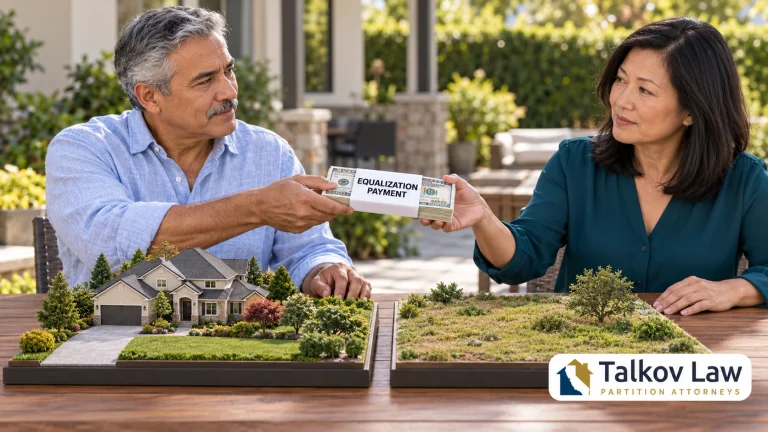
What is Owelty in Partition Law?
When a property can’t be divided into equal-value parts, the court can order owelty, a payment from the co-owner who receives more to the one who receives less.
-
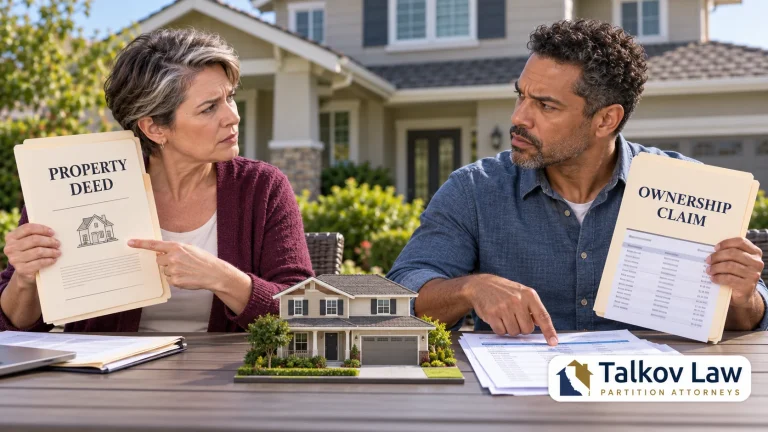
Quiet Title and Partition Actions for Co-Ownership Disputes
A quiet title action asks a court to decide who owns property. In co-ownership disputes, it is often paired with a partition action, which ends the co-ownership.
-
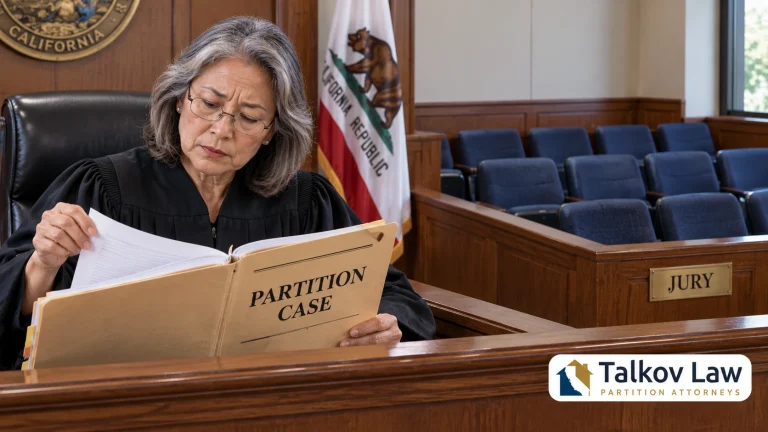
Does a Partition Action Result in a Jury Trial?
Generally not. A partition action is an equitable action, so a judge decides it, not a jury. Talkov Law has never seen a partition action go to a…
-
My Co-owner Asked for Partition by Sale. Can I Buy Out my Co-owner?
Yes. California Code of Civil Procedure section 874.317 lets a co-owner buy out the co-owners who requested a partition by sale, at a price based on the court’s…
-
How Does the Partition Referee Get Paid?
A partition referee is usually paid at the end of the case, typically from the sale proceeds at the same time the co-owners are paid.
-
Can You Make Property Improvements During a Partition?
If you want to improve a co-owned property, timing matters. Here are the advantages and disadvantages of paying for improvements at each stage of a partition action.
-
What is Tenancy in Common?
Tenancy in common is the most common and default form of co-ownership in California. Here is how it works and how it differs from joint tenancy.
-
What Does a Notice of Private Sale Mean in a Partition Action?
A notice of private sale is a required notice in a partition action. Despite the name, it usually means the referee is marketing the property to the public…
-
What Is a Partition Lawyer and What Do They Do in California?
A partition lawyer represents co-owners of California property who can’t agree on whether to keep, sell, or buy out the property. The main tool is a partition action…
-
Partition Referees in California
A California partition referee carries out a court-ordered sale or division of co-owned property. Learn what referees do, how they are selected and paid, and how a sale…
-
Affidavit of Death of a Joint Tenant (Probate Code § 210)
When a California joint tenant dies, the survivor takes their share by right of survivorship and records an affidavit of death to show the change in ownership. Here…
-
Rising Interest Rates on Co-Owner Buyouts in a Partition
Higher interest rates make co-owner buyouts harder, because the buying co-owner must borrow at a higher cost. That changes partition strategy for both sides.
-
Should I Use an Escrow for my Co-owner Buyout?
Use escrow to coordinate a California co-owner buyout. Review the price, liens, loan release, deed, closing deadlines, and protections if financing fails.
-
Co-Ownership Dispute Resolution: How Assertive Should You Be?
How assertive you need to be to force a sale or buyout depends mostly on how cooperative your co-owner is and how much money is at stake.
-
Realtors in a Partition: Who Picks the Agent, and Can a Realtor Be the Referee?
Yes, but it’s nuanced. A Realtor can serve as a partition referee, though the role involves more than listing the property, so co-owners should weigh the pros and…
-
TIC Agreements (Tenant-in-Common) in California
A tenants in common agreement lets unrelated co-owners share one property, often divided into separate units. Long popular in San Francisco, these agreements are spreading to Los Angeles.
-
Can a Partition Prevent a Foreclosure?
Foreclosure is especially hard when co-owners are in a partition action. An injunction may give co-owners a way to protect the property while the case moves forward.
-

Title Insurance in a Partition Action
A clear and marketable title is essential when property is sold in a partition action. Here is how title insurance protects the sale and the buyer.
-
Can a Co-Owner Buy the Property in the Partition Action?
Yes. A co-owner can buy the other co-owners’ shares in a partition action, but the process follows specific state laws and court procedures.
-
Unclear Ownership Interests on Deeds with Multiple Co-Owners
Many deeds name three or more co-owners without saying how much each owns. That question becomes critical in a partition action. Here are the factors courts consider.
-
Joint Tenants vs Tenants in Common – What’s the Difference?
Both joint tenants and tenants in common share ownership of the same property, but their rights differ sharply, especially when an owner dies.
-
The Impact of an Unrecorded Deed in California Partition Actions
Recording a deed gives the public notice of ownership. An unrecorded deed creates uncertainty that can complicate a partition action.
-
Joint Tenancy in California
In a joint tenancy, co-owners hold equal shares with a right of survivorship. Here is how joint tenancy is created in California and what happens when it ends.
-
Should I Tell My Co-owner That I Am Suing Them for Partition?
Generally, no. Many co-owners feel they should give a heads-up before filing for partition, but warning them in advance usually does more harm than good.
-
How Long Does a Partition Action Take?
A partition action usually takes seven to nine months, depending on the circumstances and complexity of the case. Here are the factors that affect timing.
-
Who Pays for a Partition Action?
California lets the co-owner who files a partition ask the court to award attorney’s fees and costs against the other co-owners, usually paid from the sale proceeds.
-
Mortgage Assumptions in Partition Actions
An assumption can let a co-owner keep a low-rate mortgage in a buyout, but it does not release the departing co-owner by itself. The lender, and for a…
-
Can I Partition a Rental Property With Tenants? A Guide for Co-Owner Landlords
Yes. A California co-owner can partition a rental property even with tenants and a good lease. Here is how rent, receivers, tenants, deposits and the sale are handled.
-
What is a Receiver in a Partition Action?
A co-owner may ask the court to appoint a receiver during a partition action. Here is when that happens and how a receiver differs from a partition referee.
-

Should I Communicate with the Opposing Party During a Partition
Parties in litigation are often tempted to talk directly, believing the lawyers are causing the conflict. Here are the risks and when direct communication can help.
-

Are There Any Specific Rules for Partitioning Agricultural Land?
Agricultural land brings its own challenges in a partition action. Here is what co-owners of California farmland should know.
-

Can a Partition Action Be Avoided Through Negotiation or Mediation?
Often, yes. When co-owners reach an agreement before or during litigation, everyone wins. Here is how negotiation can end a co-ownership dispute.
-

How Can I Calculate My Share in a Partition?
Estimate partition proceeds by accounting for value, debt, sale expenses, ownership shares, and reimbursements. See a worked $1 million sale example.
-

Will a Partition Sale Yield Fair Market Value for a Property?
Usually, yes. Most partitions end with an agreement to sell on the open market, and even sales run by a partition referee generally reach fair market value or…
-
Co-Owners’ Right to Encumber Property in California
Tensions rise when one co-owner places a loan or lien on the property. Here is what a California co-owner may encumber and how a partition action deals with…
-

Equitable Title vs. Legal Title: Ownership vs. Deed
Legal title is the name on the deed. Equitable title is the real ownership. California presumes they match, and a co-owner who says otherwise must prove it by…
-
Waiver of Right to Partition in California
Defendants often claim their co-owner waived the right to partition. In California, a valid waiver is extremely rare and requires specific circumstances.
-

Partition of Real Property Act – California – The Ultimate Guide
The Partition of Real Property Act took effect January 1, 2023. It gives co-owners the chance to buy out a co-owner who asks for a sale, at a…
-
Is There a Statute of Limitations on a Partition Action?
No. Under Adams v. Hopkins, the statute of limitations never bars a partition action between co-owners, unless one owner has already lost title to the other through adverse…
-
What Are Examples of a Partition Action in California?
A partition action is a court-ordered division of property. Here are common examples of co-ownership disputes that lead to a partition in California.
-
Unequal Down Payments and Ownership Interests in Property Co-Ownership Disputes (Partition Actions)
One of the most common co-ownership disputes is what happens when one co-owner paid more than their share of the down payment. Here is how a partition action…
-

Partition by Sale in California
A partition by sale is a court-ordered sale of jointly owned property, with the proceeds divided among the co-owners. It is the most common outcome of a California…
-

Partition in Kind in California
A partition in kind physically divides the property so each co-owner receives a portion of the land. Here are the rules that decide when it is allowed.
-
Partition by Appraisal in California
Partition by appraisal is one of three ways to partition property in California. It lets co-owners resolve their dispute through an agreed buyout at an appraised price.
-
Can I Collect Rental Value from my Co-Owner in a Partition Action?
Moving out doesn’t end your co-ownership rights. Here is when a co-owner in possession may owe rental value to the others in a partition action.
-
Partition of Personal Property
A partition action can force the sale of jointly owned real estate, but it can also divide or sell personal property, like cars or artwork.
-
Quitclaim Deed in California: What to Do When a Co-Owner Won’t Sign
A quitclaim deed only works if the co-owner giving up a share signs it. When a co-owner will not sign, or is pressing you to sign one, a…
-
Can a Co-Owner Sue You or Your Attorney for Filing a Partition Action?
A co-owner served with a partition action sometimes threatens to sue the co-owner who filed it, and the attorney too. In California, the litigation privilege and the anti-SLAPP…
-
What Is Ouster? Definition and Meaning in California Property Law
Ouster happens when one co-owner wrongfully excludes another from property they own together, such as by changing the locks, denying the other owner’s title, or refusing them entry.
-
How to Win a Partition Action
How a co-owner who wants out wins a partition action in California: force the sale or a buyout, answer the defenses your co-owner will raise, maximize your offsets,…
-
Absolute Right to Partition in California: Why Your Co-Owner Can’t Say No
Any California co-owner can force a sale or division of co-owned property without the other owners’ consent. Here is what the absolute right to partition means, its four…
-

Adverse Possession and Co-Ownership
Co-owners often ask whether moving out of a property means giving up their ownership. In California, adverse possession between co-owners is very hard to prove.
-
I Paid for Repairs or Improvements on Co-Owned Property. Do I Get It Back?
Yes. A California partition action can credit a co-owner for necessary repairs and value-adding improvements, paid before the sale proceeds are divided, even without the other owner’s consent.
-
Manner of Partition Actions (By Sale, In Kind, & By Appraisal)
California law provides three types of partition: partition by sale, partition in kind, and partition by appraisal. By far the most common is partition by sale.
-
How to Sever Joint Tenancy in California – Civil Code 683.2
Severing a joint tenancy changes what happens to your share when you die. Here is what severance means, why it matters, and how a co-owner can do it.
-

Family Code 1100(b): A Spouse Can Give Away Only Half of the Community Property
A California spouse can give away or leave only half of the community property. When that half goes to a child, the child and the stepparent co-own the…
-
What Is a Constructive Trust in California?
A constructive trust is a court order that makes someone who took property by fraud or another wrongful act hand it back. California co-owners use it to prove…
-
Title vs. Deed: What’s the Difference?
Title means ownership; a deed transfers an interest in property. Learn how California deeds, title insurance, liens, and mortgages affect co-owners.
-
How to Force the Sale of Jointly Owned Property in California
Co-owners of real estate in California have an absolute legal right to partition the property, thereby causing the property to be sold and the proceeds distributed.
-
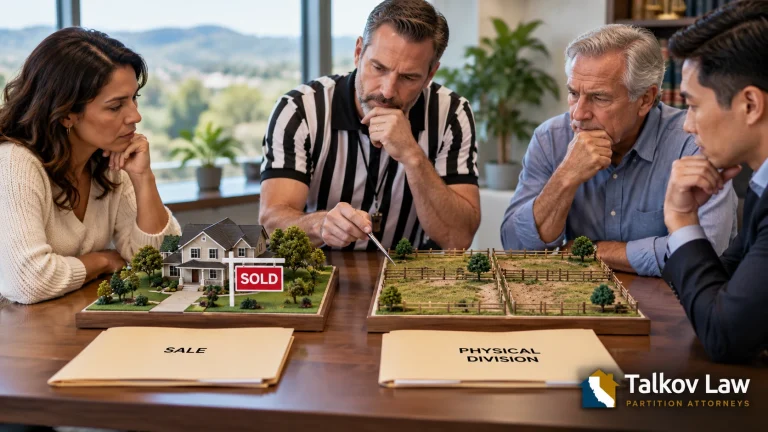
Partition by Sale vs. Partition In-Kind [California Real Estate]
Co-owners often disagree about whether to sell the property or divide it. Here is how California courts decide between partition by sale and partition in kind.
-

What Is a Lis Pendens in California? Meaning, Effect and Removal
A lis pendens is a notice, recorded with the county recorder, that a pending lawsuit affects title to, or possession of, real property. Here is what it does…
-

What is the Cost of Partition Action in California?
As partition attorneys in California, we are often asked about the cost of a partition action. Since attorneys are the largest cost, the real question is how much…
No explainers match that search. Try a different word, or ask a partition attorney.
Have a question about your own property?
An explainer covers the rule. A partition attorney can tell you how it applies to your deed, your co-owner and your numbers. Free 30-minute consultation. No fees until you win.

Scott Talkov
Founder & Managing Partner, Talkov Law
Scott Talkov founded Talkov Law and leads its partition practice, representing co-owners across California in partition actions.
Read Scott’s bio →Essential guides
 Filing for PartitionPartition Action in California: What It Is and How It WorksA partition action is a lawsuit in which a California court ends the co-ownership of real property by dividing...
- Partition of Real Property ActPartition of Real Property Act – California – The Ultimate GuideThe Partition of Real Property Act took effect January 1, 2023.
- Partition Referees & BrokersPartition Referees in CaliforniaA California partition referee carries out a court-ordered sale or division of co-owned property.
- Right to PartitionAbsolute Right to Partition in California: Why Your Co-Owner Can’t Say NoAny California co-owner can force a sale or division of co-owned property without the other owners’ consent.
- Partition by SalePartition by Sale in CaliforniaA partition by sale is a court-ordered sale of jointly owned property, with the proceeds divided among the co-owners.
- Partition in KindPartition in Kind in CaliforniaA partition in kind physically divides the property so each co-owner receives a portion of the land.
- Partition by SaleHow to Force the Sale of Jointly Owned Property in CaliforniaCo-owners of real estate in California have an absolute legal right to partition the property, thereby causing...
 Offsets BasicsPartition Offsets and Accounting in CaliforniaWhen co-owners can’t agree, a California court can force a sale.
 GuideCalifornia Partition Statutes (CCP 872.010-874.323)Every California partition statute, CCP 872.010 to 874.323, with plain-English explanations of how each rule w...
Latest explainers
- Gudelj v. Gudelj: Paying More for the House Does Not Undo a Joint Tenancy Deed
- Dunn v. Dunn: A Partition Sale Can’t Be Thrown Out on Vague Claims the Price Was Too Low

- Rich v. Smith: Mortgages and a Slow Market Are No Reason to Delay Partition

- Can You Settle or Dismiss a Partition Action After Filing?
- My Sibling Says Mom Promised Them Our Co-Owned House for Life. What Can I Do?
- Trial Preference in a California Partition: Trial Within 120 Days Under CCP 36
- Undivided Interest in California: What It Means for Co-Owners
- How Do I Transfer My Share of a Co-Owned Property in California?
- Does Paying Someone Else’s Property Taxes Give You Ownership in California?
- Can I Sell My Half of a Jointly Owned Property in California?