Rent and Possession Between Co-Owners in California
When a co-owner living in the property owes rent, how rent from tenants is shared, what counts as an ouster, and how a California partition action settles it.
How rent, or the value of one owner's use, is shared among California co-owners.
When a co-owner living in the property owes rent, how rent from tenants is shared, what counts as an ouster, and how a California partition action settles it.

In Goodenow v. Ewer, the California Supreme Court held that a co-owner who collected rent from tenants of a shared Oroville theater must account to the other owners in the partition, after deducting taxes and necessary repairs, with no charge for his own time managing the building.
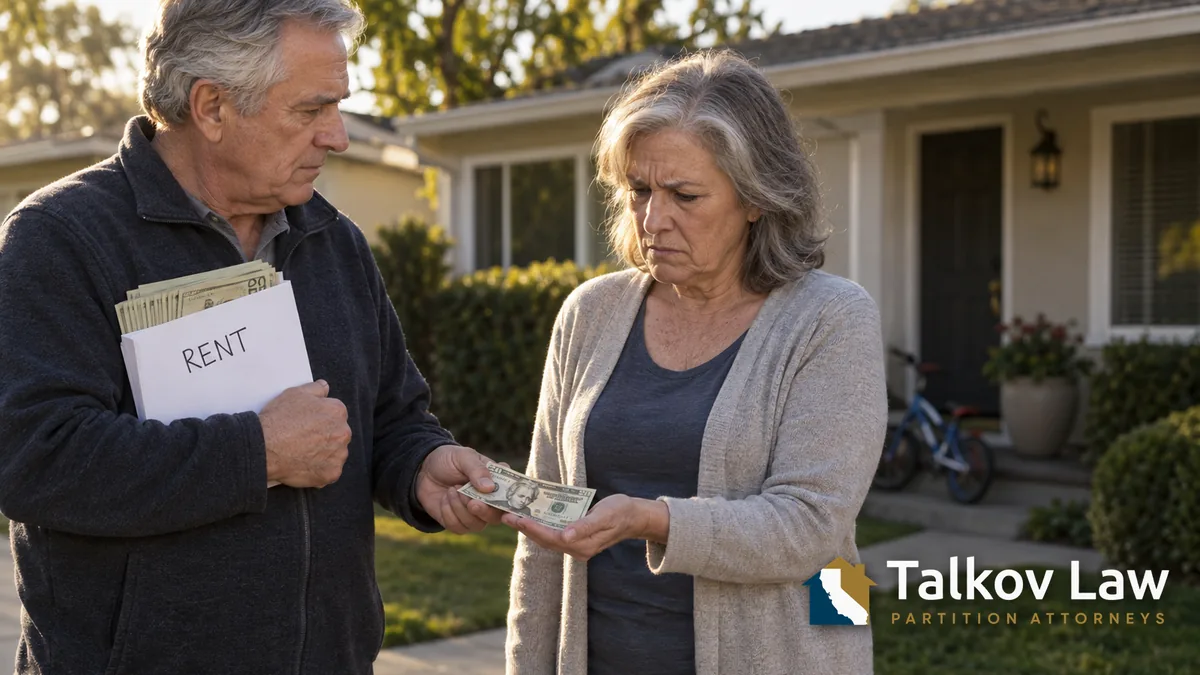
A co-owner who collects rent from tenants must account to you for your share of the net rent. A California partition action totals what was collected and what you were paid, and orders the difference paid to you.
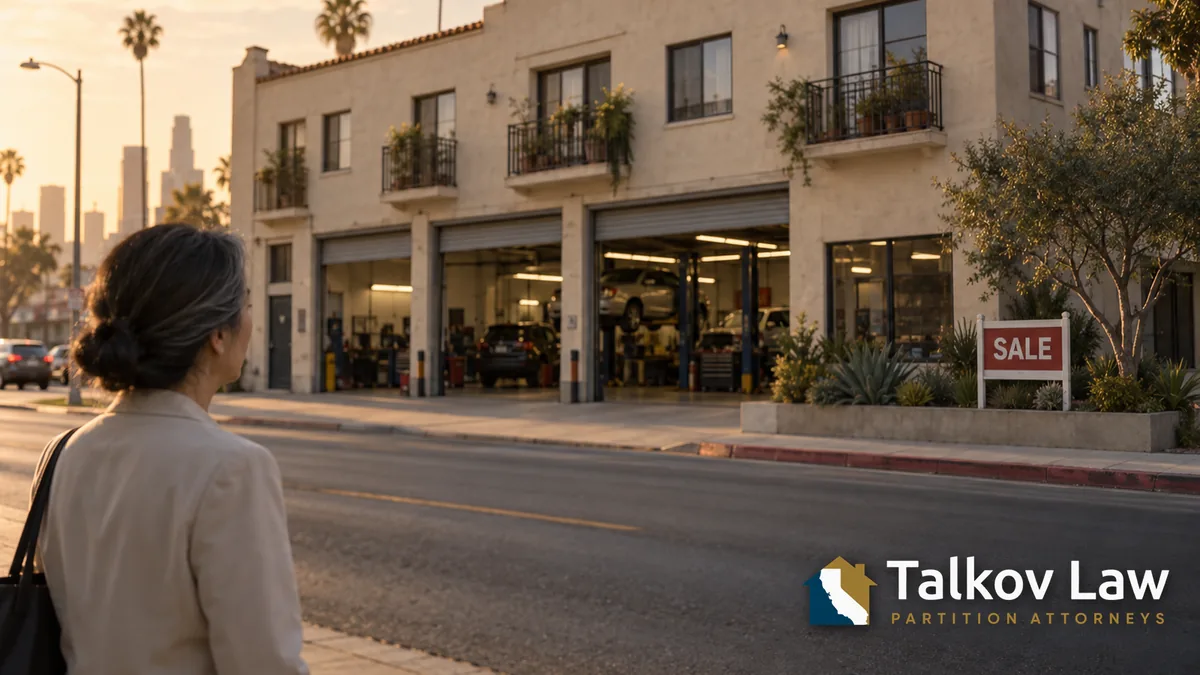
In Rutledge v. Rutledge, the California Court of Appeal held that a partition court cannot order one co-owner to pay the other a court-set price for a co-owned Los Angeles business, because property that cannot be divided must be sold, and that a co-owner who collects rent from tenants must account for it.

In Swartzbaugh v. Sampson, the California Court of Appeal held that one co-owner can lease jointly owned property without the other’s consent, but the lease is valid only as to the signer’s share, and the other owner keeps her right to possession and to partition.
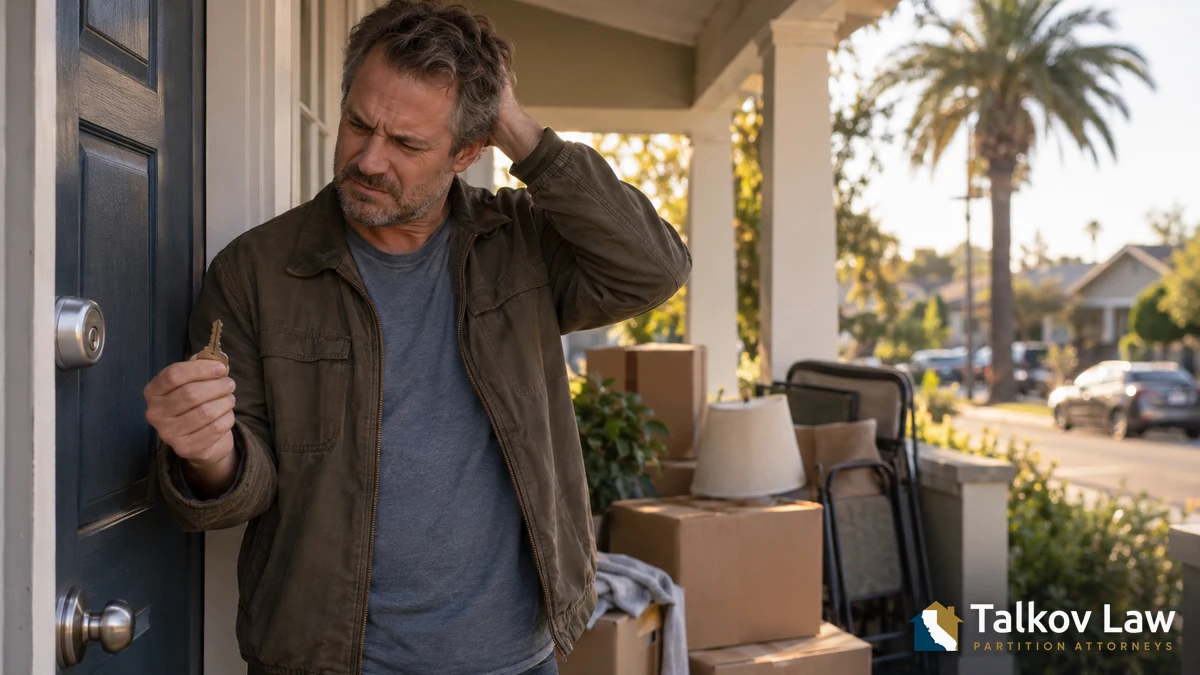
In Zaslow v. Kroenert, the California Supreme Court held that a co-owner who changes the locks and refuses entry commits an ouster, and the locked-out owner can recover their share of the rental value.
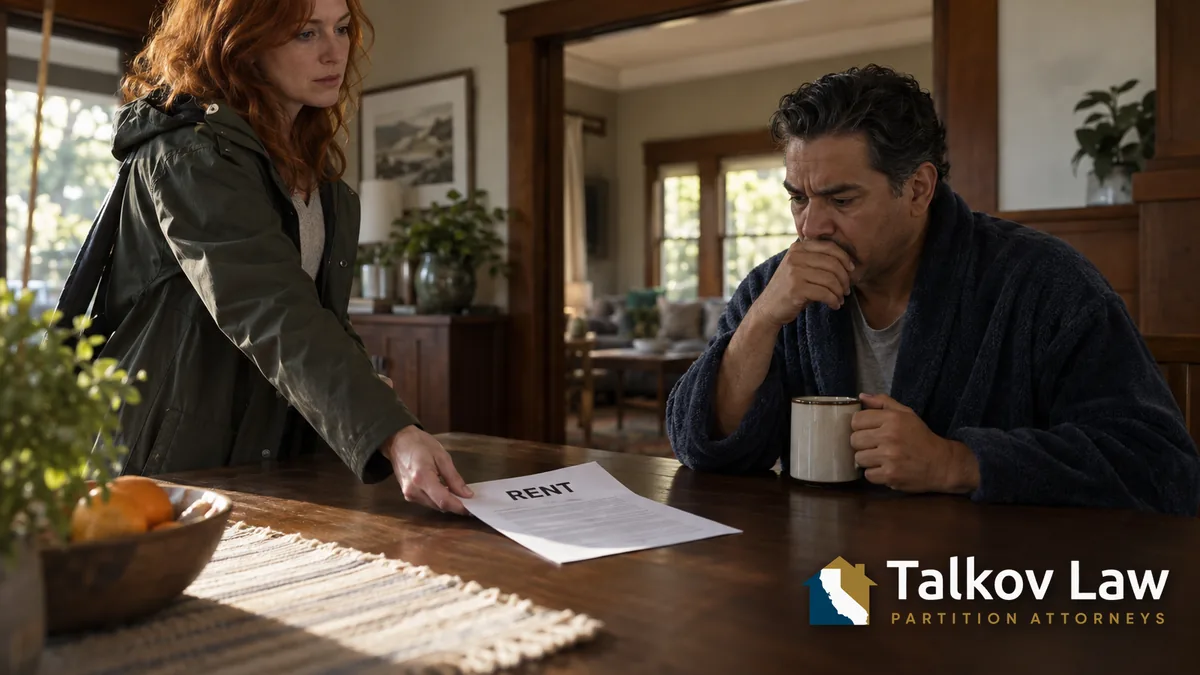
Not automatically. Living in a jointly owned property does not by itself create a rent obligation in California. Whether rent is owed is often decided in a partition action.
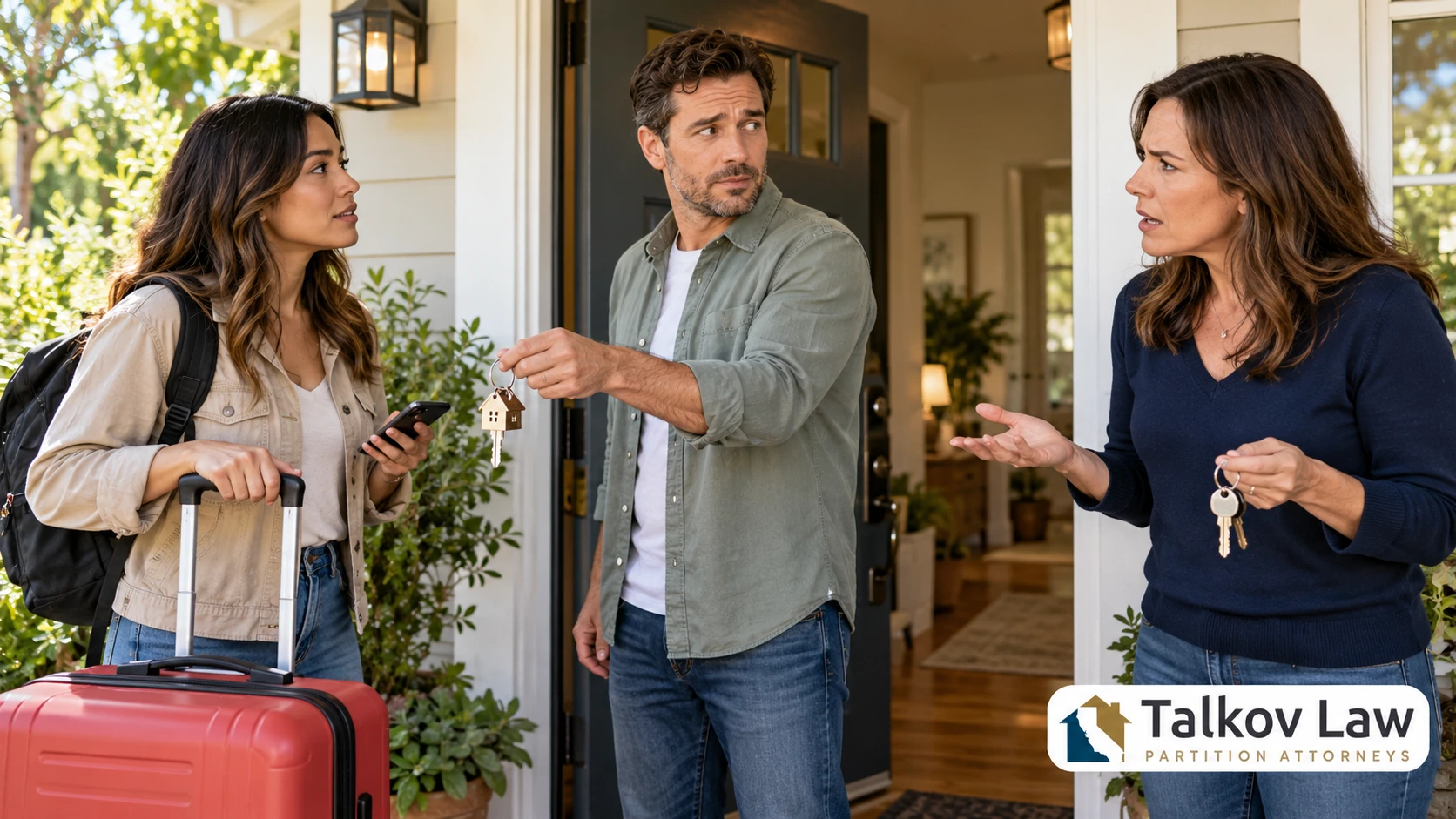
Technically, yes. But in a California partition action, the court can make the renting co-owner account for the income, pay for exclusive use, and end the co-ownership.
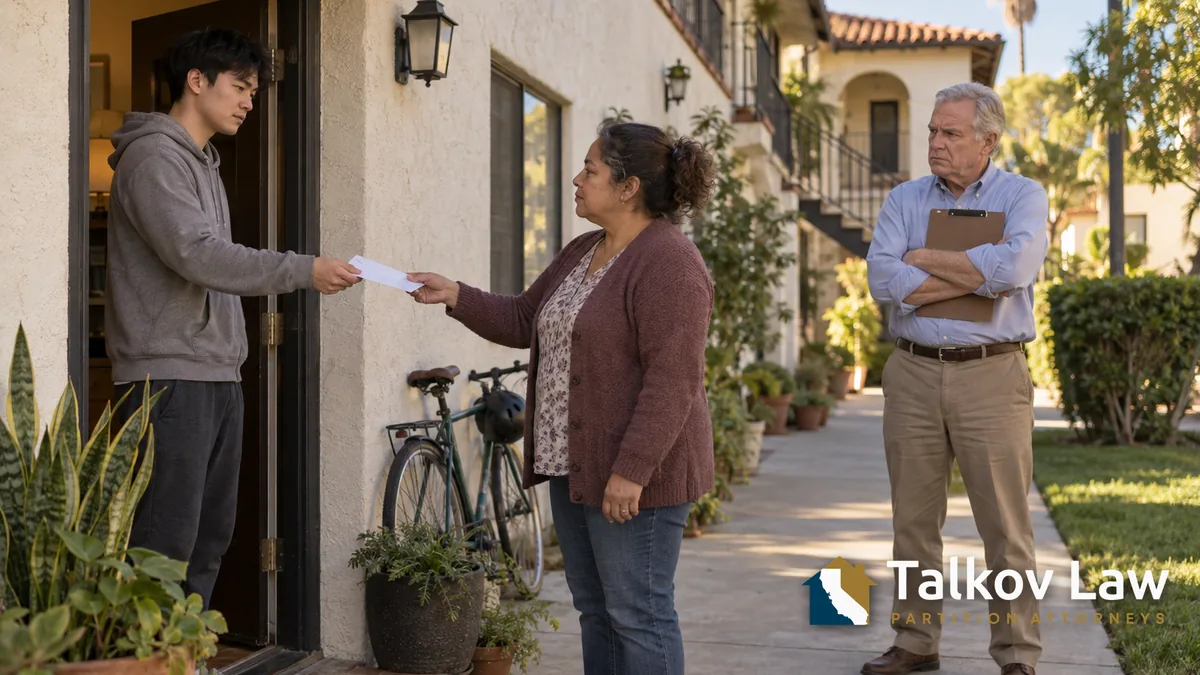
Yes. A California co-owner can partition a rental property even with tenants and a good lease. Here is how rent, receivers, tenants, deposits and the sale are handled.
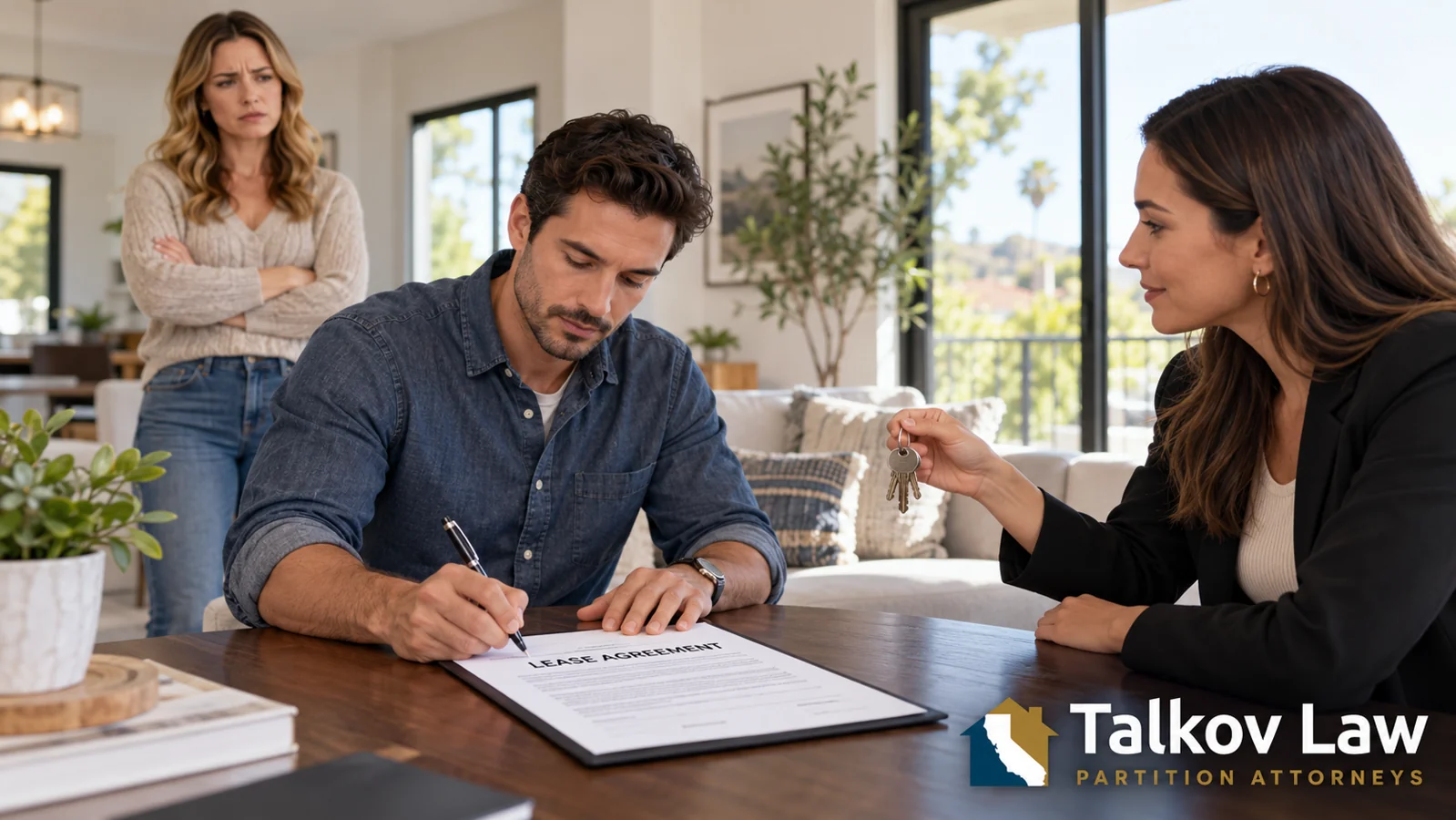
Yes. Each co-owner may lease the co-owned property, even without the others’ consent, but doing so creates complications for rent, possession, and evicting tenants.

A co-owner in sole possession who paid all the expenses often expects full reimbursement. Under Hunter v. Schultz, the other co-owner can offset the property’s rental value against those claims.
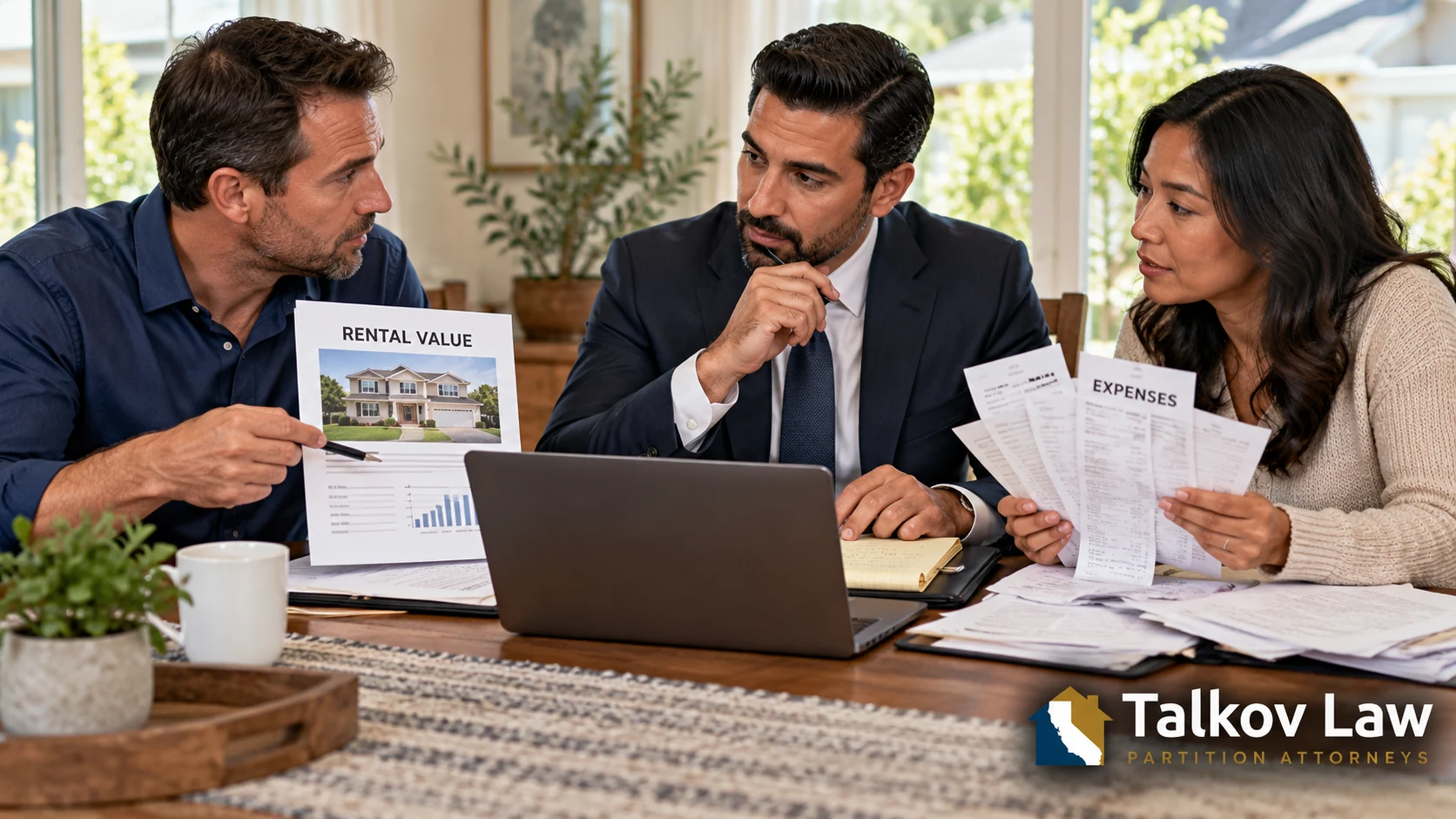
Moving out doesn’t end your co-ownership rights. Here is when a co-owner in possession may owe rental value to the others in a partition action.
150+ Five-Star Reviews
Read our reviews →I would definitely recommend Talkov Law. They helped me with my inherited property partition action and did it with extreme haste and quality. All of their partition attorneys are so knowledgeable and helped me work through all my questions. Big shout out to Talkov law, they're the #1 Partition Law firm for a reason!
Sam W.
Put the basic information about my case into their chatbot on the website at about 3pm and they called back the next day. They know their niche in fine detail! They were able to offer insight into aspects that my divorce attorney had been completely unaware of and offered a quick solution. I'm extremely impressed with the easy solution they laid out. Really wish they had been my first call!!
Chris PattersonMy sister and I had a disagreement over a jointly owned house. The other party insisted on listing the house for sale, while I insisted on buying their share. Ultimately, thanks to the highly professional assistance of Scott Resnick and his team at Talkov Law Firm, we were able to reach a reasonable settlement out of court. I am very grateful to Scott and his team, Courtney and Lauren, for providing such professional service; they are definitely the best choice, especially when dealing with real estate disputes.
Mo WilliamAs a fellow lawyer, I am confident that Mr. Talkov knows partition law like the back of his hand. I would not hesitate to call him for a partition action. Very professional and insightful!
Lisa FisherOlivia Dajee and the attorneys at Talkov Law were very helpful in representing me in a partition case that could have easily become much more complicated. They were knowledgeable, excellent at communication, and were able to sell my property quickly and efficiently without court intervention. I highly recommend Talkov Law to anyone searching for a reliable real estate partition attorney!
Sheryll Vanderhooft
Representing co-owners statewide. Find your nearest Talkov Law office.
10880 Wilshire Blvd Ste 1101
Los Angeles, CA 90024
4000 MacArthur Blvd Ste 655
Newport Beach, CA 92660
3610 Central Ave, Ste 400
Riverside, CA 92506
500 Capitol Mall, Ste 2350
Sacramento, CA 95814
11622 El Camino Real Ste 100
San Diego, CA 92130
50 California St, Ste 1500
San Francisco, CA 94111
99 S. Almaden Blvd Ste 600
San Jose, CA 95113
Partition Law Resources
Practical guides from attorneys who focus exclusively on California partition actions.
The information on this site, including the Talkov Law Blog, is intended for general information purposes only. By using this site, you agree that any information contained in the site does not constitute legal, financial or any other form of professional advice. Information on this site may be changed without notice and is not guaranteed to be complete, accurate, correct or up-to-date.







