
Does Appealing a Partition Judgment Stop the Sale in California?
Usually not. An appeal of a California partition judgment ordering a sale generally does not stop the sale unless the appealing co-owner posts an undertaking set by the trial court.
Usually not. An appeal of a California partition judgment ordering a sale generally does not stop the sale unless the appealing co-owner posts an undertaking set by the trial court.
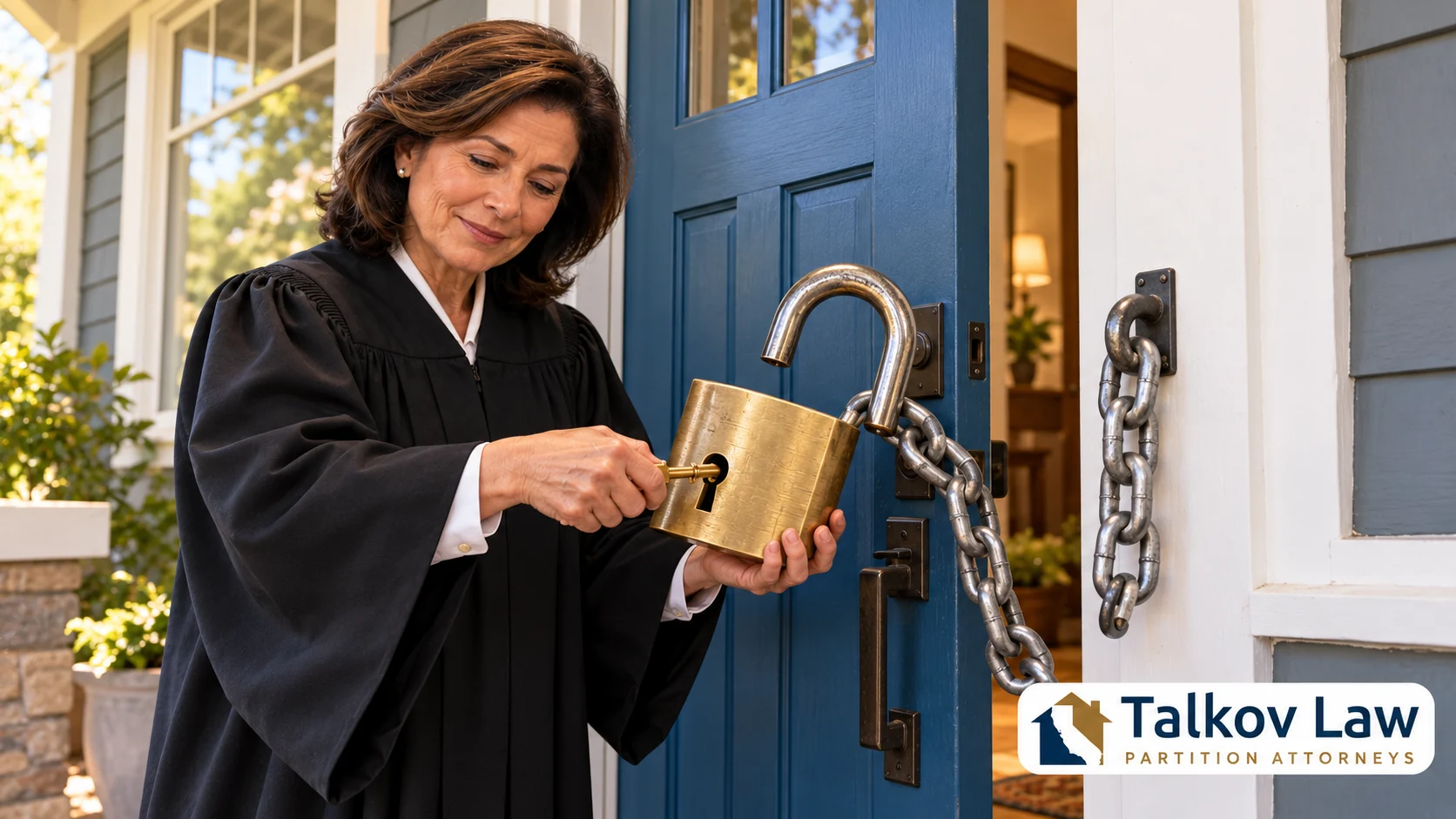
An interlocutory judgment of partition closes the first phase of a California partition case. You obtain it by proving your right to partition and each co-owner’s share, often by motion rather than trial.

When siblings inherit a house, old resentments often surface once the parents are gone. If they cannot agree on whether to keep, sell, or buy out the property, a California partition action brings the dispute to an end.
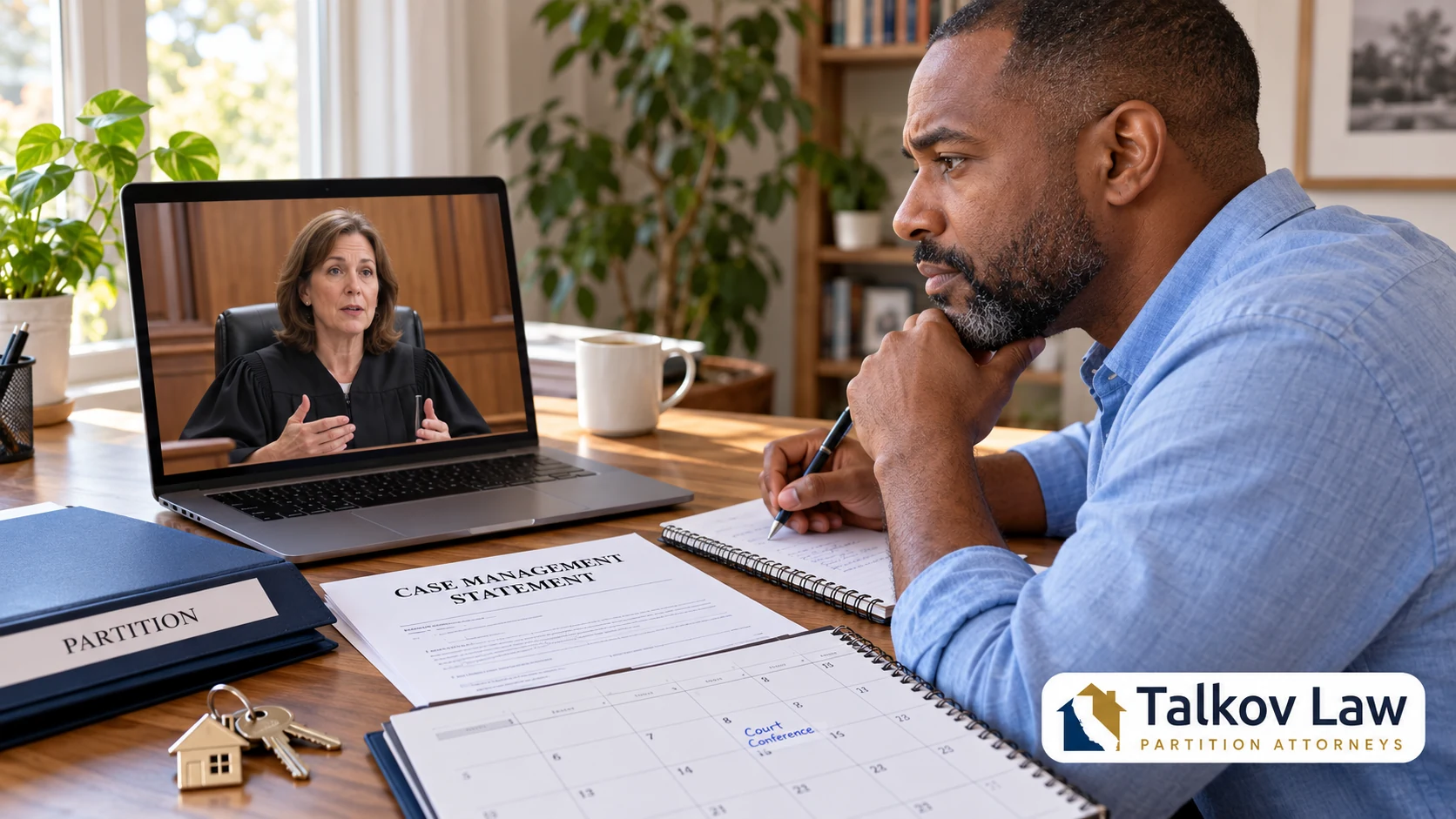
A case management conference is a hearing to keep a California partition action moving. Contrary to what many co-owners expect, the judge does not rule on the merits there.
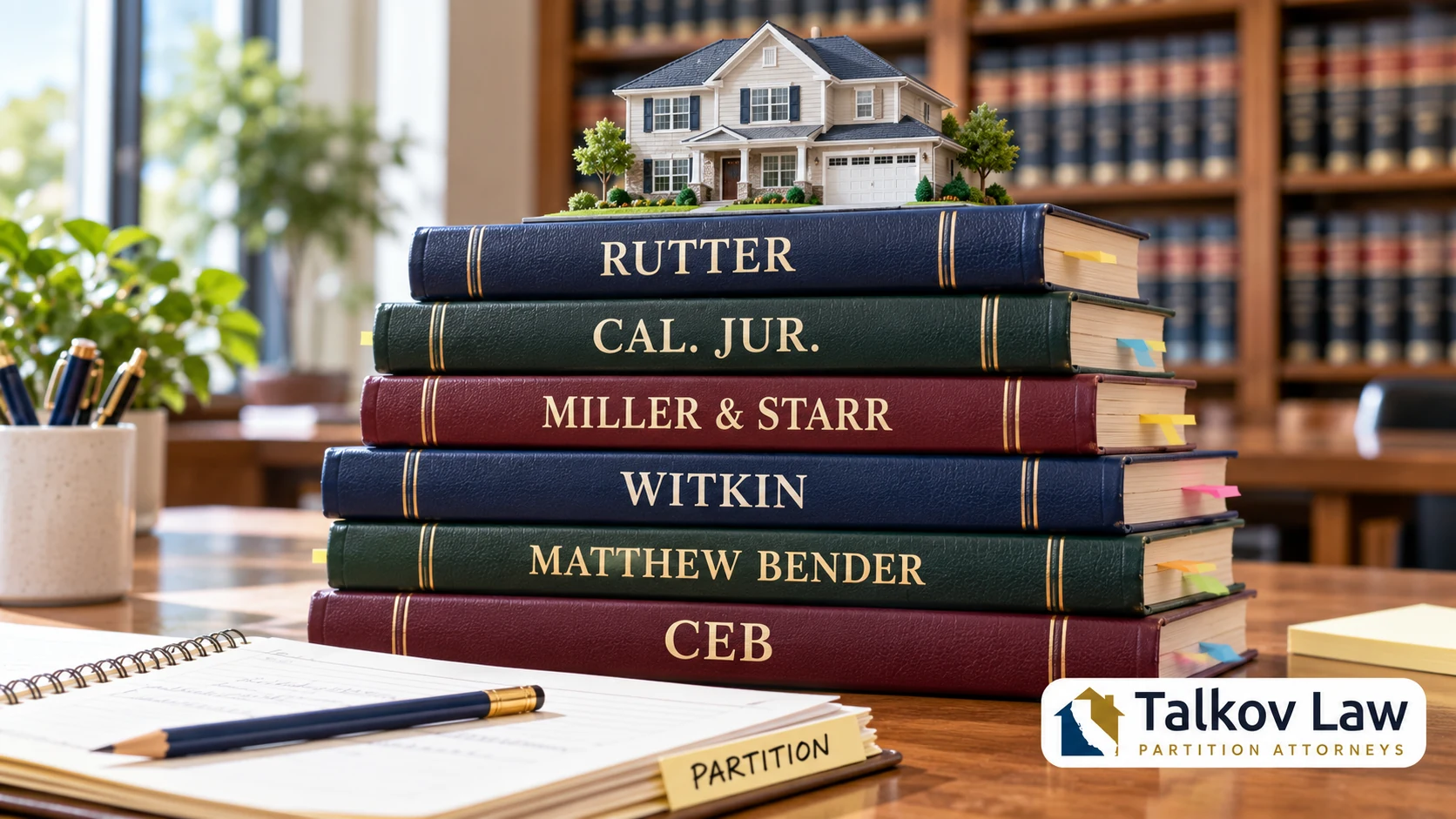
Partition lawyers need to know trusts and probate, family law, property tax, accounting, and more. These six secondary sources help.
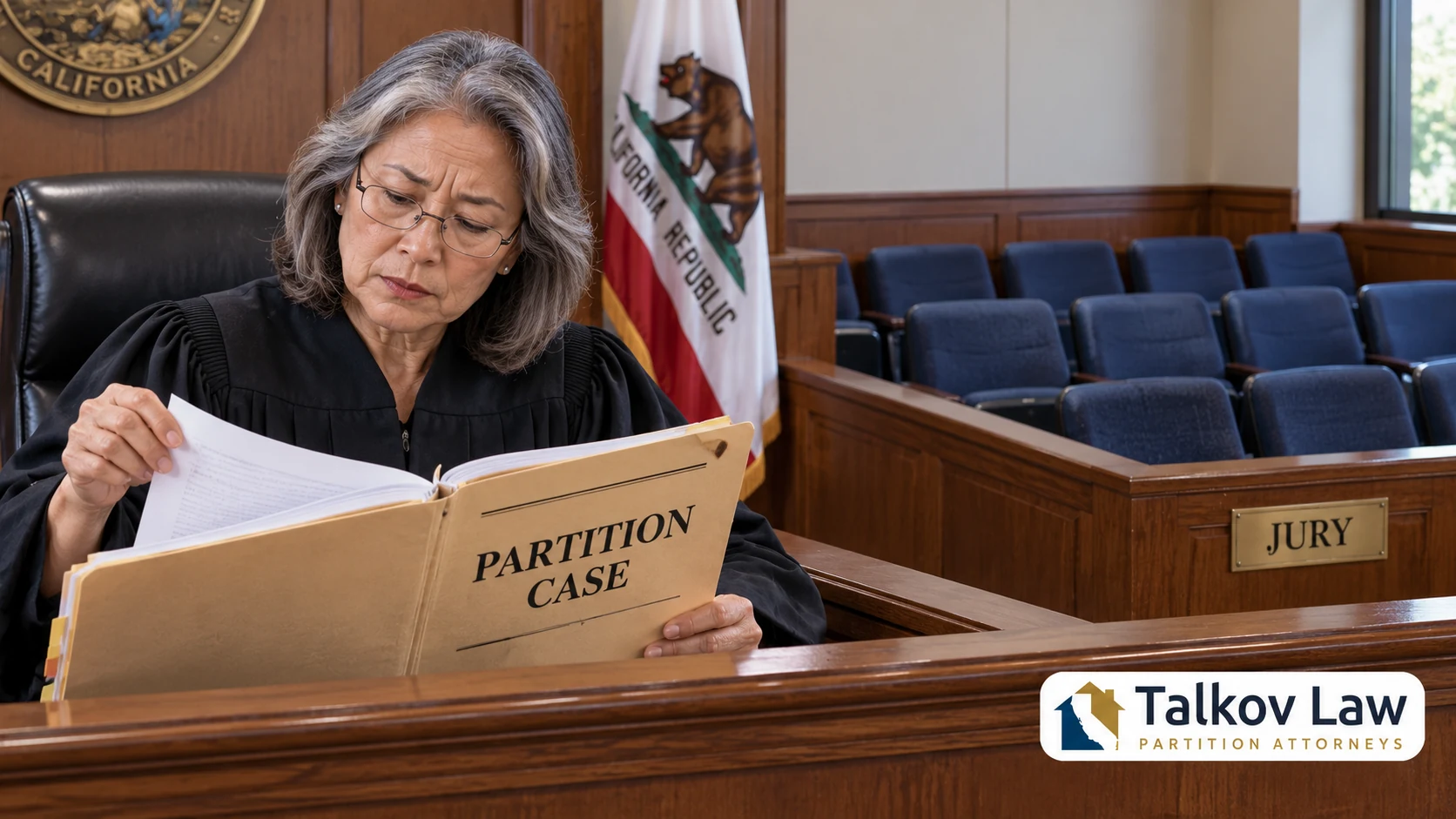
Generally not. A partition action is an equitable action, so a judge decides it, not a jury. Talkov Law has never seen a partition action go to a jury trial.
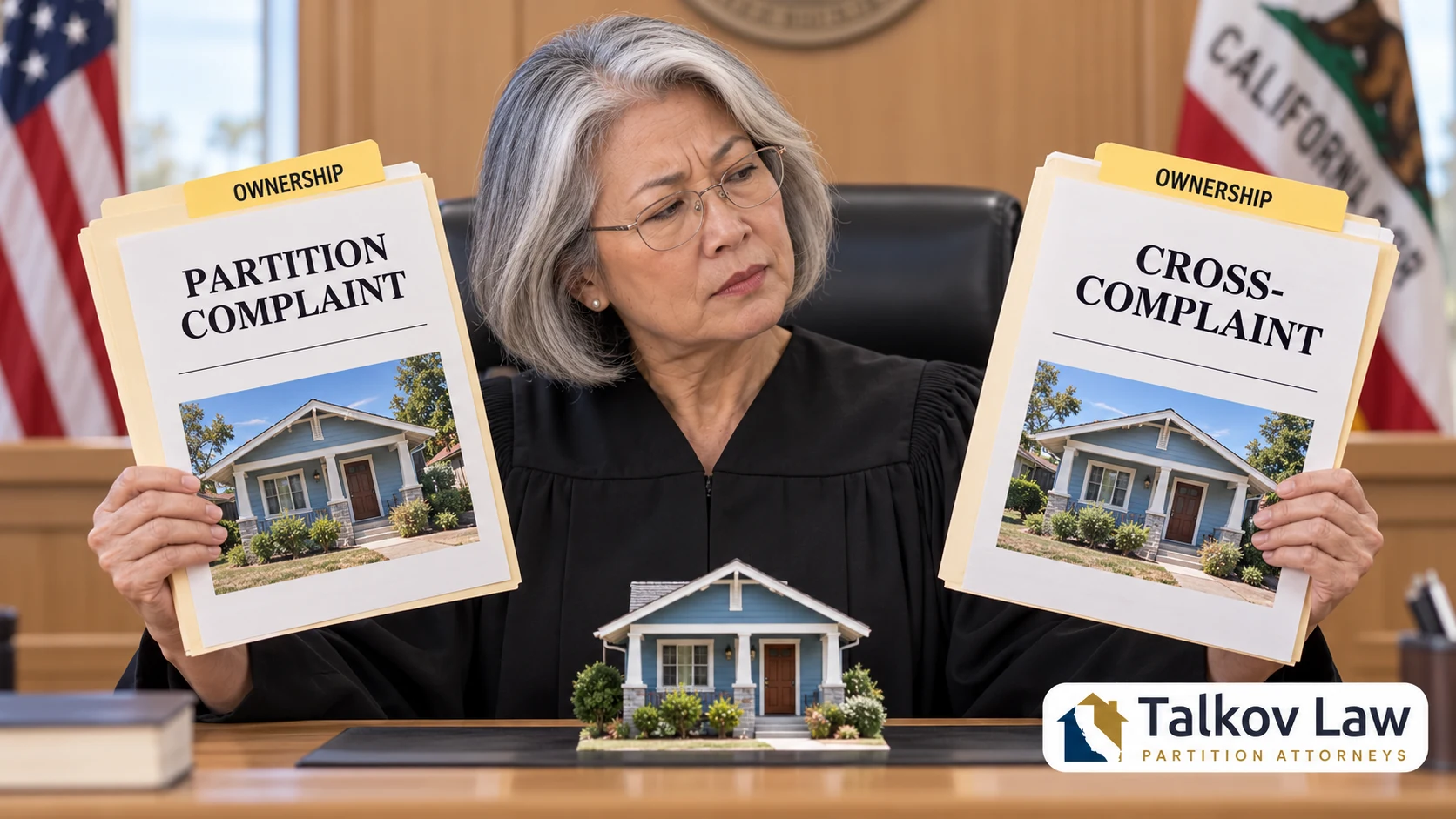
A cross-complaint for declaratory relief can clarify the parties’ rights in a partition action. But its value is limited for ownership disputes, since ownership is already at issue in every partition.
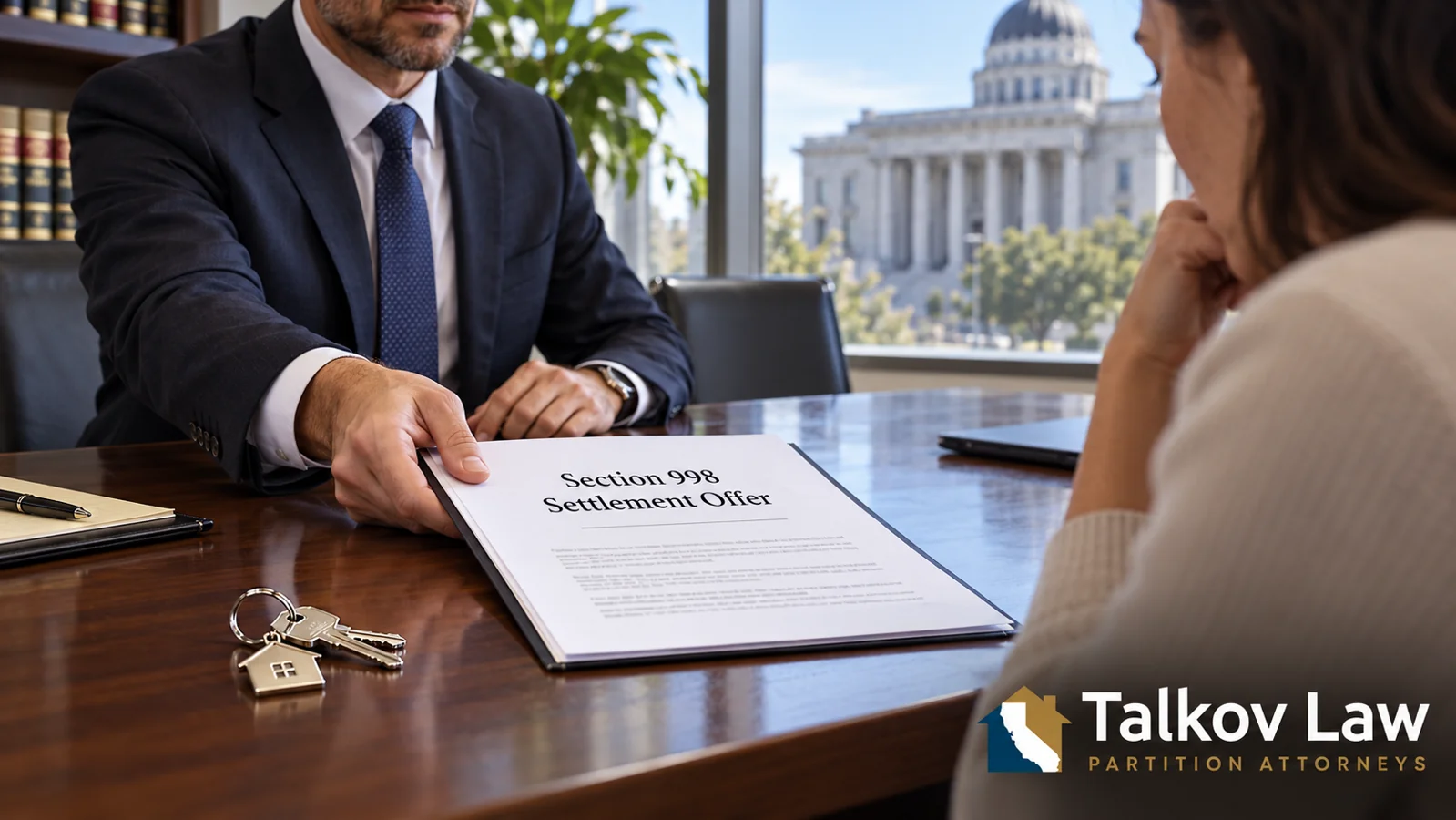
A section 998 offer lets a co-owner pressure the other side to settle a partition action, because a co-owner who refuses and does worse at trial can be made to bear more of the costs.
A demurrer challenges a pleading that does not state facts sufficient for a claim. Here is how the sham pleading doctrine and truthful pleading requirement affect demurrers.
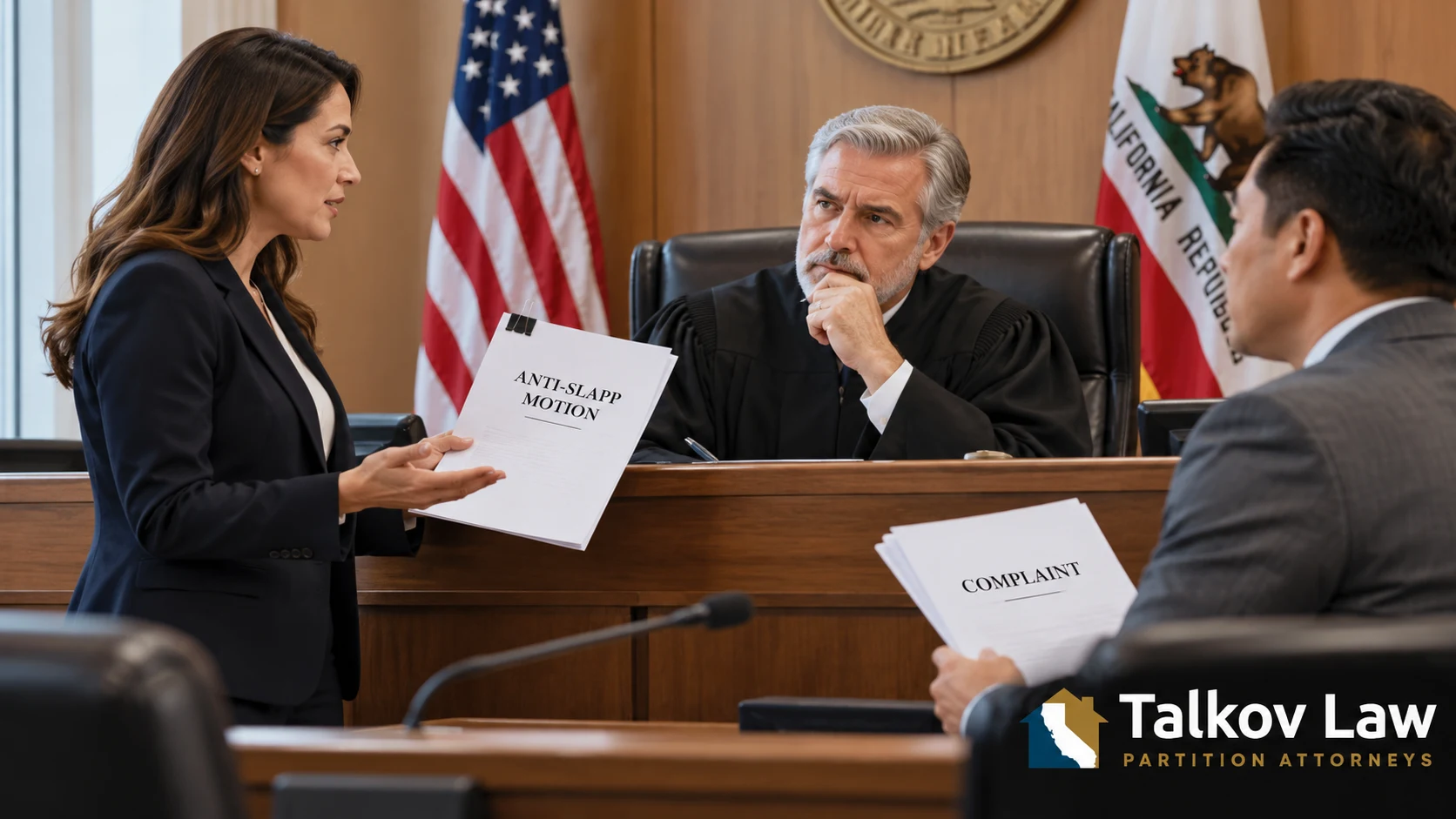
Litigants sometimes name the opposing attorney as a defendant to gain leverage. Under California’s anti-SLAPP statute, that can be a costly mistake that ends with paying the attorney’s fees.
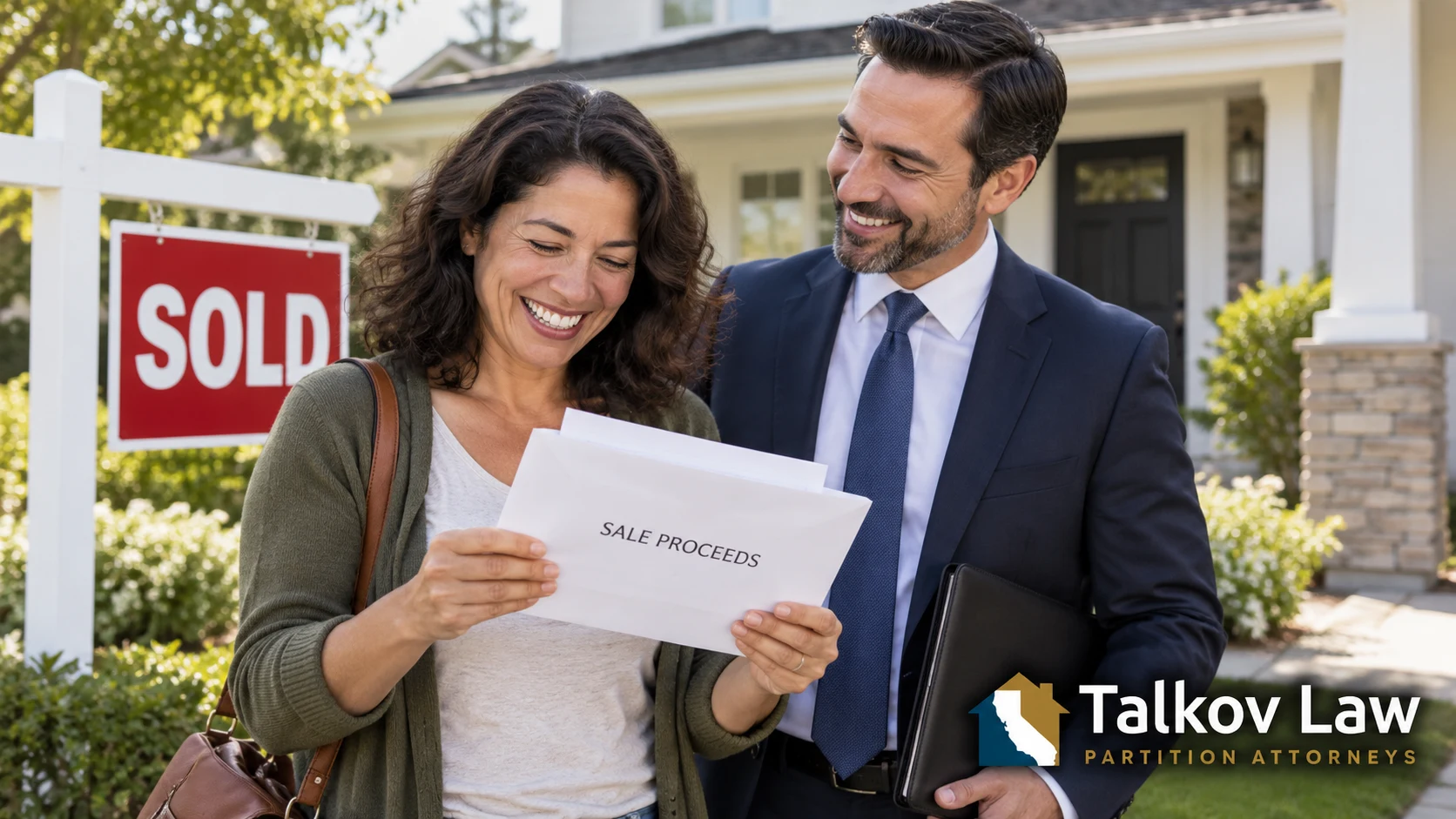
How a co-owner who wants out wins a partition action in California: force the sale or a buyout, answer the defenses your co-owner will raise, maximize your offsets, and build your record from day one.
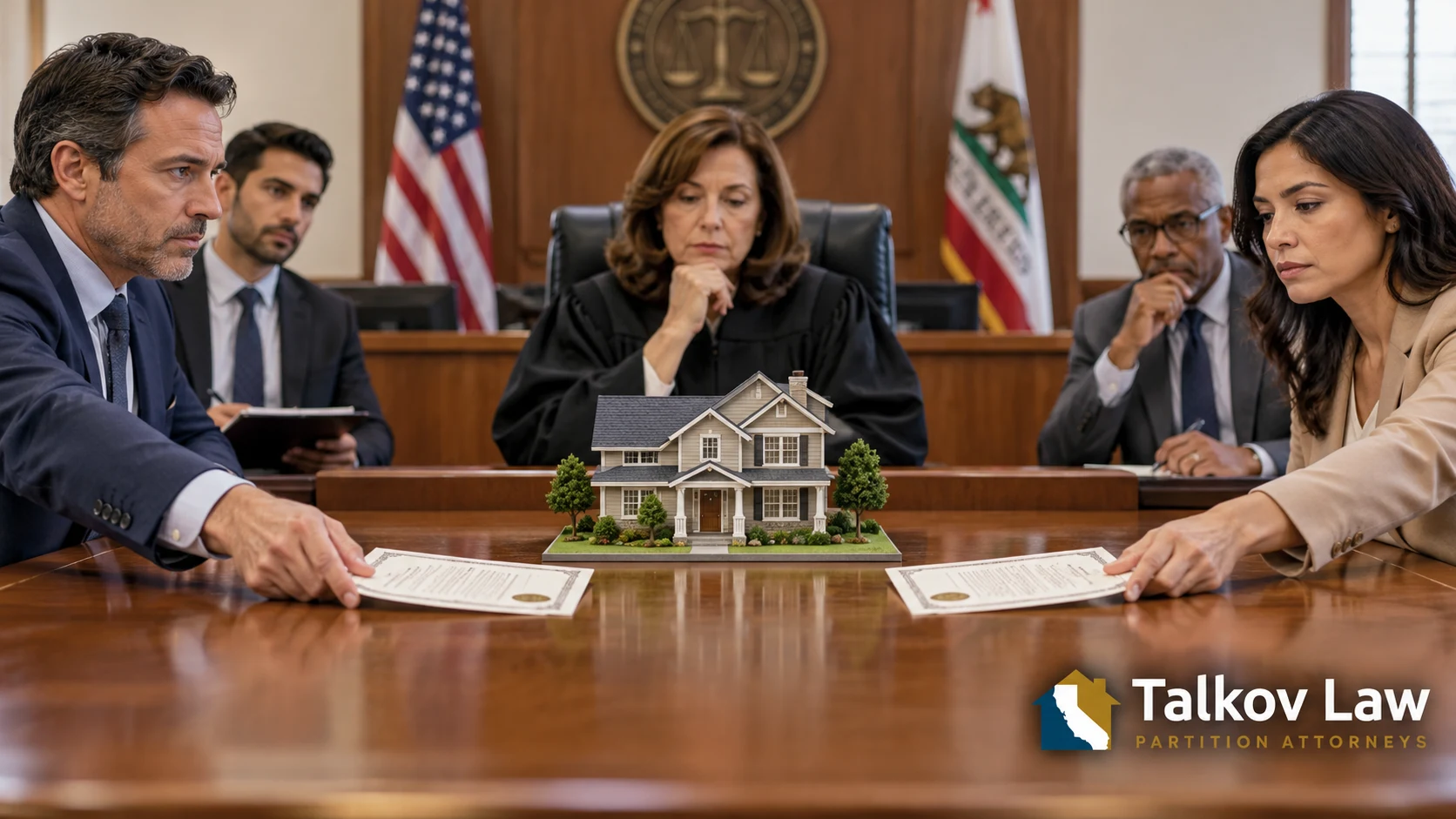
Code of Civil Procedure section 872.610 provides that the interests of all parties, plaintiff and defendant alike, may be tried and decided in the partition action.
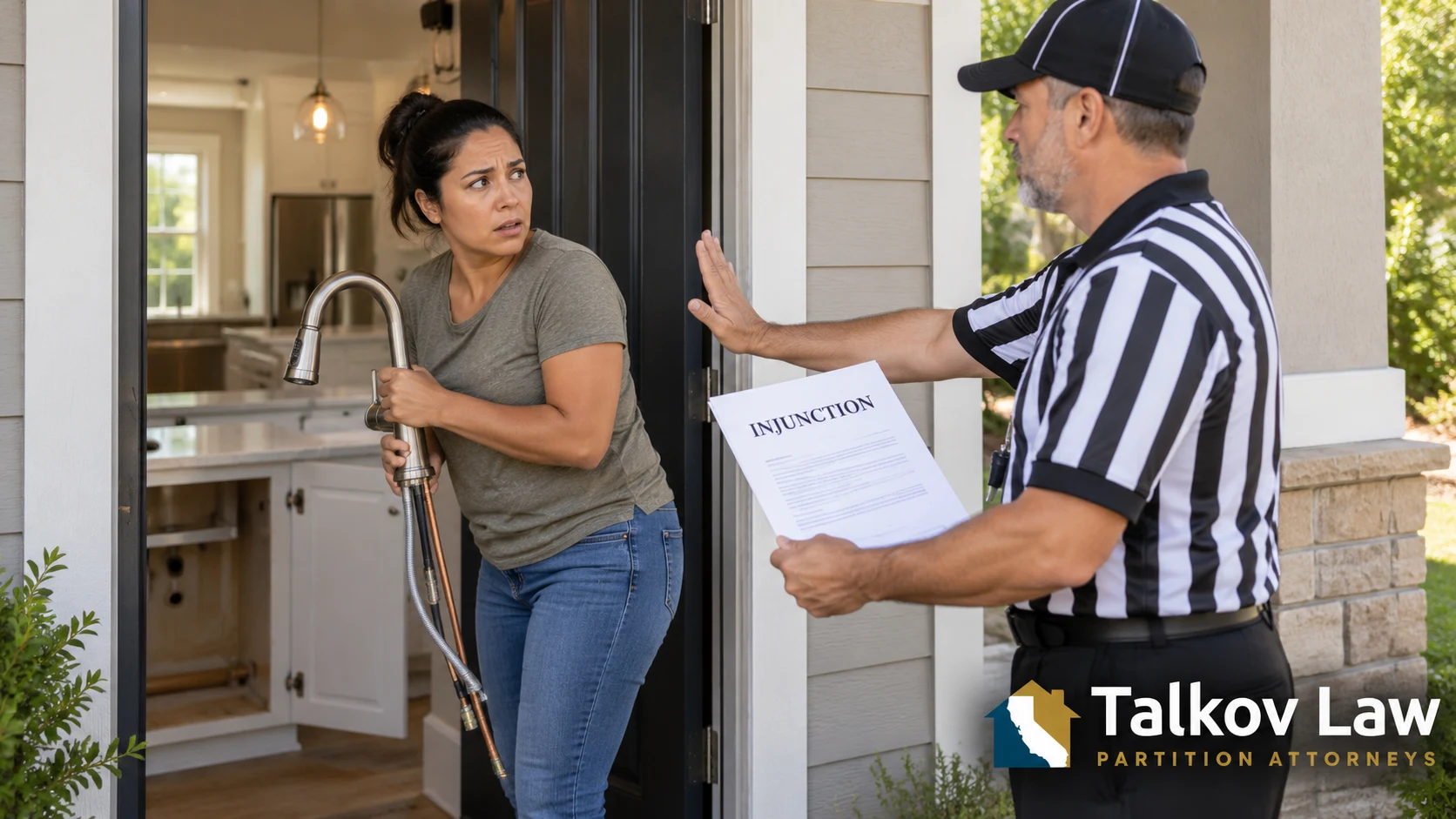
Code of Civil Procedure section 872.130 lets the partition court issue restraining orders and injunctions to prevent waste, protect the property or its title, and stop interference.
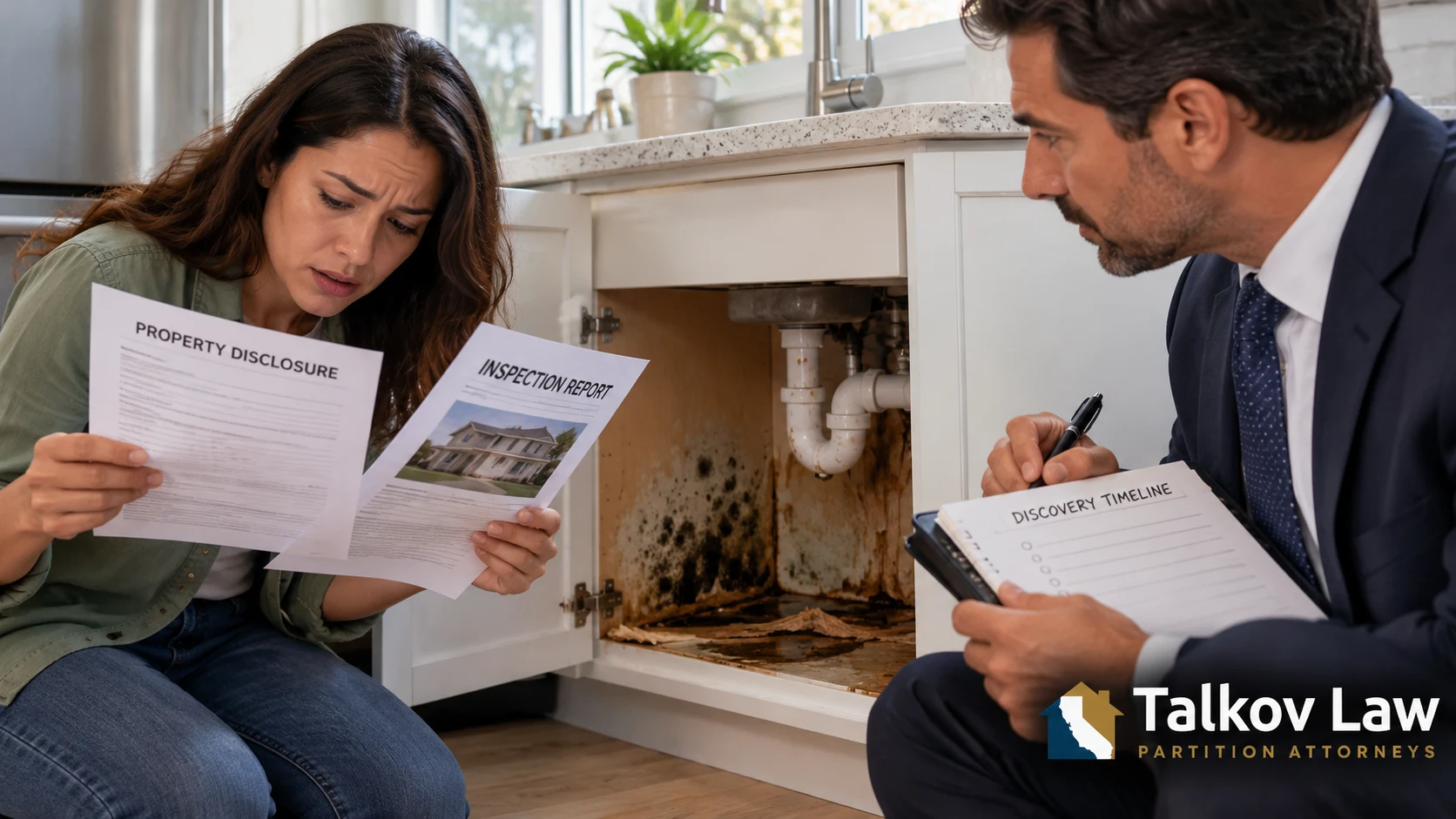
What is the statute of limitations for fraud in California, and when does the discovery rule delay it? Here is how the defense works.
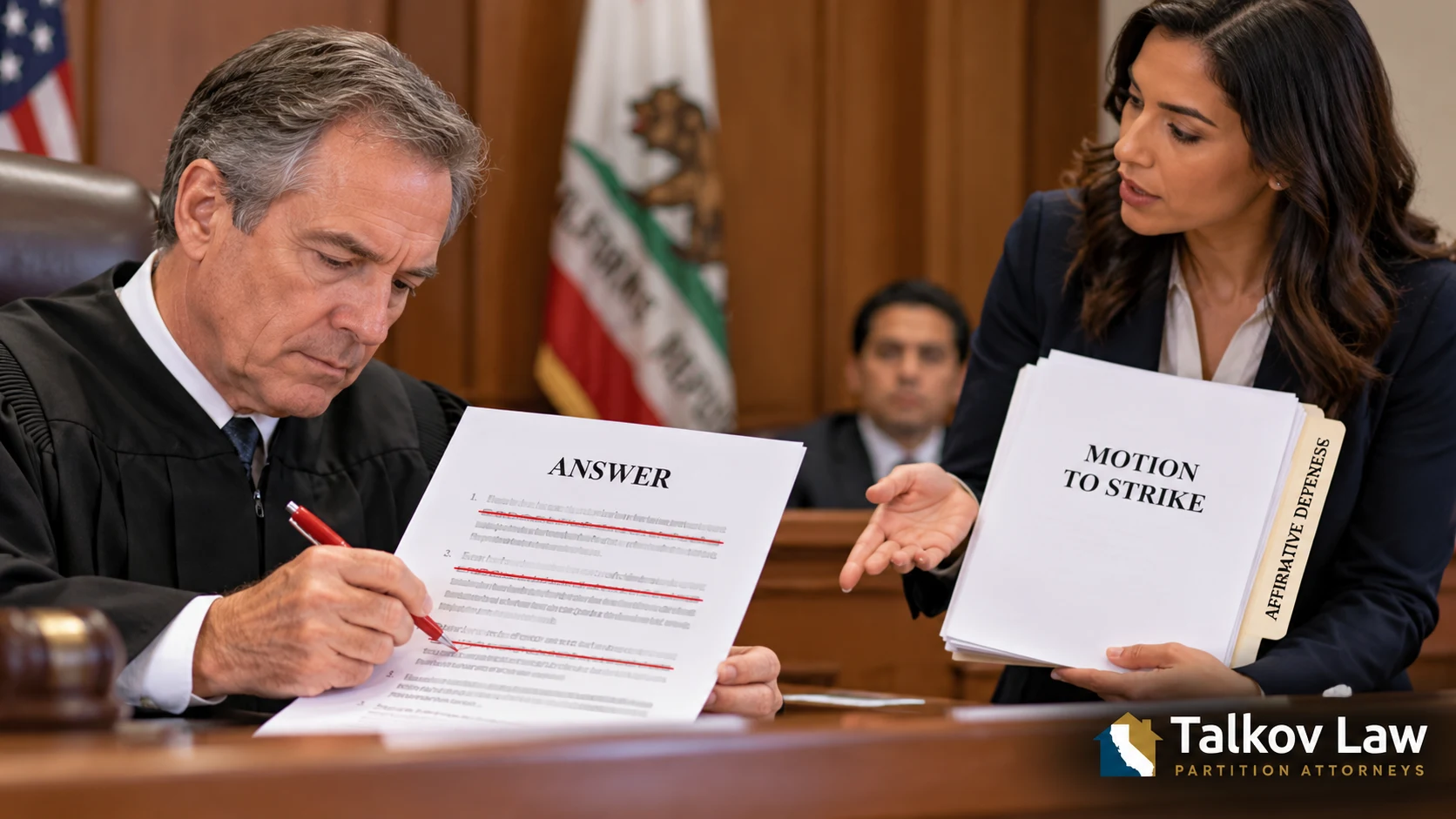
Many defendants answer with boilerplate affirmative defenses and no supporting facts. In California, those defenses can be challenged by a motion to strike or demurrer.
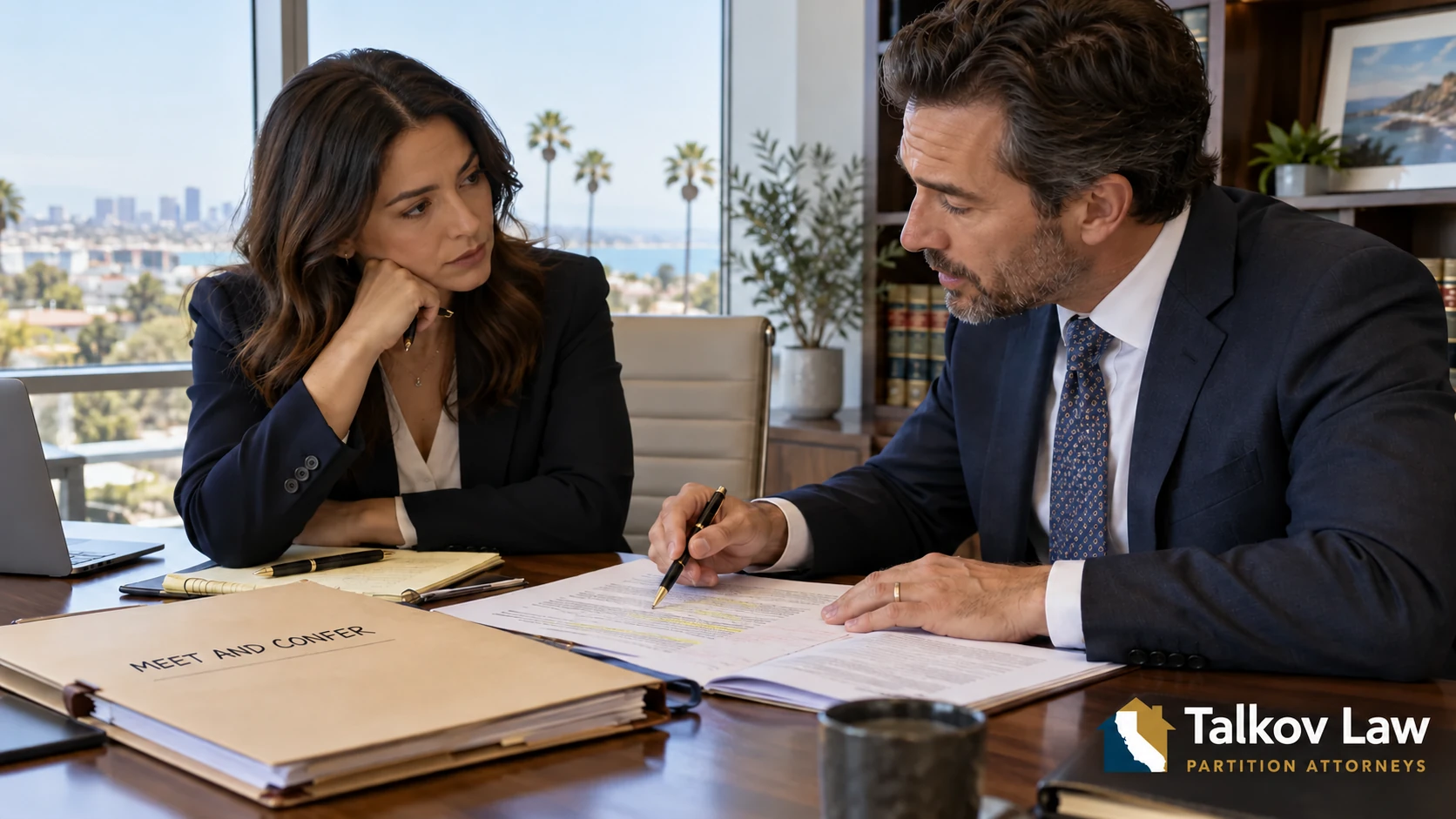
Effective January 1, 2016, SB 383 severely limits the use of demurrers in California through newly-enacted California Code of Civil Procedure § 430.41.

Representing co-owners statewide. Find your nearest Talkov Law office.
Practical guides from attorneys who focus exclusively on California partition actions.
The information on this site, including the Talkov Law Blog, is intended for general information purposes only. By using this site, you agree that any information contained in the site does not constitute legal, financial or any other form of professional advice. Information on this site may be changed without notice and is not guaranteed to be complete, accurate, correct or up-to-date.







