
How a California partition action moves through court, from the right to file and the complaint through the lis pendens, trial, judgment, and the referee’s sale. Every Talkov Law guide on partition procedure, organized by stage.

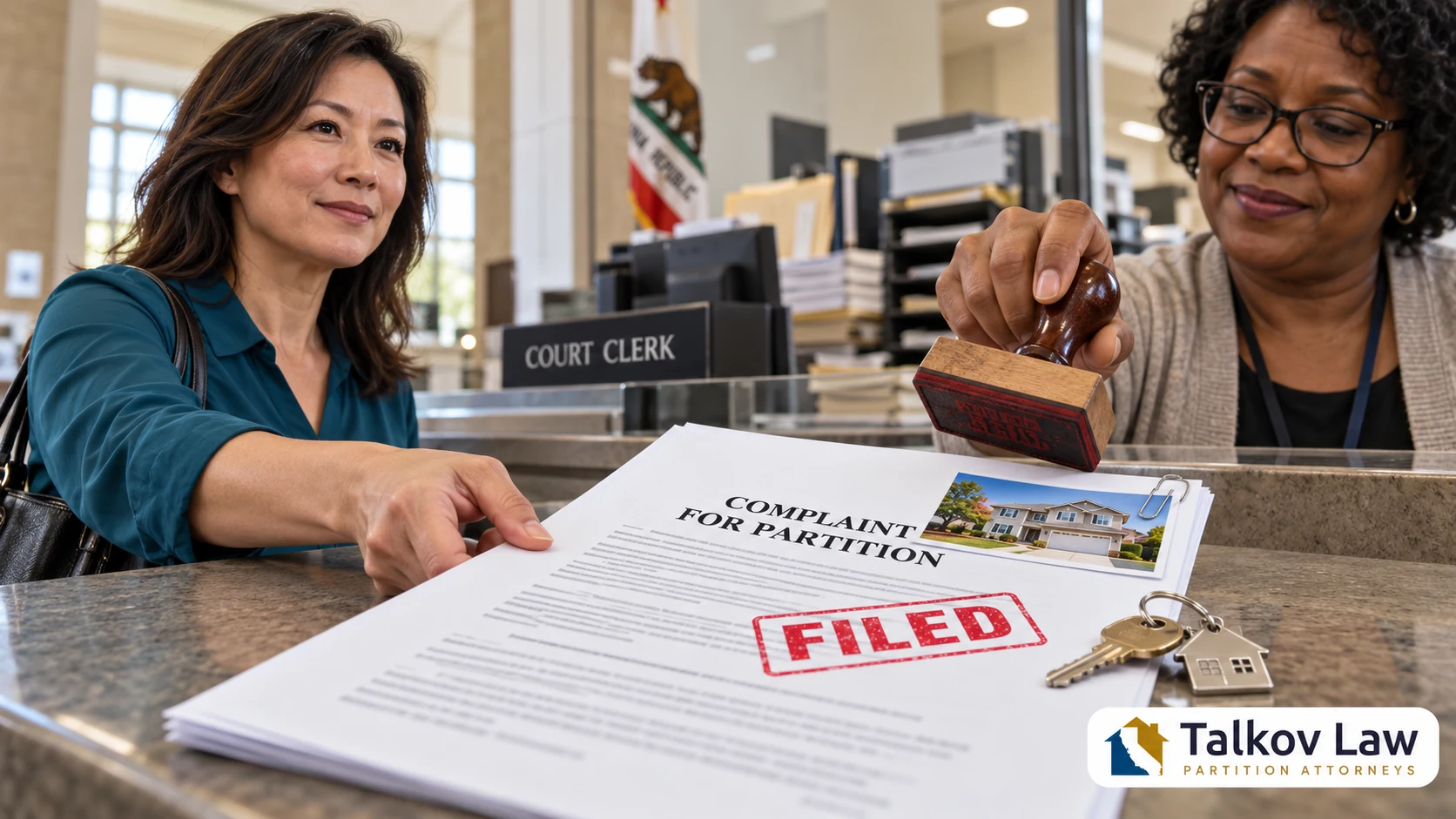
A California partition action follows a set path through court. A co-owner files a complaint, records a lis pendens, and serves the other owners. The court then confirms the right to partition in an interlocutory judgment and appoints a referee to sell or divide the property.
This page collects every Talkov Law guide, form, and case summary on partition procedure, organized by the stage of the case. New to the topic? Start with our guide to what a partition action is and how it works.
A partition action in eight steps
- Demand letterA letter warning of a partition action often produces a buyout or an agreed sale before anything is filed.
- ComplaintThe co-owner files a complaint for partition in the superior court of the county where the property is located.
- Lis pendensA notice of pending action is recorded with the county recorder immediately after filing.
- Service and responseEvery co-owner and lienholder is served with the summons and has 30 days to respond.
- Interlocutory judgmentThe court confirms the right to partition, determines each owner’s share, and orders a sale or division.
- RefereeThe court appoints a partition referee to list and sell the property, or to divide it.
- Sale and confirmationThe referee sells the property and reports the sale to the court, which confirms it at a hearing.
- Accounting and distributionSale expenses, costs, and liens are paid, credits are settled, and the balance goes to the owners.
Most cases settle along the way through a buyout or an agreed listing. For how long each step takes, see how long a partition action takes.
Essential procedure guides
 Start hereWhat a partition action is and how it worksThe complete guide: who can file, the steps, the cost, and the timeline.
- The rightThe absolute right to partitionWhy a co-owner generally cannot stop a partition.
- FilingHow to file a partition actionThe steps from confirming ownership to serving the complaint.
- The complaintPartition complaint: free form and templateWhat the complaint must say, with a California sample.
- Lis pendensWhat is a lis pendens?The recorded notice that puts buyers and lenders on notice of the case.
- TimelineHow long does a partition action take?How long each stage usually takes, and what speeds a case up.
- JudgmentThe interlocutory judgment of partitionThe two phases of a California partition, and the judgment between them.
- RefereesPartition referees in CaliforniaThe neutral person the court appoints to sell or divide the property.
- The saleHow a partition referee sells propertyFrom hiring a broker to closing escrow.


Latest procedure articles
- Caiozzo v. 2672 to 2674 North Beachwood Drive: Why a Shared Duplex Was Sold, Not Split
- Bacon v. Wahrhaftig: One Partition Lawsuit Can Settle Every Co-Owner Dispute
- Adams v. Hopkins: Why Time Never Bars a Partition Between Co-Owners
- Capuccio v. Caire (1922): Co-Owners Can’t Transfer Away Your Right to Partition
- Lazzarevich v. Lazzarevich: The Right to Partition Can’t Be Blocked by an Unpaid Judgment
- De Roulet v. Mitchel: A Co-Owner Can’t Delay Partition to Wait for a Better Market

- De Uprey v. De Uprey: Delay Tactics Could Not Stop a Partition

- Richmond v. Dofflemyer: Can a Court Divide Co-Owned Land in Stages?

- Priddel v. Shankie: Why the Right to Partition Is Absolute
- Jamison v. Jamison: How a Court Sets Owelty When It Divides Family Land

Browse by stage
1.The right to partition
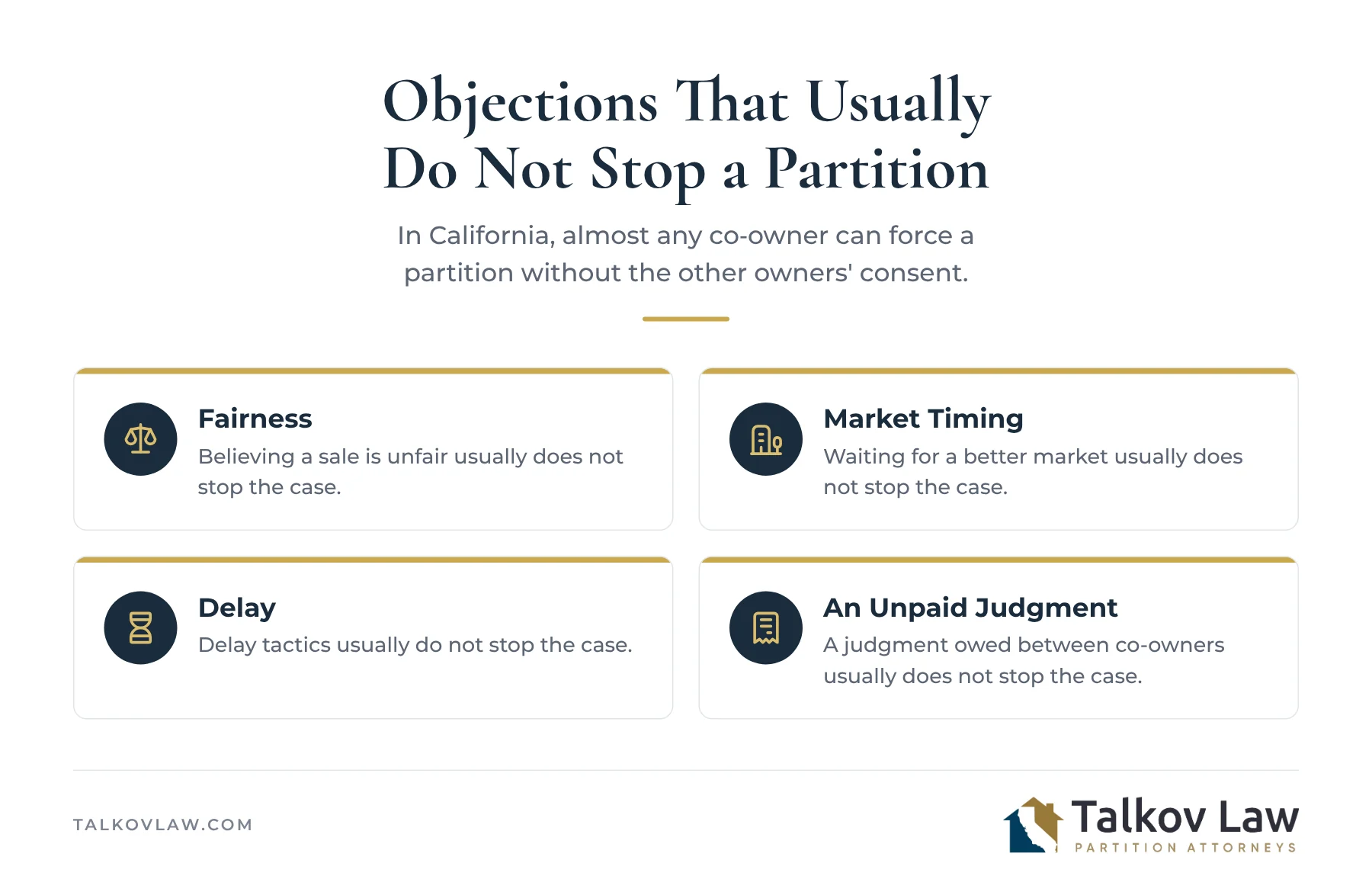
Before anything is filed, the first question is whether you can force a partition at all. In California, almost any co-owner can, without a majority share and without the other owners’ consent.
These guides cover who may file and why objections such as fairness, market timing, delay, or an unpaid judgment usually do not stop the case.
- CCP 872.210Who may file a partition action
- CCP 872.710Partition as of right, unless a valid waiver bars it
2.Filing for partition
A partition action starts with a complaint filed in the superior court of the county where the property is located. Every co-owner and lienholder with an interest of record is then served with the summons.
These guides cover the demand letter, the complaint, who must be named, service, venue, the answer, and what to do when you are the co-owner who was served.
- CCP 872.110Which court hears the case
- CCP 872.230What the complaint must contain
- CCP 872.510Who must be named as a defendant
3.Recording the lis pendens
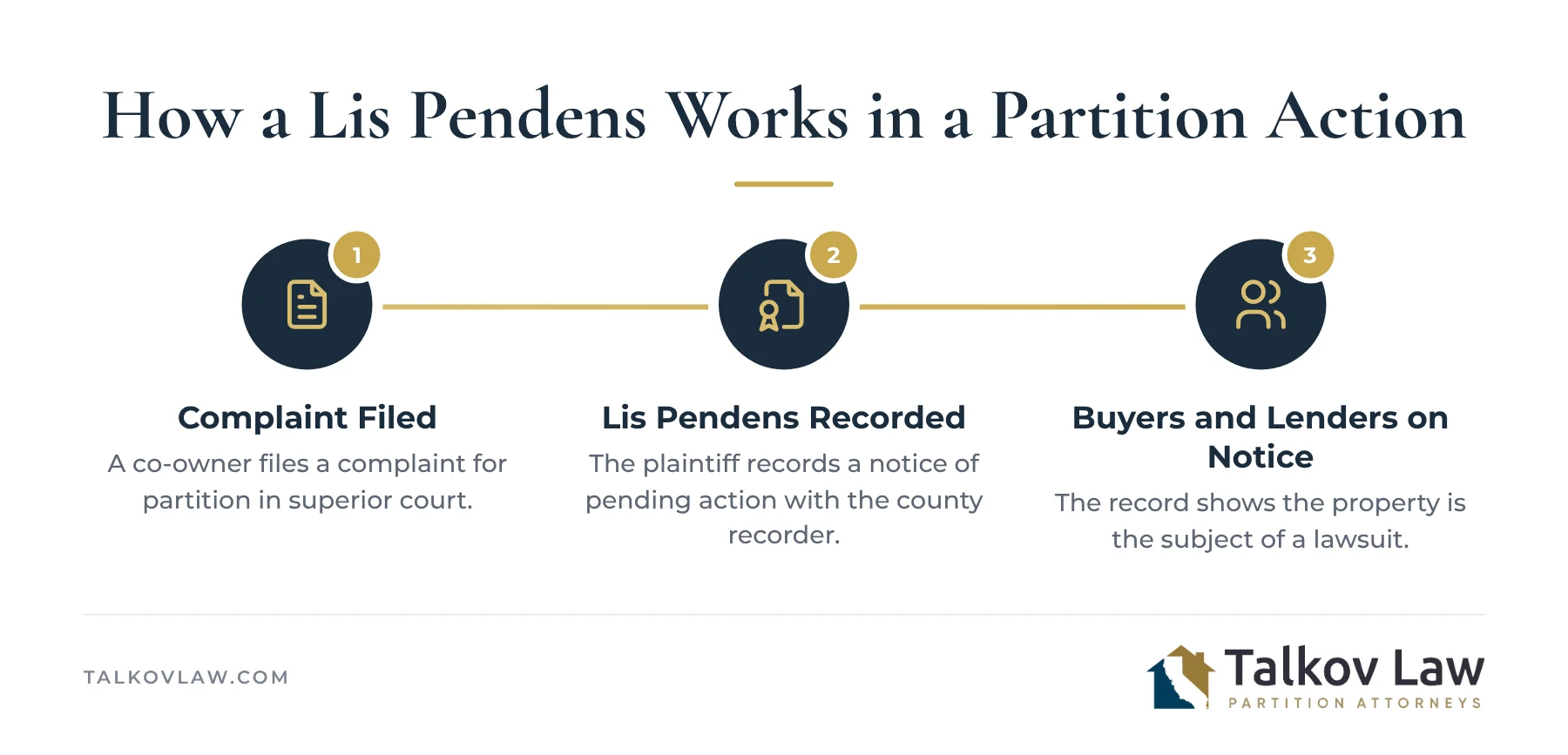
Immediately after filing, the plaintiff records a lis pendens, also called a notice of pending action, with the county recorder. It puts buyers and lenders on notice that the property is the subject of a lawsuit.
- CCP 872.250Recording the lis pendens in a partition action
4.Discovery and trial
Most partition actions resolve without a trial, because the right to partition is rarely in doubt. When a case is contested, the fight is usually over each owner’s share and the credits each side claims.
These guides cover discovery, cross-complaints, demurrers, settlement offers, and trial.
- CCP 872.130Restraining orders and injunctions while the case is pending
- CCP 872.430Claims for credits raised in the answer
5.Judgments and appeals
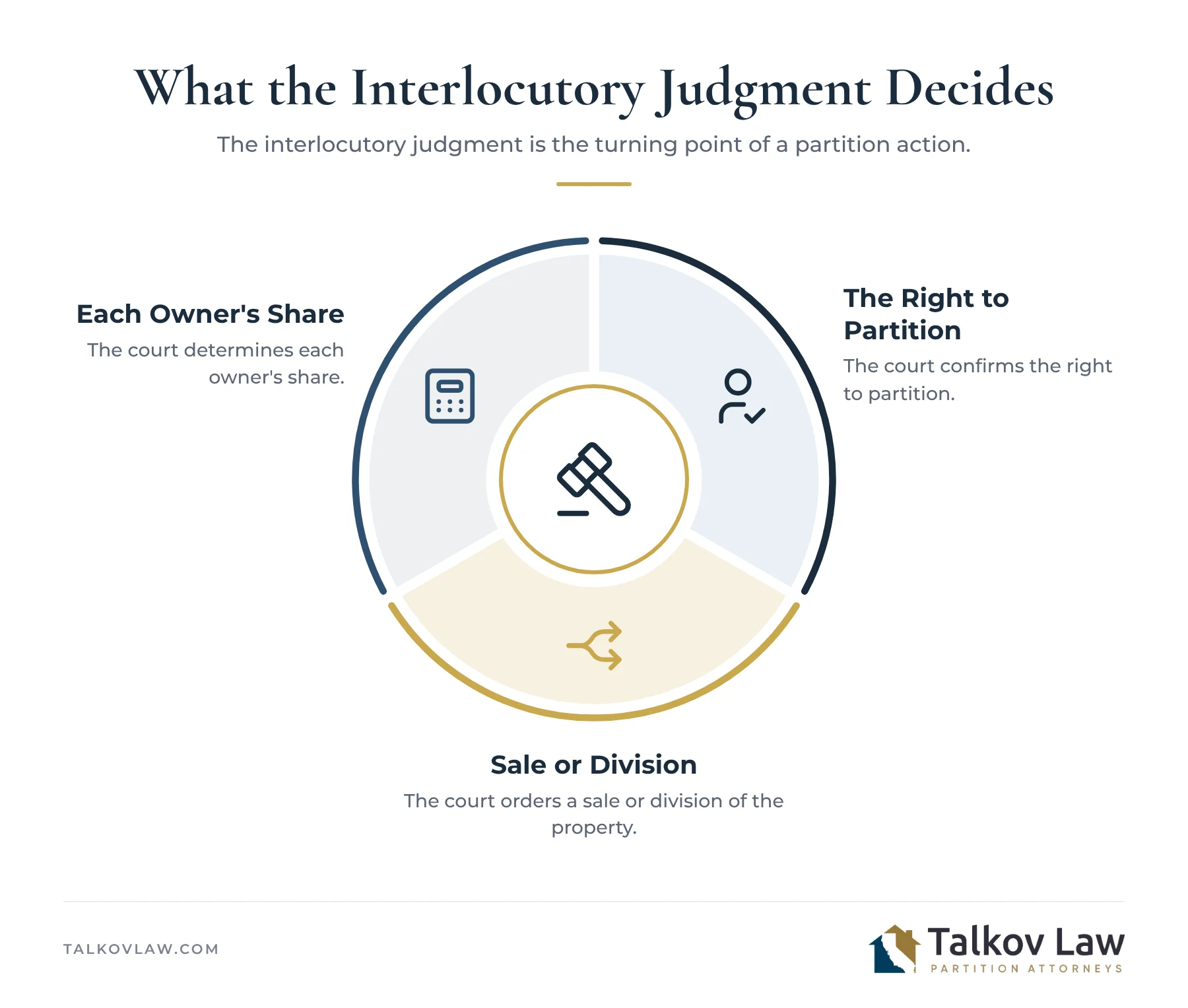
The interlocutory judgment is the turning point of a partition action. It confirms the right to partition, determines each owner’s share, and orders a sale or division of the property.
These guides cover the interlocutory judgment, default judgments, the final judgment, and whether an appeal stops a sale.
- CCP 872.720The interlocutory judgment of partition
- CCP 874.040How the costs of partition are apportioned
6.Partition referees, brokers, and the sale
Once the court orders a sale or division, a court-appointed partition referee carries it out. In some cases a real estate broker fills that role.
These guides cover how referees are chosen and paid, how they sell the property, and how they report to the court.
- CCP 873.010Appointment of the partition referee
- CCP 873.730The hearing to confirm the sale
- CCP 874.320Open-market sale under the Partition of Real Property Act

Scott Talkov
Founder & Managing Partner, Talkov Law
Scott Talkov founded Talkov Law and leads its partition practice, representing co-owners across California at every stage of a partition action, from the demand letter through the referee’s sale.
Read Scott’s bio →





