Right to Partition

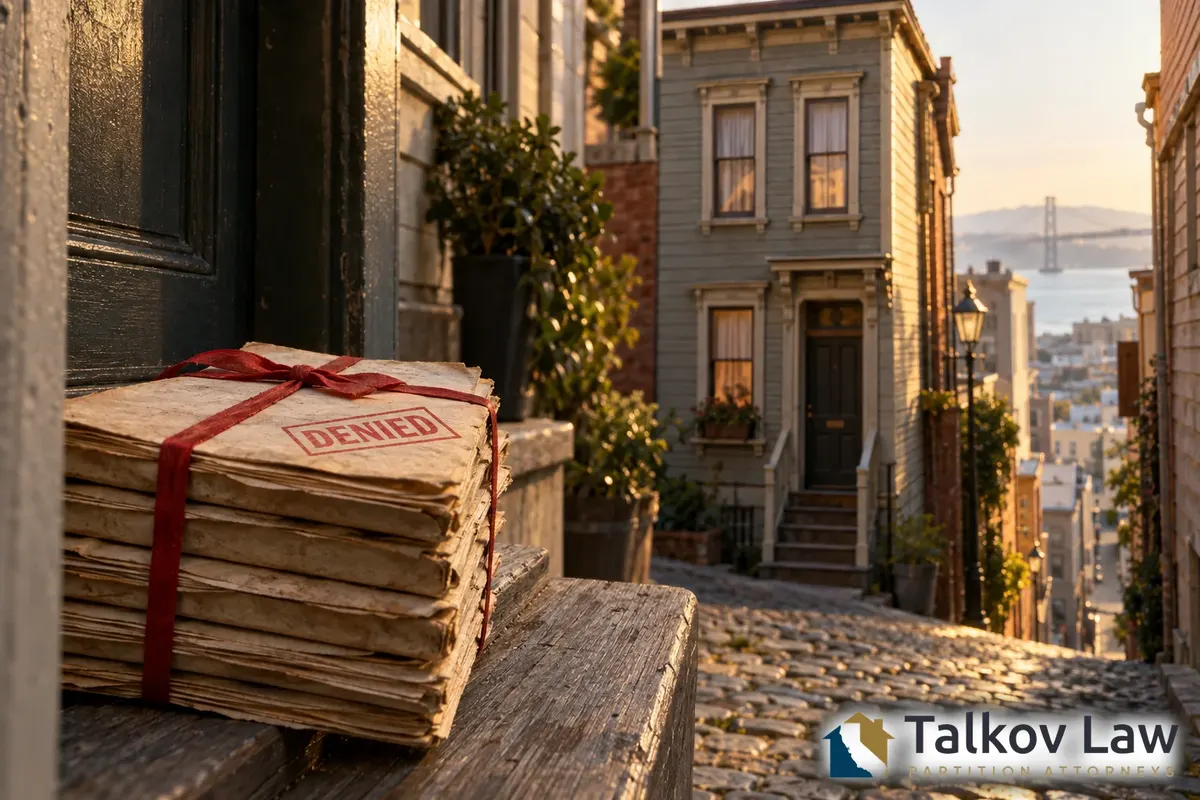
Narrow San Francisco row house on a small alley lot with a stack of denied legal papers, illustrating De Uprey v. De Uprey

De Uprey v. De Uprey: Delay Tactics Could Not Stop a Partition

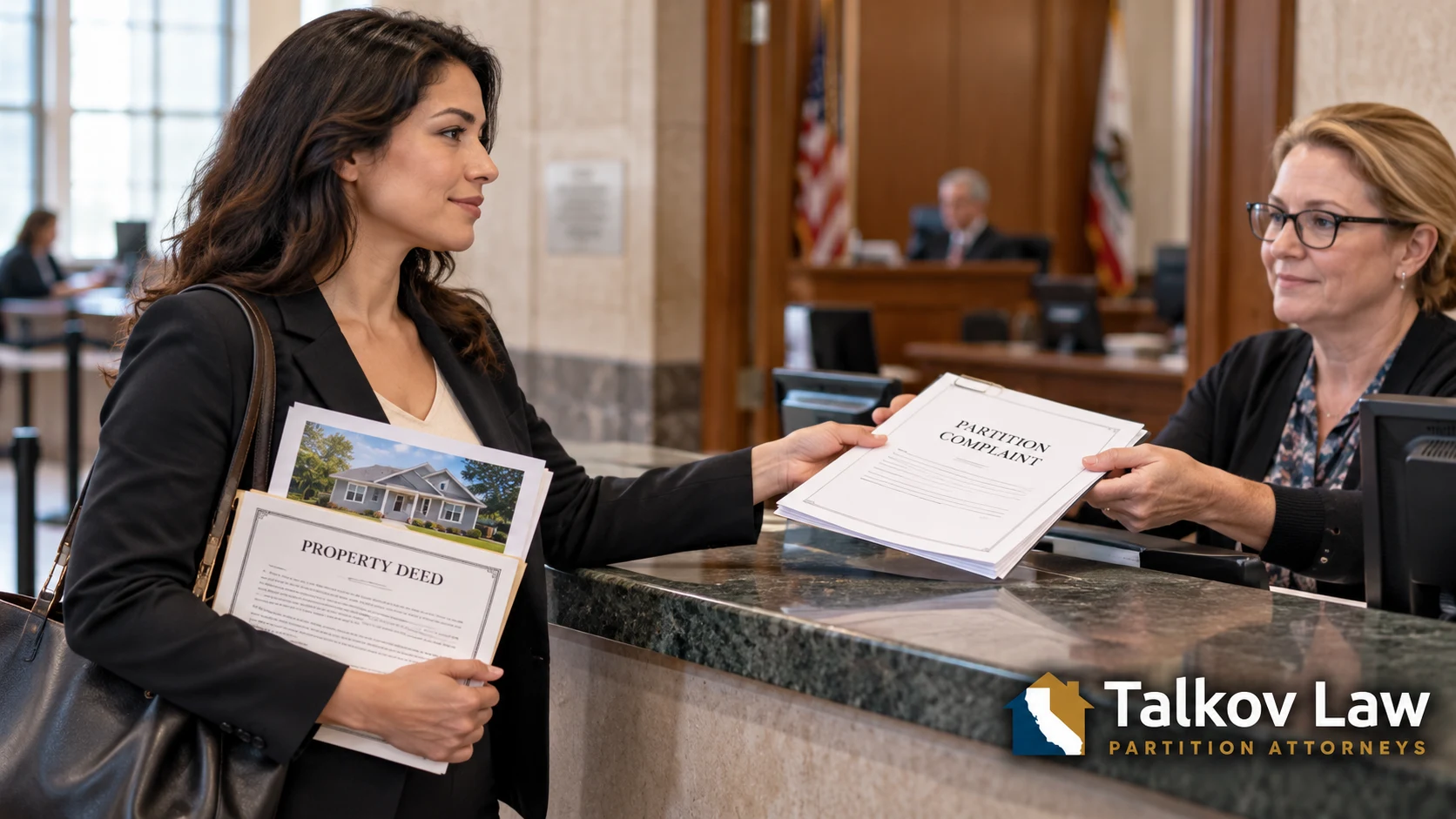
In De Uprey v. De Uprey, the California Supreme Court affirmed the sale of a co-owned San Francisco lot despite five demurrers, holding that a partition complaint need not say how the property should be divided and that ownership disputes are decided inside the partition.

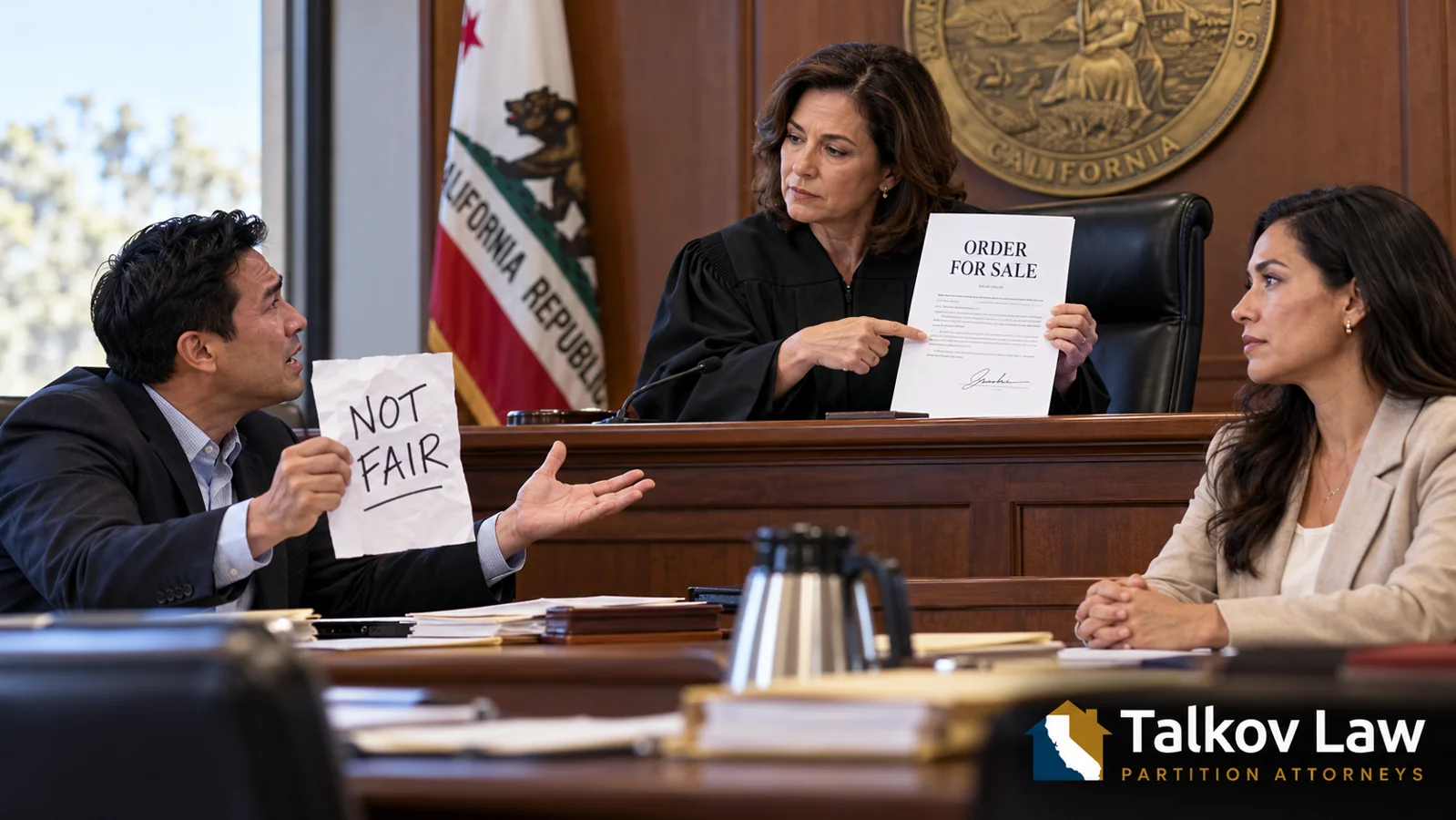
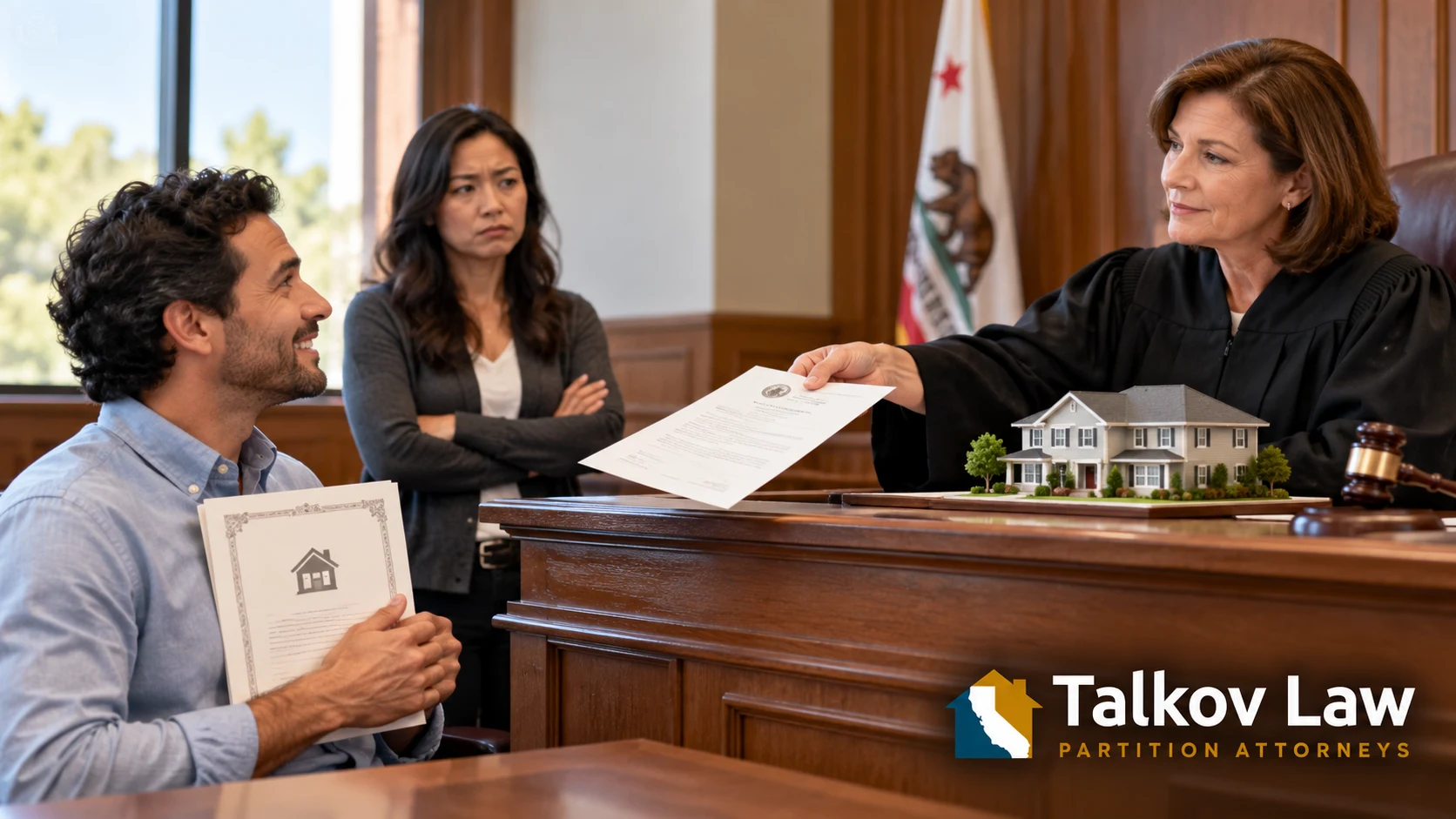
A judge points to an order for sale despite a co-owner's objection that it is not fair.

“Fairness” is Not a Defense to Partition

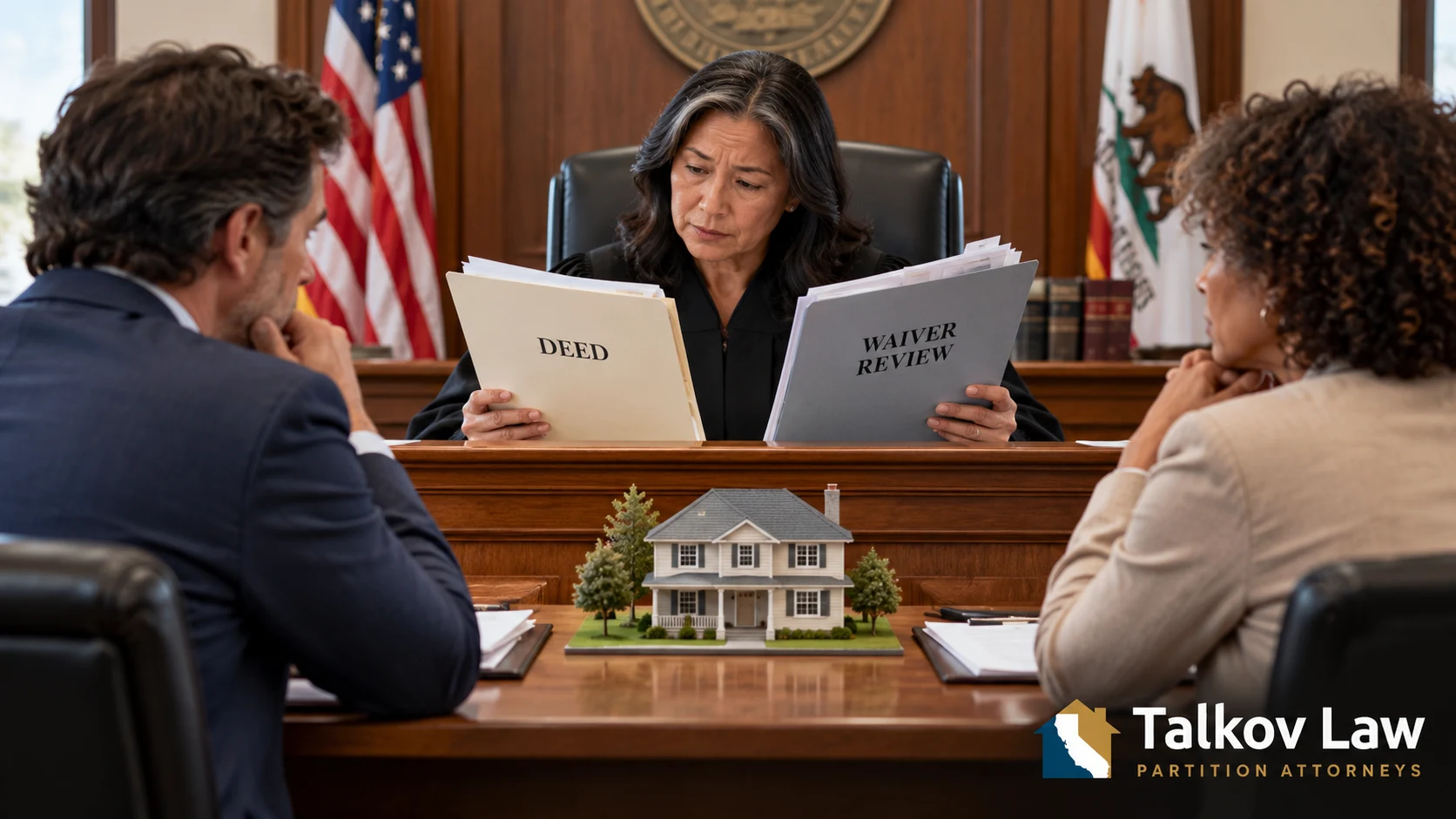
A 1976 case suggested fairness could limit partition, but the Legislature that same year made partition a matter of right unless validly waived. California courts have since rejected the fairness defense.

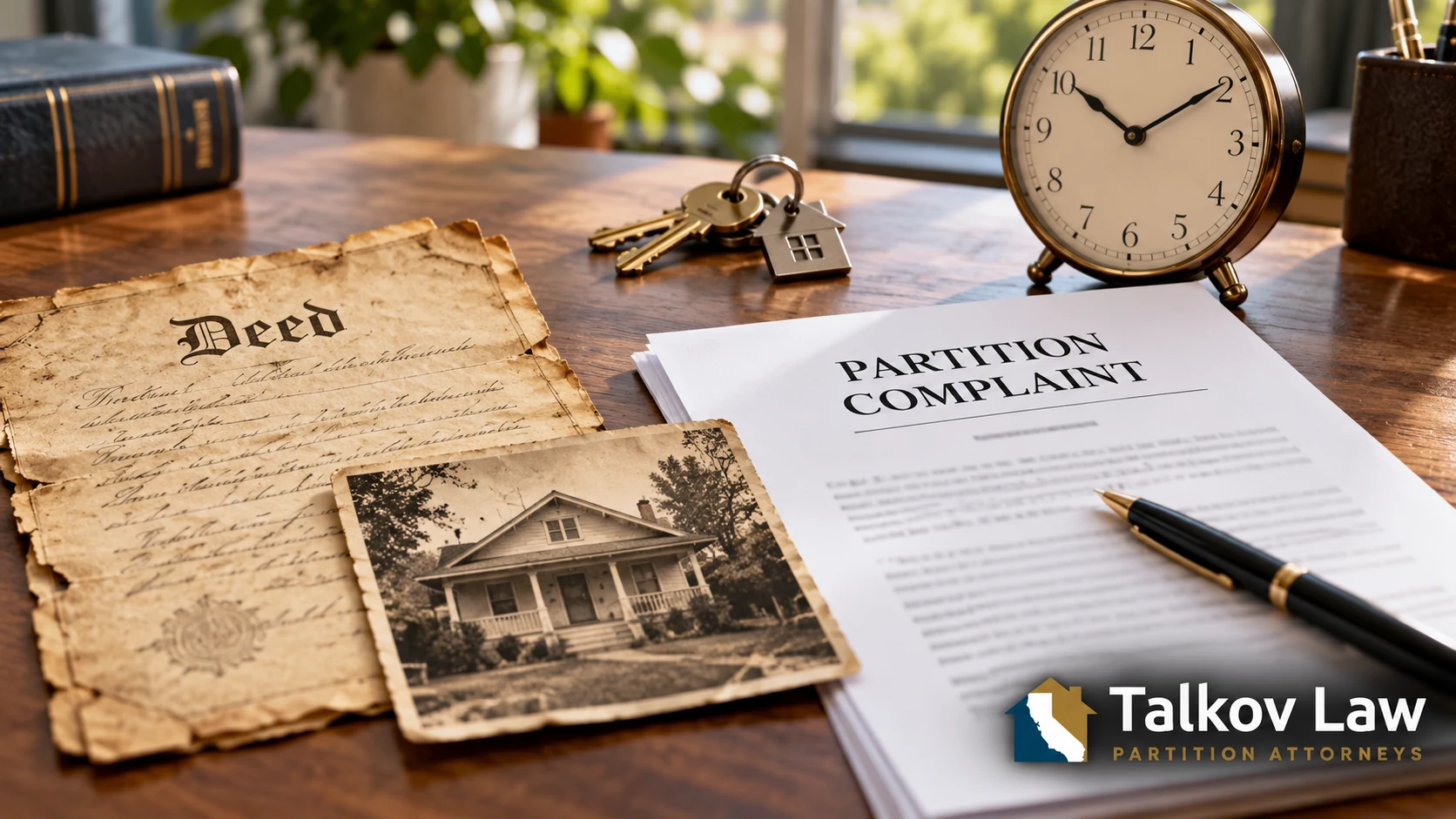
Absolute Right to Partition in California — Talkov Law illustration

Absolute Right to Partition in California

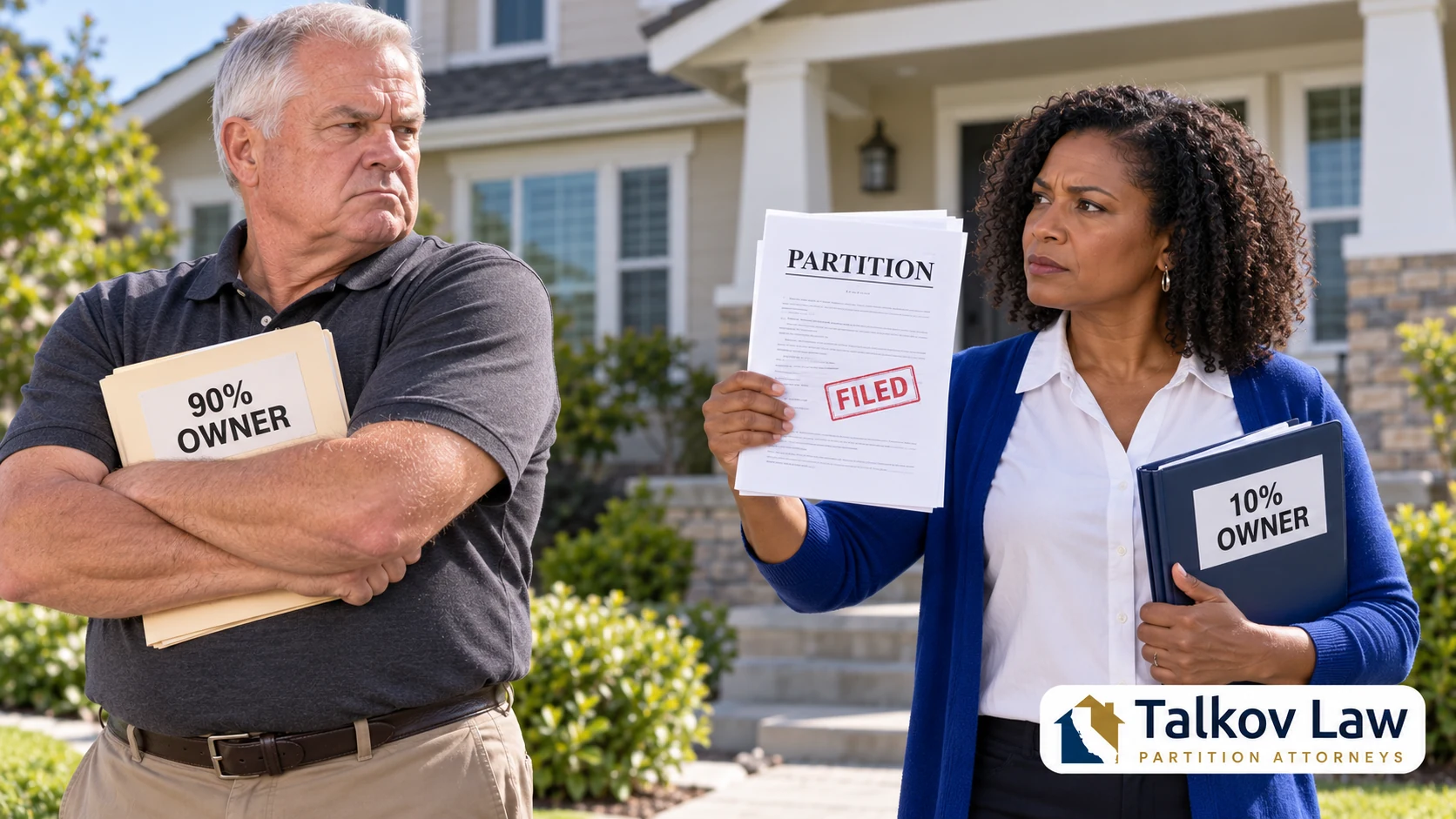
Under Code of Civil Procedure section 872.210, any co-owner can force the sale of co-owned property. The right to partition is so strong that courts call it absolute.