California Partition Cases
Plain-English summaries of the California Supreme Court and Court of Appeal decisions that decide how co-owned property is sold, divided and paid out in a partition action.
A partition action is the lawsuit a California co-owner files to end co-ownership of real estate, usually by asking the court to order the property sold and the money divided. The statutes set out the steps, but the cases decide the fights that come up along the way: whether a co-owner can stop the sale, who gets credit for the mortgage, taxes and repairs, who owes rent for living in the house, and who pays the attorney’s fees.
Each summary below explains one decision: what happened, what the court held, and what it means for a co-owner today. Many of these cases come up in nearly every partition we handle. For example, the courts have held that the right to partition is absolute, that time never bars a partition between co-owners, and that every partition includes an accounting of what each co-owner paid.
How to use this library
Search by case name or by issue (for example “ouster,” “attorney’s fees” or “joint tenancy”), or browse the full list. If you are new to partition, start with our California Partition Law Guides & Articles, then come back here for the case behind each rule.
All Partition Cases
-
Adams v. Hopkins: Why Time Never Bars a Partition Between Co-Owners
In Adams v. Hopkins, the California Supreme Court held that the statute of limitations never bars a partition action between co-owners. Time matters only when a co-owner has…
-
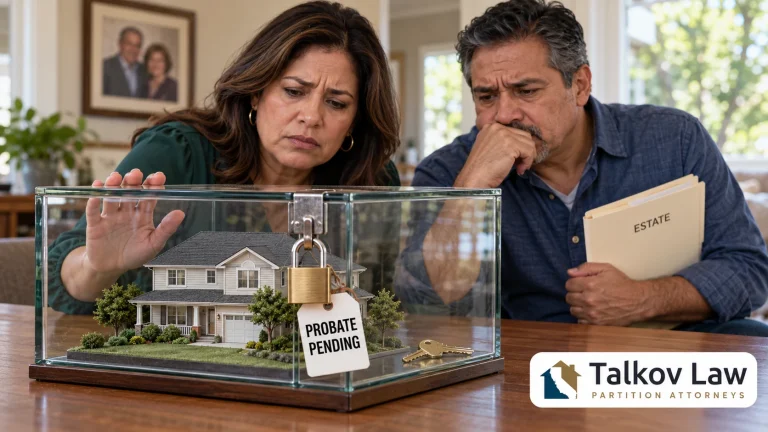
Amundson v. Catello (2025) – Can Heirs Force a Partition Sale?
Not while probate is pending. In Amundson v. Catello (2025), the Court of Appeal held that siblings who only expected to inherit property still in probate had no…
-
Bacon v. Wahrhaftig: One Partition Lawsuit Can Settle Every Co-Owner Dispute
In Bacon v. Wahrhaftig, the California Court of Appeal revived a Kern County oil-land partition, holding that fraud, damages and accounting claims against co-owners are part of one…
-

Butte Creek Island Ranch v. Crim: Evidence Required for Partition by Sale
Butte Creek Island Ranch v. Crim explains the evidence supporting partition by sale: an inability to divide the property fairly or a material loss in value from division.
-
Caiozzo v. 2672 to 2674 North Beachwood Drive: Why a Shared Duplex Was Sold, Not Split
In Caiozzo v. 2672 to 2674 North Beachwood Drive, LLC, the California Court of Appeal affirmed a trust’s right to partition a co-owned Los Angeles duplex and rejected…
-
Capuccio v. Caire (1922): Co-Owners Can’t Transfer Away Your Right to Partition
In Capuccio v. Caire (1922), the California Supreme Court held that co-owners who moved property into a revived company without a co-owner’s consent could not defeat her partition.…
-
Capuccio v. Caire (1932): Partition Attorney’s Fees Are Shared Even When Co-Owners Fight
In Capuccio v. Caire, the California Supreme Court held that a partition plaintiff’s attorney’s fees for the common benefit are shared by all owners, even when the other…
-
Cosler v. Norwood: Joint Tenants Can Own Unequal Shares in a Partition
In Cosler v. Norwood, the California Court of Appeal upheld a 3/4–1/4 split between joint tenants based on what each actually paid, holding that a co-owner who sues…
-
Cummings v. Dessel: Can a Court Order Partition by Appraisal?
A California court cannot order a partition by appraisal unless the co-owners agree to it. Cummings v. Dessel explains the written agreement rule, the public notice rule for…
-

De Roulet v. Mitchel: A Co-Owner Can’t Delay Partition to Wait for a Better Market
In De Roulet v. Mitchel, the California Court of Appeal held that a co-owner cannot block or delay a partition sale because the property has a profitable lease…
-

De Uprey v. De Uprey: Delay Tactics Could Not Stop a Partition
In De Uprey v. De Uprey, the California Supreme Court affirmed the sale of a co-owned San Francisco lot despite five demurrers, holding that a partition complaint need…
-
Demetris v. Demetris: Undoing a Mistaken Joint Tenancy in a Partition
In Demetris v. Demetris, the California Court of Appeal let a father undo a mistaken joint tenancy deed and convert it to a tenancy in common, repaid the…
-
Estate of Hughes: When Claiming the Whole House Is an Ouster
In Estate of Hughes, the California Court of Appeal held that a co-owner living in the house owed no rent just for living there, but his court petitions…
-
Finney v. Gomez: Who Pays the Attorney’s Fees in a California Partition?
In Finney v. Gomez, the Court of Appeal held that partition attorney’s fees are ordinarily split by ownership, so a 50 percent owner cannot be charged with 100…
-
Forrest v. Elam: When a Life Tenant Forces a Partition Sale
In Forrest v. Elam, the California Court of Appeal held that a son whose life estate ended when he left the property gave it up by forcing a…
-

Gerontopoulos v. Gerontopoulos: Little Credit for Repairs by the Co-Owner Living in the House
In Gerontopoulos v. Gerontopoulos, the California Court of Appeal affirmed a partition and upheld a ruling that limited the occupying family’s claim for ordinary repairs and improvements to…
-
Gray v. Superior Court: No Dismissing a Partition After the Referee Hears the Evidence
In Gray v. Superior Court, the California Court of Appeal held that a partition trial begins once the parties present evidence to a referee, so a plaintiff who…
-

Hacienda Ranch Homes v. Superior Court: What Counts as Ouster Between Co-Owners
Hacienda Ranch Homes v. Superior Court defines ouster as the wrongful exclusion of a co-owner and holds that paying the taxes, maintaining the land, and posting a for-sale…
-
Holt v. Brock: A Co-Owner Can’t Sue the Court-Appointed Broker Over a Partition Sale
In Holt v. Brock, the California Court of Appeal held that a real estate broker appointed by the court to sell property in a partition action has quasi-judicial…
-

Hunter v. Schultz: Rental Value Offsets Against a Co-Owner in Sole Possession
A co-owner in sole possession who paid all the expenses often expects full reimbursement. Under Hunter v. Schultz, the other co-owner can offset the property’s rental value against…
-
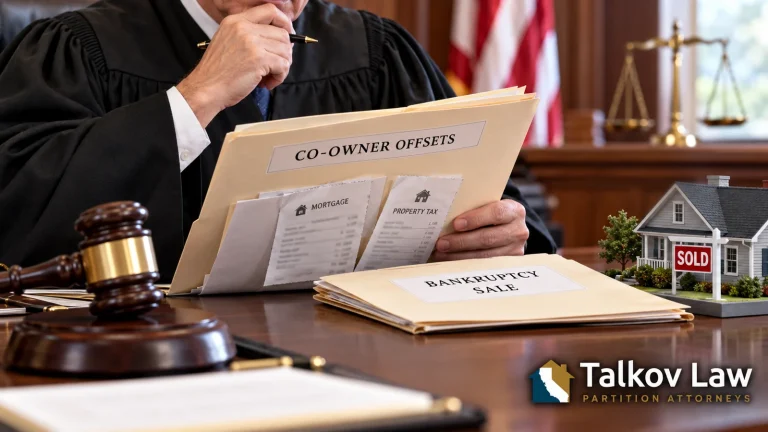
In re Flynn: Partition Offsets Still Apply When a Bankruptcy Trustee Sells Co-Owned Property
When a co-owner files bankruptcy, the trustee may sell the co-owned property under section 363(h) of the Bankruptcy Code. Under In re Flynn, the court can still apply…
-

Jamison v. Jamison: How a Court Sets Owelty When It Divides Family Land
In Jamison v. Jamison, the California Court of Appeal explained that a court dividing co-owned land must value each parcel to set owelty, and held that a co-owner…
-

Johns v. Scobie: Every Co-Owner May Occupy the Whole Property
In Johns v. Scobie, the California Supreme Court held that each co-owner has the right to occupy the whole property, and that a co-owner’s possession is presumed to…
-

Kershman v. Kershman: Unequal Shares Despite a Joint Tenancy Deed
In Kershman v. Kershman, the California Court of Appeal held that co-owners on a joint tenancy deed can own unequal shares if they agreed their shares would follow…
-
Lazzarevich v. Lazzarevich: The Right to Partition Can’t Be Blocked by an Unpaid Judgment
In Lazzarevich v. Lazzarevich, the California Supreme Court held that a joint tenant has a right to partition unless waived, and that an unpaid judgment owed to a…
-
LEG Investments v. Boxler: A Right of First Refusal Does Not Waive Partition
In LEG Investments v. Boxler, the California Court of Appeal held that a right of first refusal between co-owners does not waive partition. The co-owner who wants out…
-
Lin v. Jeng: A Co-Owner Who Games a Partition Can Pay All Their Own Attorney’s Fees
In Lin v. Jeng, the Court of Appeal held that courts have broad power to divide partition attorney’s fees based on fairness, and upheld an order making a…
-
Lindsay-Field v. Friendly: One Co-Owner Can’t Sign Away Your Share
In Lindsay-Field v. Friendly, the California Court of Appeal held that a co-owner has no authority to bind another co-owner’s interest without that owner’s agreement, so a deal…
-
Machado v. Machado: One Owner’s Hidden Intent Can’t Undo a Joint Tenancy Deed
In Machado v. Machado, the California Supreme Court held that a joint tenancy deed creates a presumption that can be overcome only by evidence of a common understanding…
-

Martin v. Walker: A Co-Owner Out of Possession Can Still Sue for Partition
In Martin v. Walker, the California Supreme Court held that a co-owner who never lived on the property, and whose co-owner held all of it and denied their…
-

Mercola v. Chester: The Co-Owner Who Paid for the Building Gets Repaid First
In Mercola v. Chester, the California Court of Appeal approved a partition sale that repaid the co-owners who funded a building before any profit was split by ownership…
-
Milian v. De Leon: A True Joint Tenancy Means Equal Shares in a Partition
Milian v. De Leon (1986) 181 Cal.App.3d 1185 held that once a partition court finds a true joint tenancy, the co-owners generally share equally without reimbursement for unequal…
-
Orien v. Lutz: Common-Benefit Attorney’s Fees in Contested Partitions
Orien v. Lutz explains that reasonable attorney’s fees in a contested partition can benefit all co-owners and be allocated among them. A co-owner’s opposition does not defeat that…
-

Preciado v. Wilde: A Co-Owner Cannot Take Title by Exclusive Possession Alone
In Preciado v. Wilde, the California Court of Appeal held that a co-owner cannot take a relative’s share by adverse possession through exclusive use alone. Between co-owners, the…
-
Priddel v. Shankie: Why the Right to Partition Is Absolute
In Priddel v. Shankie, the California Court of Appeal held that a co-owner’s right to partition is absolute and that another co-owner’s homestead on their own share cannot…
-

Richmond v. Dofflemyer: Can a Court Divide Co-Owned Land in Stages?
In Richmond v. Dofflemyer, a California court divided part of a family ranch in kind and sent the rest to a referee. See what it means for co-owners.
-
Riddle v. Harmon: A Joint Tenant Can Sever by Deeding to Herself
In Riddle v. Harmon, the California Court of Appeal held that a joint tenant can end a joint tenancy on her own, without her co-owner’s consent and without…
-
Southern Adjustment Bureau v. Nelson: Calculating a Co-Owner’s Reimbursement in a Partition
In Southern Adjustment Bureau v. Nelson, the California Court of Appeal held that a co-owner who paid taxes, insurance, and loan payments is repaid the full amount from…
-
Starcevic v. Pentech: A Partition Does Not Keep an Expired Judgment Lien Alive
In Starcevic v. Pentech, the California Court of Appeal held that a creditor ranked first against a co-owner’s share of partition sale money lost its place when its…
-
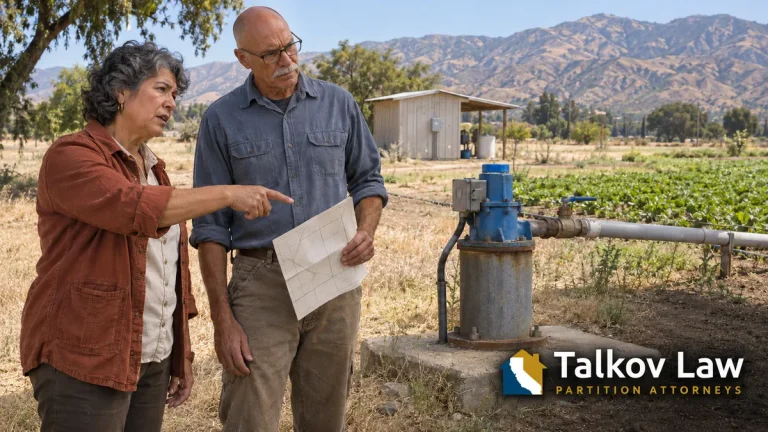
Sting v. Beckham: When a Water Well Makes Physical Partition Unfair
Sting v. Beckham upheld a partition by sale where a single water well supplied much of the property’s value, making physical division unfair to the owner who would…
-
Stutz v. Davis: Partition Fees Are Shared by Ownership, Even When a Co-Owner Buys
In Stutz v. Davis, a one-third owner forced a partition and bought the property. The court split attorney’s fees by ownership on the full sale price and denied…
-
Sullivan v. Dorsa: No Broker Commission on a Partition Sale the Court Never Confirmed
In Sullivan v. Dorsa, the California Court of Appeal held that a broker earns no commission on a partition sale that was never confirmed or closed, and that…
-
Summers v. Superior Court: Ownership Shares Come Before a Partition Sale
In Summers v. Superior Court, the California Court of Appeal held that a court cannot order a partition sale before deciding each co-owner’s ownership share, and those “interests”…
-

Swartzbaugh v. Sampson: A Co-Owner’s Lease Binds Only Their Own Share
In Swartzbaugh v. Sampson, the California Court of Appeal held that one co-owner can lease jointly owned property without the other’s consent, but the lease is valid only…
-

Ventre v. Tiscornia: Reimbursement for Improvements in a Partition
In Ventre v. Tiscornia, the California Court of Appeal held that a co-owner who pays for necessary improvements in good faith must be credited for them in a…
-

Wallace v. Daley: Every Partition Includes an Accounting
Wallace v. Daley (1990) 220 Cal.App.3d 1028 may be the most cited case in California partition law. It holds that every partition includes an accounting of offsets.
-
Willmon v. Koyer: A Co-Owner Who Pays the Taxes Gets Reimbursed in Partition
In Willmon v. Koyer, the California Supreme Court held that a co-owner who pays the taxes and other common expenses is entitled to reimbursement from the other owner,…
-

Wood v. Henley: An Absent Co-Owner Keeps Her Share
In Wood v. Henley, the California Court of Appeal held that a co-owner’s family could not take an absent owner’s half interest in Ventura County land by living…
-
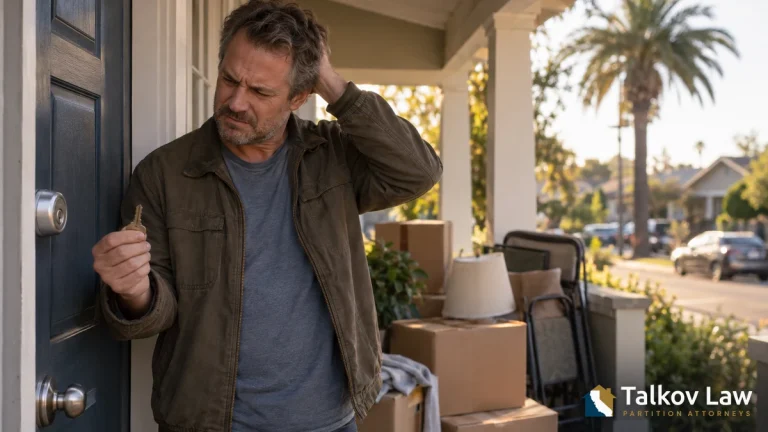
Zaslow v. Kroenert: When a Co-Owner Changes the Locks
In Zaslow v. Kroenert, the California Supreme Court held that a co-owner who changes the locks and refuses entry commits an ouster, and the locked-out owner can recover…
-
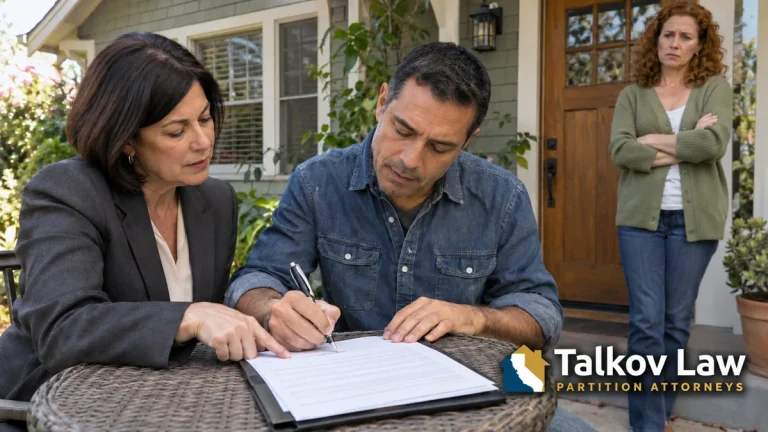
Zieve v. Dhindsa: A Co-Owner’s Loan Reaches Only Their Own Share
In Zieve v. Dhindsa, the California Court of Appeal confirmed that a co-owner can borrow against their own share without the others’ consent, but the loan reaches only…
No cases match that search. Try a different word, or ask a partition attorney.
Is your co-owner refusing to sell?
These cases are the tools we use to force a sale and protect your share. Talk to a California partition attorney in a free 30-minute consultation. No fees until you win.