Legal Explainers

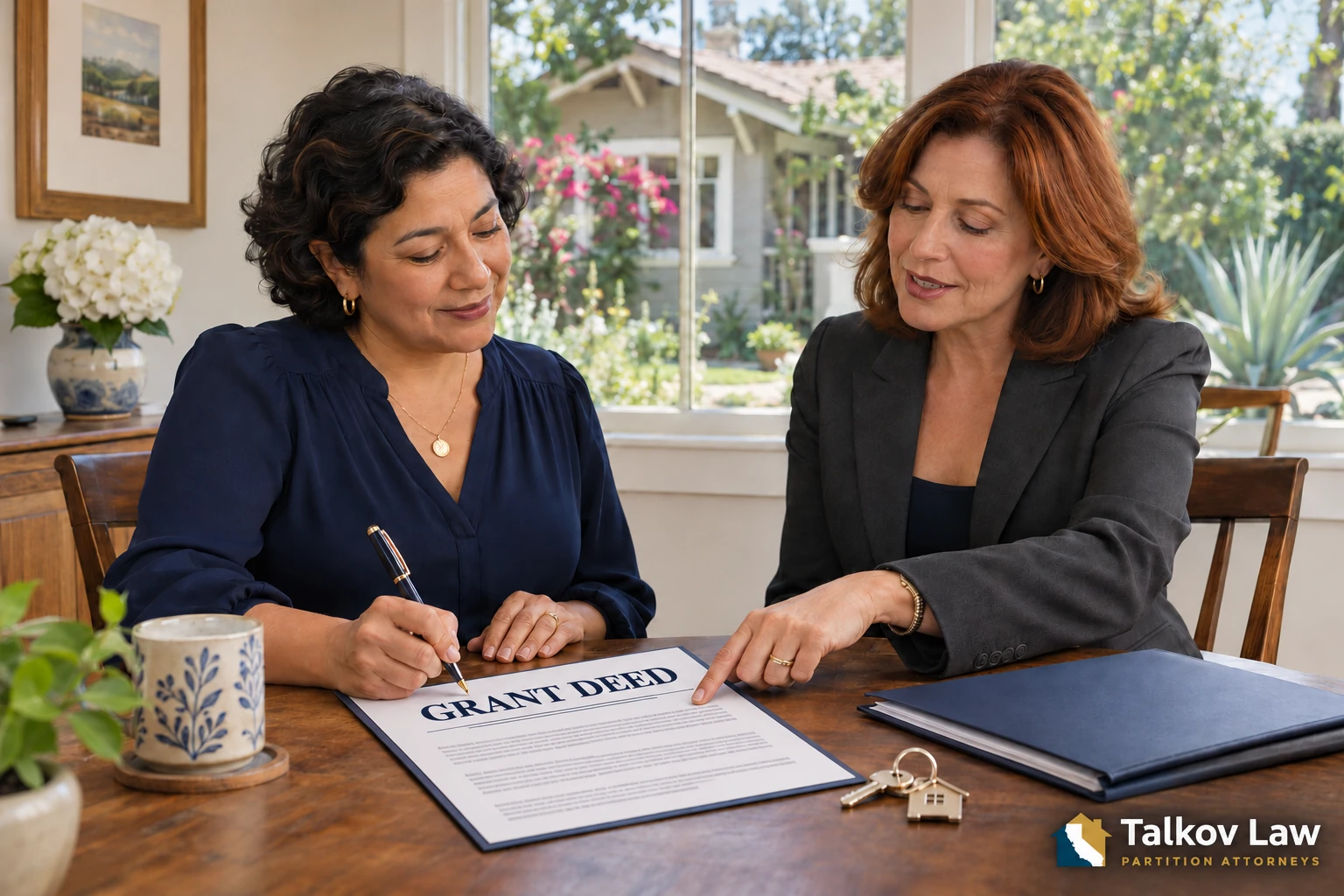
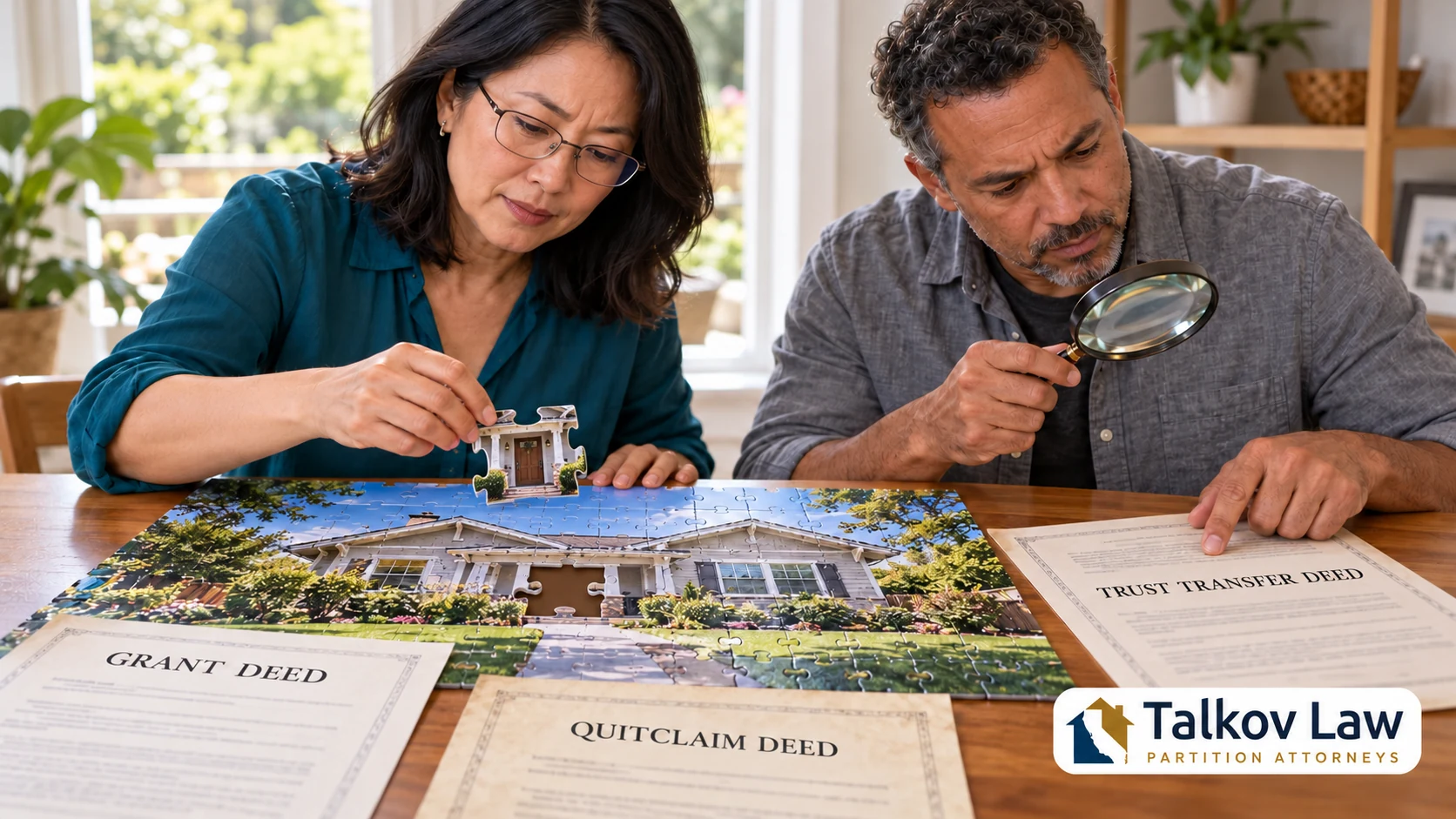
Homeowner reviewing a document labeled Grant Deed with an attorney, with the Talkov Law Partition Attorneys logo in the corner.

What Is a Grant Deed in California?

A grant deed transfers California real estate and promises the signer has not already sold the property or secretly placed liens on it. Here is how it differs from a quitclaim deed and what it means for co-owners.

Proposition 19 and Inherited Property for Co-Owning Siblings

When siblings inherit a parent’s California home, one sibling’s qualifying occupancy can preserve the Proposition 19 exclusion for all inherited shares, subject to the value cap and filing requirements. A later sibling buyout generally triggers reassessment of the share transferred.

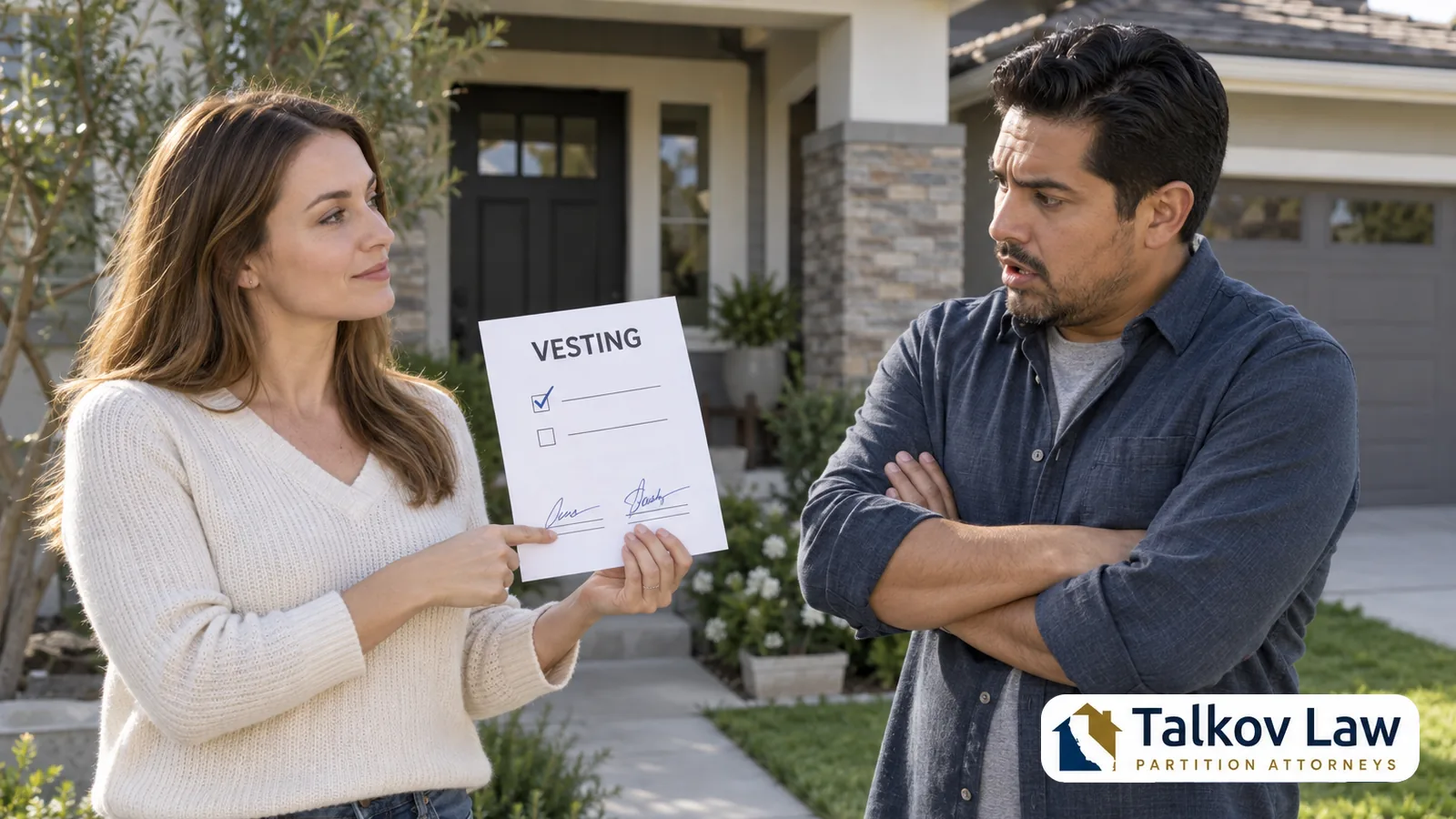
Woman pointing to both signatures on a signed vesting worksheet as her co-owner stands with arms crossed outside their house

Escrow Vesting Worksheet and How Co-Owners Hold Title

The vesting worksheet signed during escrow is usually why a deed says joint tenants or tenants in common. Co-owners who say they never agreed usually signed it, and the choice affects a California partition action.

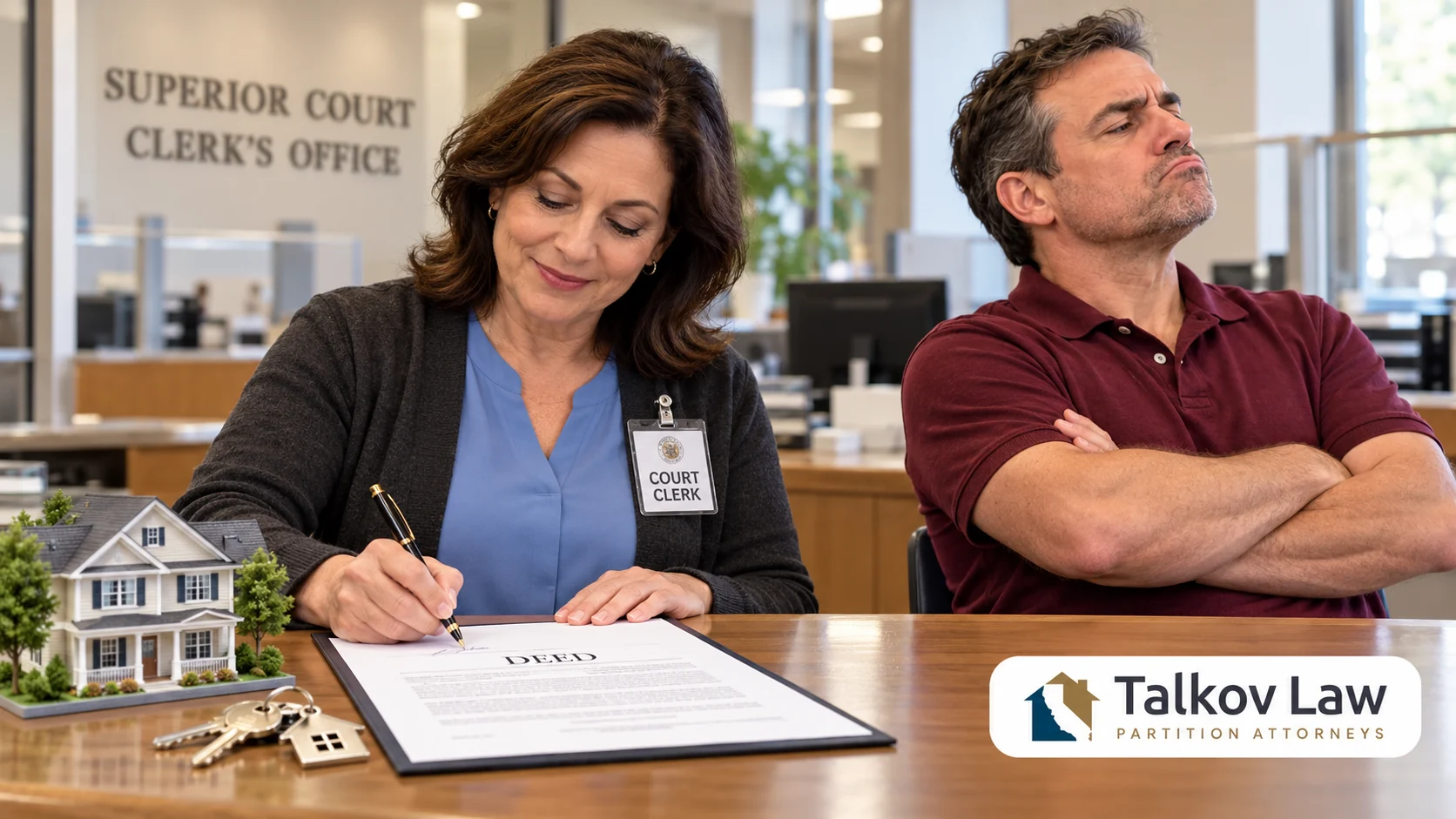
Court clerk signs a property deed while a co-owner refuses with his arms crossed, beside a model house and keys.

What Is an Elisor in a California Partition Action?

An elisor is a person the court appoints, usually the clerk of the court, to sign a deed or other document for a party who refuses to sign it. In a California partition action, an elisor is a backup tool, while a partition referee does the real work.

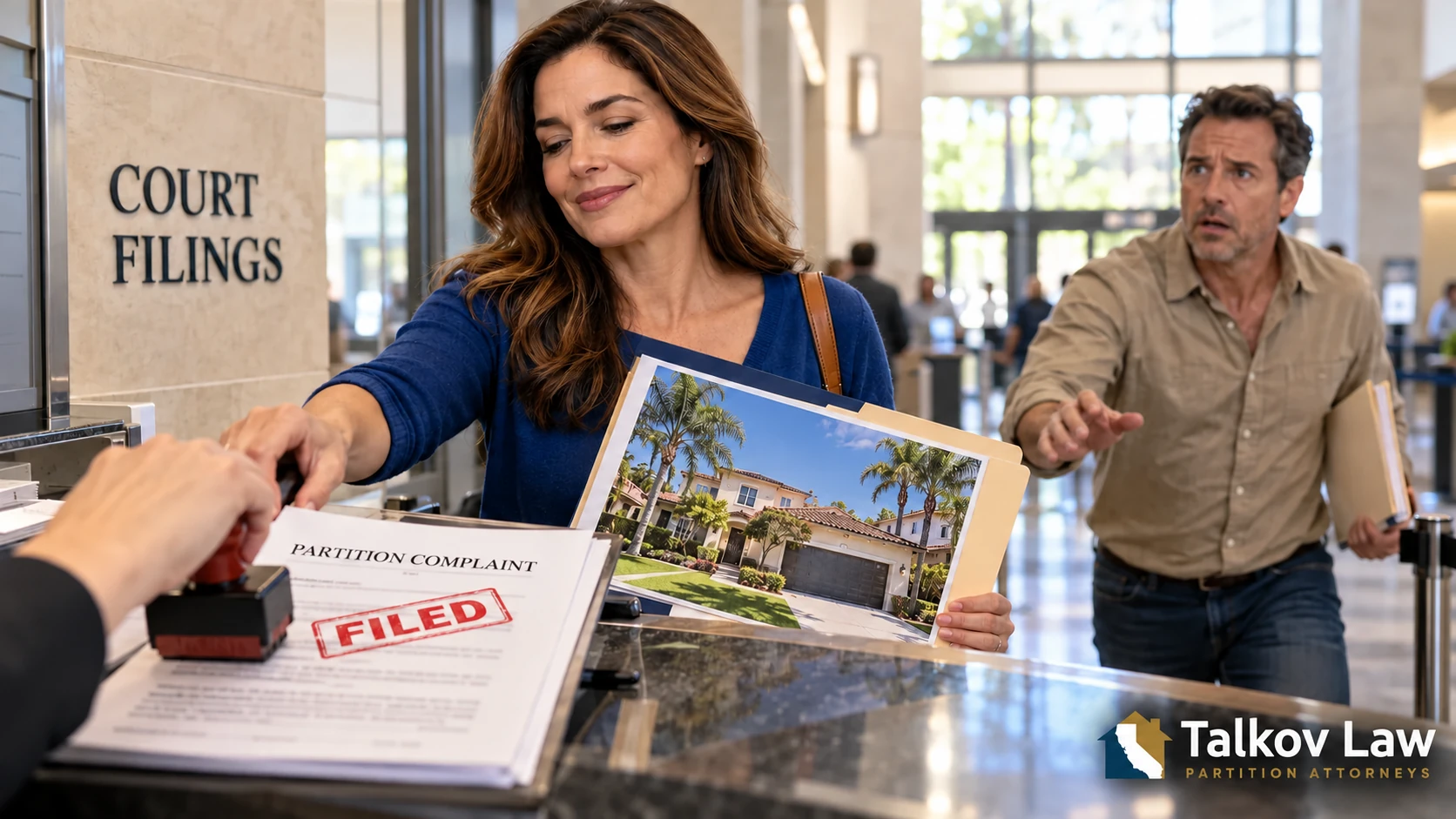
A co-owner files a partition complaint at the courthouse while the other co-owner arrives behind her.

Is It Better to Be a Plaintiff in a Partition?

Usually, yes. Filing first in a partition action gives you control over the timeline, the court, the lis pendens, and how the case is framed, advantages the responding co-owner cannot easily reclaim.

A worried property owner watches sand gather around a house model inside a large hourglass beside unpaid bills.

Hidden Risks of Delaying a Partition Action

Delaying a partition action can turn a simple co-ownership dispute into an expensive legal problem. Falling values, mounting costs, and new complications all work against the co-owner who waits.