Find your situation
- ›My co-owner won’t sell or won’t cooperate
- ›My co-owner lives there, locked me out or rents it out
- ›My co-owner stopped paying the mortgage, taxes or insurance
- ›We inherited the house and can’t agree
- ›I co-own with an ex
- ›I want out, or I want to sell my share
- ›Your rights as a co-owner, by situation
- ›Common questions about co-owning a house
- ›All Co-Owner Situations
- ›Is your co-owner refusing to cooperate?
When you are co-owning a house in California, your rights depend on your situation, and most disputes start the same way: one owner wants out and the other will not cooperate. This page sorts the most common situations into six groups. Each one starts with a short answer on what California law lets you do, then lists our guides for that exact problem.
Whatever the situation, a co-owner has three ways out of co-owned property:
My co-owner won’t sell or won’t cooperate
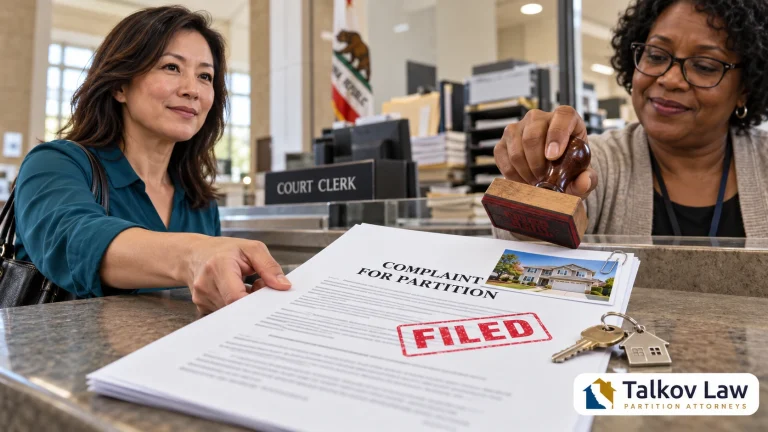
A co-owner cannot veto a sale by refusing to talk, sign or move. Under California Code of Civil Procedure section 872.210 (CCP 872.210), a co-owner of real property can file a partition action, whatever the size of the share. Under CCP 872.710, partition between co-owners is “as of right unless barred by a valid waiver.”
The court orders a sale when the owners agree to one, or when a sale would be more equitable than physically dividing the property (CCP 872.820’s rule on sale and division of proceeds). The same right applies when the co-owner is unreachable, in jail, or struggling with addiction, hoarding or mental illness.
What usually works: a written buyout or sale proposal first. If the co-owner still refuses, a partition action takes the decision out of their hands. See the defenses a co-owner can raise to know what you may face.
Guides for this situation
-
What If Some Co-Owners Want to Sell and Others Won’t Take a Side?
-
Can a Realtor List a Property With Only One Co-Owner’s Signature?
-
My Co-Owner Is a Drug Addict: What Can I Do?
-
What to Do When a Co-Owner Refuses to Sell in California
-
I Helped Fund My Child’s House and I’m on Title. What Are My Options?
-
What Happens When a Co-Owner Refuses to Communicate About Sale or Buyout? (Partition Actions)
-
My Co-Owner Is Mentally Ill: What Can I Do?
-
My Co-Owner Is in Jail or Prison: Can I Still Sell the House?
-
Inheriting a House with an Uncooperative Family Member
-
Want to Sell Before a Recession, but Your Co-Owner Refuses?
-
My Co-Owner Is a Hoarder: What Can I Do?
-
I Want to Sell After a Fire, Flood, or Earthquake, but My Co-Owner Wants to Rebuild
-
Can a Minority Owner Force a Partition if the Majority Owner Refuses?
-
Can I Force the Sale of a Jointly Owned Vacation Property?
-
My Co-Owner Is Impossible to Deal With: How to Get Out in California
-
The Secret to Selling Jointly Owned Property
My co-owner lives there, locked me out or rents it out
Every co-owner has a right to use the whole property, so a co-owner who lives there generally does not owe the others rent just for living there. That changes when there is an agreement to pay or an ouster, meaning a wrongful exclusion of the other co-owner.
You do not have to wait for a lockout. Under Civil Code section 843 (Civil Code 843 on establishing an ouster), a co-owner out of possession can serve a written demand for concurrent possession. If the co-owner in possession does not offer and provide unconditional concurrent possession within 60 days after service is complete, an ouster is established. Rent a co-owner collects from tenants can also be charged against that co-owner in the accounting.
What usually works: a Civil Code 843 demand to start the clock, then a partition action that includes your claim for rental value. A partition, not the eviction process alone, is what gets a co-owner out.
Guides for this situation
-
Does Paying Someone Else’s Property Taxes Give You Ownership in California?
-
Can a Restraining Order Remove a Co-Owner From the House?
-
What to Do When a Co-Owner Refuses to Sell in California
-
Can a Co-Owner Charge Rent to Another Co-Owner in California?
-
Can I Change the Locks of the Property Without Co-Owner Permission?
-
Can a Co-Owner Airbnb or Short-Term Rent a Property Without Permission?
-
What Happens if One Co-Owner Wants to Live in the Property?
-
Can a Person Move Into My Jointly Owned Home Without My Permission?
-
Can You Evict a Co-owner of a House?
-
Can One Owner Lease Out Property that is Jointly Owned?
-
Evicting a Sibling Living Rent-Free in an Inherited House
My co-owner stopped paying the mortgage, taxes or insurance
You can keep the property safe by covering the payments and ask to be repaid later. Under California Code of Civil Procedure section 872.140 (CCP 872.140), the court in a partition action may order “allowance, accounting, contribution, or other compensatory adjustment among the parties according to the principles of equity.”
The adjustments courts most often consider include credits for mortgage payments made for the other owners, property taxes, insurance, and necessary repairs. These credits are decided by the court, so they are not automatic.
What usually works: keeping records of every payment you make, then claiming them as offsets in the partition accounting or as a credit in a buyout price.
Guides for this situation
-
Does Paying Someone Else’s Property Taxes Give You Ownership in California?
-
Can Your Co-Owner Buy You Out if You Are on the Mortgage?
-
I Paid the Mortgage. Can I Get It Back in a Partition?
-
My Co-Owner Is Not Paying the Insurance
-
I Paid the Down Payment and Put My Girlfriend on Title. Does My Ex Get Half?
-
Should I Stay on the Mortgage of a Co-Owned House?
-
Inheriting a House With a Mortgage in California
-
How to Remove Co-owner From a Mortgage
-
My Co-owner is Not Paying the Mortgage
-
My Co-owner is Not Paying the Property Taxes
-
Can One Co-Owner Take Out a Loan on a Jointly Owned Property?
-
5 Ways to Sell a Co-Owned House in California With a Lien
We inherited the house and can’t agree
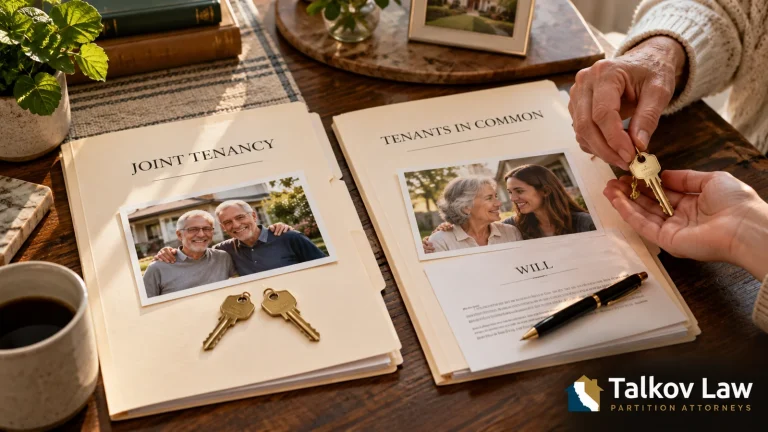
Siblings and other heirs who inherit a house together usually hold title as tenants in common, the default form of co-ownership in California when a deed or will does not declare a joint tenancy. Once title is in the heirs’ names, each heir is a co-owner with the same right to partition under CCP 872.210 and CCP 872.710.
That means one heir who wants to keep the house, or who is living in it rent-free, cannot hold the others there forever. If the estate or trust is still being administered, different rules can apply, and the guides below cover those cases.
What usually works: offering the heir who wants to stay a buyout at fair value with a deadline, and filing for partition if it passes.
Guides for this situation
-
My Sibling Says Mom Promised Them Our Co-Owned House for Life. What Can I Do?
-
Putting a Co-Owned House Into Trust
-
Spouse Won’t Sell an Inherited House in California
-
My Co-Owner Is in Jail or Prison: Can I Still Sell the House?
-
Inheriting a House with an Uncooperative Family Member
-
Do All Heirs Have to Agree to Sell Inherited Property in California?
-
Joint Tenancy with a Parent: What Happens When the Parent Decides to Sever the Joint Tenancy?
-
How to Sell Property After a Co-Owner Dies in California
-
Inheriting a House With a Mortgage in California
-
Do I Have to Sue my Family Member to Obtain my Share of the Inherited Property?
-
Evicting a Sibling Living Rent-Free in an Inherited House
I co-own with an ex
A breakup does not change who is on title. Unmarried partners who bought together stay co-owners until one buys out the other, the property is sold, or a court orders partition. Disputes over who paid the down payment or the mortgage are resolved in the accounting under CCP 872.140.
Married couples are different. Under CCP 872.210, an action between spouses to partition their community property cannot be brought under the partition statutes. The guides below cover co-owning with a former spouse.
What usually works: for unmarried co-owners, a buyout that also takes the departing owner off the loan, or a sale that pays the loan off.
Guides for this situation
-
Can a Restraining Order Remove a Co-Owner From the House?
-
How Do I Get My Ex-Boyfriend Off the Deed in California?
-
I Helped Fund My Child’s House and I’m on Title. What Are My Options?
-
Spouse Won’t Sell an Inherited House in California
-
I Paid the Down Payment and Put My Girlfriend on Title. Does My Ex Get Half?
-
Should I Stay on the Mortgage of a Co-Owned House?
-
What Happens to Engagement Rings in a Partition Action?
I want out, or I want to sell my share
You are not required to stay a co-owner. Your realistic exits are the same three: sell your share to your co-owner in a co-owner buyout, agree to sell the whole property, or file a partition action. This is true whether you own half, a third or a small minority share.
How title is held matters to what you can transfer and what happens if an owner dies, so start with your deed. The guides below cover selling your half, removing a name from title, and what a 33% or 50% owner can do.
What usually works: asking your co-owner for a buyout in writing before filing. The right to partition is what gives that request weight.
Guides for this situation
-
My Sibling Says Mom Promised Them Our Co-Owned House for Life. What Can I Do?
-
How Do I Transfer My Share of a Co-Owned Property in California?
-
Can I Sell My Half of a Jointly Owned Property in California?
-
Can Your Co-Owner Buy You Out if You Are on the Mortgage?
-
Can a Realtor List a Property With Only One Co-Owner’s Signature?
-
Putting a Co-Owned House Into Trust
-
How Do I Get My Ex-Boyfriend Off the Deed in California?
-
What Happens When a Co-Owner Refuses to Communicate About Sale or Buyout? (Partition Actions)
-
Do All Heirs Have to Agree to Sell Inherited Property in California?
-
Joint Tenancy with a Parent: What Happens When the Parent Decides to Sever the Joint Tenancy?
-
My Co-owner Filed a Partition Action Against Me – What Now?
-
How to Remove a Co-Owner From a House Title in California
-
I Own 33% of a Property. What Are My Rights?
-
What Are My Rights as a 50% Owner of California Real Estate?
-
5 Ways to Sell a Co-Owned House in California With a Lien
-
The Secret to Selling Jointly Owned Property
Your rights as a co-owner, by situation
| My situation | What you can do | The rule |
|---|---|---|
| Co-owner refuses to sell | File a partition action asking the court to order a sale | CCP 872.710, CCP 872.820 |
| Co-owner lives there and keeps me out | Serve a written demand for concurrent possession, then claim rental value | Civil Code 843 |
| Co-owner stopped paying | Cover the payments, keep records and ask the court for credit | CCP 872.140 |
| Heirs cannot agree | Offer a buyout, then file for partition as a co-owner | CCP 872.210 |
| Unmarried ex is on title | Buyout, sale or partition, with an accounting of who paid what | CCP 872.140 |
| I own a minority share | You have the same right to partition as any other co-owner | CCP 872.210 |
Common questions about co-owning a house
Can one co-owner force the sale of a house in California?
Yes. A co-owner can file a partition action under CCP 872.210, and partition between co-owners is a matter of right unless it was validly waived (CCP 872.710). The court orders a sale when the owners agree to one or when a sale is more equitable than dividing the property (CCP 872.820).
Can a jointly owned property be sold by one owner?
Not the whole property. One owner acting alone can sell only that owner’s share, and a sale of the whole property needs every owner’s signature. See selling your half of a jointly owned property. When a co-owner refuses to sign, a partition action asks the court to order the sale.
Can my co-owner stop a partition action?
Rarely. The main defense is a valid waiver of the right to partition, usually found in a written agreement between the owners. Disagreeing with the sale, living in the property or refusing to cooperate does not stop the case.
Does a co-owner who lives in the house owe me rent?
Generally not just for living there. A co-owner in possession can owe rental value when there is an agreement to pay or an ouster. Civil Code 843 lets a co-owner out of possession establish an ouster with a written demand for concurrent possession and a 60-day deadline.
Will I be repaid for the mortgage and taxes I covered?
You can ask. In a partition action the court may order an accounting and compensatory adjustment among the co-owners under CCP 872.140, which often includes credits for mortgage payments, property taxes, insurance and necessary repairs. The credits are decided by the court and are not automatic.
All Co-Owner Situations
-
My Sibling Says Mom Promised Them Our Co-Owned House for Life. What Can I Do?
-
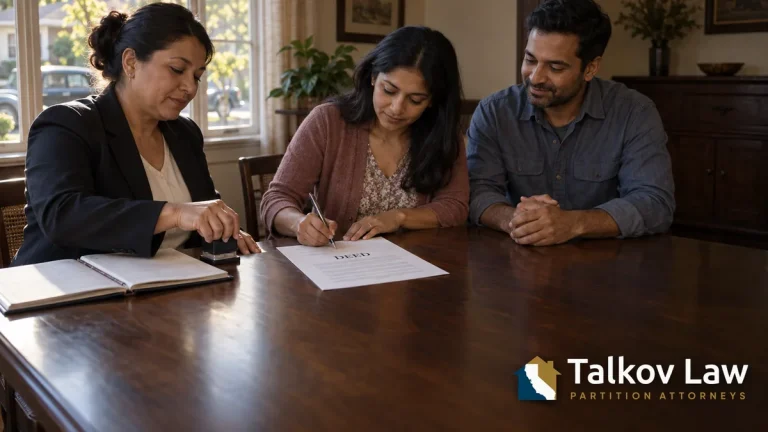
How Do I Transfer My Share of a Co-Owned Property in California?
-
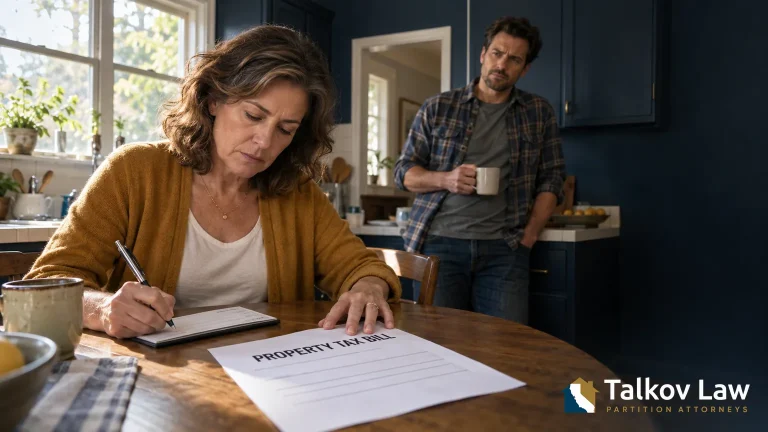
Does Paying Someone Else’s Property Taxes Give You Ownership in California?
-
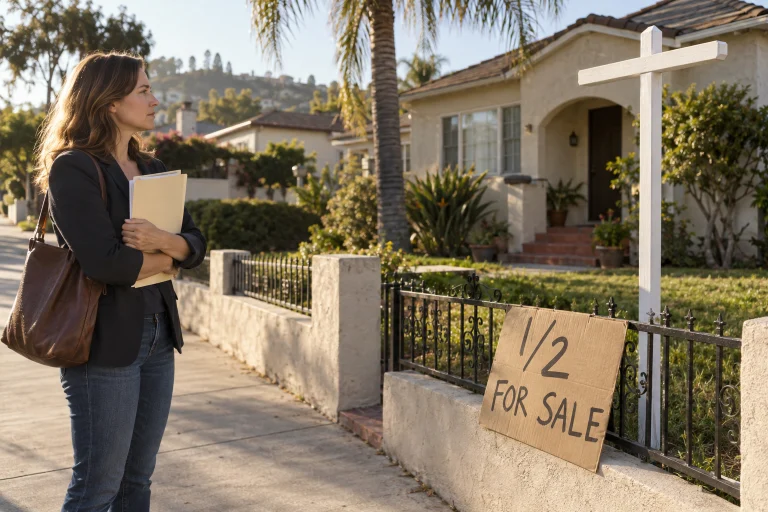
Can I Sell My Half of a Jointly Owned Property in California?
-
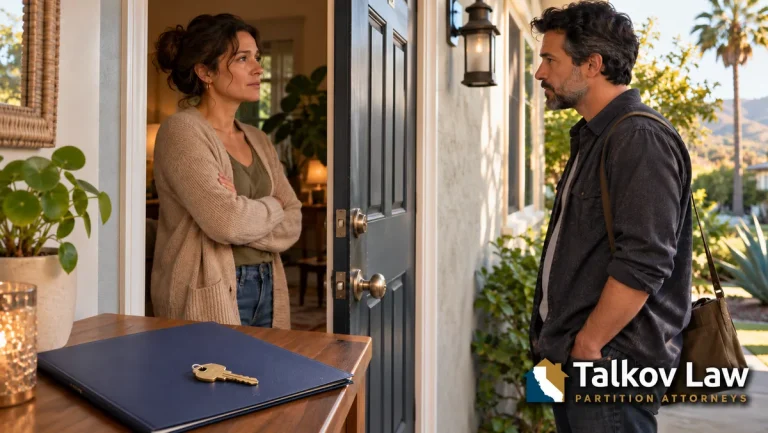
Can a Restraining Order Remove a Co-Owner From the House?
-
Can Your Co-Owner Buy You Out if You Are on the Mortgage?
-

What If Some Co-Owners Want to Sell and Others Won’t Take a Side?
-
Can a Realtor List a Property With Only One Co-Owner’s Signature?
-

I Paid the Mortgage. Can I Get It Back in a Partition?
-
Putting a Co-Owned House Into Trust
-

My Co-Owner Is a Drug Addict: What Can I Do?
-
What to Do When a Co-Owner Refuses to Sell in California
-

How Do I Get My Ex-Boyfriend Off the Deed in California?
-
I Helped Fund My Child’s House and I’m on Title. What Are My Options?
-
Can a Co-Owner Charge Rent to Another Co-Owner in California?
-

Can I Change the Locks of the Property Without Co-Owner Permission?
-
Can a Co-Owner Airbnb or Short-Term Rent a Property Without Permission?
-

My Co-Owner Is Not Paying the Insurance
-
What Happens if One Co-Owner Wants to Live in the Property?
-
What Happens When a Co-Owner Refuses to Communicate About Sale or Buyout? (Partition Actions)
-
Spouse Won’t Sell an Inherited House in California
-
My Co-Owner Is Mentally Ill: What Can I Do?
-
My Co-Owner Is in Jail or Prison: Can I Still Sell the House?
-
Inheriting a House with an Uncooperative Family Member
-
Want to Sell Before a Recession, but Your Co-Owner Refuses?
-
Do All Heirs Have to Agree to Sell Inherited Property in California?
-

My Co-Owner Is a Hoarder: What Can I Do?
-

I Want to Sell After a Fire, Flood, or Earthquake, but My Co-Owner Wants to Rebuild
-
I Paid the Down Payment and Put My Girlfriend on Title. Does My Ex Get Half?
-
Joint Tenancy with a Parent: What Happens When the Parent Decides to Sever the Joint Tenancy?
-

How to Sell Property After a Co-Owner Dies in California
-

Should I Stay on the Mortgage of a Co-Owned House?
-
Inheriting a House With a Mortgage in California
-
How to Remove Co-owner From a Mortgage
-
My Co-owner is Not Paying the Mortgage
-
Do I Have to Sue my Family Member to Obtain my Share of the Inherited Property?
-
My Co-owner is Not Paying the Property Taxes
-
What Happens to Engagement Rings in a Partition Action?
-
My Co-owner Filed a Partition Action Against Me – What Now?
-
Who is Responsible for Injuries on Jointly Owned Property?
-
How to Remove a Co-Owner From a House Title in California
-
Can One Co-Owner Take Out a Loan on a Jointly Owned Property?
-
Can a Minority Owner Force a Partition if the Majority Owner Refuses?
-

Can I Force the Sale of a Jointly Owned Vacation Property?
-

Can a Person Move Into My Jointly Owned Home Without My Permission?
-
I Own 33% of a Property. What Are My Rights?
-
Can You Evict a Co-owner of a House?
-
Can One Owner Lease Out Property that is Jointly Owned?
-
What Are My Rights as a 50% Owner of California Real Estate?
-

My Co-Owner Is Impossible to Deal With: How to Get Out in California
-
Evicting a Sibling Living Rent-Free in an Inherited House
-
5 Ways to Sell a Co-Owned House in California With a Lien
-
The Secret to Selling Jointly Owned Property
No situations match that search. Try a different word, or ask a partition attorney.
Is your co-owner refusing to cooperate?
Whatever the situation, a co-owner cannot keep you trapped in the property. Talk to a California partition attorney in a free 30-minute consultation. No fees until you win.
Essential guides
 GuideBuying Out a Co-Owner in California
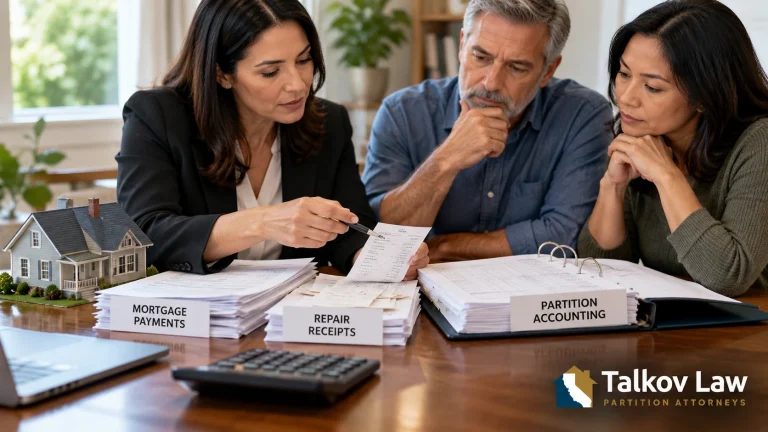 Offsets BasicsPartition Offsets and Accounting in California
 Filing for PartitionPartition Action in California: What It Is and How It Works
 GuidePartition Action Defenses in California
- Uncooperative Co-OwnersWhat to Do When a Co-Owner Refuses to Sell in California
- Right to PartitionCan a Minority Owner Force a Partition if the Majority Owner Refuses?
- Mortgage PaymentsMy Co-owner is Not Paying the Mortgage
- Property Taxes & InsuranceMy Co-owner is Not Paying the Property Taxes
- Inheritance, Trusts & ProbateDo All Heirs Have to Agree to Sell Inherited Property in California?
Latest situations
- Gudelj v. Gudelj: Paying More for the House Does Not Undo a Joint Tenancy Deed
- Dunn v. Dunn: A Partition Sale Can’t Be Thrown Out on Vague Claims the Price Was Too Low

- Rich v. Smith: Mortgages and a Slow Market Are No Reason to Delay Partition

- Can You Settle or Dismiss a Partition Action After Filing?
- My Sibling Says Mom Promised Them Our Co-Owned House for Life. What Can I Do?
- Trial Preference in a California Partition: Trial Within 120 Days Under CCP 36
- Undivided Interest in California: What It Means for Co-Owners
- How Do I Transfer My Share of a Co-Owned Property in California?
- Does Paying Someone Else’s Property Taxes Give You Ownership in California?
- Can I Sell My Half of a Jointly Owned Property in California?