Find your situation
- ›My co-owner won’t sell or won’t cooperate
- ›My co-owner lives there, locked me out or rents it out
- ›My co-owner stopped paying the mortgage, taxes or insurance
- ›We inherited the house and can’t agree
- ›I co-own with an ex
- ›I want out, or I want to sell my share
- ›Quick answers by situation
- ›Common questions from co-owners
- ›All Co-Owner Situations
- ›Is your co-owner refusing to cooperate?
Most co-ownership disputes start the same way: one owner wants out and the other will not cooperate. This page sorts the most common situations into six groups. Each one starts with a short answer on what California law lets you do, then lists our guides for that exact problem.
Whatever the situation, a co-owner has three ways out of co-owned property:
My co-owner won’t sell or won’t cooperate
A co-owner cannot veto a sale by refusing to talk, sign or move. Under California Code of Civil Procedure section 872.210 (CCP 872.210), a co-owner of real property can file a partition action, whatever the size of the share. Under CCP 872.710, partition between co-owners is “as of right unless barred by a valid waiver.”
The court orders a sale when the owners agree to one, or when a sale would be more equitable than physically dividing the property (CCP 872.820’s rule on sale and division of proceeds). The same right applies when the co-owner is unreachable, in jail, or struggling with addiction, hoarding or mental illness.
What usually works: a written buyout or sale proposal first. If the co-owner still refuses, a partition action takes the decision out of their hands. See the defenses a co-owner can raise to know what you may face.
Guides for this situation
-
What If Some Co-Owners Want to Sell and Others Won’t Take a Side?
-
Can a Realtor List a Property With Only One Co-Owner’s Signature?
-
My Co-Owner Is a Drug Addict: What Can I Do?
-
What to Do When a Co-Owner Refuses to Sell in California
-
I Helped Fund My Child’s House and I’m on Title. What Are My Options?
-
What Happens When a Co-Owner Refuses to Communicate About Sale or Buyout? (Partition Actions)
-
My Co-Owner Is Mentally Ill: What Can I Do?
-
My Co-Owner Is in Jail or Prison: Can I Still Sell the House?
-
Inheriting a House with an Uncooperative Family Member
-
Want to Sell Before a Recession, but Your Co-Owner Refuses?
-
My Co-Owner Is a Hoarder: What Can I Do?
-
I Want to Sell After a Fire, Flood, or Earthquake, but My Co-Owner Wants to Rebuild
-
Can a Minority Owner Force a Partition if the Majority Owner Refuses?
-
Can I Force the Sale of a Jointly Owned Vacation Property?
-
My Co-Owner Is Impossible to Deal With: How to Get Out in California
-
The Secret to Selling Jointly Owned Property
My co-owner lives there, locked me out or rents it out
Every co-owner has a right to use the whole property, so a co-owner who lives there generally does not owe the others rent just for living there. That changes when there is an agreement to pay or an ouster, meaning a wrongful exclusion of the other co-owner.
You do not have to wait for a lockout. Under Civil Code section 843 (Civil Code 843 on establishing an ouster), a co-owner out of possession can serve a written demand for concurrent possession. If the co-owner in possession does not offer and provide unconditional concurrent possession within 60 days after service is complete, an ouster is established. Rent a co-owner collects from tenants can also be charged against that co-owner in the accounting.
What usually works: a Civil Code 843 demand to start the clock, then a partition action that includes your claim for rental value. A partition, not the eviction process alone, is what gets a co-owner out.
Guides for this situation
-
Does Paying Someone Else’s Property Taxes Give You Ownership in California?
-
Can a Restraining Order Remove a Co-Owner From the House?
-
What to Do When a Co-Owner Refuses to Sell in California
-
Can a Co-Owner Charge Rent to Another Co-Owner in California?
-
Can I Change the Locks of the Property Without Co-Owner Permission?
-
Can a Co-Owner Airbnb or Short-Term Rent a Property Without Permission?
-
What Happens if One Co-Owner Wants to Live in the Property?
-
Can a Person Move Into My Jointly Owned Home Without My Permission?
-
Can You Evict a Co-owner of a House?
-
Can One Owner Lease Out Property that is Jointly Owned?
-
Evicting a Sibling Living Rent-Free in an Inherited House
My co-owner stopped paying the mortgage, taxes or insurance
You can keep the property safe by covering the payments and ask to be repaid later. Under California Code of Civil Procedure section 872.140 (CCP 872.140), the court in a partition action may order “allowance, accounting, contribution, or other compensatory adjustment among the parties according to the principles of equity.”
The adjustments courts most often consider include credits for mortgage payments made for the other owners, property taxes, insurance, and necessary repairs. These credits are decided by the court, so they are not automatic.
What usually works: keeping records of every payment you make, then claiming them as offsets in the partition accounting or as a credit in a buyout price.
Guides for this situation
-
Does Paying Someone Else’s Property Taxes Give You Ownership in California?
-
Can Your Co-Owner Buy You Out if You Are on the Mortgage?
-
I Paid the Mortgage. Can I Get It Back in a Partition?
-
My Co-Owner Is Not Paying the Insurance
-
I Paid the Down Payment and Put My Girlfriend on Title. Does My Ex Get Half?
-
Should I Stay on the Mortgage of a Co-Owned House?
-
Inheriting a House With a Mortgage in California
-
How to Remove Co-owner From a Mortgage
-
My Co-owner is Not Paying the Mortgage
-
My Co-owner is Not Paying the Property Taxes
-
Can One Co-Owner Take Out a Loan on a Jointly Owned Property?
-
5 Ways to Sell a Co-Owned House in California With a Lien
We inherited the house and can’t agree
Siblings and other heirs who inherit a house together usually hold title as tenants in common, the default form of co-ownership in California when a deed or will does not declare a joint tenancy. Once title is in the heirs’ names, each heir is a co-owner with the same right to partition under CCP 872.210 and CCP 872.710.
That means one heir who wants to keep the house, or who is living in it rent-free, cannot hold the others there forever. If the estate or trust is still being administered, different rules can apply, and the guides below cover those cases.
What usually works: offering the heir who wants to stay a buyout at fair value with a deadline, and filing for partition if it passes.
Guides for this situation
-
My Sibling Says Mom Promised Them Our Co-Owned House for Life. What Can I Do?
-
Putting a Co-Owned House Into Trust
-
Spouse Won’t Sell an Inherited House in California
-
My Co-Owner Is in Jail or Prison: Can I Still Sell the House?
-
Inheriting a House with an Uncooperative Family Member
-
Do All Heirs Have to Agree to Sell Inherited Property in California?
-
Joint Tenancy with a Parent: What Happens When the Parent Decides to Sever the Joint Tenancy?
-
How to Sell Property After a Co-Owner Dies in California
-
Inheriting a House With a Mortgage in California
-
Do I Have to Sue my Family Member to Obtain my Share of the Inherited Property?
-
Evicting a Sibling Living Rent-Free in an Inherited House
I co-own with an ex
A breakup does not change who is on title. Unmarried partners who bought together stay co-owners until one buys out the other, the property is sold, or a court orders partition. Disputes over who paid the down payment or the mortgage are resolved in the accounting under CCP 872.140.
Married couples are different. Under CCP 872.210, an action between spouses to partition their community property cannot be brought under the partition statutes. The guides below cover co-owning with a former spouse.
What usually works: for unmarried co-owners, a buyout that also takes the departing owner off the loan, or a sale that pays the loan off.
Guides for this situation
-
Can a Restraining Order Remove a Co-Owner From the House?
-
How Do I Get My Ex-Boyfriend Off the Deed in California?
-
I Helped Fund My Child’s House and I’m on Title. What Are My Options?
-
Spouse Won’t Sell an Inherited House in California
-
I Paid the Down Payment and Put My Girlfriend on Title. Does My Ex Get Half?
-
Should I Stay on the Mortgage of a Co-Owned House?
-
What Happens to Engagement Rings in a Partition Action?
I want out, or I want to sell my share
You are not required to stay a co-owner. Your realistic exits are the same three: sell your share to your co-owner in a co-owner buyout, agree to sell the whole property, or file a partition action. This is true whether you own half, a third or a small minority share.
How title is held matters to what you can transfer and what happens if an owner dies, so start with your deed. The guides below cover selling your half, removing a name from title, and what a 33% or 50% owner can do.
What usually works: asking your co-owner for a buyout in writing before filing. The right to partition is what gives that request weight.
Guides for this situation
-
My Sibling Says Mom Promised Them Our Co-Owned House for Life. What Can I Do?
-
How Do I Transfer My Share of a Co-Owned Property in California?
-
Can I Sell My Half of a Jointly Owned Property in California?
-
Can Your Co-Owner Buy You Out if You Are on the Mortgage?
-
Can a Realtor List a Property With Only One Co-Owner’s Signature?
-
Putting a Co-Owned House Into Trust
-
How Do I Get My Ex-Boyfriend Off the Deed in California?
-
What Happens When a Co-Owner Refuses to Communicate About Sale or Buyout? (Partition Actions)
-
Do All Heirs Have to Agree to Sell Inherited Property in California?
-
Joint Tenancy with a Parent: What Happens When the Parent Decides to Sever the Joint Tenancy?
-
My Co-owner Filed a Partition Action Against Me – What Now?
-
How to Remove a Co-Owner From a House Title in California
-
I Own 33% of a Property. What Are My Rights?
-
What Are My Rights as a 50% Owner of California Real Estate?
-
5 Ways to Sell a Co-Owned House in California With a Lien
-
The Secret to Selling Jointly Owned Property
Quick answers by situation
| My situation | What you can do | The rule |
|---|---|---|
| Co-owner refuses to sell | File a partition action asking the court to order a sale | CCP 872.710, CCP 872.820 |
| Co-owner lives there and keeps me out | Serve a written demand for concurrent possession, then claim rental value | Civil Code 843 |
| Co-owner stopped paying | Cover the payments, keep records and ask the court for credit | CCP 872.140 |
| Heirs cannot agree | Offer a buyout, then file for partition as a co-owner | CCP 872.210 |
| Unmarried ex is on title | Buyout, sale or partition, with an accounting of who paid what | CCP 872.140 |
| I own a minority share | You have the same right to partition as any other co-owner | CCP 872.210 |
Common questions from co-owners
Can one co-owner force the sale of a house in California?
Yes. A co-owner can file a partition action under CCP 872.210, and partition between co-owners is a matter of right unless it was validly waived (CCP 872.710). The court orders a sale when the owners agree to one or when a sale is more equitable than dividing the property (CCP 872.820).
Can my co-owner stop a partition action?
Rarely. The main defense is a valid waiver of the right to partition, usually found in a written agreement between the owners. Disagreeing with the sale, living in the property or refusing to cooperate does not stop the case.
Does a co-owner who lives in the house owe me rent?
Generally not just for living there. A co-owner in possession can owe rental value when there is an agreement to pay or an ouster. Civil Code 843 lets a co-owner out of possession establish an ouster with a written demand for concurrent possession and a 60-day deadline.
Will I be repaid for the mortgage and taxes I covered?
You can ask. In a partition action the court may order an accounting and compensatory adjustment among the co-owners under CCP 872.140, which often includes credits for mortgage payments, property taxes, insurance and necessary repairs. The credits are decided by the court and are not automatic.
All Co-Owner Situations
-
My Sibling Says Mom Promised Them Our Co-Owned House for Life. What Can I Do?
What your parents put in writing controls. If the trust or deed leaves the house to all of you, a sibling’s claim that Mom promised them the house…
-
How Do I Transfer My Share of a Co-Owned Property in California?
You transfer your share of a co-owned California property by signing, notarizing and recording a deed, without your co-owner’s consent, but the deed’s wording, taxes and any loan…
-
Does Paying Someone Else’s Property Taxes Give You Ownership in California?
In California, paying someone else’s property taxes does not give you ownership. Taxes matter only as one element of adverse possession, and a co-owner who pays more than…
-
Can I Sell My Half of a Jointly Owned Property in California?
Yes, a California co-owner can sell their half of a jointly owned property without the other owner’s consent, but almost no one buys half a house at full…
-

Can a Restraining Order Remove a Co-Owner From the House?
A domestic violence move-out order can remove a co-owner from a California house regardless of title, but it changes only who lives there, not who owns it or…
-
Can Your Co-Owner Buy You Out if You Are on the Mortgage?
Often not, and the mortgage is usually the reason. When the co-owner who wants out is on the loan, a co-owner buyout generally means paying off that loan…
-

What If Some Co-Owners Want to Sell and Others Won’t Take a Side?
When five siblings inherit a house and three want to sell, the other two cannot stop the sale, whether one lives in the house or one is simply…
-

Can a Realtor List a Property With Only One Co-Owner’s Signature?
Yes. An agent can list a California property with only one co-owner’s signature, but that listing binds only the co-owner who signed it and can’t sell the whole…
-

I Paid the Mortgage. Can I Get It Back in a Partition?
Usually, yes. In a California partition action, a co-owner who paid more than their share of the mortgage is generally entitled to be repaid the excess out of…
-
Putting a Co-Owned House Into Trust
You can put your share of a co-owned house into a trust, but doing so usually severs a joint tenancy. That often signals the co-owners’ shared plan has…
-

My Co-Owner Is a Drug Addict: What Can I Do?
You can’t make an addicted co-owner pay, move out, or sell, but a California court can order the house sold and credit you for what you paid.
-
What to Do When a Co-Owner Refuses to Sell in California
A co-owner who refuses to sell, even one living in the house, cannot block a sale in California. A partition action lets any co-owner force the sale and…
-

How Do I Get My Ex-Boyfriend Off the Deed in California?
Not without his agreement. If your ex-boyfriend refuses to sign over his share, a California partition action can end the co-ownership through a court-supervised sale or buyout.
-
I Helped Fund My Child’s House and I’m on Title. What Are My Options?
If you helped with the down payment and are on title, you are a co-owner under California law. A partition action can recover your money and end your…
-
Can a Co-Owner Charge Rent to Another Co-Owner in California?
Not automatically. Living in a jointly owned property does not by itself create a rent obligation in California. Whether rent is owed is often decided in a partition…
-

Can I Change the Locks of the Property Without Co-Owner Permission?
No. Locking out a co-owner is likely an ouster under California law and can expose you to damages. A partition action is the proper way to end the…
-
Can a Co-Owner Airbnb or Short-Term Rent a Property Without Permission?
Technically, yes. But in a California partition action, the court can make the renting co-owner account for the income, pay for exclusive use, and end the co-ownership.
-

My Co-Owner Is Not Paying the Insurance
When a co-owner won’t pay their share of homeowner’s insurance, a partition action lets you recover what you overpaid and end the co-ownership.
-
What Happens if One Co-Owner Wants to Live in the Property?
In California, each co-owner generally has an equal right to occupy the whole property, but living there has consequences. A partition action resolves disputes over possession, expenses, and…
-
What Happens When a Co-Owner Refuses to Communicate About Sale or Buyout? (Partition Actions)
When a co-owner ignores you about selling jointly owned property, California law lets you force a resolution through a partition action.
-

Spouse Won’t Sell an Inherited House in California
When one spouse inherits a share of a family house, the couple may disagree about selling it. California’s separate property rules decide who controls that share, and a…
-
My Co-Owner Is Mentally Ill: What Can I Do?
You can’t make a mentally ill co-owner pay, move out, or agree to sell, but a California court can order the house sold and credit you for what…
-
My Co-Owner Is in Jail or Prison: Can I Still Sell the House?
Yes. A co-owner in jail or prison is still on title, but a California court can order the house sold without their signature and credit you for what…
-
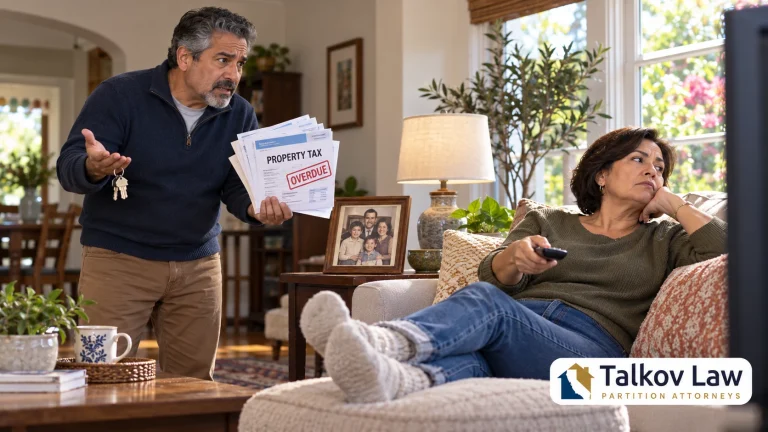
Inheriting a House with an Uncooperative Family Member
When a relative moves into an inherited house, refuses to sell, and stops paying expenses, the other heirs are left covering the costs. A California partition action can…
-
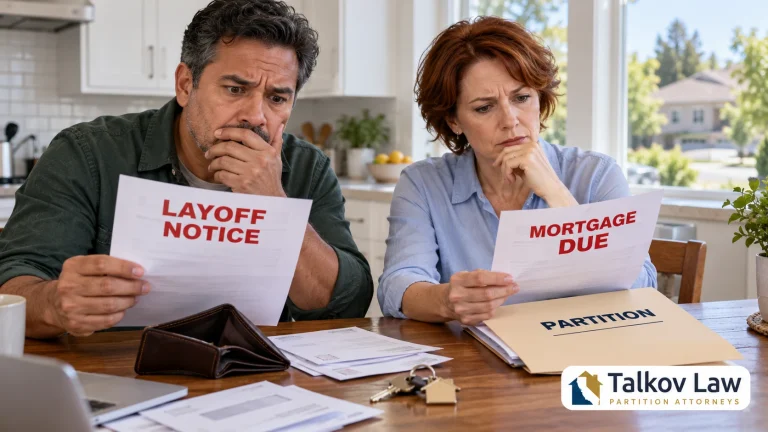
Want to Sell Before a Recession, but Your Co-Owner Refuses?
A recession does not affect your right to partition, but it can affect when you should file. Home values, interest rates, and mortgage obligations all shape the best…
-
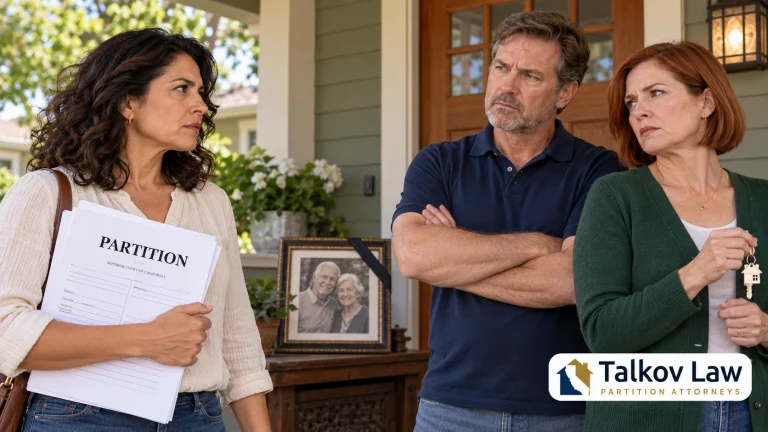
Do All Heirs Have to Agree to Sell Inherited Property in California?
No. In California, the heirs do not all have to agree to sell inherited property: any one heir who co-owns the house can force a sale through a…
-

My Co-Owner Is a Hoarder: What Can I Do?
You can’t make a hoarding co-owner clean up, move out, or sell, but a California court can order the house cleared and sold and charge the cleanup to…
-

I Want to Sell After a Fire, Flood, or Earthquake, but My Co-Owner Wants to Rebuild
In California, a co-owner who wants to sell property damaged by fire, flood, or earthquake generally cannot be forced to fund a rebuild. A partition action lets you…
-
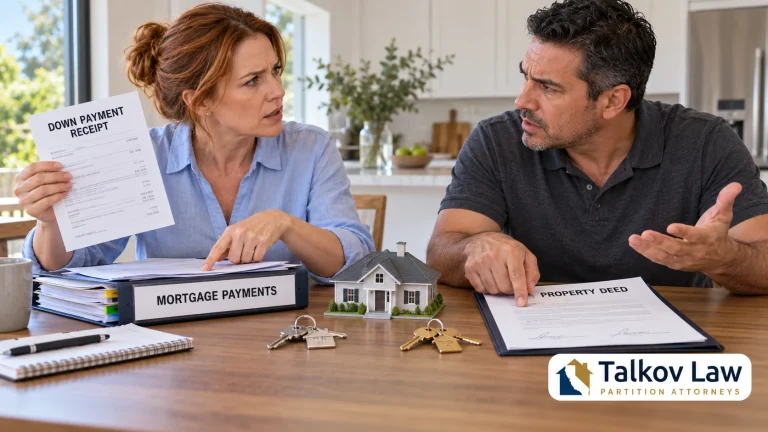
I Paid the Down Payment and Put My Girlfriend on Title. Does My Ex Get Half?
No. Putting your girlfriend on the deed does not mean she gets half of what you paid. In a California partition action, the co-owner who paid more is…
-
Joint Tenancy with a Parent: What Happens When the Parent Decides to Sever the Joint Tenancy?
Parents and children often hold title as joint tenants so the property passes automatically to the survivor. But a joint tenancy can be severed, which can upend what…
-

How to Sell Property After a Co-Owner Dies in California
When a co-owner dies, you don’t have to wait for probate to sell. A joint tenant takes the whole property by survivorship; a tenant in common can force…
-

Should I Stay on the Mortgage of a Co-Owned House?
When you sell your share of a co-owned house, should you stay on the mortgage or get your name removed? Here are the risks and factors to weigh.
-
Inheriting a House With a Mortgage in California
When you inherit a house with a mortgage in California, the lender generally cannot make you refinance just because the owner died, even when no borrower is still…
-
How to Remove Co-owner From a Mortgage
Being stuck on a mortgage with an uncooperative co-owner is hard. Here are the ways to separate yourself from the loan, including a refinance, a buyout, or a…
-
My Co-owner is Not Paying the Mortgage
A co-owner who stops paying the mortgage is often an early sign of a larger dispute. A partition action can force a resolution and credit you for the…
-
Do I Have to Sue my Family Member to Obtain my Share of the Inherited Property?
Heirs often disagree about inherited property, such as when one moves in and the others want to sell. If talks fail, a partition action may be the only…
-
My Co-owner is Not Paying the Property Taxes
One co-owner often ends up paying all the property taxes, especially when another co-owner lives there. A partition action can credit the paying co-owner and end the dispute.
-
What Happens to Engagement Rings in a Partition Action?
Many partition actions follow a broken engagement, and the engagement ring often becomes part of the fight. Here is how California law treats the ring.
-
My Co-owner Filed a Partition Action Against Me – What Now?
Being sued for partition by a co-owner is stressful. Here is what the lawsuit means, why co-owners file them, and the steps you can take to protect your…
-
Who is Responsible for Injuries on Jointly Owned Property?
Co-owners are generally liable for injuries on jointly owned property, whether or not they caused the problem. Here is how to protect yourself.
-
How to Remove a Co-Owner From a House Title in California
A co-owner can be removed from a California house title by a deed with their agreement, or without it through a partition action. Quiet title is available only…
-
Can One Co-Owner Take Out a Loan on a Jointly Owned Property?
Disputes flare when one co-owner borrows against the property without the others’ consent. Here is how such a loan affects your equity and how to protect it.
-
Can a Minority Owner Force a Partition if the Majority Owner Refuses?
Yes. Any co-owner in California can force a partition, even with a 1% share and even when the majority owner refuses to sell. No majority vote is needed,…
-

Can I Force the Sale of a Jointly Owned Vacation Property?
Yes. If your family or another co-owner won’t sell the cabin or beach house, or will only offer a low buyout, a California partition action can end the…
-

Can a Person Move Into My Jointly Owned Home Without My Permission?
Co-owners often disagree about whether one can let a roommate, partner, or tenant move in. Here are each co-owner’s rights to the property.
-

I Own 33% of a Property. What Are My Rights?
Many minority co-owners assume they have few rights. In fact, a 33% owner of California property has many, including the right to force a sale through a partition…
-
Can You Evict a Co-owner of a House?
Yes, you can evict a co-owner through a partition. You cannot use the eviction (unlawful detainer) process without a partition.
-
Can One Owner Lease Out Property that is Jointly Owned?
Yes. Each co-owner may lease the co-owned property, even without the others’ consent, but doing so creates complications for rent, possession, and evicting tenants.
-

What Are My Rights as a 50% Owner of California Real Estate?
A 50% owner of California real estate has the right to force a sale through a partition action, occupy the entire property, and collect 50% of the net…
-

My Co-Owner Is Impossible to Deal With: How to Get Out in California
You don’t need a difficult co-owner’s agreement to get out. Any California co-owner can force a sale or buyout through a partition action, whatever the relationship.
-
Evicting a Sibling Living Rent-Free in an Inherited House
Yes, you can get a sibling living rent-free out of an inherited California house: a partition action forces the sale, and the referee can remove anyone living there.
-
5 Ways to Sell a Co-Owned House in California With a Lien
A lien against one co-owner does not have to stop the sale of a co-owned house. Here are five ways to sell a California house when one owner…
-

The Secret to Selling Jointly Owned Property
California co-owners can sell by agreement, complete a buyout, or use a partition action when an owner refuses. Learn the steps, costs, and timing.
No situations match that search. Try a different word, or ask a partition attorney.
Is your co-owner refusing to cooperate?
Whatever the situation, a co-owner cannot keep you trapped in the property. Talk to a California partition attorney in a free 30-minute consultation. No fees until you win.

Scott Talkov
Founder & Managing Partner, Talkov Law
Scott Talkov founded Talkov Law and leads its partition practice, representing co-owners across California in partition actions.
Read Scott’s bio →Essential guides
 GuideBuying Out a Co-Owner in CaliforniaHow to buy out a co-owner in California, or get bought out, step by step: setting the price, adding up credits...
 Offsets BasicsPartition Offsets and Accounting in CaliforniaWhen co-owners can’t agree, a California court can force a sale.
 Filing for PartitionPartition Action in California: What It Is and How It WorksA partition action is a lawsuit in which a California court ends the co-ownership of real property by dividing...
 GuidePartition Action Defenses in CaliforniaSued by a co-owner?
- Uncooperative Co-OwnersWhat to Do When a Co-Owner Refuses to Sell in CaliforniaA co-owner who refuses to sell, even one living in the house, cannot block a sale in California.
- Right to PartitionCan a Minority Owner Force a Partition if the Majority Owner Refuses?Yes.
- Mortgage PaymentsMy Co-owner is Not Paying the MortgageA co-owner who stops paying the mortgage is often an early sign of a larger dispute.
- Property Taxes & InsuranceMy Co-owner is Not Paying the Property TaxesOne co-owner often ends up paying all the property taxes, especially when another co-owner lives there.
- Inheritance, Trusts & ProbateDo All Heirs Have to Agree to Sell Inherited Property in California?No.
Latest situations
- Gudelj v. Gudelj: Paying More for the House Does Not Undo a Joint Tenancy Deed
- Dunn v. Dunn: A Partition Sale Can’t Be Thrown Out on Vague Claims the Price Was Too Low

- Rich v. Smith: Mortgages and a Slow Market Are No Reason to Delay Partition

- Can You Settle or Dismiss a Partition Action After Filing?
- My Sibling Says Mom Promised Them Our Co-Owned House for Life. What Can I Do?
- Trial Preference in a California Partition: Trial Within 120 Days Under CCP 36
- Undivided Interest in California: What It Means for Co-Owners

- How Do I Transfer My Share of a Co-Owned Property in California?
- Does Paying Someone Else’s Property Taxes Give You Ownership in California?
- Can I Sell My Half of a Jointly Owned Property in California?