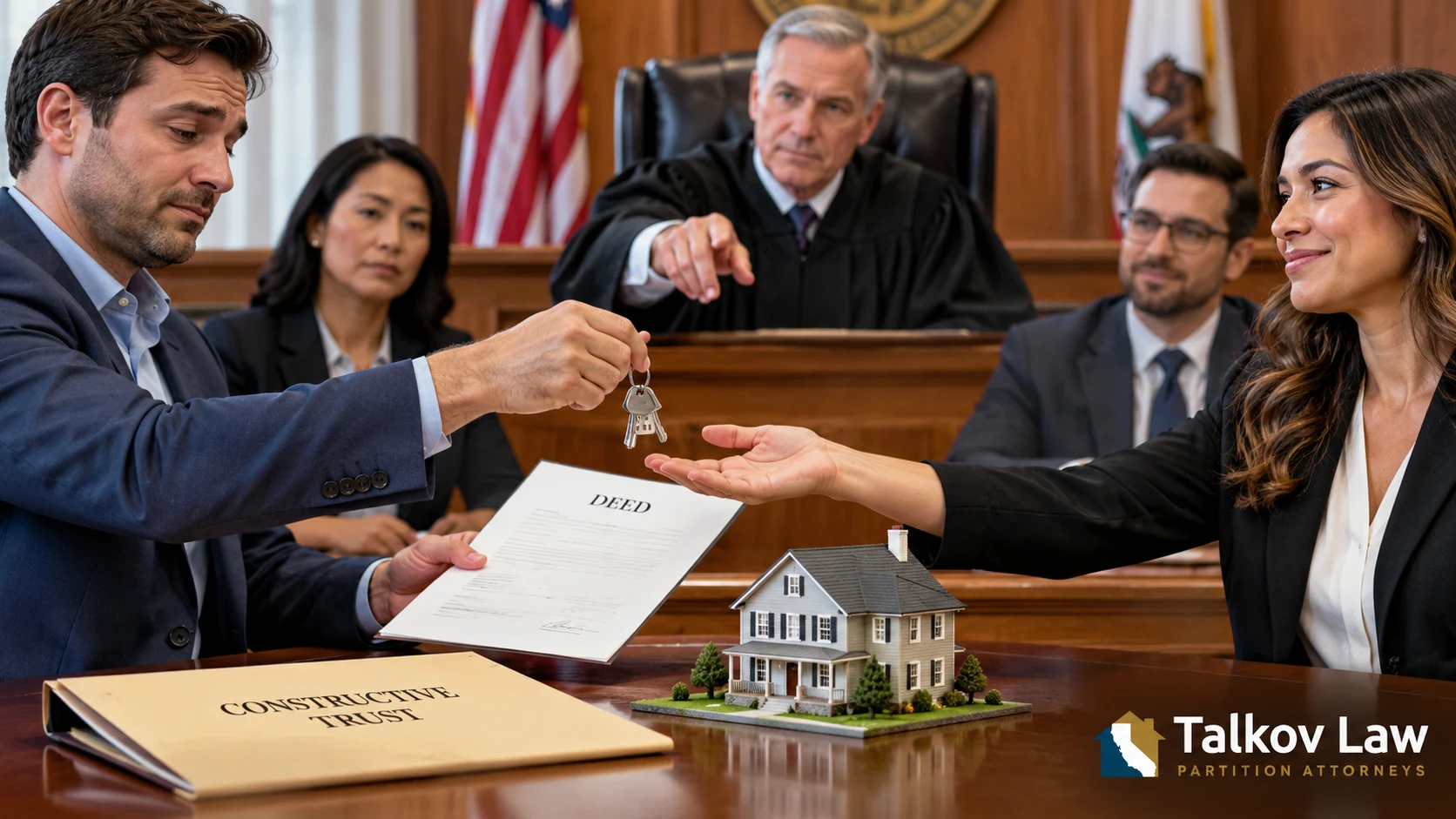
What Is a Constructive Trust in California?
A constructive trust is a court order that makes someone who took property by fraud or another wrongful act hand it back. California co-owners use it to prove their share before a partition sale.
A constructive trust is a court order that makes someone who took property by fraud or another wrongful act hand it back. California co-owners use it to prove their share before a partition sale.

Title means ownership; a deed transfers an interest in property. Learn how California deeds, title insurance, liens, and mortgages affect co-owners.
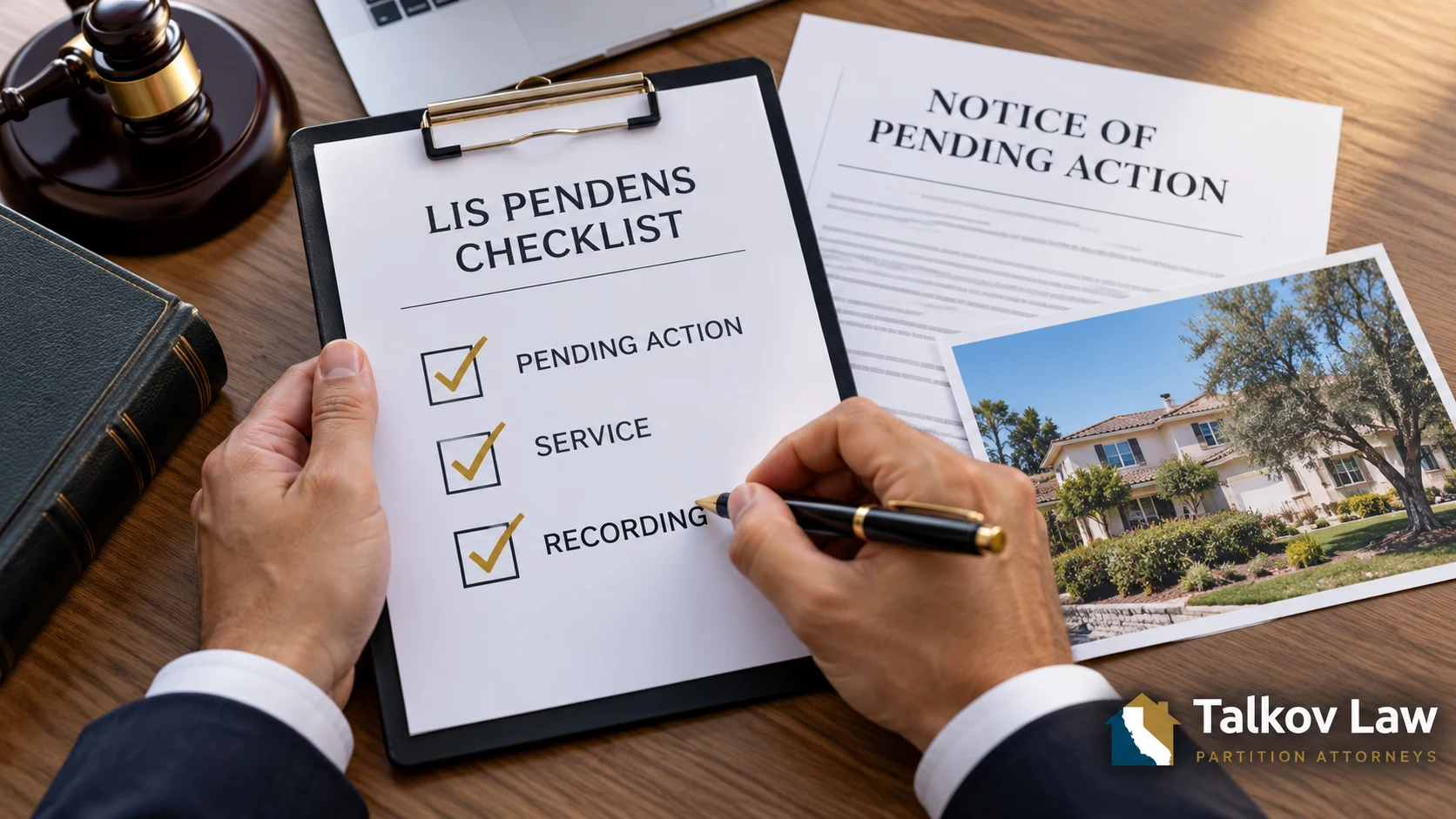
A lis pendens, now called a notice of pendency of action, is recorded to give notice of a lawsuit affecting real property. Here is a checklist of the requirements.
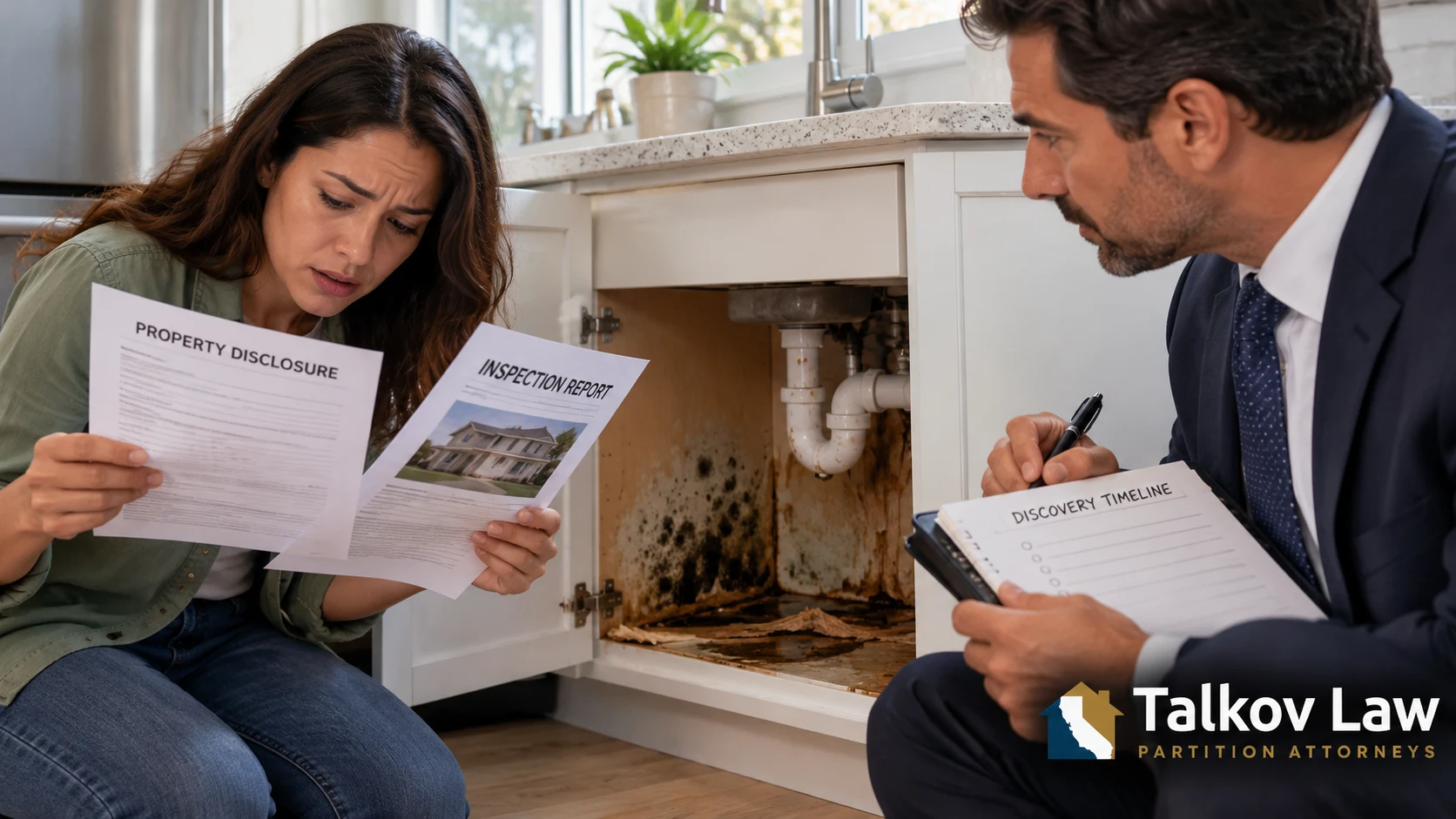
In California, a fraud claim must be filed within three years after the fraud is discovered, and a claim on a written contract within four years after the breach. When a co-owner answers a partition action by claiming they were defrauded in the purchase years ago, those deadlines often end the claim.
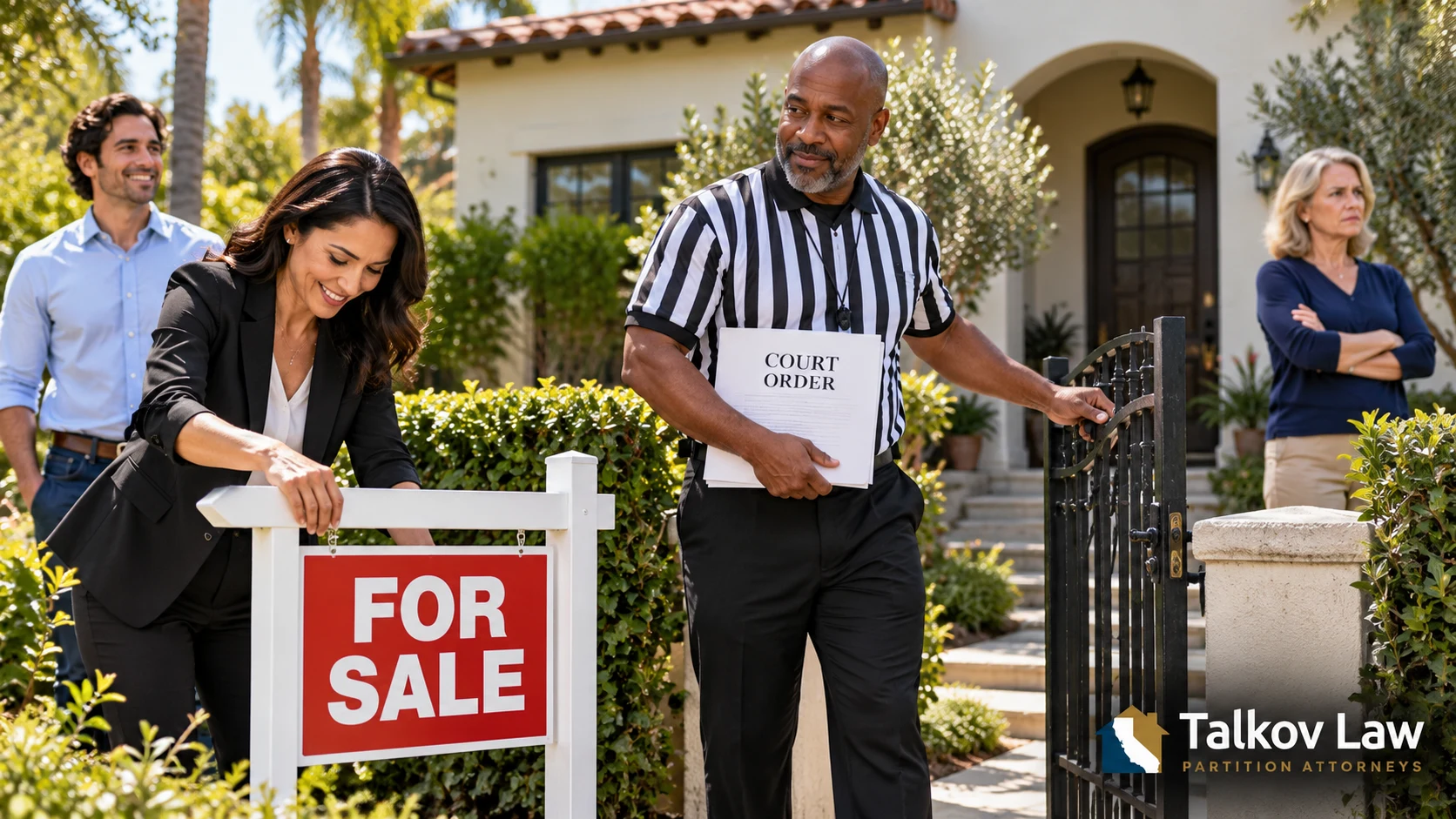
Co-owners of real estate in California have an absolute legal right to partition the property, thereby causing the property to be sold and the proceeds distributed.

California’s statute of frauds requires a signed writing to transfer an interest in real estate, so an oral promise to sell a co-owner’s half, or a claim that someone on the deed is only a co-signer, generally cannot change who owns the property.
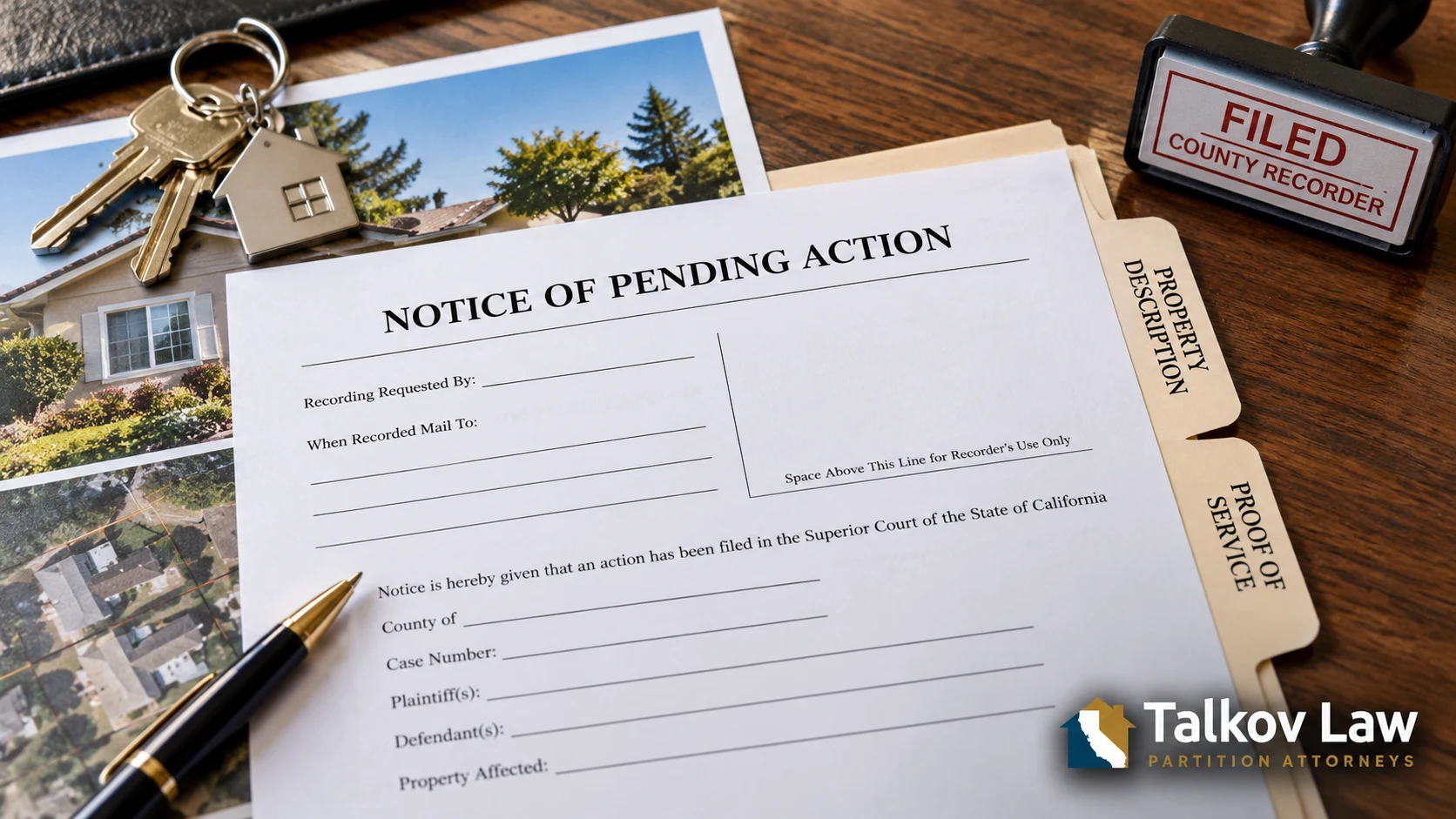
Recording a lis pendens has stringent requirement for formatting and service to ensure effectiveness. Free form lis pendens template.
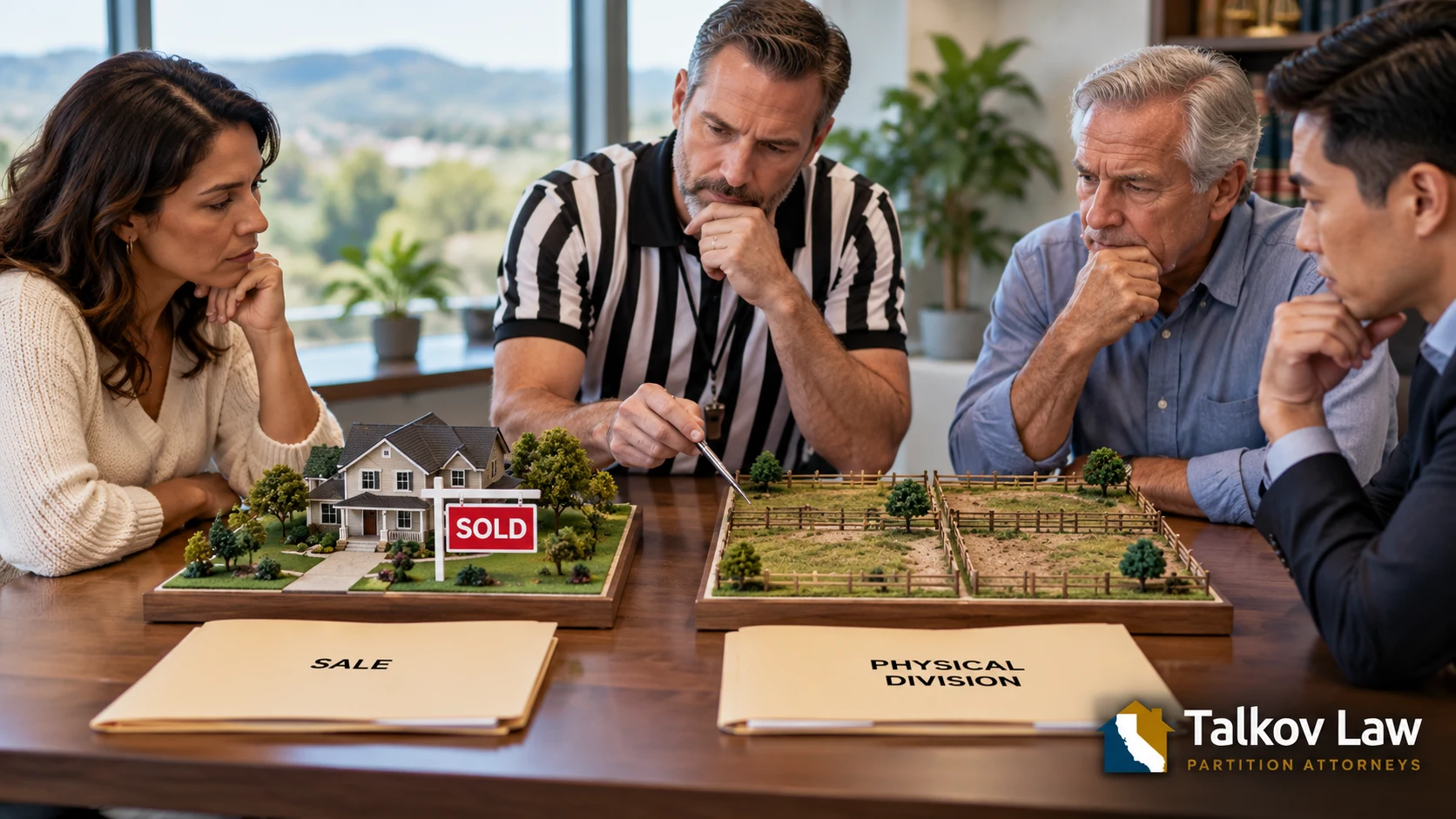
Co-owners often disagree about whether to sell the property or divide it. Here is how California courts decide between partition by sale and partition in kind.
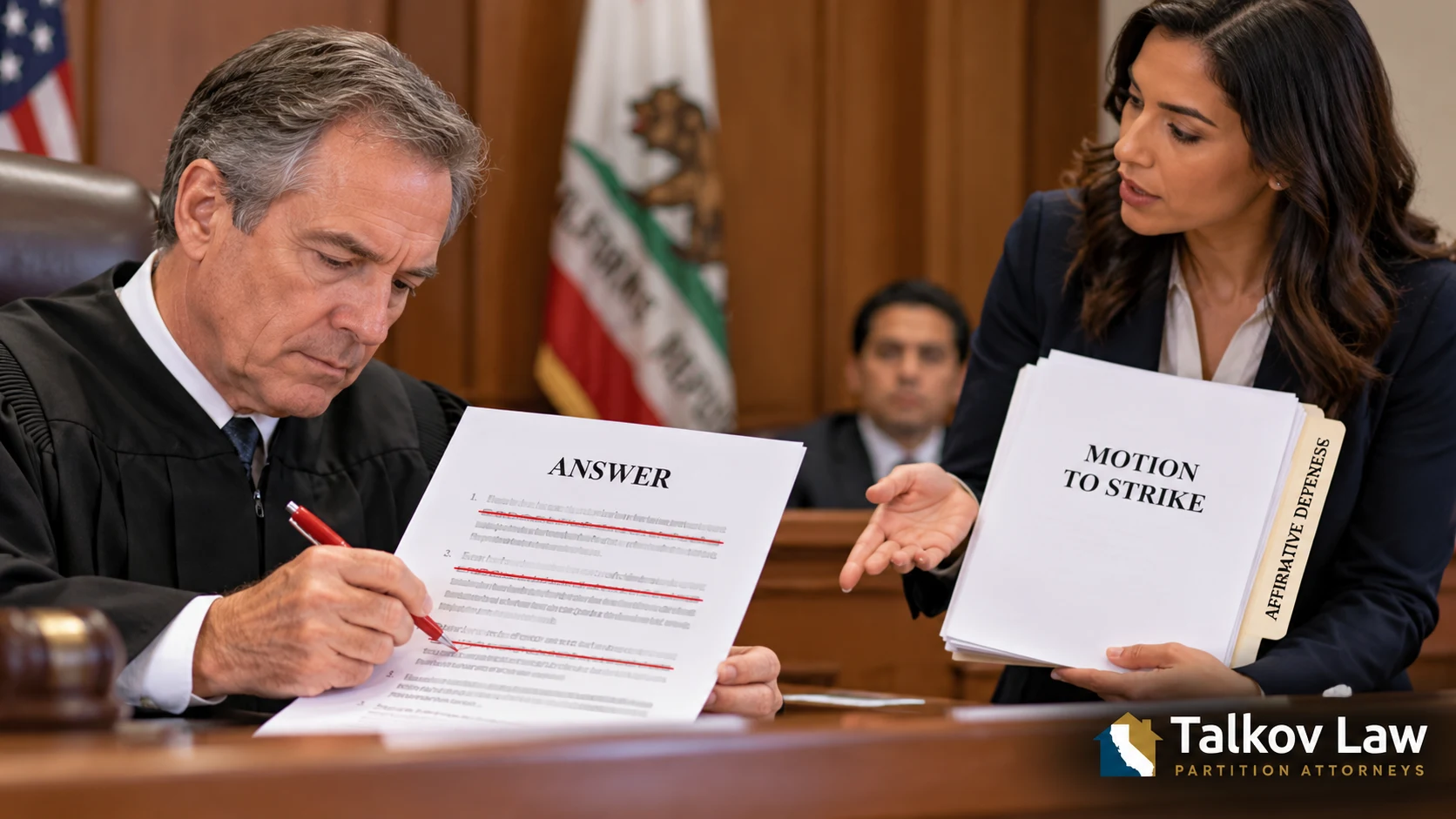
Many defendants answer with boilerplate affirmative defenses and no supporting facts. In California, those defenses can be challenged by a motion to strike or demurrer.
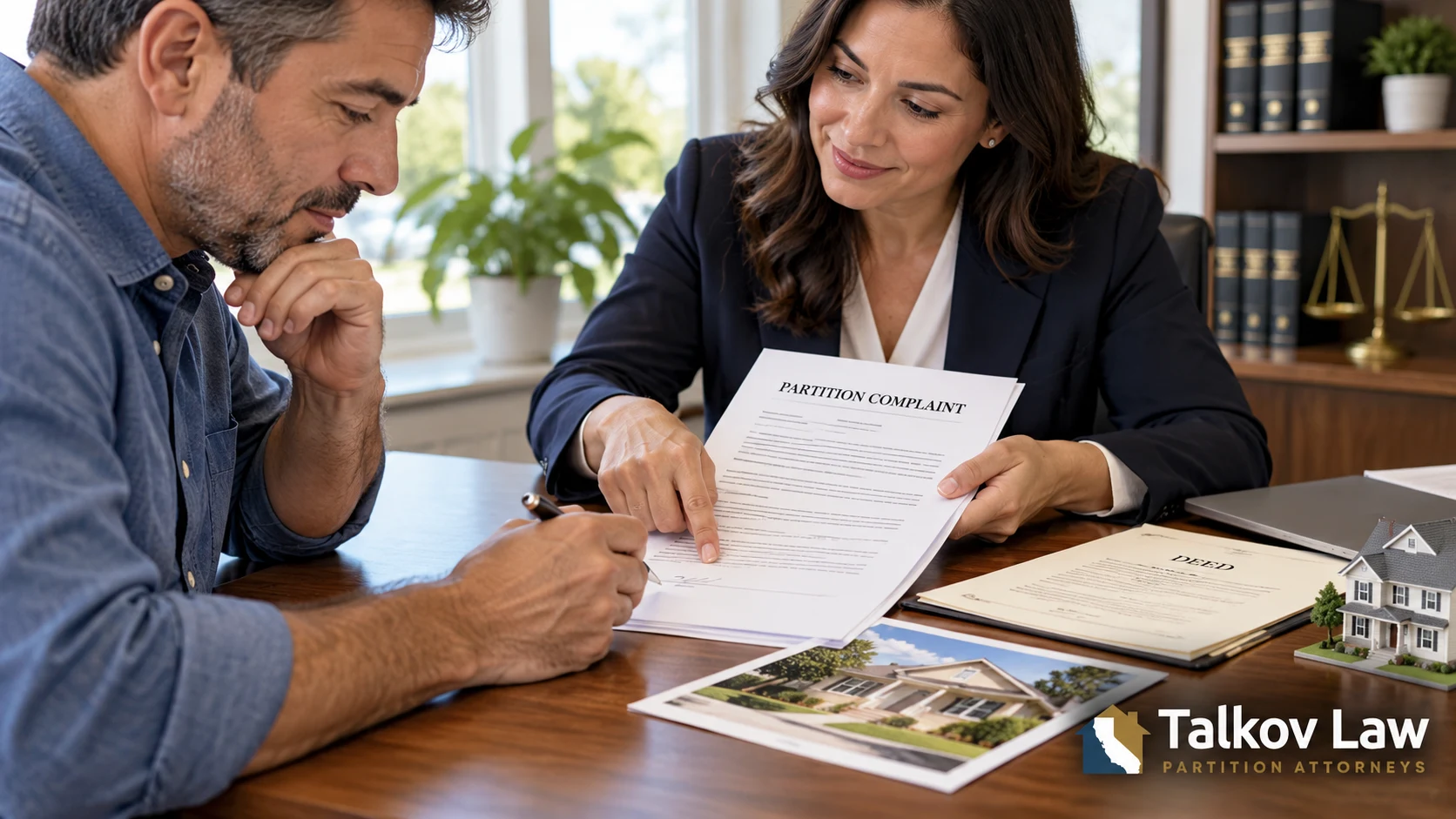
A partition action complaint describes the co-owned property, names every owner and lienholder, and asks the court to sell or divide it; here is a free California form with the CCP 872.230 checklist.

Cash for keys may help obtain vacant possession for a California partition sale. Learn how tenant and co-owner agreements differ, with sample terms.

A lis pendens is a notice, recorded with the county recorder, that a pending lawsuit affects title to, or possession of, real property. Here is what it does and the five grounds for removing it.

As partition attorneys in California, we are often asked about the cost of a partition action. Since attorneys are the largest cost, the real question is how much are the attorney’s fees for a partition lawsuit in California?
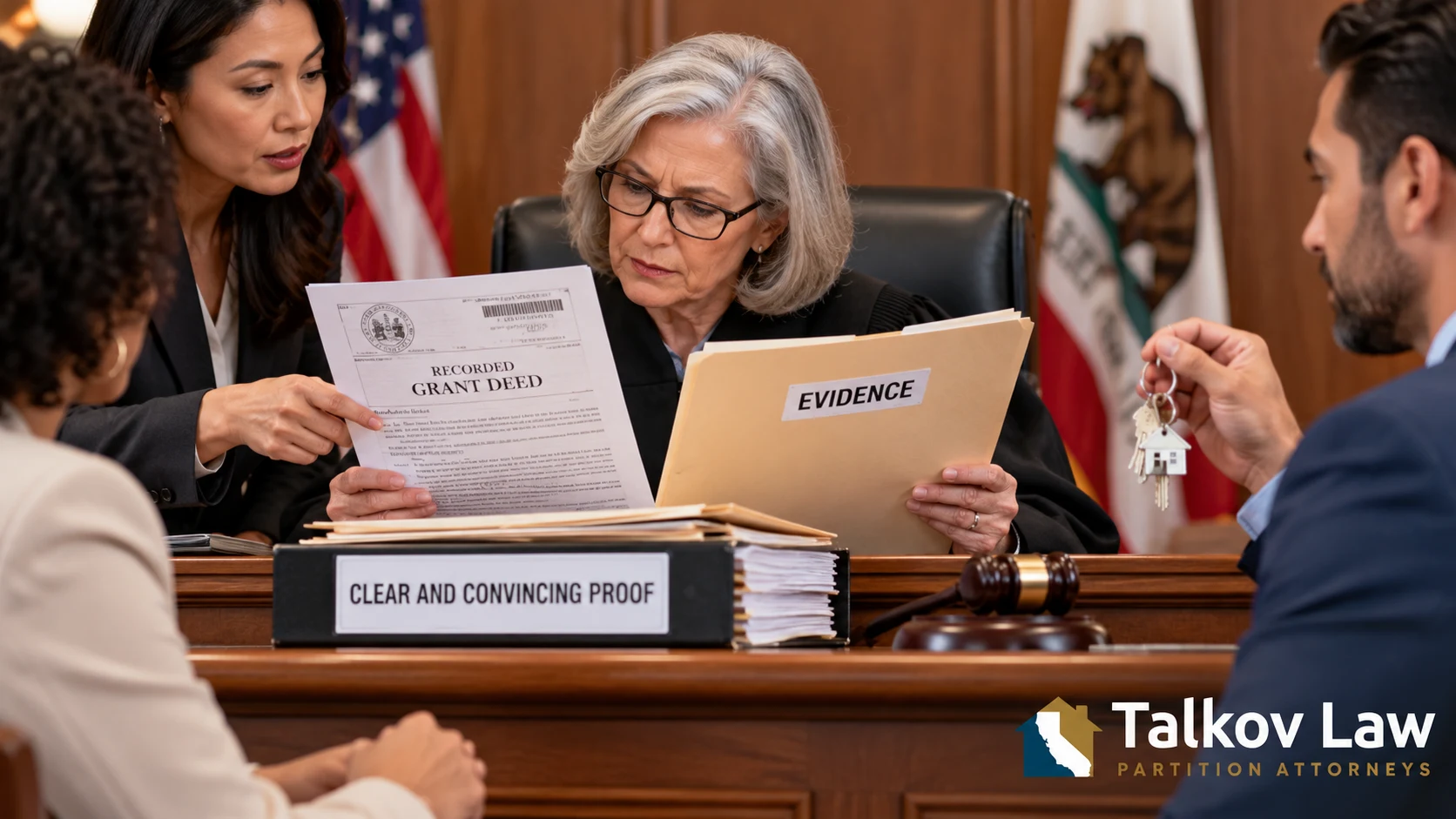
Under Evidence Code section 662, the person on the deed is presumed to own the property unless clear and convincing evidence shows the owners agreed otherwise.
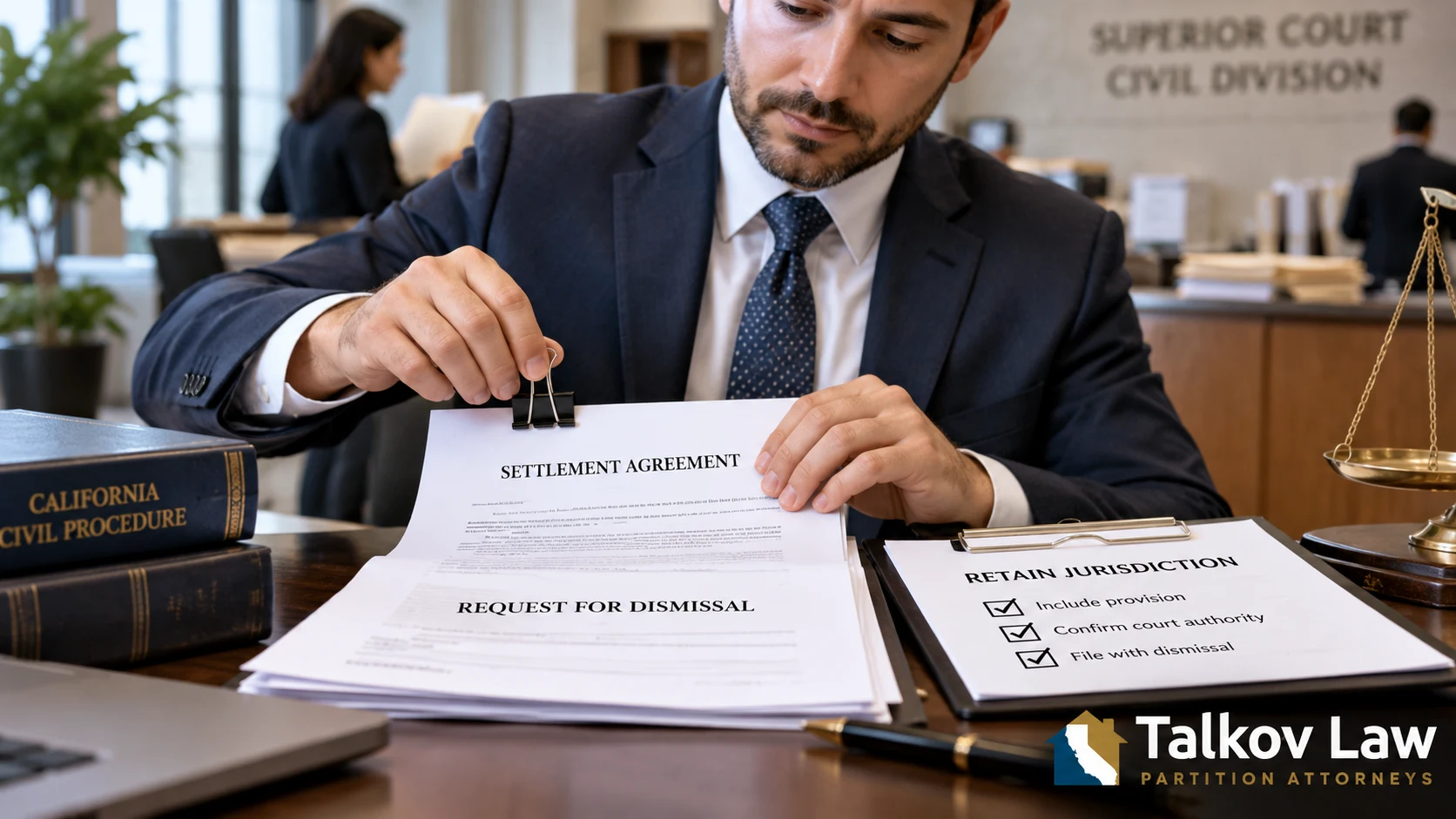
A partition plaintiff’s attorney should not dismiss the case until the settlement closes. Under Code of Civil Procedure section 664.6, a court that dismissed the case without retaining jurisdiction cannot enforce the deal.

Code of Civil Procedure section 430.41 requires a meet and confer before any demurrer in California. In a partition action, a complaint that pleads every element of Code of Civil Procedure section 872.230 leaves a defendant little to demur to.

Representing co-owners statewide. Find your nearest Talkov Law office.
Practical guides from attorneys who focus exclusively on California partition actions.
The information on this site, including the Talkov Law Blog, is intended for general information purposes only. By using this site, you agree that any information contained in the site does not constitute legal, financial or any other form of professional advice. Information on this site may be changed without notice and is not guaranteed to be complete, accurate, correct or up-to-date.







