
My Co-Owner Is Impossible to Deal With: How to Get Out in California
You don’t need a difficult co-owner’s agreement to get out. Any California co-owner can force a sale or buyout through a partition action, whatever the relationship.
You don’t need a difficult co-owner’s agreement to get out. Any California co-owner can force a sale or buyout through a partition action, whatever the relationship.
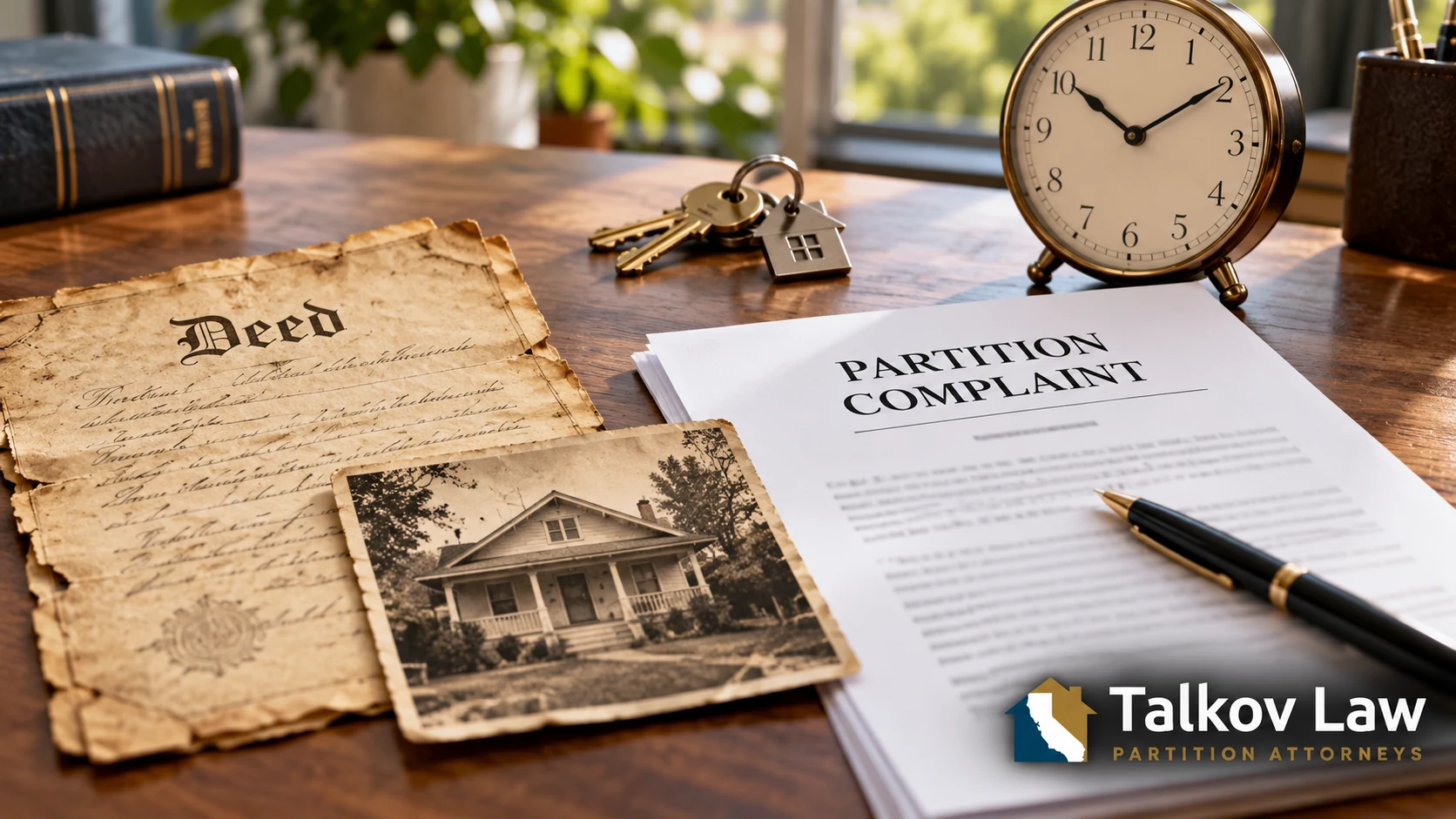
No. Under Adams v. Hopkins, the statute of limitations never bars a partition action between co-owners, unless one owner has already lost title to the other through adverse possession.
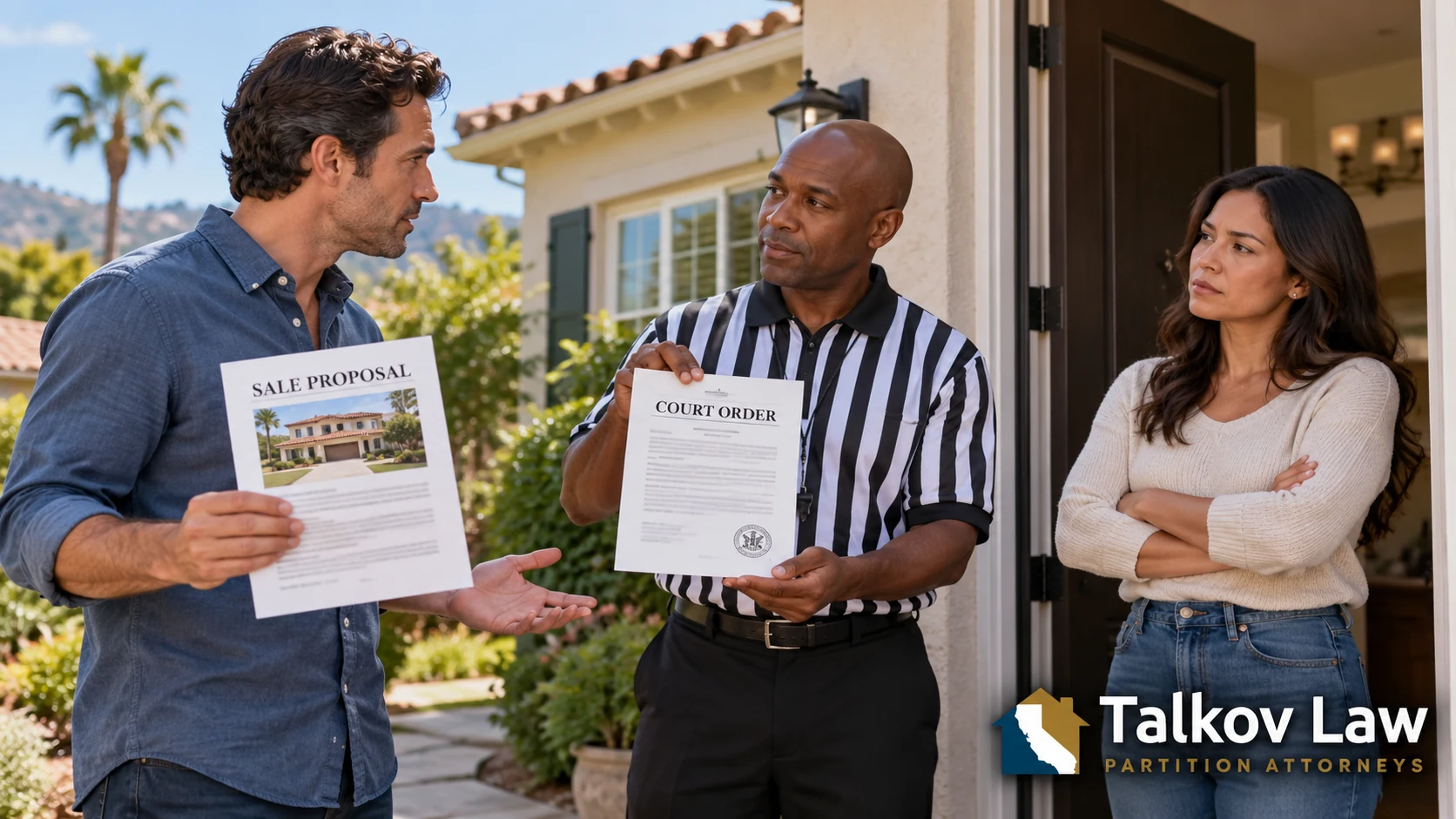
A partition action is a court-ordered division of property. Here are common examples of co-ownership disputes that lead to a partition in California.

California’s anti-heart balm statute bars lawsuits over a broken promise to marry. It often comes up in partition actions between former romantic partners.
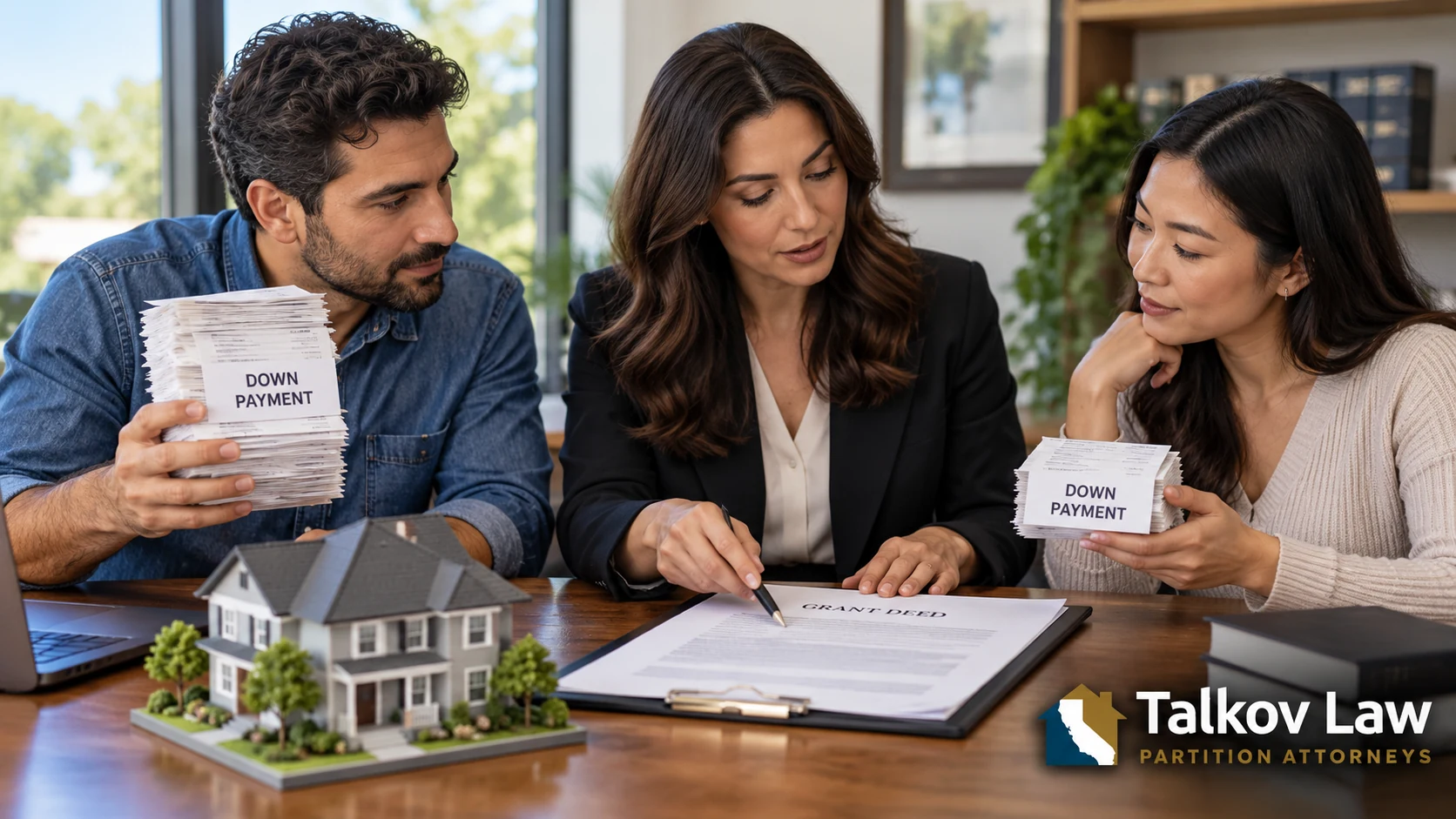
One of the most common co-ownership disputes is what happens when one co-owner paid more than their share of the down payment. Here is how a partition action handles it.

A partition by sale is a court-ordered sale of jointly owned property, with the proceeds divided among the co-owners. It is the most common outcome of a California partition.

A partition in kind physically divides the property so each co-owner receives a portion of the land. Here are the rules that decide when it is allowed.
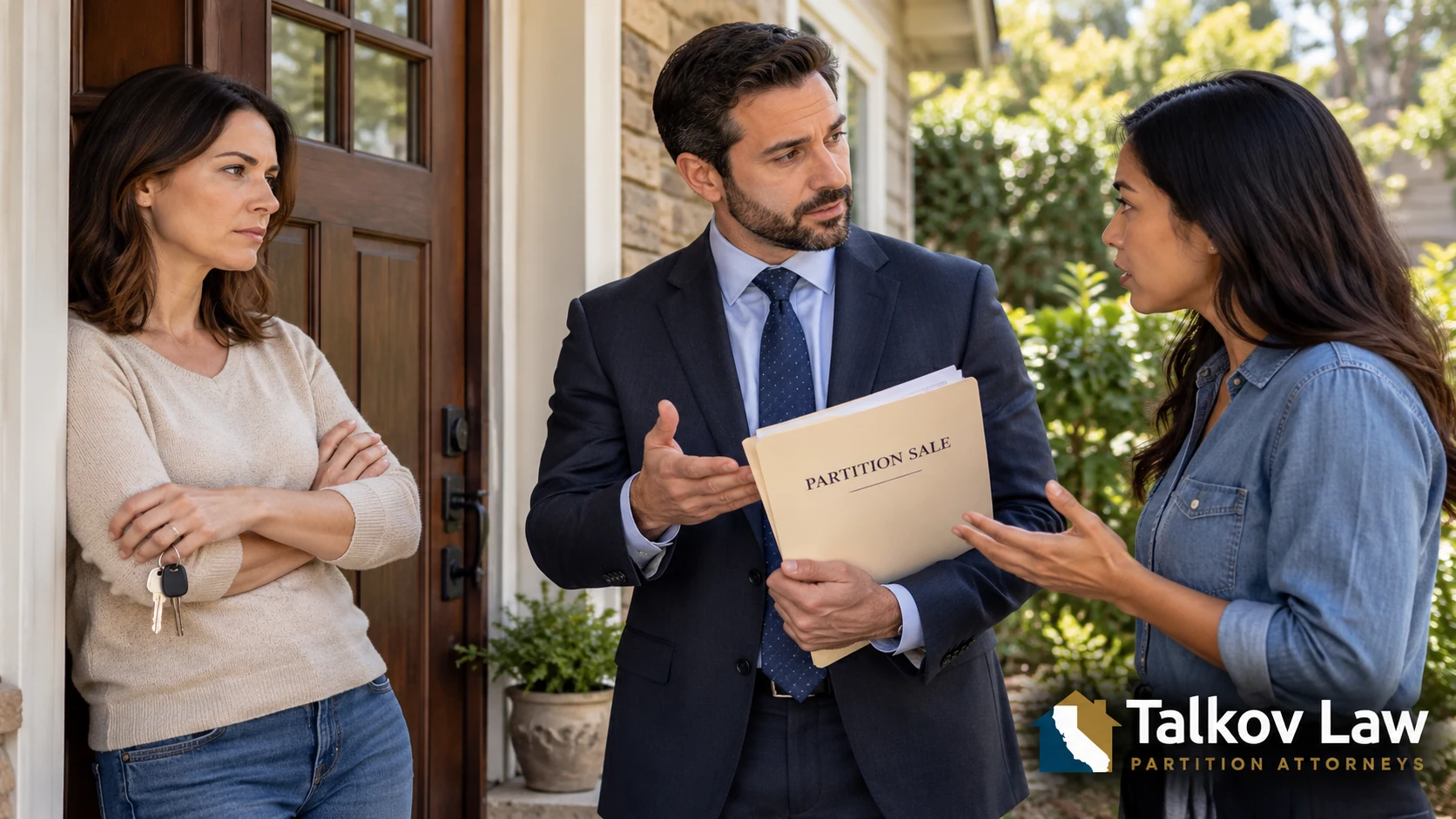
Yes, you can get a sibling living rent-free out of an inherited California house: a partition action forces the sale, and the referee can remove anyone living there.
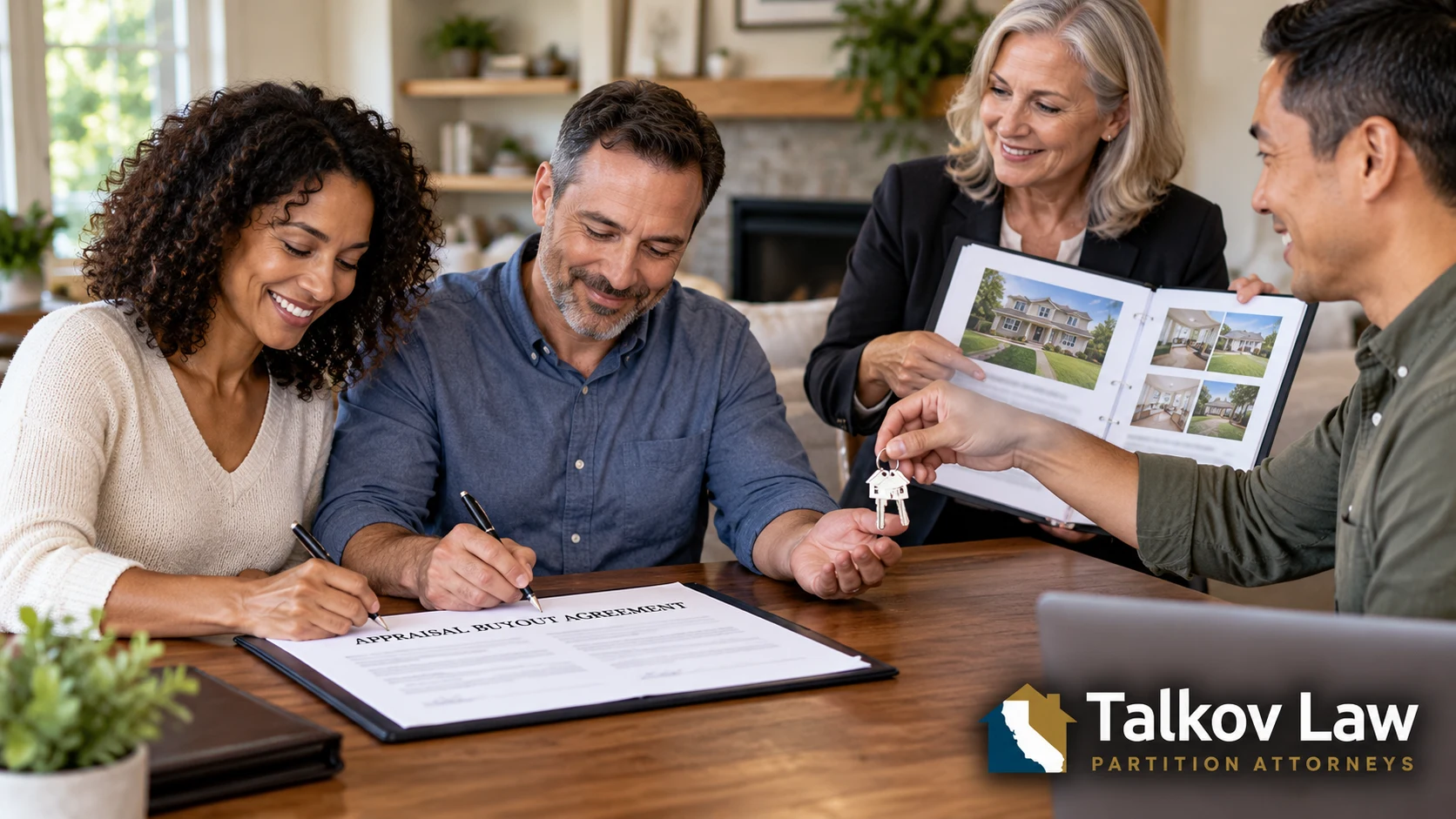
Partition by appraisal is one of three ways to partition property in California. It lets co-owners resolve their dispute through an agreed buyout at an appraised price.

Moving out doesn’t end your co-ownership rights. Here is when a co-owner in possession may owe rental value to the others in a partition action.

A partition action can force the sale of jointly owned real estate, but it can also divide or sell personal property, like cars or artwork.

A quitclaim deed only works if the co-owner giving up a share signs it. When a co-owner will not sign, or is pressing you to sign one, a California partition action ends the co-ownership without that signature.

Quiet title claims often arise alongside partition actions. Here is a sample California quiet title complaint under Code of Civil Procedure sections 760.010 to 764.010.

When a partition action is filed, the defendant can respond by filing an answer, a pleading that admits or denies the complaint’s allegations.
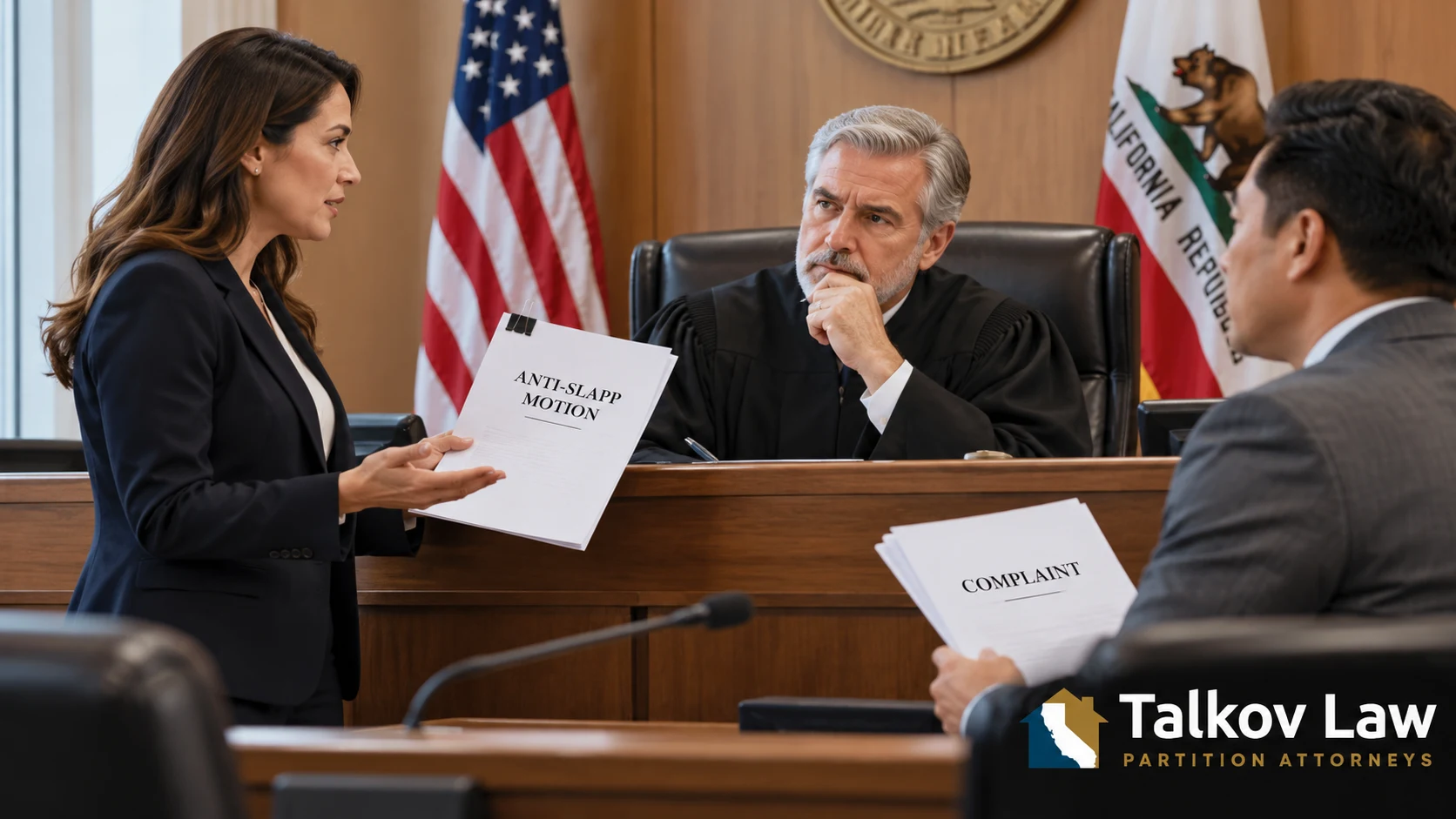
A co-owner served with a partition action sometimes threatens to sue the co-owner who filed it, and the attorney too. In California, the litigation privilege and the anti-SLAPP statute usually end that lawsuit early, with attorney’s fees.

A lien against one co-owner does not have to stop the sale of a co-owned house. Here are five ways to sell a California house when one owner has a lien or judgment.
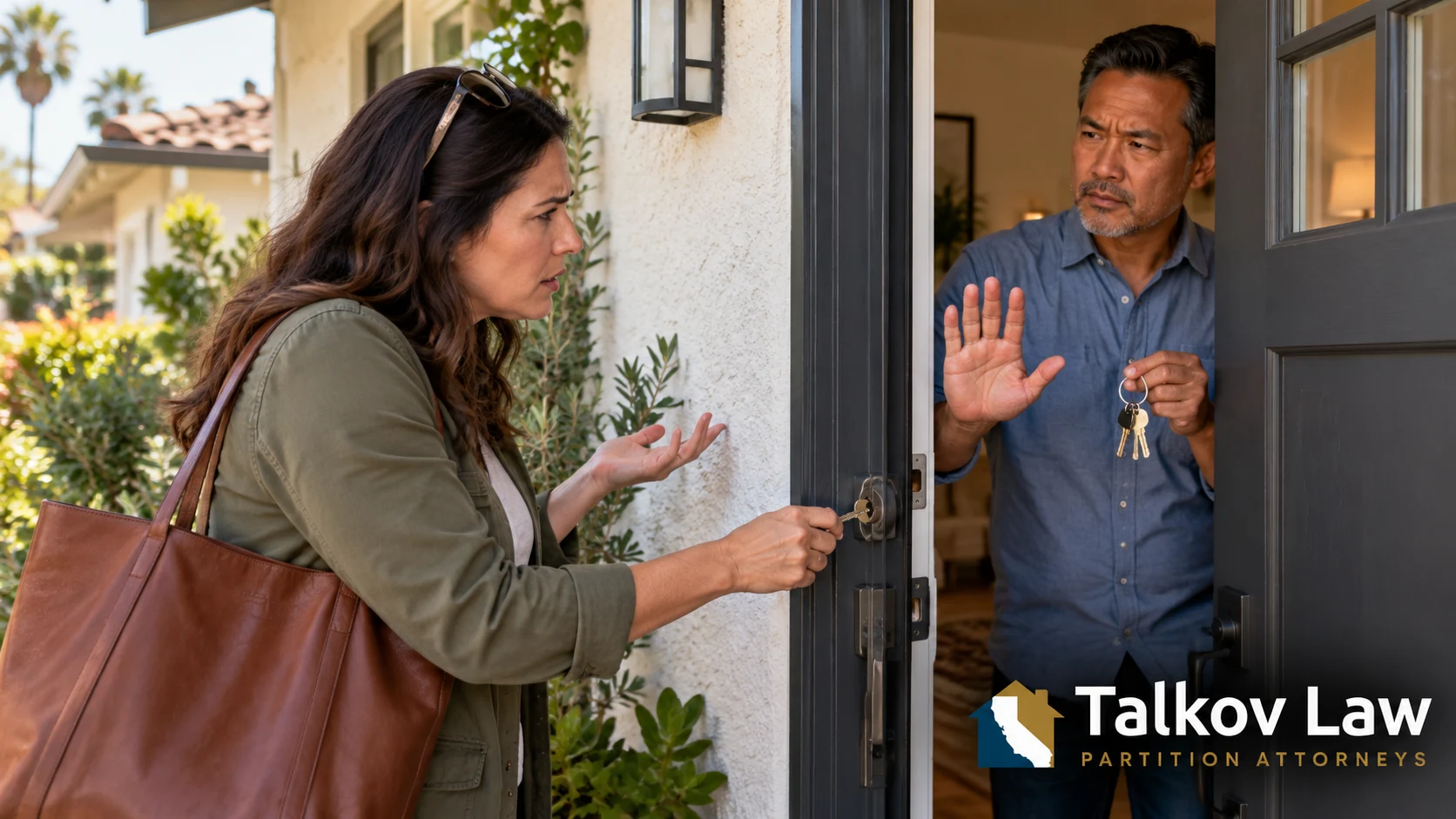
Ouster happens when one co-owner wrongfully excludes another from property they own together, such as by changing the locks, denying the other owner’s title, or refusing them entry.

How a co-owner who wants out wins a partition action in California: force the sale or a buyout, answer the defenses your co-owner will raise, maximize your offsets, and build your record from day one.

Any California co-owner can force a sale or division of co-owned property without the other owners’ consent. Here is what the absolute right to partition means, its four narrow exceptions, and the arguments that never stop it.

Co-owners often ask whether moving out of a property means giving up their ownership. In California, adverse possession between co-owners is very hard to prove.
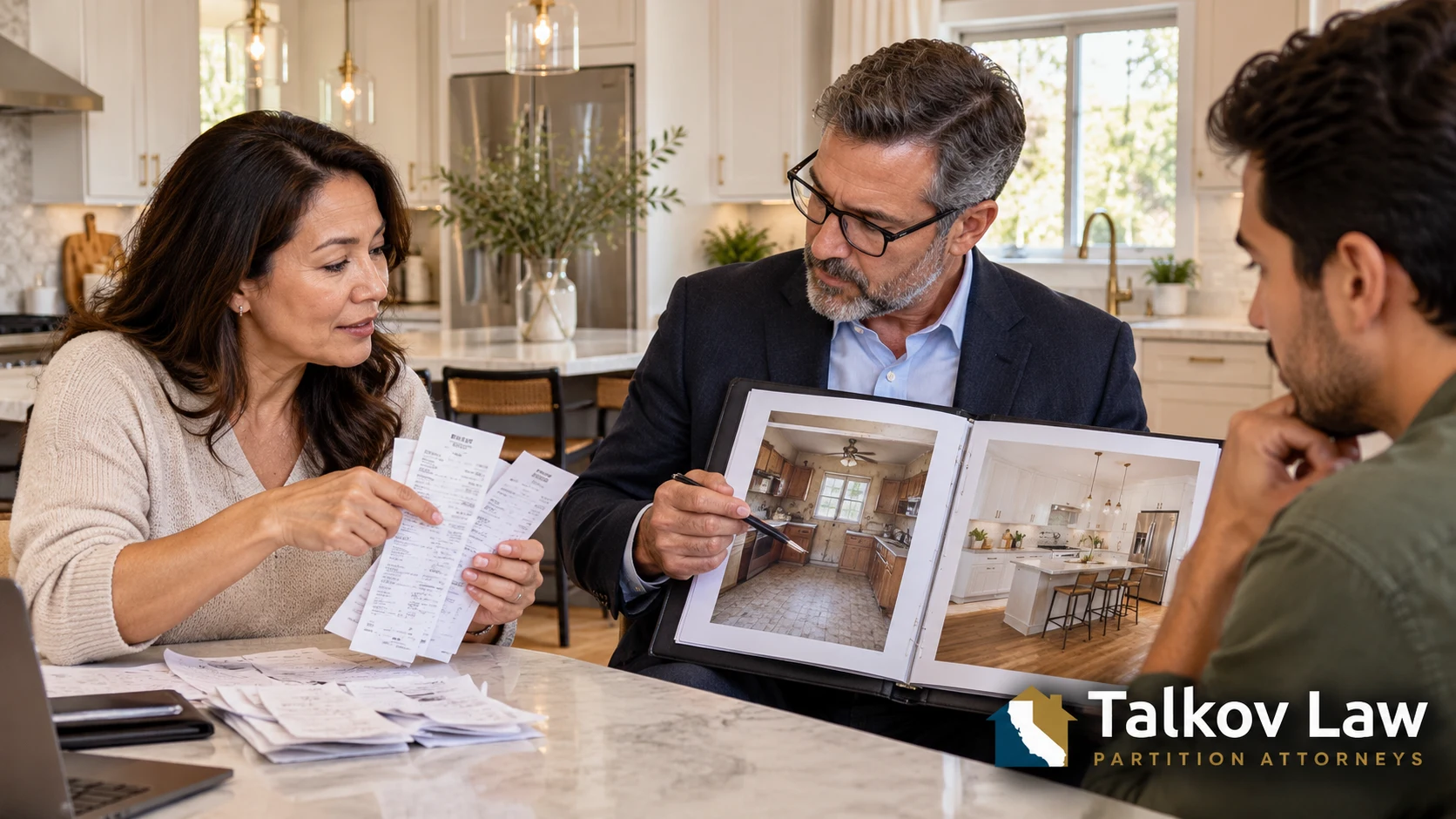
Yes. A California partition action can credit a co-owner for necessary repairs and value-adding improvements, paid before the sale proceeds are divided, even without the other owner’s consent.

California law provides three types of partition: partition by sale, partition in kind, and partition by appraisal. By far the most common is partition by sale.

California co-owners can sell by agreement, complete a buyout, or use a partition action when an owner refuses. Learn the steps, costs, and timing.
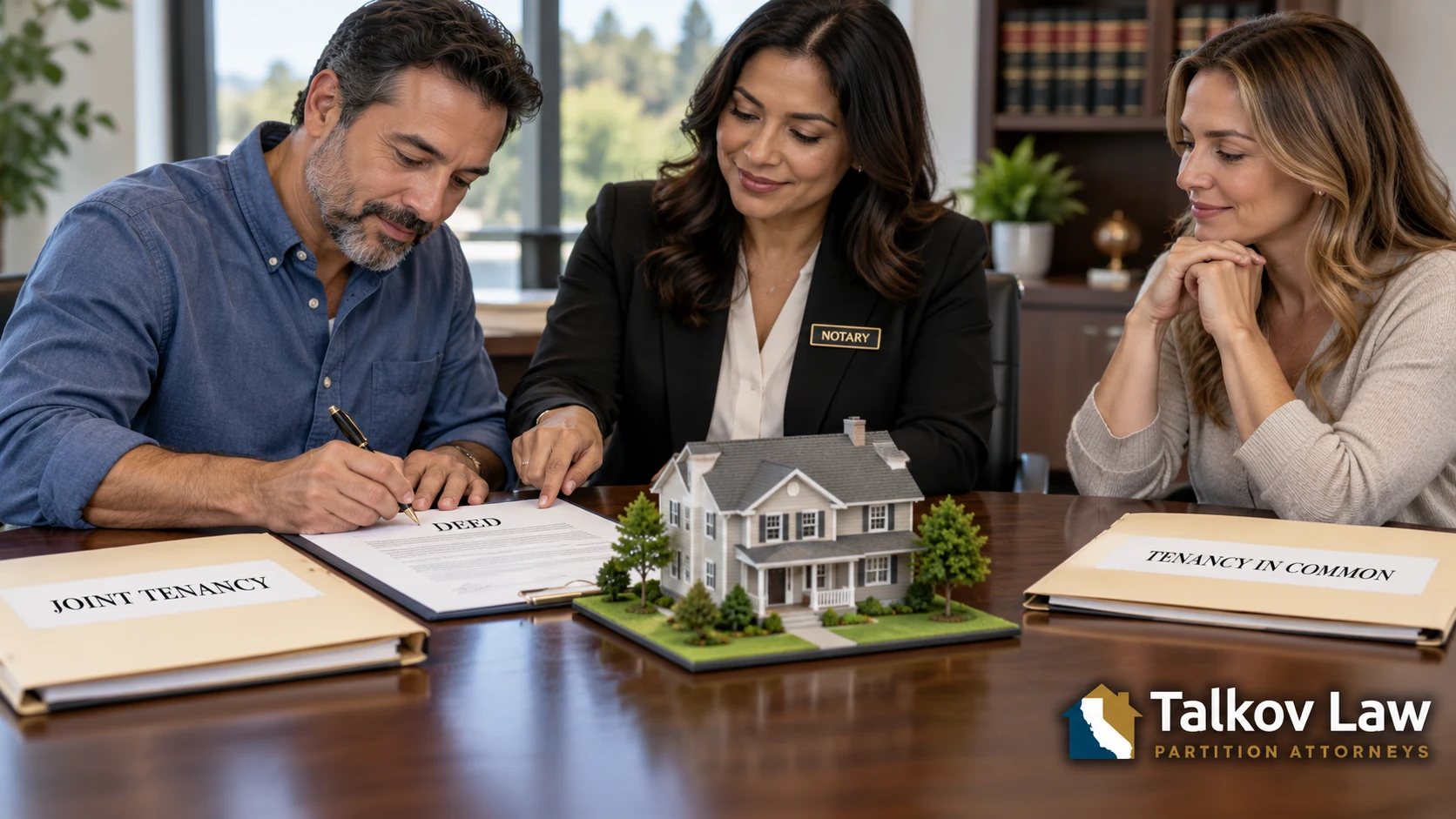
Severing a joint tenancy changes what happens to your share when you die. Here is what severance means, why it matters, and how a co-owner can do it.

A California spouse can give away or leave only half of the community property. When that half goes to a child, the child and the stepparent co-own the home, and either can force a sale through partition.

Representing co-owners statewide. Find your nearest Talkov Law office.
Practical guides from attorneys who focus exclusively on California partition actions.
The information on this site, including the Talkov Law Blog, is intended for general information purposes only. By using this site, you agree that any information contained in the site does not constitute legal, financial or any other form of professional advice. Information on this site may be changed without notice and is not guaranteed to be complete, accurate, correct or up-to-date.







