California Code of Civil Procedure § 872.730 – Partnership Property in a Partition
Code of Civil Procedure section 872.730 lets the court apply the partition statutes to partnerships when the court finds them a suitable remedy.
Code of Civil Procedure section 872.730 lets the court apply the partition statutes to partnerships when the court finds them a suitable remedy.
Defendants often claim their co-owner waived the right to partition. In California, a valid waiver is extremely rare and requires specific circumstances.
No. Under Adams v. Hopkins, the statute of limitations never bars a partition action between co-owners, unless one owner has already lost title to the other through adverse possession.
When a partition action is filed, the defendant can respond by filing an answer, a pleading that admits or denies the complaint’s allegations.

How a co-owner who wants out wins a partition action in California: force the sale or a buyout, answer the defenses your co-owner will raise, maximize your offsets, and build your record from day one.
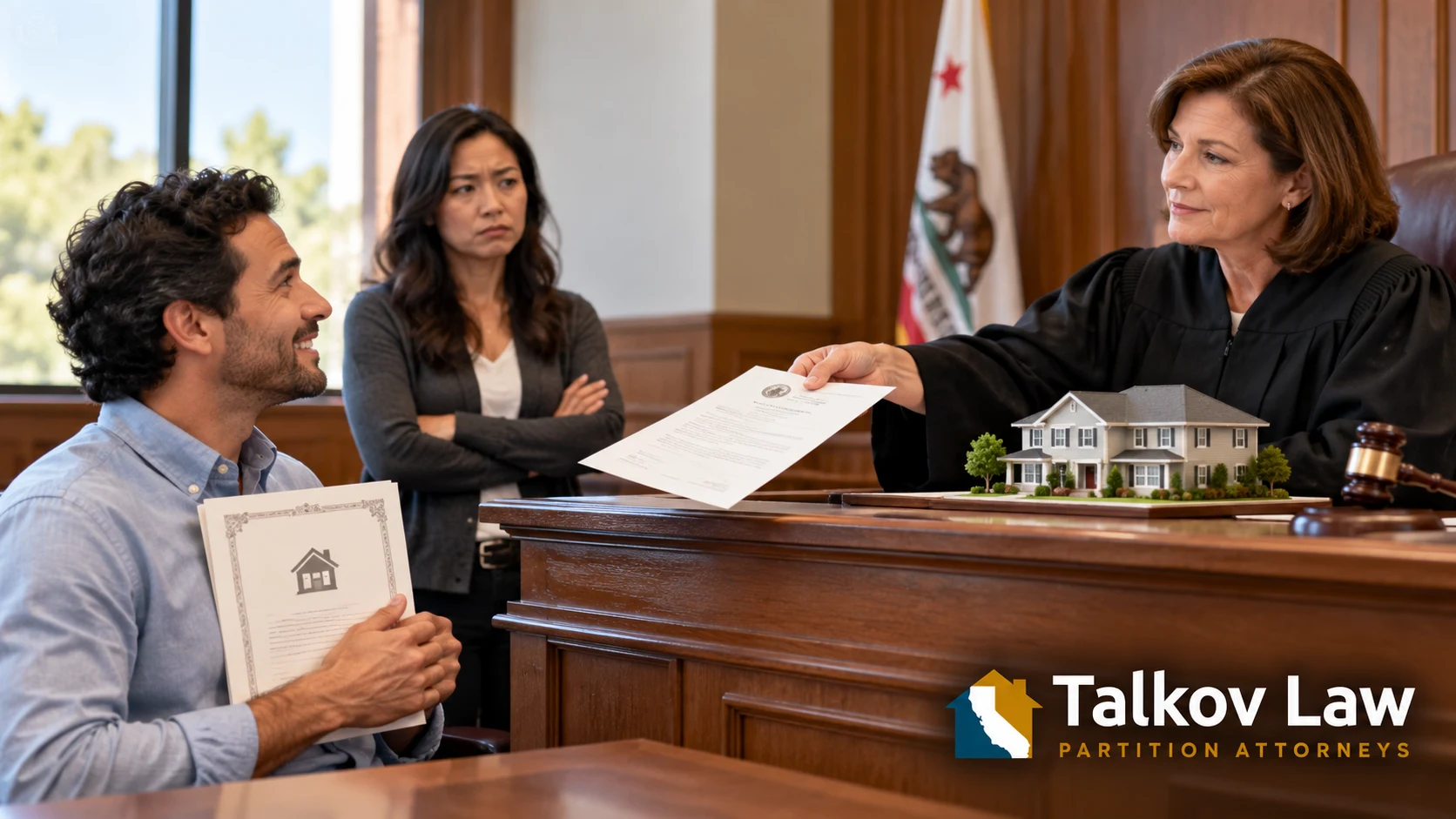
Under Code of Civil Procedure section 872.210, any co-owner can force the sale of co-owned property. The right to partition is so strong that courts call it absolute.
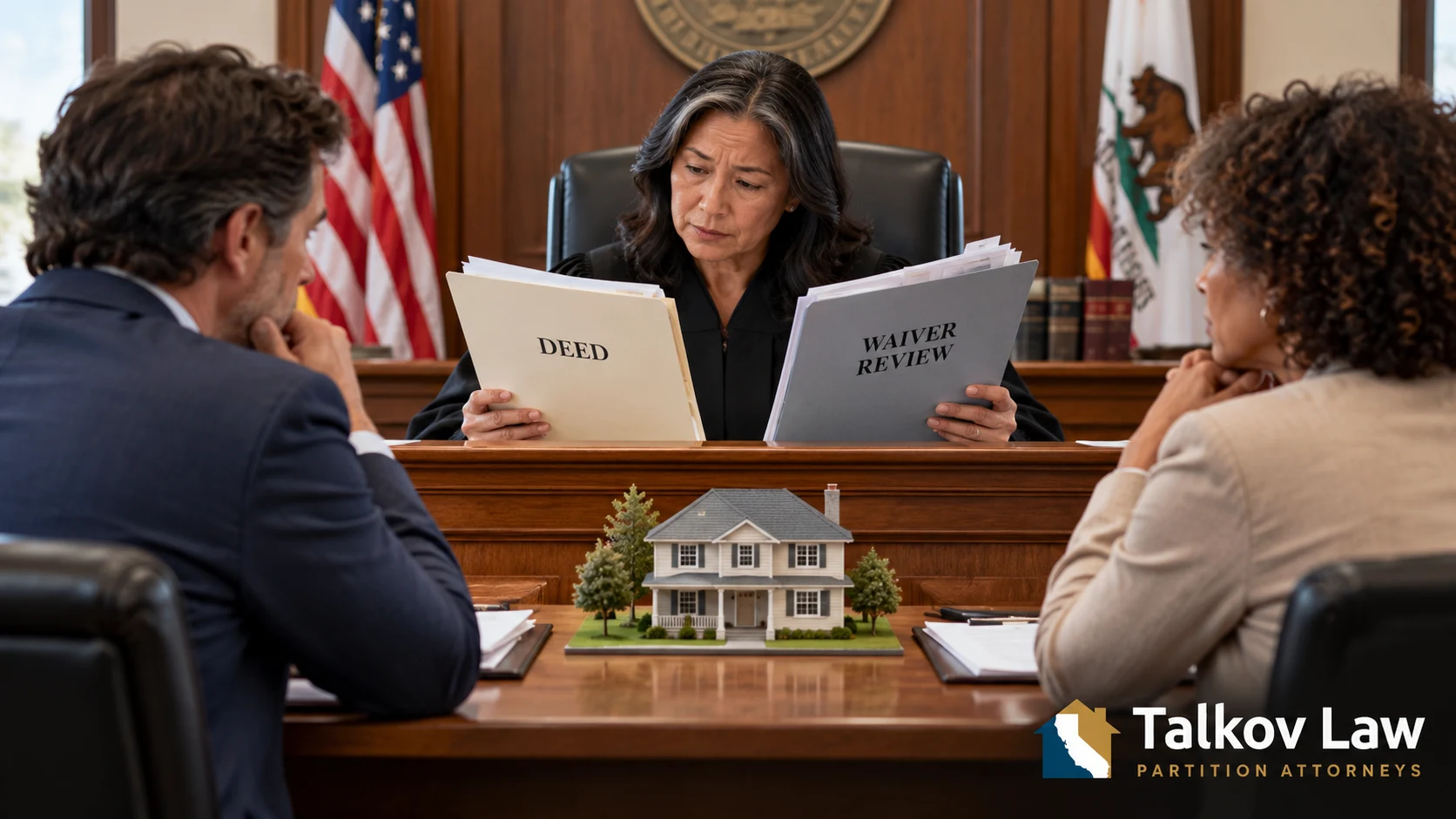
Code of Civil Procedure section 872.710 governs the right to partition in California, providing that partition of concurrent interests is a matter of right unless barred by a valid waiver.
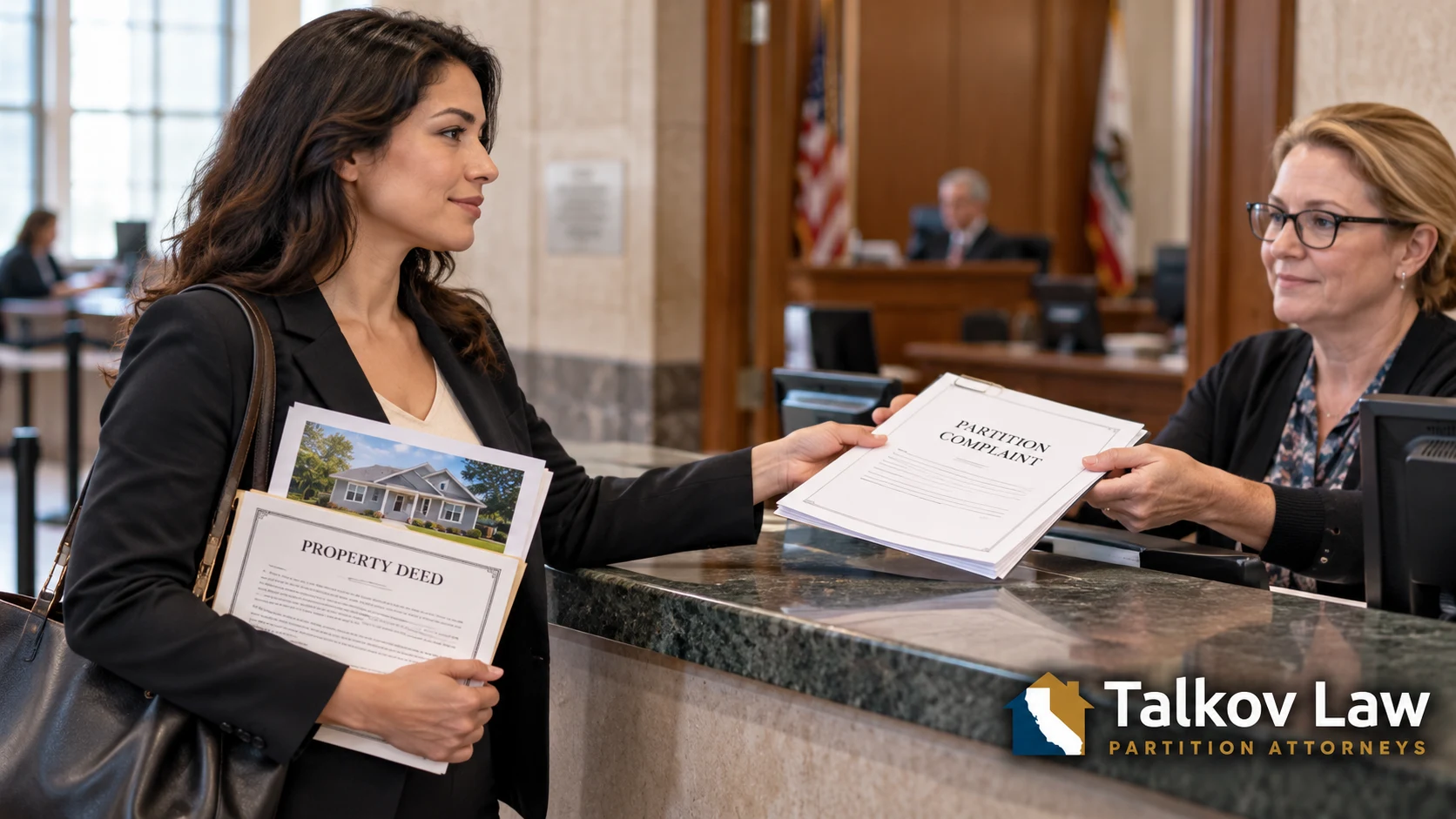
Code of Civil Procedure section 872.210 decides who can file a partition action. Any co-owner of real or personal property may sue for partition, but spouses cannot use it to divide community property.

California co-owners can sell by agreement, complete a buyout, or use a partition action when an owner refuses. Learn the steps, costs, and timing.
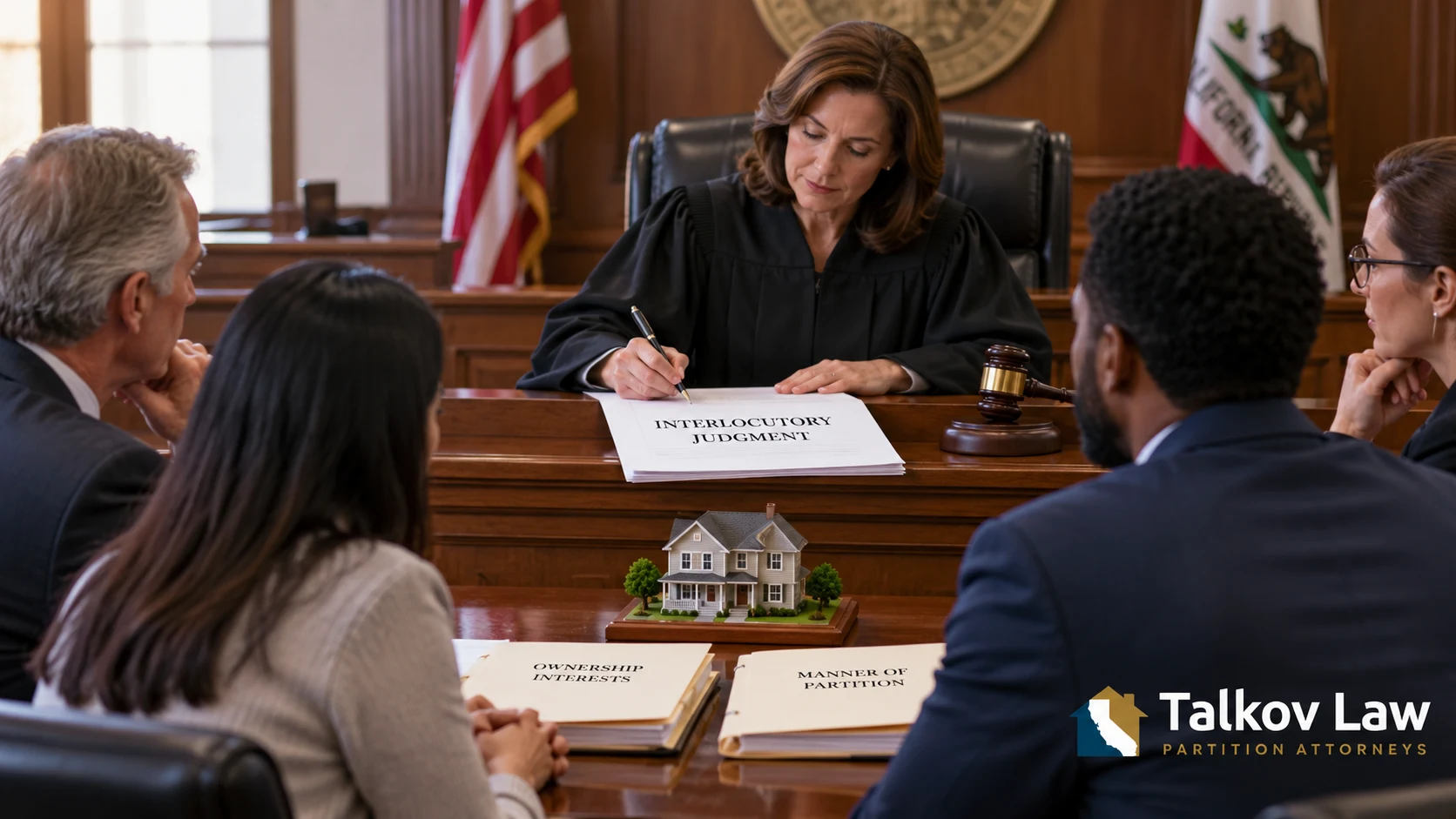
Code of Civil Procedure section 872.720 requires the court in a partition action to enter an interlocutory judgment once it finds the plaintiff is entitled to partition. That judgment sets the ownership interests and the manner of partition.
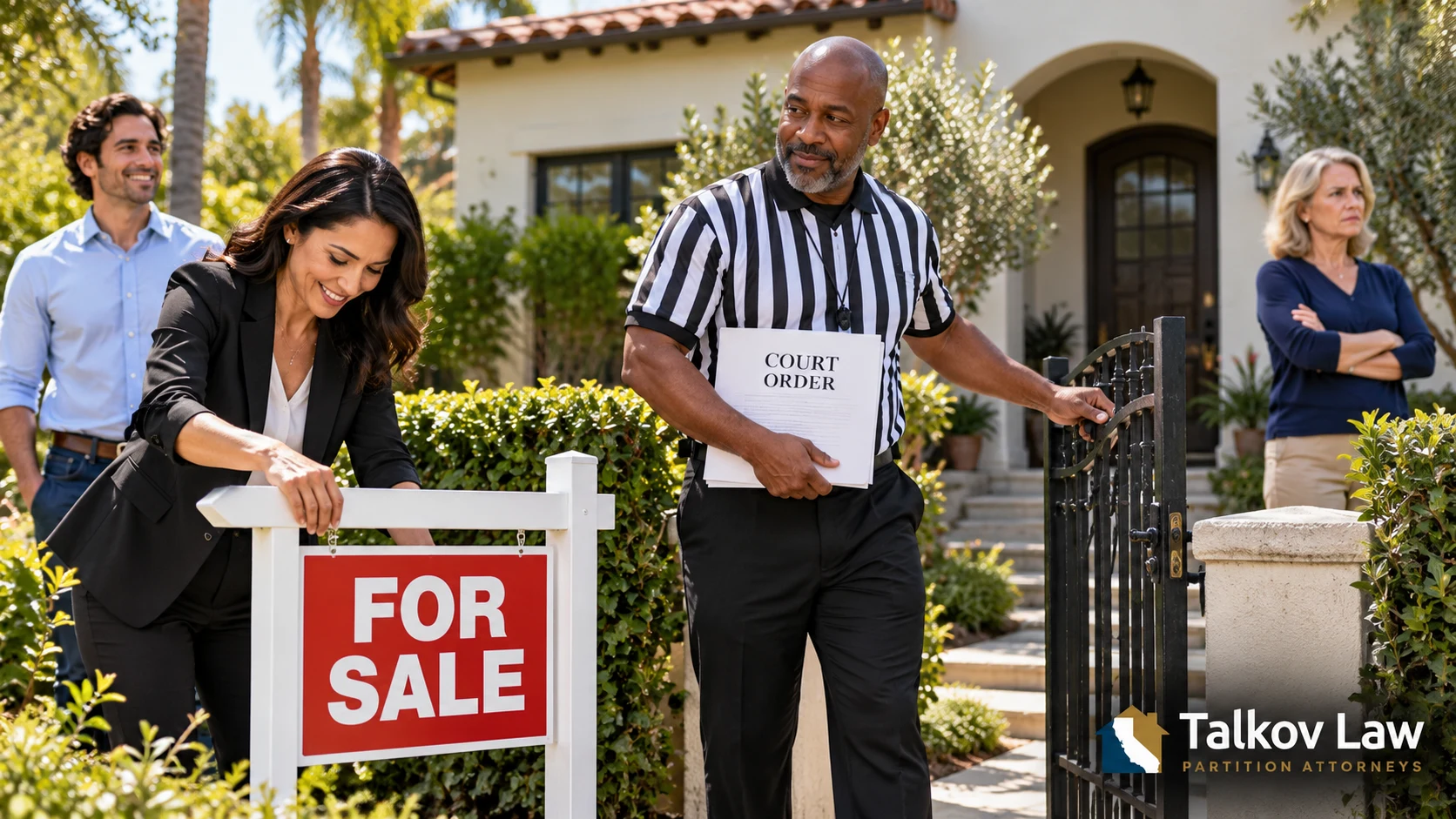
Co-owners of real estate in California have an absolute legal right to partition the property, thereby causing the property to be sold and the proceeds distributed.

California’s statute of frauds requires a signed writing to transfer an interest in real estate, so an oral promise to sell a co-owner’s half, or a claim that someone on the deed is only a co-signer, generally cannot change who owns the property.
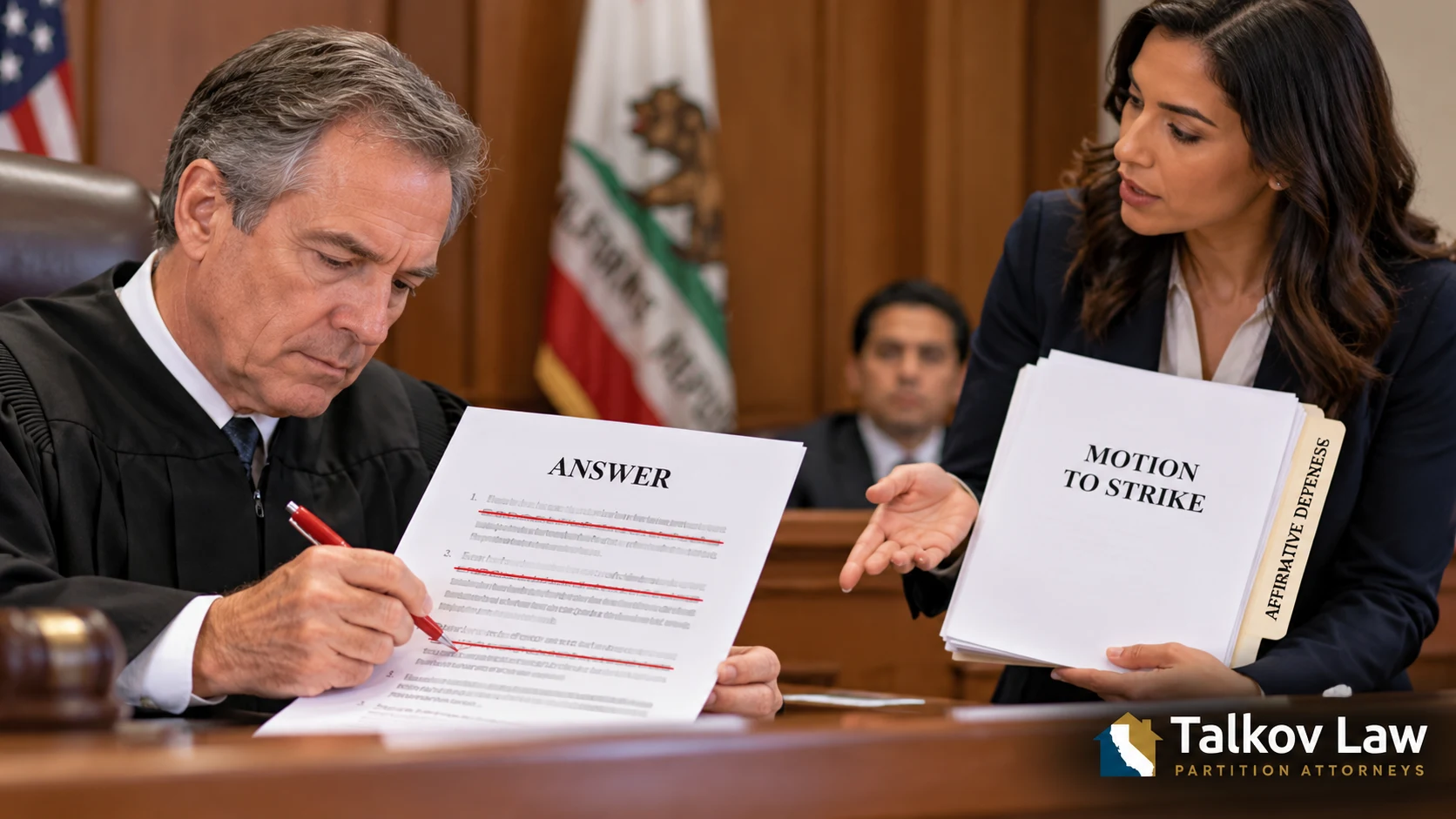
Many defendants answer with boilerplate affirmative defenses and no supporting facts. In California, those defenses can be challenged by a motion to strike or demurrer.

Representing co-owners statewide. Find your nearest Talkov Law office.
Practical guides from attorneys who focus exclusively on California partition actions.
The information on this site, including the Talkov Law Blog, is intended for general information purposes only. By using this site, you agree that any information contained in the site does not constitute legal, financial or any other form of professional advice. Information on this site may be changed without notice and is not guaranteed to be complete, accurate, correct or up-to-date.







