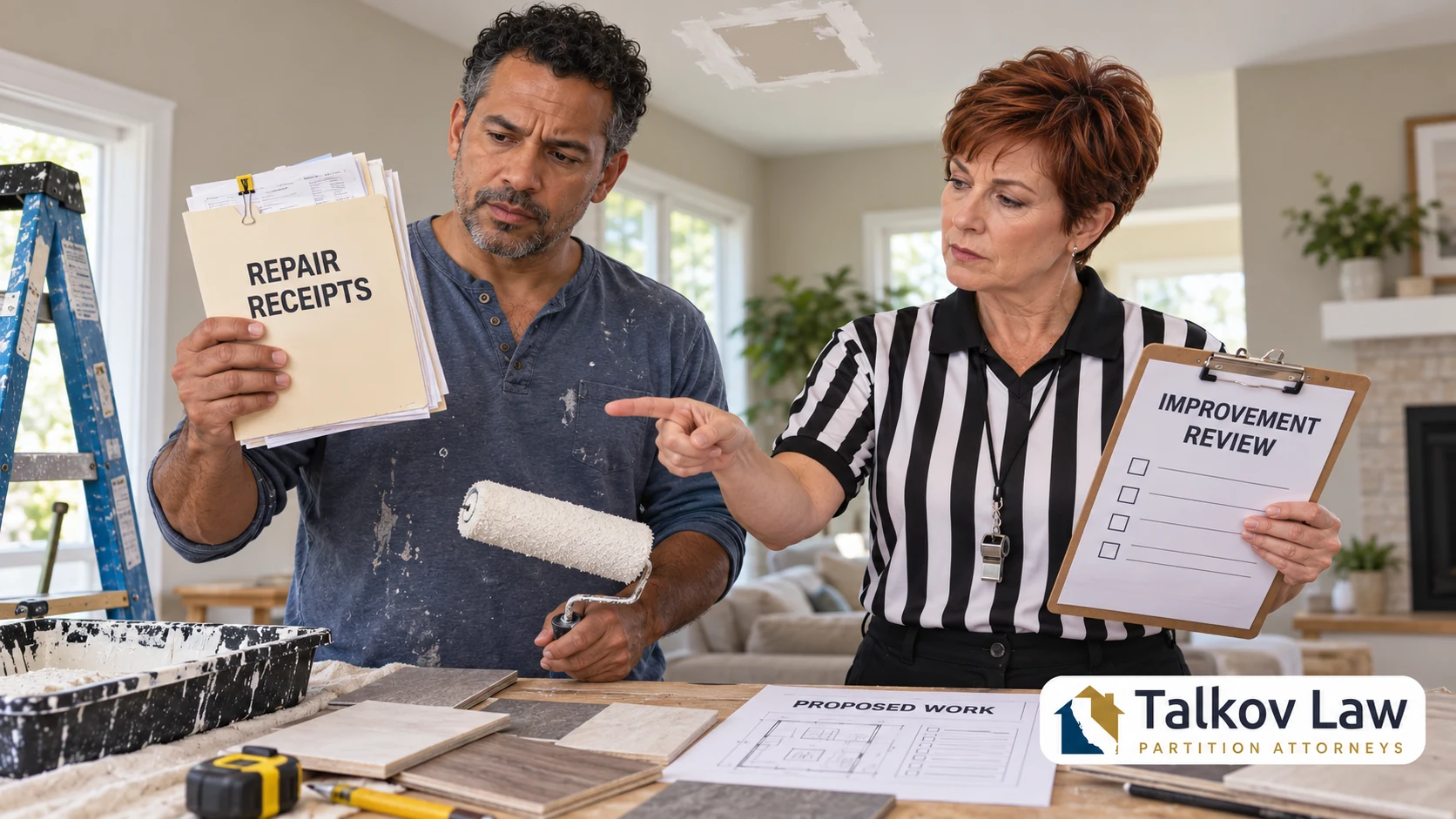
Can You Make Property Improvements During a Partition?
If you want to improve a co-owned property, timing matters. Here are the advantages and disadvantages of paying for improvements at each stage of a partition action.
If you want to improve a co-owned property, timing matters. Here are the advantages and disadvantages of paying for improvements at each stage of a partition action.
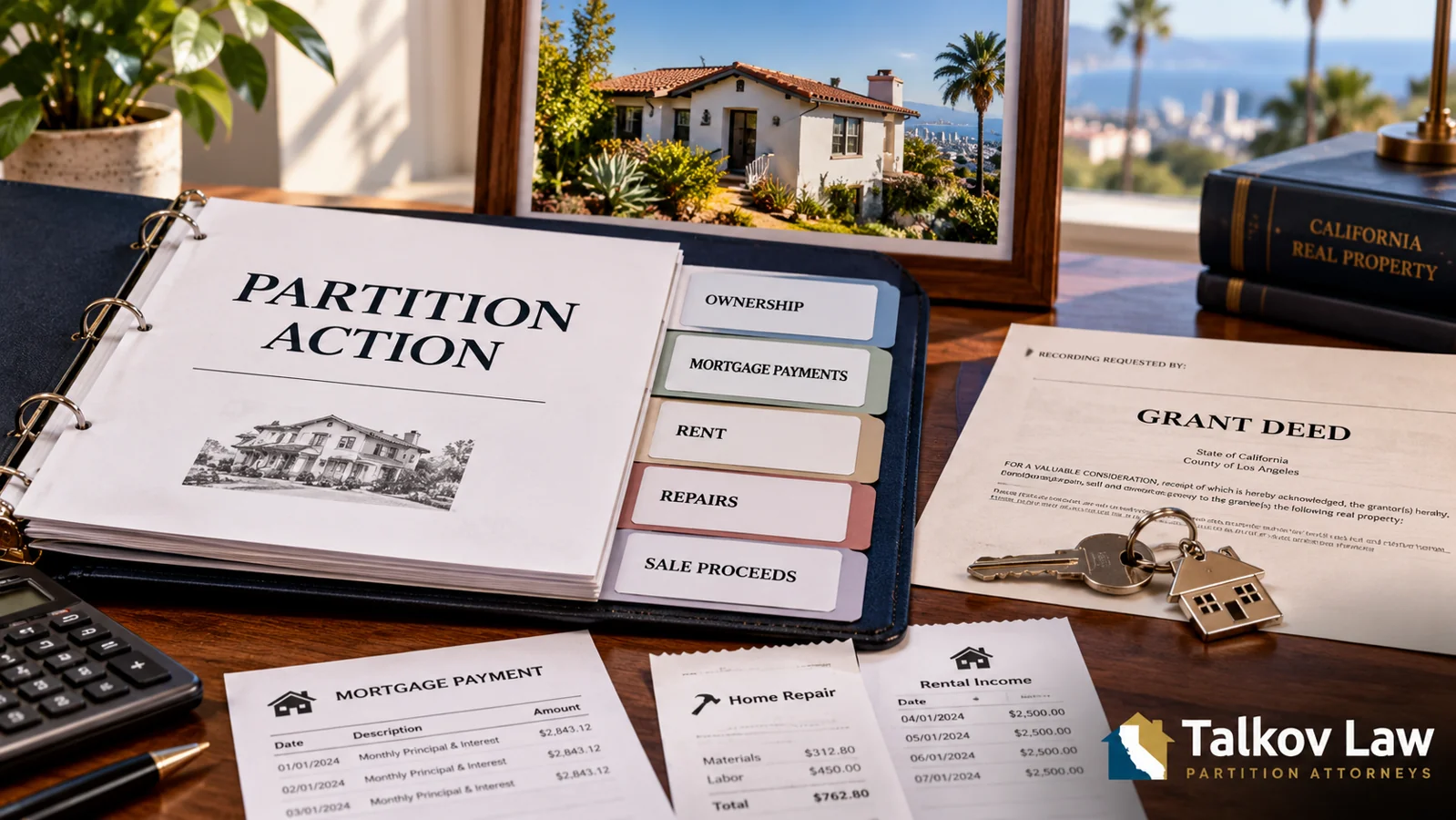
A California partition action can resolve ownership, title disputes, reimbursements, rent, liens, fees, and the sale. Learn its scope, limits, and how the accounting affects your payout.

A partition referee can report on offsets for the down payment, mortgage, and taxes faster than a trial. Learn how it works and what evidence to bring.
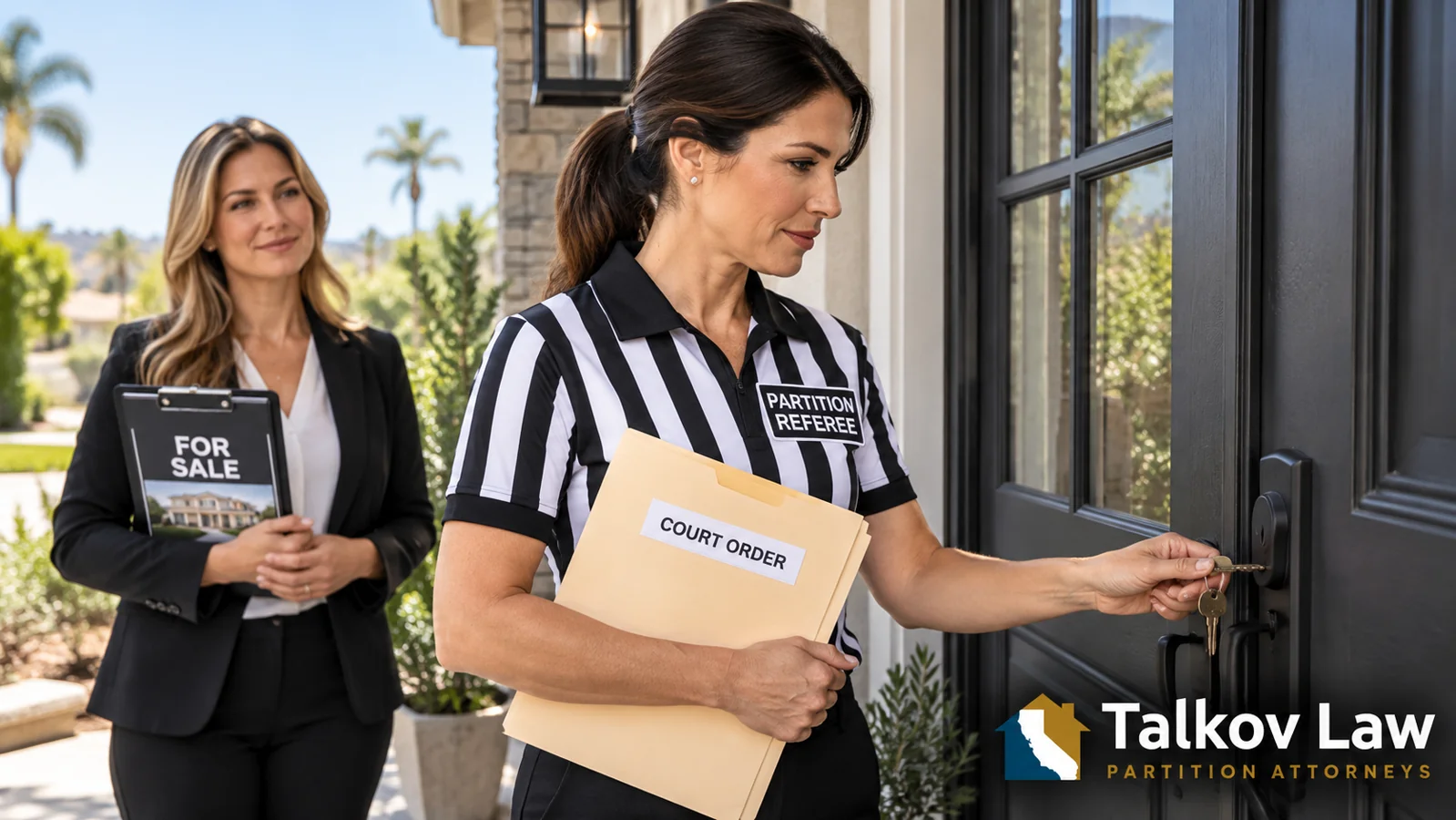
Code of Civil Procedure section 873.060 gives the partition referee authority to perform any acts necessary to carry out the referee’s duties in a partition action.

Code of Civil Procedure section 873.770 explains how the referee distributes sale proceeds when the buyer is also a party entitled to part of them, as with a credit bid.

Code of Civil Procedure section 873.810 directs the court to order how the proceeds of a partition sale are disbursed to the parties.
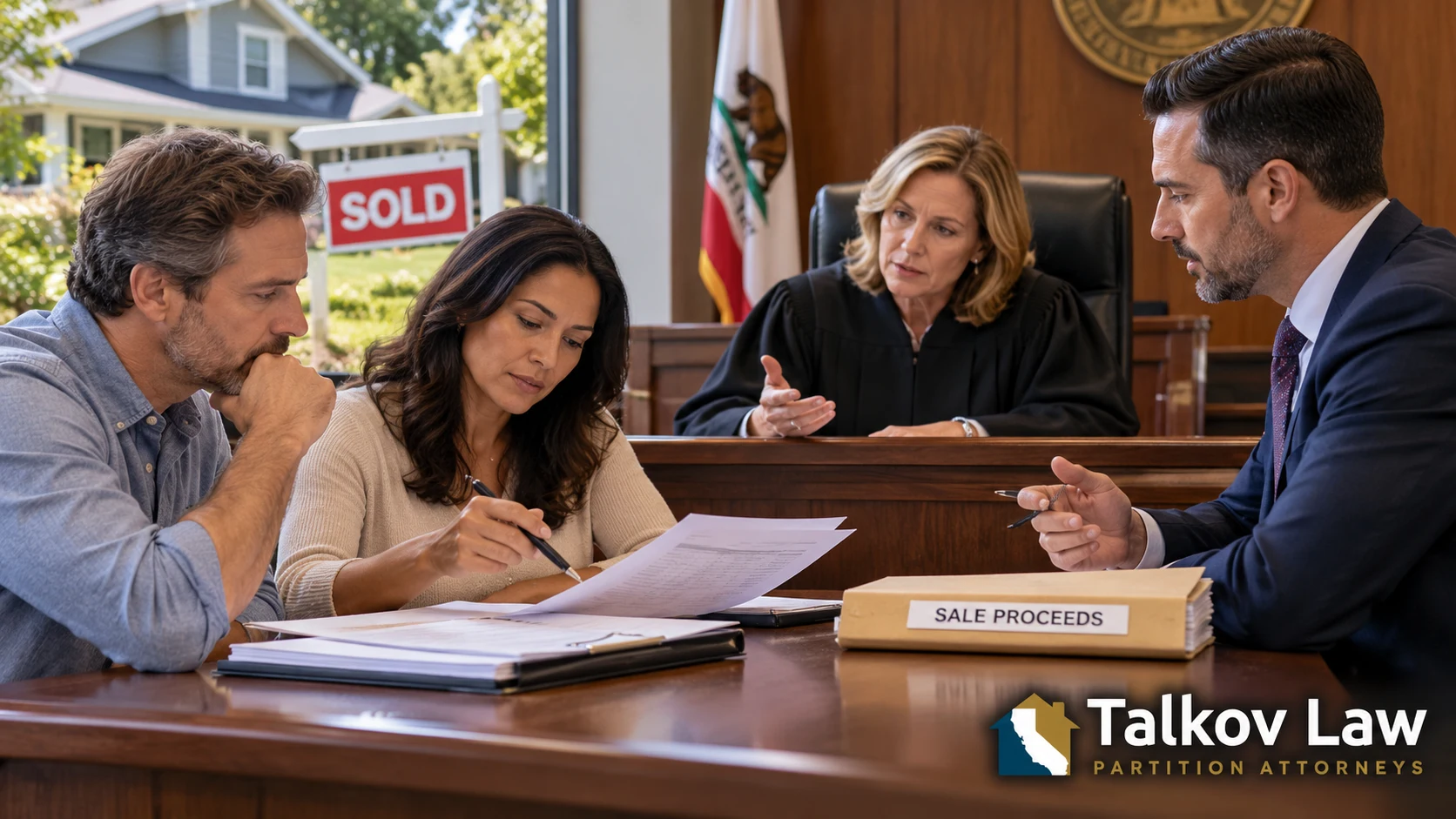
Code of Civil Procedure section 873.850 lets the partition action continue between the parties to decide how proceeds are allocated when that hasn’t yet been determined.

Wallace v. Daley (1990) 220 Cal.App.3d 1028 may be the most cited case in California partition law. It holds that every partition includes an accounting of offsets.

Representing co-owners statewide. Find your nearest Talkov Law office.
Practical guides from attorneys who focus exclusively on California partition actions.
The information on this site, including the Talkov Law Blog, is intended for general information purposes only. By using this site, you agree that any information contained in the site does not constitute legal, financial or any other form of professional advice. Information on this site may be changed without notice and is not guaranteed to be complete, accurate, correct or up-to-date.







