
Inheriting a House with an Uncooperative Family Member
When a relative moves into an inherited house, refuses to sell, and stops paying expenses, the other heirs are left covering the costs. A California partition action can force a sale.
The basics of owning California property with others, and what happens when owners disagree.
When a relative moves into an inherited house, refuses to sell, and stops paying expenses, the other heirs are left covering the costs. A California partition action can force a sale.
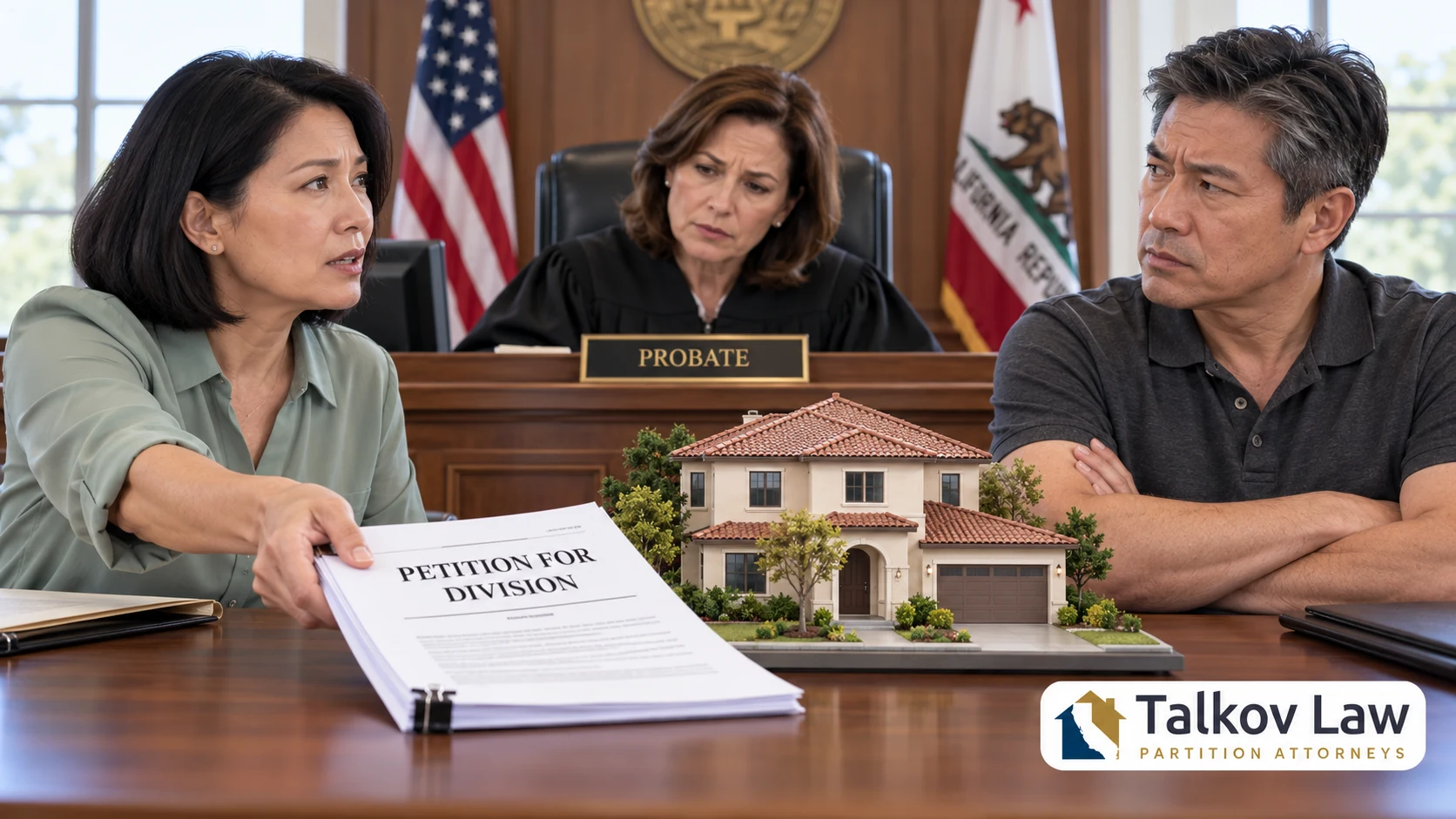
California Probate Code section 11950 lets two or more beneficiaries with undivided interests in estate property ask the probate court to partition, allot, or otherwise divide that property.

California Probate Code section 11953 requires that estate property be divided so each beneficiary receives value equal to their share, and allows a sale when a fair division is not possible.
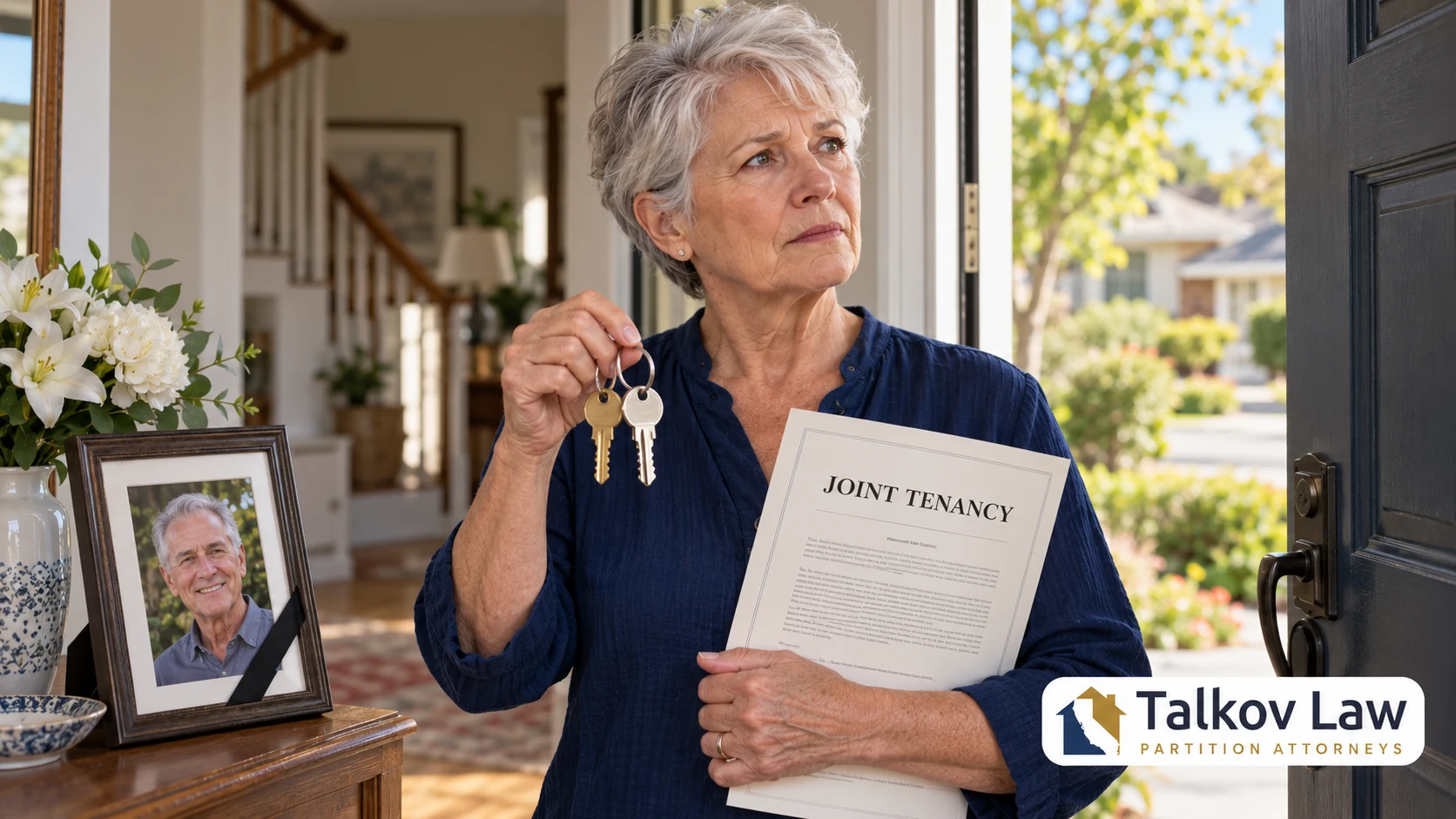
Right of survivorship lets a surviving co-owner automatically take a deceased co-owner’s share without probate, but only if title is held the right way. When the deed is unclear, disputes follow.
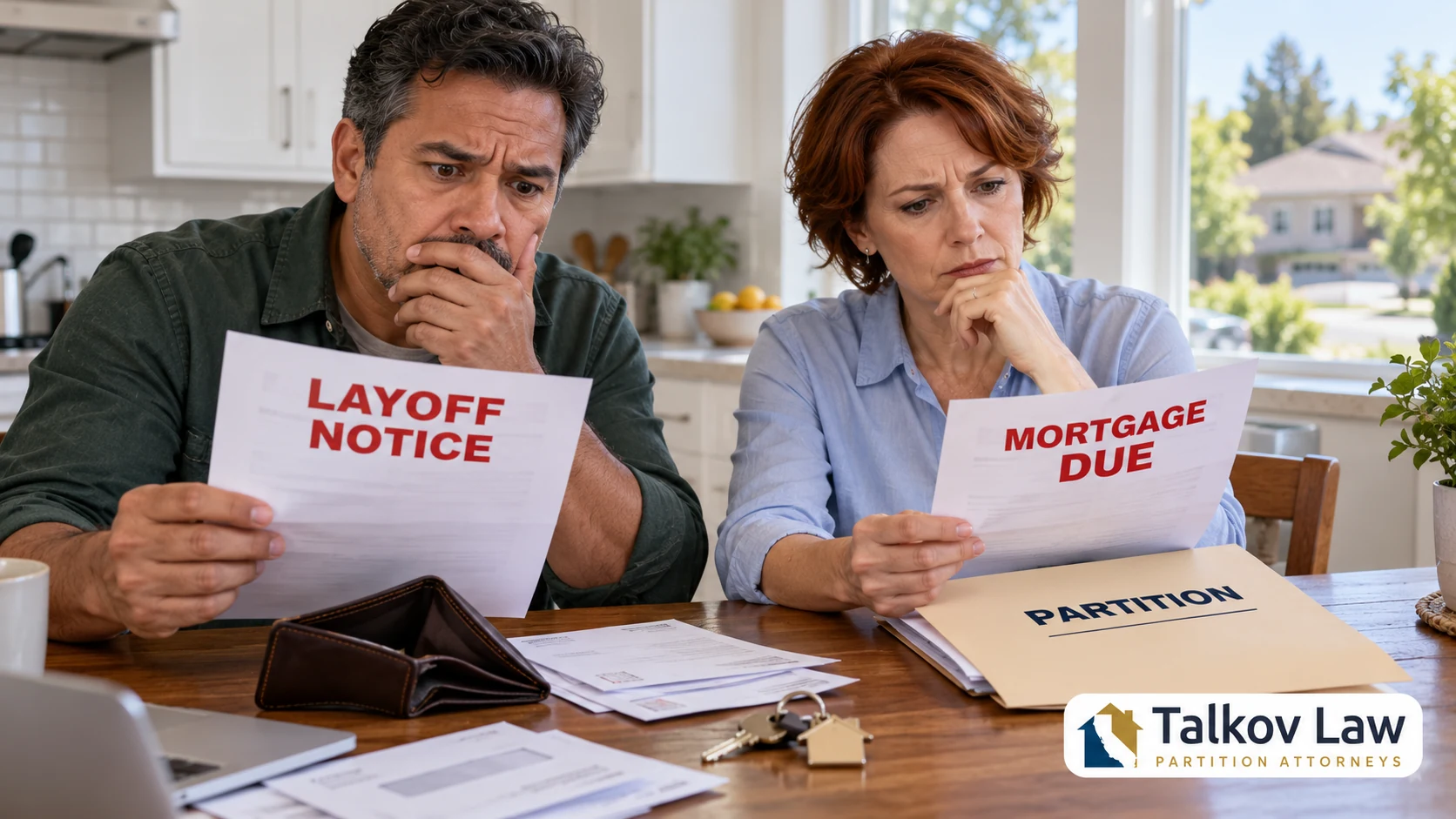
Want to sell now instead of risking a falling market? Your co-owner cannot make you wait. Any California co-owner can force the sale and get their equity out.
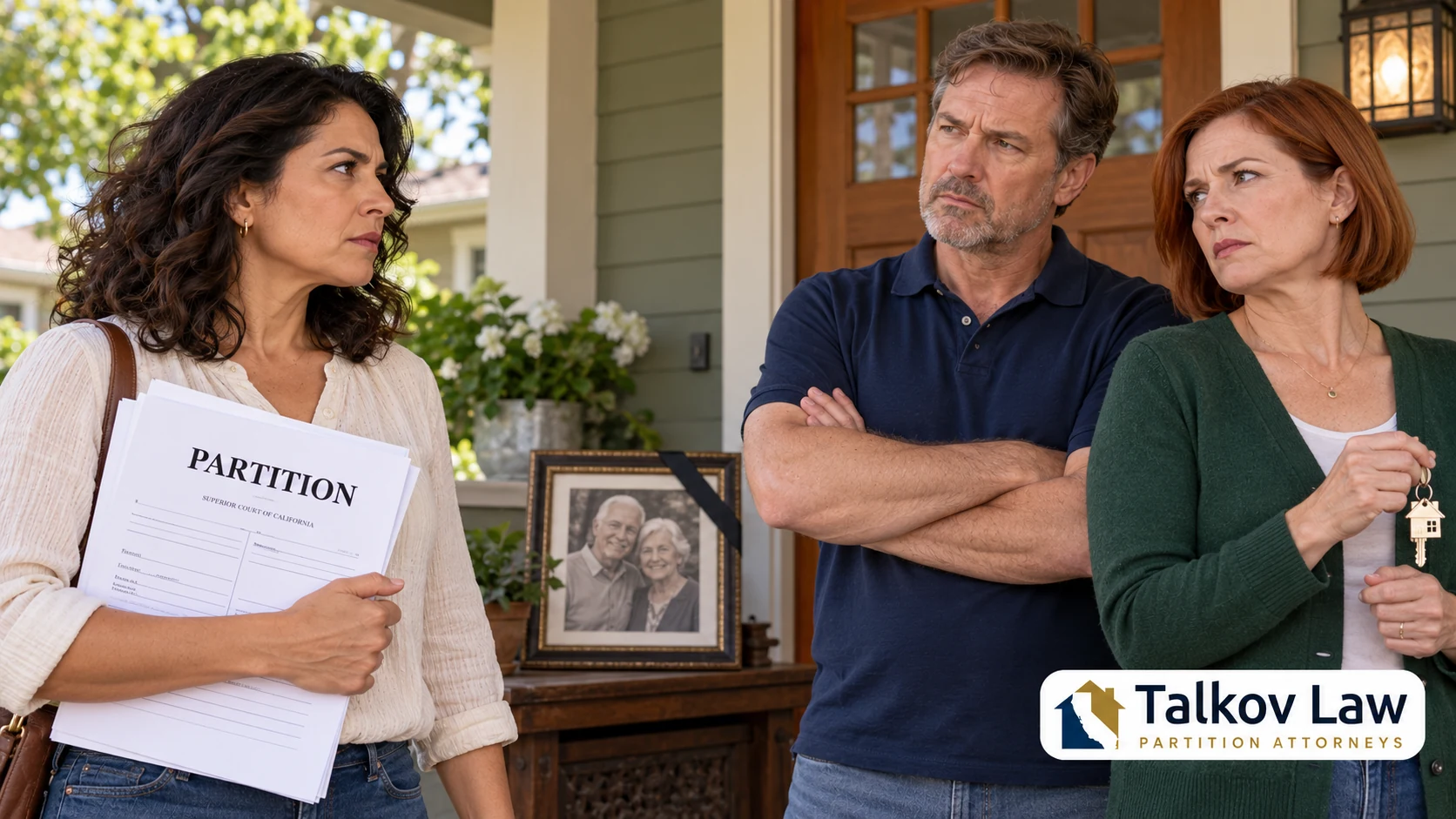
No. In California, the heirs do not all have to agree to sell inherited property: any one heir who co-owns the house can force a sale through a partition action, even when a sibling living there refuses to sell.
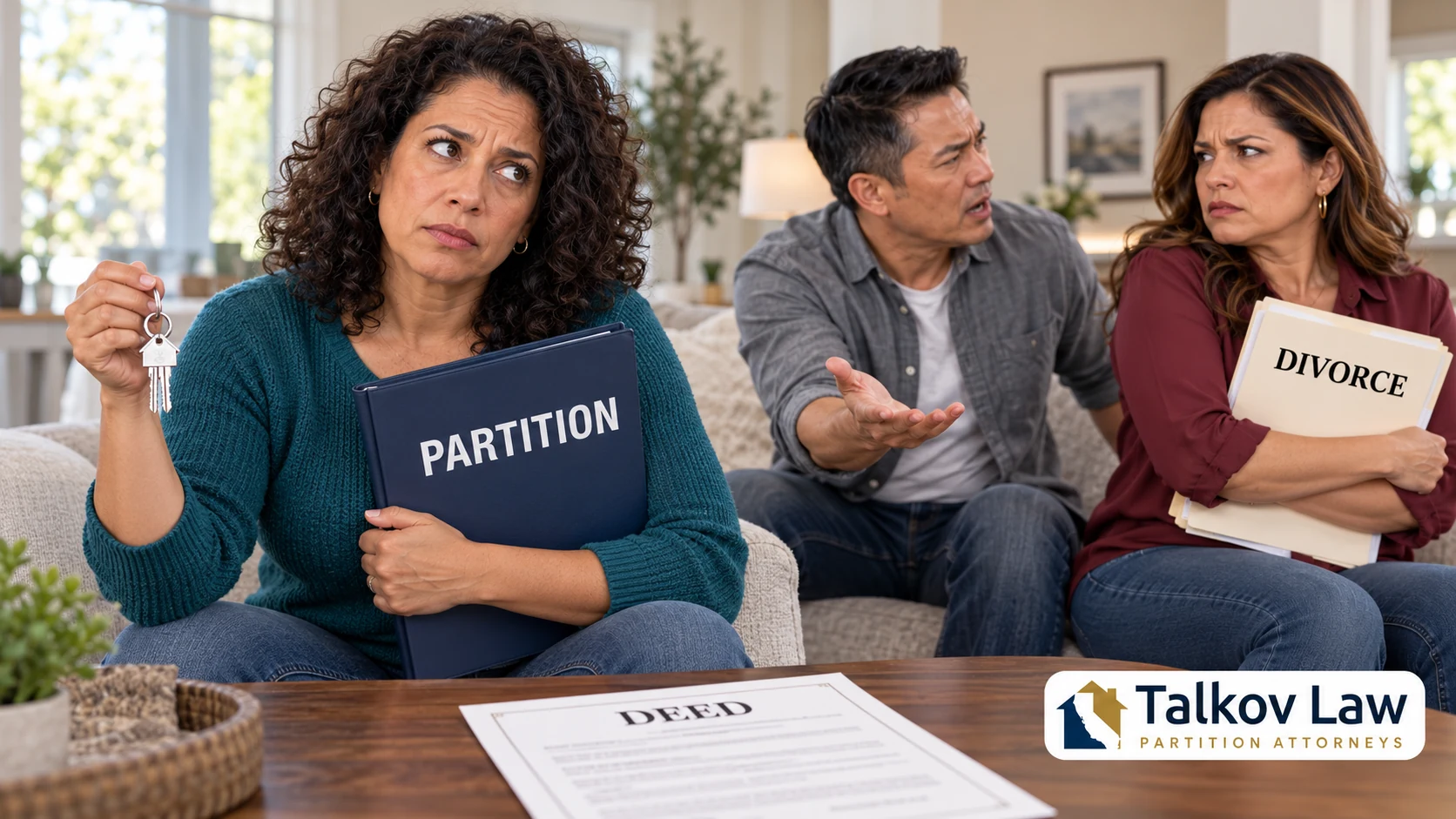
A sale of property co-owned with a married couple can be forced through a partition action by any co-owner, or through joinder in the family law case if the couple is divorcing.
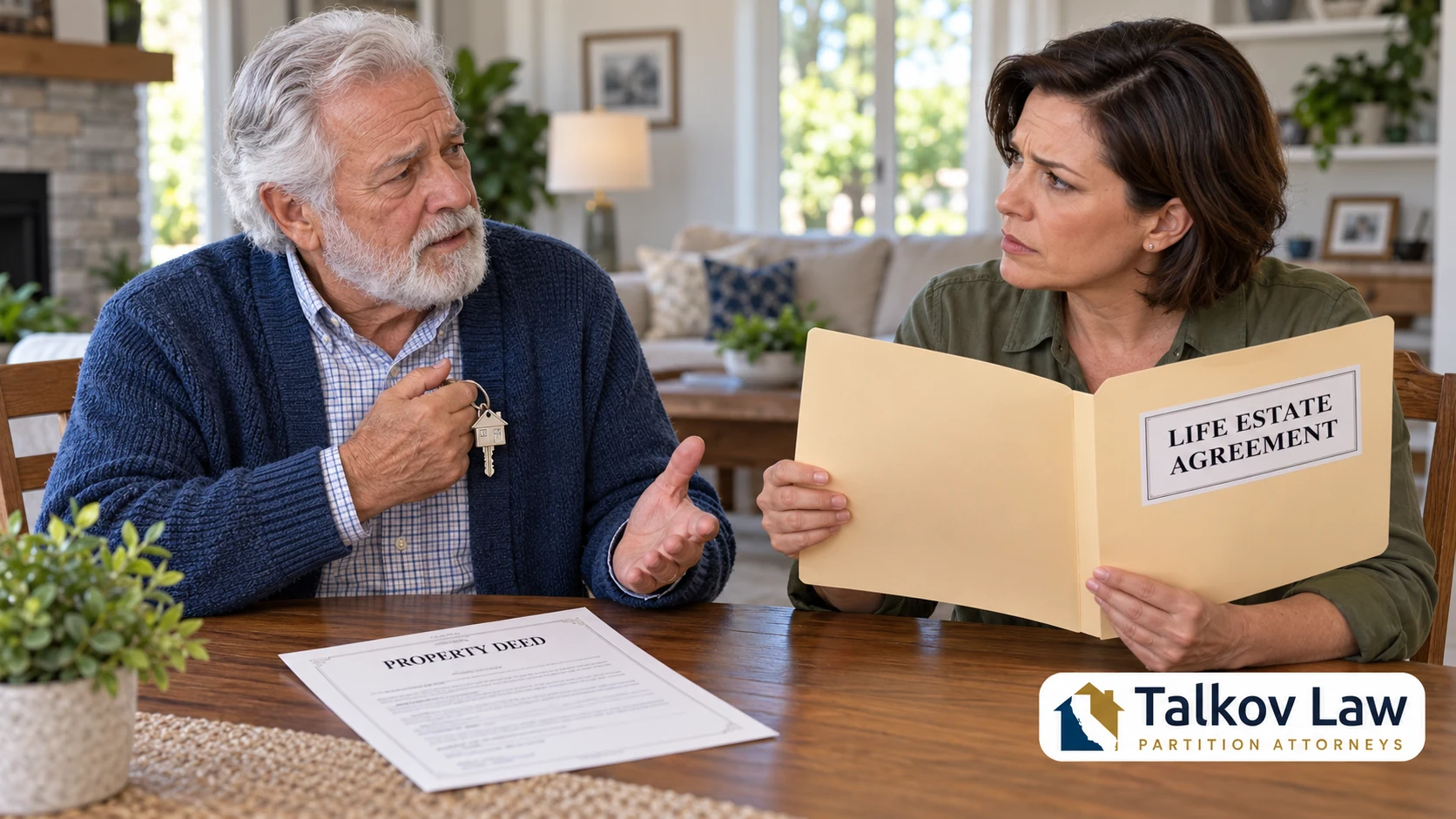
A life estate must be in writing to be enforceable in California. A verbal promise that someone can live in a property for life does not create a legal life estate.
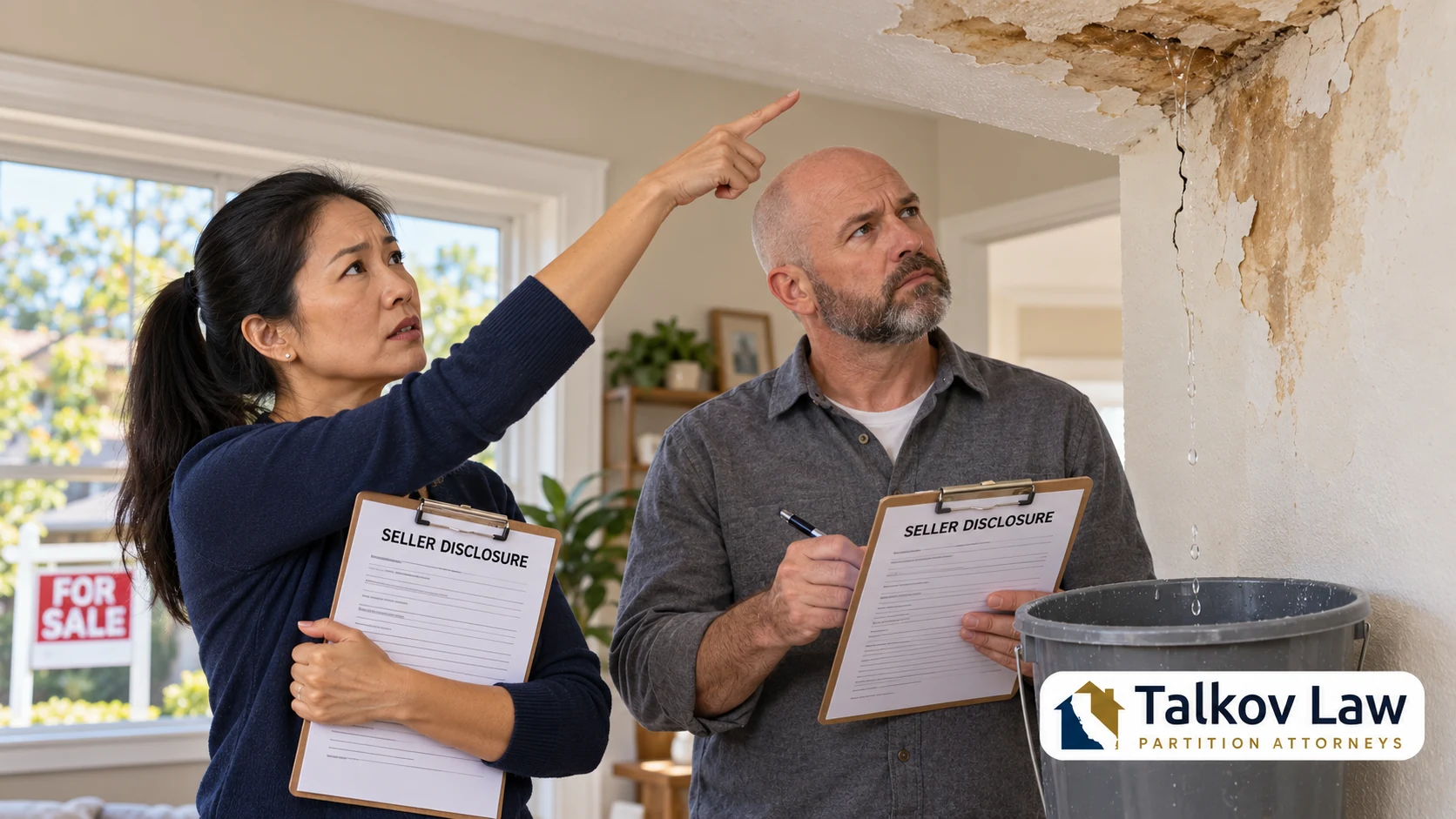
Yes. Each co-owner of California real property must disclose known material defects that could affect its value, although some court-ordered sales are exempt from the statutory disclosure requirements.

You can’t make a hoarding co-owner clean up, move out, or sell, but a California court can order the house cleared and sold and charge the cleanup to the hoarder’s share.
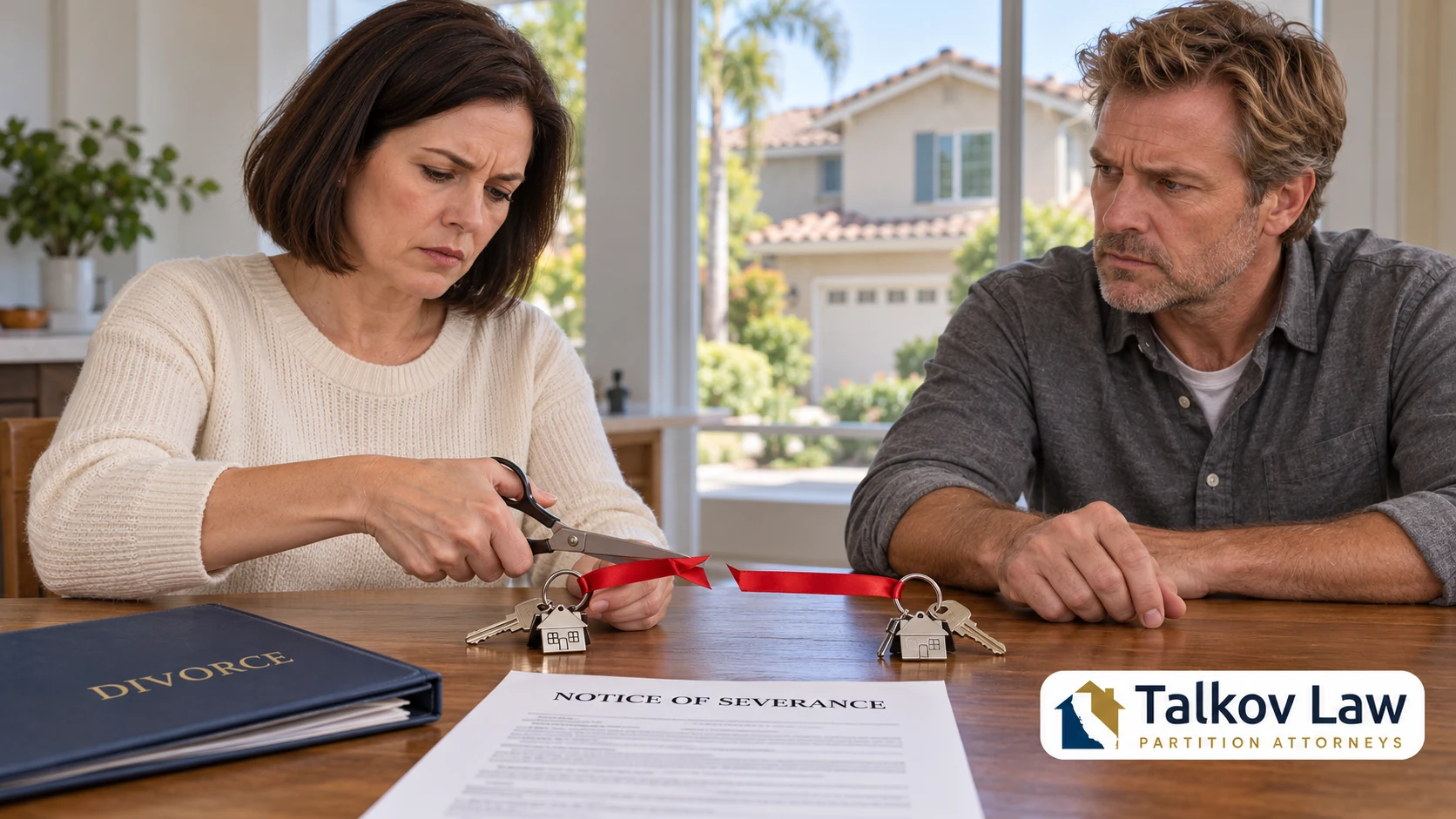
When a California divorce is filed, automatic temporary restraining orders limit what spouses can do with property. Here is whether a spouse can still sever a joint tenancy, and how that affects partition.

Whether you inherited a share of a property or co-own with a former partner, disagreements can trap your equity. A partition action or a sale of your fractional interest can unlock it.
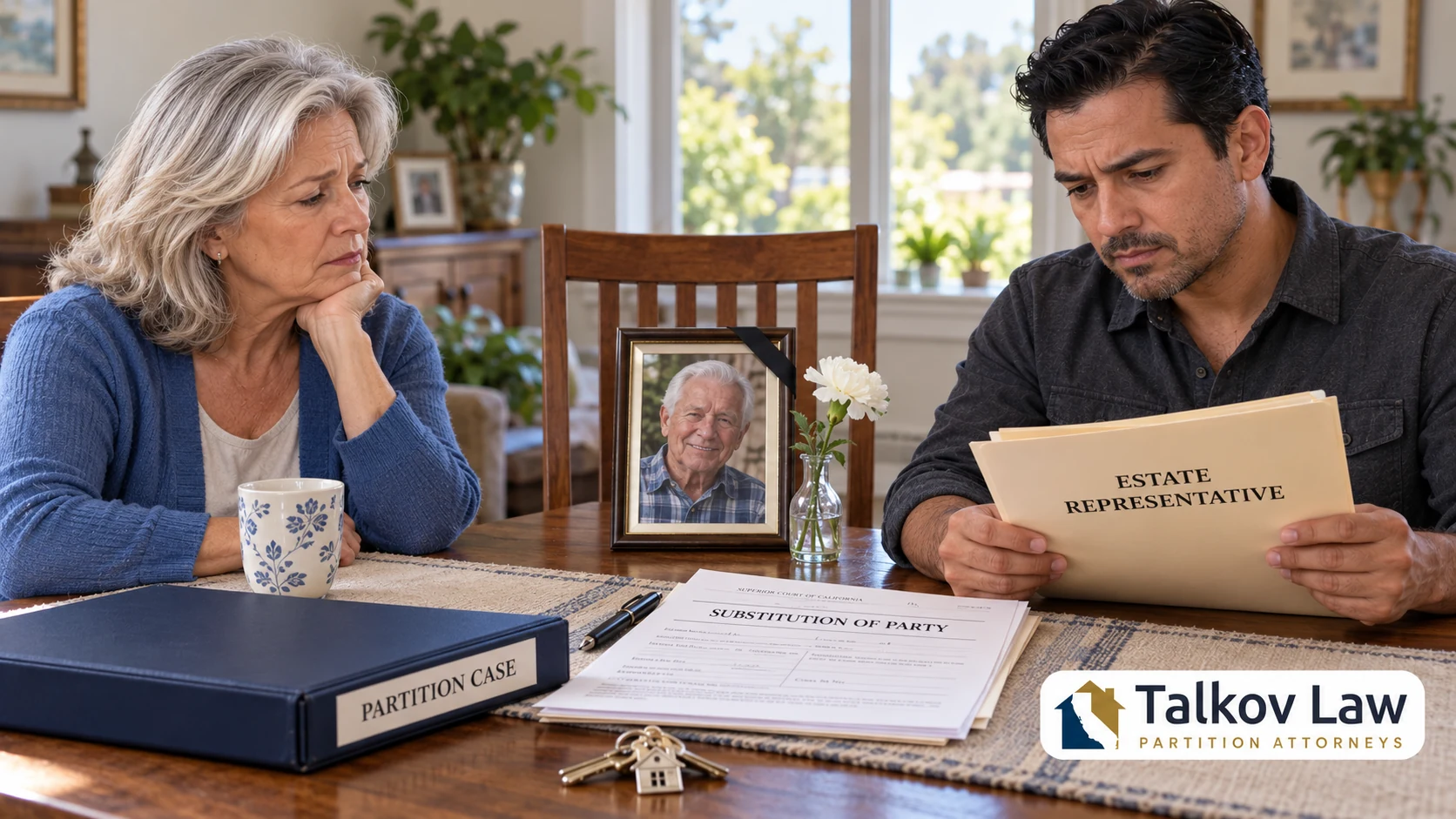
When a co-owner dies mid-case, your next steps depend on whether they had an attorney, how they held title, and where the case stands. Here is what to do, including when the co-owner was a trustee.

In California, a co-owner who wants to sell property damaged by fire, flood, or earthquake generally cannot be forced to fund a rebuild. A partition action lets you sell, even when your co-owner wants to rebuild.
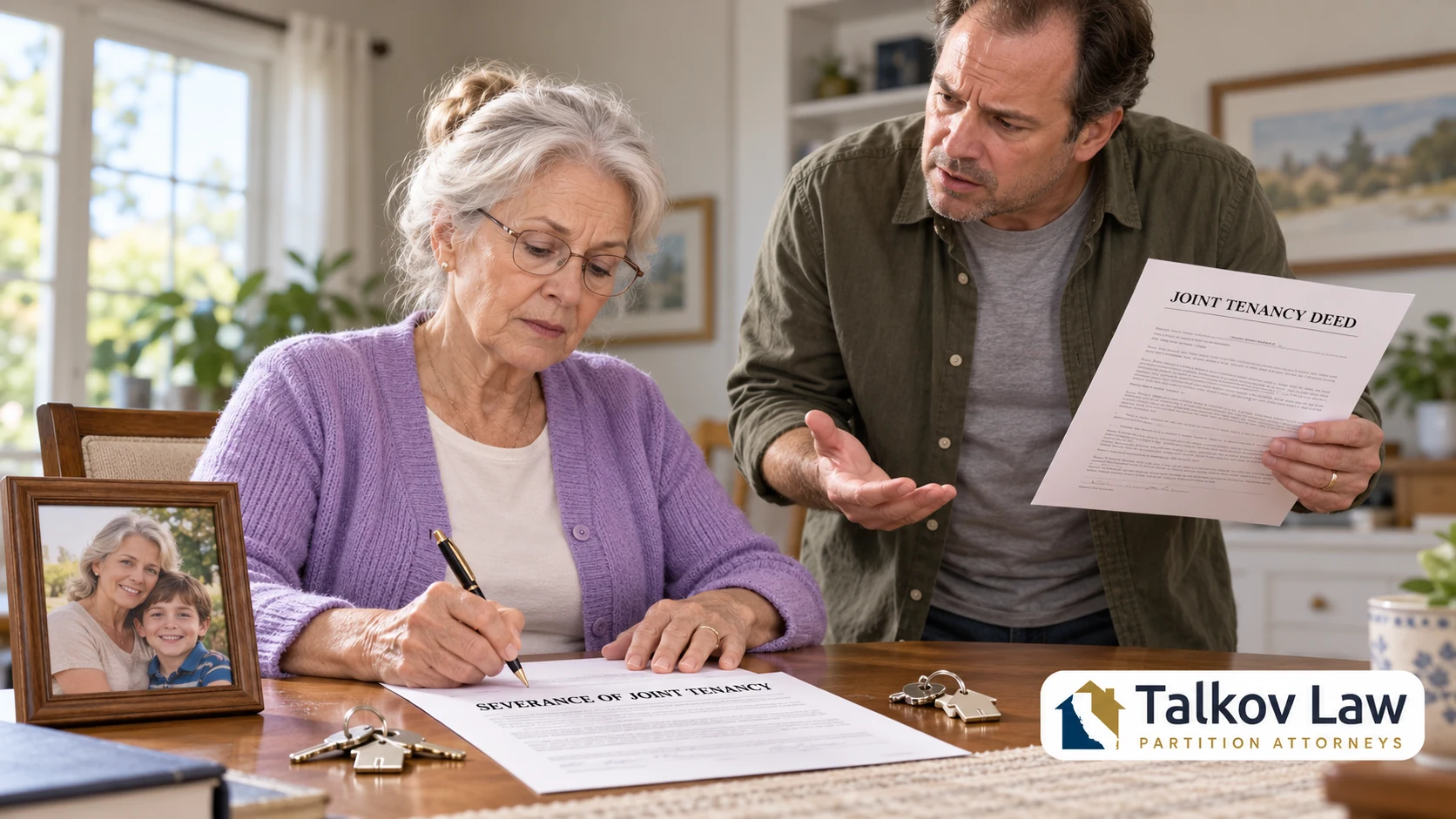
Parents and children often hold title as joint tenants so the property passes automatically to the survivor. But a joint tenancy can be severed, which can upend what the child expected.
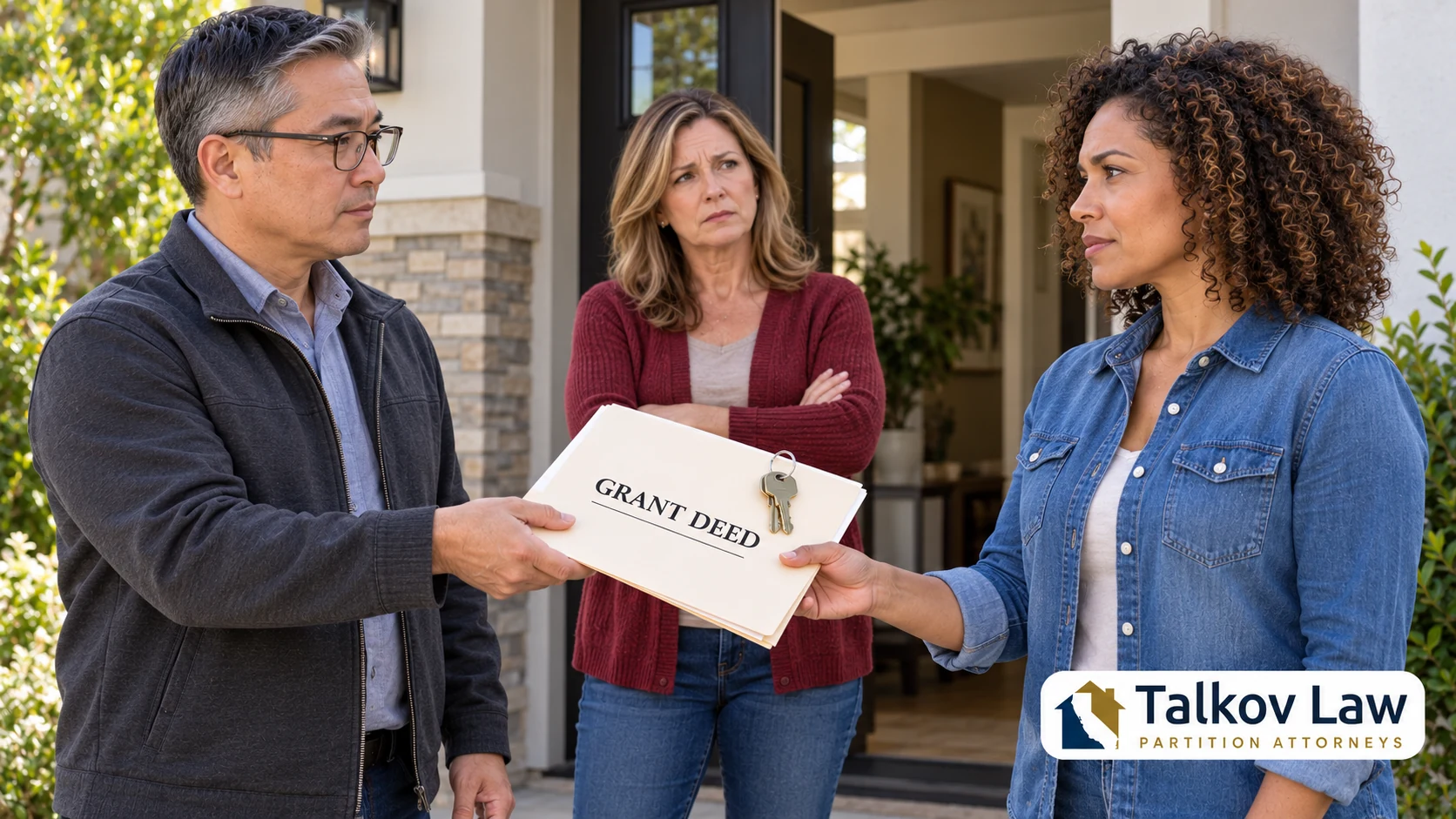
Joint tenancy includes the right of survivorship. But if one joint tenant transfers their interest during their lifetime, the joint tenancy is severed and survivorship is lost for that share.

A quiet title action asks a court to decide who owns property. In co-ownership disputes, it is often paired with a partition action, which ends the co-ownership.

When a co-owner dies, you don’t have to wait for probate to sell. A joint tenant takes the whole property by survivorship; a tenant in common can force a sale through a partition action that joins the estate or heirs.

When you sell your share of a co-owned house, should you stay on the mortgage or get your name removed? Here are the risks and factors to weigh.
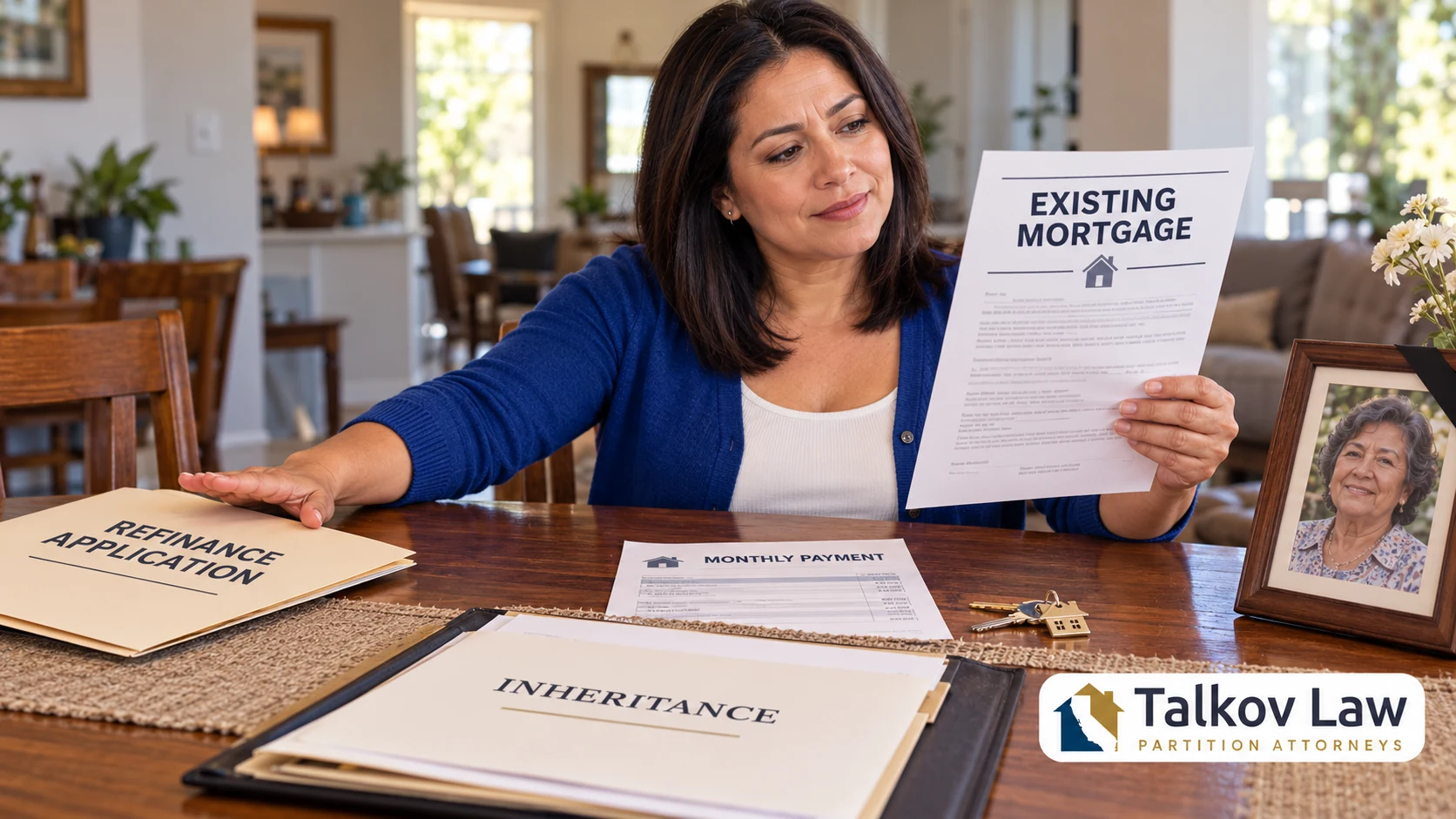
When you inherit a house with a mortgage in California, the lender generally cannot make you refinance just because the owner died, even when no borrower is still alive. Here is who pays and how heirs keep or sell the house.
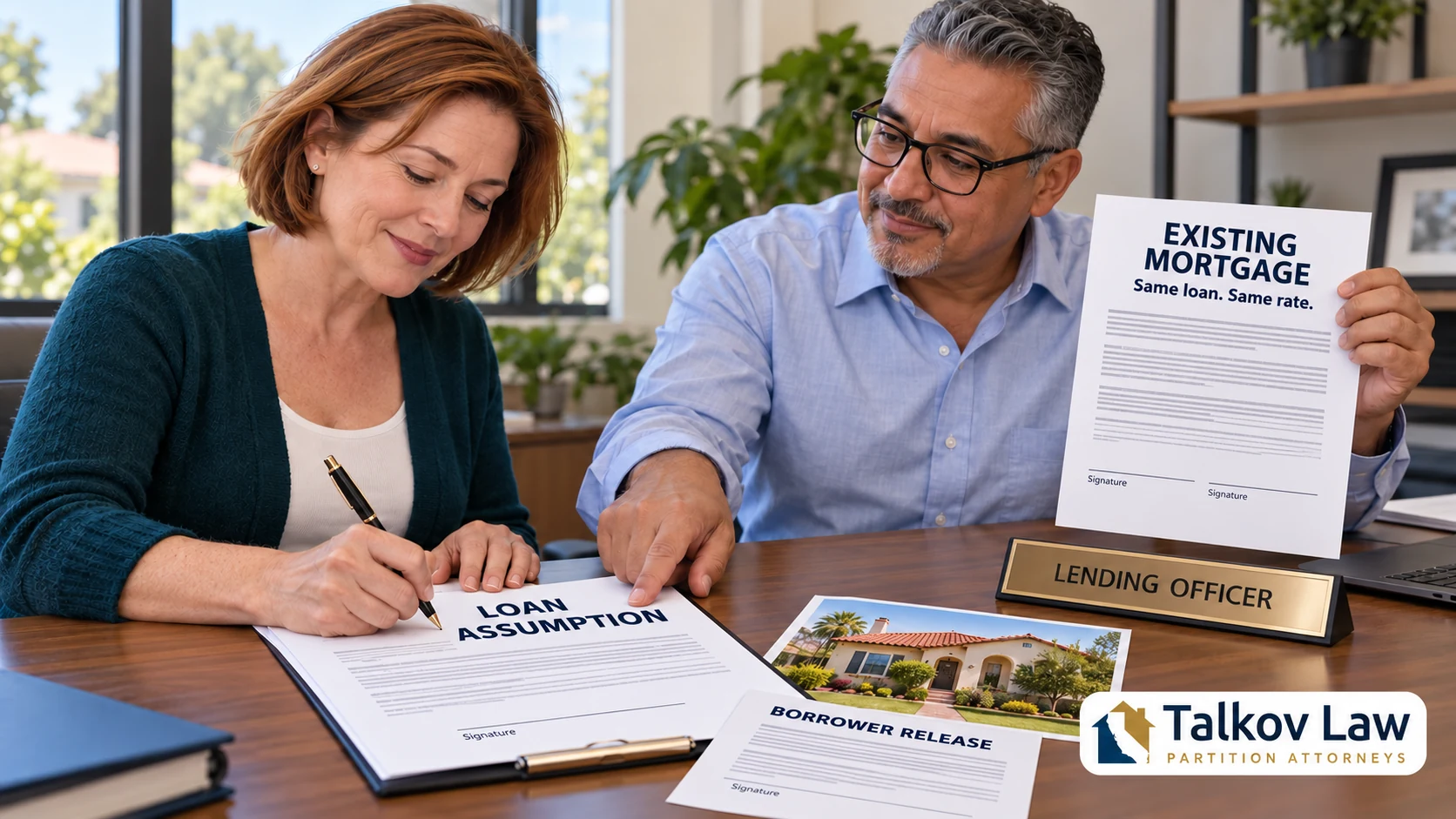
Being stuck on a mortgage with an uncooperative co-owner is hard. Here are the ways to separate yourself from the loan, including a refinance, a buyout, or a partition action.

A co-owner who stops paying the mortgage is often an early sign of a larger dispute. A partition action can force a resolution and credit you for the payments you covered.
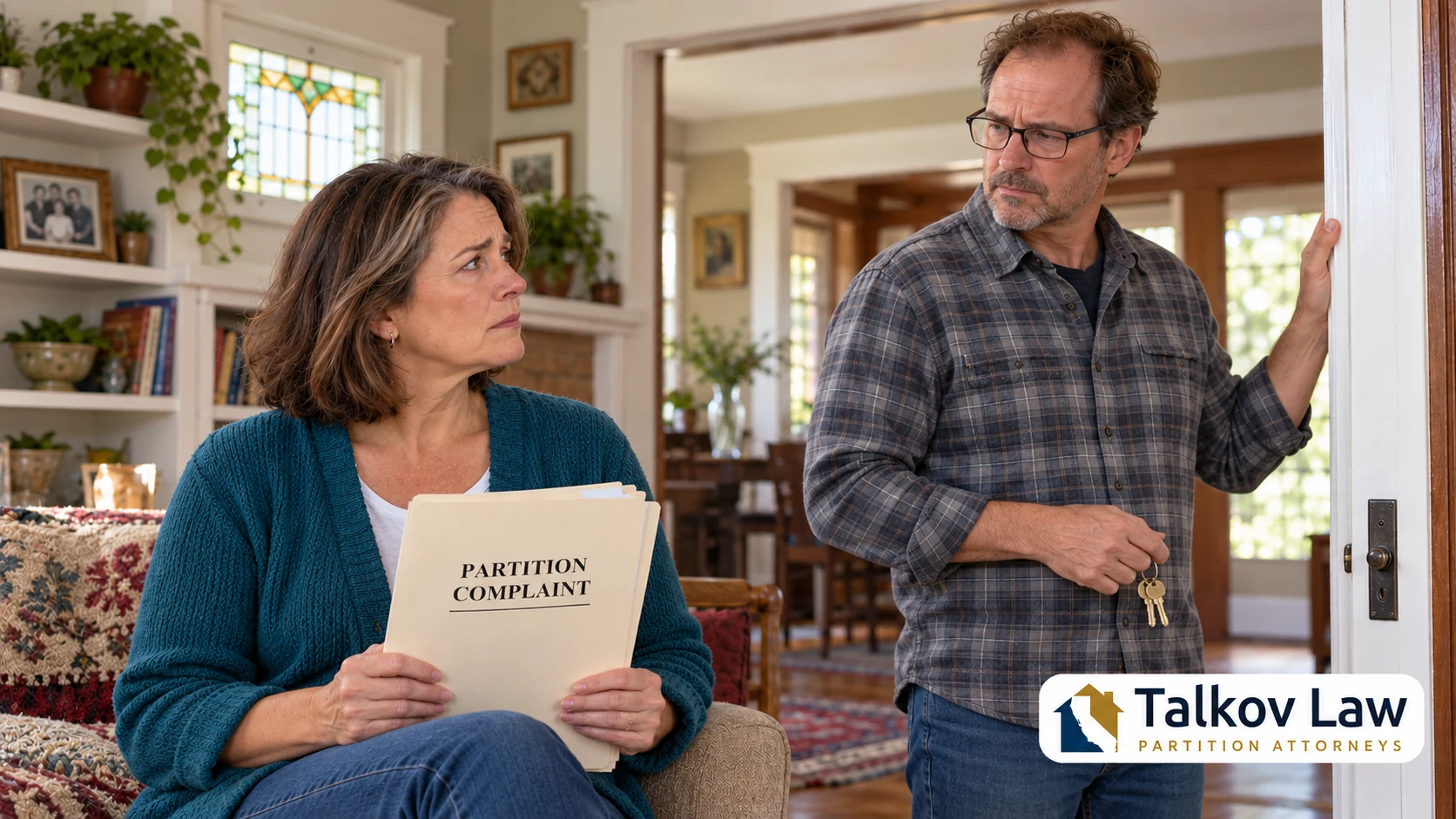
Heirs often disagree about inherited property, such as when one moves in and the others want to sell. If talks fail, a partition action may be the only way to get your share.
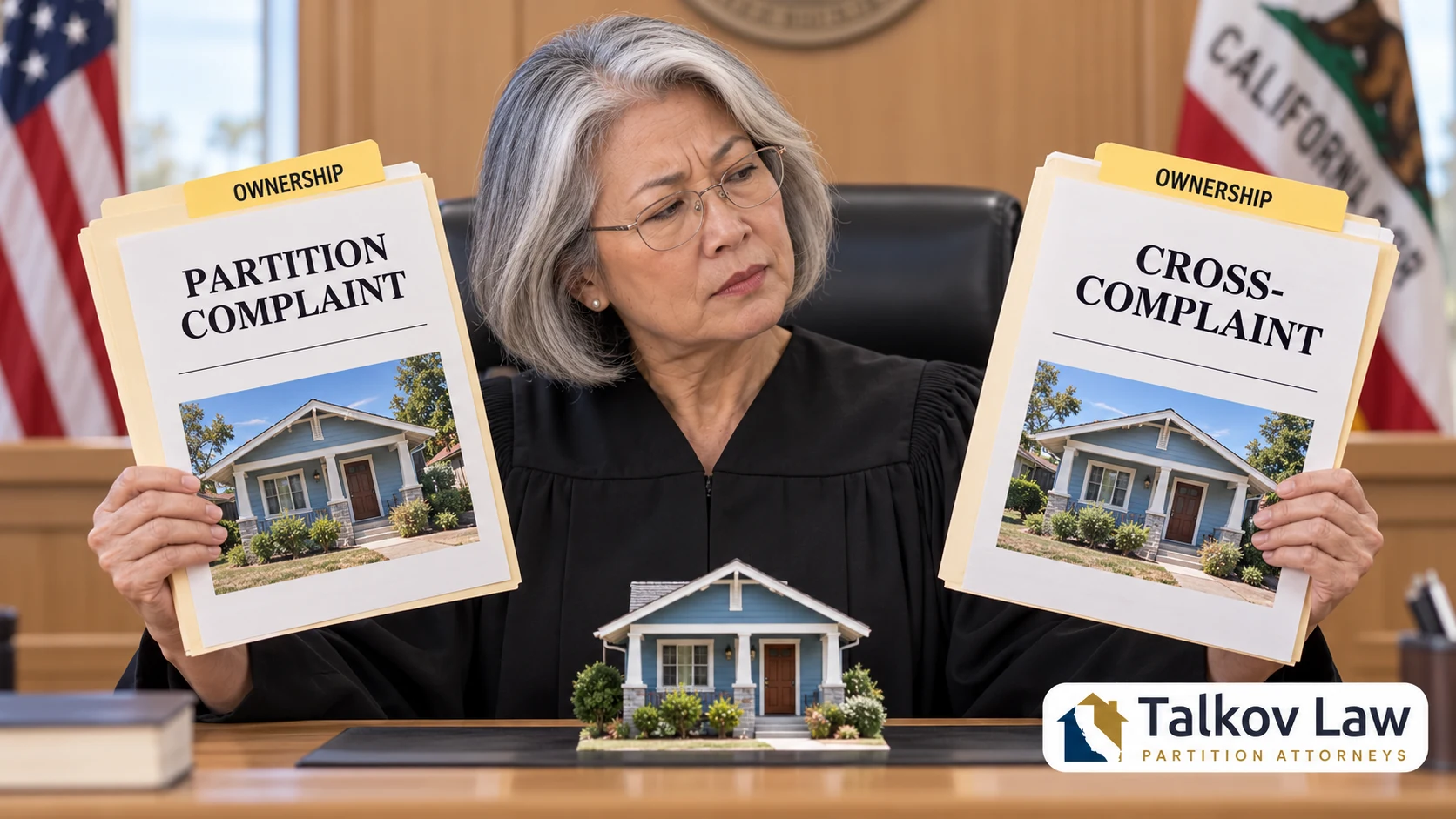
A cross-complaint for declaratory relief can clarify the parties’ rights in a partition action. But its value is limited for ownership disputes, since ownership is already at issue in every partition.
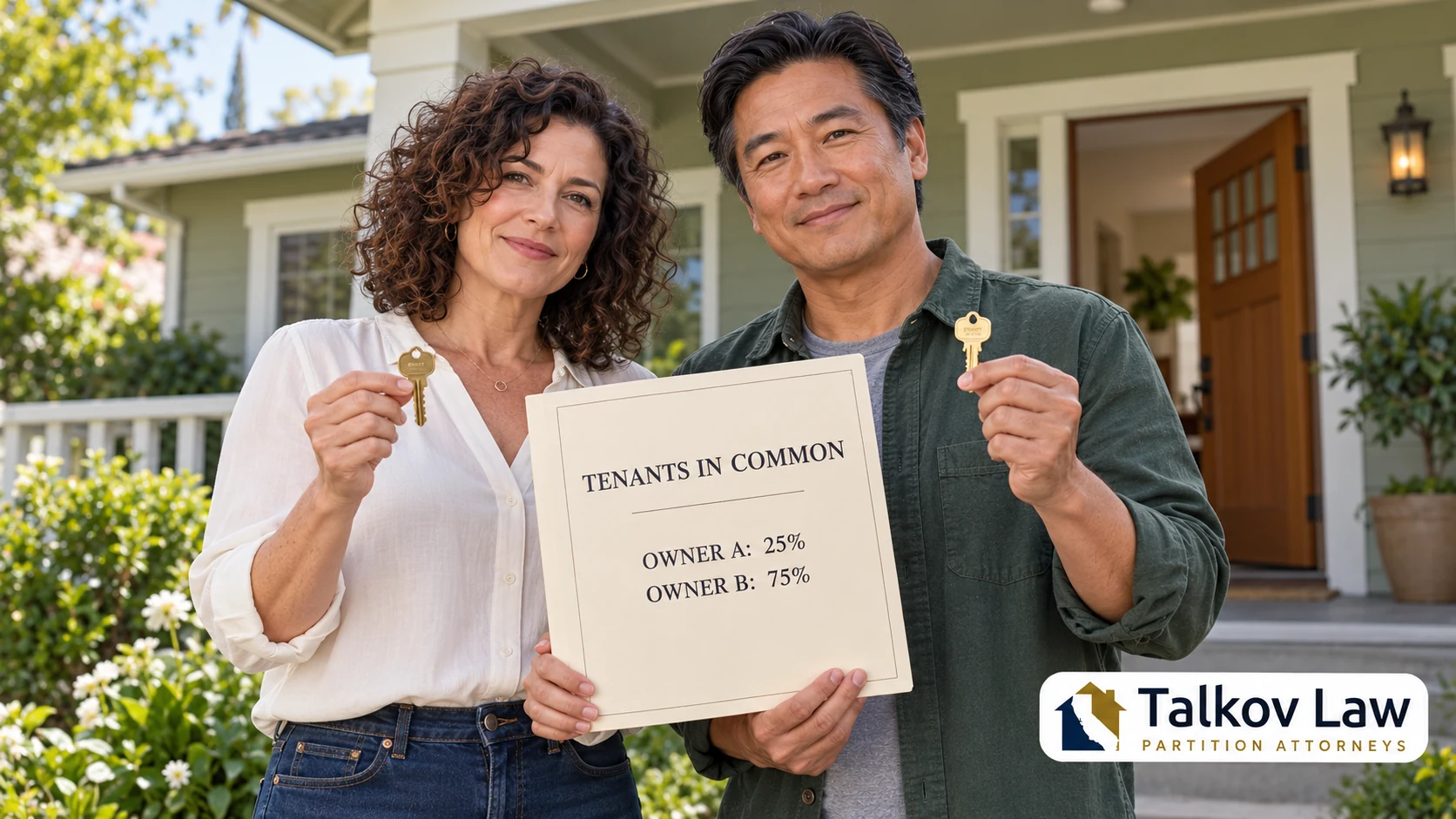
Tenancy in common is the most common and default form of co-ownership in California. Here is how it works and how it differs from joint tenancy.
150+ Five-Star Reviews Across Our California Offices.
Read our reviews →
Representing co-owners statewide. Find your nearest Talkov Law office.
10880 Wilshire Blvd Ste 1101
Los Angeles, CA 90024
4000 MacArthur Blvd Ste 655
Newport Beach, CA 92660
3610 Central Ave, Ste 400
Riverside, CA 92506
500 Capitol Mall, Ste 2350
Sacramento, CA 95814
11622 El Camino Real Ste 100
San Diego, CA 92130
50 California Street 15th Floor
San Francisco, CA 94111
99 S. Almaden Blvd Ste 600
San Jose, CA 95113
Partition Law Resources
Practical guides from attorneys who focus exclusively on California partition actions.
The information on this site, including the Talkov Law Blog, is intended for general information purposes only. By using this site, you agree that any information contained in the site does not constitute legal, financial or any other form of professional advice. Information on this site may be changed without notice and is not guaranteed to be complete, accurate, correct or up-to-date.







