

Free Consultation
Request Your Free Consultation
Tell us about your co-ownership situation and we’ll follow up with the next best step. Do not include confidential information in this form.
150+ Five-Star Reviews
See Why Clients Recommend Talkov Law.
The Talkov Law firm was a pleasure to work with. They were very knowledgeable in the whole process and explained all the steps that they were taking. Scott and Colleen were the best. She accomplished exactly what I wanted and gave me a peace of mind that they would get it done. Colleen took all the right steps in ensuring the best outcome. The whole team at Talkov were professional. I couldn't have asked for a better team to help with my case. Everyone there was willing to help with any questions i had. I would refer them to anyone who wants a team that knows exactly what they are doing and that is transparent. If i ever need another Law firm in the future, I will be calling them to help. Thank you again Talkov Law firm for helping with my Partition.
Jonathan ScocchioAs a fellow attorney I have found that Scott Talkov at Talkov Law is very knowledgeable of partition law and procedure. If I were looking for help in a partition action, I would have no reservation in recommending him.
Antonio MaldonadoThank you Olivia and the Talkov team for all your efforts in resolving our partition action case. Definitely recommend !
Eric TruongTalkov Law
Serving Oakland
Oakland
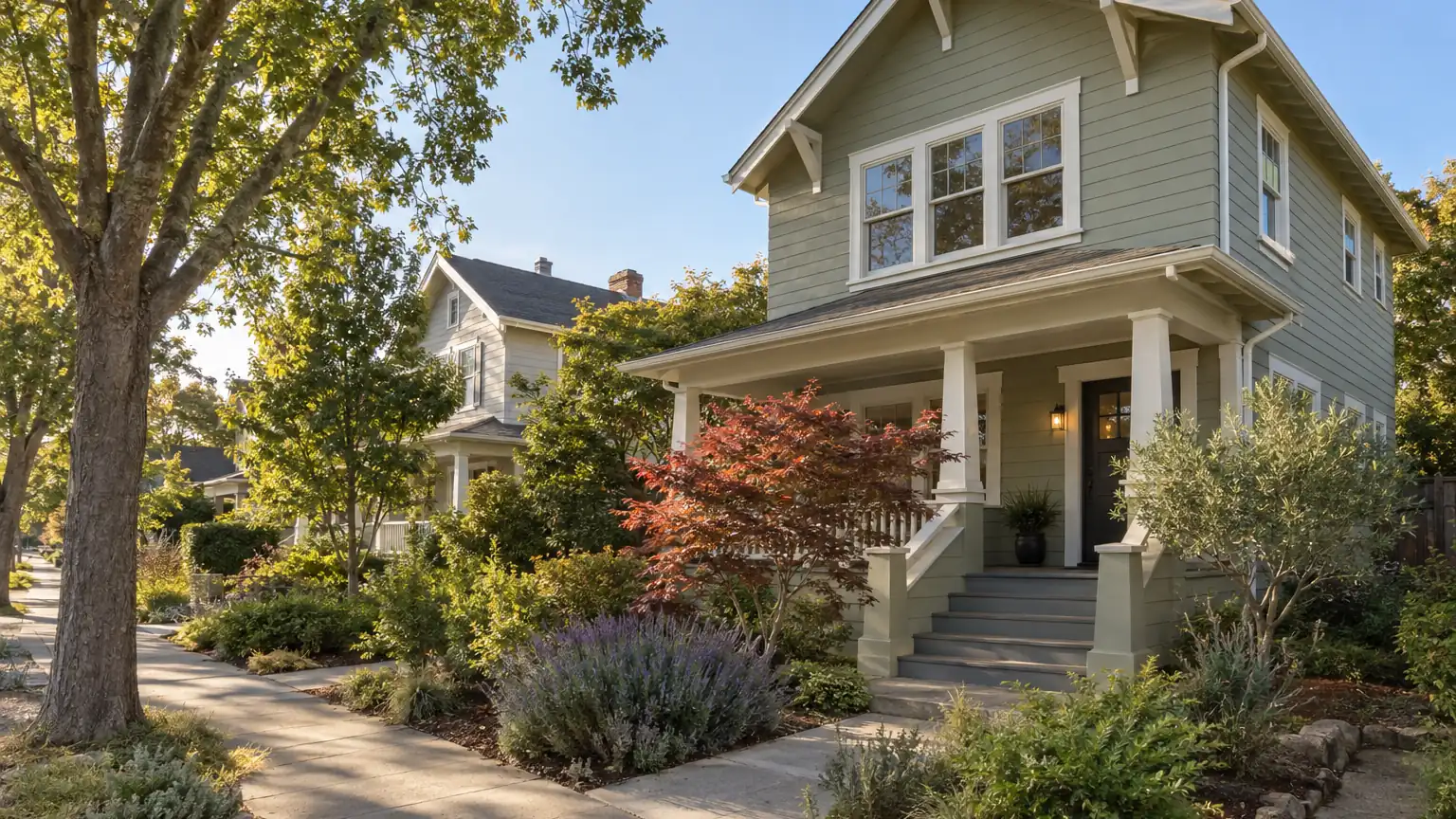
Oakland runs from the wooded hills of Montclair and Skyline down through Rockridge and Temescal to Lake Merritt, Fruitvale, and the flatlands of West and East Oakland. Co-owned property here takes every form: a family Craftsman in the Dimond District, a Victorian in West Oakland, a hillside home above the Warren Freeway, a duplex near Grand Lake, or a condominium downtown. Many of these properties have been in the same family for decades, carry a property tax bill from another era, and are rented to tenants under some of the strictest eviction rules in California. Each of those facts changes how an Oakland partition should be run.
The disputes we handle here are simple to describe and hard to live through: one co-owner wants to sell and the other refuses, leaving the first to force the sale when one owner won’t; siblings inherit a house and only one of them lives in it; or friends who bought a duplex together no longer agree on how to run it. Understanding exactly how a partition action works is usually the turning point.
You don’t have to move blind. From the California partition action forms to the Partition of Real Property Act’s definitions that govern buyouts of inherited property, we map the whole process to your specific situation before anything is filed, then resolve it as efficiently as the Oakland market allows.
Get a Free Case ConsultationOakland · Alameda County
Oakland Partition Attorneys for Co-Ownership Disputes
A co-owned property in Oakland shouldn’t be able to strand your equity because one owner won’t move. House, duplex, condominium, or small apartment building: we can tell you quickly what your share is worth and the fastest route to it.
Talkov Law works only on partition, and we serve the whole East Bay from our California offices. For property elsewhere in the county, see our Alameda County partition attorney section below, our Berkeley, San Leandro, Hayward, Fremont, and Pleasanton, Dublin, and Livermore sections, and the Alameda County courthouses where these cases are heard. We also handle partitions next door in Contra Costa County. For property across the bay, see our San Francisco partition lawyer page. We also handle partitions across the San Mateo Bridge in San Mateo County and over the Altamont Pass in Stockton and San Joaquin County.
Free Consultation
Speak With an Oakland Partition Attorney Today
Get clear guidance on your co-ownership situation and learn the next best step toward resolution.
Get a Free Consultation NowTalk Directly With a California Partition Attorney
Partition Actions in Oakland
When a Co-Owned Oakland Property Won’t Move
If you own an Oakland house, duplex, or condominium with a sibling, an ex, or a friend, and they won’t sell, won’t buy you out, and won’t let you use it, California law gives you a way out: any co-owner can ask the court to order the property sold or divided, no matter how the others feel about it. That lawsuit is called a partition action. It works the same whether you inherited a parent’s house in the Laurel District, bought a first home in Temescal with a partner you’ve since split from, or pooled money with friends on a fourplex near Lake Merritt.
The real question isn’t whether you can get out. It’s how fast, how much of the value you keep, and whether the firm handling it does only this. Partition is all we do.
The Disputes We See Most in Oakland
Most of our Oakland clients arrive with a version of one of these:
Siblings inherit a parent’s house in East Oakland or the Dimond District, and one lives there rent-free and won’t leave while the others can’t reach their share.
Unmarried partners who bought in Rockridge or Temescal split up, and the ex who stayed in the house won’t sell or refinance.
A duplex or small apartment building with tenants, held by co-owners who disagree on rents, repairs, or whether to sell at all.
A tenancy-in-common building near Grand Lake or Adams Point where one owner wants out and the others won’t buy or sell.
A hillside home in Montclair or Piedmont Pines where one co-owner stopped paying the mortgage, the property taxes, or a hard-to-find fire insurance policy.
A co-owner changed the locks, or rents the place out and keeps the money.
None of these has to end in a standoff. Whether the property is an inherited family home, an investment property, or a building held under a tenancy-in-common agreement, a partition gives any owner a way to compel a division or sale and walk away with a fair share.
Oakland Field Guide
What’s Different About a Partition in Oakland
California’s partition statutes apply statewide, but an Oakland property brings its own courthouse, its own taxes, and its own tenant rules. These are the local facts that change the strategy, and the size of your check.
Where your case is heard
A partition of Oakland property is a civil case in the Superior Court of California, County of Alameda. Oakland sits in the court’s Northern Division, served by the René C. Davidson Courthouse at 1225 Fallon Street near Lake Merritt, with most civil judges next door at 1221 Oak Street, and civil papers are filed electronically. See where Alameda County partition cases are heard.
If the house is still tied up in a parent’s estate or trust, that side of the matter runs through the court’s probate department at the Berkeley Courthouse, so we coordinate the two.
The $6,000 empty-house tax
Oakland’s Vacant Property Tax, passed by voters as Measure W in 2018, charges $6,000 a year on a parcel in use fewer than 50 days in a calendar year, and $3,000 on a vacant condominium, townhouse, or duplex unit. It shows up on the Alameda County property tax bill, and ten exemptions can apply.
An inherited house left empty while siblings argue can run up this bill year after year. Who paid it, and why the house sat empty, become questions in the accounting.
Oakland’s transfer tax on a partition sale
Oakland charges one of the steepest city transfer taxes in California. The rate is set by the price tier and applied to the full price, on top of Alameda County’s $1.10 per $1,000:
| Sale price | Oakland rate |
|---|---|
| $300,000 or less | 1.00% |
| $300,001 to $2,000,000 | 1.50% |
| $2,000,001 to $5,000,000 | 1.75% |
| More than $5,000,000 | 2.50% |
Example: on a $1,200,000 Oakland house, the city tax is $18,000 (1.5% of $1,200,000) and the county tax is $1,320 ($1.10 for each $1,000), or $19,320 in all. That is a cost of the sale that shrinks what the co-owners divide.
A buyout of one owner’s share is generally taxed only on the price paid for that share, which is one reason a co-owner buyout can leave more money for everyone in Oakland.
Tenants stay with the building
Oakland’s Just Cause for Eviction Ordinance covers most rentals in the city, including single-family homes and, since voters passed Measure Y in 2018, owner-occupied duplexes and triplexes.
A partition sale doesn’t end a tenancy: the buyer takes the property with the tenants in place, and an owner move-in eviction later has to meet the ordinance’s rules, including relocation payments. That affects price, so we weigh it before choosing between a sale and a buyout.
Proposition 19 and the sibling who moved in
Many Oakland families have owned the same house for decades, with a property tax bill to match. Under Proposition 19, children keep a parent’s low tax base on an inherited family home only if one of them makes it a primary residence, subject to a value cap.
That rule is why one sibling often moves in and the others feel stuck. Read how Proposition 19 affects co-owning siblings, including what happens to the tax base after a buyout.
Hills homes and fire risk
Much of the Oakland Hills, the area that burned in the 1991 firestorm, lies in a state-mapped Very High Fire Hazard Severity Zone. That affects disclosures, insurance, and what buyers will pay, but it does not take away your right to partition. When coverage is hard to find, who carries the policy and at what cost becomes part of the case.
Neighborhoods We Serve Across Oakland
A partition is filed in the county where the property sits, but you don’t have to live here to bring one. Many of our Oakland clients are heirs or investors who live elsewhere in California or out of state. We represent co-owners in every part of the city:
The Oakland Hills
Montclair · Piedmont Pines · Skyline · Oakmore · Crocker Highlands · Trestle Glen
View homes on steep lots, where fire-zone insurance and deferred maintenance often drive the dispute.
North Oakland
Rockridge · Temescal · Piedmont Avenue · Longfellow · Bushrod
Craftsman houses and duplexes near BART, often bought by couples and friends who later go separate ways.
Downtown, the Lake, and West Oakland
Lake Merritt · Adams Point · Grand Lake · Uptown · Jack London Square · West Oakland
Condominiums, Victorians, and tenancy-in-common buildings, most of them with tenants.
East Oakland
Fruitvale · Dimond District · Laurel District · Glenview · Maxwell Park · Millsmont · Eastmont
Family homes held for generations, where several heirs now share one house.
Nearby cities we also serve
We handle partitions across the East Bay, including every city in Alameda County and these nearby communities:
How a Partition Action Works
People expect a years-long fight. In reality most partitions follow a set path, and many settle once the outcome is clear:
-
Filing and the right to partition
We file and establish your right to partition, which is nearly absolute in California and puts pressure on a stalling co-owner from day one.
-
Interlocutory judgment
The court confirms the ownership shares and orders the property partitioned. A house, duplex, or condominium in Oakland is almost always sold rather than physically split.
-
Sale or buyout
Before a listing, a co-owner often has the right to buy the others out at appraised value. If no one buys, the property is sold and the proceeds are distributed.
-
Accounting and distribution
Before proceeds are split, the court accounts for who paid the mortgage, taxes, insurance and improvements, and who collected rent. On Oakland property values, that can move real money.
Partition Referees in Alameda County
Once the court orders a sale, it appoints a partition referee, a neutral officer who answers to the judge, to market and sell the property. The referee can be a real estate broker or another professional the court approves, and co-owners can often agree on who it will be, which saves time and fights. The referee arranges the listing, deals with access when a co-owner or tenant is in the house, and reports the sale back to the court for confirmation. Cases that settle never need one; see whether a partition referee is necessary.
Where the Real Money Is Decided
On an Oakland property, the accounting is usually where the case is won or lost. If you carried more than your share of the down payment, the mortgage, the property taxes, insurance, or improvements, those amounts can be reimbursed off the top before the balance is divided, and rent from a tenant or a unit in a duplex has to be accounted for too. A co-owner who locks the others out can also owe them their share of the rental value.
Oakland adds items owners elsewhere never see: a year or two of vacant property tax on an empty inherited house, the city’s annual Rent Adjustment Program fee on each rental unit, or a costly fire policy in the hills. Our guide to partition offsets, credits, and reimbursements explains how these are counted, and getting them right early is often the quiet difference between an even split and the share you’re actually owed.
Alameda County Partition Attorney
Alameda County stretches from the brown-shingle hills of Berkeley and Oakland through the flatlands of Hayward and San Leandro to the suburbs of Fremont and the Tri-Valley. With median values well above a million dollars, a co-owned East Bay home is often a family’s most valuable asset, and many are shared by siblings, partners, or investors who bought together to afford the Bay Area. Owners ask about the trend of co-buying in the Bay Area and how partition rules apply to property held by partnerships.
We represent co-owners in every city in Alameda County: Alameda, Albany, Berkeley, Dublin, Emeryville, Fremont, Hayward, Livermore, Newark, Oakland, Piedmont, Pleasanton, San Leandro, and Union City. We also represent owners in the county’s unincorporated communities, which have no city government of their own: Castro Valley, San Lorenzo, Ashland, Cherryland, and Fairview, and Sunol. Every Alameda County partition case is filed in the Superior Court of California, County of Alameda, and you don’t need to live here to bring one.
Alameda County Superior Court: Where a Partition Case Is Heard
A partition is filed in the county where the property sits, so every partition of Alameda County real estate goes to the Superior Court of California, County of Alameda. The case is assigned to a single civil judge, who handles it from filing through the interlocutory judgment, the sale or buyout, and the final accounting. The court has courthouses all over the county, but its civil judges sit in only two places: downtown Oakland and Hayward.
Oakland: René C. Davidson Courthouse and the Administration Building
The civil clerk’s office is in Room 109 of the René C. Davidson Courthouse, 1225 Fallon Street, on the edge of Lake Merritt. Most of Oakland’s civil judges hear cases next door in the County Administration Building at 1221 Oak Street, and the Lake Merritt BART station is a few minutes’ walk from both. The court’s local rules place Oakland, Berkeley, Alameda, Albany, Emeryville, and Piedmont in its Northern Division, served by the Davidson courthouse.
Hayward Hall of Justice
The Hayward Hall of Justice, 24405 Amador Street, has its own civil clerk’s office and civil judges. The local rules place Hayward, San Leandro, Fremont, Newark, Union City, Castro Valley, San Lorenzo, Ashland, Cherryland, and Fairview in the Southern Division, served by this courthouse.
Fremont and the Tri-Valley
Owners in Fremont, and in Pleasanton, Dublin, Livermore, and Sunol (which the rules call the Eastern Division), are often surprised that their partition is not heard at the Fremont Hall of Justice or the East County Hall of Justice in Dublin. Civil papers can be filed only at the clerk’s offices in Oakland and Hayward, and the court’s civil judges sit in those two buildings.
When the House Is Also in Probate or a Trust Case
If the property is still part of a parent’s estate or trust, that side of the matter goes to the probate court. Probate calendars are heard at the Berkeley Courthouse, 2120 Martin Luther King Jr. Way, in Departments 201 and 202, and probate trials and trust matters are also heard in Department 103 at the Wiley W. Manuel Courthouse, 661 Washington Street in Oakland. We coordinate the two cases so the estate and the partition don’t work against each other.
Department numbers and judges change from year to year, so we confirm the current assignment when your case is filed. Most papers are filed electronically, and you don’t need to come to court for most of the case.
Berkeley Partition Attorney
Berkeley’s housing is old, valuable, and often shared. Brown-shingle Craftsmans and early-1900s bungalows line the streets of Elmwood, North Berkeley, and Westbrae; larger view homes climb the Berkeley Hills toward Tilden Park; and the flatlands are full of duplexes and small multi-unit buildings, many rented to students and staff at UC Berkeley. Most residents rent rather than own, so a co-owned property here is frequently an income property with tenants in place, and Berkeley’s rent and eviction rules can affect how and when it can be sold.
Berkeley cases usually start one of three ways: a family home has passed to several heirs, and the question becomes whether all heirs have to agree to sell inherited property; one owner lives in the house and stonewalls the others, a situation we address in when a co-owner in possession refuses to cooperate; or a co-owner moved away years ago and has gone silent, which raises whether you can file a partition action if the co-owner cannot be reached. In every one of these, you have options.
Many Berkeley properties have been in the same family for decades. A house bought in the 1970s for a fraction of today’s price is now worth well over a million dollars, and a long-held family home often carries a large gain; a co-owner can’t force you to pay their capital gains tax in a partition sale. When the property is rented, rents collected by one owner have to be shared, and payments for the mortgage, property taxes, insurance, and repairs can be credited back to whoever made them.
We represent co-owners throughout Berkeley, including Elmwood, North Berkeley, Westbrae, Thousand Oaks, Claremont, the Berkeley Hills, South Berkeley, West Berkeley, and the neighborhoods around the UC Berkeley campus, and next door in Kensington and in Richmond across the Contra Costa County line. Berkeley partition cases are filed in the Superior Court of California, County of Alameda, in the court’s Northern Division, and many of our Berkeley clients are heirs who moved away long ago.
Alameda Partition Attorney
Alameda is home to one of the largest collections of Victorian homes in California. Queen Annes and Italianate cottages line the streets of the Gold Coast, the East End, and the neighborhoods around Park Street, while Bay Farm Island and Harbor Bay offer newer single-family homes and townhomes by the water. Older homes here carry historic character, along with historic-preservation rules, deferred maintenance, and decades of family ownership that can turn a shared house into a source of conflict.
Alameda disputes often center on the house itself: one owner wants to restore a 120-year-old Victorian before selling, another wants to sell as-is, and nobody agrees on who pays. Those questions lead to others: whether each co-owner must disclose material defects in an older home, whether you can pick the realtor in a partition action, and whether co-listing the property could avoid a fight altogether.
San Leandro Partition Attorney
San Leandro is a city of long-time homeowners. Spanish Revival cottages and 1920s bungalows fill Estudillo Estates and Broadmoor, post-war homes line the streets of Washington Manor and Mulford Gardens, and hillside homes in Bay-O-Vista look out over the bay. Many of these houses have been owned by the same family for decades, which means that when they change hands, they often pass to several children at once, along with a low property tax base and a lot of family history.
Long ownership creates its own kind of dispute. A parent may have promised one child they could stay in the house, but oral life estates are not legally recognized in California. Names may have been added or removed over the years, so it’s sometimes necessary to piece together a property’s title history or deal with the impact of an unrecorded deed. And owners often ask whether they can simply remove a co-owner from title. Usually the answer is a partition.
Hayward Partition Attorney
Hayward is one of the Bay Area’s most established homeowner communities. Post-war tract homes fill the flatlands between the bay and the hills, larger view homes sit up in the Hayward Highlands near Cal State East Bay, and newer townhomes and single-family homes line the shoreline in Eden Shores. Because Hayward is more affordable than much of the Bay Area, many homes here were bought by family members pooling their incomes: parents and adult children, siblings, or partners buying their first place together.
That kind of shared purchase works until it doesn’t. Hayward disputes often turn on who put up the money, which is why down payment gifts in partition actions get so much attention; on how title was taken, since the right of survivorship in California changes what happens when an owner dies; and on what to do when a co-owner refuses to communicate about a sale or buyout.
Castro Valley and San Lorenzo Partition Attorney
Castro Valley, San Lorenzo, Ashland, Cherryland, and Fairview are unincorporated communities, governed by Alameda County rather than a city. San Lorenzo Village is one of the Bay Area’s original post-war planned neighborhoods, and its 1940s and 1950s homes, like the ranch homes and hillside houses of Castro Valley around Lake Chabot, are often owned by the family that bought them new. When those homes pass to the next generation, several children usually inherit together, and one of them often already lives there.
These cases are filed in the Superior Court of California, County of Alameda, in the Southern Division served by the Hayward Hall of Justice. A buyout of the sibling in the house is often the best outcome for everyone; see how a co-owner buyout works inside a partition.
Fremont Partition Attorney
Fremont is Alameda County’s largest city by area, made up of the historic districts of Mission San Jose, Niles, Centerville, Irvington, and Warm Springs, plus newer neighborhoods such as Ardenwood. Close to Silicon Valley jobs, Fremont homes command high prices, and many were bought by relatives or friends who pooled their incomes, by parents and adult children together, or by investors who rent them out. When the buyers’ plans diverge, a partition is how one owner gets out.
Fremont disputes often turn on who paid what. One owner made the down payment, another paid the mortgage, a third lived in the house; the accounting in a partition sorts that out through offsets, credits, and reimbursements before the proceeds are divided.
Newark Partition Attorney
Newark is surrounded by Fremont on three sides, and its single-family neighborhoods and newer developments near the bay draw many of the same co-buyers. We represent Newark co-owners in partitions filed in the Southern Division, served by the Hayward Hall of Justice.
Union City Partition Attorney
Union City’s homes, from the older neighborhoods of Alvarado and Decoto to newer subdivisions in the hills, are frequently shared by extended families. We represent Union City owners who need to force a sale or a buyout when the family can’t agree.
Pleasanton, Dublin, and Livermore Partition Attorney
The Tri-Valley holds some of Alameda County’s most valuable homes. Pleasanton offers its historic downtown, established neighborhoods, and estates near Ruby Hill; Dublin has grown quickly with newer planned communities, many with homeowners association dues and special tax assessments; and Livermore adds wine-country properties, ranches, and rural acreage, as does Sunol. Co-owners here include siblings who inherited a parent’s home, couples who bought together and split up, and families holding land as an investment.
With a house or condominium, the court almost always orders a sale. With larger parcels in Livermore or Sunol, it is sometimes possible to divide the land itself; see how the court chooses the manner of partition. Tri-Valley owners should know that their partition is heard in Oakland or Hayward, not at the East County Hall of Justice in Dublin.
Piedmont, Emeryville, and Albany Partition Attorney
Three small cities round out the north end of the county. Piedmont, entirely surrounded by Oakland, is known for large historic homes on generous lots, where a single property can be worth several million dollars and a co-owner who blocks a sale ties up a fortune. Emeryville, between Oakland and Berkeley, is mostly condominiums, lofts, and townhomes, many held as rentals. Albany, just north of Berkeley, is a city of bungalows and small lots that families have held for generations.
All three are in the court’s Northern Division, served by the René C. Davidson Courthouse in Oakland. When the property is rented, owners often ask whether they can partition a rental property with tenants; the answer is yes.
East Bay Partition Attorney
On the Alameda County side, the East Bay runs from the brown-shingle hills of Berkeley and Oakland through the bungalows of San Leandro and Hayward to Fremont and the Tri-Valley. Many East Bay homes were bought decades ago, and many are now shared by heirs, co-buyers, or relatives who share rentals.
We represent co-owners throughout the East Bay, including Berkeley, Alameda, San Leandro, Hayward, Fremont, Pleasanton, and Livermore, and those cases are filed in the Superior Court of California, County of Alameda. For property in Richmond, Walnut Creek, Concord, Antioch, or elsewhere in Contra Costa County, see our Contra Costa County partition attorney page.
East Bay co-owners include siblings who inherited a family home in the hills, friends who co-bought a duplex, and relatives who share rentals with long-term tenants. Tenancies and local rent rules in several East Bay cities affect value and timing, not the right to partition. Owners of rentals often ask whether they can partition a rental property with tenants.
A court-ordered sale still closes through escrow, and mistakes can be costly.
Why Oakland Owners Choose Talkov Law
Most real estate attorneys handle a partition occasionally, between other matters. We don’t do anything else, and the focus shows. The firm has handled 650 partition matters, and no partition has been denied. Cases are handled by a dedicated team of partition attorneys who do this full-time. When the property in dispute is a tenant-occupied building or a family home with decades of history, that depth is the difference between a resolution and a discount.
Oakland Partition Questions
One of us wants to sell and the other won’t. Can I force it?
Yes. California’s right to partition is nearly absolute. If your co-owner refuses to sell, the court can order the property sold and the proceeds divided by ownership share. Your co-owner cannot simply block it.
My sibling lives in our inherited house and won’t pay rent or sell. What can I do?
A partition lets you force a sale or a buyout of your share. In the accounting, the court can also weigh who has had the use of the property and who has paid its expenses.
Our Oakland duplex has tenants. Can it still be partitioned?
Yes. Oakland’s rent and eviction protections stay with the tenants through a sale, which affects what a buyer will pay, but they don’t take away a co-owner’s right to partition. We build those limits into the strategy.
Does fire-zone property in the Oakland Hills change anything?
It can affect value, insurance, and what a buyer will pay, but it doesn’t take away your right to partition. We account for those factors in the strategy.
Are there alternatives to filing?
Yes: a negotiated buyout, an agreed sale, or mediation. Filing is often the leverage that finally makes one of those happen, and we pursue both tracks at once.
What does a partition cost, and who pays?
The average partition action costs about $20,000. California law can spread attorney’s fees that benefit every owner across all of the co-owners by ownership share, and Talkov Law charges no fees until you win. See who pays for a partition.
Our inherited Oakland house is sitting empty. Will the city tax it?
It may. Oakland’s Vacant Property Tax charges $6,000 a year on a parcel in use fewer than 50 days in a calendar year, or $3,000 for a vacant condominium, townhouse, or duplex unit, billed with the county property taxes. Exemptions exist, including for hardship, so check before the bill arrives.
Which Alameda County courthouse will hear my partition case?
A partition of Alameda County property is filed in the Superior Court of California, County of Alameda, and assigned to one civil judge in Oakland or Hayward. Oakland’s civil judges sit in the Administration Building at 1221 Oak Street, next to the René C. Davidson Courthouse at 1225 Fallon Street; the other civil judges sit at the Hayward Hall of Justice at 24405 Amador Street. Owners in Fremont, Pleasanton, Dublin, and Livermore should expect one of those two buildings, not their local courthouse.
I live outside California. Can I still partition an Oakland property?
Yes. The case is filed in Alameda County because that is where the property is, not where you live. Many of our Oakland clients are heirs in other states, and much of the case can be handled without travel.
Find Out Where Your Oakland Case Stands, Free
A free 30-minute consultation is usually enough to map your options and your likely outcome for an Oakland property. No fees until you win.
Get a Free Case ConsultationOr call (510) 999-3300







