
Is a Partition Referee Necessary in California?
Not always. Most California partitions that end in a court-ordered sale need a referee, but a court-appointed broker can fill that role, and cases that settle never need one.
Not always. Most California partitions that end in a court-ordered sale need a referee, but a court-appointed broker can fill that role, and cases that settle never need one.

Not just because you filed. In California, a co-owner’s buyout right opens only after someone requests partition by sale, and only for property held as tenants in common.

Yes. California Code of Civil Procedure section 874.317 lets a co-owner buy out the co-owners who requested a partition by sale, at a price based on the court’s valuation.

California lets the co-owner who files a partition ask the court to award attorney’s fees and costs against the other co-owners, usually paid from the sale proceeds.

California’s Uniform Partition of Heirs Property Act took effect January 1, 2022, giving defendants in some partition actions added protections.

Estimate partition proceeds by accounting for value, debt, sale expenses, ownership shares, and reimbursements. See a worked $1 million sale example.

Code of Civil Procedure section 874.323 explains how California’s Partition of Real Property Act modifies, limits, and supersedes the federal Electronic Signatures in Global and National Commerce Act.
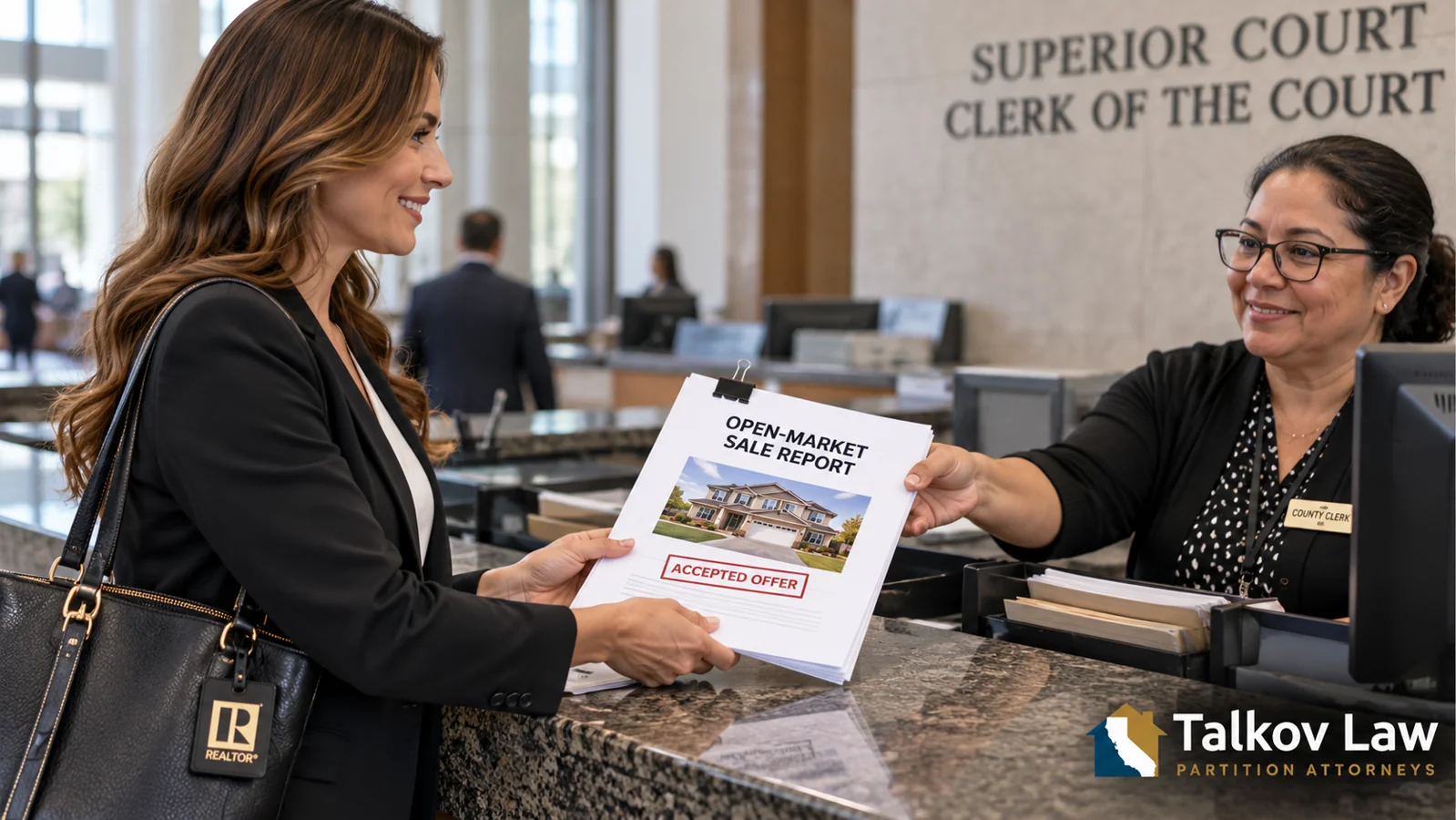
Code of Civil Procedure section 874.321 sets what details of an open-market sale must be reported to the court under California’s Partition of Real Property Act.
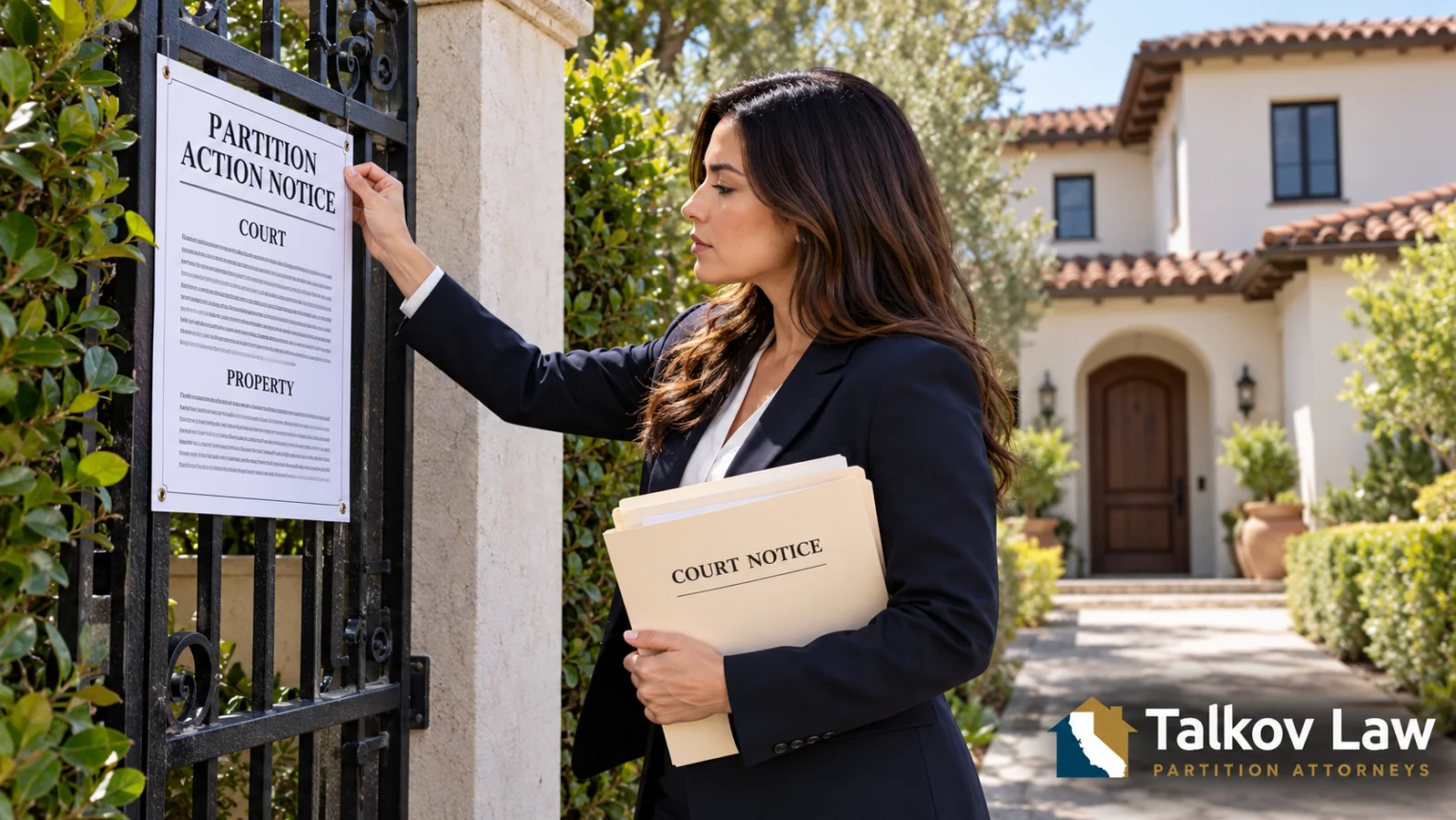
Code of Civil Procedure section 874.314 addresses methods of service and notice by publication under California’s Partition of Real Property Act.
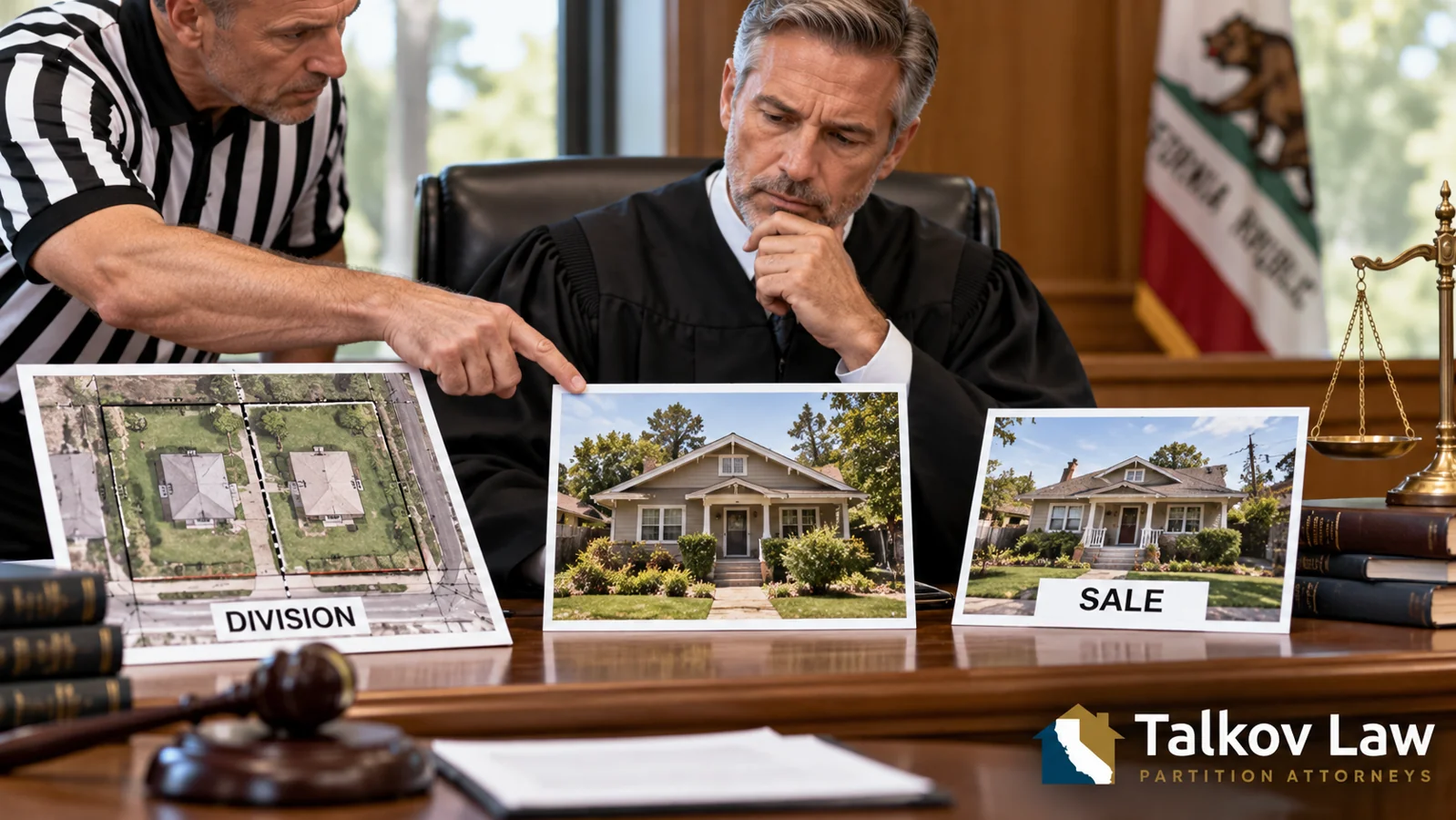
Code of Civil Procedure section 874.318 explains the partition alternatives under California’s Partition of Real Property Act when the co-owners requesting a sale are not bought out.

Code of Civil Procedure section 874.316 sets how the court determines the property’s fair market value under the Partition of Real Property Act, which then sets the price for a co-owner buyout.

Code of Civil Procedure section 874.320 explains how the court sells property under the Partition of Real Property Act, usually through an open-market sale by a broker.

Code of Civil Procedure section 874.321.5 explains how the court apportions the costs of partition among the parties under the Partition of Real Property Act.

Code of Civil Procedure section 874.311 gives the Partition of Real Property Act its name and sets when the Act applies.

The Partition of Real Property Act took effect January 1, 2023, replacing the Uniform Partition of Heirs Property Act. It gives co-owners the chance to buy out a co-owner who asks for a sale.

Code of Civil Procedure section 874.315 sets requirements for partition referees appointed under the Partition of Real Property Act.

Code of Civil Procedure section 874.313 sets when a partition must proceed under the Partition of Real Property Act and how the Act relates to other partition laws.

Code of Civil Procedure section 874.312 defines the terms used throughout California’s Partition of Real Property Act.

Code of Civil Procedure section 874.319 lists the factors a court considers in deciding whether a partition in kind would cause great prejudice to the co-owners.

Code of Civil Procedure section 874.317 explains how a co-owner can buy out the co-owners who requested a sale once the fair market value of the property is set.

Partition by appraisal is one of three ways to partition property in California. It lets co-owners resolve their dispute through an agreed buyout at an appraised price.

As partition attorneys in California, we are often asked about the cost of a partition action. Since attorneys are the largest cost, the real question is how much are the attorney’s fees for a partition lawsuit in California?

Representing co-owners statewide. Find your nearest Talkov Law office.
Practical guides from attorneys who focus exclusively on California partition actions.
The information on this site, including the Talkov Law Blog, is intended for general information purposes only. By using this site, you agree that any information contained in the site does not constitute legal, financial or any other form of professional advice. Information on this site may be changed without notice and is not guaranteed to be complete, accurate, correct or up-to-date.







