
Richmond v. Dofflemyer: Can a Court Divide Co-Owned Land in Stages?
In Richmond v. Dofflemyer, a California court divided part of a family ranch in kind and sent the rest to a referee. See what it means for co-owners.
In Richmond v. Dofflemyer, a California court divided part of a family ranch in kind and sent the rest to a referee. See what it means for co-owners.
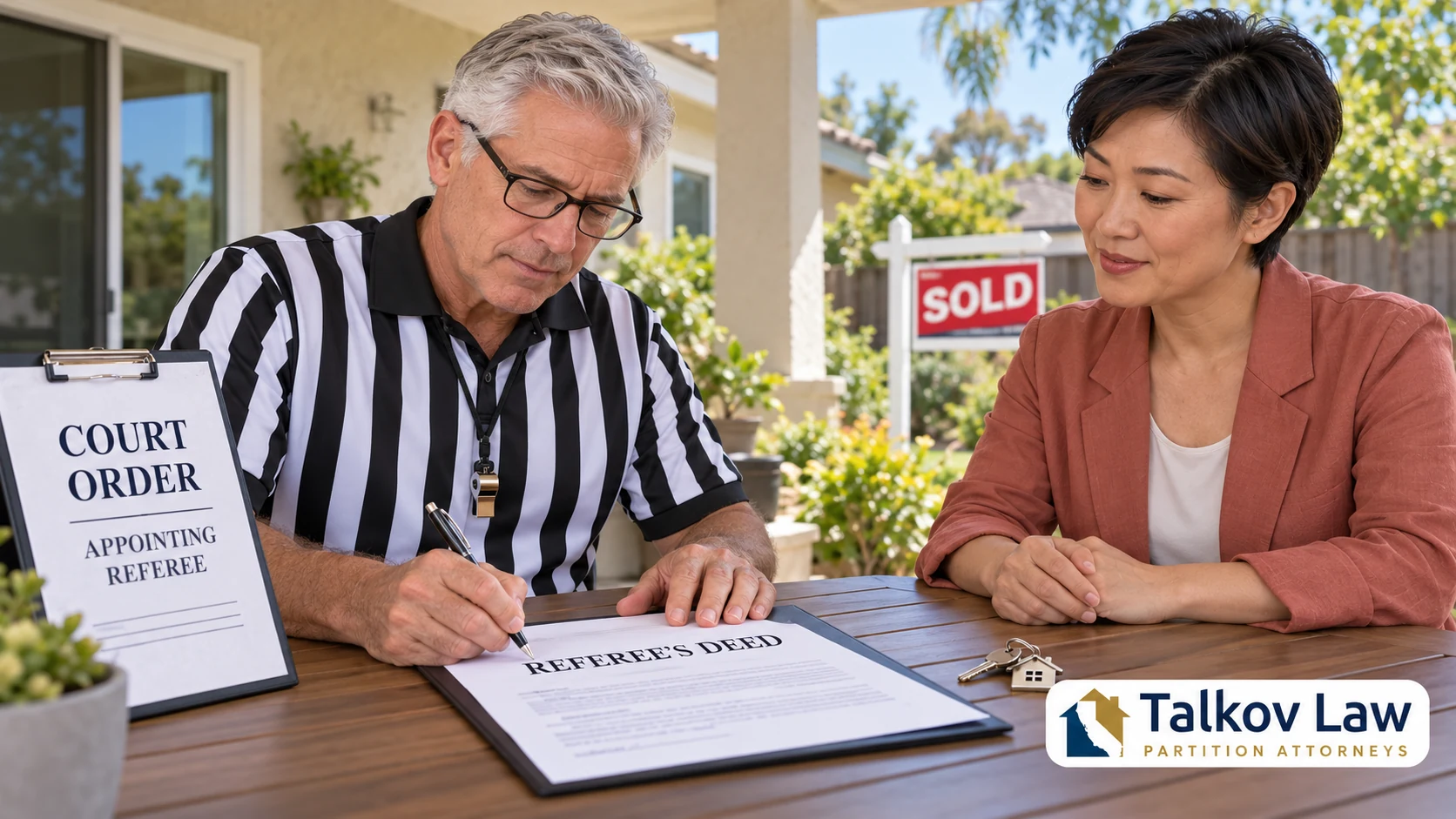
A California partition referee carries out a court-ordered sale or division of co-owned property. Learn what referees do, how they are selected and paid, and how a sale can proceed when a co-owner refuses to cooperate. Includes a California referee directory.
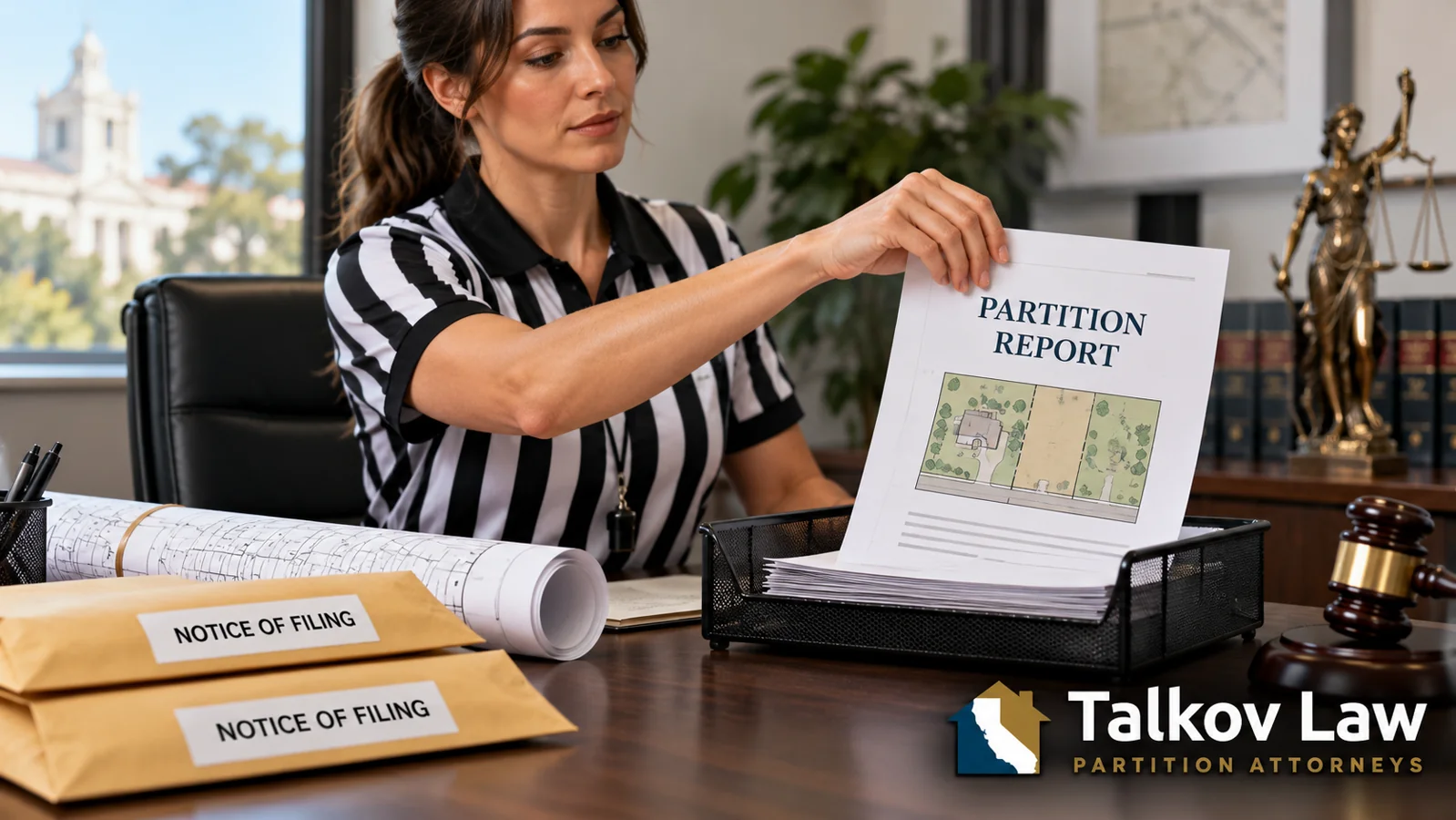
Code of Civil Procedure section 873.280 sets what a partition referee’s report must contain and who must receive written notice of it.
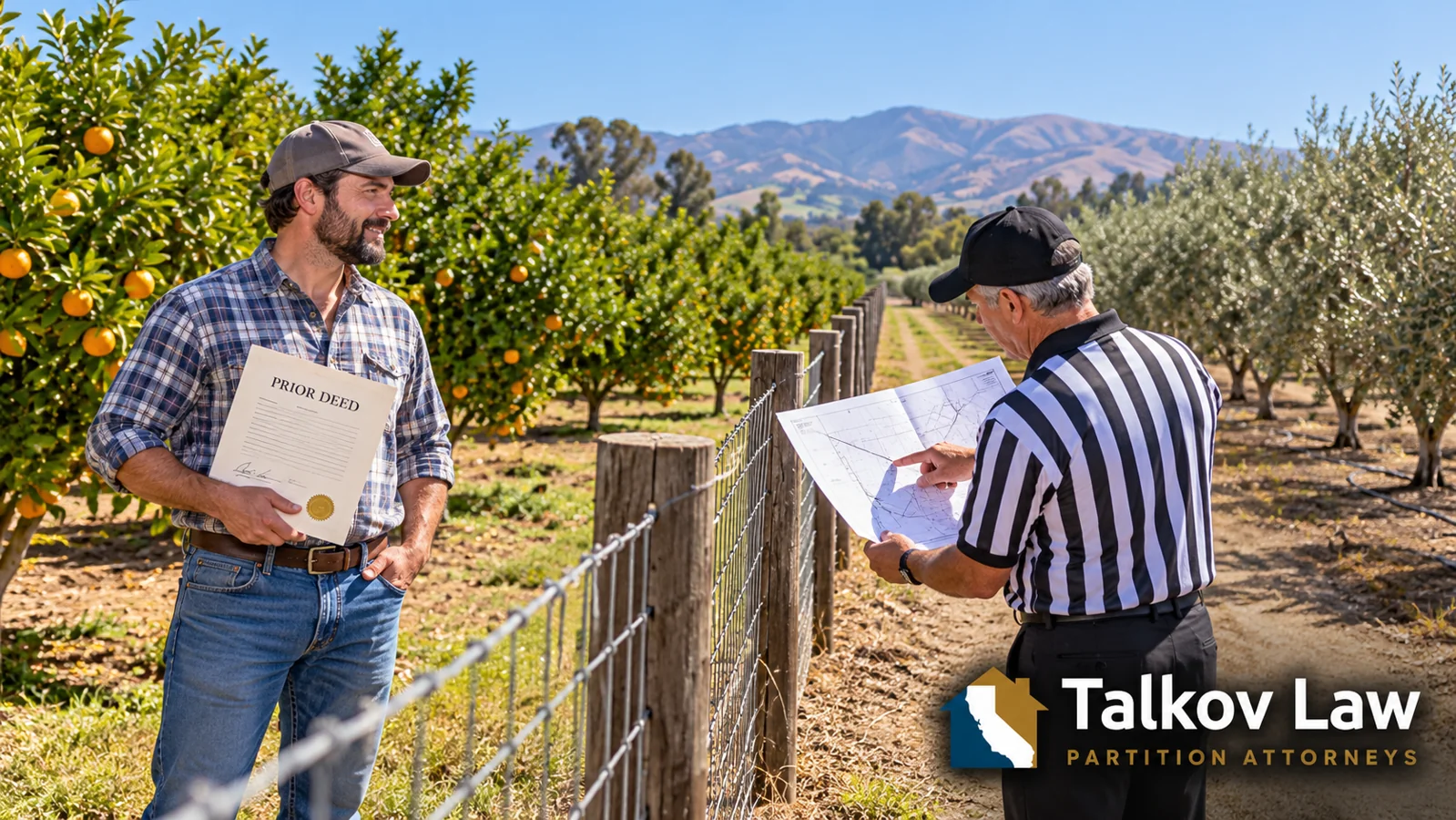
Code of Civil Procedure section 873.230 explains what happens in a partition in kind when a co-owner transferred part of the property to a buyer before the partition action was filed.
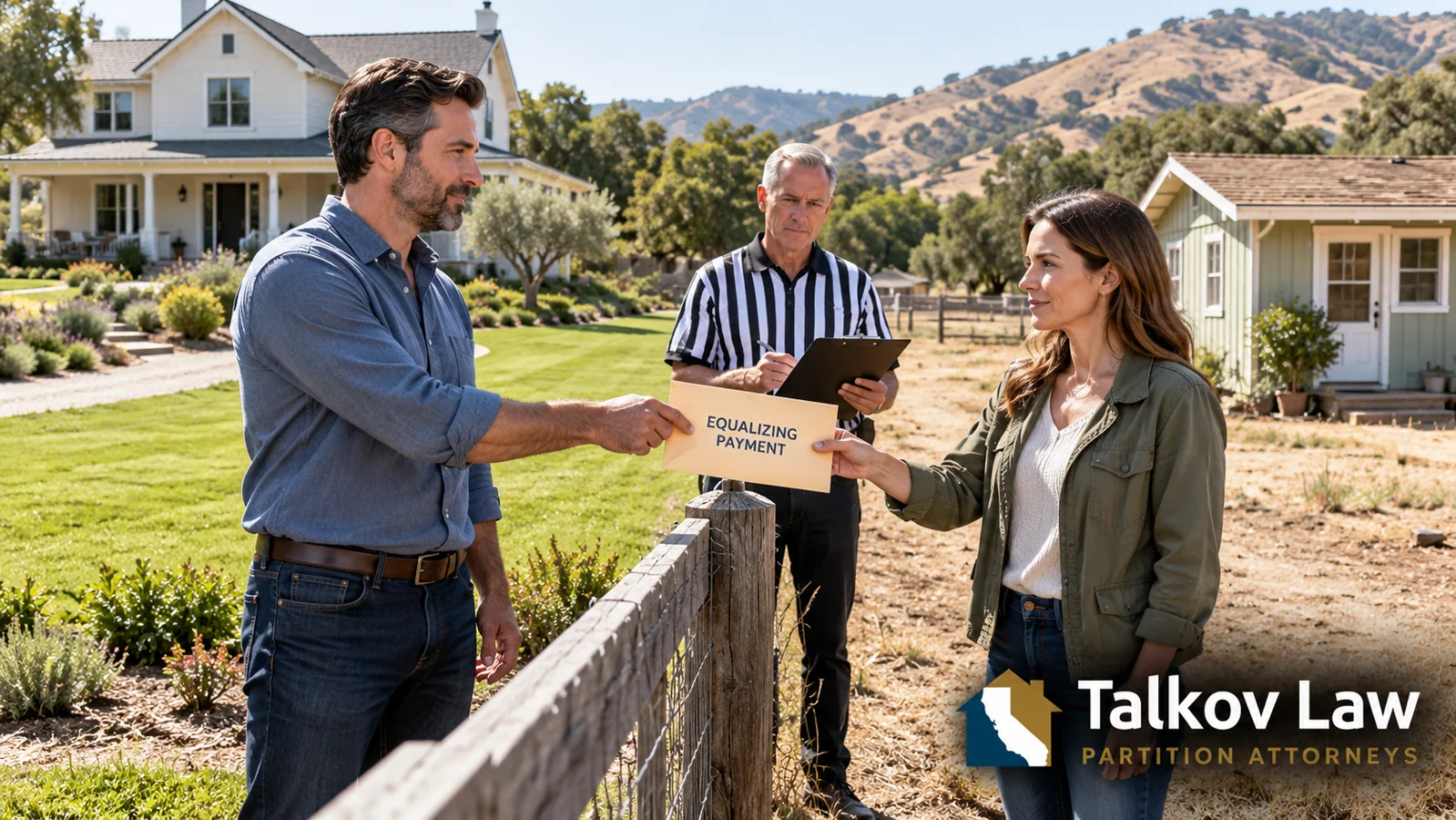
Code of Civil Procedure section 873.250 lets the court order owelty, a compensating payment between co-owners, when a partition in kind can’t divide the property equally.
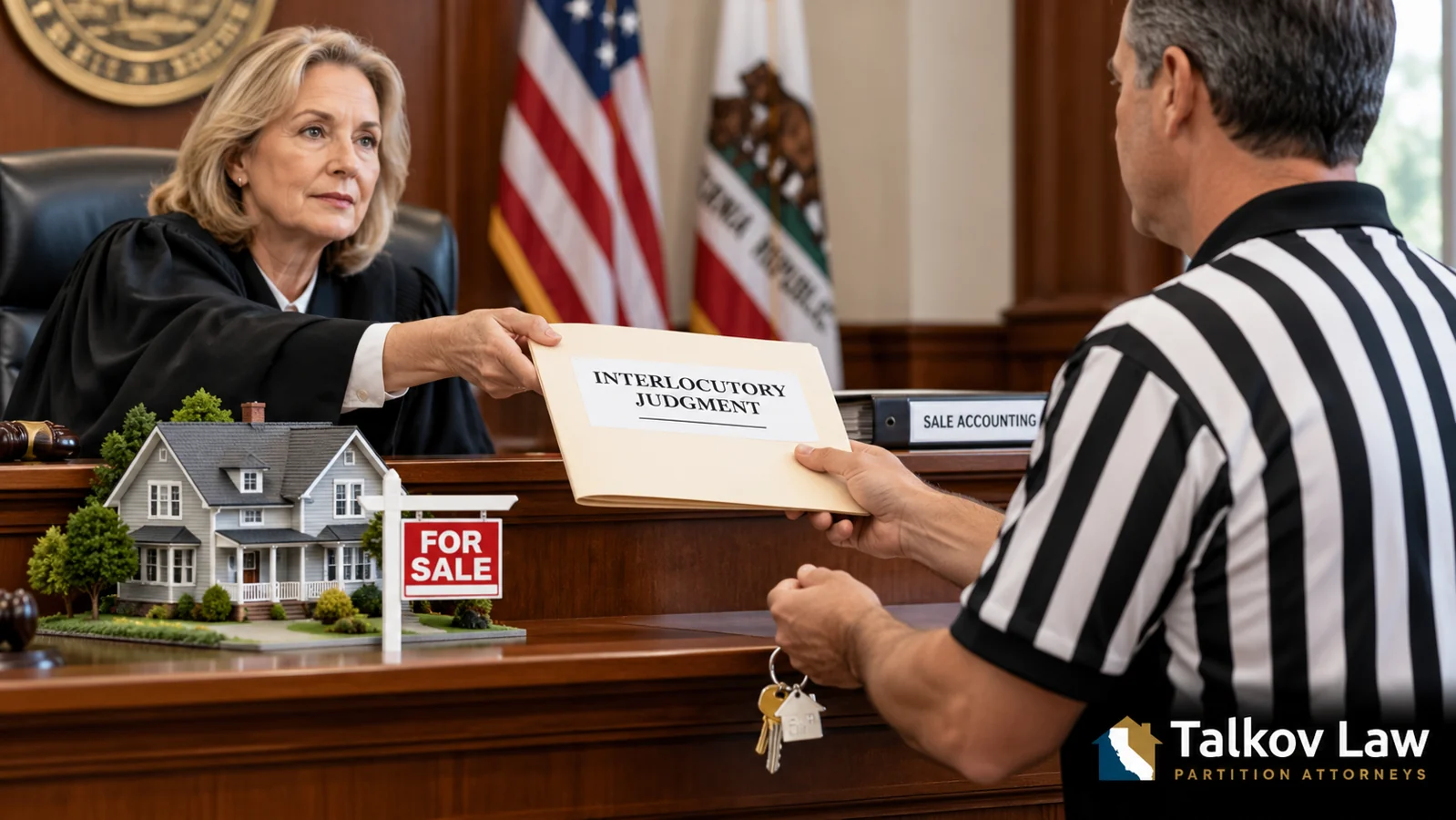
An interlocutory judgment of partition sets each co-owner’s share and orders the property sold, before the sale, the accounting and the final judgment. Learn what it includes and how to get one.
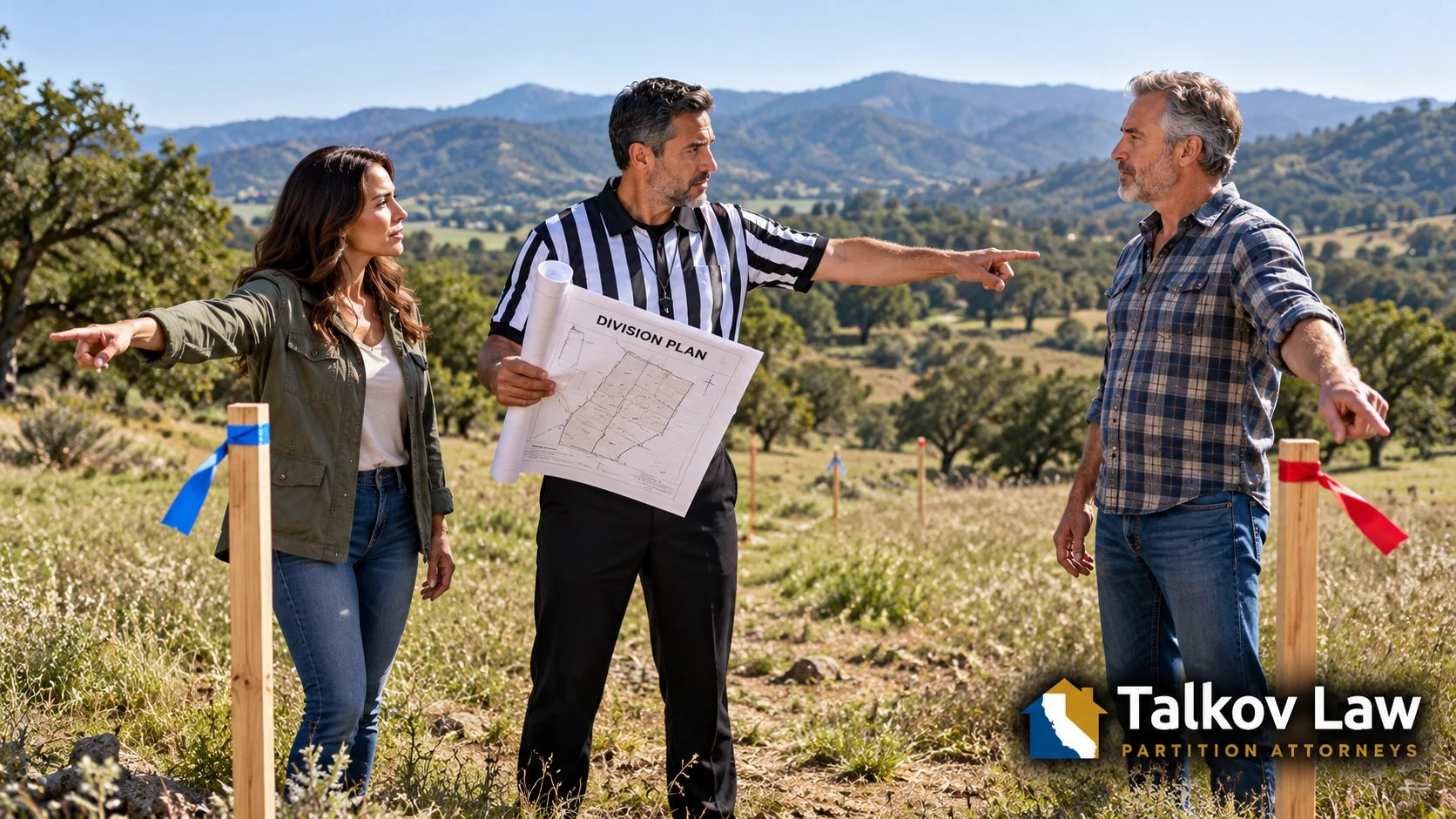
Code of Civil Procedure section 873.210 explains how a partition referee physically divides the property and distributes it according to each party’s interest.
A partition in kind physically divides the property so each co-owner receives a portion of the land. Here are the rules that decide when it is allowed.
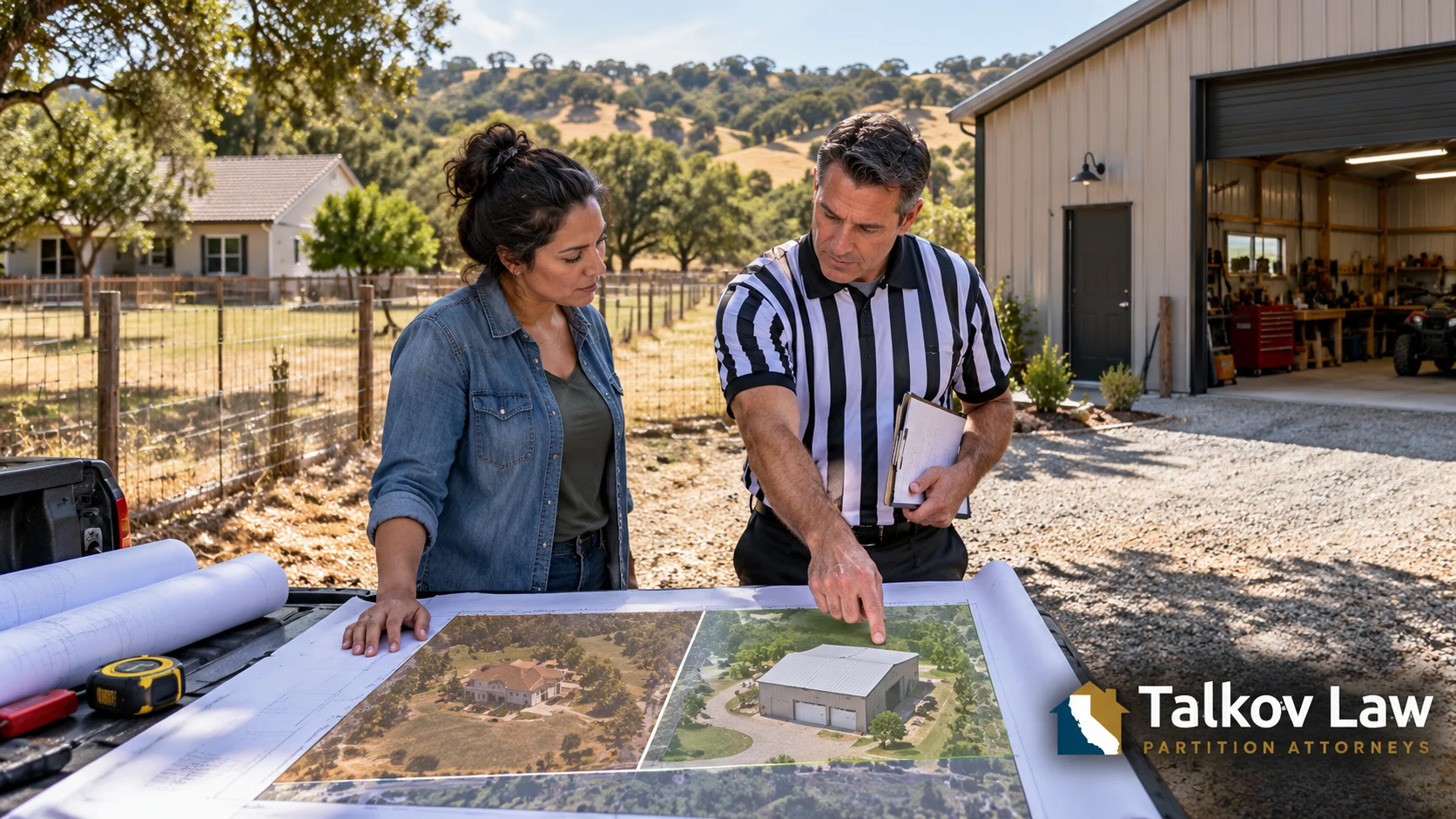
Code of Civil Procedure section 873.220 lets a partition in kind allot to a party the portion of the property that includes improvements that party made.
150+ Five-Star Reviews Across Our California Offices.
Read our reviews →
Representing co-owners statewide. Find your nearest Talkov Law office.
10880 Wilshire Blvd Ste 1101
Los Angeles, CA 90024
4000 MacArthur Blvd Ste 655
Newport Beach, CA 92660
3610 Central Ave, Ste 400
Riverside, CA 92506
500 Capitol Mall, Ste 2350
Sacramento, CA 95814
11622 El Camino Real Ste 100
San Diego, CA 92130
50 California Street 15th Floor
San Francisco, CA 94111
99 S. Almaden Blvd Ste 600
San Jose, CA 95113
Partition Law Resources
Practical guides from attorneys who focus exclusively on California partition actions.
The information on this site, including the Talkov Law Blog, is intended for general information purposes only. By using this site, you agree that any information contained in the site does not constitute legal, financial or any other form of professional advice. Information on this site may be changed without notice and is not guaranteed to be complete, accurate, correct or up-to-date.







