
California Code of Civil Procedure § 872.820 – Sale of Property and Division of Proceeds
Code of Civil Procedure section 872.820 allows the court to order a partition by sale when a sale would be more equitable than dividing the property.
Code of Civil Procedure section 872.820 allows the court to order a partition by sale when a sale would be more equitable than dividing the property.

Code of Civil Procedure section 873.010 directs the court to appoint a partition referee to divide or sell the property, and describes the referee’s powers and duties.
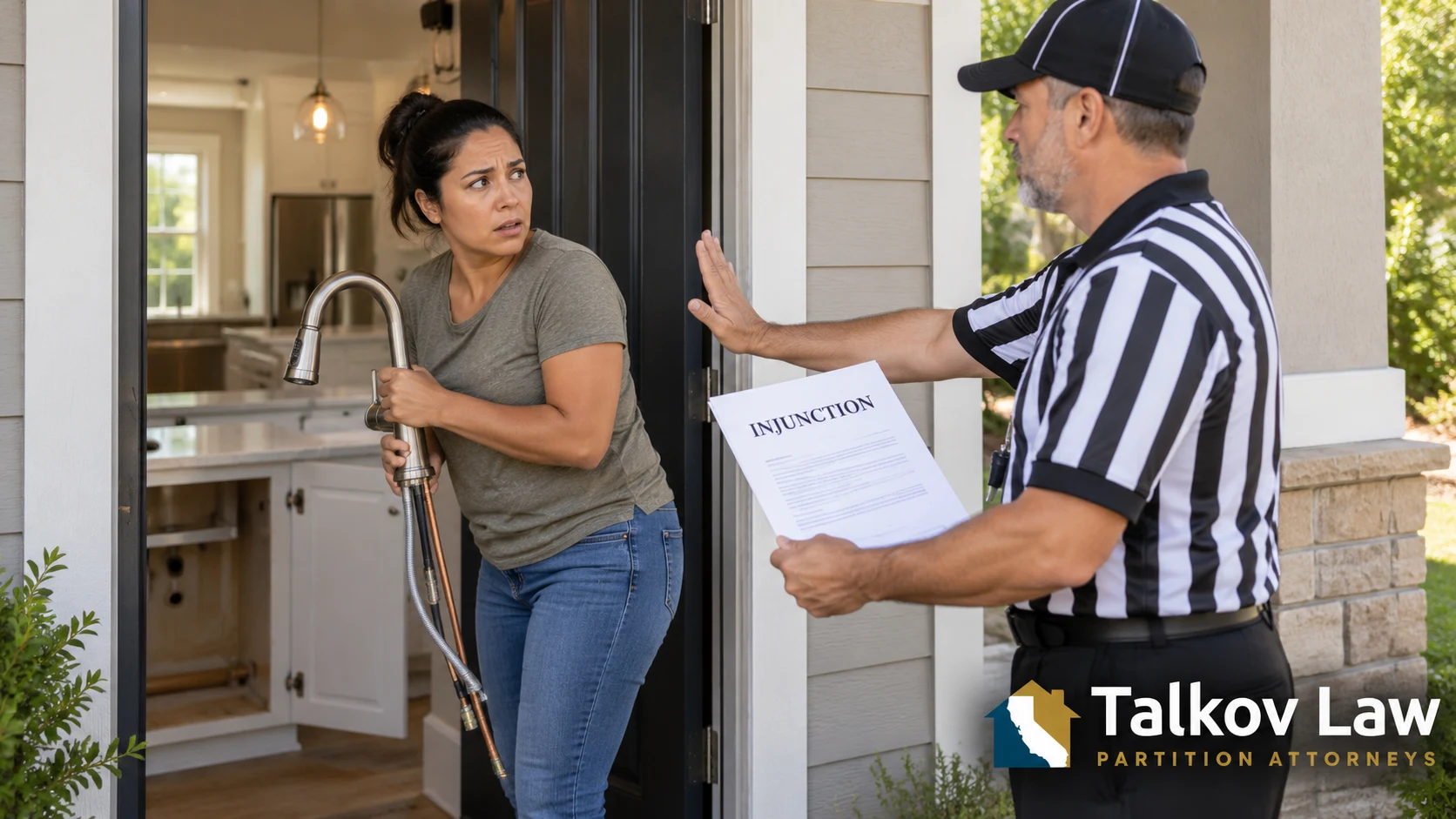
Code of Civil Procedure section 872.130 lets the partition court issue restraining orders and injunctions to prevent waste, protect the property or its title, and stop interference.
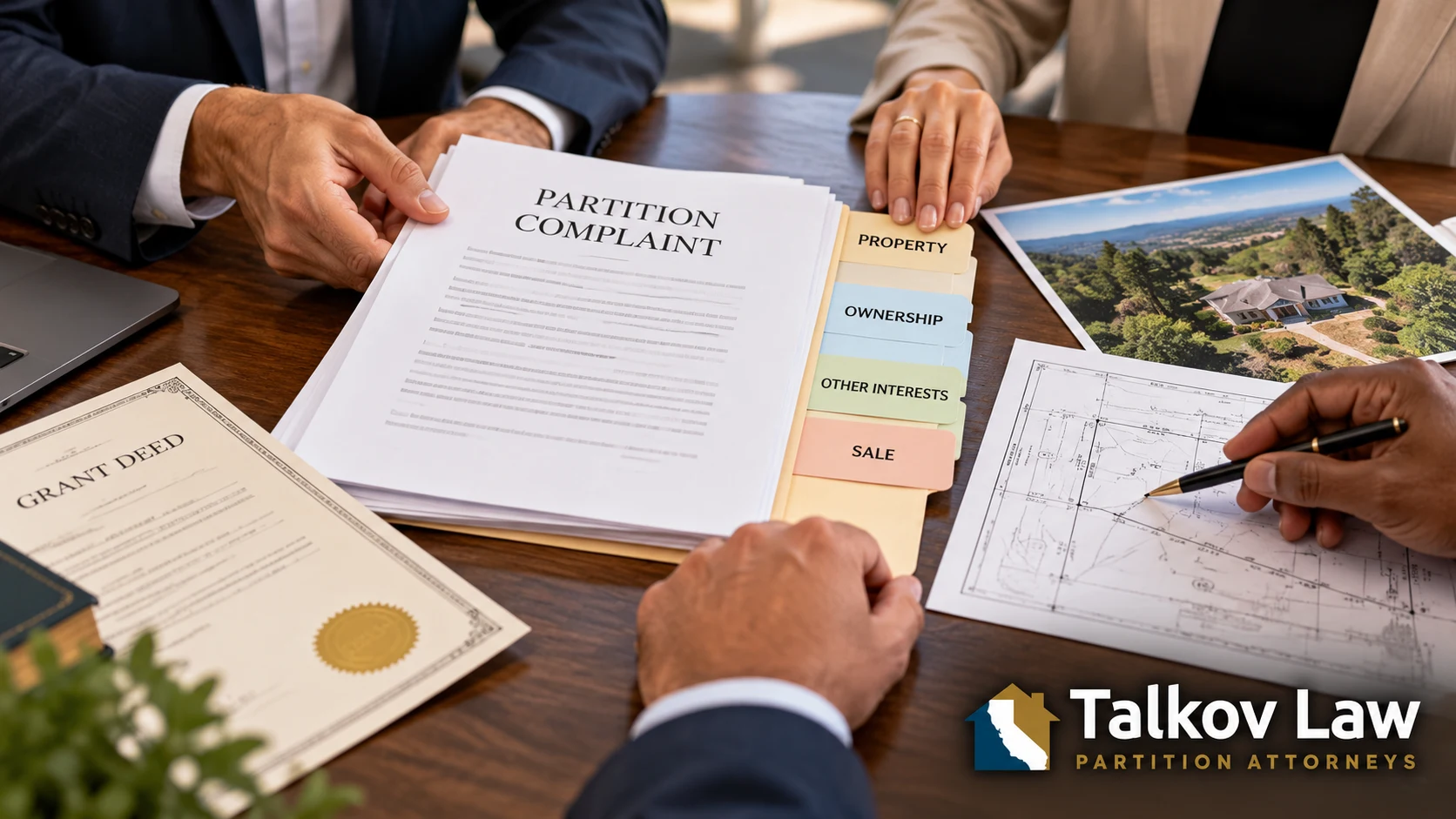
Code of Civil Procedure section 872.230 lists what a partition complaint must contain, including a description of the property, the plaintiff’s interests, and the other interests the case will affect.
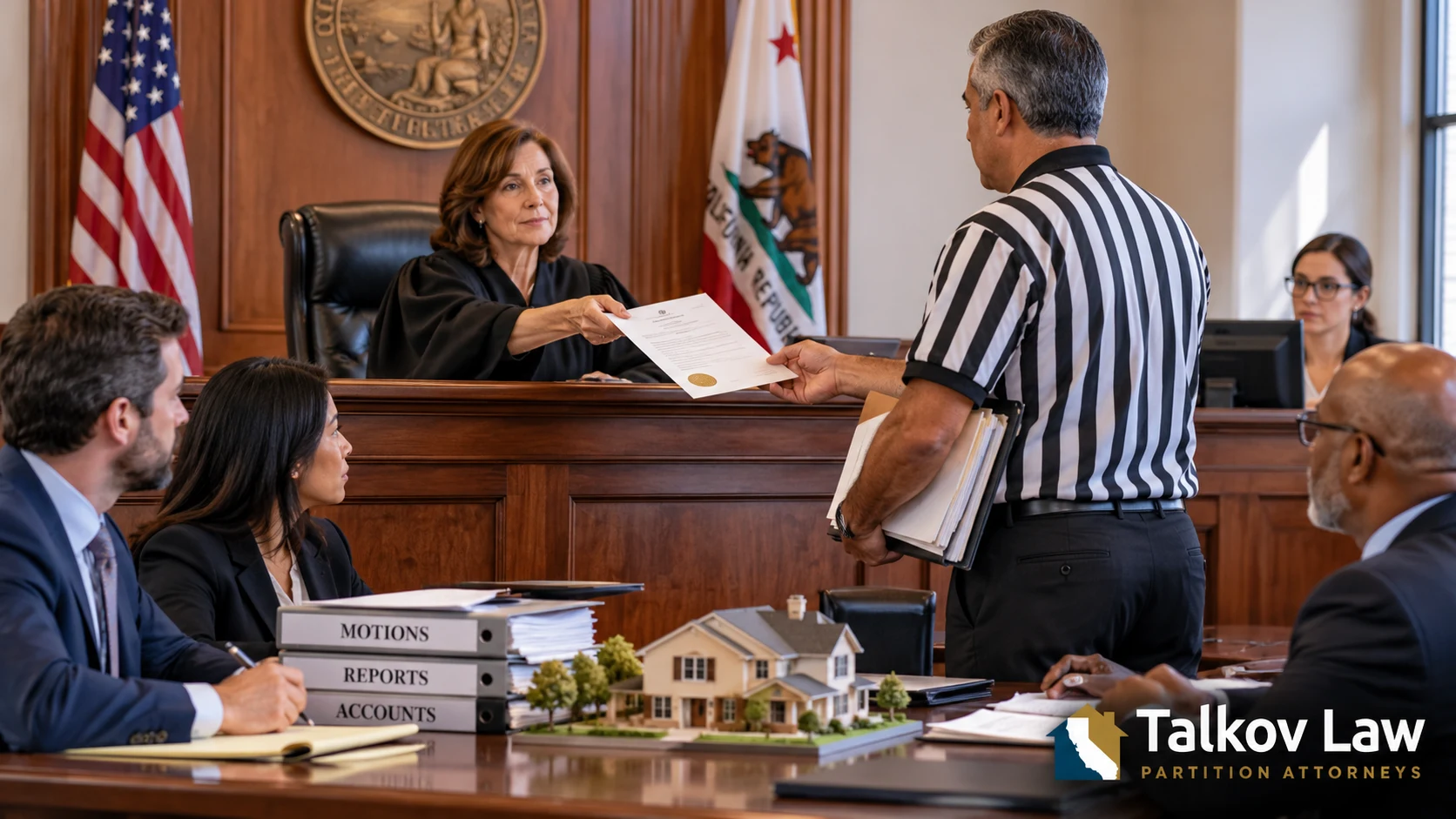
Code of Civil Procedure section 872.120 gives the partition court power to decide every motion, report, and account in the case and to make any order needed to carry out the partition.

Code of Civil Procedure section 874.020 lets the court award expenses, including attorney’s fees, incurred in other actions for the common benefit of the co-owners.
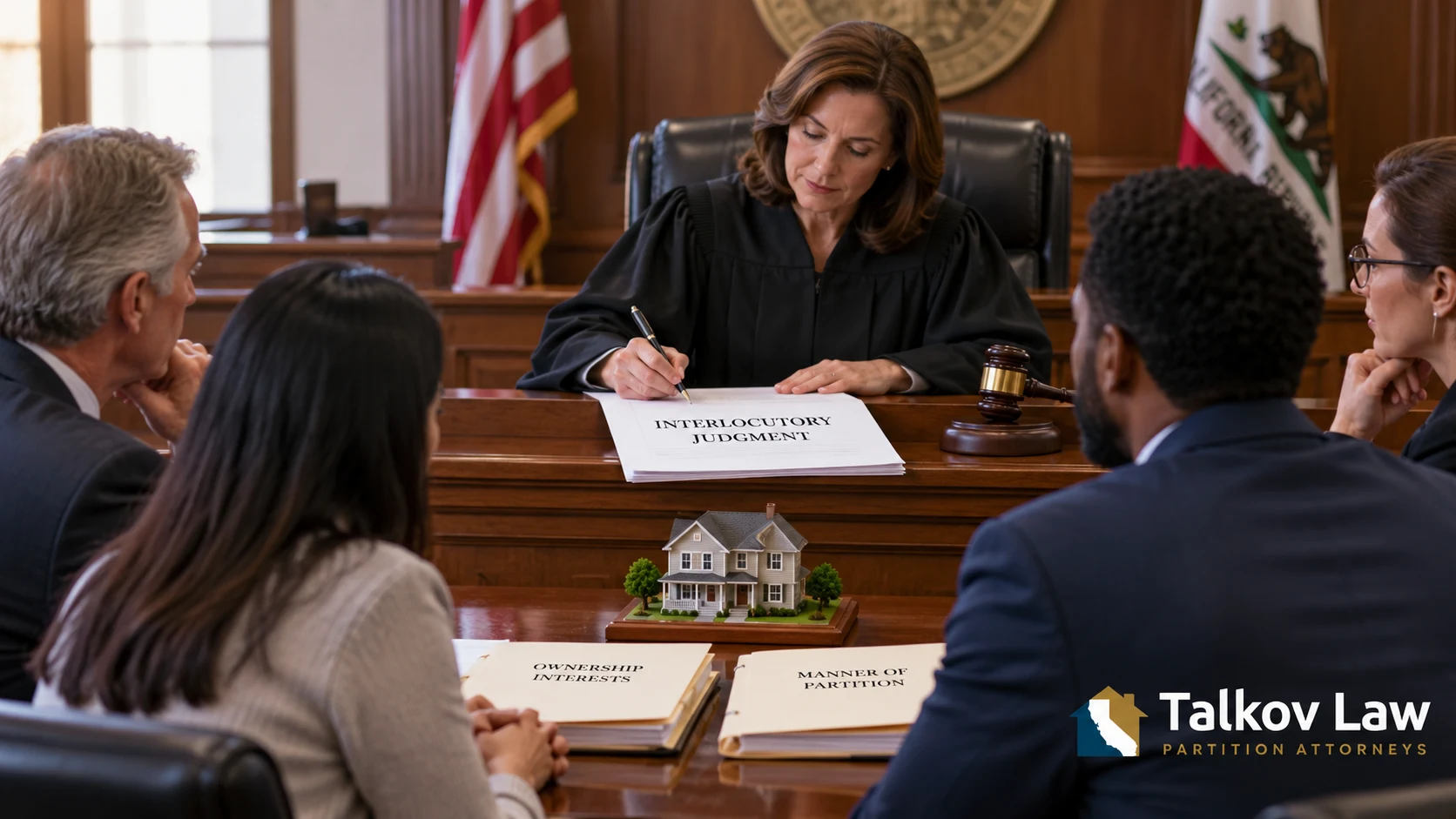
Code of Civil Procedure section 872.720 requires the court in a partition action to enter an interlocutory judgment once it finds the plaintiff is entitled to partition. That judgment sets the ownership interests and the manner of partition.

Co-owners of real estate in California have an absolute legal right to partition the property, thereby causing the property to be sold and the proceeds distributed.

As partition attorneys in California, we are often asked about the cost of a partition action. Since attorneys are the largest cost, the real question is how much are the attorney’s fees for a partition lawsuit in California?

Representing co-owners statewide. Find your nearest Talkov Law office.
Practical guides from attorneys who focus exclusively on California partition actions.
The information on this site, including the Talkov Law Blog, is intended for general information purposes only. By using this site, you agree that any information contained in the site does not constitute legal, financial or any other form of professional advice. Information on this site may be changed without notice and is not guaranteed to be complete, accurate, correct or up-to-date.







