CCP 872.140

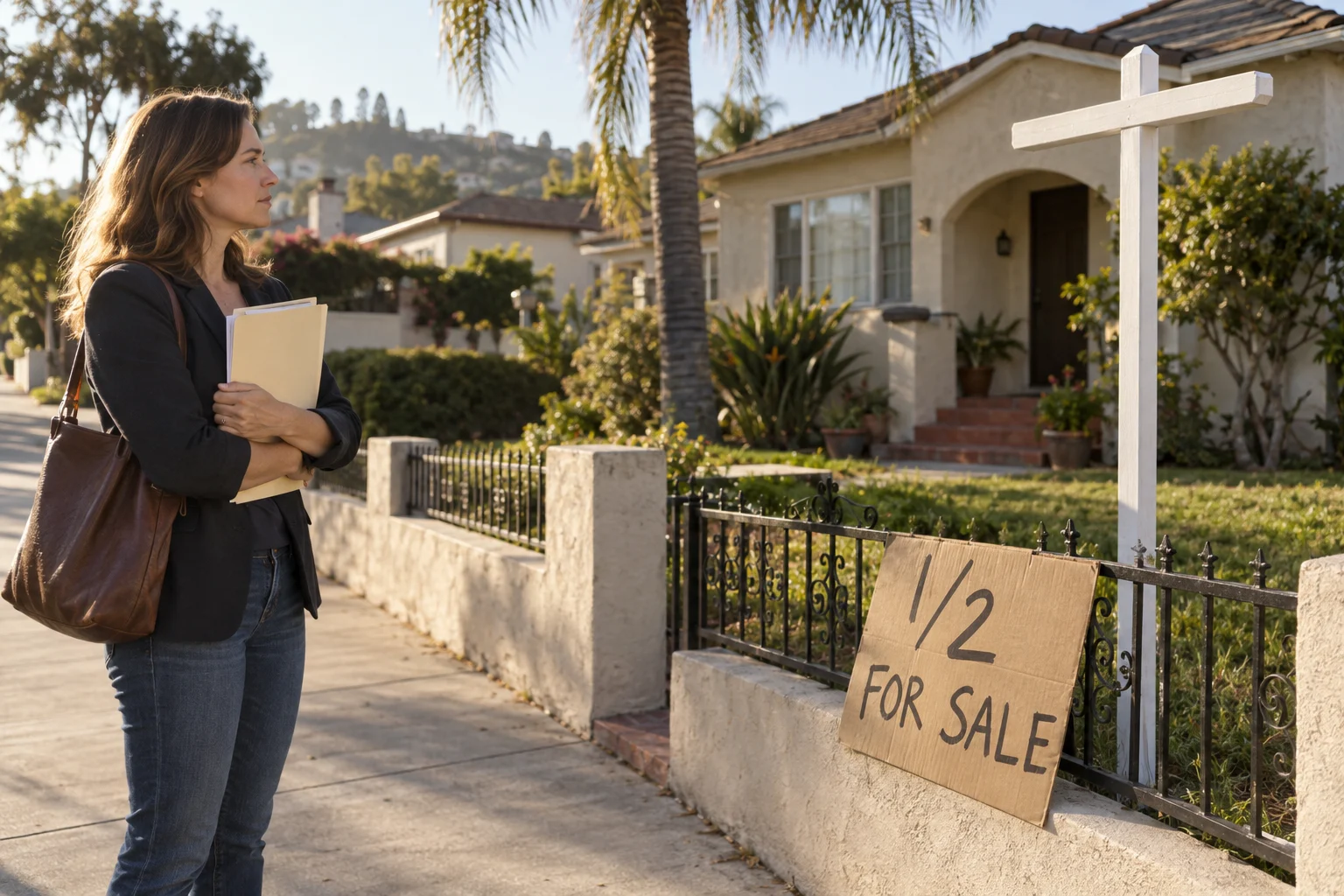
A woman holding a folder of property documents stands on the sidewalk in front of a California bungalow, a hand-lettered "1/2 for sale" sign leaning against the front fence.

Can I Sell My Half of a Jointly Owned Property in California?

Yes, a California co-owner can sell their half of a jointly owned property without the other owner’s consent, but almost no one buys half a house at full value, so the way to cash out your share for what it is actually worth is a co-owner buyout or a partition action.
Woman hands a check to a man in front of a sold craftsman bungalow on a Santa Monica street at sunset

Kershman v. Kershman: Unequal Shares Despite a Joint Tenancy Deed

In Kershman v. Kershman, the California Court of Appeal held that co-owners on a joint tenancy deed can own unequal shares if they agreed their shares would follow what each paid, and that a co-owner’s debts come out of his share of the sale proceeds, not his ownership percentage, so he keeps his share of the appreciation.

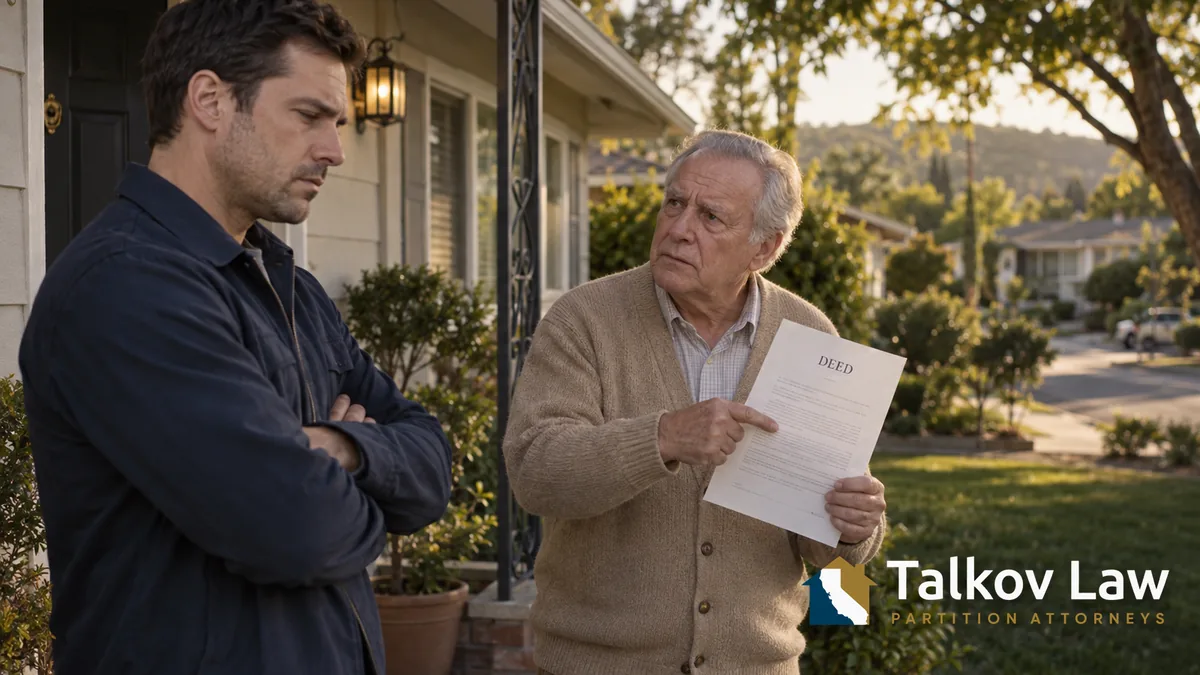
Older father in a cardigan points to a deed while his adult son stands with arms crossed outside a California ranch house

Demetris v. Demetris: Undoing a Mistaken Joint Tenancy in a Partition

In Demetris v. Demetris, the California Court of Appeal let a father undo a mistaken joint tenancy deed and convert it to a tenancy in common, repaid the extra $1,000 he put toward his son’s share, and held that a loan on the whole house is paid from all the sale proceeds before the co-owners divide it.

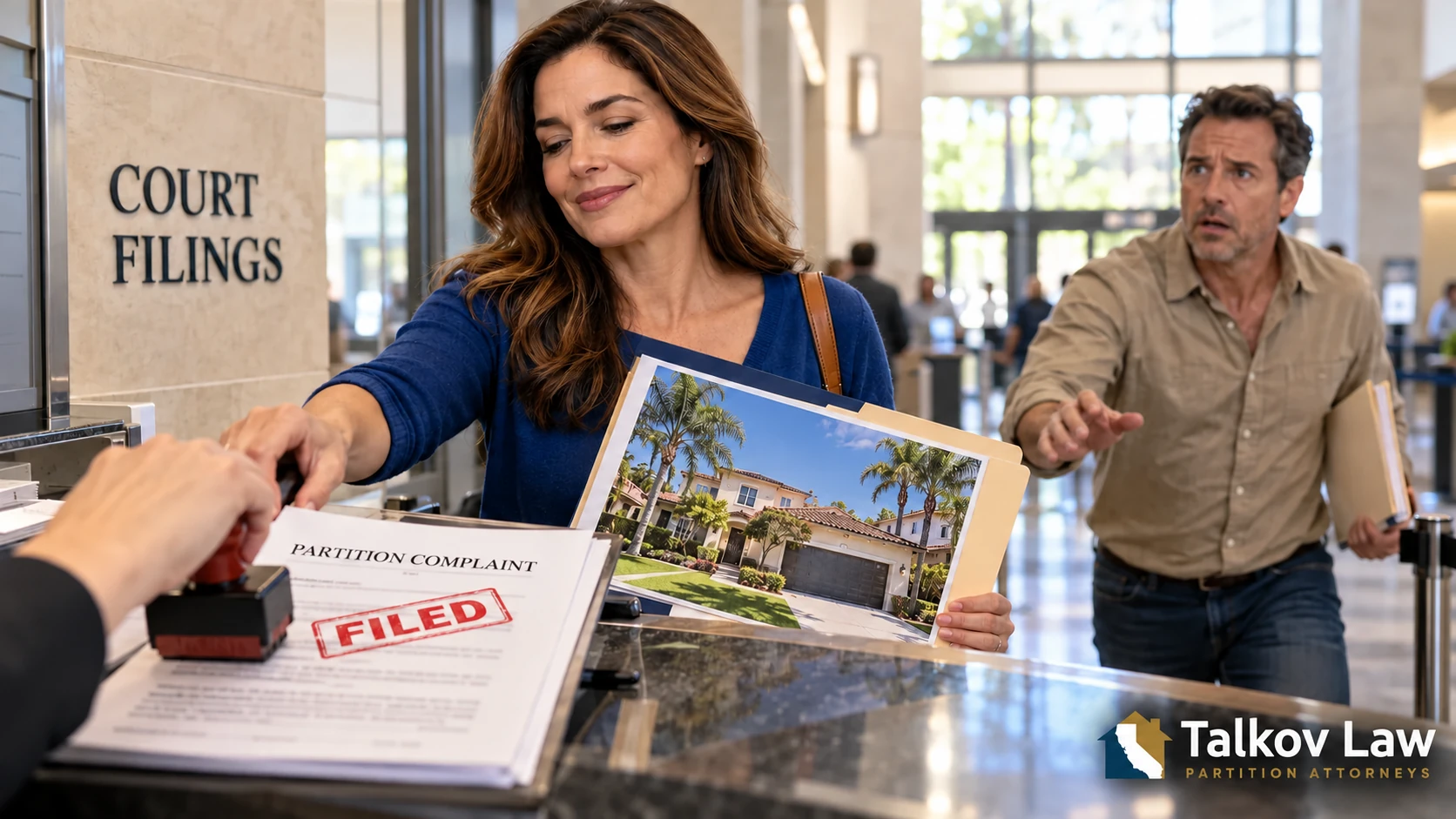
A co-owner files a partition complaint at the courthouse while the other co-owner arrives behind her.

Is It Better to Be a Plaintiff in a Partition?

Usually, yes. Filing first in a partition action gives you control over the timeline, the court, the lis pendens, and how the case is framed, advantages the responding co-owner cannot easily reclaim.