
Richmond v. Dofflemyer: Can a Court Divide Co-Owned Land in Stages?
In Richmond v. Dofflemyer, a California court divided part of a family ranch in kind and sent the rest to a referee. See what it means for co-owners.
In Richmond v. Dofflemyer, a California court divided part of a family ranch in kind and sent the rest to a referee. See what it means for co-owners.

In Jamison v. Jamison, the California Court of Appeal explained that a court dividing co-owned land must value each parcel to set owelty, and held that a co-owner who did not timely move for a new trial could not challenge the owelty amount on appeal.

Yes. When co-owners share two or more properties, a partition can sell one first and let you use your share of that sale to keep the other. This is especially common with inherited property.
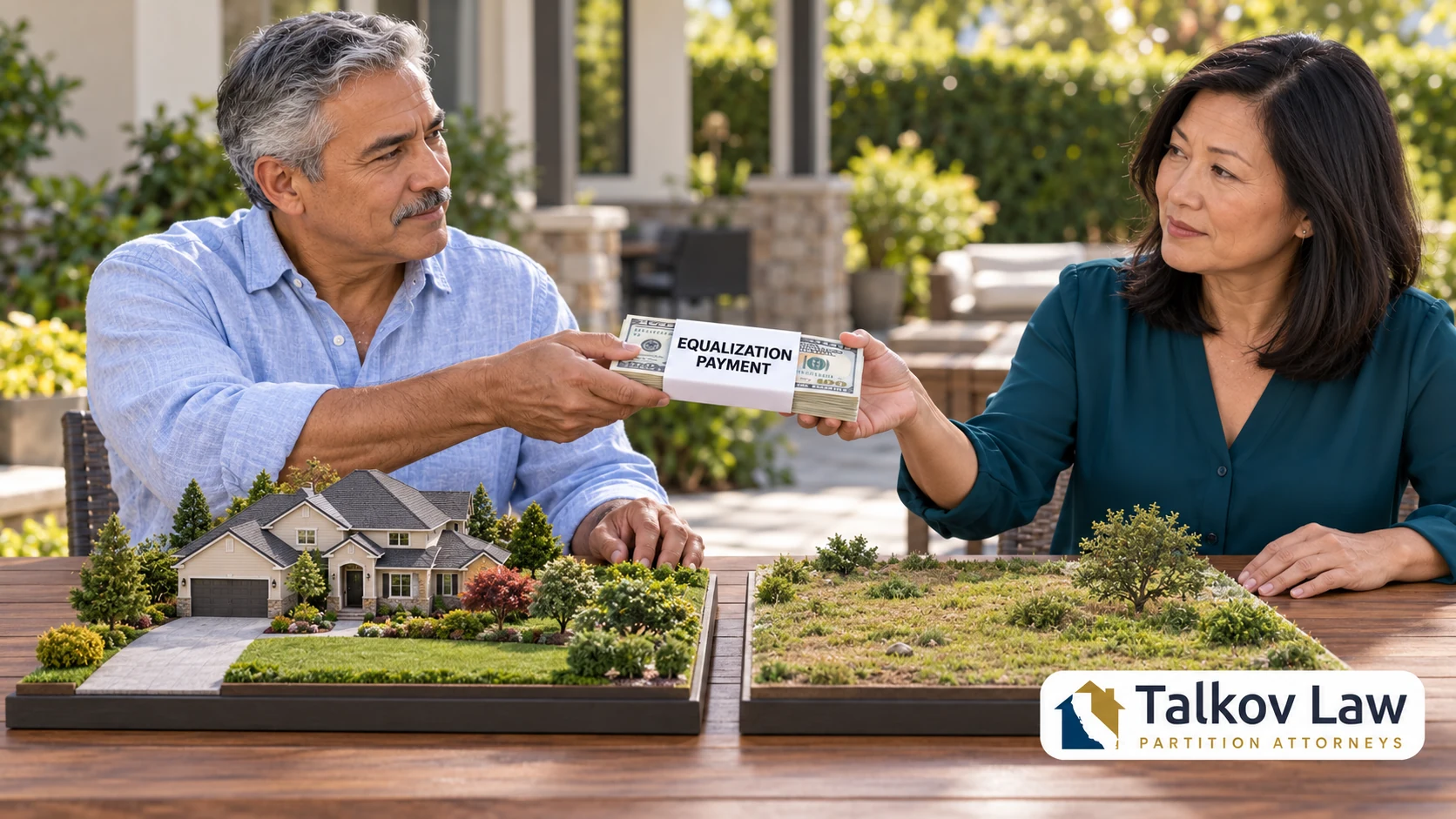
When a property can’t be divided into equal-value parts, the court can order owelty, a payment from the co-owner who receives more to the one who receives less.
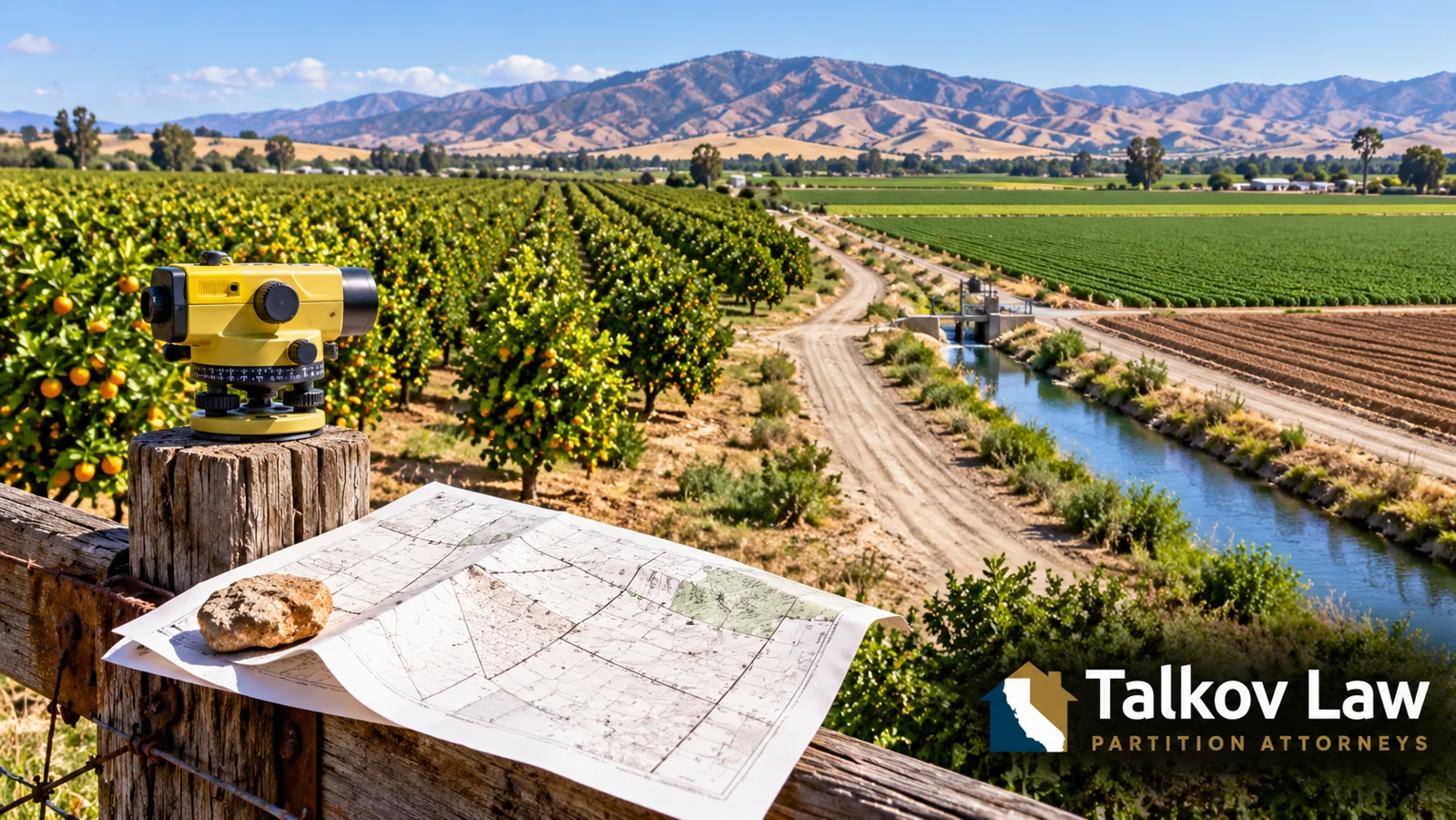
Agricultural land brings its own challenges in a partition action. Here is what co-owners of California farmland should know.
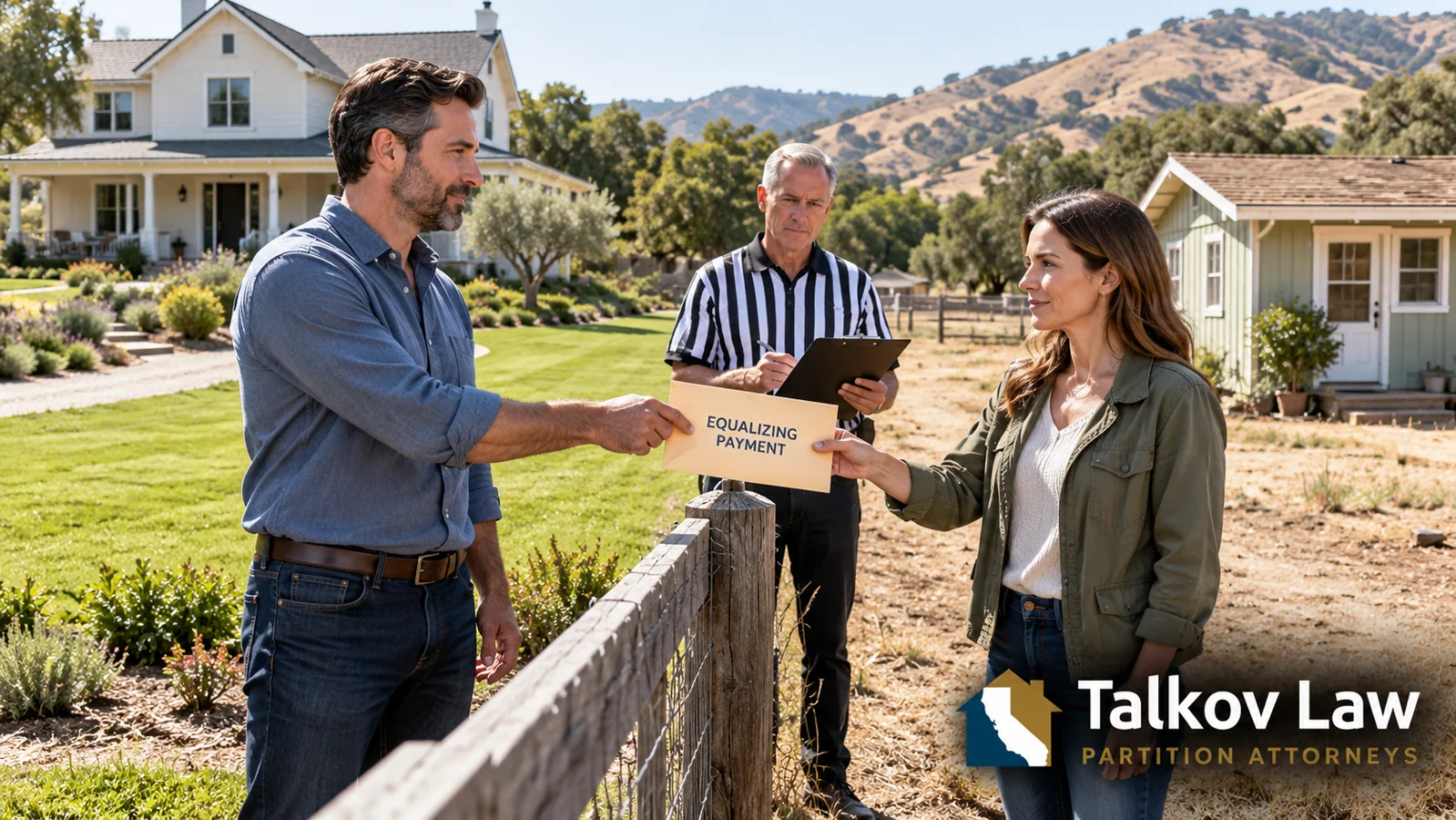
Code of Civil Procedure section 873.250 lets the court order owelty, a compensating payment between co-owners, when a partition in kind can’t divide the property equally.

A partition in kind physically divides the property so each co-owner receives a portion of the land. Here are the rules that decide when it is allowed.
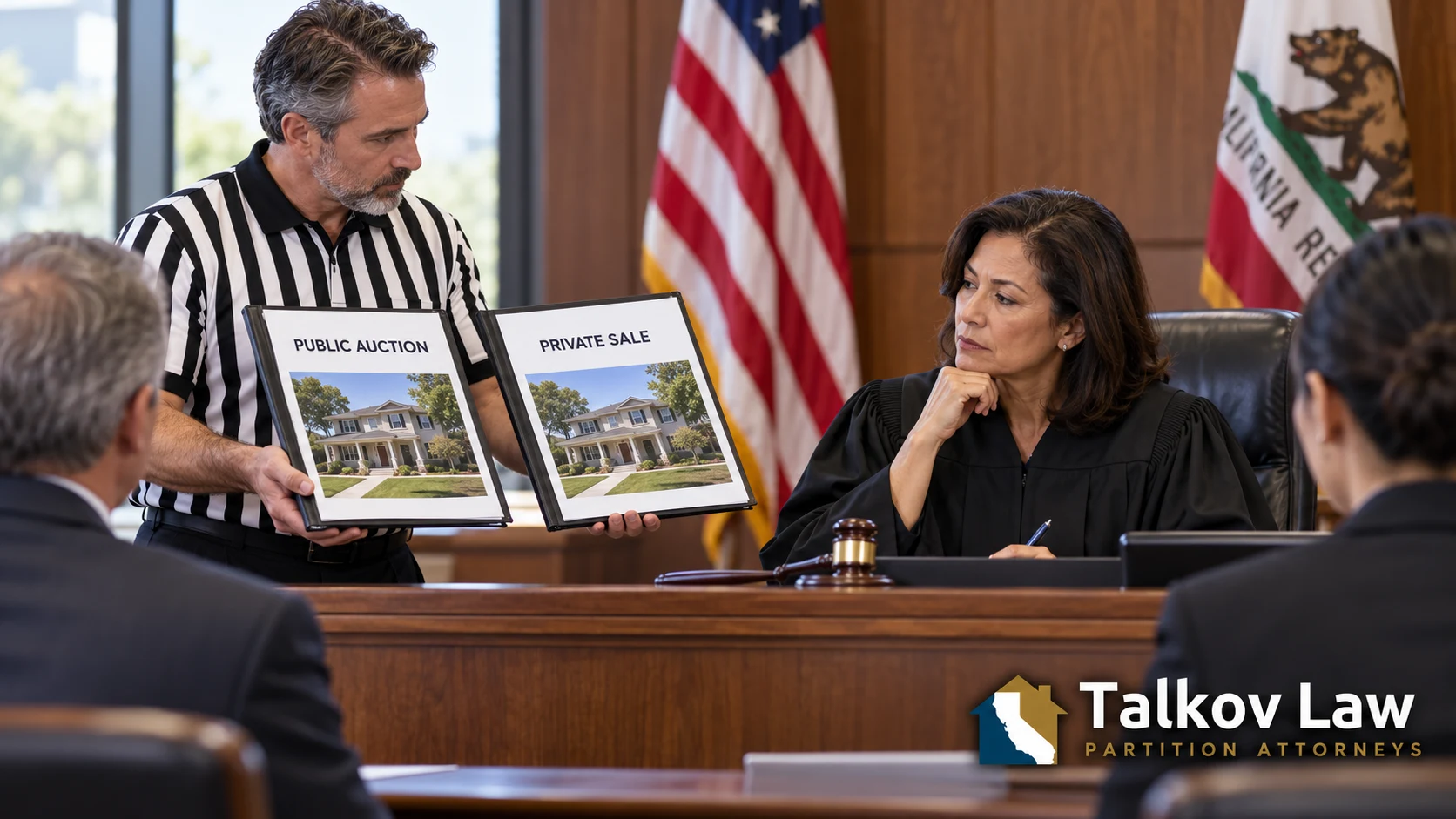
Code of Civil Procedure section 873.520 lets the court decide whether the property will be sold at public auction or by private sale.

Representing co-owners statewide. Find your nearest Talkov Law office.
Practical guides from attorneys who focus exclusively on California partition actions.
The information on this site, including the Talkov Law Blog, is intended for general information purposes only. By using this site, you agree that any information contained in the site does not constitute legal, financial or any other form of professional advice. Information on this site may be changed without notice and is not guaranteed to be complete, accurate, correct or up-to-date.







