
Richmond v. Dofflemyer: Can a Court Divide Co-Owned Land in Stages?
In Richmond v. Dofflemyer, a California court divided part of a family ranch in kind and sent the rest to a referee. See what it means for co-owners.
In Richmond v. Dofflemyer, a California court divided part of a family ranch in kind and sent the rest to a referee. See what it means for co-owners.
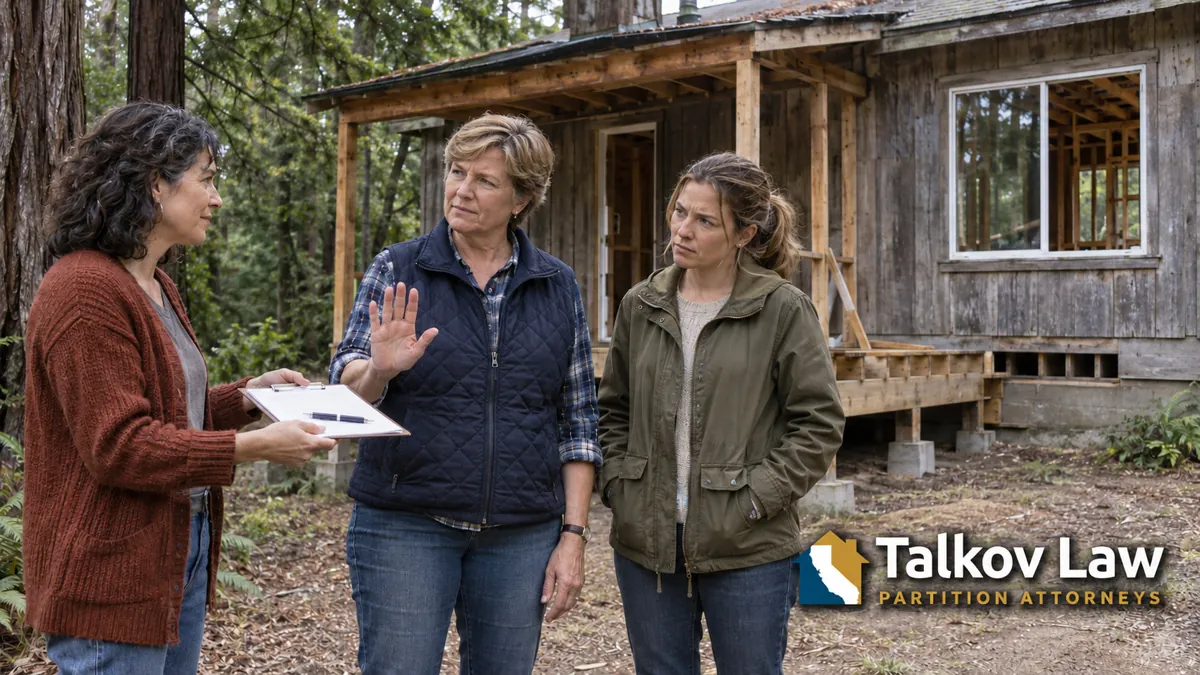
A California court cannot order a partition by appraisal unless the co-owners agree to it. Cummings v. Dessel explains the written agreement rule, the public notice rule for sales, and what co-owners can do instead.

Yes. An agent can list a California property with only one co-owner’s signature, but that listing binds only the co-owner who signed it and can’t sell the whole property. A partition action can force the sale.

When a court orders a partition by sale, a neutral partition referee carries it out, from hiring a broker to closing escrow. Here is how the referee must sell the property.

In California, a co-owner who wants to sell property damaged by fire, flood, or earthquake generally cannot be forced to fund a rebuild. A partition action lets you sell, even when your co-owner wants to rebuild.

A partition lawyer represents co-owners of California property who can’t agree on whether to keep, sell, or buy out the property. The main tool is a partition action asking the court to order a sale or division.

Usually, yes. Most partitions end with an agreement to sell on the open market, and even sales run by a partition referee generally reach fair market value or better.

Code of Civil Procedure section 873.530 allows part of a property to be sold at public auction and part at private sale if that is more beneficial to the parties.
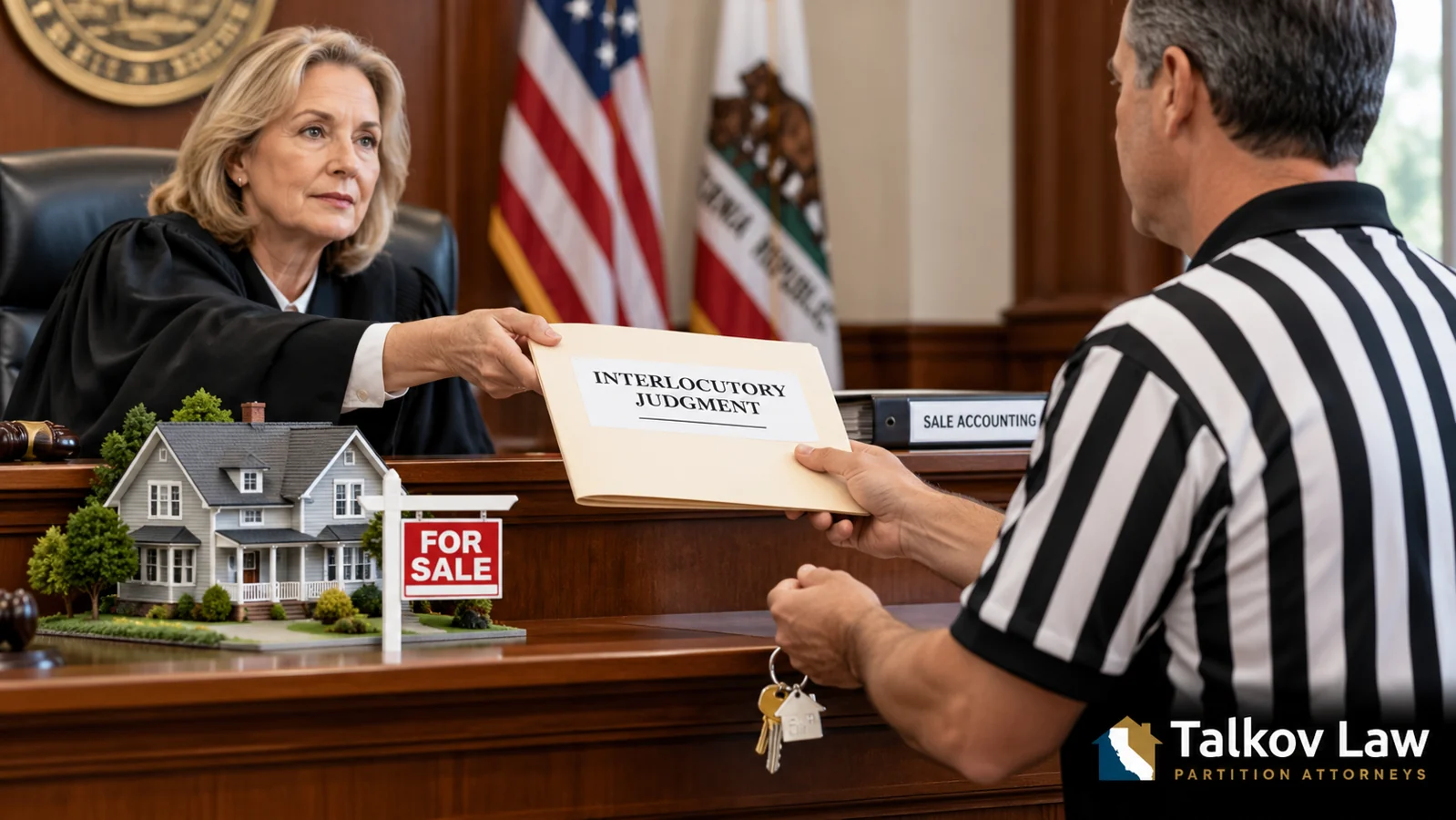
Unlike most lawsuits, a California partition action has two phases. The interlocutory judgment ends the first phase by deciding the right to partition, before the sale and accounting.

Code of Civil Procedure section 874.320 explains how the court sells property under the Partition of Real Property Act, usually through an open-market sale by a broker.
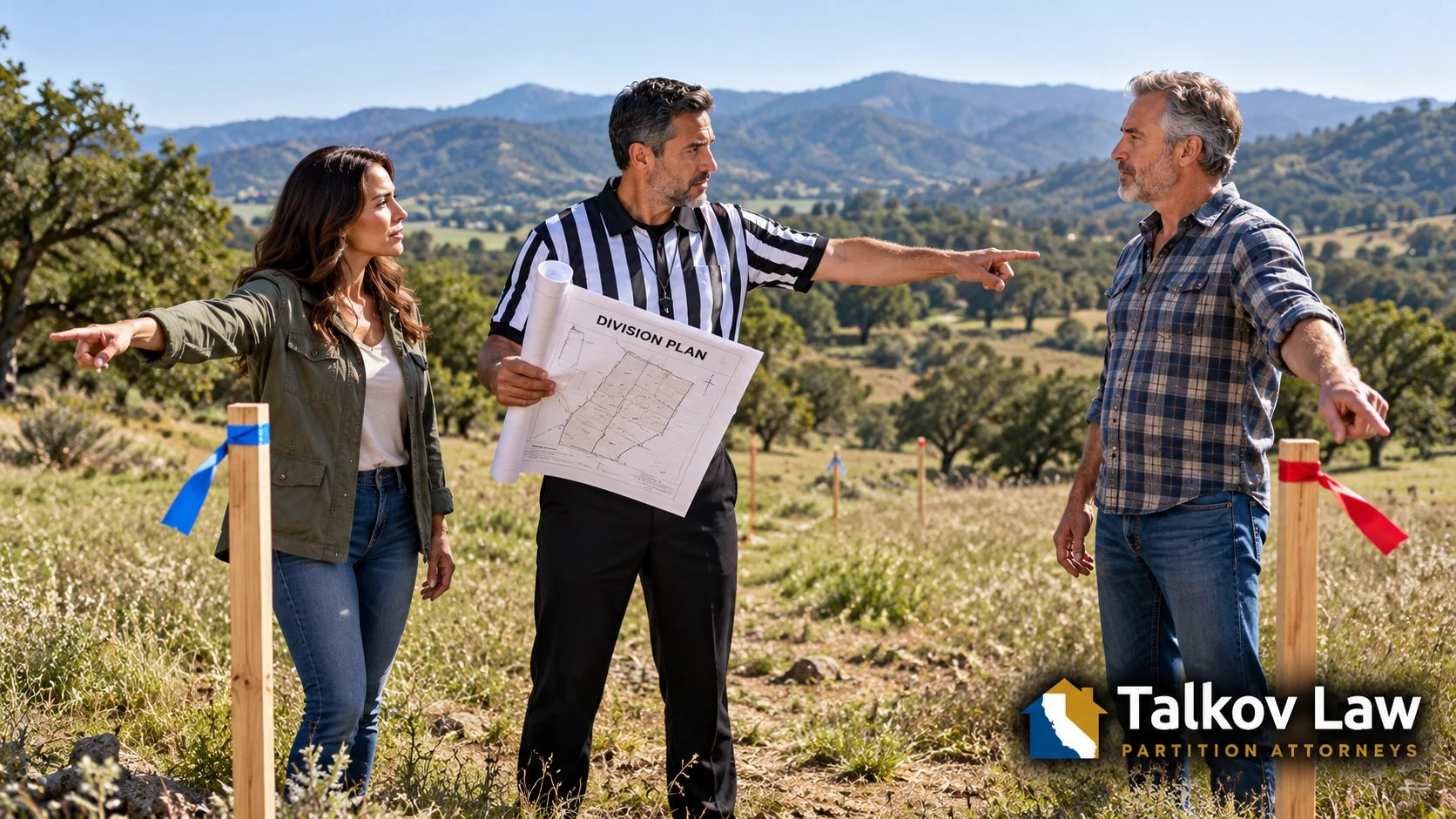
Code of Civil Procedure section 873.210 explains how a partition referee physically divides the property and distributes it according to each party’s interest.

California law provides three types of partition: partition by sale, partition in kind, and partition by appraisal. By far the most common is partition by sale.

Code of Civil Procedure section 873.510 sets how the court-appointed partition referee makes the sale of the property.

Representing co-owners statewide. Find your nearest Talkov Law office.
Practical guides from attorneys who focus exclusively on California partition actions.
The information on this site, including the Talkov Law Blog, is intended for general information purposes only. By using this site, you agree that any information contained in the site does not constitute legal, financial or any other form of professional advice. Information on this site may be changed without notice and is not guaranteed to be complete, accurate, correct or up-to-date.







