
Do You Need a Lawyer for a Partition Action in California?
An individual co-owner can represent themselves in a California partition action, but a company, executor, or trustee must hire a lawyer.
An individual co-owner can represent themselves in a California partition action, but a company, executor, or trustee must hire a lawyer.
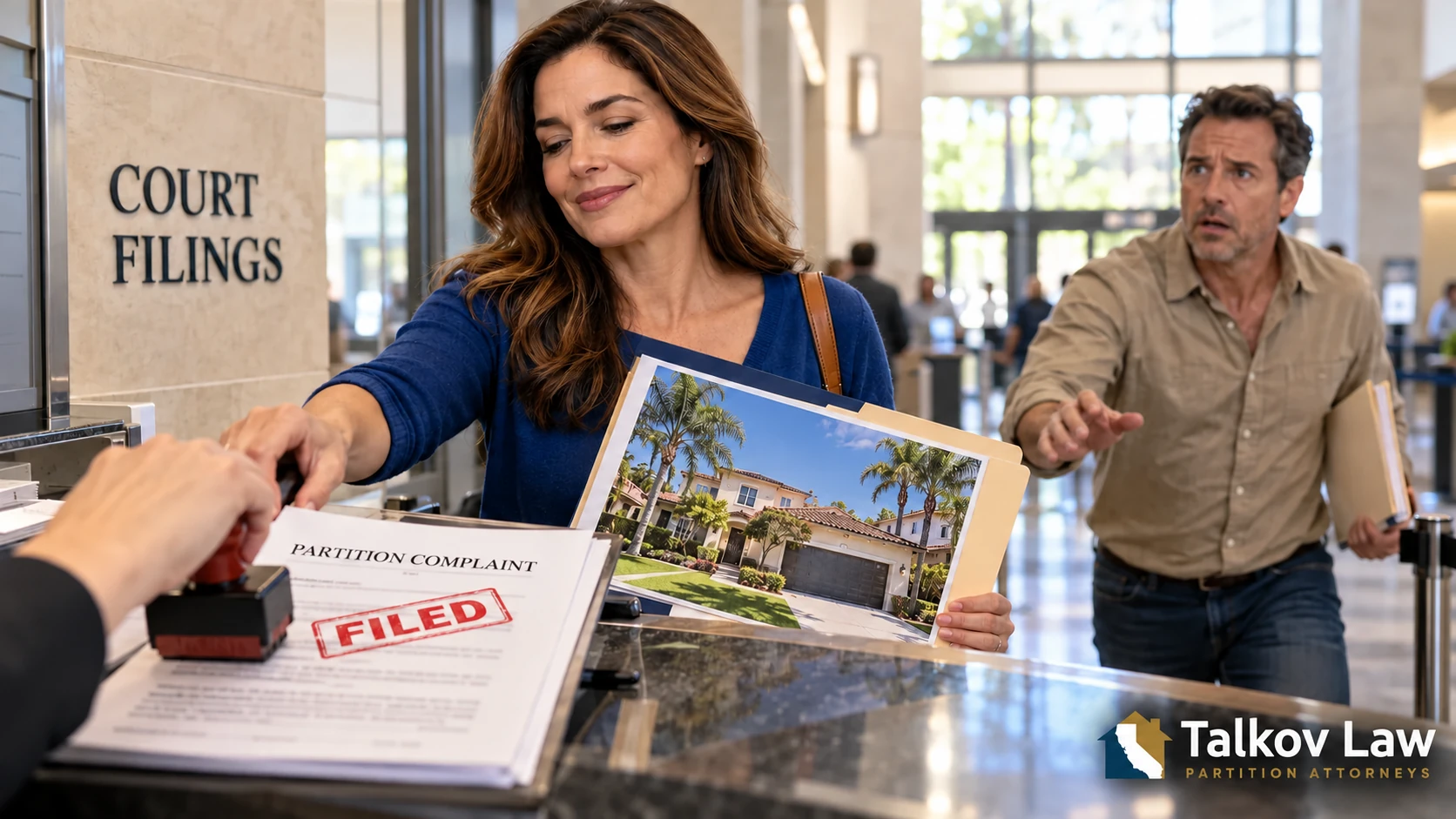
Usually, yes. Filing first in a partition action gives you control over the timeline, the court, the lis pendens, and how the case is framed, advantages the responding co-owner cannot easily reclaim.

A recession does not affect your right to partition, but it can affect when you should file. Home values, interest rates, and mortgage obligations all shape the best timing.

A partition lawyer represents co-owners of California property who can’t agree on whether to keep, sell, or buy out the property. The main tool is a partition action asking the court to order a sale or division.

California is phasing in remote online notarization, first through notaries in other states and eventually through California notaries, so residents can notarize documents without meeting in person.

Code of Civil Procedure section 872.030 explains which court rules apply in a partition action. The ordinary civil rules apply unless a partition statute sets a different rule.
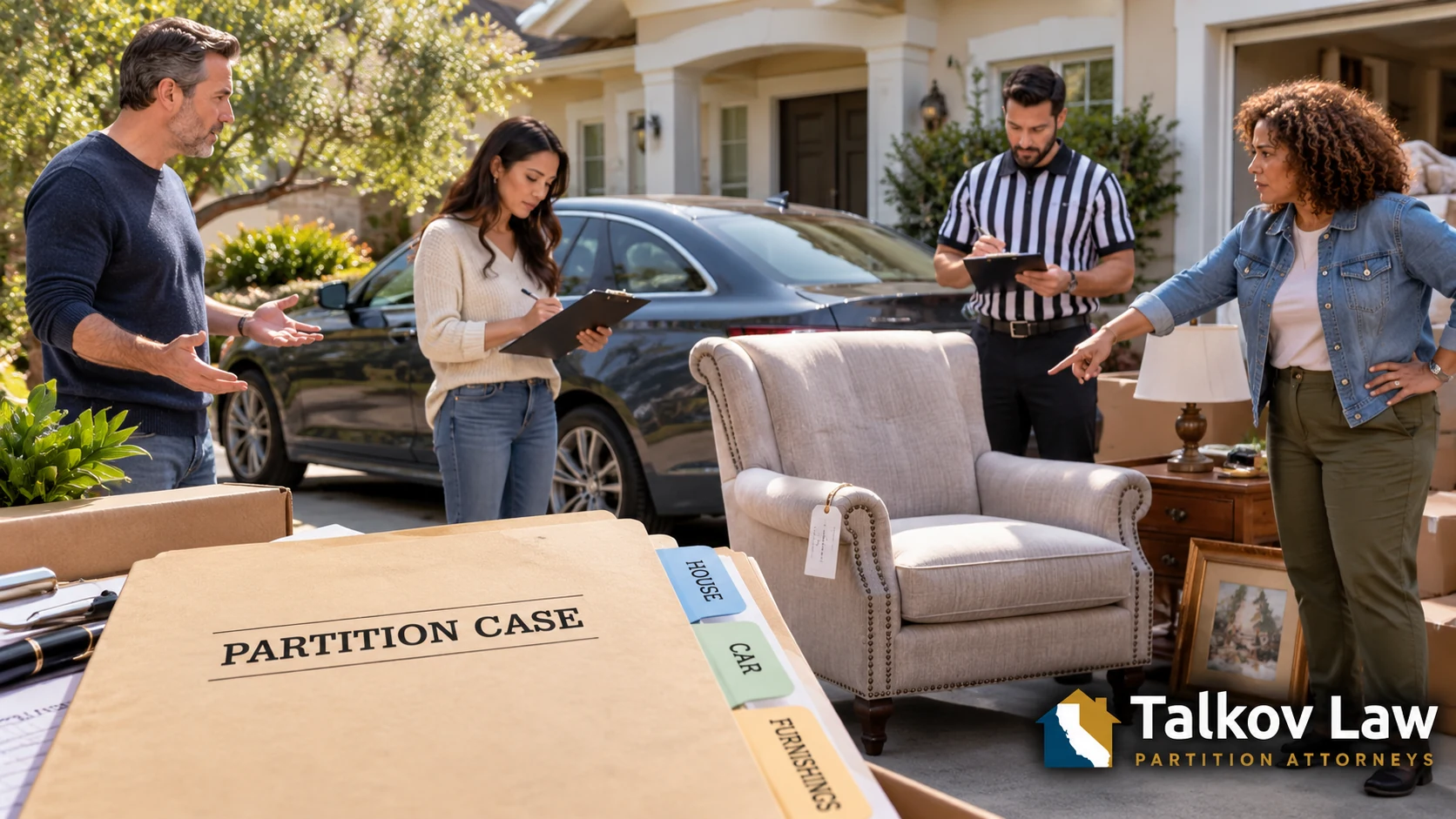
Code of Civil Procedure section 872.240 lets co-owners partition real property and personal property in one case, so a house, its furnishings, and a shared vehicle can be resolved together.
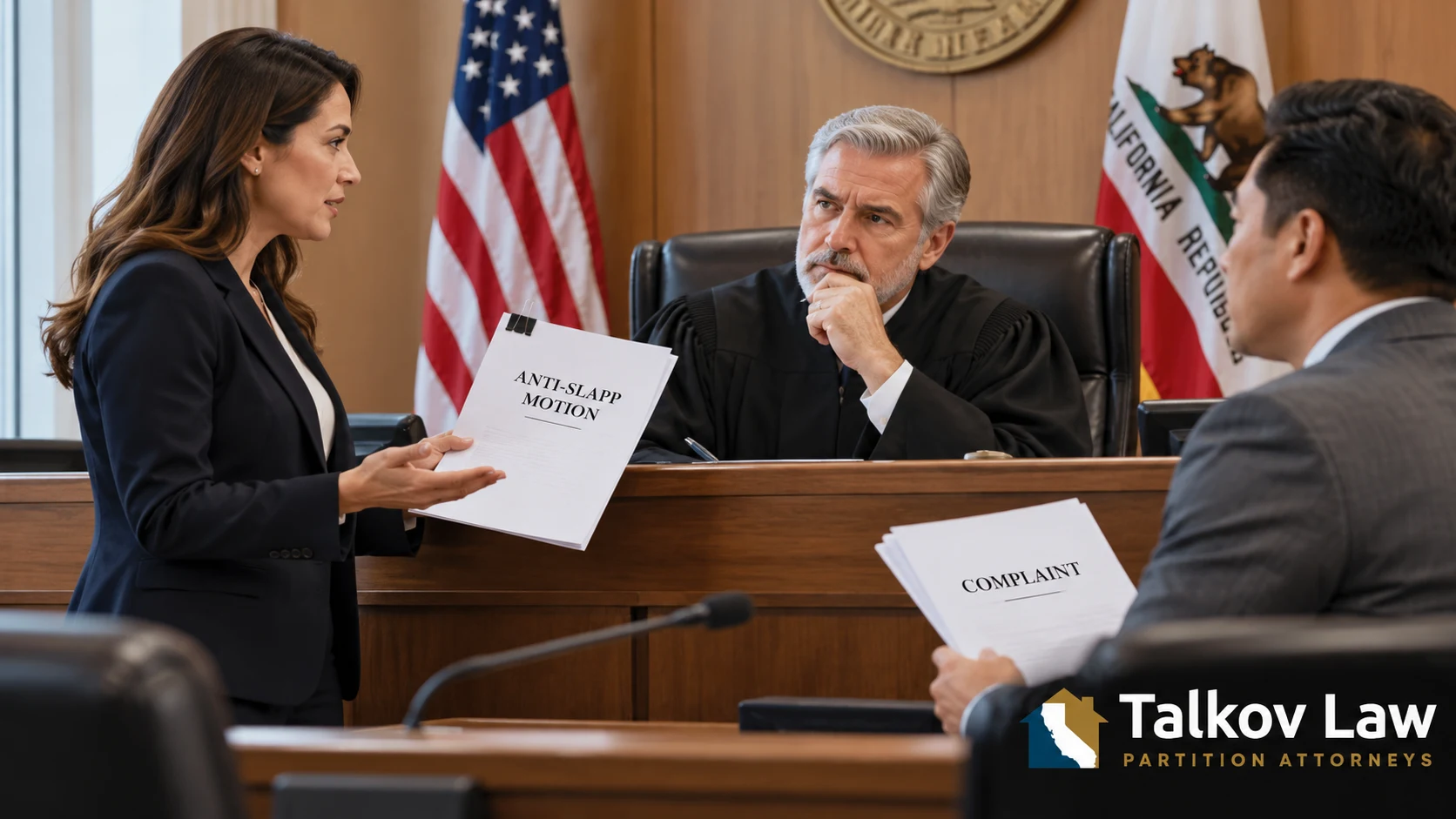
A co-owner served with a partition action sometimes threatens to sue the co-owner who filed it, and the attorney too. In California, the litigation privilege and the anti-SLAPP statute usually end that lawsuit early, with attorney’s fees.

How a co-owner who wants out wins a partition action in California: force the sale or a buyout, answer the defenses your co-owner will raise, maximize your offsets, and build your record from day one.

Code of Civil Procedure section 872.320 sets three conditions when a court orders service by publication in a partition: posting on the property, recording a lis pendens, and describing the property.
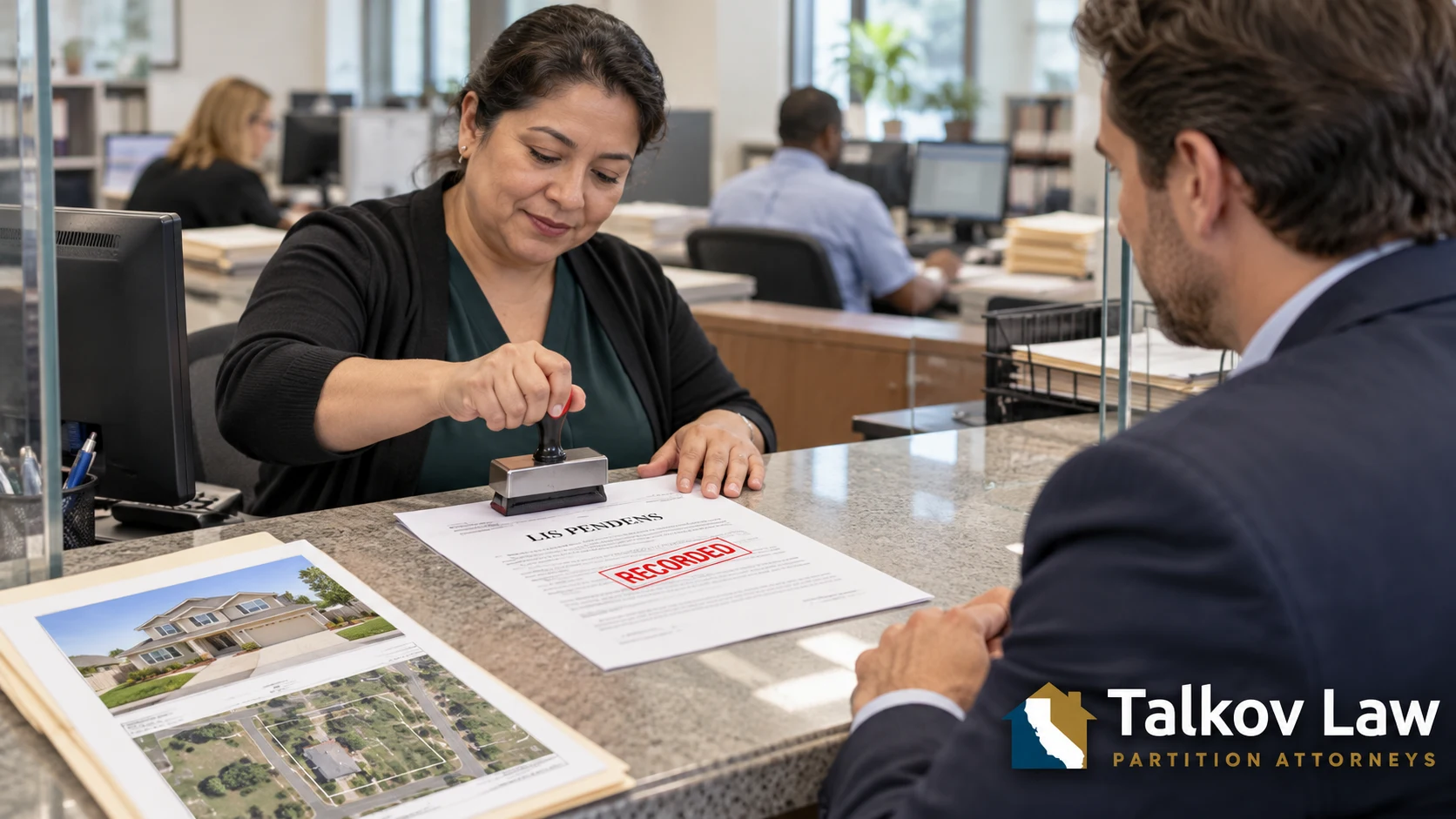
Code of Civil Procedure section 872.250 requires a partition plaintiff to record a lis pendens in every county where the property is located, immediately upon filing the complaint.
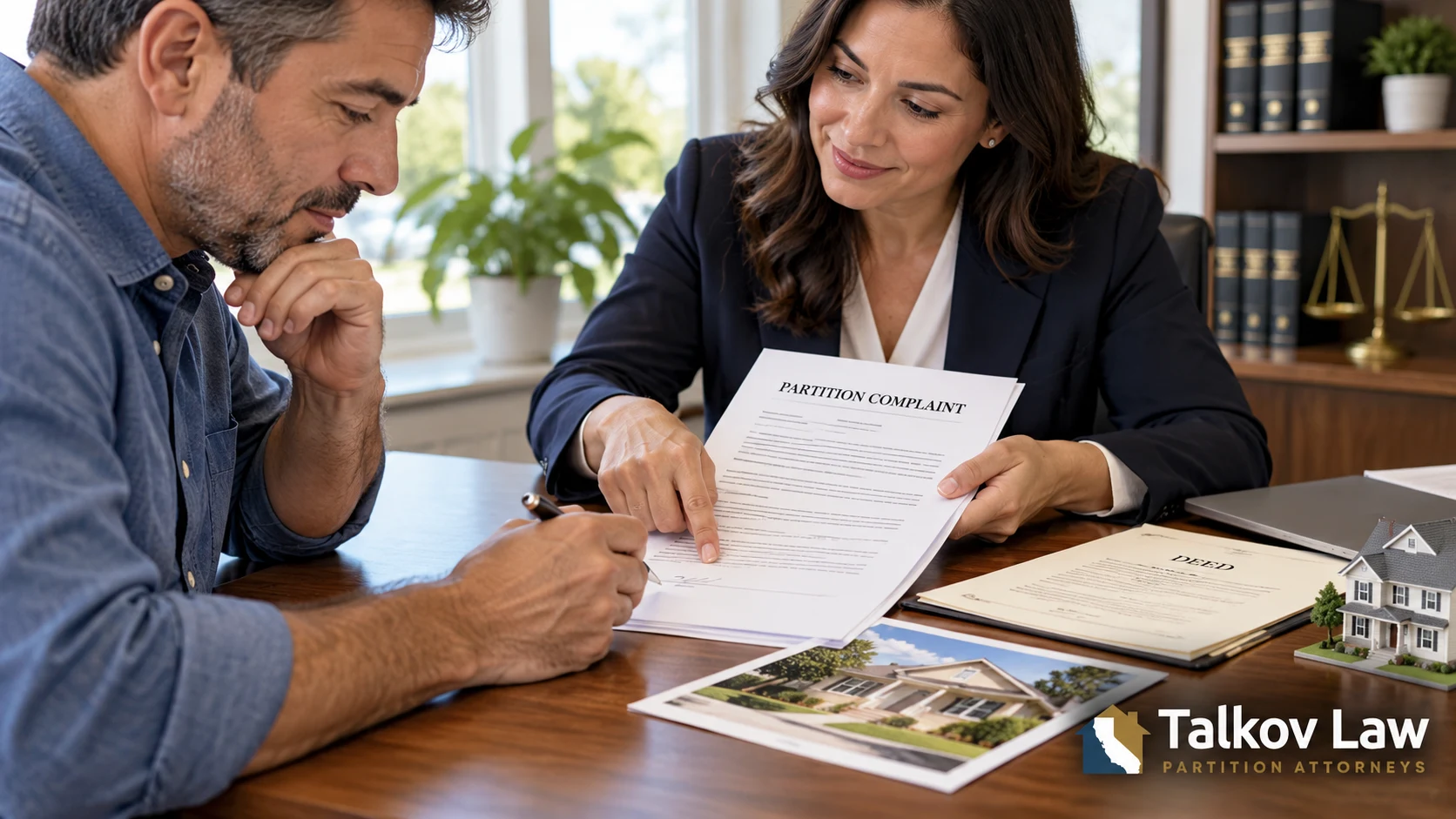
A partition action complaint describes the co-owned property, names every owner and lienholder, and asks the court to sell or divide it; here is a free California form with the CCP 872.230 checklist.

Representing co-owners statewide. Find your nearest Talkov Law office.
Practical guides from attorneys who focus exclusively on California partition actions.
The information on this site, including the Talkov Law Blog, is intended for general information purposes only. By using this site, you agree that any information contained in the site does not constitute legal, financial or any other form of professional advice. Information on this site may be changed without notice and is not guaranteed to be complete, accurate, correct or up-to-date.







