
Do You Need a Lawyer for a Partition Action in California?
An individual co-owner can represent themselves in a California partition action, but a company, executor, or trustee must hire a lawyer.
An individual co-owner can represent themselves in a California partition action, but a company, executor, or trustee must hire a lawyer.
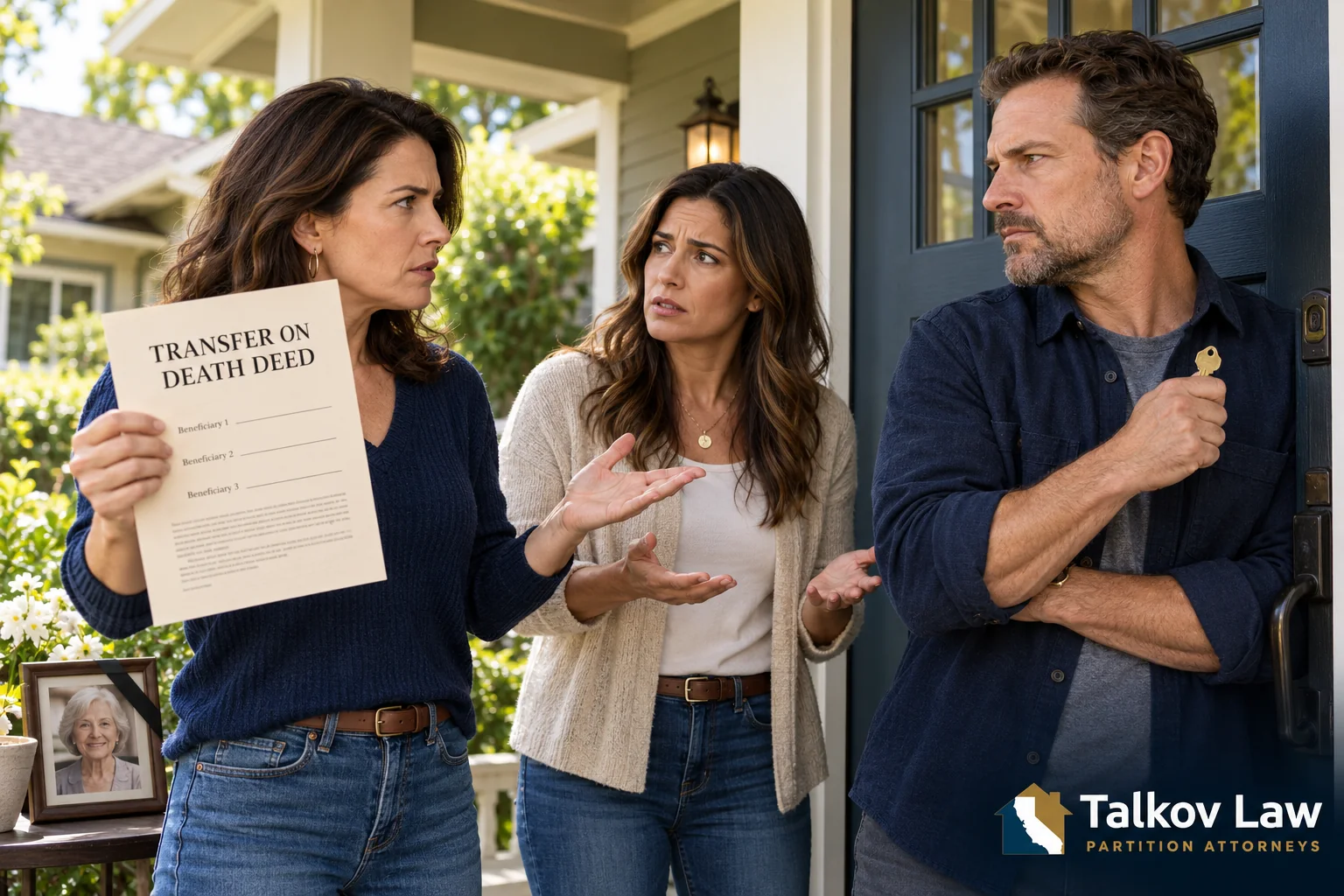
A California transfer on death deed can name several beneficiaries. When the owner dies, they inherit the house together in equal shares. If they cannot agree on keeping, renting, or selling it, any one of them can file a partition action.
An interlocutory judgment of partition closes the first phase of a California partition case. You obtain it by proving your right to partition and each co-owner’s share, often by motion rather than trial.

A partition lawyer represents co-owners of California property who can’t agree on whether to keep, sell, or buy out the property. The main tool is a partition action asking the court to order a sale or division.

A clear and marketable title is essential when property is sold in a partition action. Here is how title insurance protects the sale and the buyer.
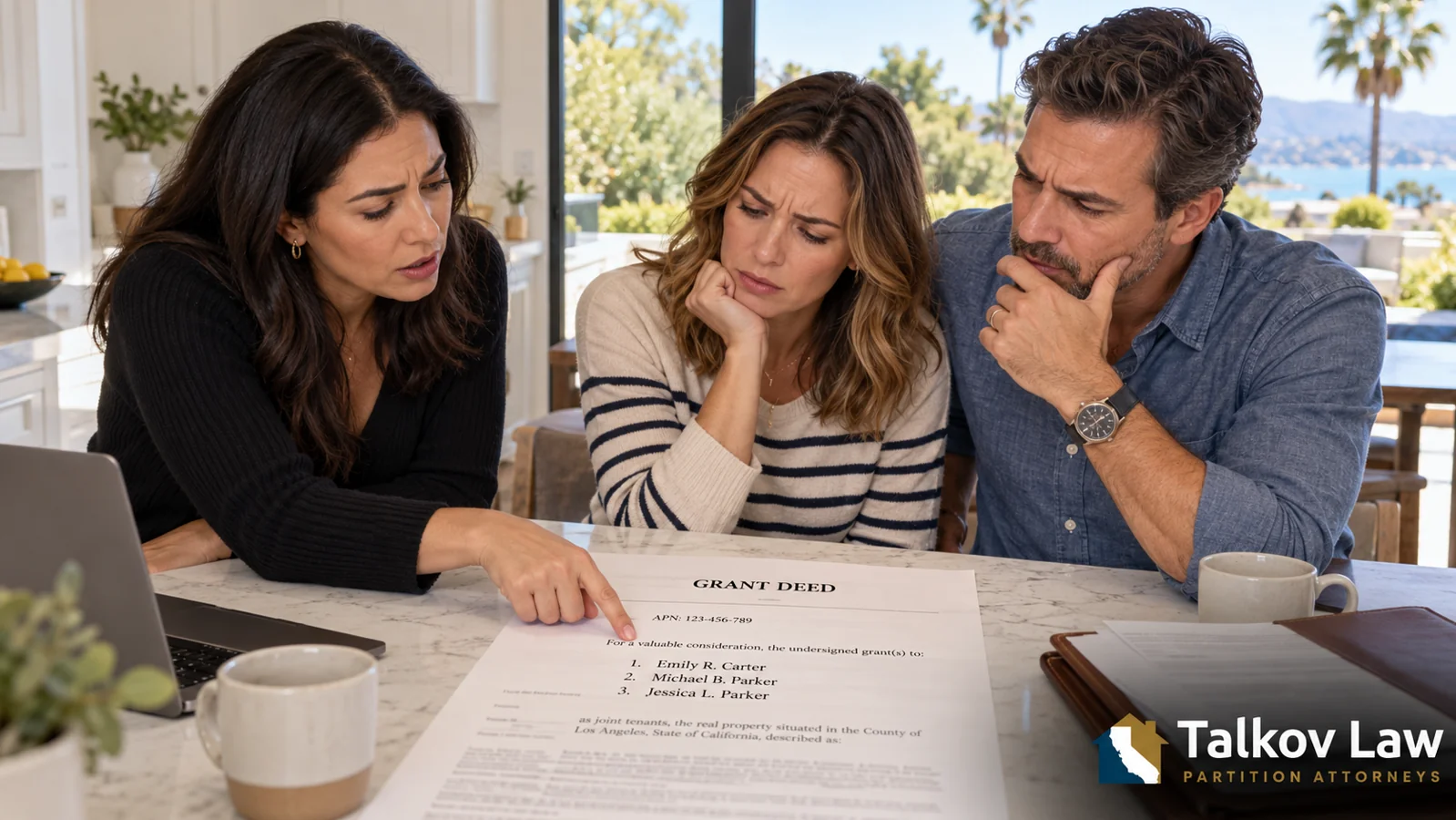
Many deeds name three or more co-owners without saying how much each owns. That question becomes critical in a partition action. Here are the factors courts consider.

A section 998 offer lets a co-owner pressure the other side to settle a partition action, because a co-owner who refuses and does worse at trial can be made to bear more of the costs.

Code of Civil Procedure section 872.010 is the definitions section of the partition law. It defines action, lien, property, remainder, and title report for every partition action.

Code of Civil Procedure section 872.550 lets a partition plaintiff join all persons unknown who claim an interest in the property when partition is sought as to all interests.

Code of Civil Procedure section 872.220 sets out two ways to get a title report in a partition action: the plaintiff may order one before filing, or the court may authorize a party to order one during the case.
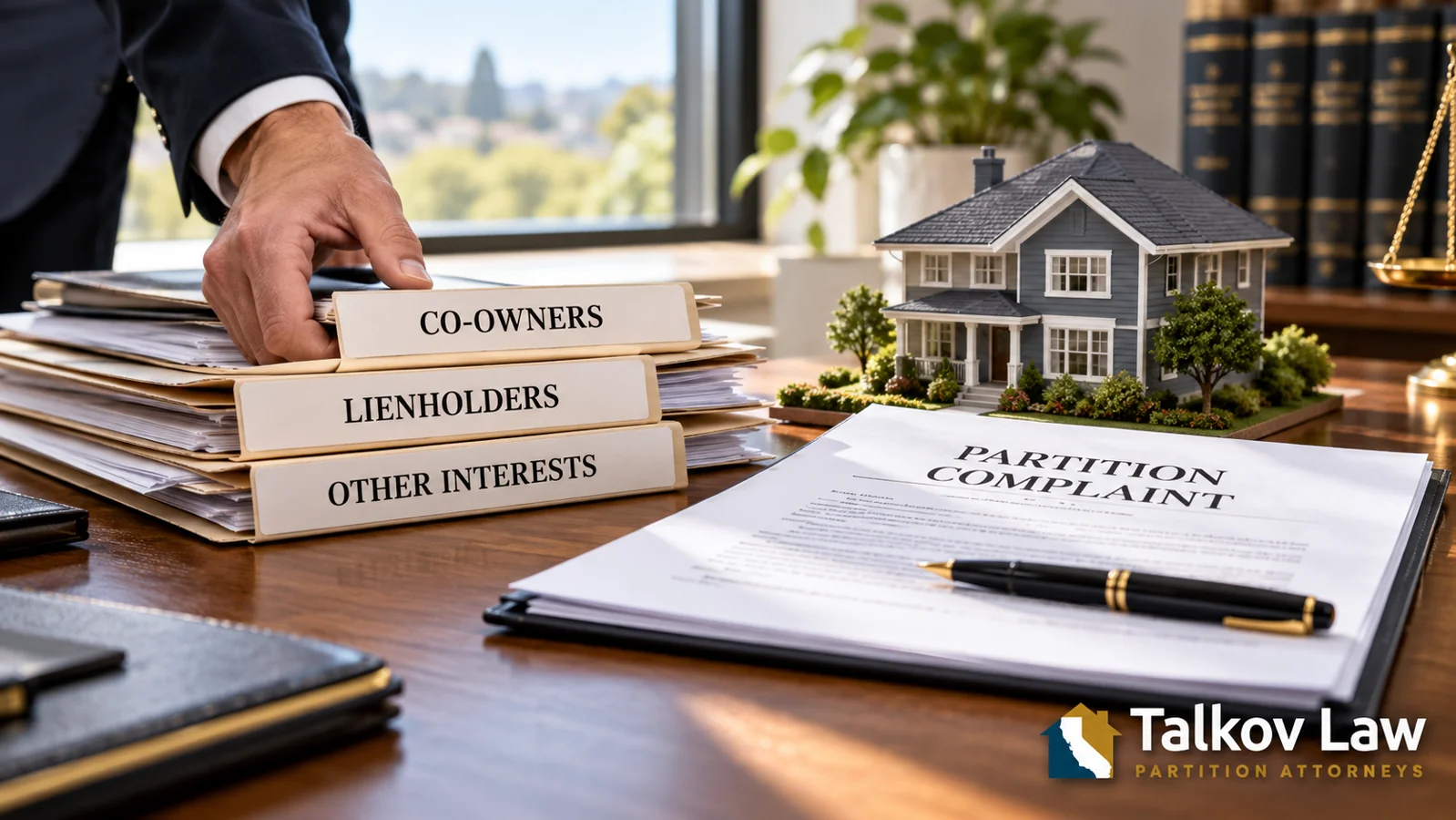
Code of Civil Procedure section 872.510 requires a partition plaintiff to name as defendants everyone who has or claims an interest in the property that is of record or known to the plaintiff.
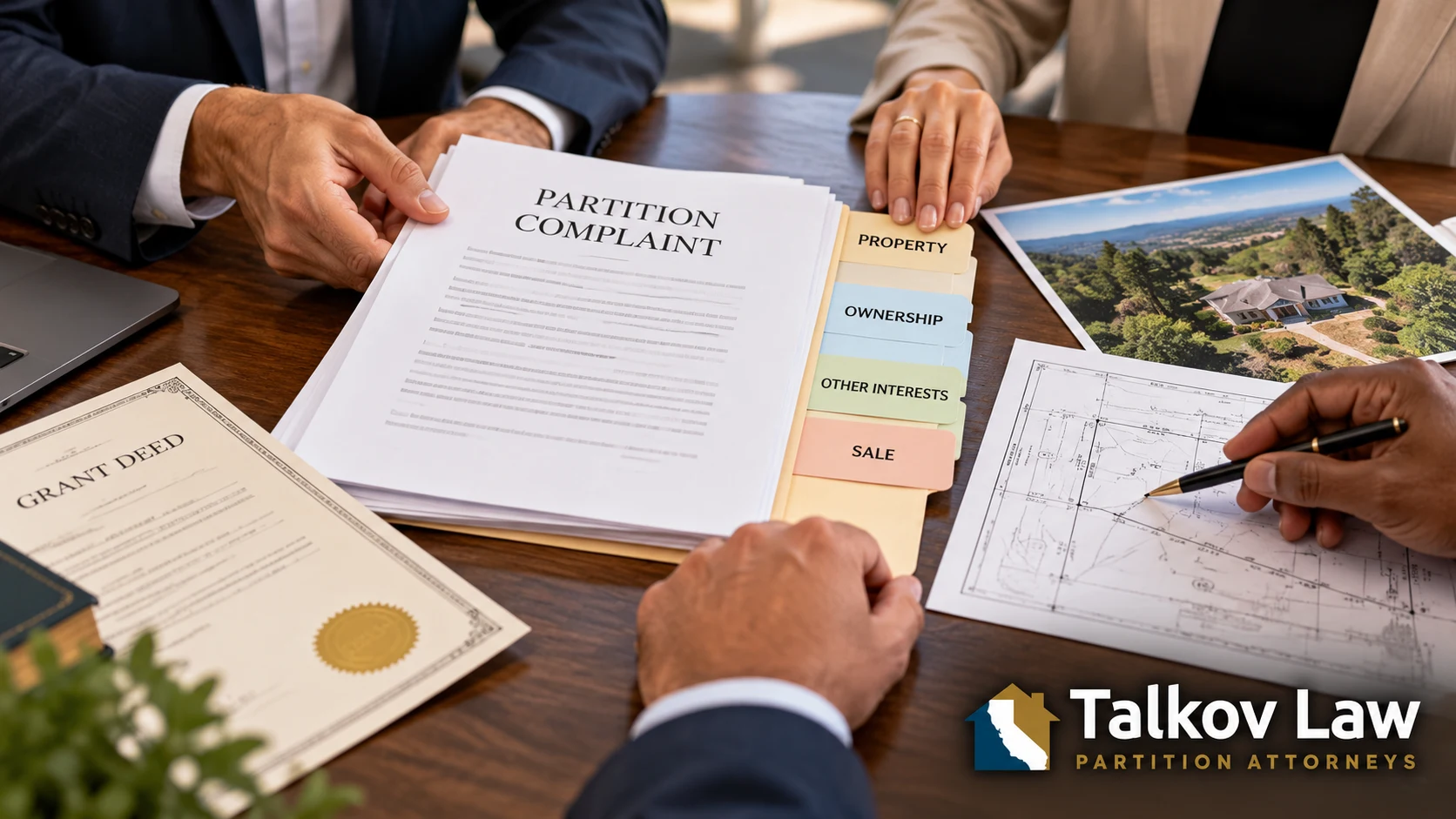
Code of Civil Procedure section 872.230 lists what a partition complaint must contain, including a description of the property, the plaintiff’s interests, and the other interests the case will affect.
Code of Civil Procedure section 872.620 lets the court determine the state of the title as part of the partition action.

Code of Civil Procedure section 874.010 lists the costs of partition the court may allow and apportion among the parties, such as attorney’s fees and referee fees.
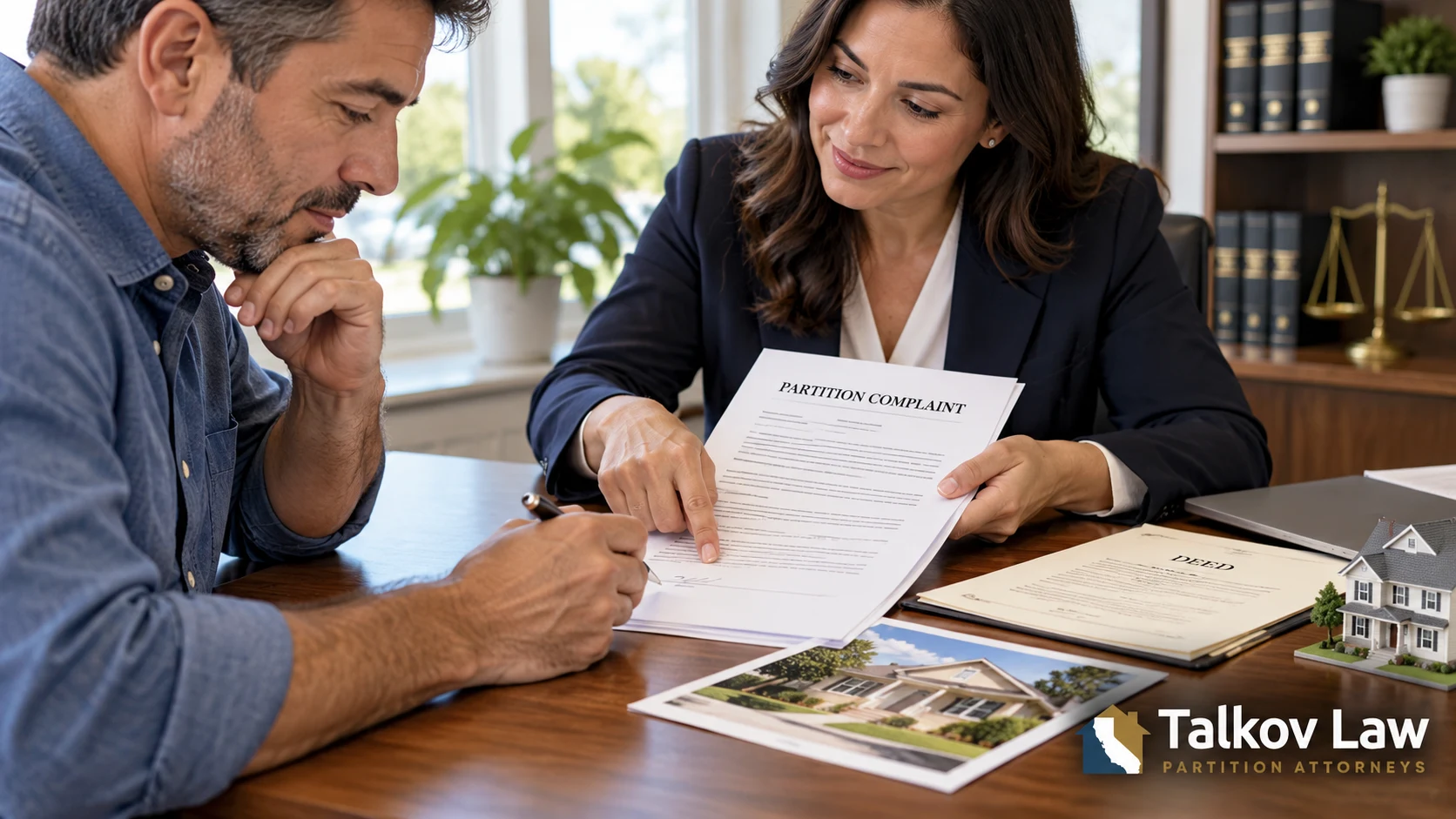
A partition action complaint describes the co-owned property, names every owner and lienholder, and asks the court to sell or divide it; here is a free California form with the CCP 872.230 checklist.

Representing co-owners statewide. Find your nearest Talkov Law office.
Practical guides from attorneys who focus exclusively on California partition actions.
The information on this site, including the Talkov Law Blog, is intended for general information purposes only. By using this site, you agree that any information contained in the site does not constitute legal, financial or any other form of professional advice. Information on this site may be changed without notice and is not guaranteed to be complete, accurate, correct or up-to-date.







