
Adverse Possession and Co-Ownership
Co-owners often ask whether moving out of a property means giving up their ownership. In California, adverse possession between co-owners is very hard to prove.
Co-owners often ask whether moving out of a property means giving up their ownership. In California, adverse possession between co-owners is very hard to prove.
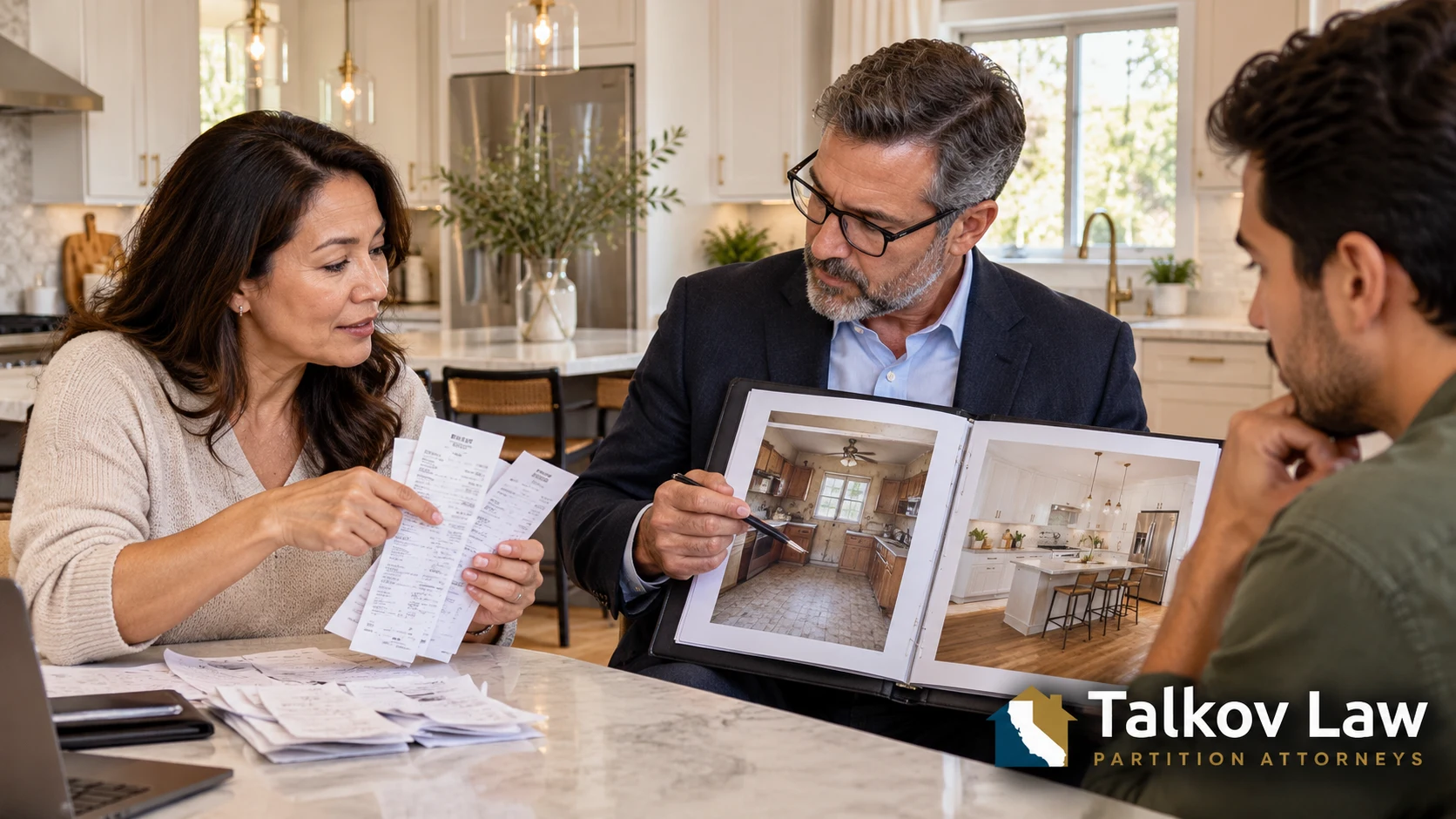
California law allows a co-owner to be compensated for improvements in a partition action, but whether an offset is awarded depends on the circumstances.
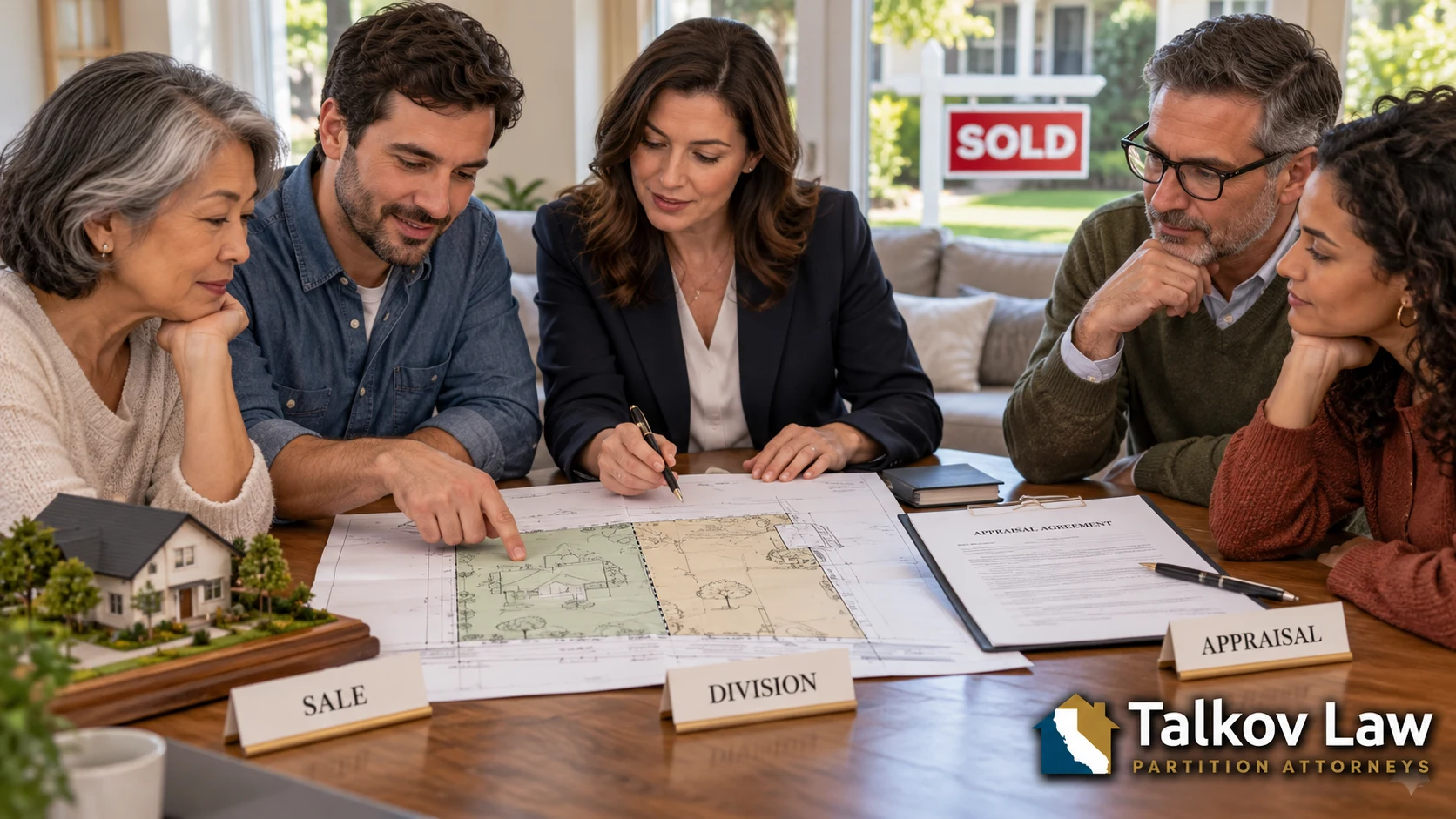
California law provides three types of partition: partition by sale, partition in kind, and partition by appraisal. By far the most common is partition by sale.
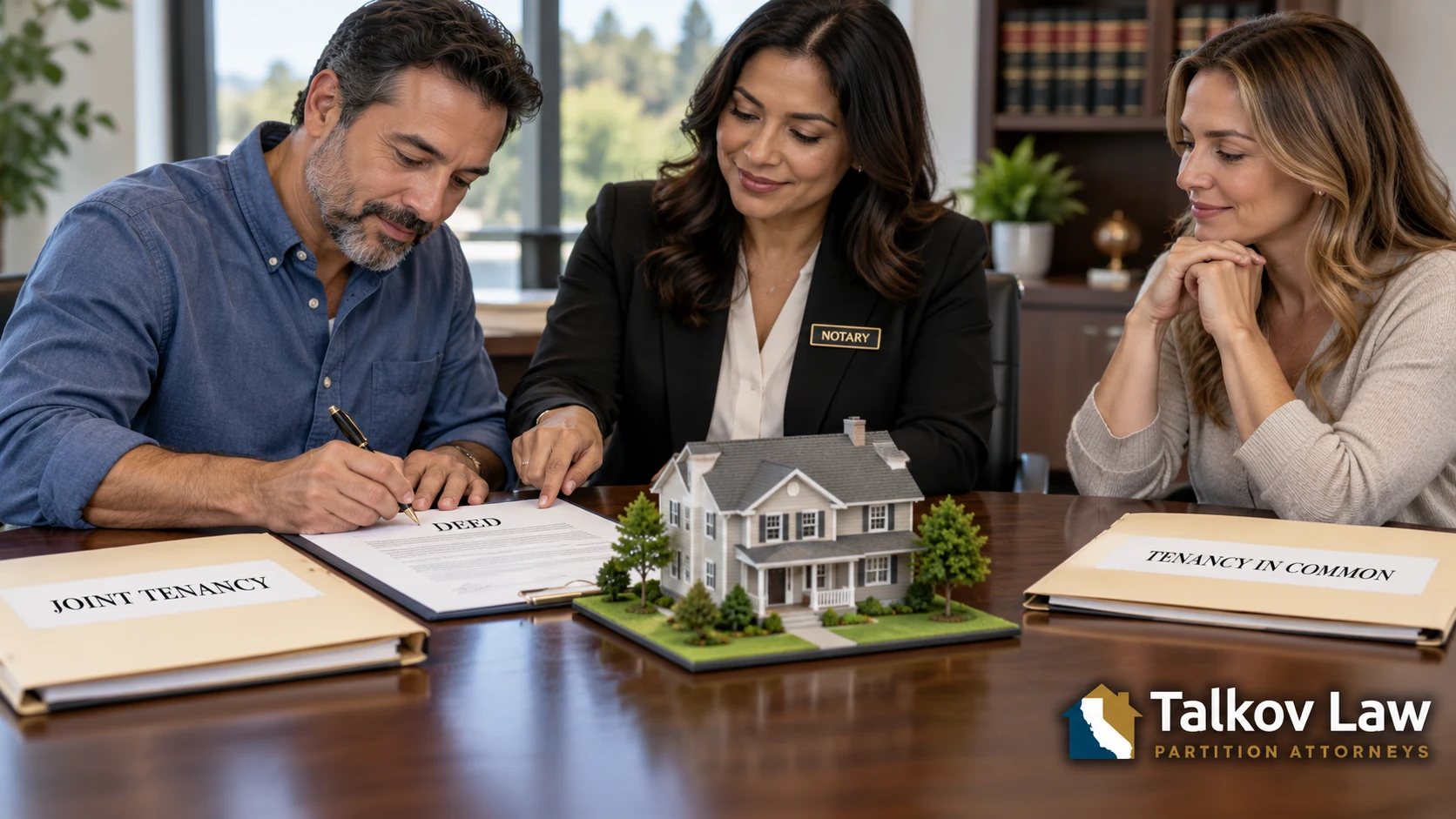
Severing a joint tenancy changes what happens to your share when you die. Here is what severance means, why it matters, and how a co-owner can do it.
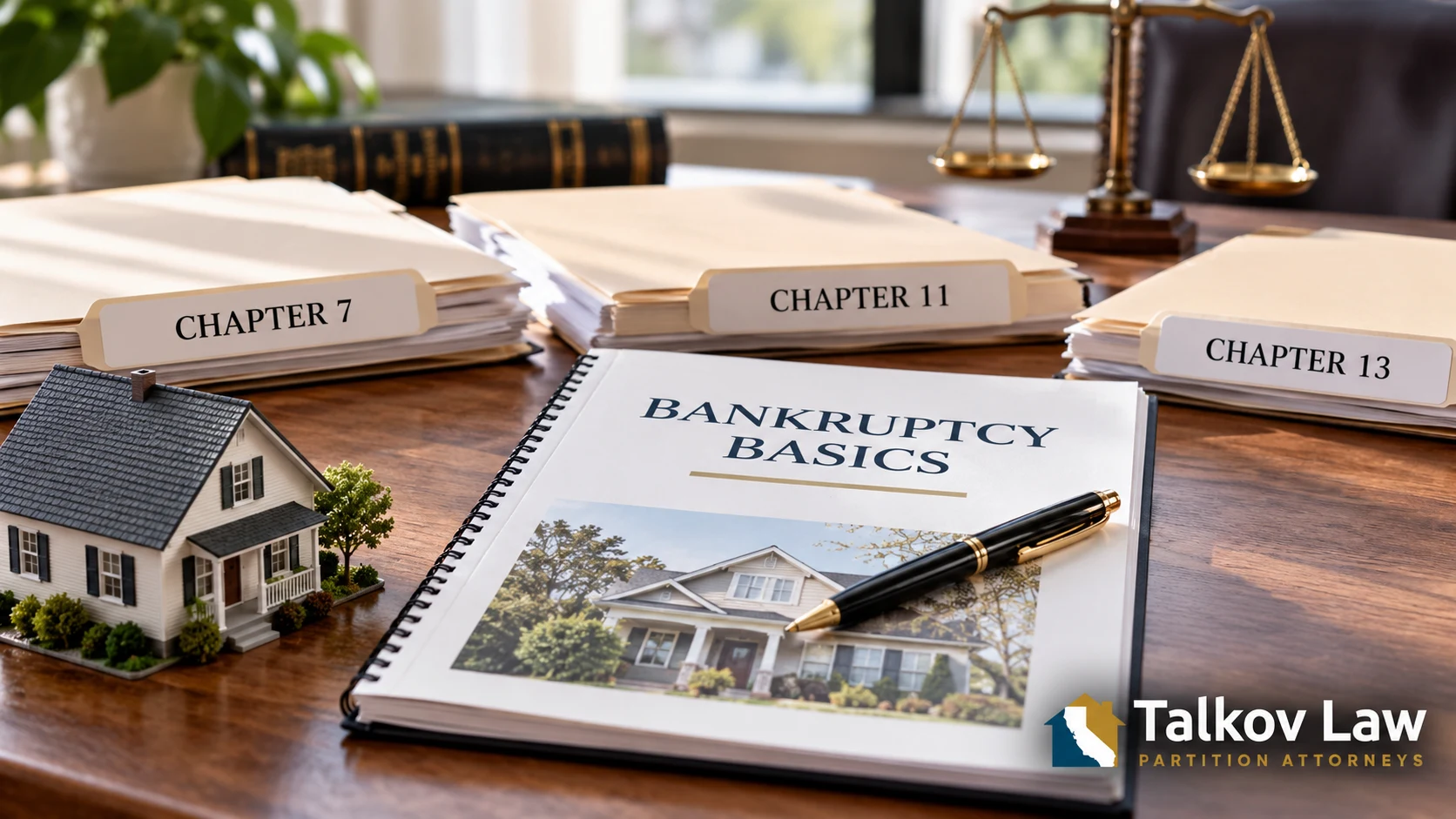
When a co-owner files bankruptcy, the trustee may sell the whole house, you may have the right to buy it first, and your share of the proceeds still needs protecting. Here is how it works in California.
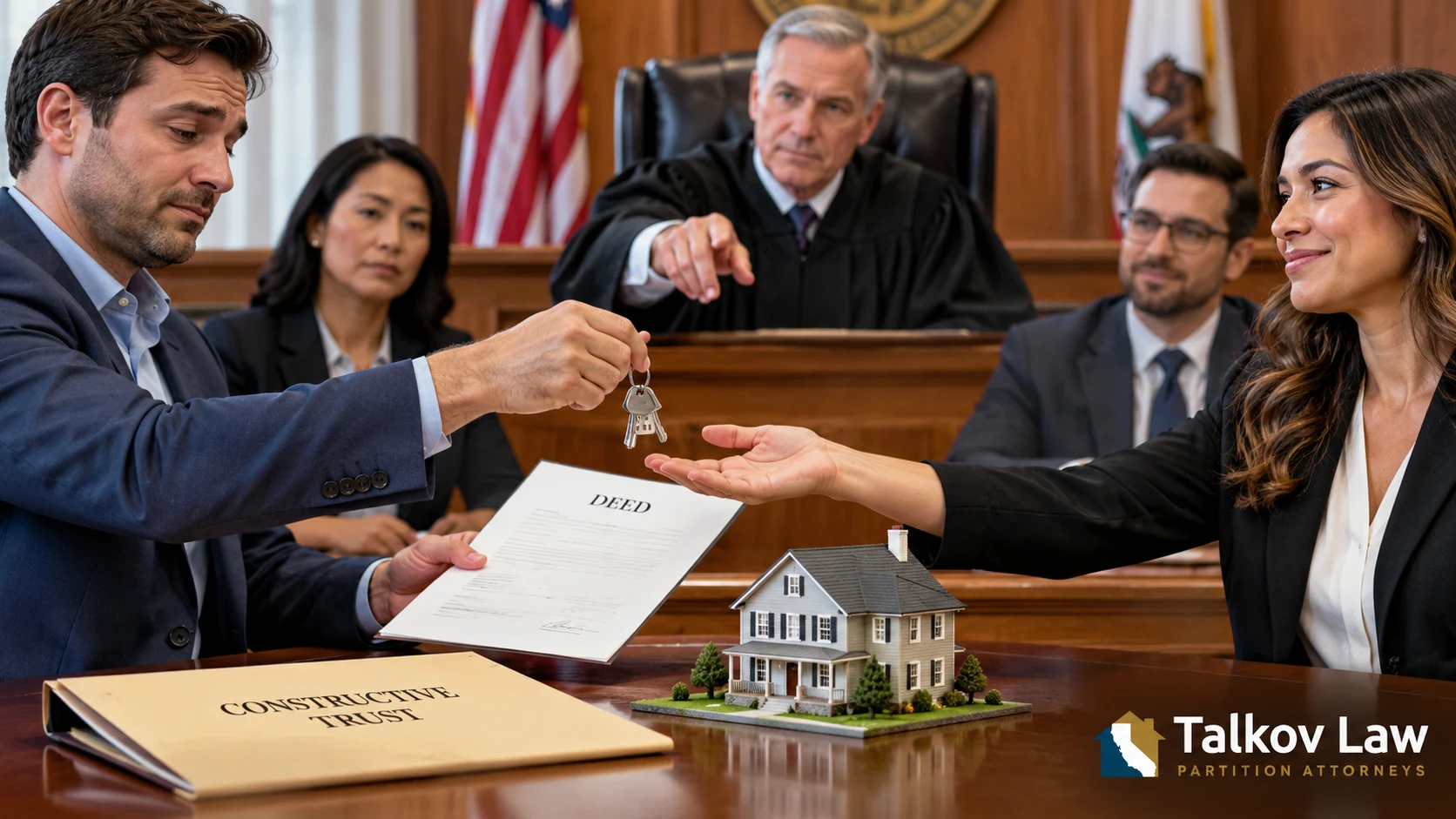
A constructive trust is a court remedy that forces a person holding property they aren’t entitled to to transfer it to the rightful owner. It often comes up in co-ownership disputes.
Title means ownership; a deed transfers an interest in property. Learn how California deeds, title insurance, liens, and mortgages affect co-owners.
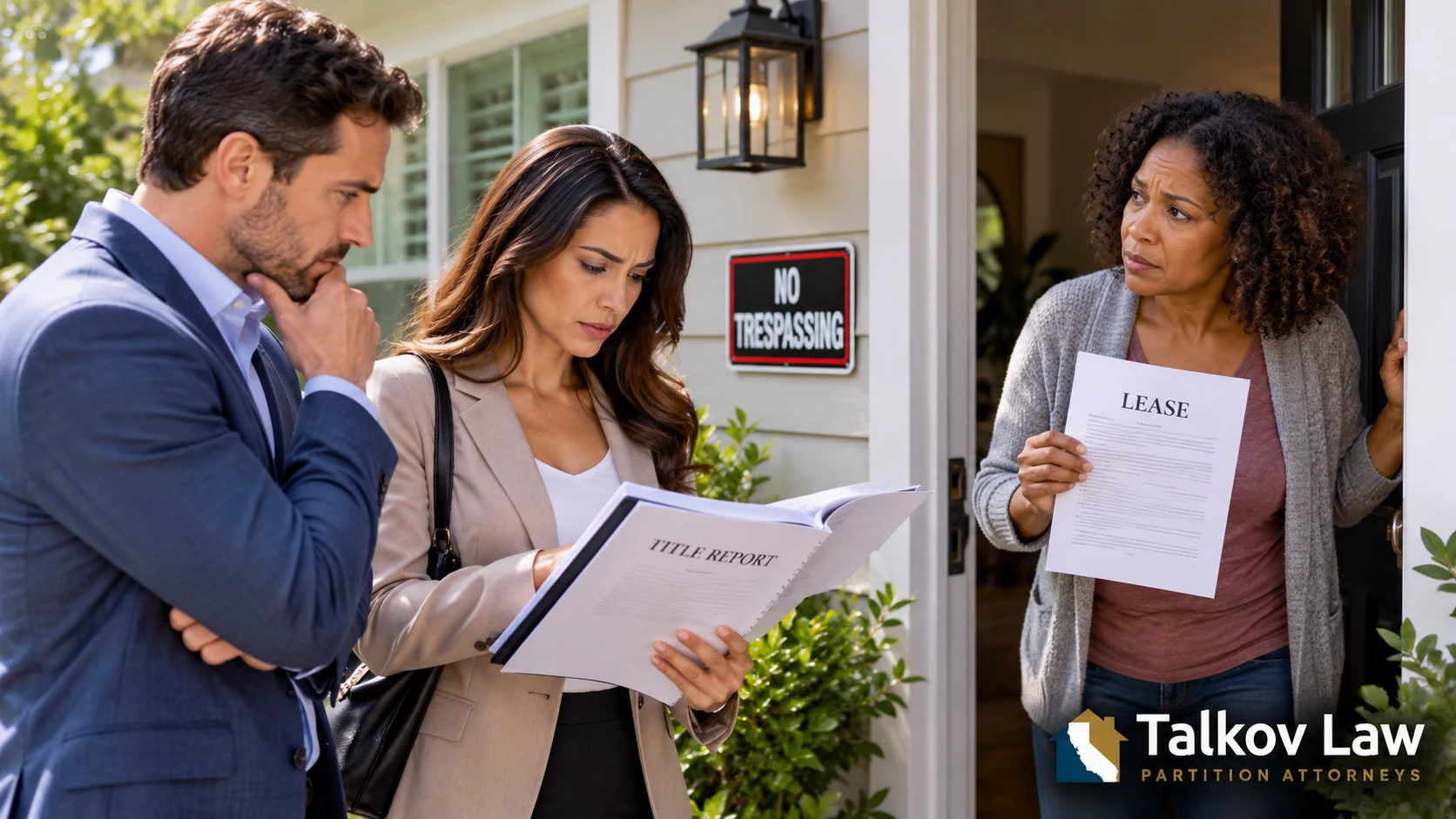
Disputes often arise when a buyer claims priority over earlier interests in a property. Bona fide purchaser status depends on California’s rules for actual, constructive, inquiry, and imputed notice.

The statute of frauds requires certain agreements, including most real estate contracts, to be in writing. Here is how it applies to California real estate.
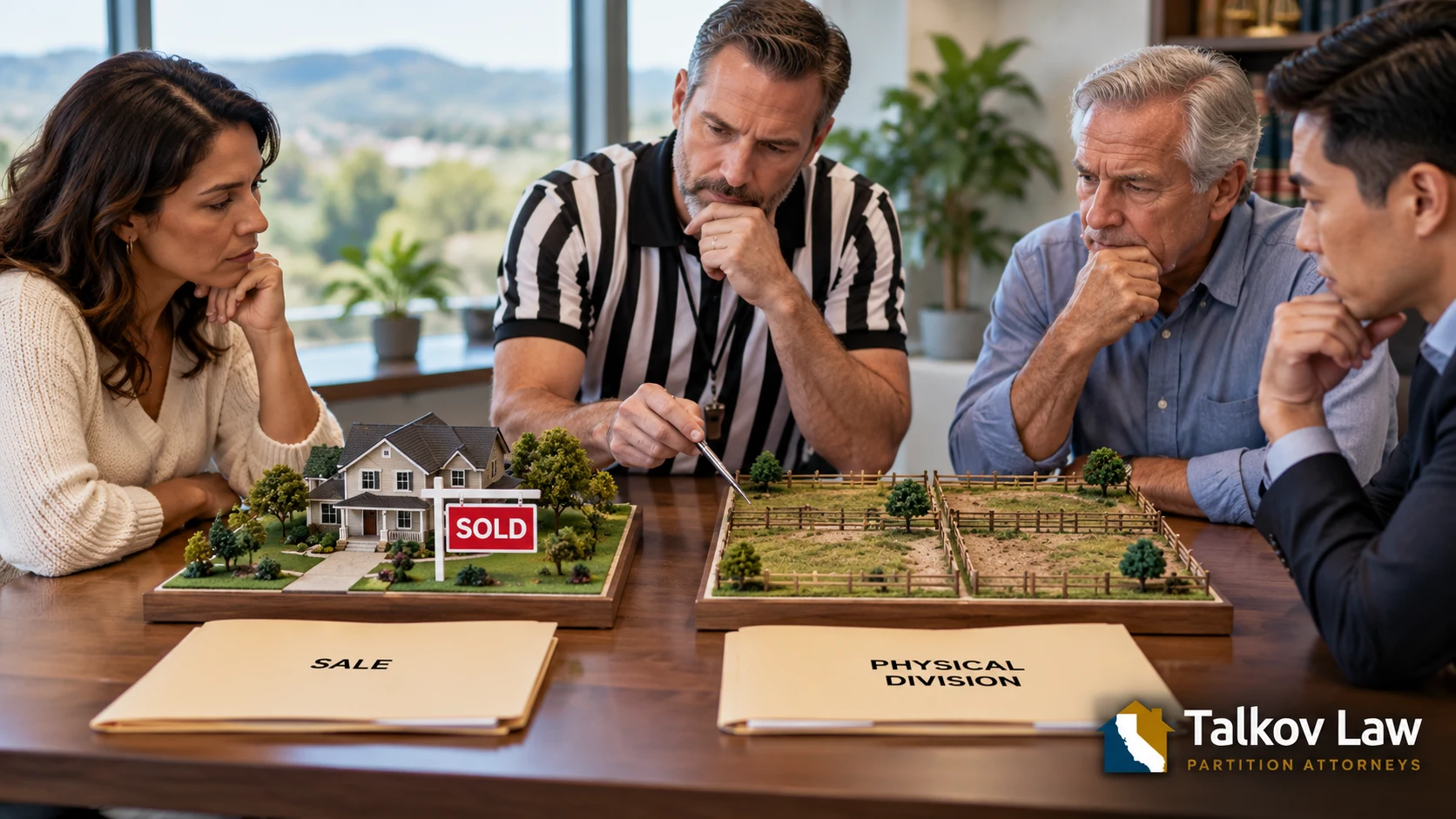
Co-owners often disagree about whether to sell the property or divide it. Here is how California courts decide between partition by sale and partition in kind.
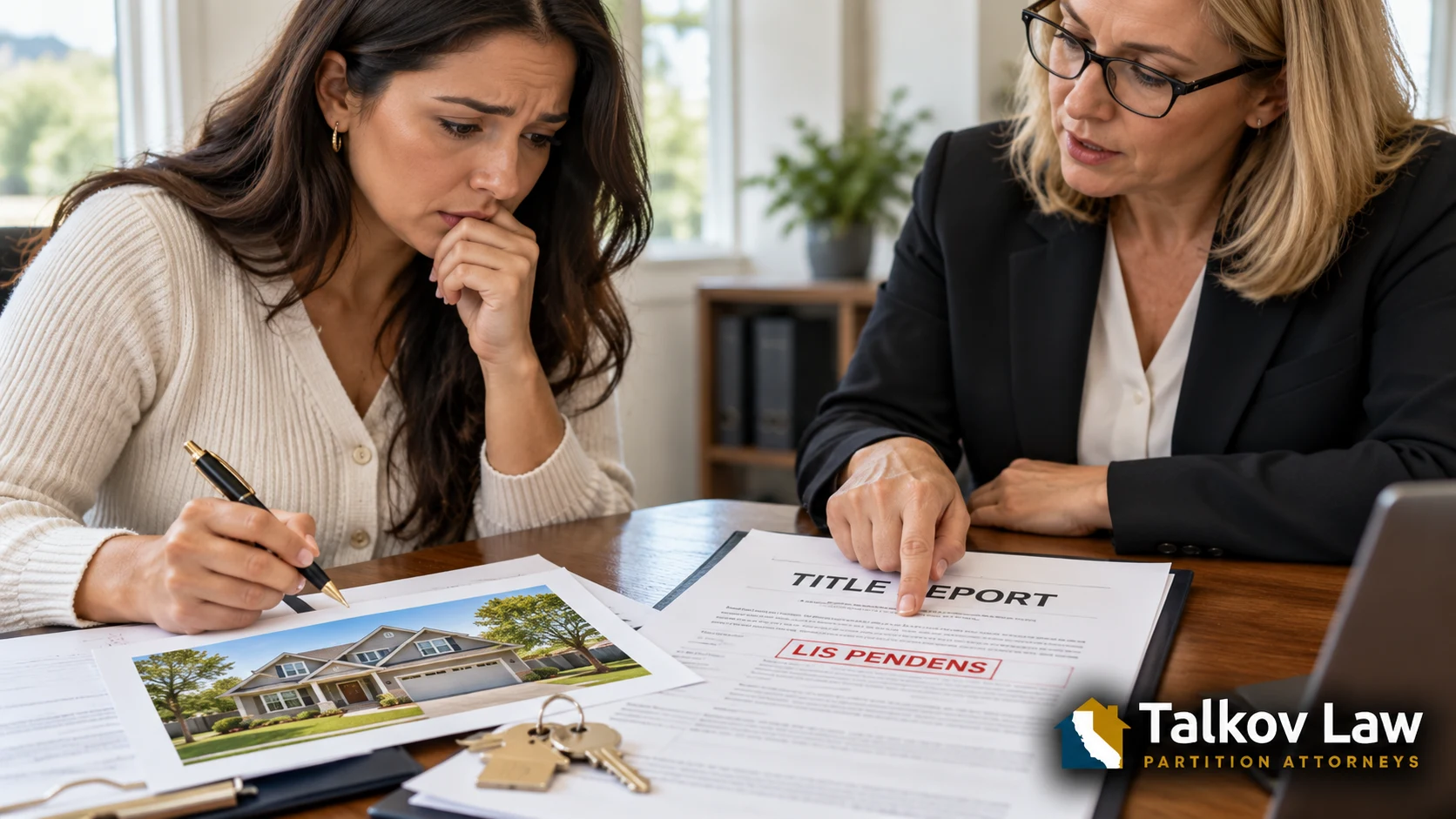
Formerly known as a “lis pendens,” a notice of pendency of action is a written document, recorded with the county recorder that provides constructive notice of a pending court action (i.e. a lawsuit) that affects title to, or possession of, real property.

As partition attorneys in California, we are often asked about the cost of a partition action. Since attorneys are the largest cost, the real question is how much are the attorney’s fees for a partition lawsuit in California?

When co-owners can’t agree, a California court can force a sale. Before the proceeds are split, the court credits co-owners for mortgage payments, taxes, improvements, and rental value.

Representing co-owners statewide. Find your nearest Talkov Law office.
Practical guides from attorneys who focus exclusively on California partition actions.
The information on this site, including the Talkov Law Blog, is intended for general information purposes only. By using this site, you agree that any information contained in the site does not constitute legal, financial or any other form of professional advice. Information on this site may be changed without notice and is not guaranteed to be complete, accurate, correct or up-to-date.







