
Trial Preference in a California Partition: Trial Within 120 Days Under CCP 36
A co-owner over 70 can force a partition to trial within 120 days under CCP 36. Here is who qualifies, what the court must find, and how it speeds up a sale.
A co-owner over 70 can force a partition to trial within 120 days under CCP 36. Here is who qualifies, what the court must find, and how it speeds up a sale.
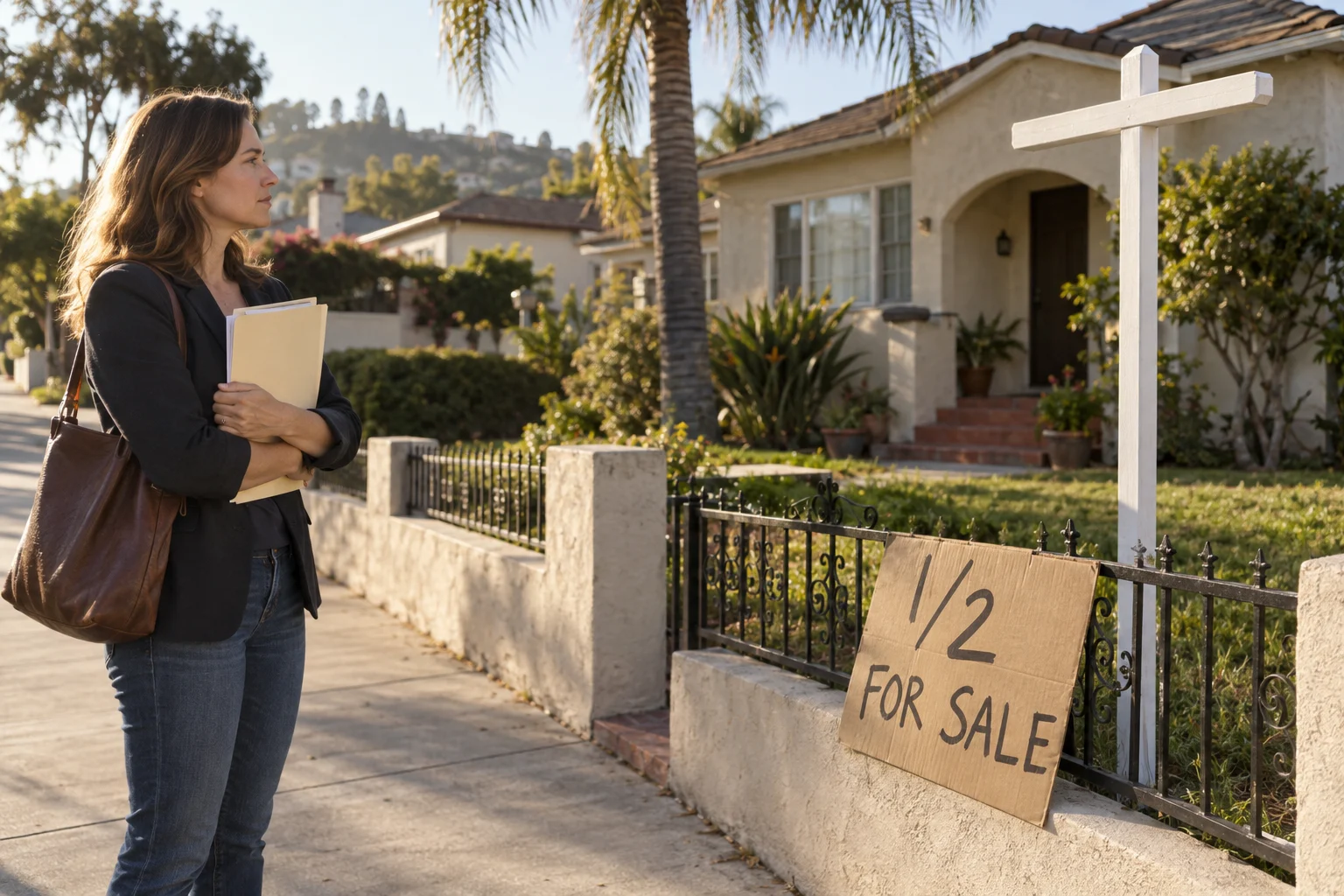
Yes, a California co-owner can sell their half of a jointly owned property without the other owner’s consent, but almost no one buys half a house at full value, so the way to cash out your share for what it is actually worth is a co-owner buyout or a partition action.

In Kershman v. Kershman, the California Court of Appeal held that co-owners on a joint tenancy deed can own unequal shares if they agreed their shares would follow what each paid, and that a co-owner’s debts come out of his share of the sale proceeds, not his ownership percentage, so he keeps his share of the appreciation.
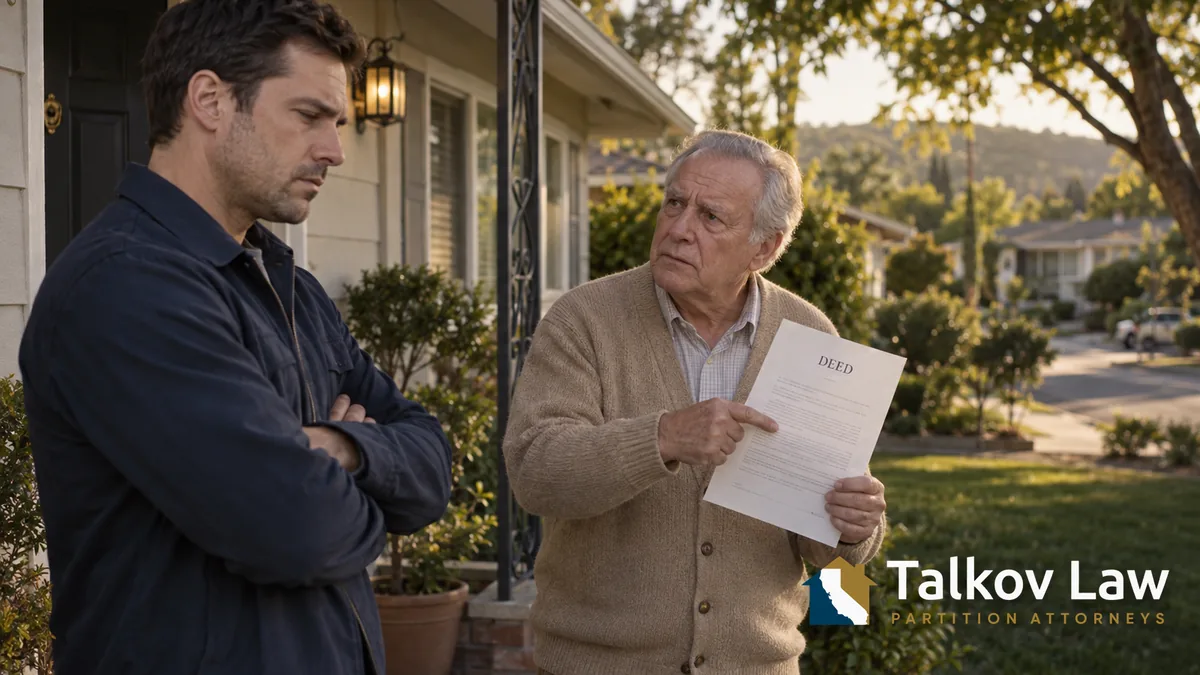
In Demetris v. Demetris, the California Court of Appeal let a father undo a mistaken joint tenancy deed and convert it to a tenancy in common, repaid the extra $1,000 he put toward his son’s share, and held that a loan on the whole house is paid from all the sale proceeds before the co-owners divide it.

In Southern Adjustment Bureau v. Nelson, the California Court of Appeal held that a co-owner who paid taxes, insurance, and loan payments is repaid the full amount from a partition sale before the rest is split, and showed how repaying only half underpays that co-owner.

Usually, yes. In a California partition action, a co-owner who paid more than their share of the mortgage is generally entitled to be repaid the excess out of the sale proceeds before the remaining money is divided.

California law lets each co-owner use the property, but improvements one co-owner makes without the other’s agreement raise hard questions about who pays. A partition action sorts that out.

A co-owner who paid more than their share of expenses or improvements can be reimbursed in a partition action. California courts use two methods to calculate those offsets.
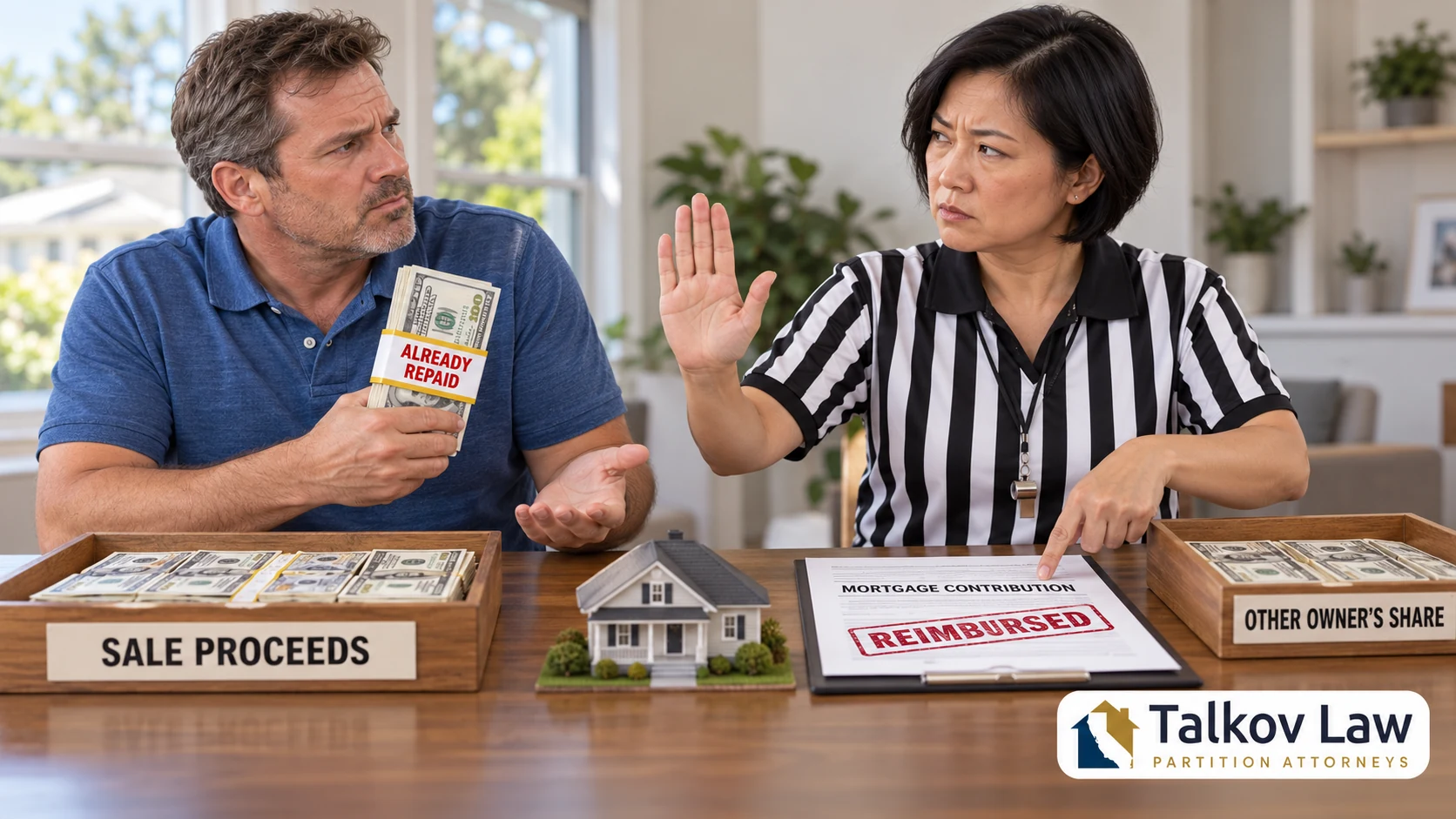
Partition accounting tracks costs, contributions, and reimbursements. One common mistake, double counting, can make the final judgment unfair if no one catches it.

The court or partition referee may need proof of who paid the mortgage to divide the sale proceeds. Here is how to gather and organize those records, including digital payments.

A co-owner who stops paying the mortgage is often an early sign of a larger dispute. A partition action can force a resolution and credit you for the payments you covered.
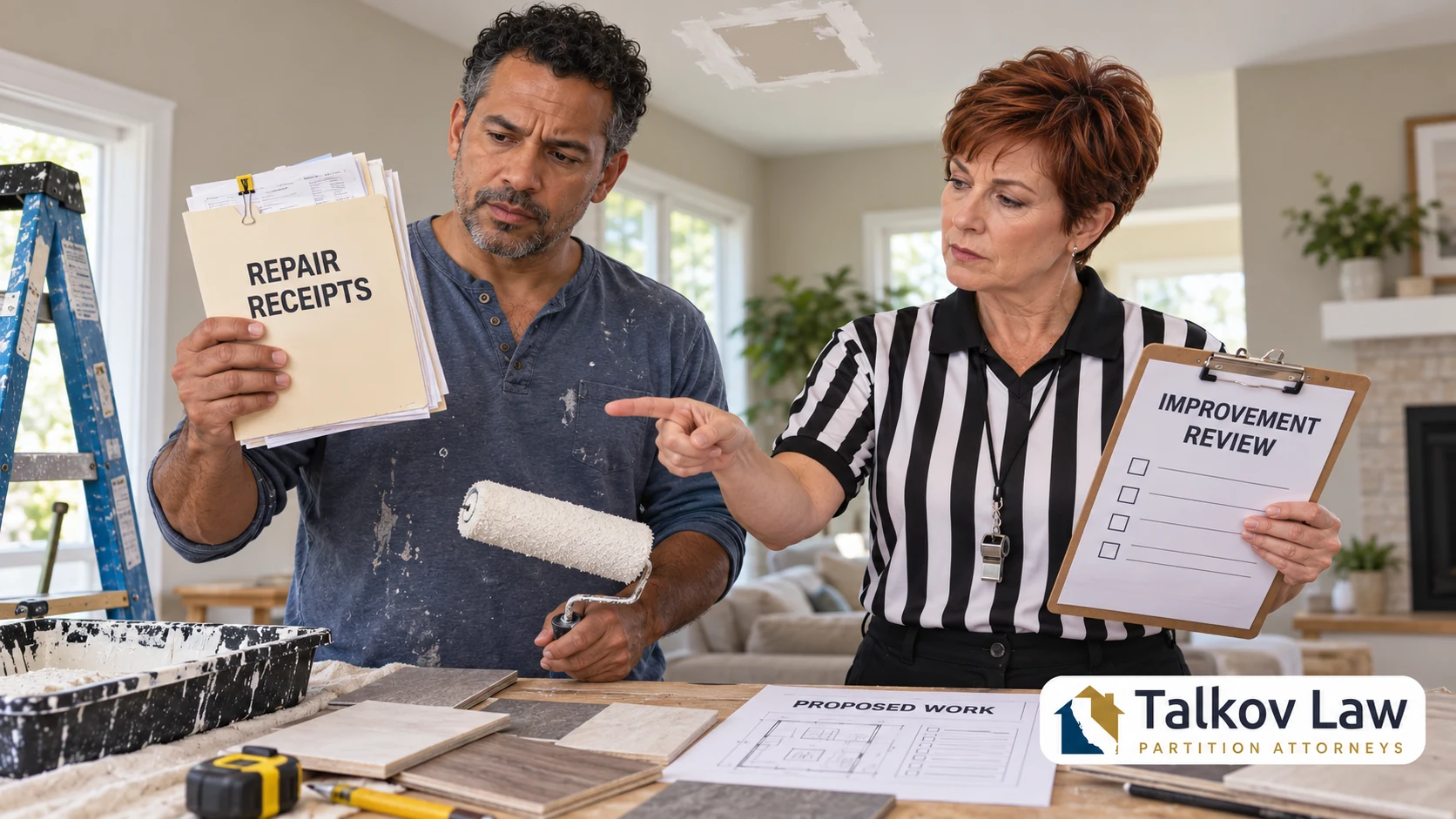
If you want to improve a co-owned property, timing matters. Here are the advantages and disadvantages of paying for improvements at each stage of a partition action.

One co-owner often ends up paying all the property taxes, especially when another co-owner lives there. A partition action can credit the paying co-owner and end the dispute.

Many deeds name three or more co-owners without saying how much each owns. That question becomes critical in a partition action. Here are the factors courts consider.

Co-owners often seek reimbursement for repairs and improvements in a partition action. The law favors improvements and may not always allow ordinary repairs to be recovered.

Yes. If your family or another co-owner won’t sell the cabin or beach house, or will only offer a low buyout, a California partition action can end the co-ownership through a court-supervised sale or a buyout at a court-set value.

Code of Civil Procedure section 873.820 sets the order in which the proceeds of a partition sale are applied.

Representing co-owners statewide. Find your nearest Talkov Law office.
Practical guides from attorneys who focus exclusively on California partition actions.
The information on this site, including the Talkov Law Blog, is intended for general information purposes only. By using this site, you agree that any information contained in the site does not constitute legal, financial or any other form of professional advice. Information on this site may be changed without notice and is not guaranteed to be complete, accurate, correct or up-to-date.







