Trial Preference in a California Partition: Trial Within 120 Days Under CCP 36
A co-owner over 70 can force a partition to trial within 120 days under CCP 36. Here is who qualifies, what the court must find, and how it speeds up a sale.
A co-owner over 70 can force a partition to trial within 120 days under CCP 36. Here is who qualifies, what the court must find, and how it speeds up a sale.

In Swartzbaugh v. Sampson, the California Court of Appeal held that one co-owner can lease jointly owned property without the other’s consent, but the lease is valid only as to the signer’s share, and the other owner keeps her right to possession and to partition.
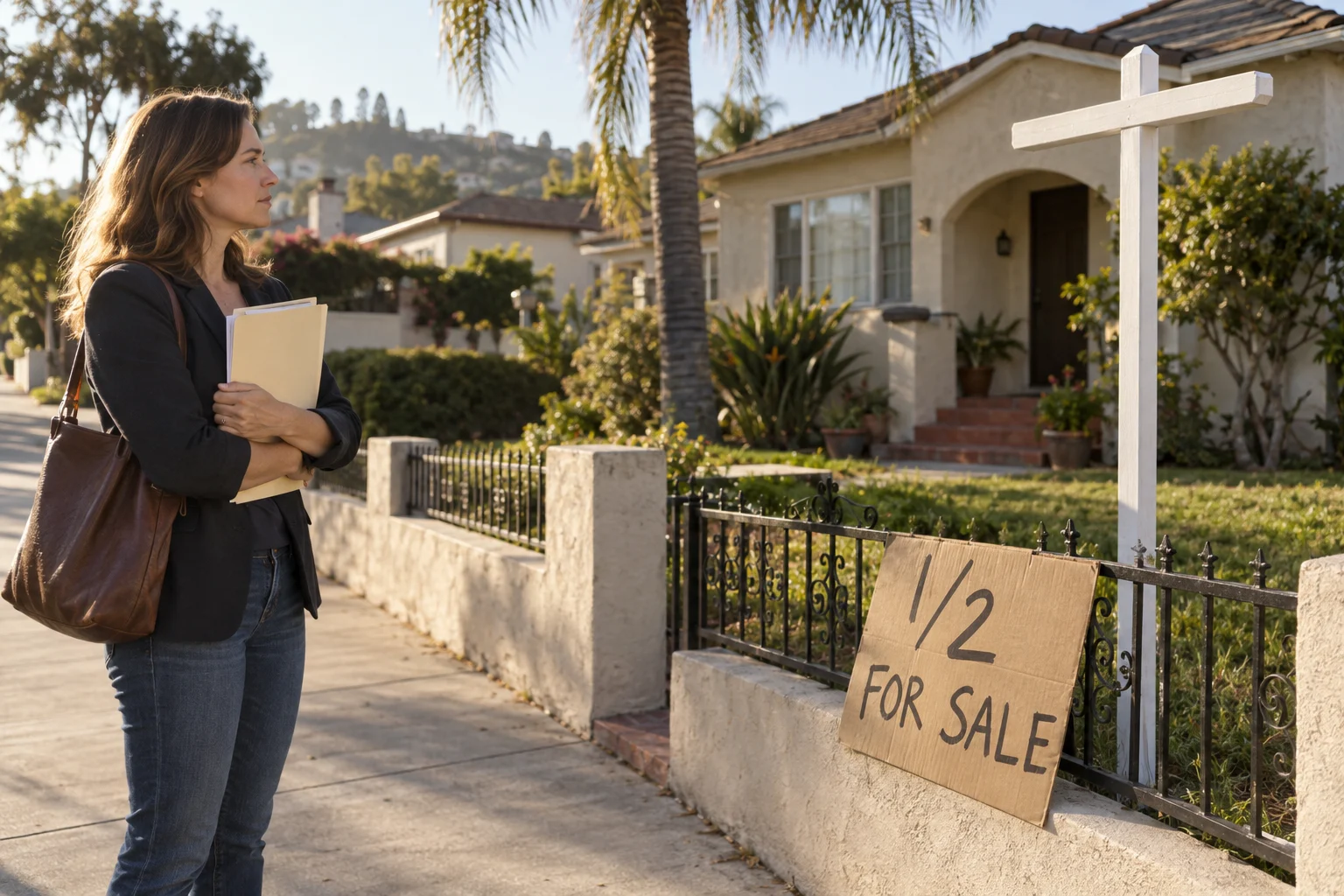
Yes, a California co-owner can sell their half of a jointly owned property without the other owner’s consent, but almost no one buys half a house at full value, so the way to cash out your share for what it is actually worth is a co-owner buyout or a partition action.
In Lazzarevich v. Lazzarevich, the California Supreme Court held that a joint tenant has a right to partition unless waived, and that an unpaid judgment owed to a co-owner cannot defeat that right.

In De Roulet v. Mitchel, the California Court of Appeal held that a co-owner cannot block or delay a partition sale because the property has a profitable lease or its value is expected to rise.
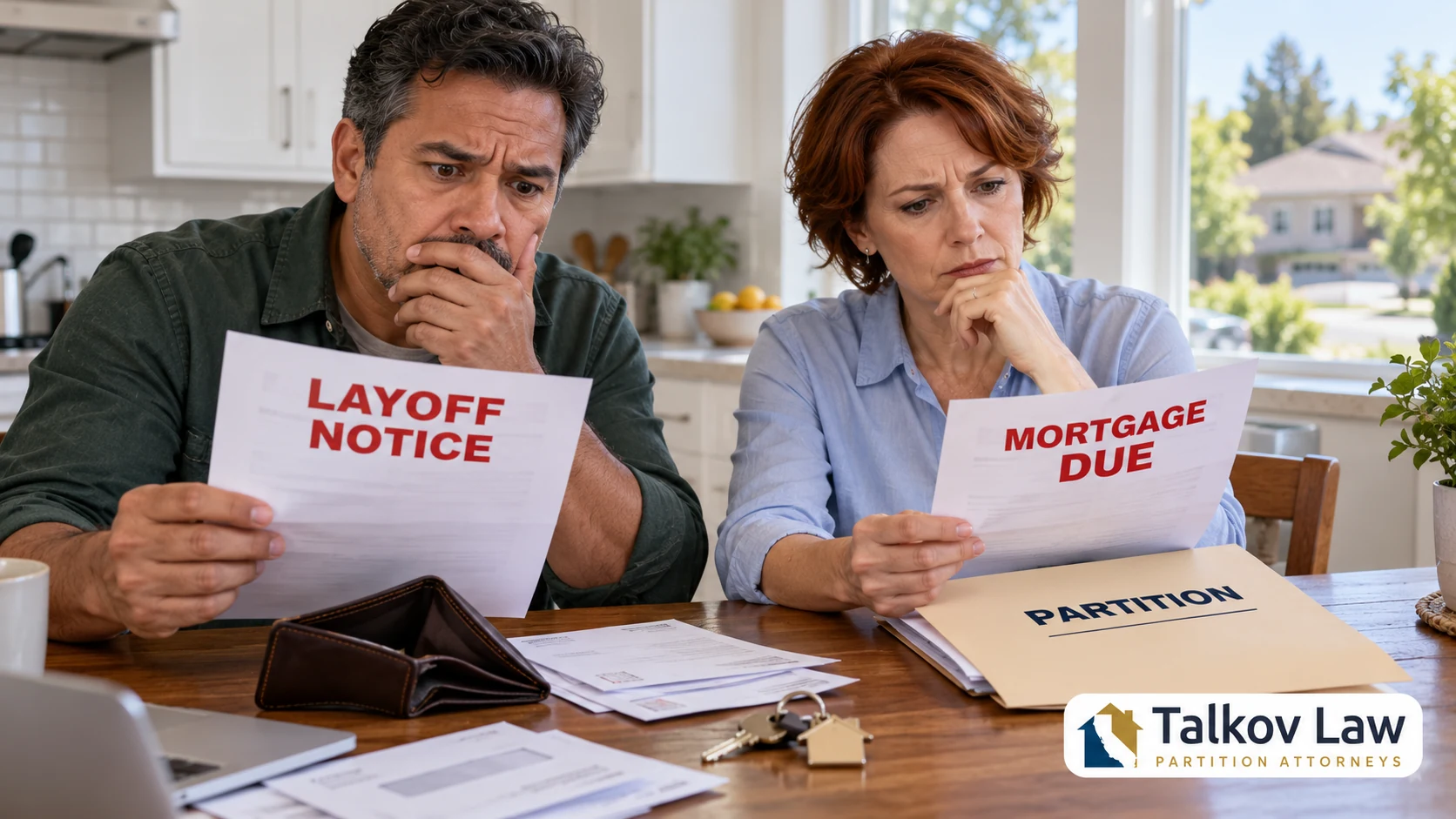
A recession does not affect your right to partition, but it can affect when you should file. Home values, interest rates, and mortgage obligations all shape the best timing.
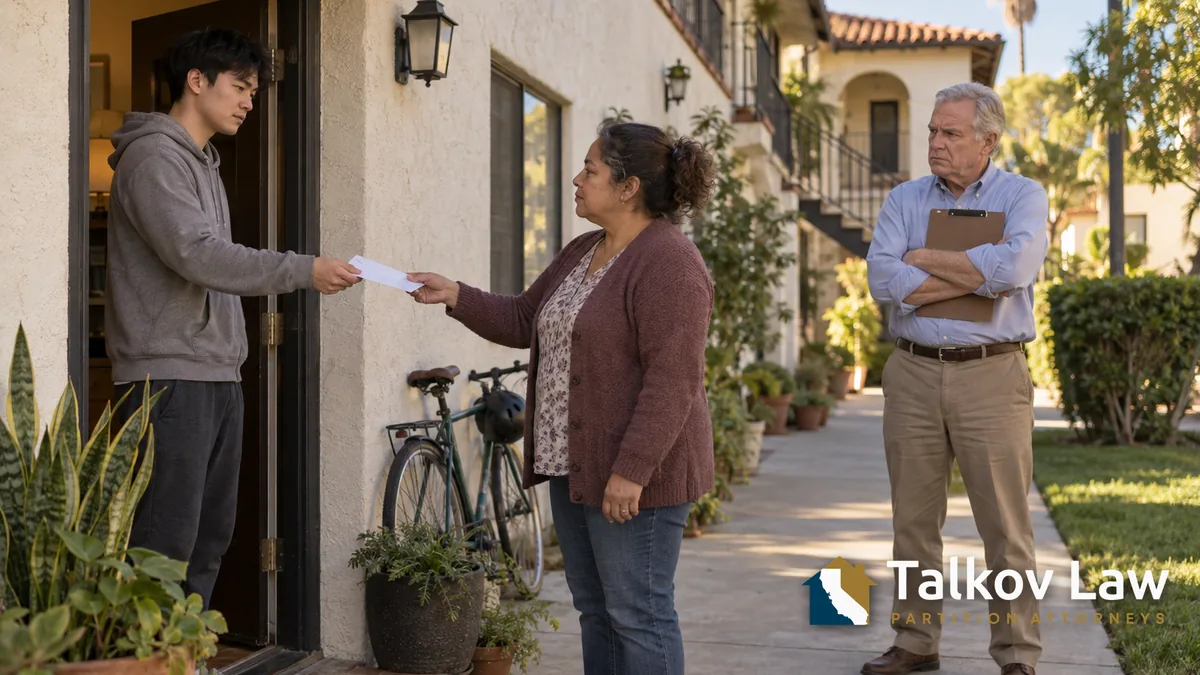
Yes. A California co-owner can partition a rental property even with tenants and a good lease. Here is how rent, receivers, tenants, deposits and the sale are handled.
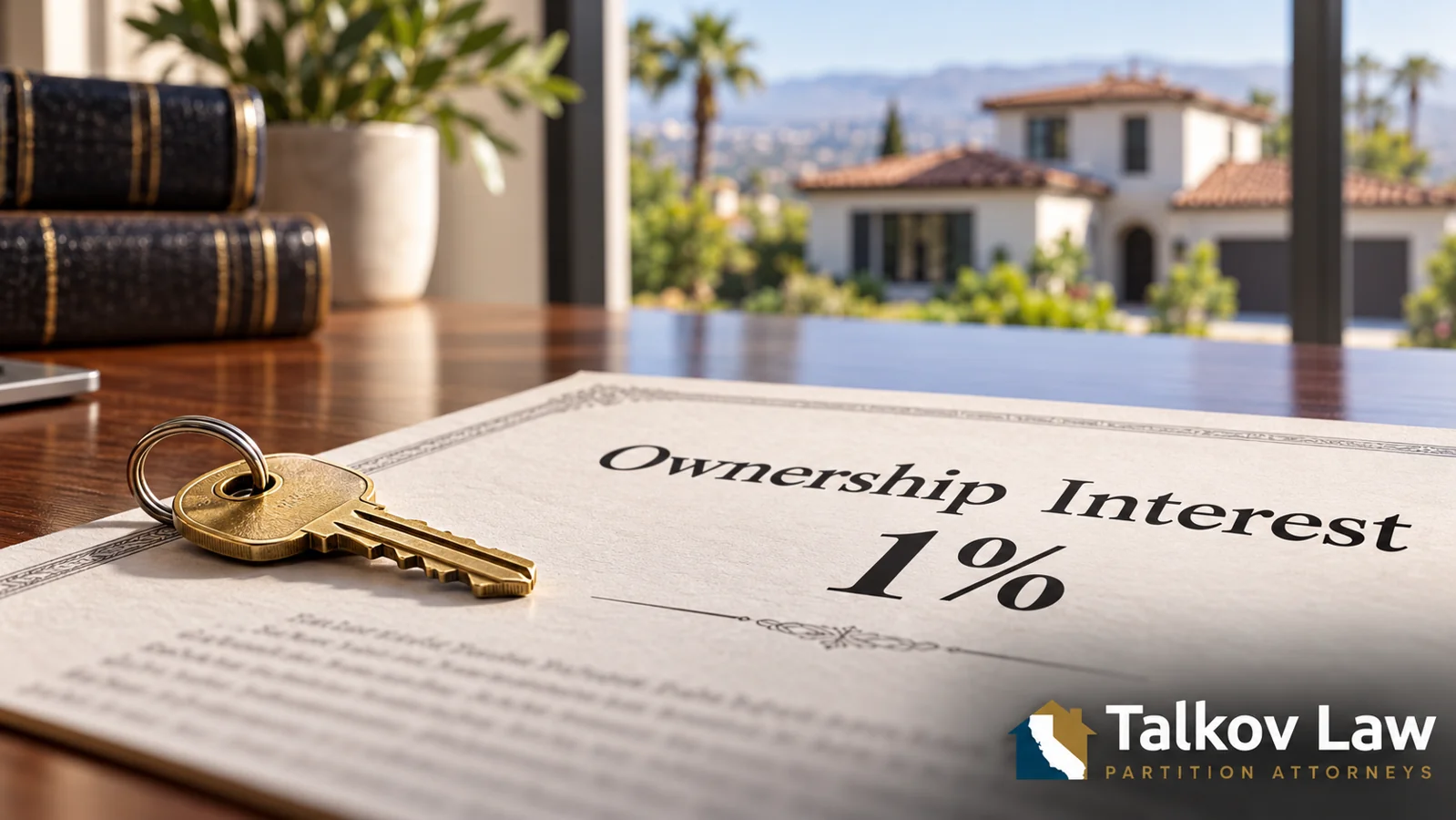
Yes. Any co-owner in California can force a partition, even with a 1% share and even when the majority owner refuses to sell. No majority vote is needed, because the right to partition is absolute.
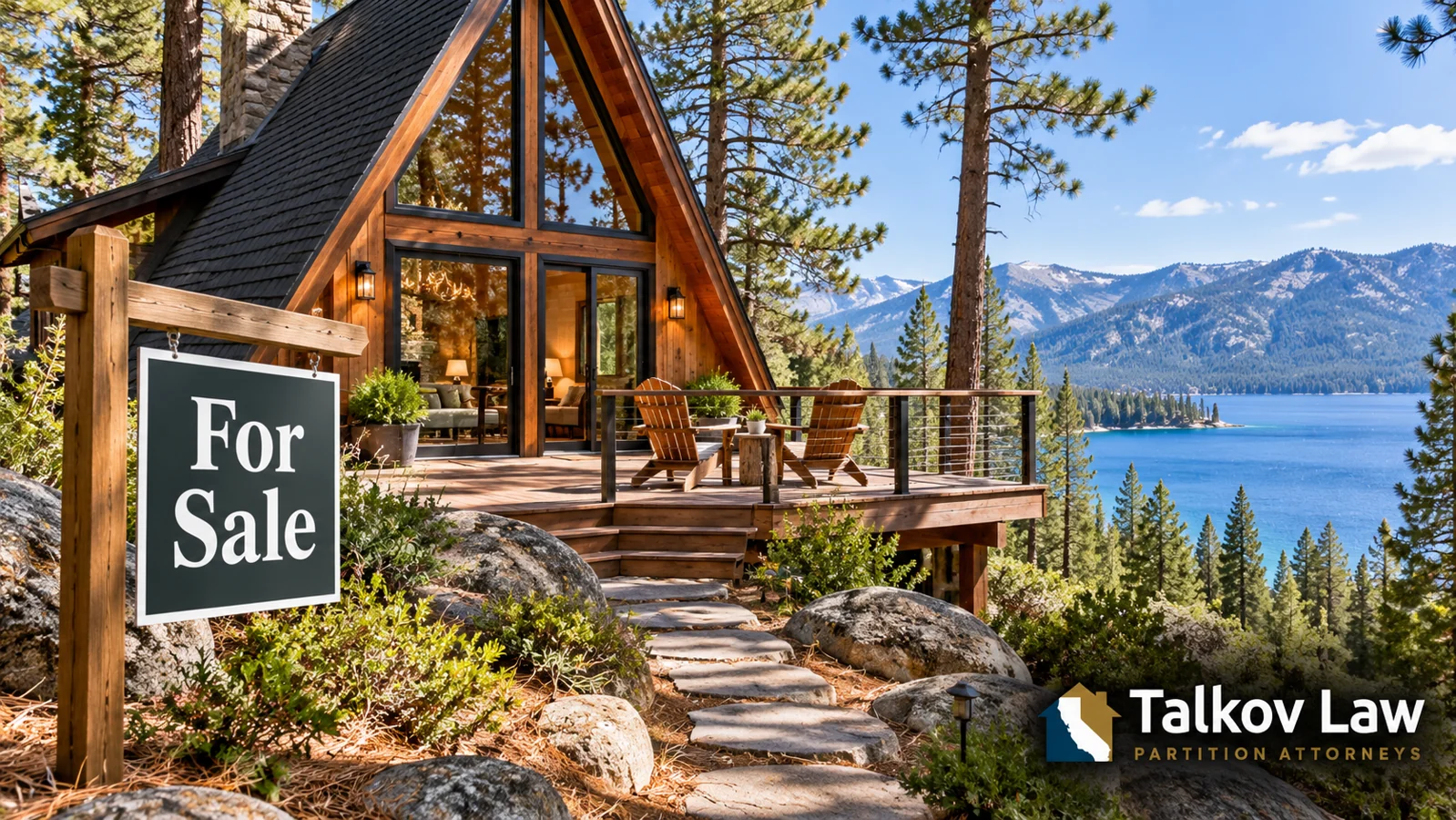
Yes. If your family or another co-owner won’t sell the cabin or beach house, or will only offer a low buyout, a California partition action can end the co-ownership through a court-supervised sale or a buyout at a court-set value.
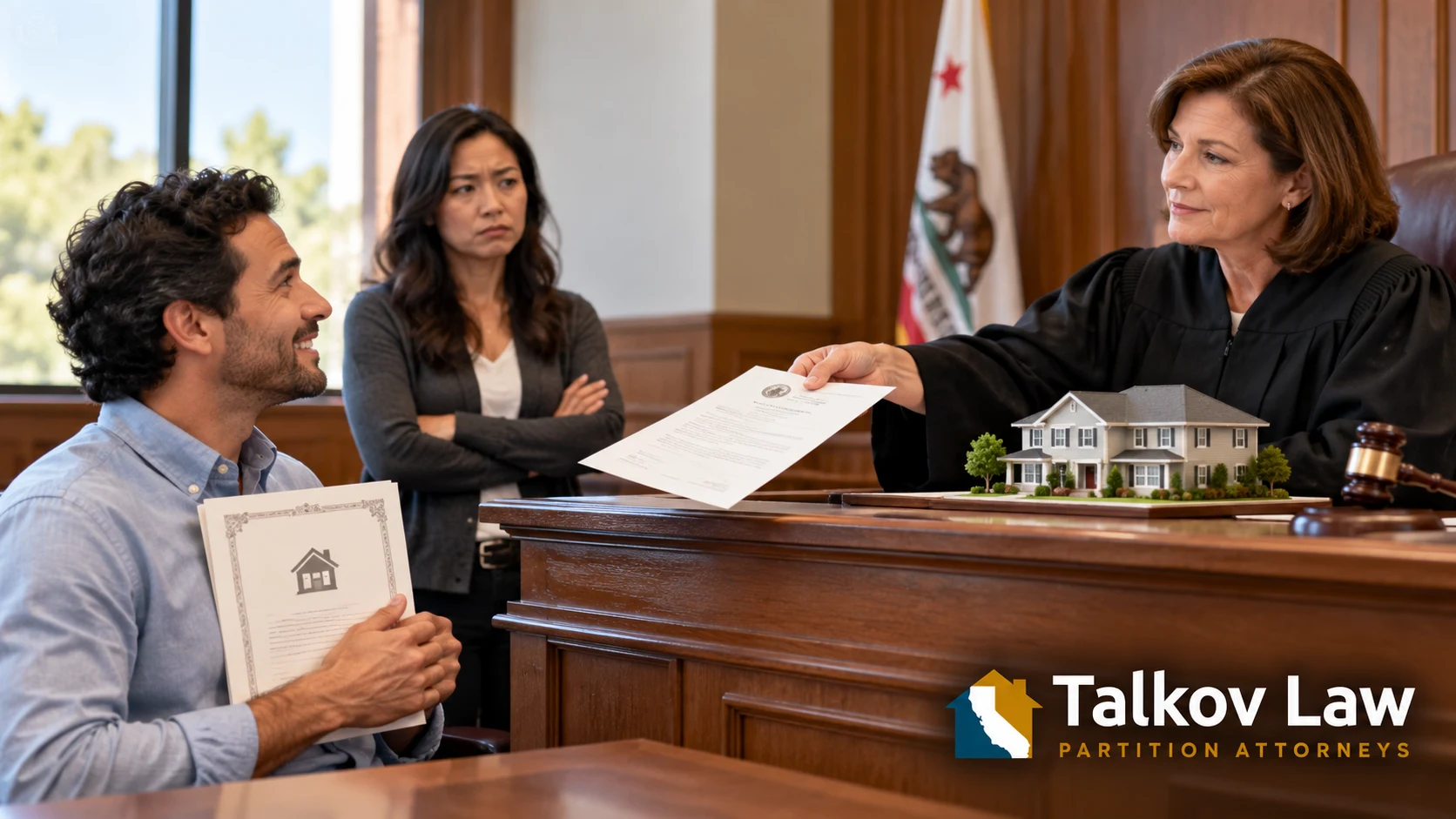
Under Code of Civil Procedure section 872.210, any co-owner can force the sale of co-owned property. The right to partition is so strong that courts call it absolute.

Representing co-owners statewide. Find your nearest Talkov Law office.
Practical guides from attorneys who focus exclusively on California partition actions.
The information on this site, including the Talkov Law Blog, is intended for general information purposes only. By using this site, you agree that any information contained in the site does not constitute legal, financial or any other form of professional advice. Information on this site may be changed without notice and is not guaranteed to be complete, accurate, correct or up-to-date.







