
Can My Co-Owner Buy Me Out If I File for Partition?
Not just because you filed. In California, a co-owner’s buyout right opens only after someone requests partition by sale, and only for property held as tenants in common.
Not just because you filed. In California, a co-owner’s buyout right opens only after someone requests partition by sale, and only for property held as tenants in common.

Yes. When co-owners share two or more properties, a partition can sell one first and let you use your share of that sale to keep the other. This is especially common with inherited property.
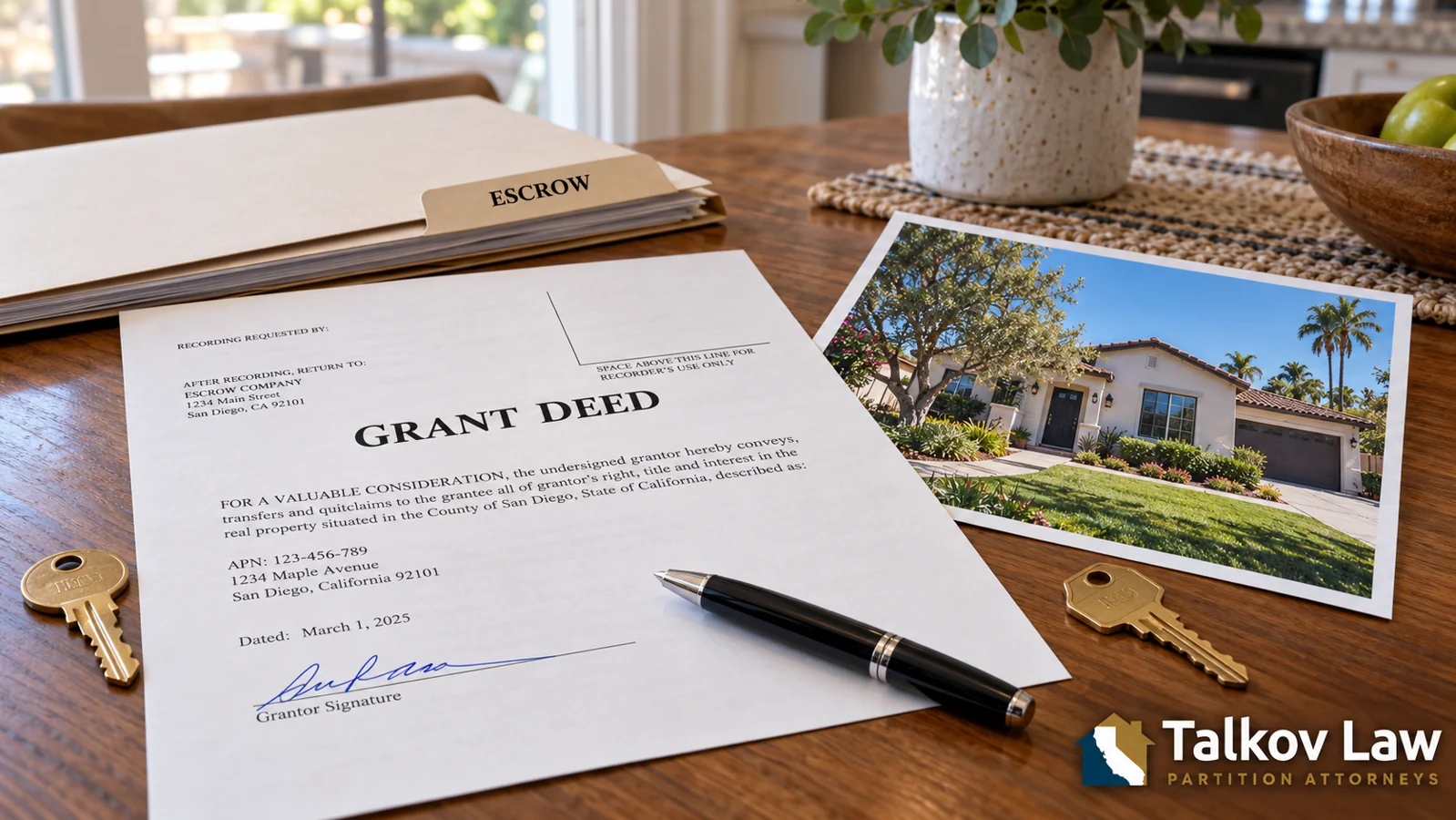
A co-owner can be removed from a California house title by a deed with their agreement, or without it through a partition action. Quiet title is available only in narrow cases.

Usually, yes. Most partitions end with an agreement to sell on the open market, and even sales run by a partition referee generally reach fair market value or better.

Code of Civil Procedure section 873.745 gives the court authority to set, limit, or divide real estate agents’ commissions on a partition sale.

Code of Civil Procedure section 873.690 lists who may not buy property sold in a partition action and protects good-faith buyers.

Code of Civil Procedure section 874.320 explains how the court sells property under the Partition of Real Property Act, usually through an open-market sale by a broker.

Code of Civil Procedure section 873.770 explains how the referee distributes sale proceeds when the buyer is also a party entitled to part of them, as with a credit bid.
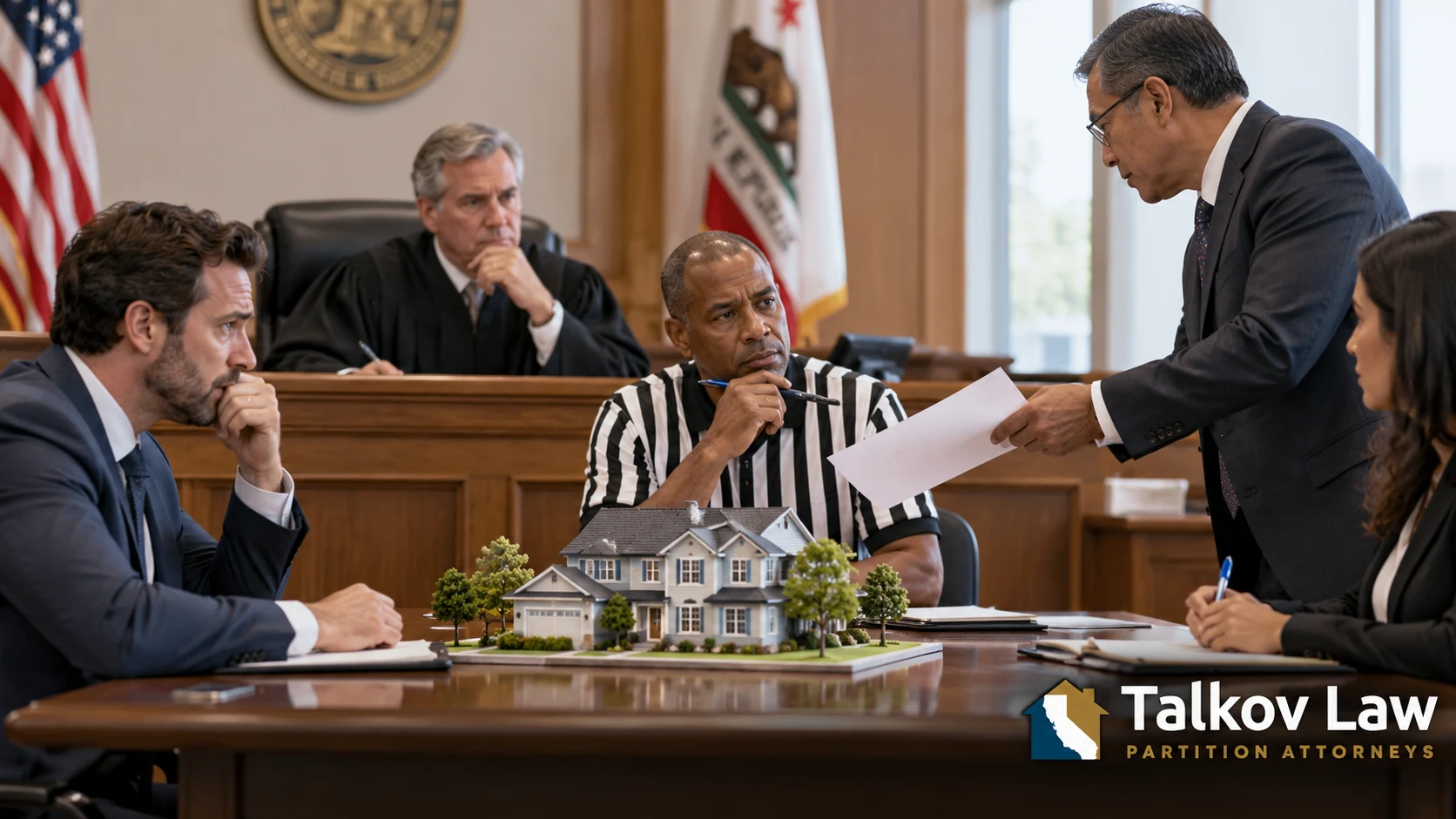
Code of Civil Procedure section 873.740 sets the court’s options at a sale confirmation hearing when an overbidder makes an increased offer above the current sale price.

How a co-owner who wants out wins a partition action in California: force the sale or a buyout, answer the defenses your co-owner will raise, maximize your offsets, and build your record from day one.

Representing co-owners statewide. Find your nearest Talkov Law office.
Practical guides from attorneys who focus exclusively on California partition actions.
The information on this site, including the Talkov Law Blog, is intended for general information purposes only. By using this site, you agree that any information contained in the site does not constitute legal, financial or any other form of professional advice. Information on this site may be changed without notice and is not guaranteed to be complete, accurate, correct or up-to-date.







