
Can a Restraining Order Remove a Co-Owner From the House?
A domestic violence move-out order can remove a co-owner from a California house regardless of title, but it changes only who lives there, not who owns it or how the property is divided.
A domestic violence move-out order can remove a co-owner from a California house regardless of title, but it changes only who lives there, not who owns it or how the property is divided.
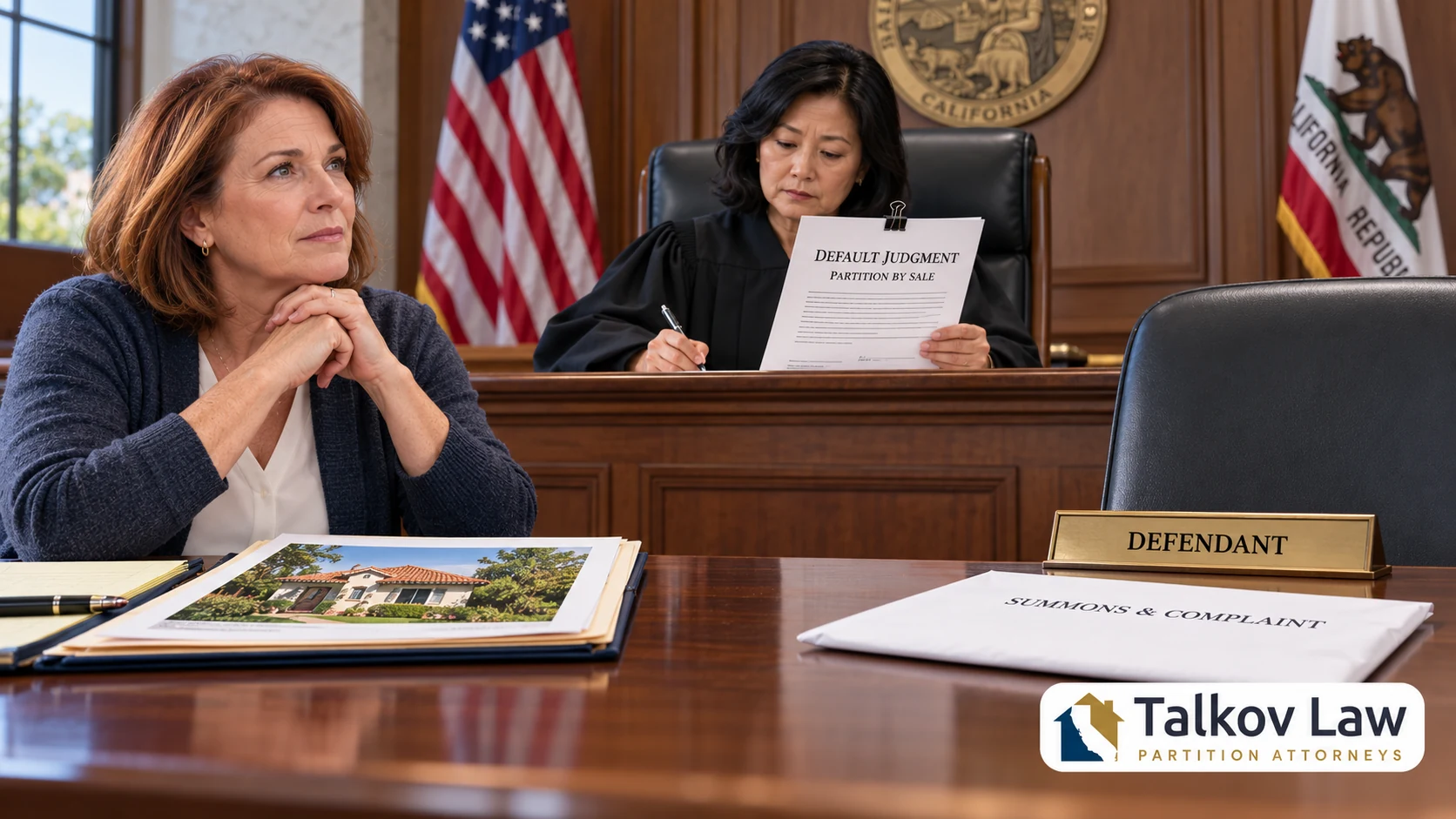
When defendants ignore a partition summons and complaint, the plaintiff can get a default judgment ordering the property partitioned, usually by sale.
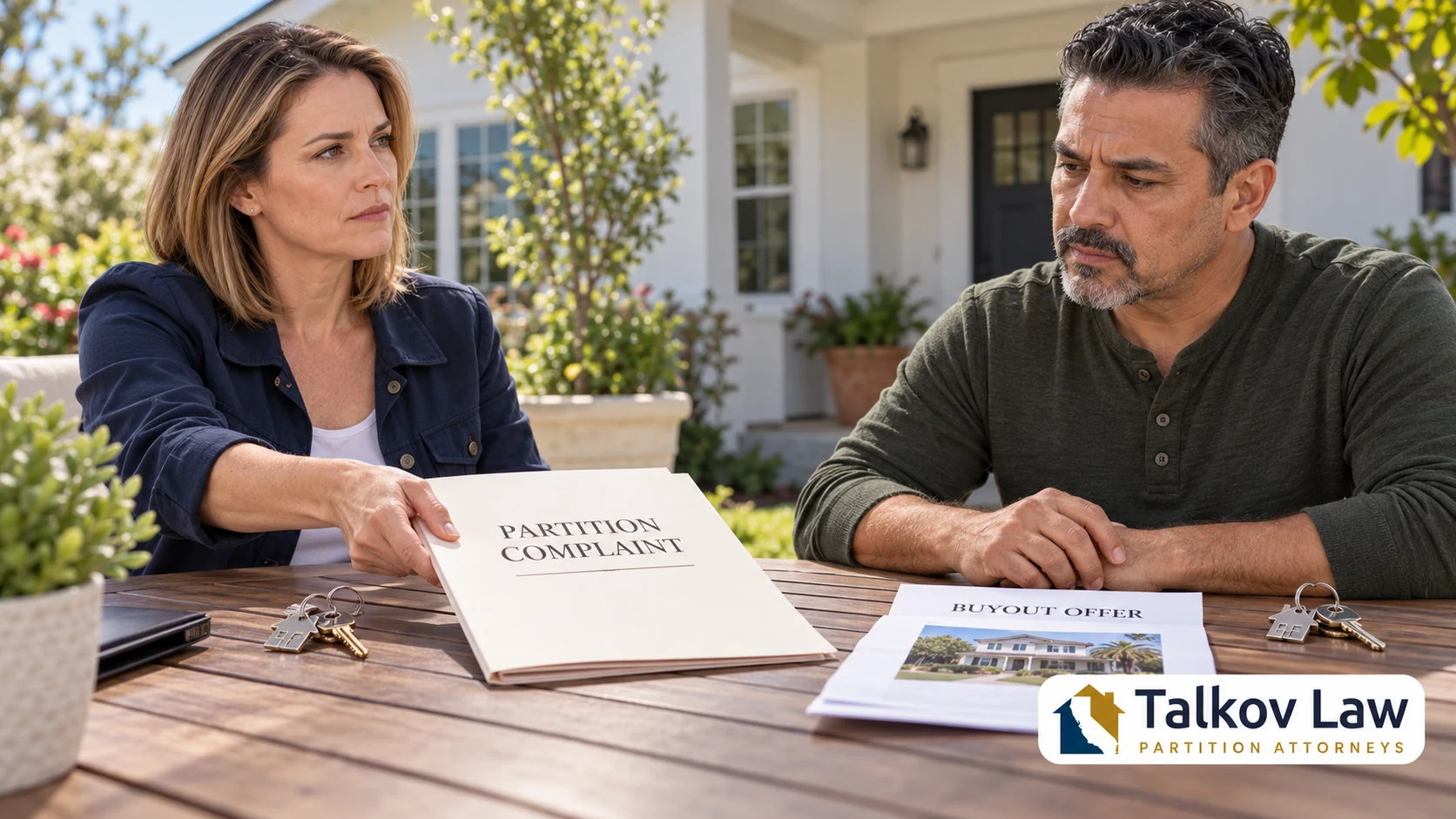
How assertive you need to be to force a sale or buyout depends mostly on how cooperative your co-owner is and how much money is at stake.
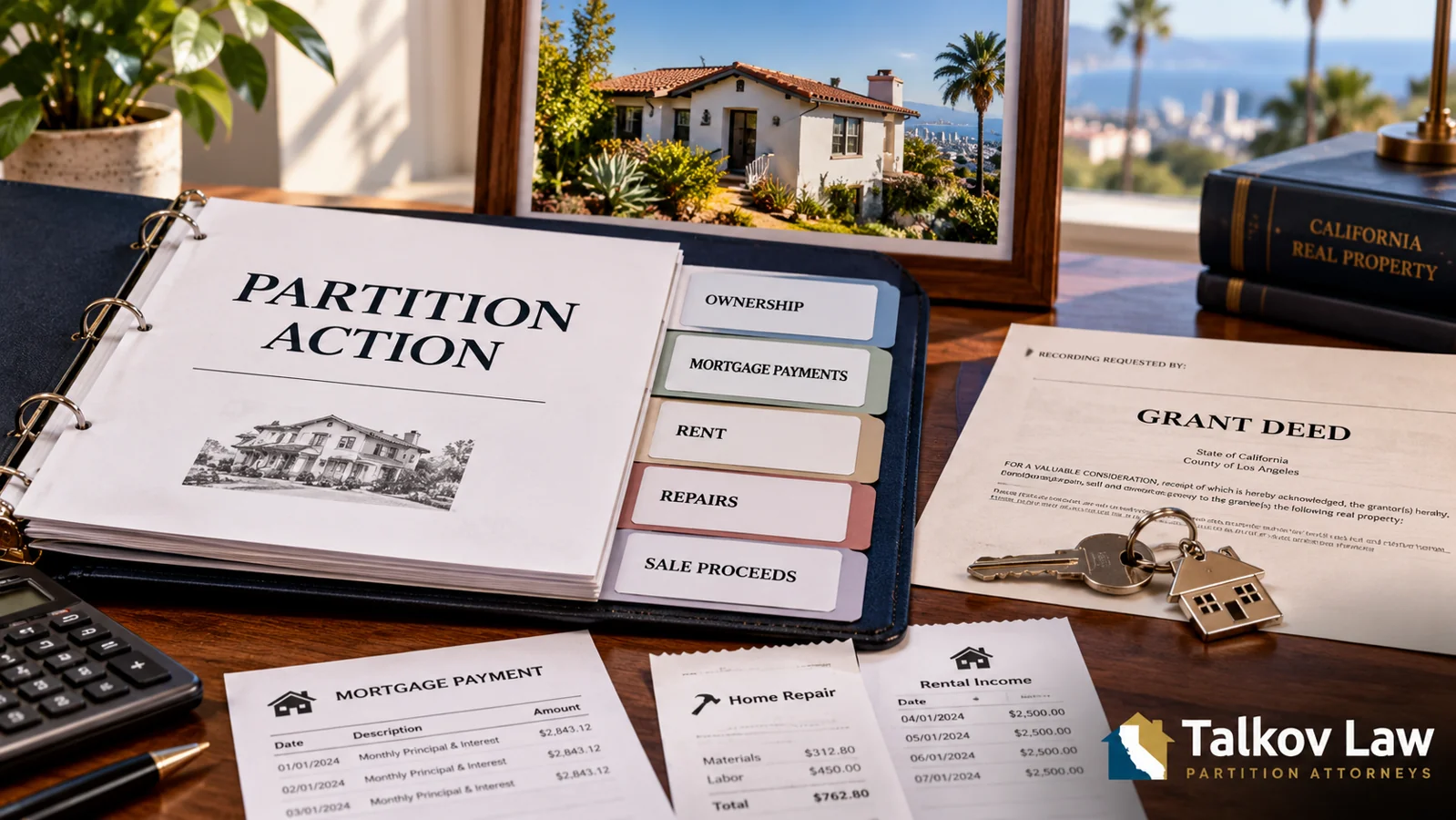
A California partition action can resolve ownership, title disputes, reimbursements, rent, liens, fees, and the sale. Learn its scope, limits, and how the accounting affects your payout.
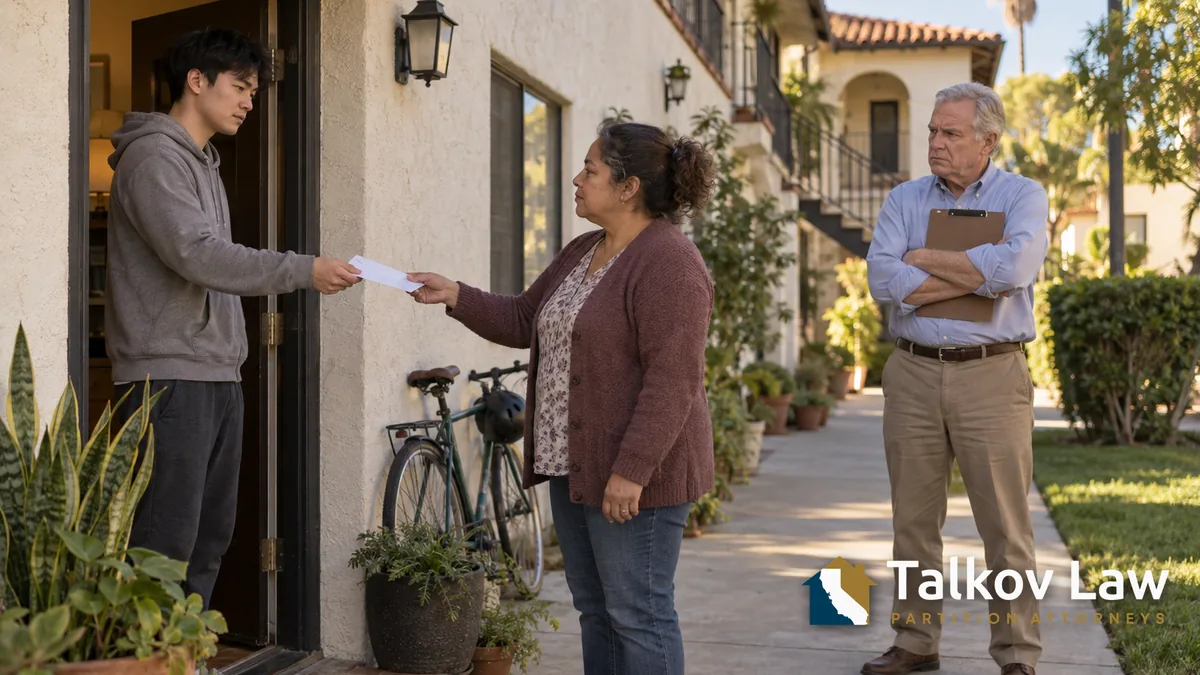
Yes. A California co-owner can partition a rental property even with tenants and a good lease. Here is how rent, receivers, tenants, deposits and the sale are handled.

Co-owners often disagree about whether one can let a roommate, partner, or tenant move in. Here are each co-owner’s rights to the property.

Yes, you can evict a co-owner through a partition. You cannot use the eviction (unlawful detainer) process without a partition.
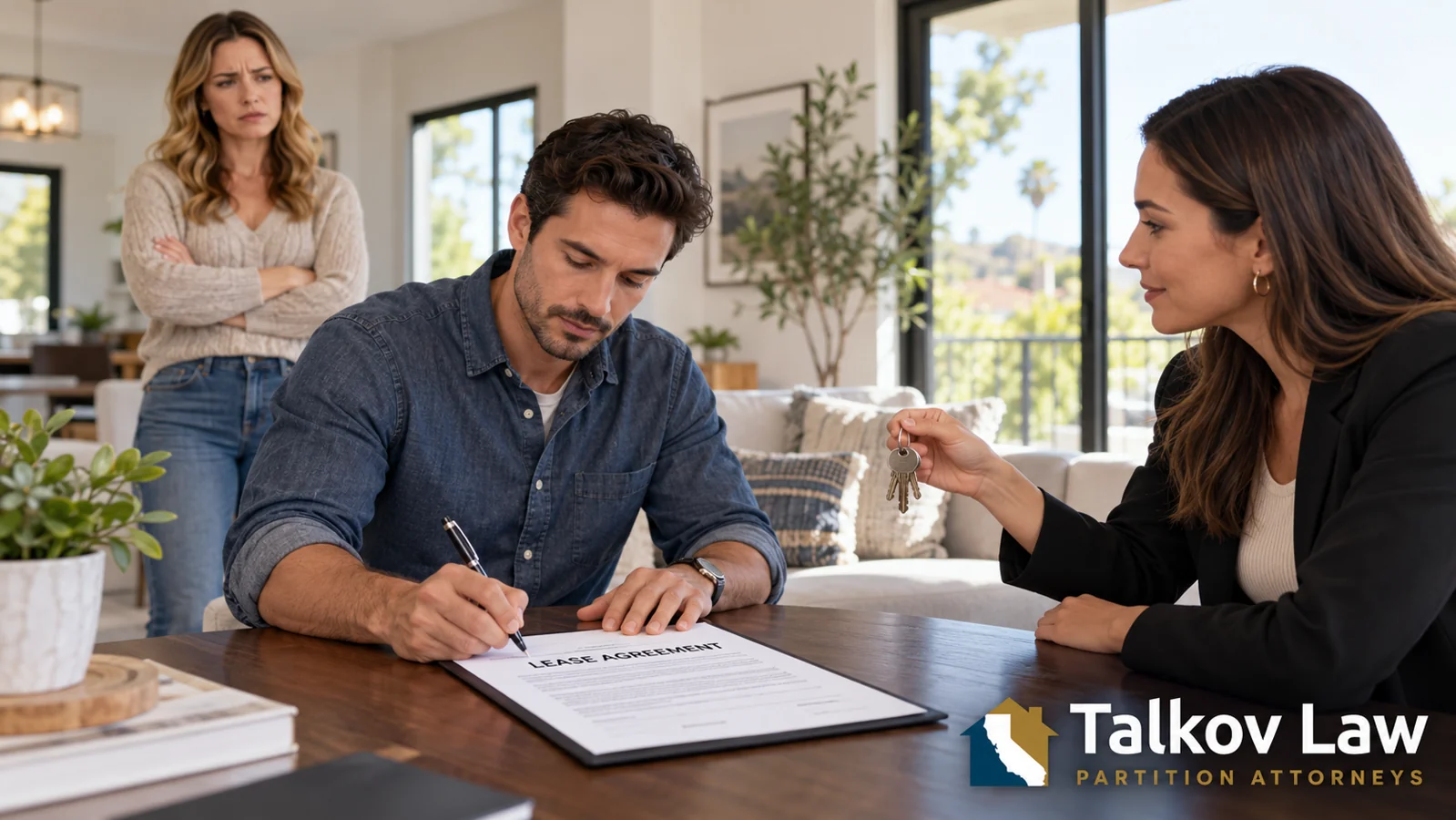
Yes. Each co-owner may lease the co-owned property, even without the others’ consent, but doing so creates complications for rent, possession, and evicting tenants.
Code of Civil Procedure section 872.030 explains which court rules apply in a partition action. The ordinary civil rules apply unless a partition statute sets a different rule.
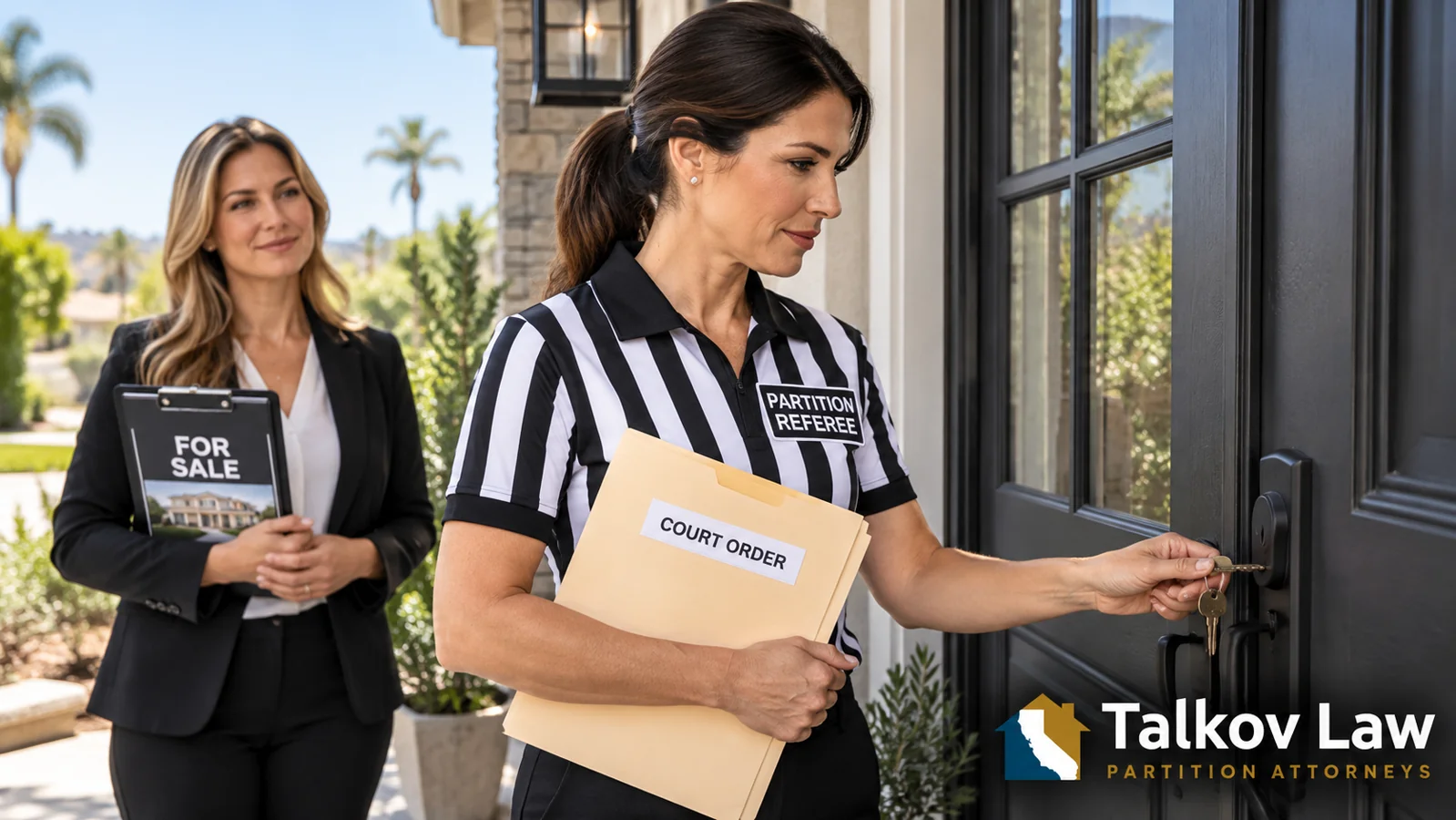
Code of Civil Procedure section 873.060 gives the partition referee authority to perform any acts necessary to carry out the referee’s duties in a partition action.

Code of Civil Procedure section 873.710 sets what a partition referee’s report of sale must contain.
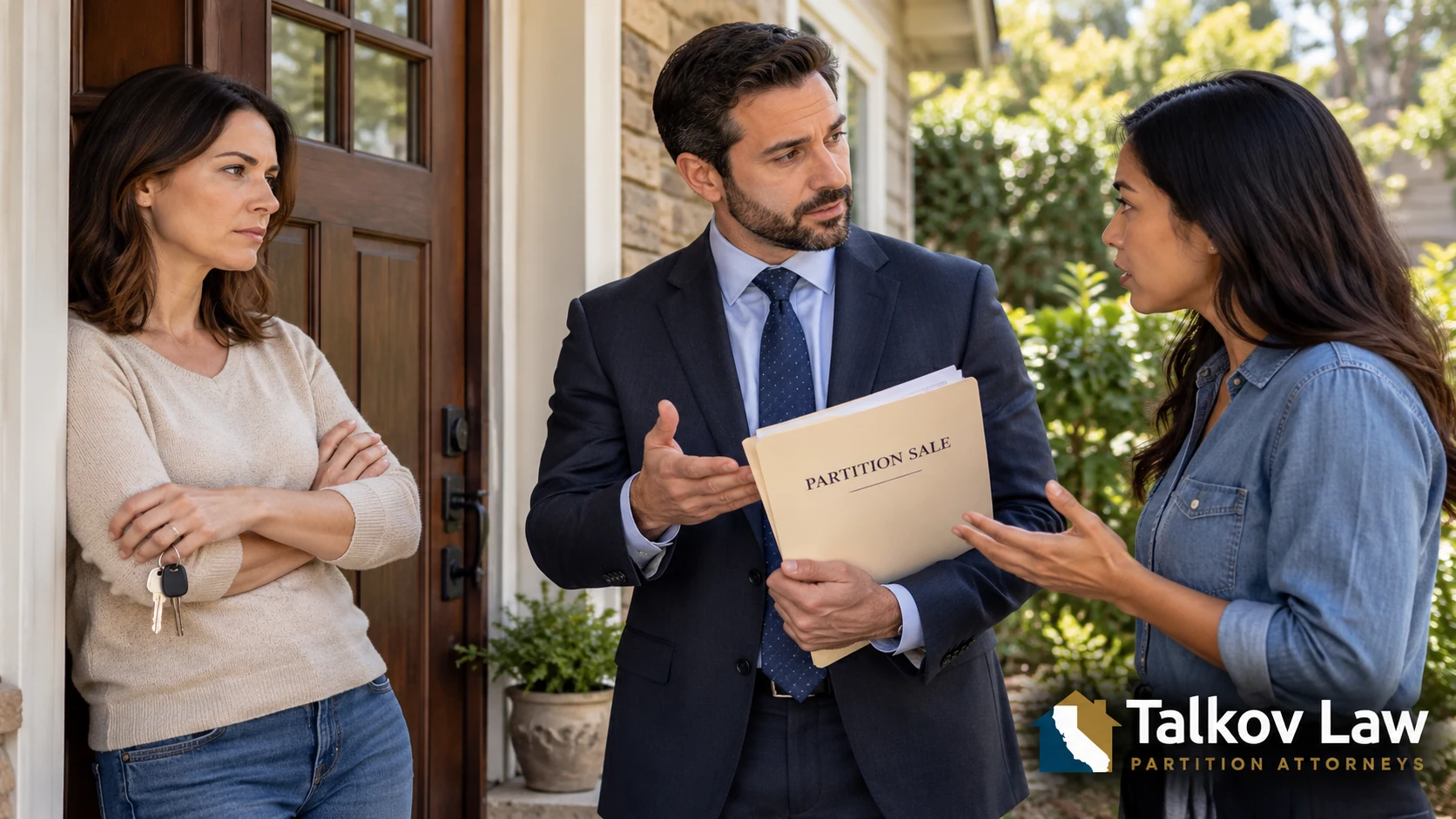
Yes, you can get a sibling living rent-free out of an inherited California house: a partition action forces the sale, and the referee can remove anyone living there.
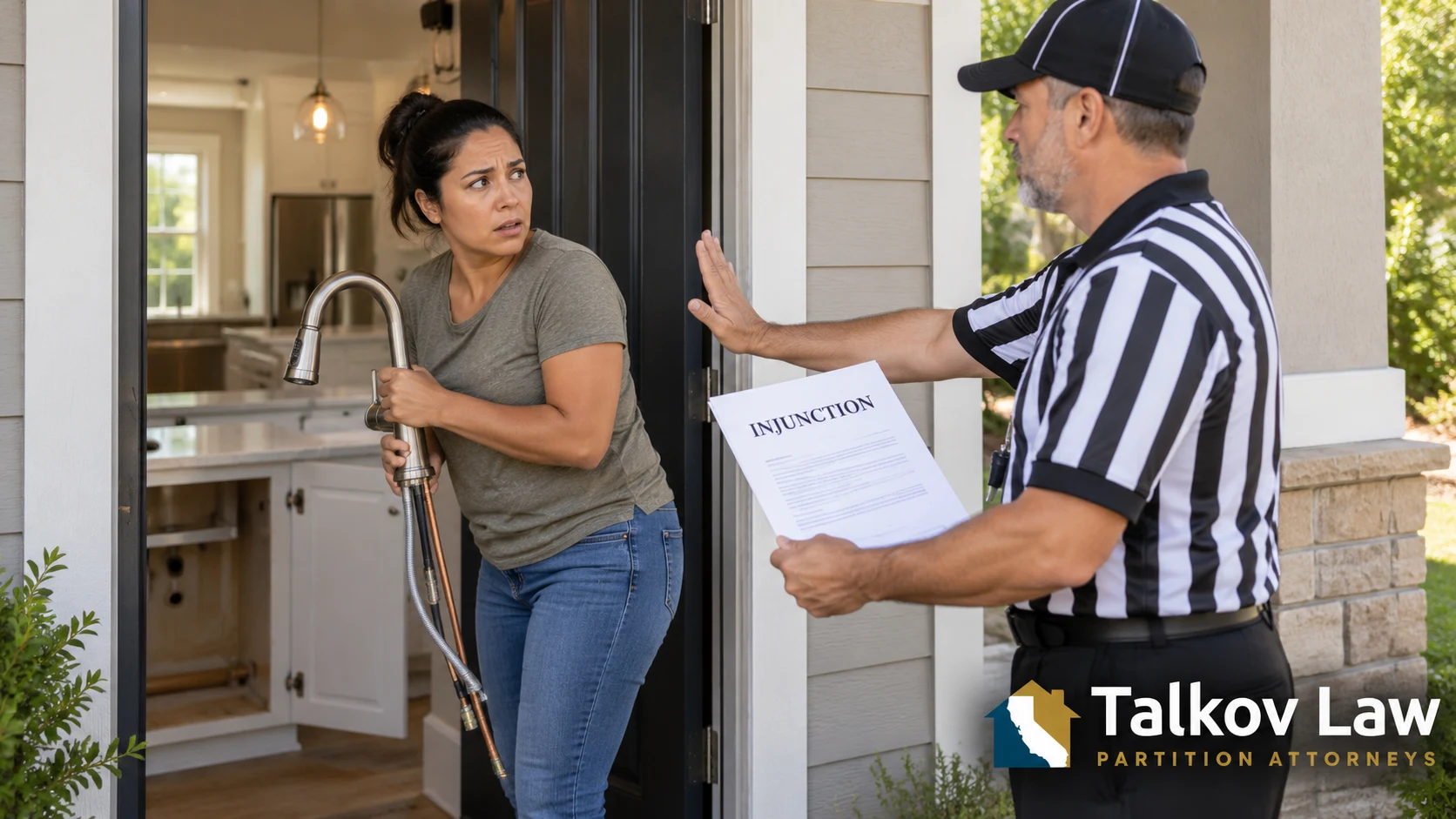
Code of Civil Procedure section 872.130 lets the partition court issue restraining orders and injunctions to prevent waste, protect the property or its title, and stop interference.
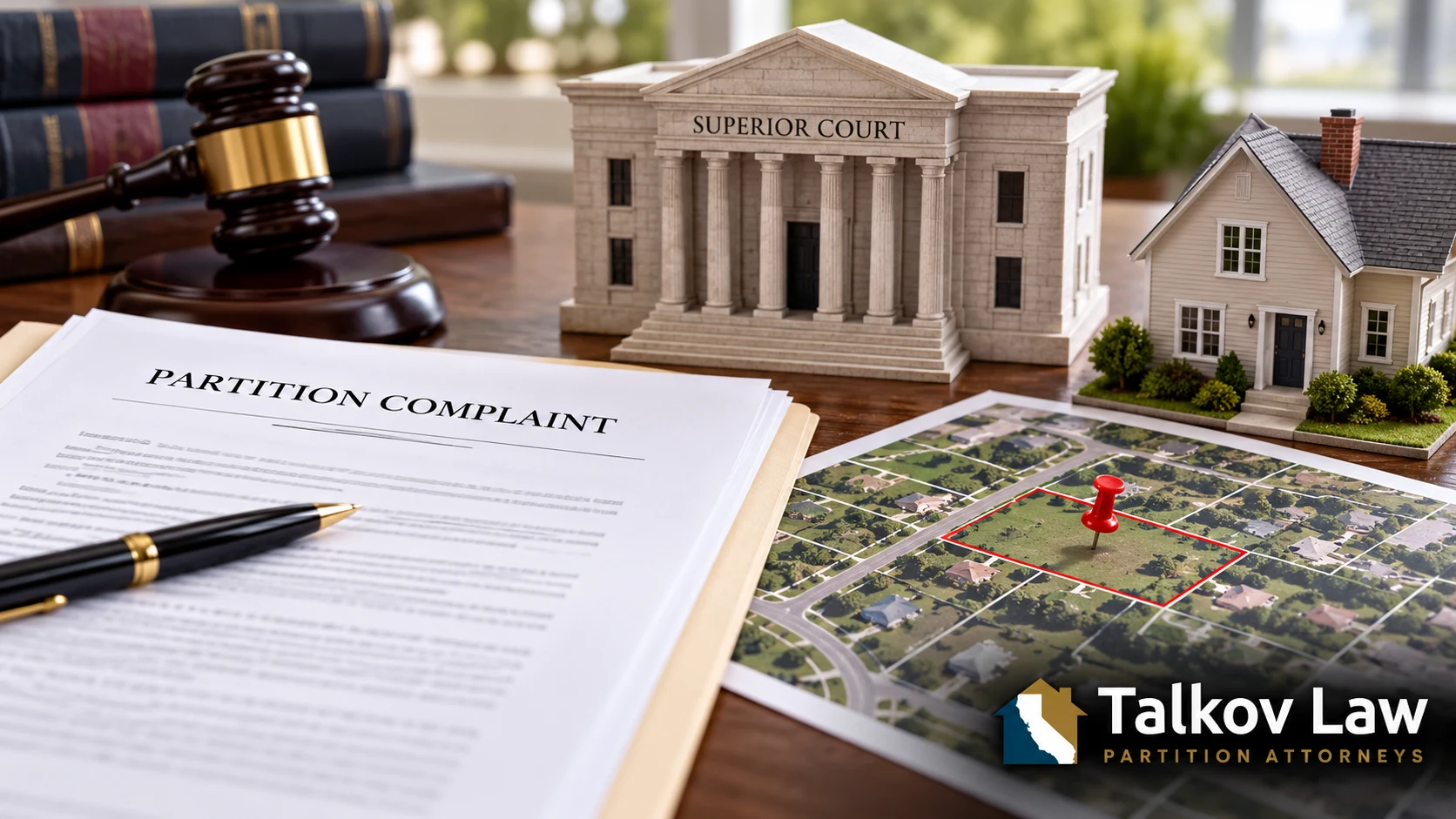
Code of Civil Procedure section 872.110 gives the Superior Court jurisdiction over partition actions and sets venue in the county where the real property is located.
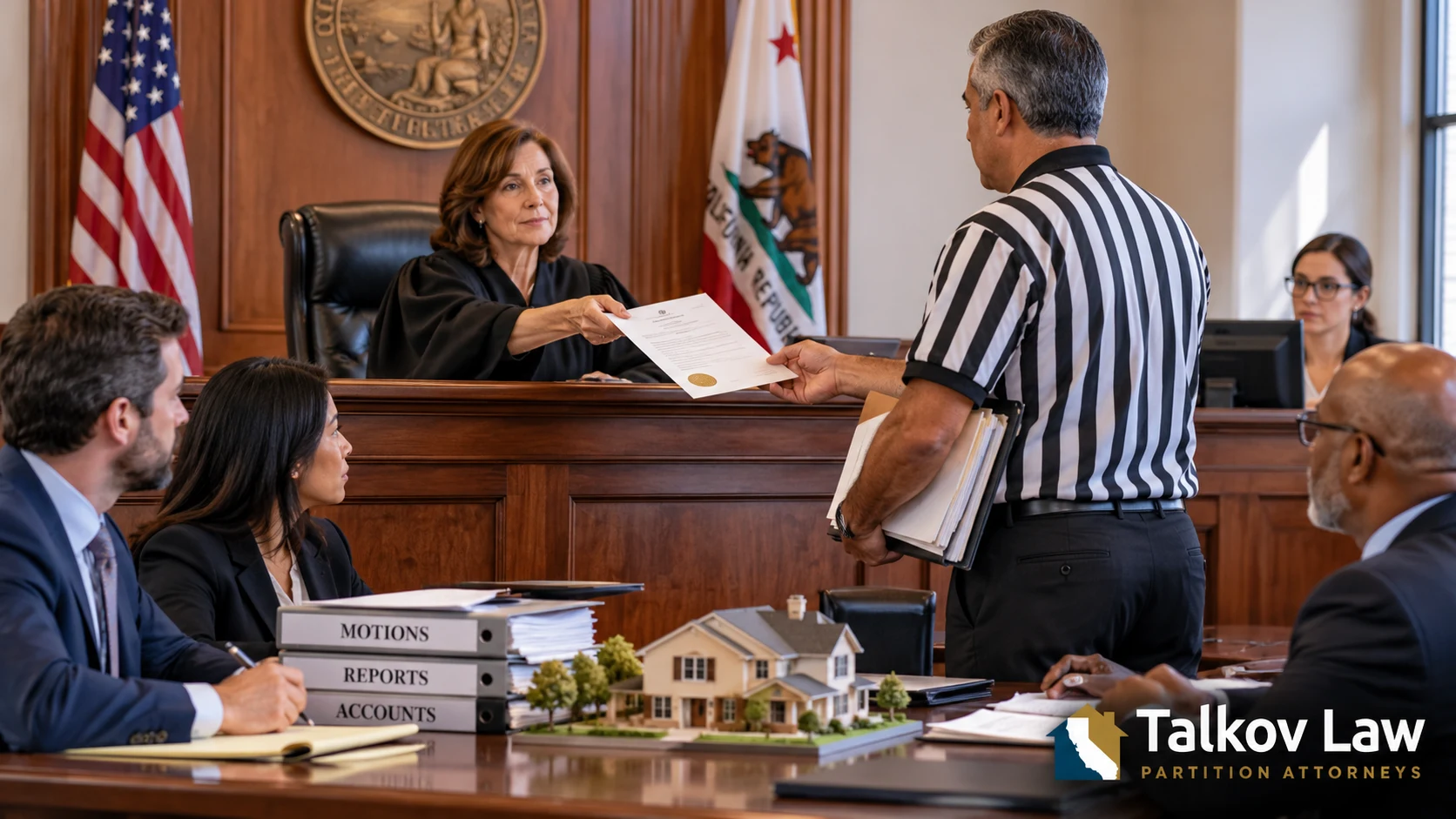
Code of Civil Procedure section 872.120 gives the partition court power to decide every motion, report, and account in the case and to make any order needed to carry out the partition.

Free lease termination letter with a historical coronavirus template, current-use cautions, and a sample rent-settlement spreadsheet.

Representing co-owners statewide. Find your nearest Talkov Law office.
Practical guides from attorneys who focus exclusively on California partition actions.
The information on this site, including the Talkov Law Blog, is intended for general information purposes only. By using this site, you agree that any information contained in the site does not constitute legal, financial or any other form of professional advice. Information on this site may be changed without notice and is not guaranteed to be complete, accurate, correct or up-to-date.







