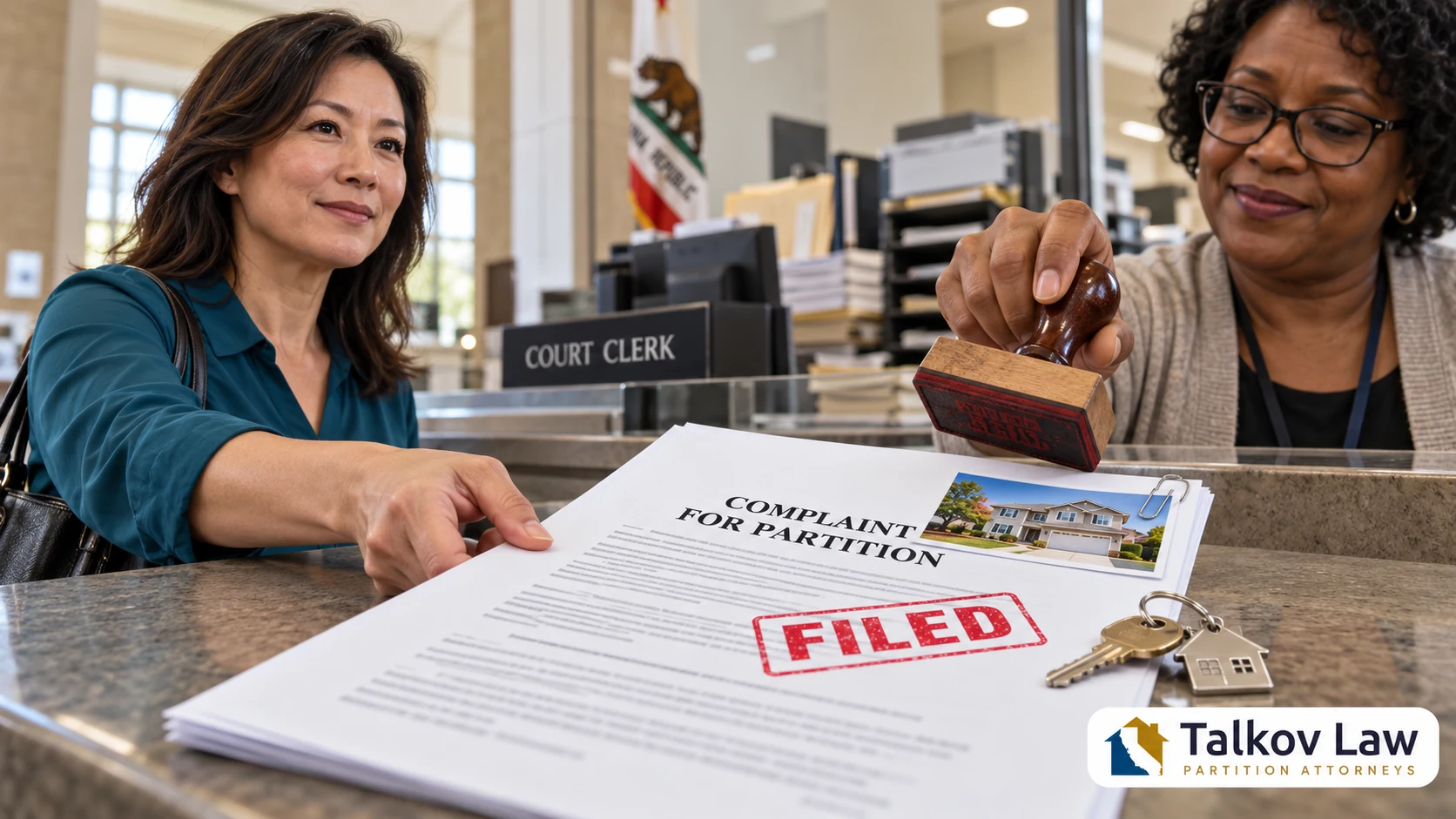
How To File a Partition Action in California
A partition action lets a California co-owner force the sale of jointly owned property through the court. This guide walks through the steps, from filing to sale.
A partition action lets a California co-owner force the sale of jointly owned property through the court. This guide walks through the steps, from filing to sale.

A partition lawyer represents co-owners of California property who can’t agree on whether to keep, sell, or buy out the property. The main tool is a partition action asking the court to order a sale or division.

California Probate Code section 9823 addresses how partition actions interact with probate when a decedent leaves an undivided interest in property.

Yes. If your family or another co-owner won’t sell the cabin or beach house, or will only offer a low buyout, a California partition action can end the co-ownership through a court-supervised sale or a buyout at a court-set value.
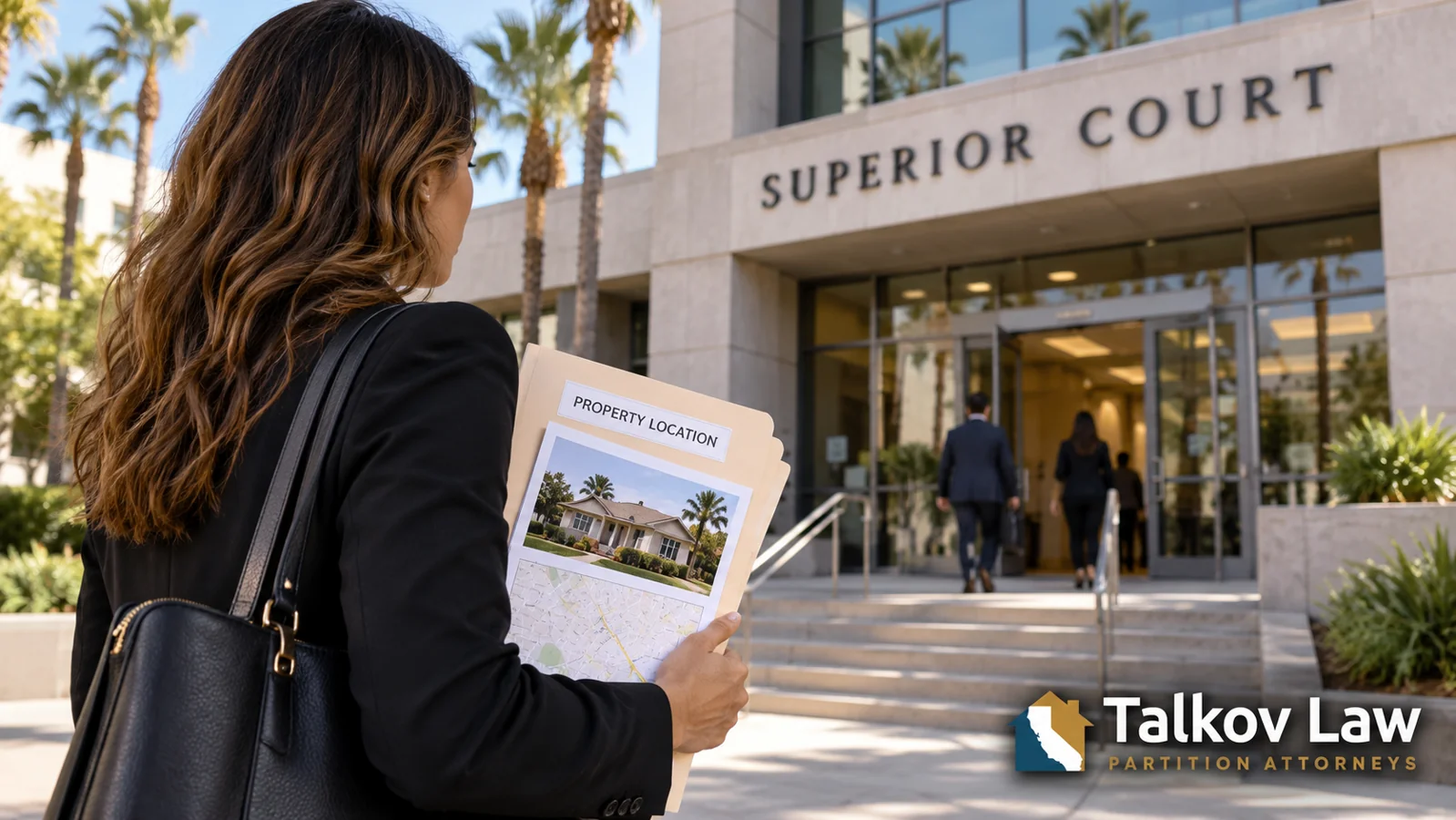
Venue decides which county court hears the case. In a partition action, proper venue is generally the county where the property is located, even when properties sit in different counties.

Code of Civil Procedure section 872.240 lets co-owners partition real property and personal property in one case, so any personal property the co-owners share can be sold with the real property.
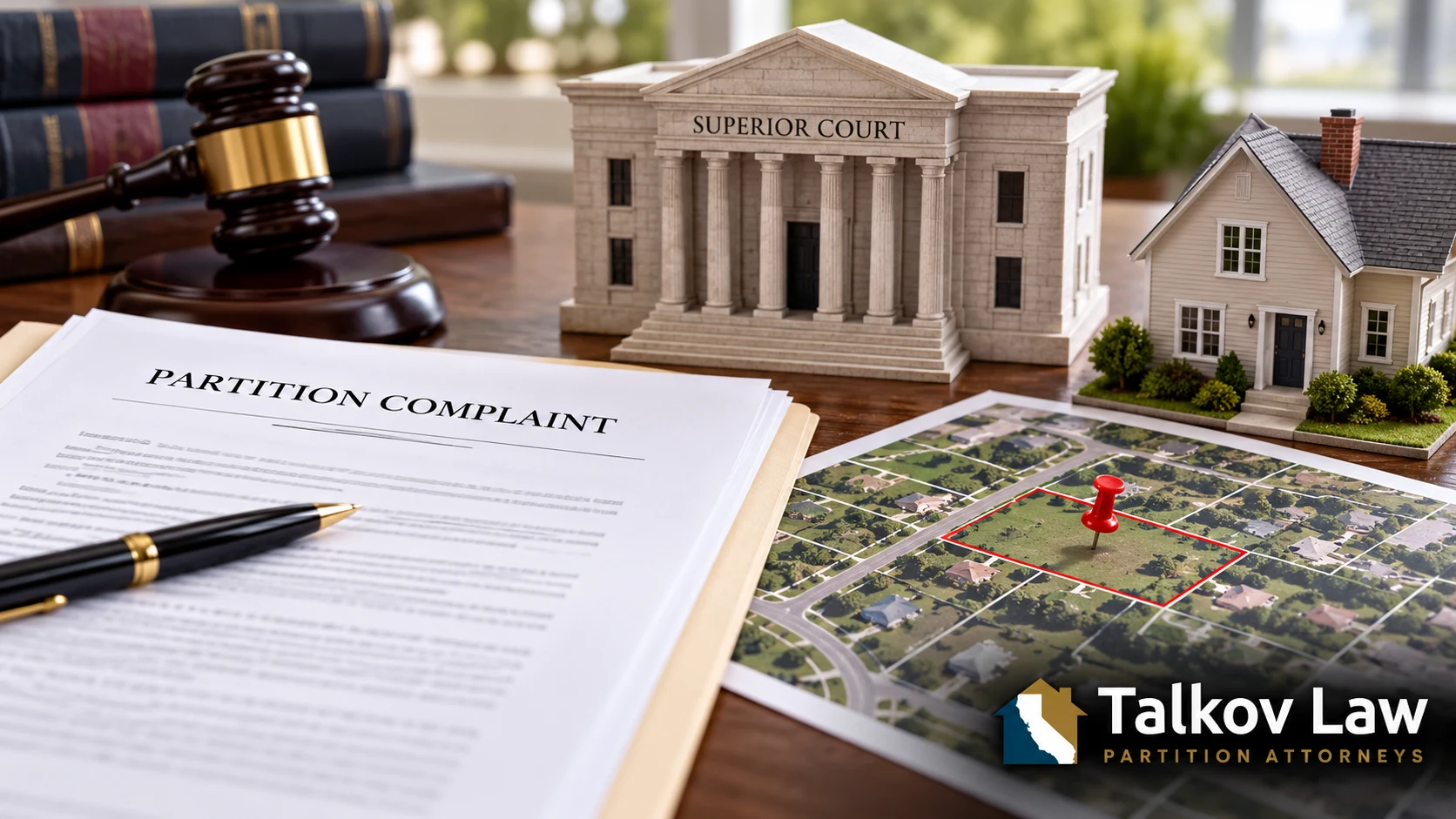
Code of Civil Procedure section 872.110 gives the Superior Court jurisdiction over partition actions and sets venue in the county where the real property is located.

Representing co-owners statewide. Find your nearest Talkov Law office.
Practical guides from attorneys who focus exclusively on California partition actions.
The information on this site, including the Talkov Law Blog, is intended for general information purposes only. By using this site, you agree that any information contained in the site does not constitute legal, financial or any other form of professional advice. Information on this site may be changed without notice and is not guaranteed to be complete, accurate, correct or up-to-date.







