
California Code of Civil Procedure § 873.020 – Appointing One or More Partition Referees
Code of Civil Procedure section 873.020 lets the court appoint a referee for sale and a referee for division, or a single referee for both.
The court process in a California partition case, step by step.
Code of Civil Procedure section 873.020 lets the court appoint a referee for sale and a referee for division, or a single referee for both.
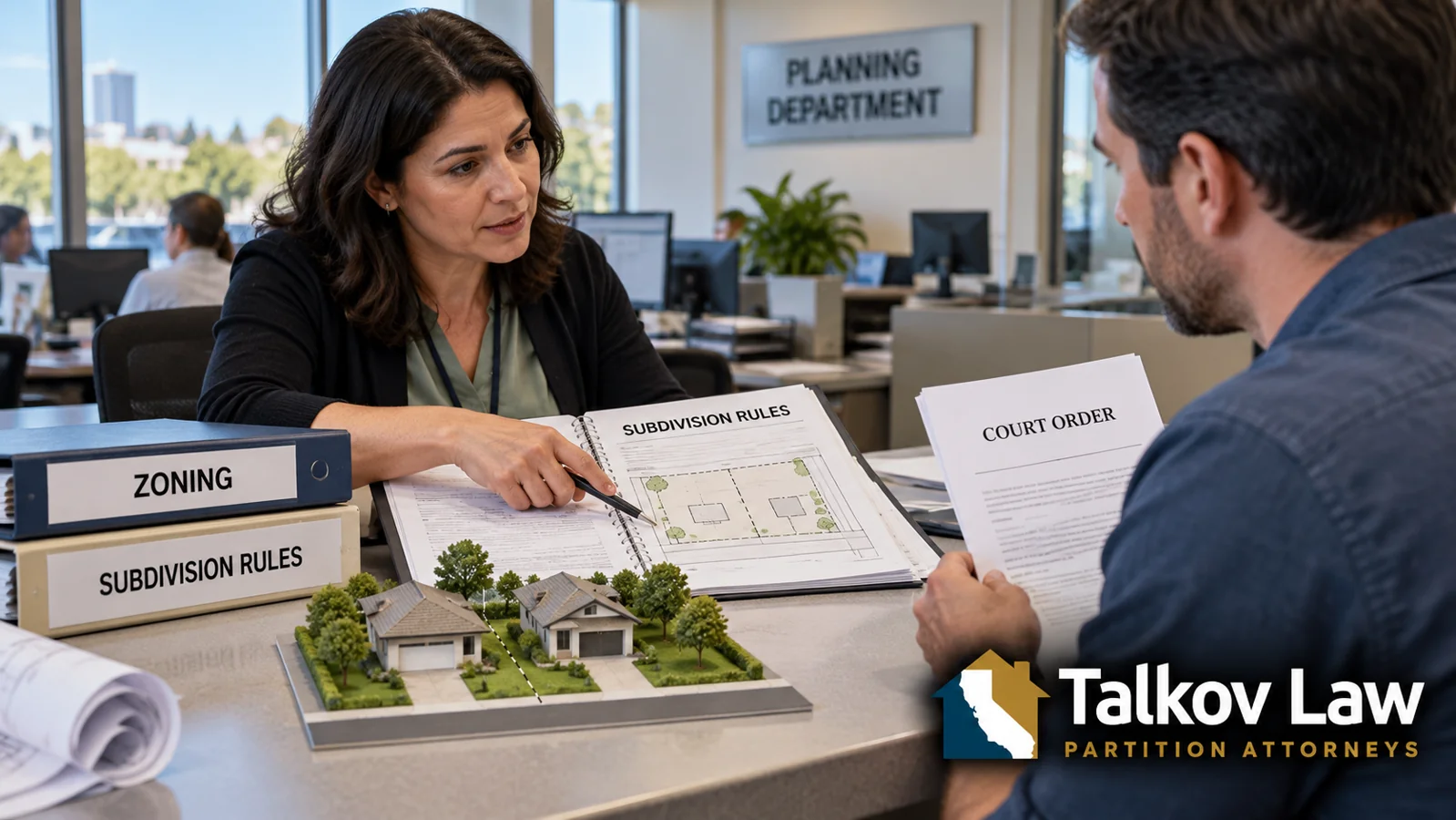
Code of Civil Procedure section 872.040 provides that the partition law does not excuse compliance with other laws governing the division, sale, or transfer of property. A partition is not a way around land-use rules.

Code of Civil Procedure section 874.240 makes a conveyance or transfer by the partition referee binding and conclusive in the same manner as a judgment.

Code of Civil Procedure section 872.030 explains which court rules apply in a partition action. The ordinary civil rules apply unless a partition statute sets a different rule.

Code of Civil Procedure section 872.010 is the definitions section of the partition law. It defines action, lien, property, remainder, and title report for every partition action.

Code of Civil Procedure section 873.280 sets what a partition referee’s report must contain and who must receive written notice of it.

Code of Civil Procedure section 873.110 lets the court authorize or approve the partition referee’s hiring of attorneys, surveyors, and other third persons.

Code of Civil Procedure section 873.120 sets out when and how a partition referee may hire an attorney in a California partition action.

Code of Civil Procedure section 873.130 lets a partition referee, with the court’s approval, hire a surveyor to help divide or sell the property.

Code of Civil Procedure section 873.140 lets a partition referee, with the court’s approval, hire an auctioneer in a partition by sale.
A partition action is a lawsuit in which a California court ends the co-ownership of real property by dividing it or ordering it sold and dividing the proceeds. A co-owner generally can force a sale without the other co-owners’ consent.

When a co-owner can’t be located, California law allows service by publication so the partition action can move forward to judgment.
Venue decides which county court hears the case. In a partition action, proper venue is generally the county where the property is located, even when properties sit in different counties.

Code of Civil Procedure section 873.070 lets the partition referee or any party, on noticed motion, ask the court for instructions about the referee’s duties.
Some co-owners agree to a sale or buyout once they understand the alternative. This free template letter warns your co-owner that a partition action is coming.
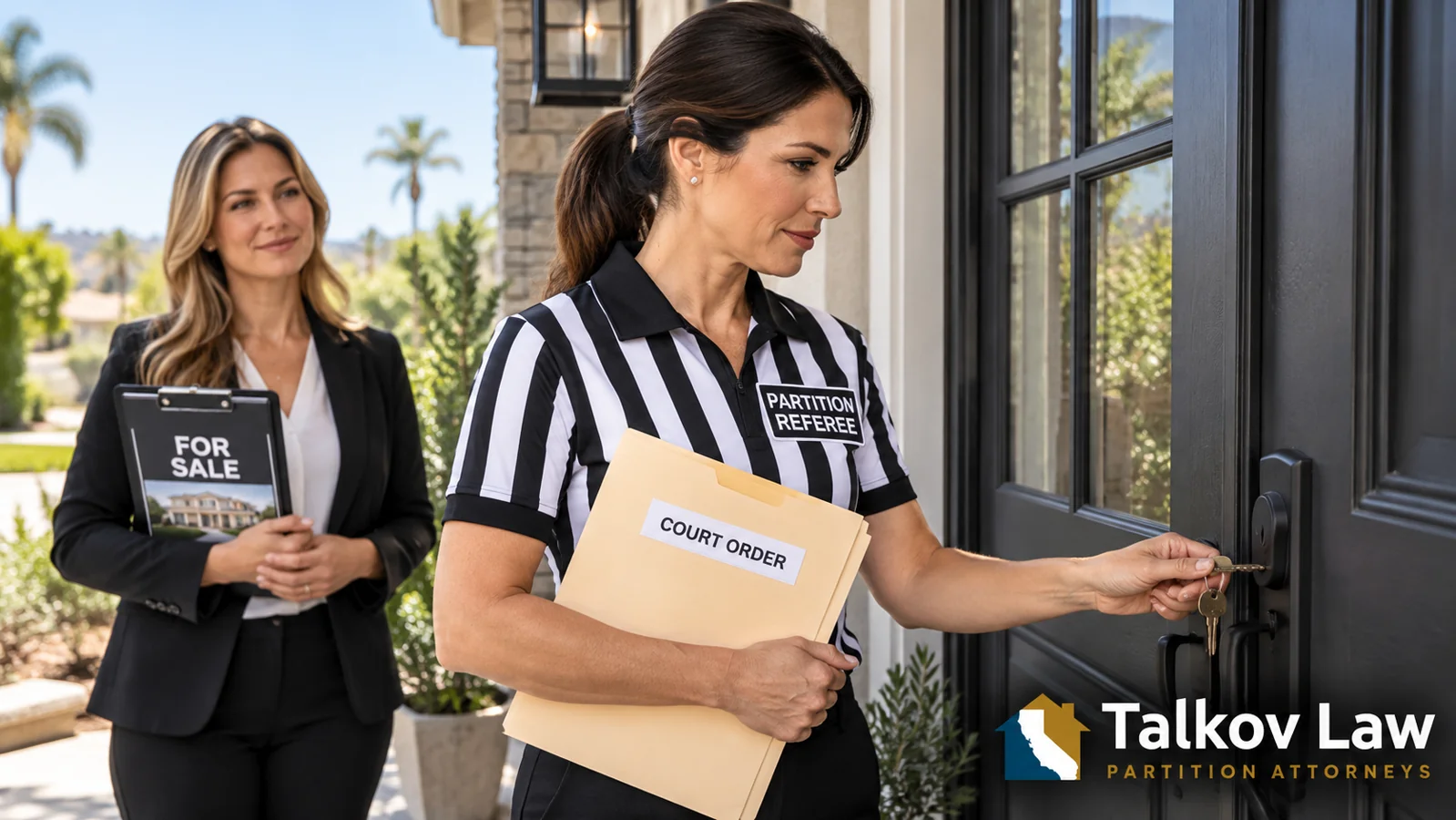
Code of Civil Procedure section 873.060 gives the partition referee authority to perform any acts necessary to carry out the referee’s duties in a partition action.

Who is bound by a California partition judgment? Learn how section 874.210 affects judgment creditors whose abstracts are recorded after the lis pendens.

Code of Civil Procedure section 873.940 directs the court to appoint one referee, or three if the agreement provides, to appraise the property in a partition by appraisal.
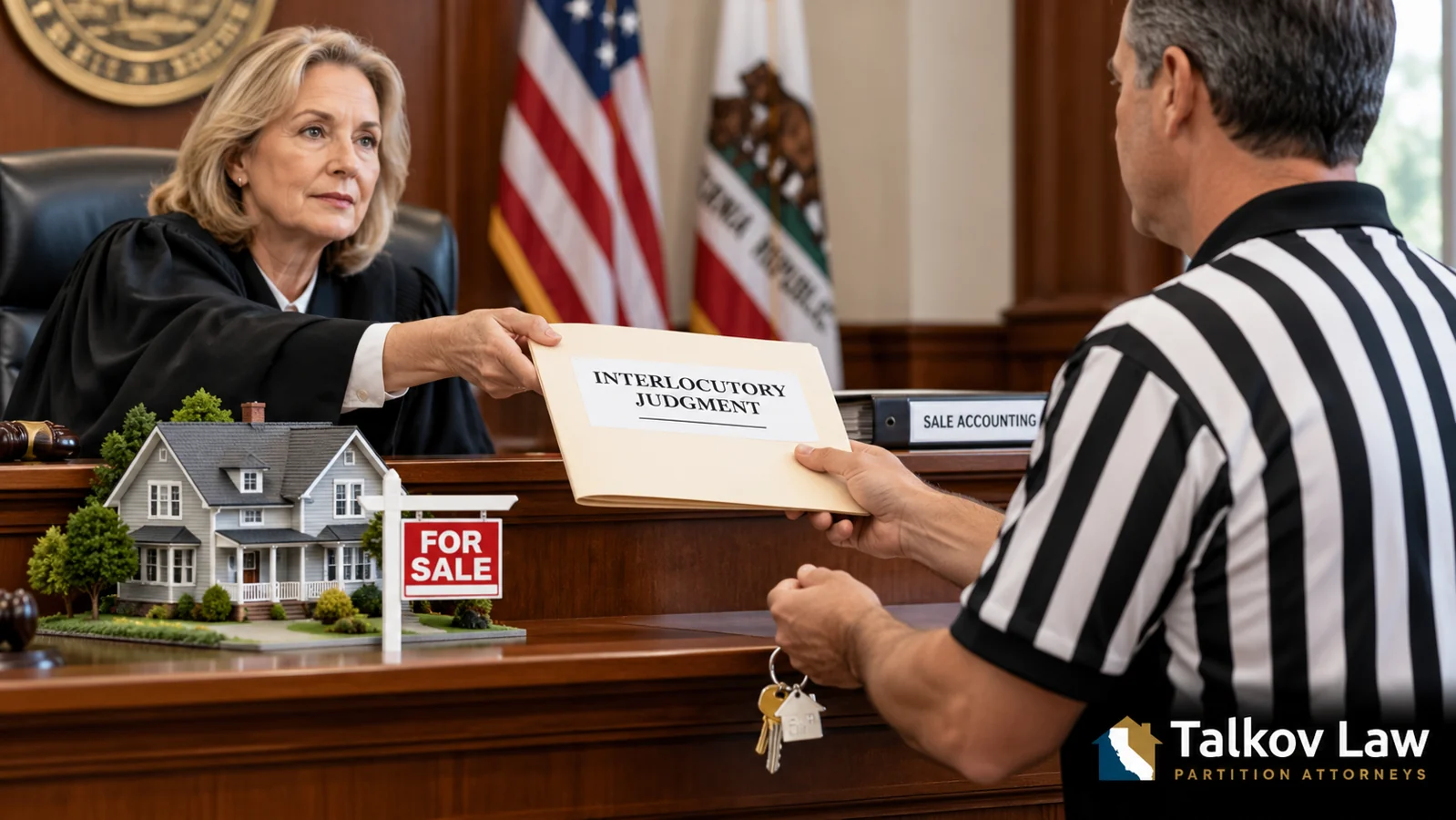
An interlocutory judgment of partition sets each co-owner’s share and orders the property sold, before the sale, the accounting and the final judgment. Learn what it includes and how to get one.
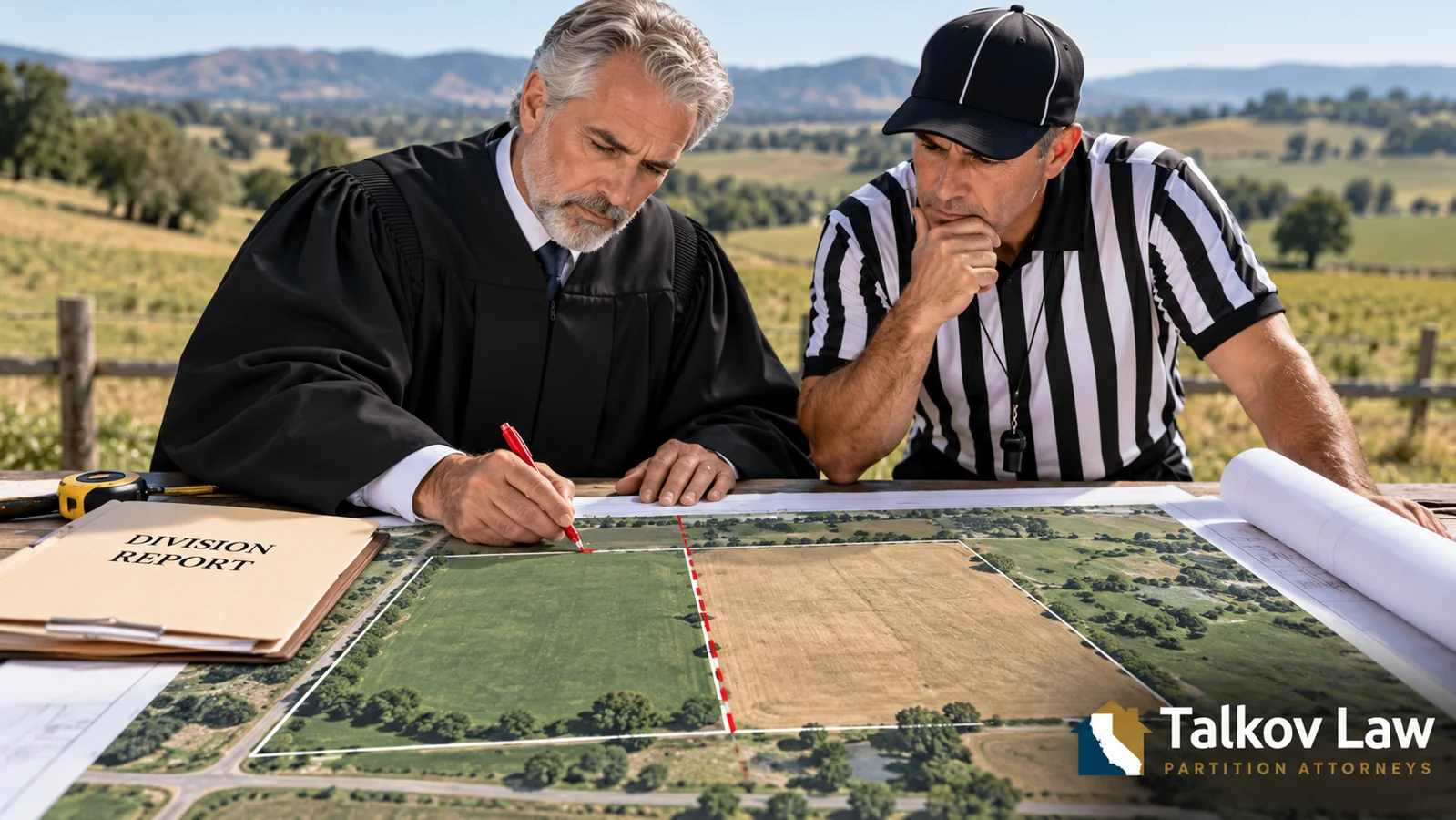
Code of Civil Procedure section 873.290 lets a party move to confirm, modify, or set aside the referee’s report in a partition in kind.

Code of Civil Procedure section 872.730 lets the court apply the partition statutes to partnerships when the court finds them a suitable remedy.

Code of Civil Procedure section 872.550 lets a partition plaintiff join all persons unknown who claim an interest in the property when partition is sought as to all interests.

Code of Civil Procedure section 872.220 sets out two ways to get a title report in a partition action: the plaintiff may order one before filing, or the court may authorize a party to order one during the case.
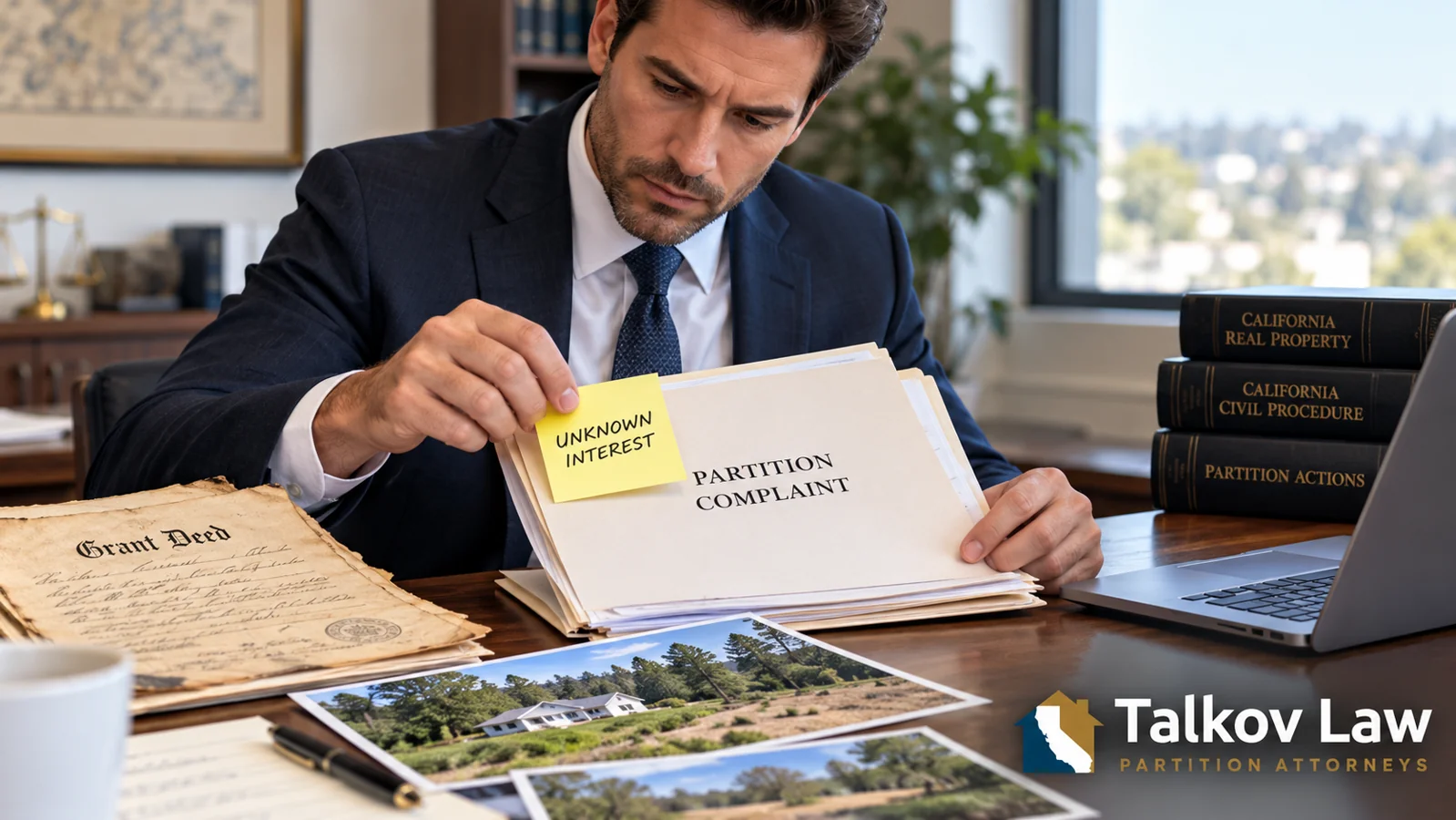
Code of Civil Procedure section 872.520 tells a partition plaintiff what to do when the name of a person who must be joined is unknown, or when an interest is unknown, uncertain, or contingent.

Code of Civil Procedure section 872.510 requires a partition plaintiff to name as defendants everyone who has or claims an interest in the property that is of record or known to the plaintiff.
150+ Five-Star Reviews Across Our California Offices.
Read our reviews →
Representing co-owners statewide. Find your nearest Talkov Law office.
10880 Wilshire Blvd Ste 1101
Los Angeles, CA 90024
4000 MacArthur Blvd Ste 655
Newport Beach, CA 92660
3610 Central Ave, Ste 400
Riverside, CA 92506
500 Capitol Mall, Ste 2350
Sacramento, CA 95814
11622 El Camino Real Ste 100
San Diego, CA 92130
50 California Street 15th Floor
San Francisco, CA 94111
99 S. Almaden Blvd Ste 600
San Jose, CA 95113
Partition Law Resources
Practical guides from attorneys who focus exclusively on California partition actions.
The information on this site, including the Talkov Law Blog, is intended for general information purposes only. By using this site, you agree that any information contained in the site does not constitute legal, financial or any other form of professional advice. Information on this site may be changed without notice and is not guaranteed to be complete, accurate, correct or up-to-date.







