
Who is Responsible for Injuries on Jointly Owned Property?
Co-owners are generally liable for injuries on jointly owned property, whether or not they caused the problem. Here is how to protect yourself.
Co-owners are generally liable for injuries on jointly owned property, whether or not they caused the problem. Here is how to protect yourself.

Yes. A co-owner can buy the other co-owners’ shares in a partition action, but the process follows specific state laws and court procedures.
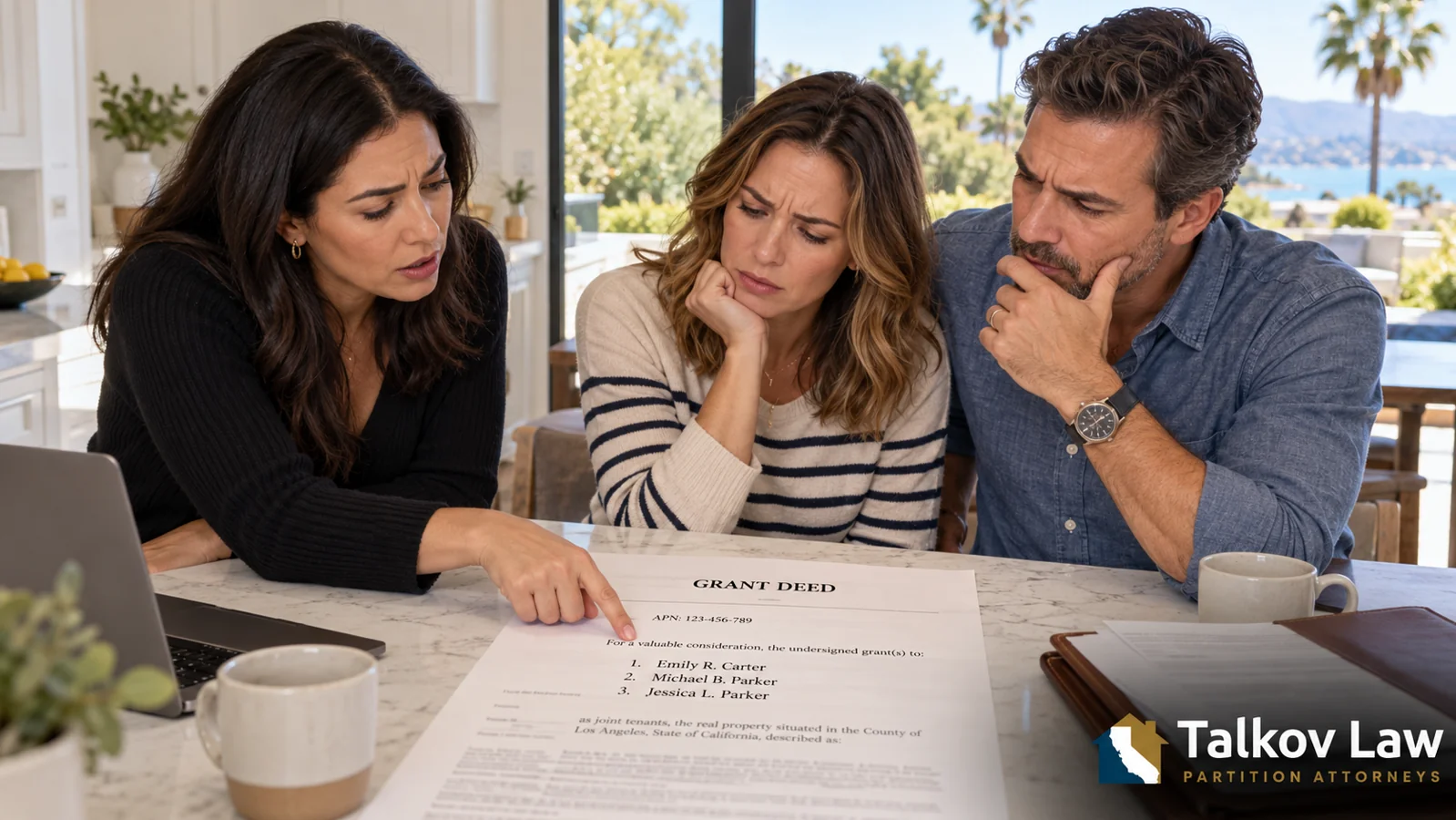
Many deeds name three or more co-owners without saying how much each owns. That question becomes critical in a partition action. Here are the factors courts consider.

Both joint tenants and tenants in common share ownership of the same property, but their rights differ sharply, especially when an owner dies.

Recording a deed gives the public notice of ownership. An unrecorded deed creates uncertainty that can complicate a partition action.
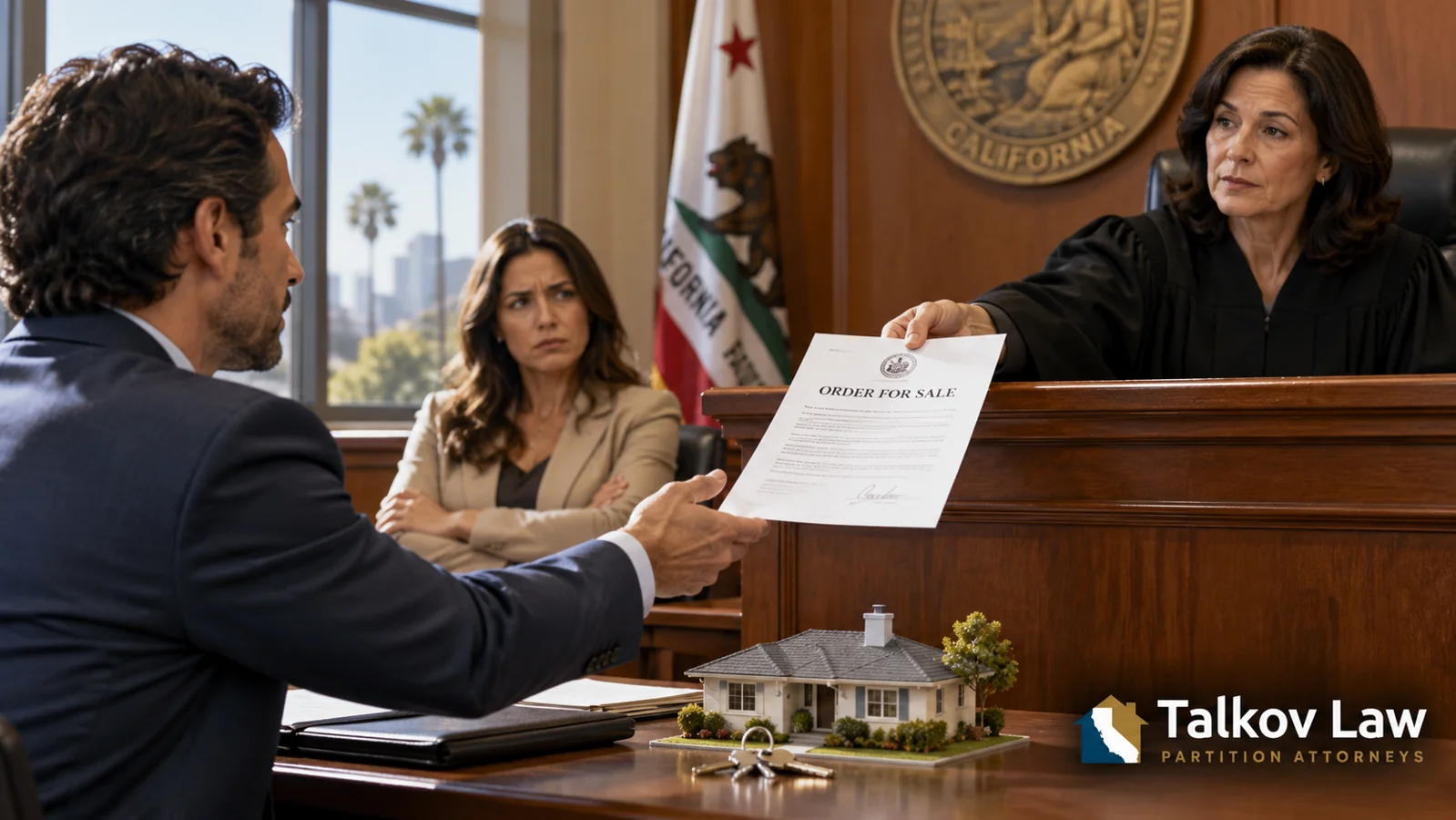
California courts allow partition actions to resolve co-ownership disputes by dividing or selling the property, with each co-owner receiving their share.

An ouster happens when one co-owner wrongfully excludes another from the property. The excluded co-owner can recover damages in a partition action.
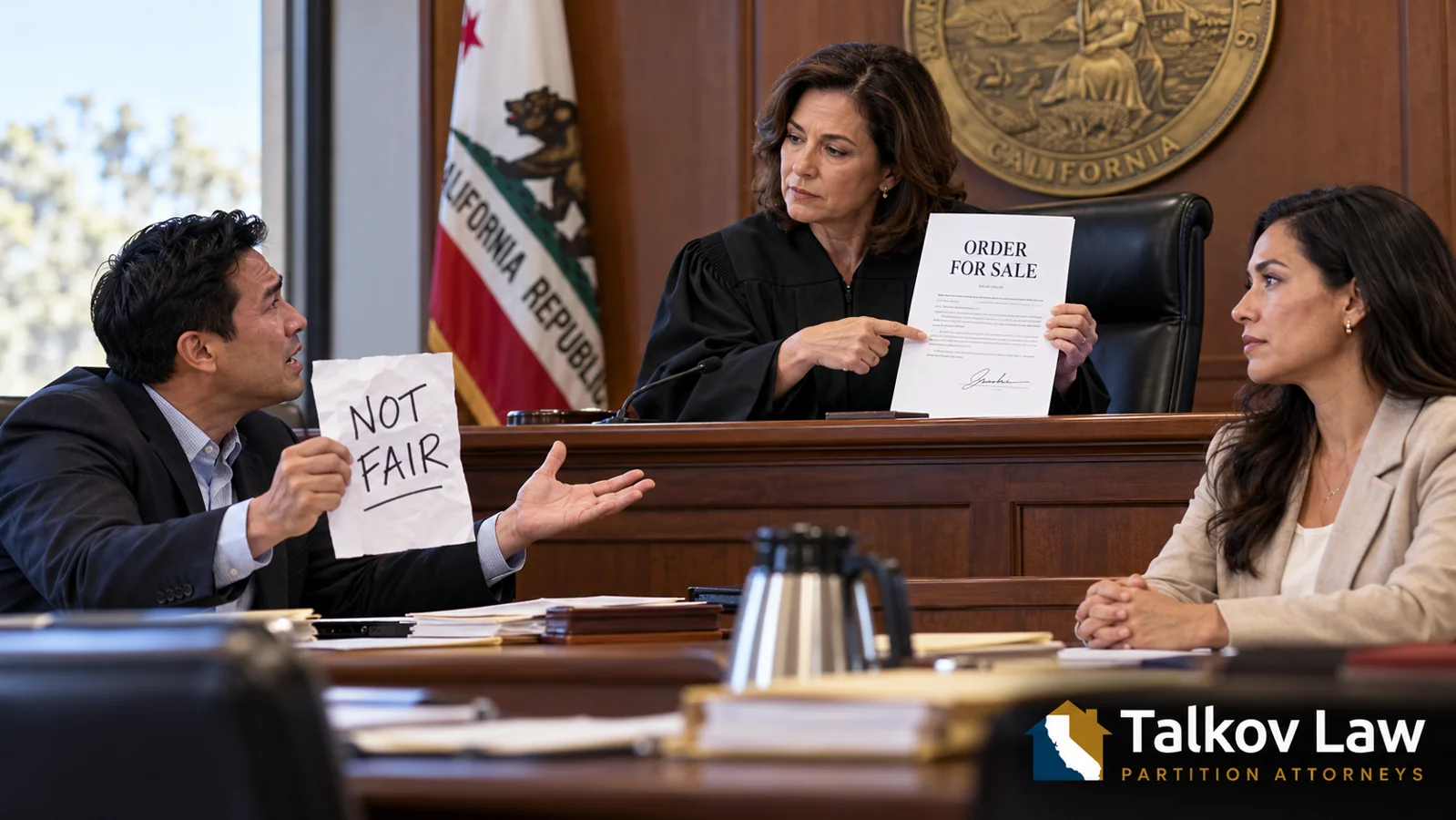
A 1976 case suggested fairness could limit partition, but the Legislature that same year made partition a matter of right unless validly waived. California courts have since rejected the fairness defense.

A notice of ouster is a written demand by a co-owner who is out of possession to share possession of the property. Civil Code section 843 sets what it must say.

Real property includes land, permanent improvements, and related rights. Learn how California law treats fixtures, ownership shares, and co-owner disputes.

Representing co-owners statewide. Find your nearest Talkov Law office.
Practical guides from attorneys who focus exclusively on California partition actions.
The information on this site, including the Talkov Law Blog, is intended for general information purposes only. By using this site, you agree that any information contained in the site does not constitute legal, financial or any other form of professional advice. Information on this site may be changed without notice and is not guaranteed to be complete, accurate, correct or up-to-date.







