
Personality Types of Co-owners in Partition Actions
Litigation is about personalities as much as law. With about 98% of the partition actions we handle settling before trial, these co-owner personality types demand careful handling.
Litigation is about personalities as much as law. With about 98% of the partition actions we handle settling before trial, these co-owner personality types demand careful handling.

Your co-owner can contest a partition action, but the chances of stopping it are slim because the right to partition is absolute in California.

A difficult co-owner can derail an otherwise easy sale. Here is how Realtors can help clients force the sale of co-owned property through a partition action.
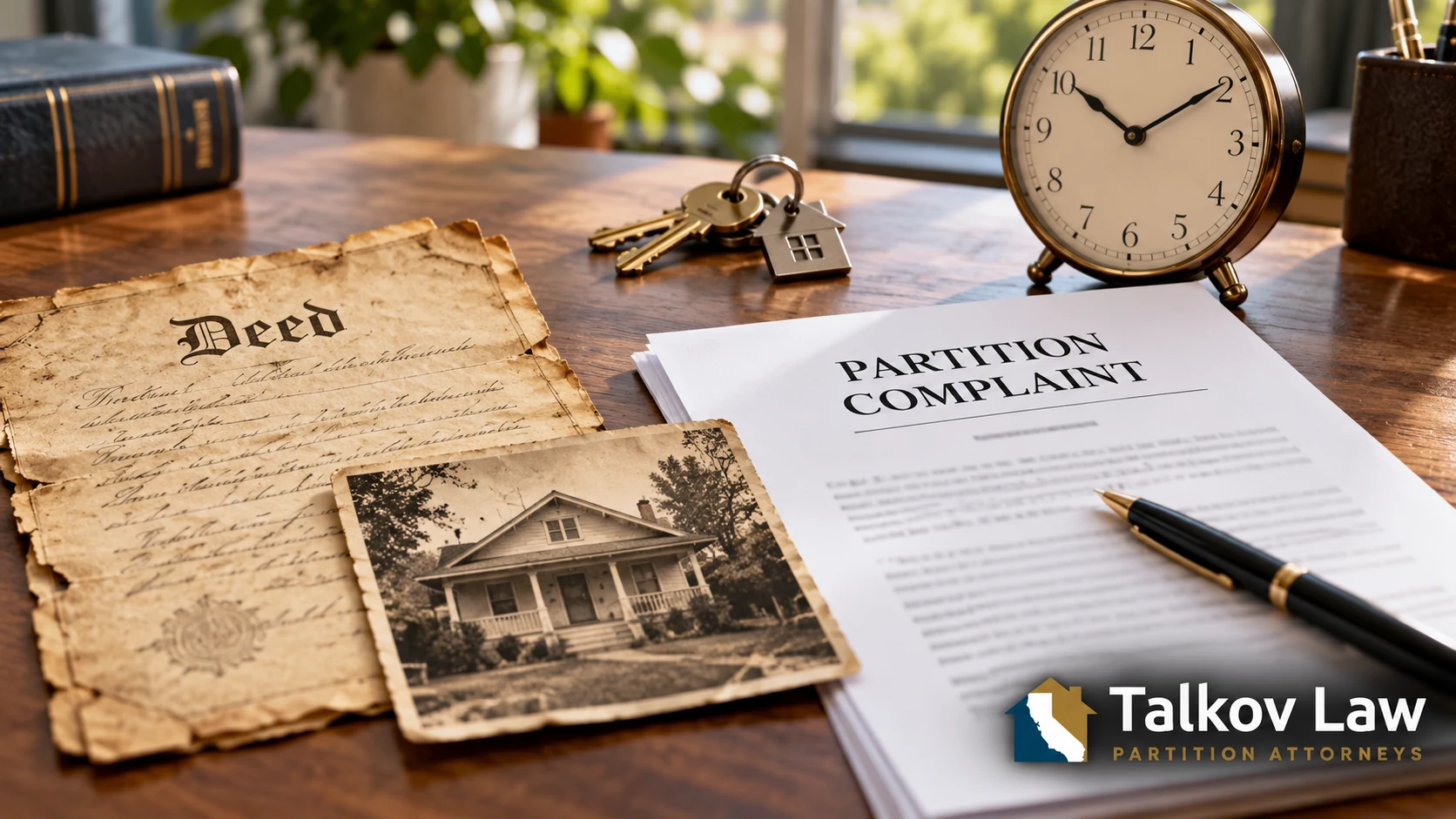
Some co-owners wonder whether there is a deadline to file for partition, such as when a co-owner moved out 20 years ago and never paid the taxes. Here is how California law treats it.

A partition action is a court-ordered division of property. Here are common examples of co-ownership disputes that lead to a partition in California.

Yes. Many people believe the Uniform Partition of Heirs Property Act prevents a sale, but it doesn’t. It adds buyout rights, and the property can still be sold.

One of the most common co-ownership disputes is what happens when one co-owner paid more than their share of the down payment. Here is how a partition action handles it.
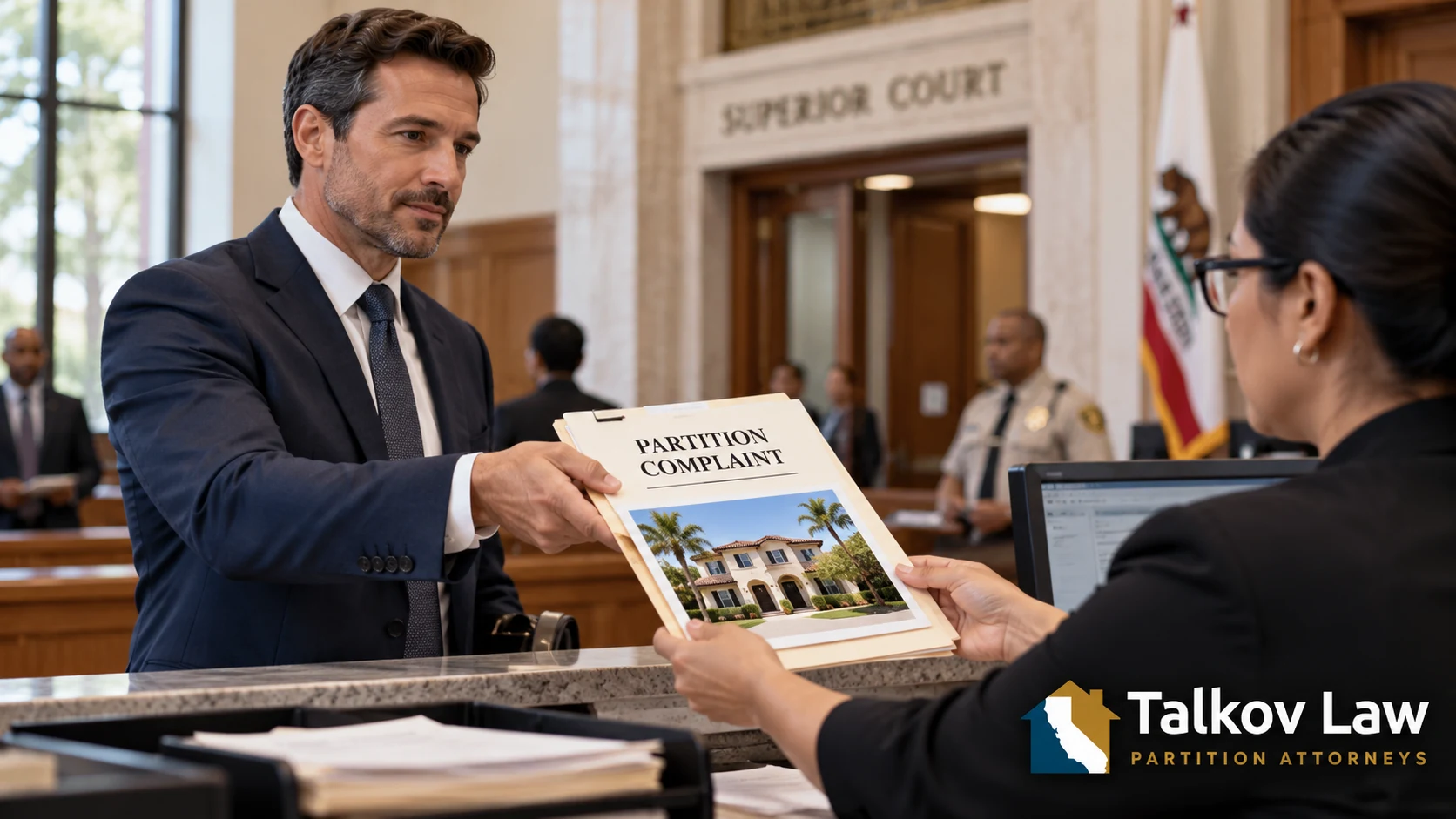
A partition lawsuit is the court process for ending a co-ownership dispute in California. Here are the basic steps to file one.

A partition by sale is a court-ordered sale of jointly owned property, with the proceeds divided among the co-owners. It is the most common outcome of a California partition.

A partition in kind physically divides the property so each co-owner receives a portion of the land. Here are the rules that decide when it is allowed.

Representing co-owners statewide. Find your nearest Talkov Law office.
Practical guides from attorneys who focus exclusively on California partition actions.
The information on this site, including the Talkov Law Blog, is intended for general information purposes only. By using this site, you agree that any information contained in the site does not constitute legal, financial or any other form of professional advice. Information on this site may be changed without notice and is not guaranteed to be complete, accurate, correct or up-to-date.







