
What is the Cost of a Partition Referee in California?
Many co-owners worry that a partition referee’s fees will eat up the sale proceeds. Here is what referees typically cost and how those fees are paid.
Many co-owners worry that a partition referee’s fees will eat up the sale proceeds. Here is what referees typically cost and how those fees are paid.
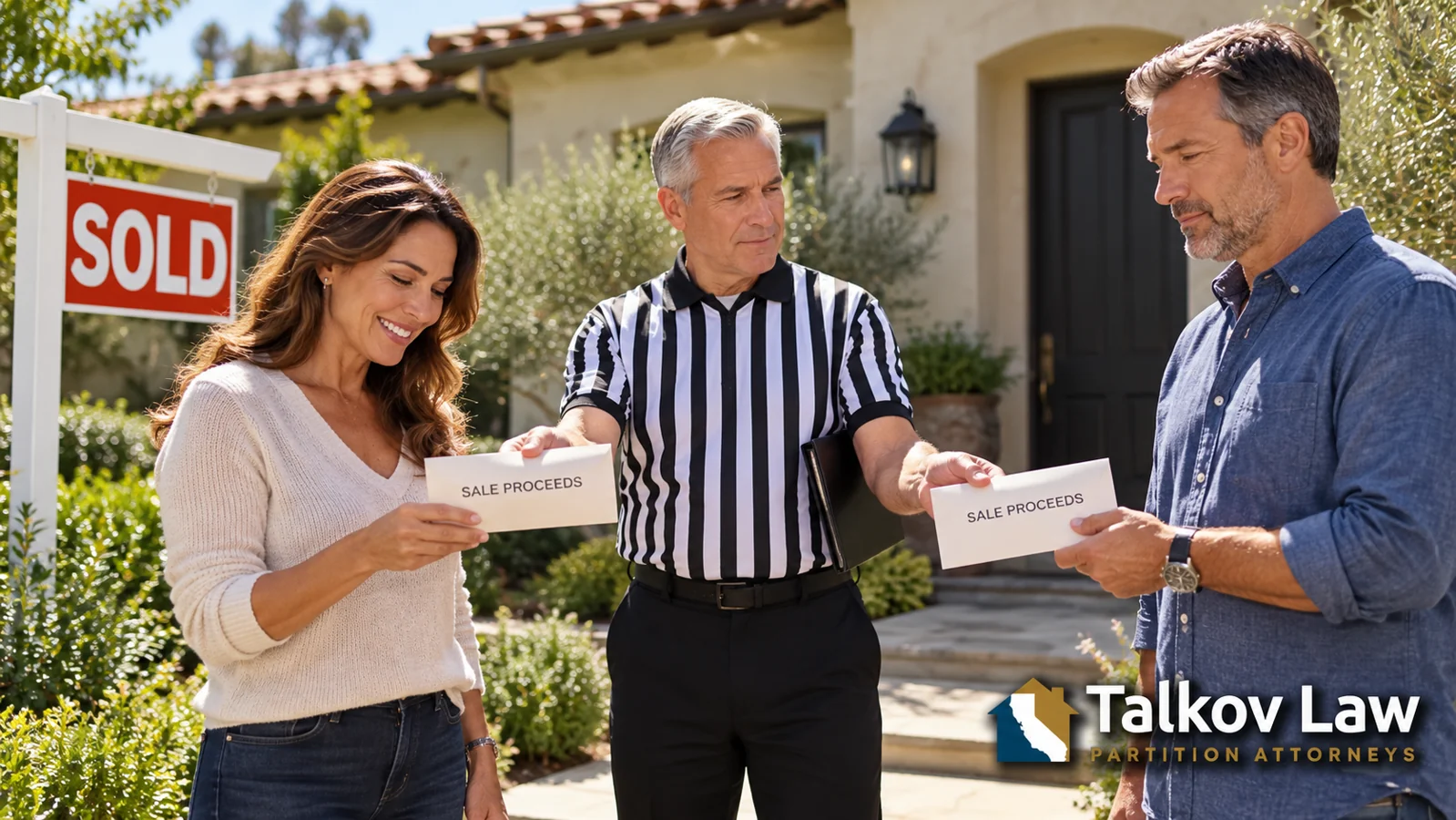
A partition action is a lawsuit in which a California court ends the co-ownership of real property by dividing it or ordering it sold and dividing the proceeds. A co-owner generally can force a sale without the other co-owners’ consent.
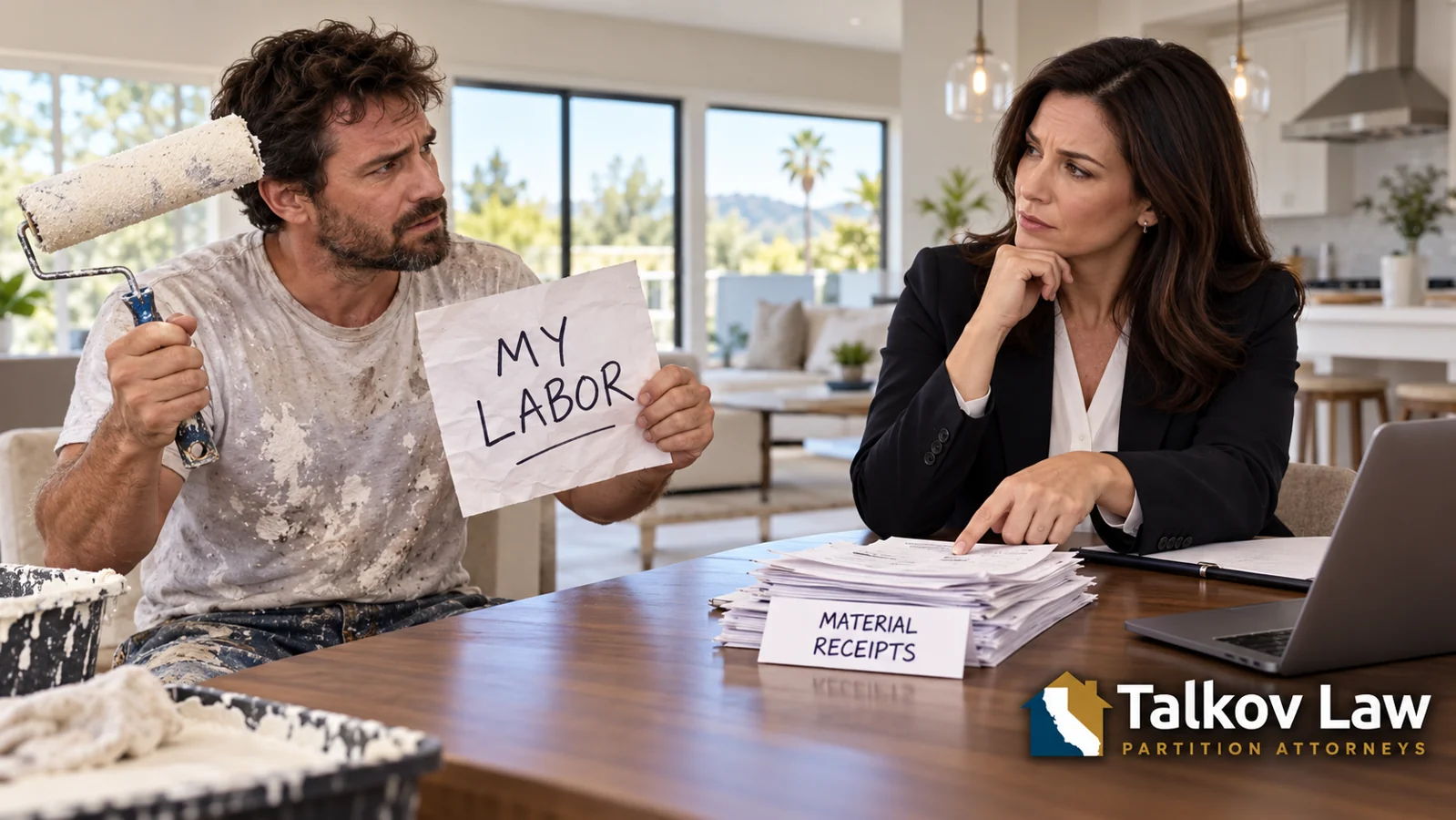
In a partition action, a co-owner who made unequal contributions may recover offsets. Here is whether that includes compensation for your own time and labor on improvements and management.

Tensions rise when one co-owner places a loan or lien on the property. Here is what a California co-owner may encumber and how a partition action deals with it.

Legal title is who appears on the deed. Equitable title can belong to someone else. The difference often matters when a partition action involves a quiet title dispute.

A co-owner in sole possession who paid all the expenses often expects full reimbursement. Under Hunter v. Schultz, the other co-owner can offset the property’s rental value against those claims.

The end goal of most partition actions is a sale of the jointly owned property. Here are answers to common questions about how a court-ordered partition sale works.
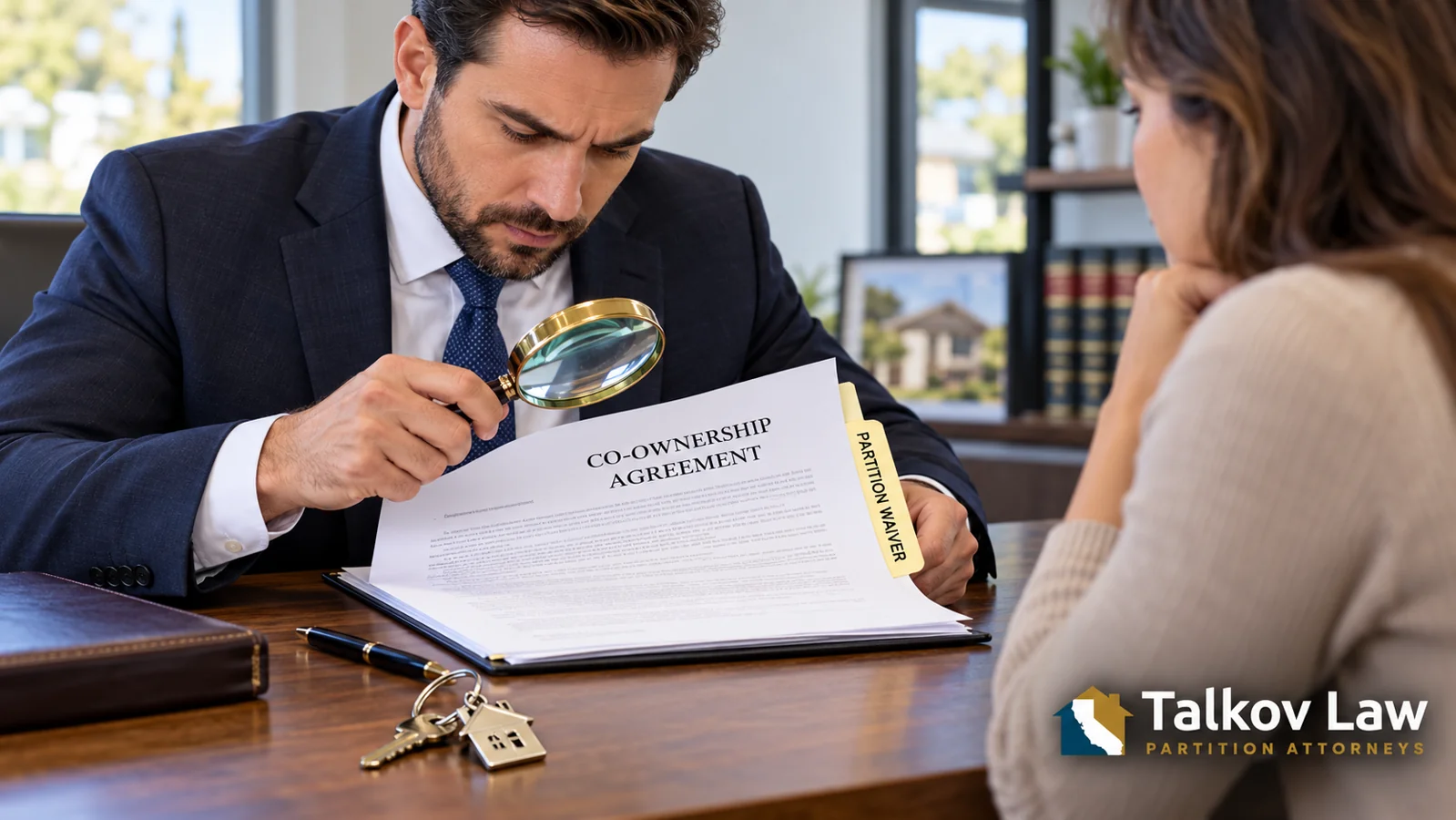
Defendants often claim their co-owner waived the right to partition. In California, a valid waiver is extremely rare and requires specific circumstances.
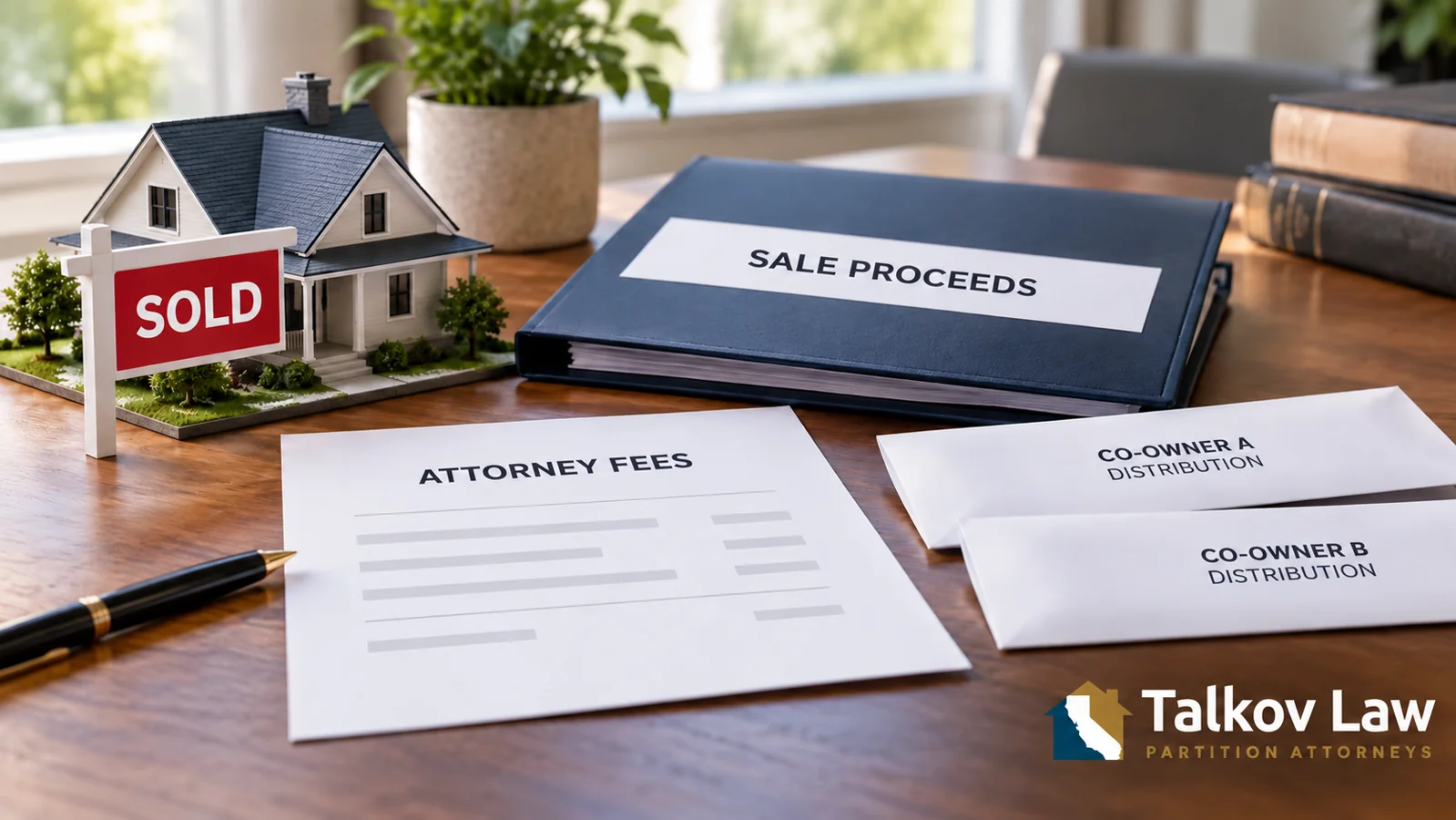
Attorney’s fees are among the most common questions in partition actions. Here is when California courts award fees against an uncooperative co-owner and how they are paid.

The Partition of Real Property Act took effect January 1, 2023, replacing the Uniform Partition of Heirs Property Act. It gives co-owners the chance to buy out a co-owner who asks for a sale.

Representing co-owners statewide. Find your nearest Talkov Law office.
Practical guides from attorneys who focus exclusively on California partition actions.
The information on this site, including the Talkov Law Blog, is intended for general information purposes only. By using this site, you agree that any information contained in the site does not constitute legal, financial or any other form of professional advice. Information on this site may be changed without notice and is not guaranteed to be complete, accurate, correct or up-to-date.







