
My Co-owner Filed a Partition Action Against Me – What Now?
Being sued for partition by a co-owner is stressful. Here is what the lawsuit means, why co-owners file them, and the steps you can take to protect your share.
Being sued for partition by a co-owner is stressful. Here is what the lawsuit means, why co-owners file them, and the steps you can take to protect your share.

While the property remains co-owned, each owner has rights to use it. Here is when a co-owner’s conduct crosses the line, and how a partition action ends the conflict.
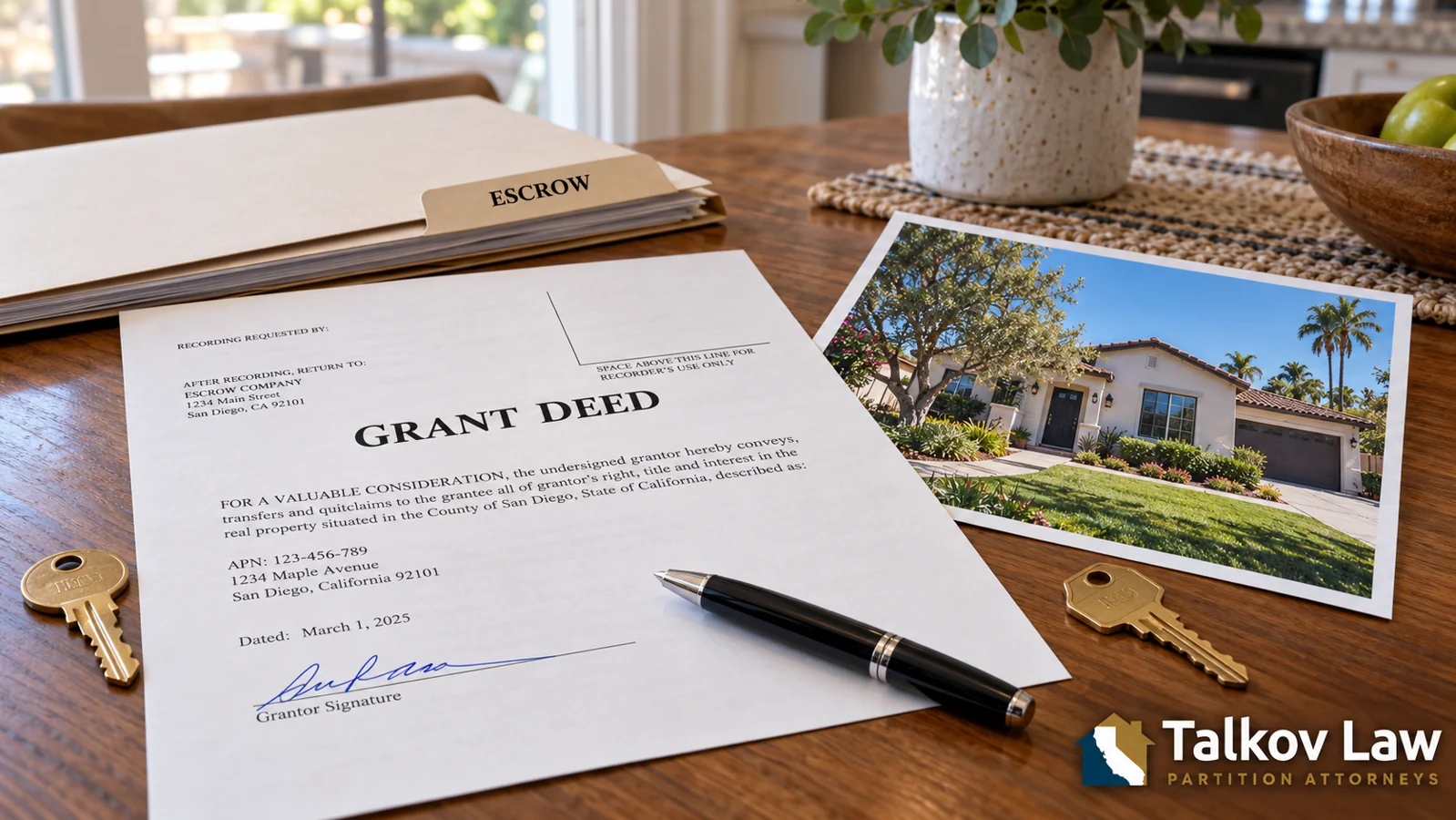
A co-owner can be removed from a California house title by a deed with their agreement, or without it through a partition action. Quiet title is available only in narrow cases.

Disputes flare when one co-owner borrows against the property without the others’ consent. Here is how such a loan affects your equity and how to protect it.

Yes. A California co-owner can partition a rental property even with tenants and a good lease. Here is how rent, receivers, tenants, deposits and the sale are handled.

Yes. Any co-owner in California can force a partition, no matter how small their share. Even a 1% owner can file, and no majority vote is needed, because the right to partition is absolute.

Yes. Many families buy vacation homes together, but relationships change. When a co-owner won’t cooperate, a partition action can force the sale.

Co-owners often disagree about whether one can let a roommate, partner, or tenant move in. Here are each co-owner’s rights to the property.

Many minority co-owners assume they have few rights. In fact, a 33% owner of California property has many, including the right to force a sale through a partition action.

Co-owners in a partition action almost always want the same thing: the best result in the least time with the lowest fees. Here are the signs of an attorney who can deliver.

No. An eviction won’t remove a co-owner, because each co-owner has an equal right to possess the entire property. A partition action is the way to end the co-ownership.

Yes. Each co-owner may lease the co-owned property, even without the others’ consent, but doing so creates complications for rent, possession, and evicting tenants.

A 50% owner of California real estate has the right to force a sale through a partition action, occupy the entire property, and collect 50% of the net rental proceeds, among other rights.

Yes. A trust on title usually does not stop a California partition action: you sue the trustee who holds a co-owner’s share. When one active trust owns the whole property, beneficiaries usually start in probate court instead.

A Realtor can’t force a co-owner who refuses to sell. Here is what agents can do, when to bring in a partition attorney, and how a stalled sale moves forward.

When siblings inherit a house and one moves in, the others often want them out. You can’t evict a co-owning sibling, but a partition action can force a sale.

When a sibling or other heir lives in an inherited house and won’t sell, the other heirs can force a sale through a partition action.

A lien against one co-owner does not have to stop the sale of a co-owned house. Here are five ways to sell a California house when one owner has a lien or judgment.

California co-owners can sell by agreement, complete a buyout, or use a partition action when an owner refuses. Learn the steps, costs, and timing.

Removing your name from the mortgage on jointly owned property might seem difficult, but there are four possible solutions to get your name off the mortgage.

Co-owners of real estate in California have an absolute legal right to partition the property, thereby causing the property to be sold and the proceeds distributed.

Representing co-owners statewide. Find your nearest Talkov Law office.
Practical guides from attorneys who focus exclusively on California partition actions.
The information on this site, including the Talkov Law Blog, is intended for general information purposes only. By using this site, you agree that any information contained in the site does not constitute legal, financial or any other form of professional advice. Information on this site may be changed without notice and is not guaranteed to be complete, accurate, correct or up-to-date.







