Partition by Sale in California
A partition by sale is a court-ordered sale of jointly owned property, with the proceeds divided among the co-owners. It is the most common outcome of a California partition.
How a California court decides whether to divide, sell, or appraise co-owned property.
A partition by sale is a court-ordered sale of jointly owned property, with the proceeds divided among the co-owners. It is the most common outcome of a California partition.
A partition in kind physically divides the property so each co-owner receives a portion of the land. Here are the rules that decide when it is allowed.
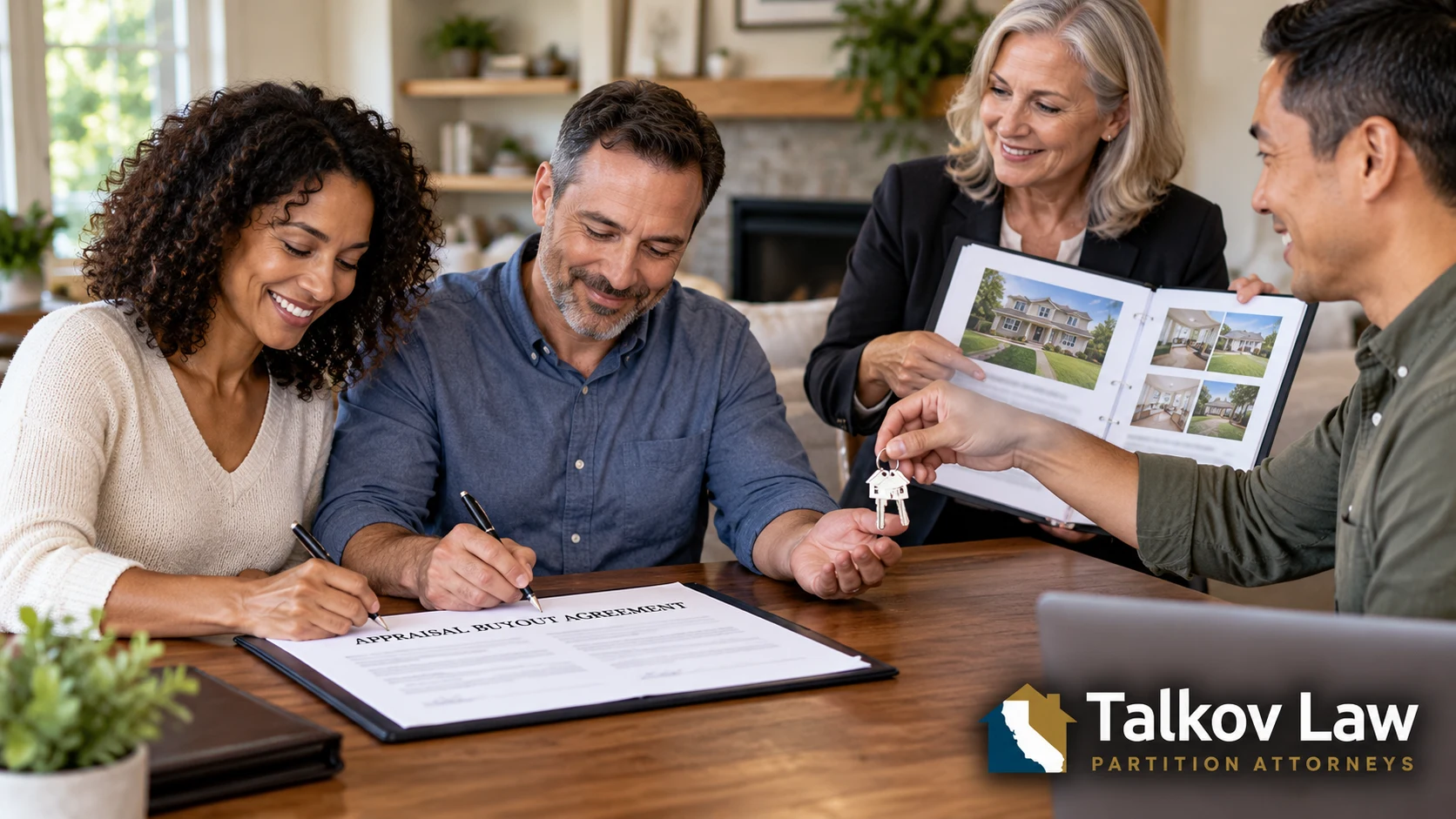
Partition by appraisal is one of three ways to partition property in California. It lets co-owners resolve their dispute through an agreed buyout at an appraised price.

Code of Civil Procedure section 873.820 sets the order in which the proceeds of a partition sale are applied.
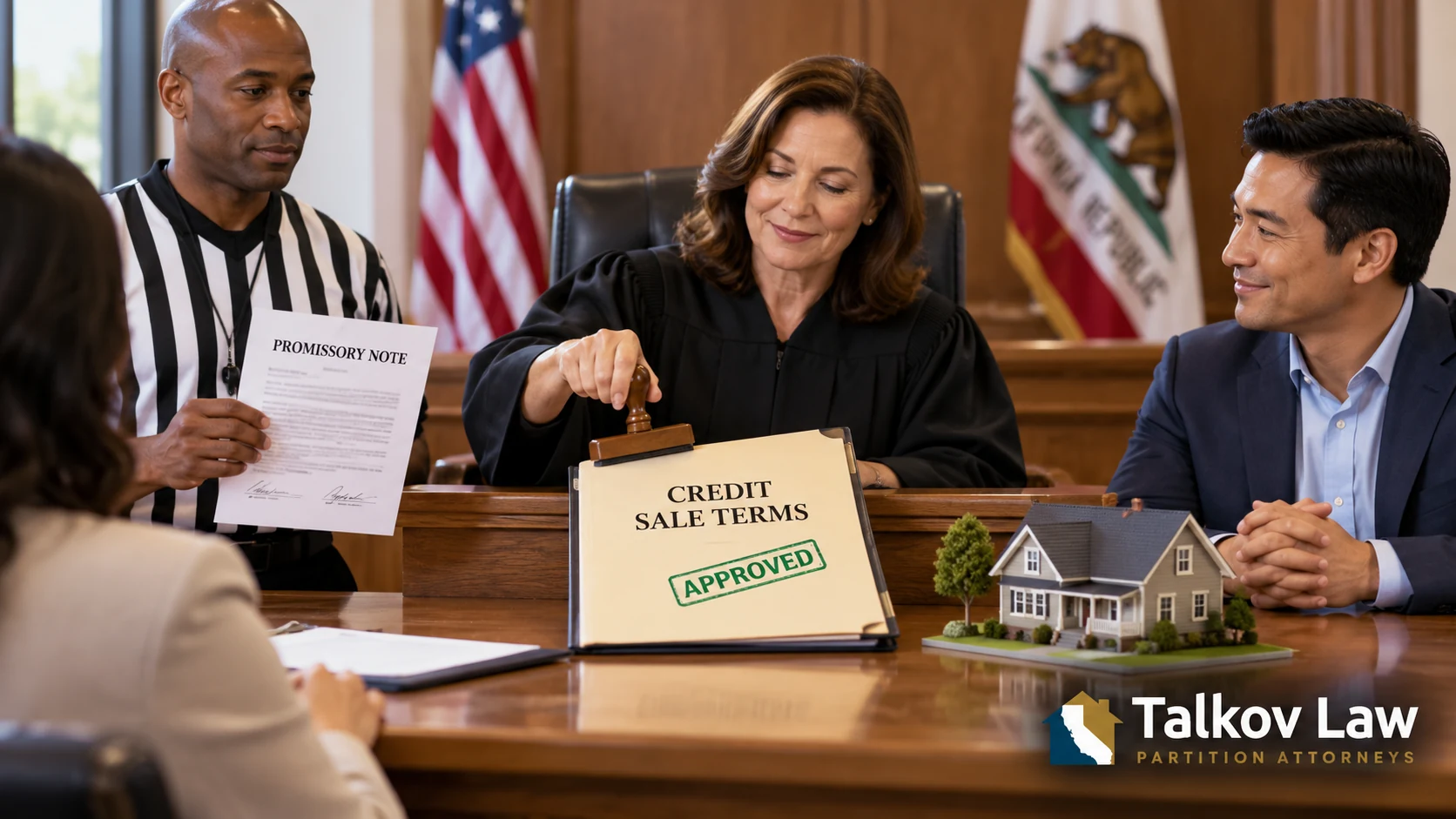
Code of Civil Procedure section 873.630 lets the court direct a partition sale on credit and set the terms of the credit and the security instrument.
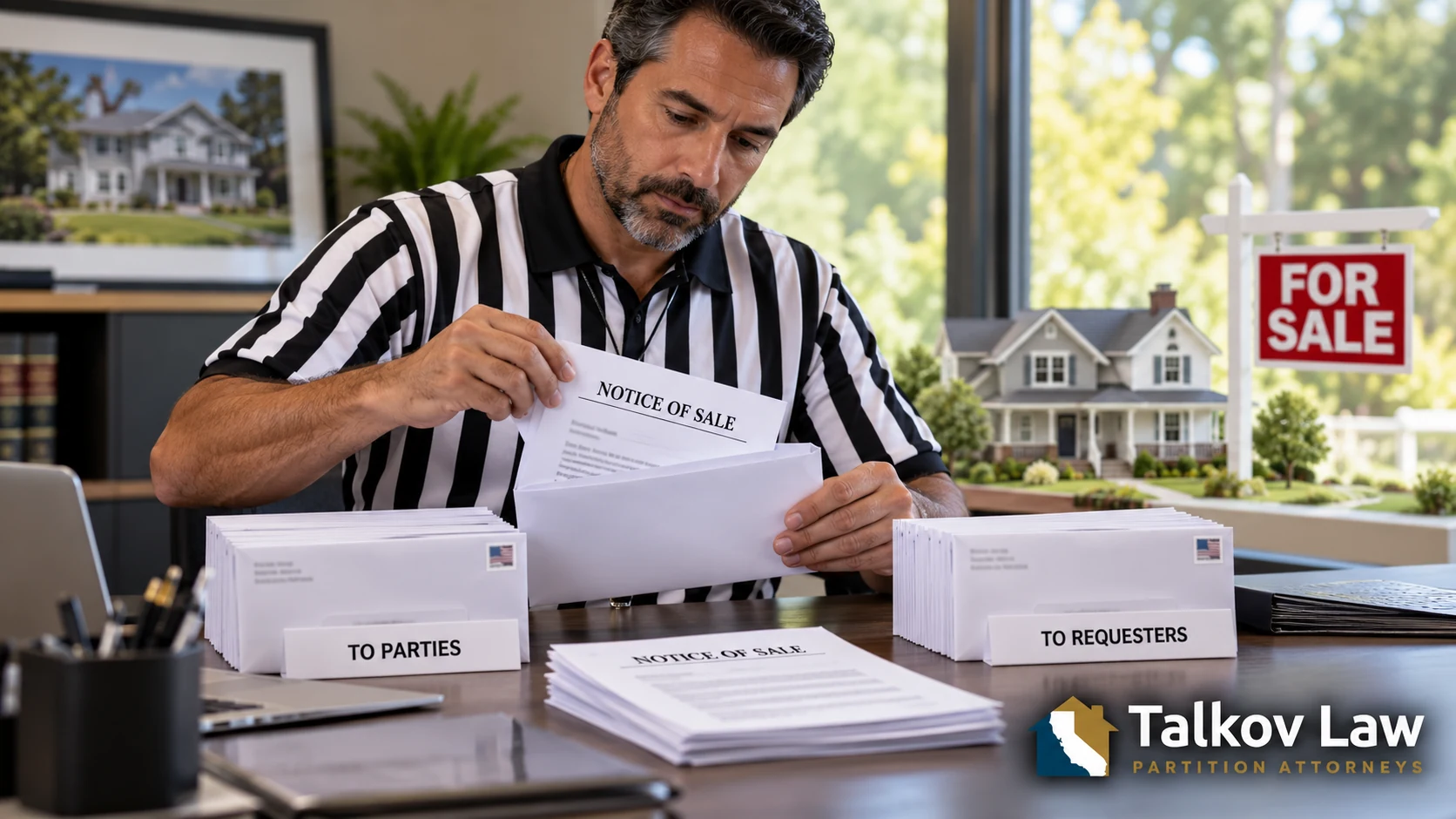
Code of Civil Procedure section 873.640 sets how and to whom notice of a partition sale of real or personal property must be given.
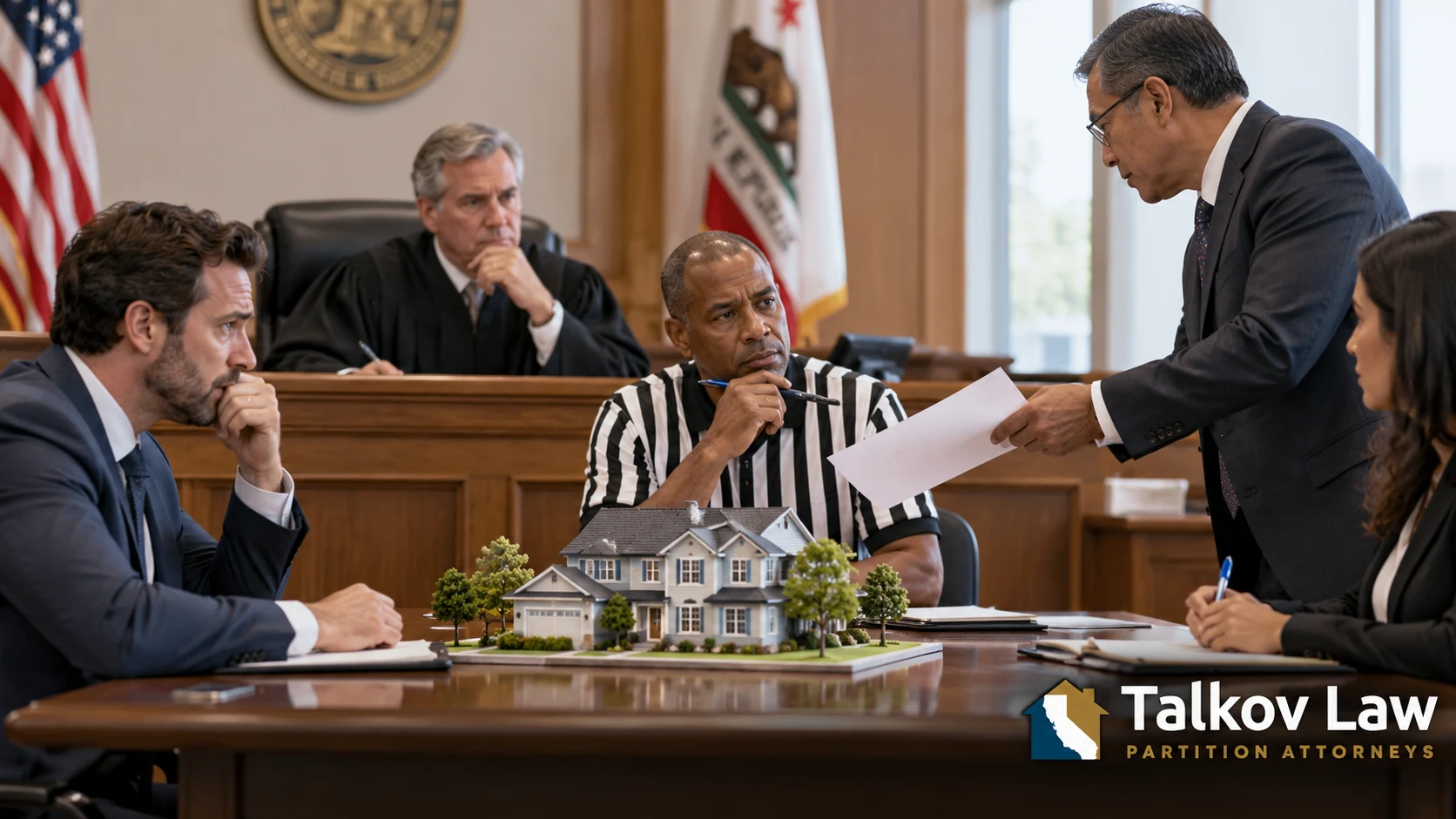
Code of Civil Procedure section 873.740 sets the court’s options at a sale confirmation hearing when an overbidder makes an increased offer above the current sale price.
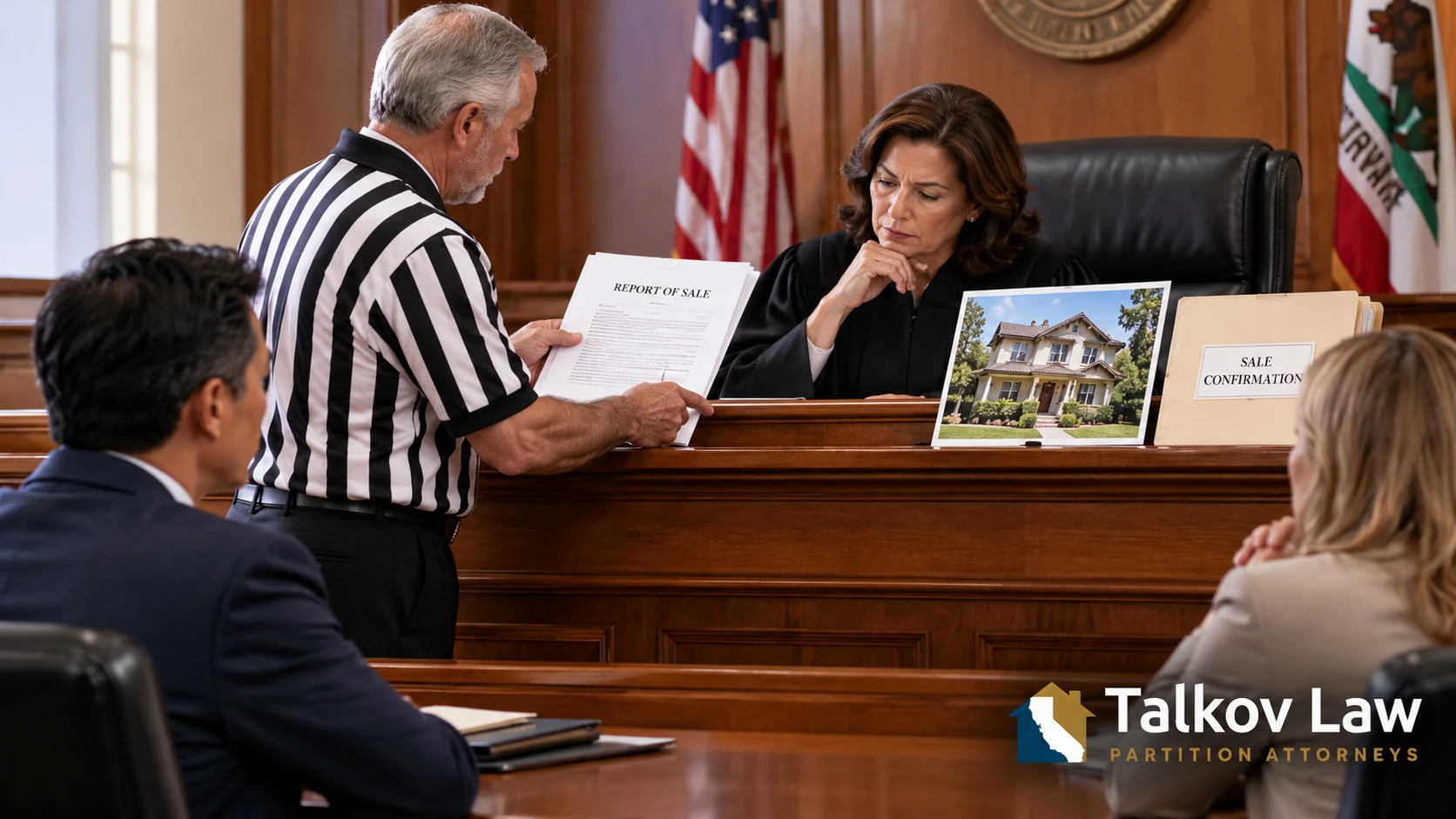
Code of Civil Procedure section 873.730 explains how the court handles a hearing to confirm a partition sale under section 873.720, including when it orders a new sale.
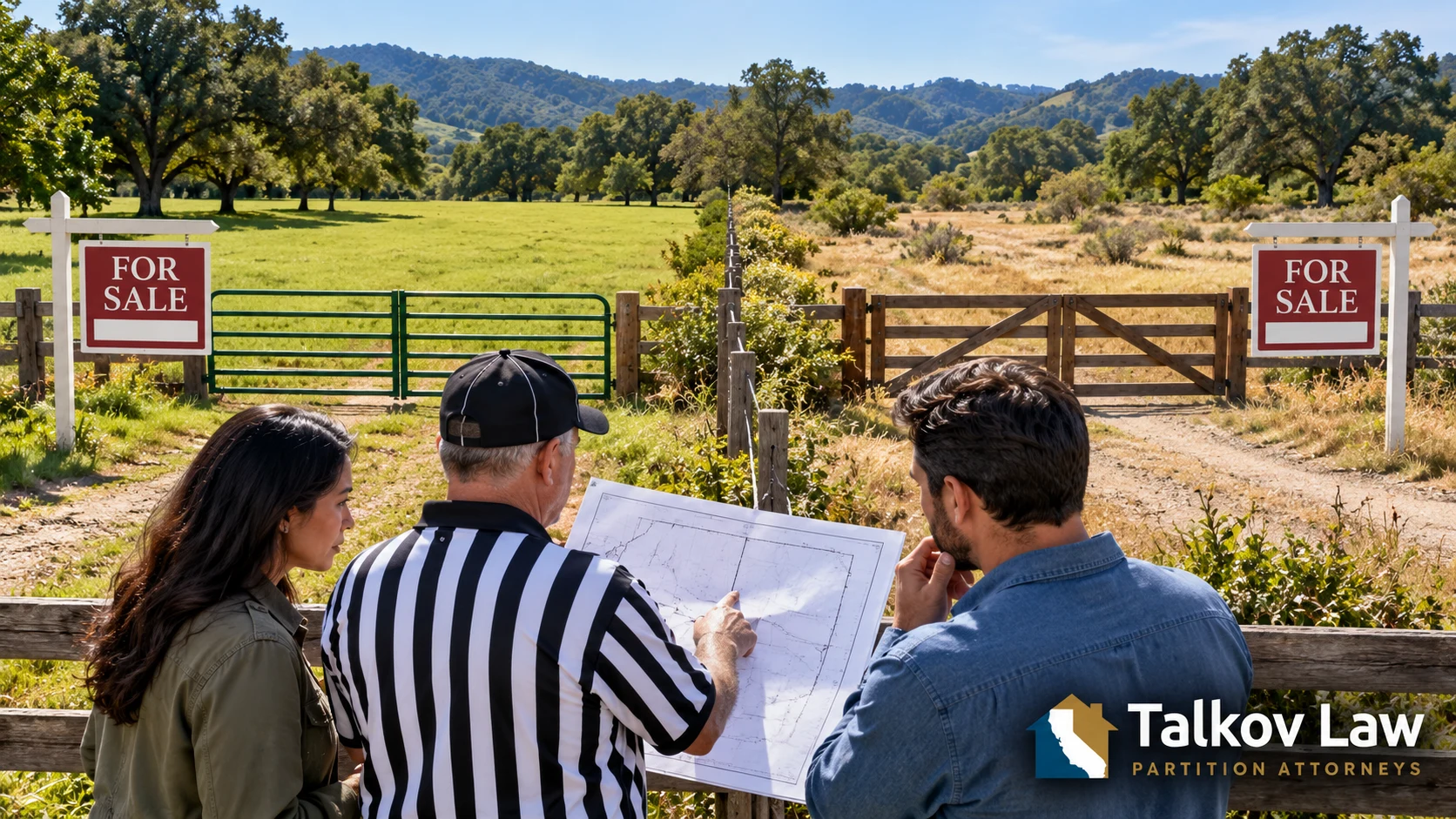
Code of Civil Procedure section 873.620 favors selling property in separate lots rather than as a single unit, unless the parties’ interests are better served by a unit sale.
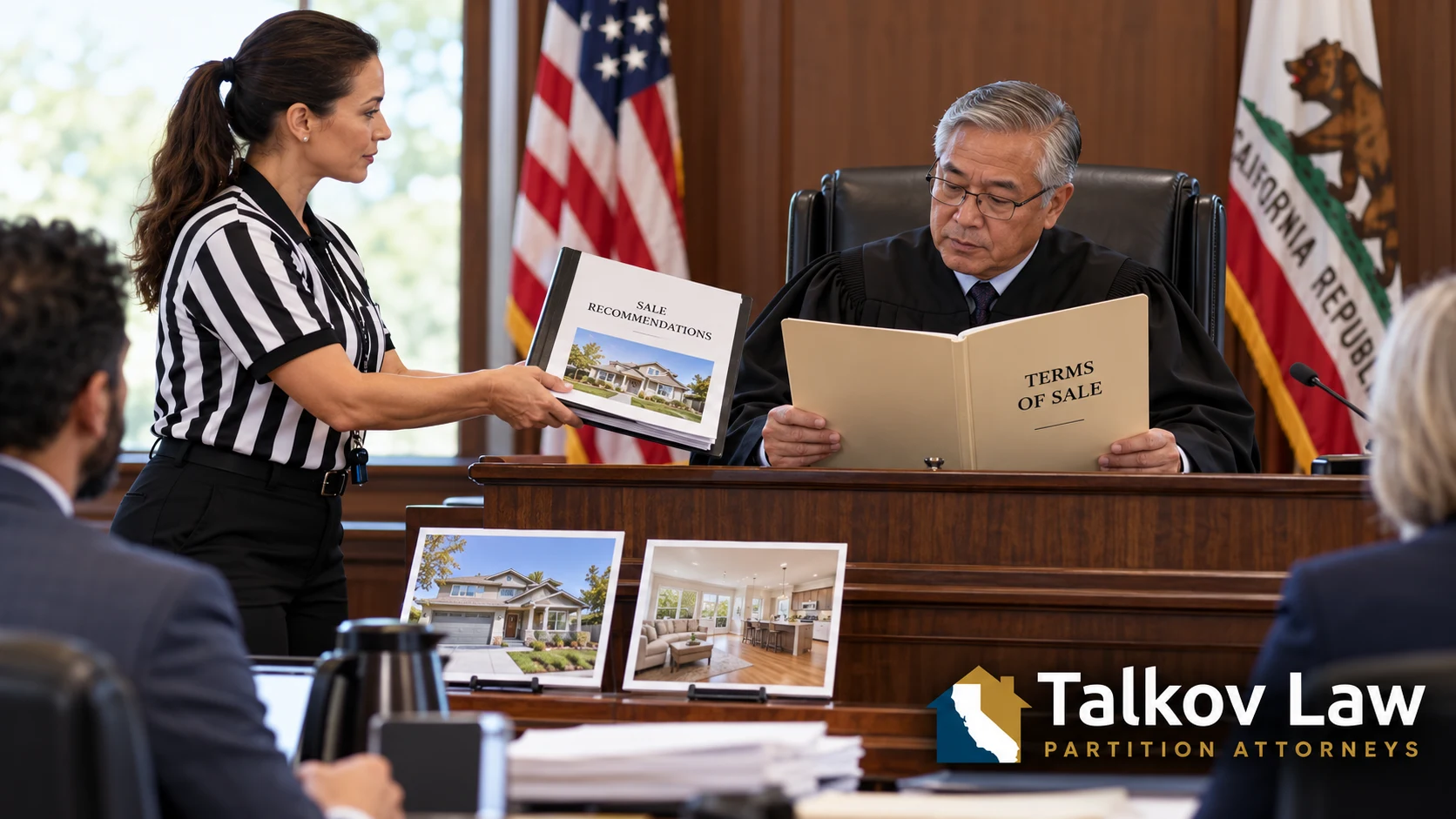
Code of Civil Procedure section 873.610 lets the court set the manner, terms, and conditions of a partition sale, and lets the referee make recommendations about them.
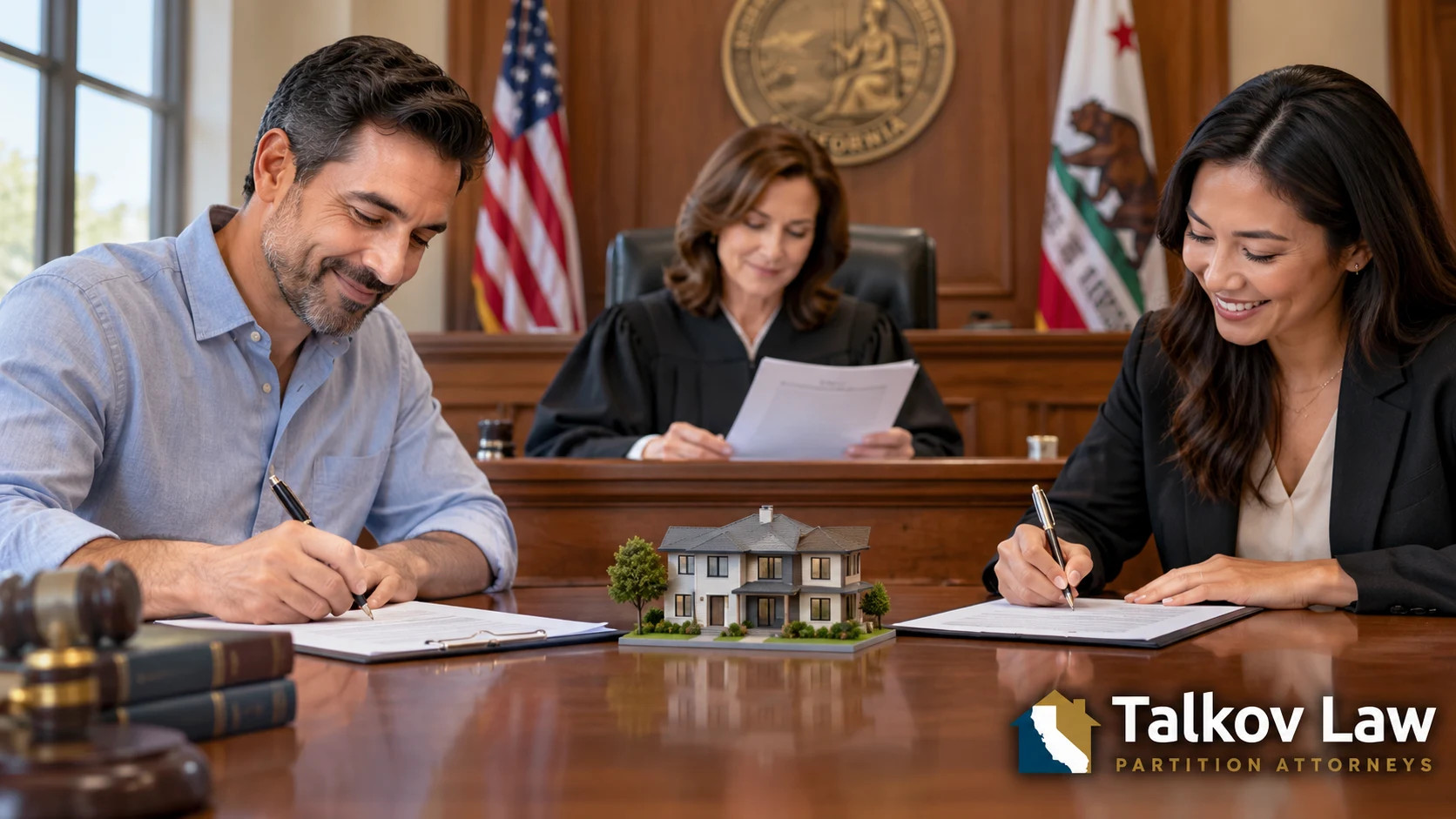
Code of Civil Procedure section 873.600 requires the court to order a partition sale in the manner and on the terms the parties agree to.
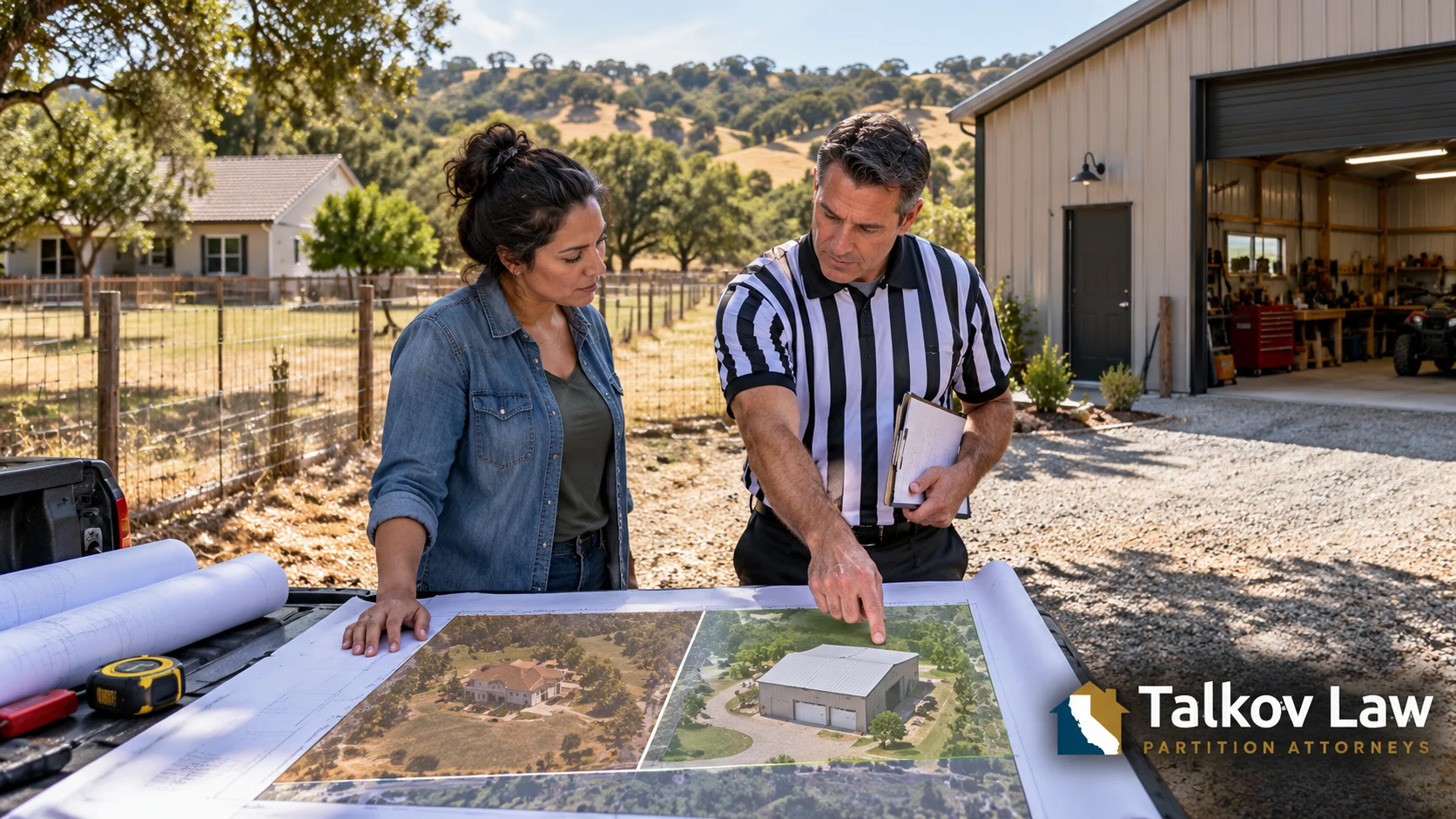
Code of Civil Procedure section 873.220 lets a partition in kind allot to a party the portion of the property that includes improvements that party made.
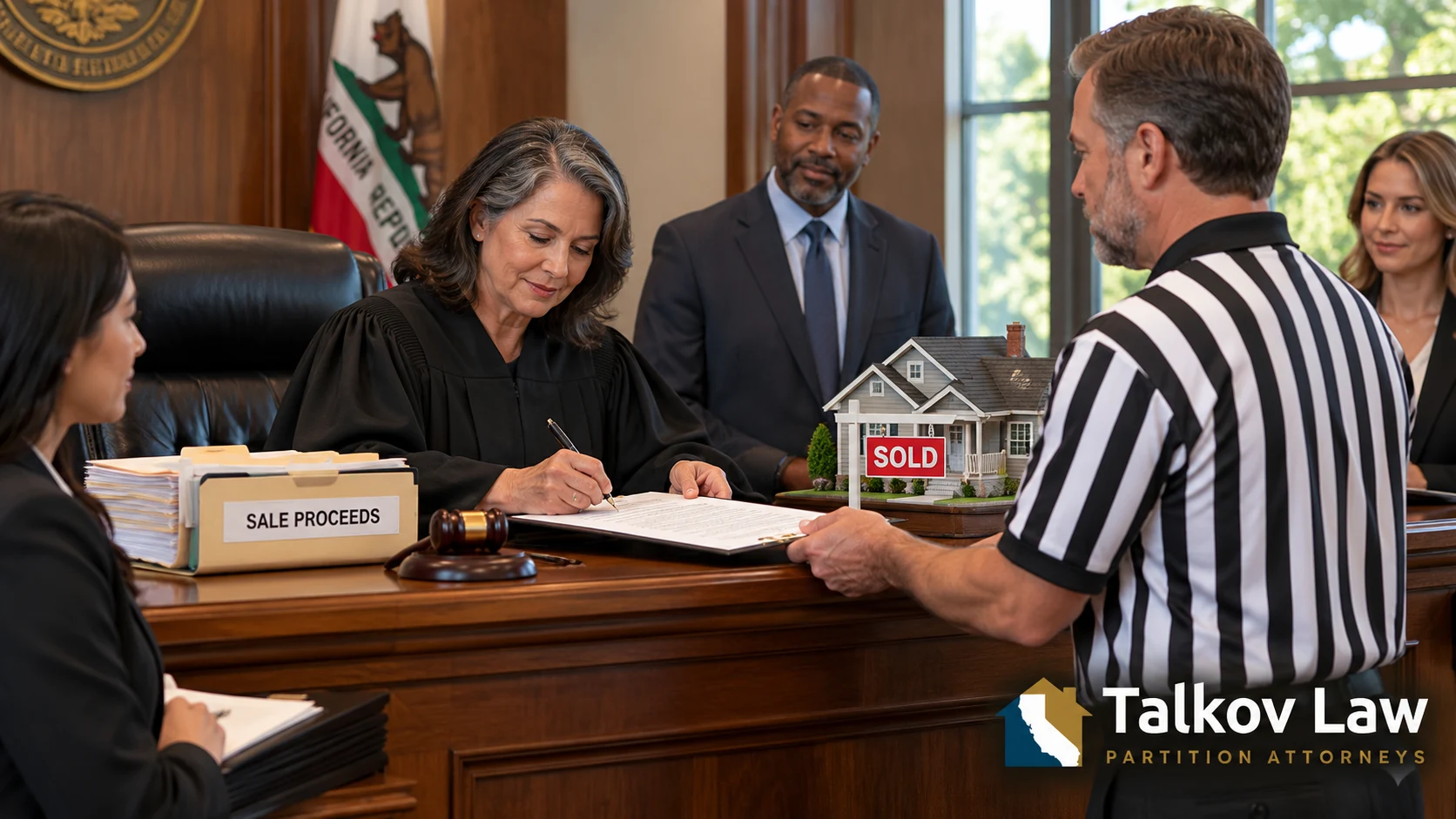
Code of Civil Procedure section 873.810 directs the court to order how the proceeds of a partition sale are disbursed to the parties.
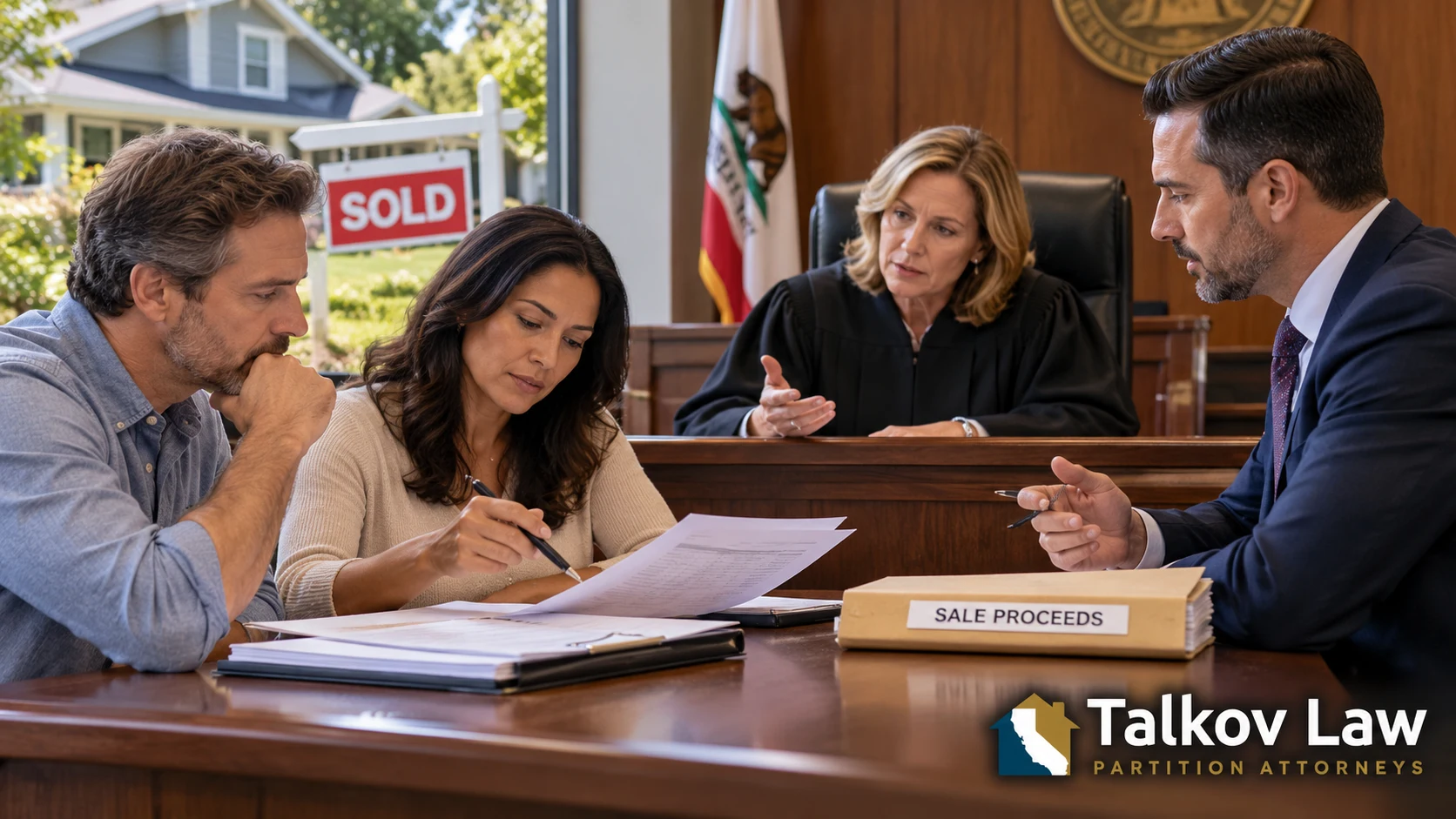
Code of Civil Procedure section 873.850 lets the partition action continue between the parties to decide how proceeds are allocated when that hasn’t yet been determined.
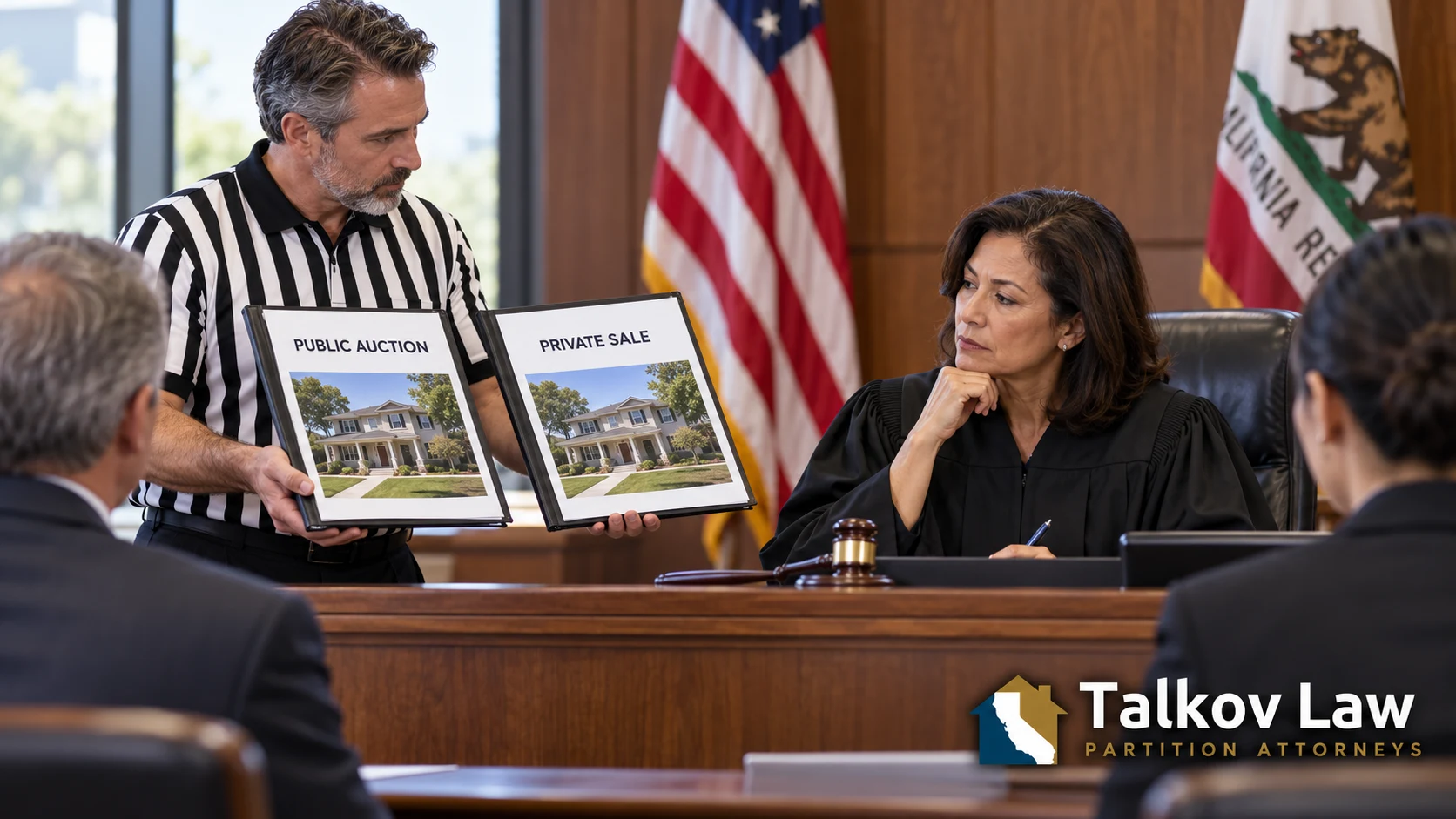
Code of Civil Procedure section 873.520 lets the court decide whether the property will be sold at public auction or by private sale.
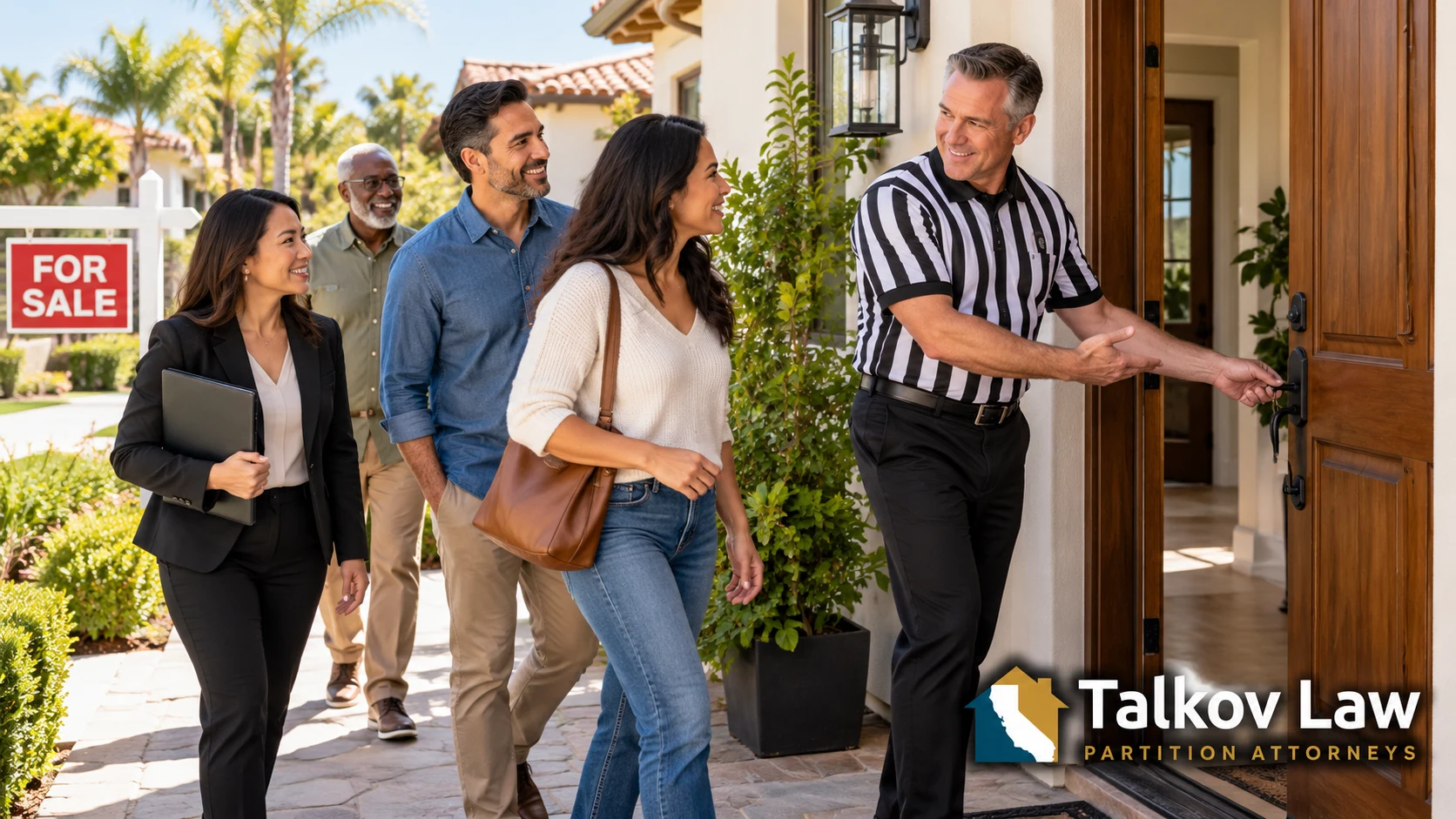
Code of Civil Procedure section 873.510 sets how the court-appointed partition referee makes the sale of the property.
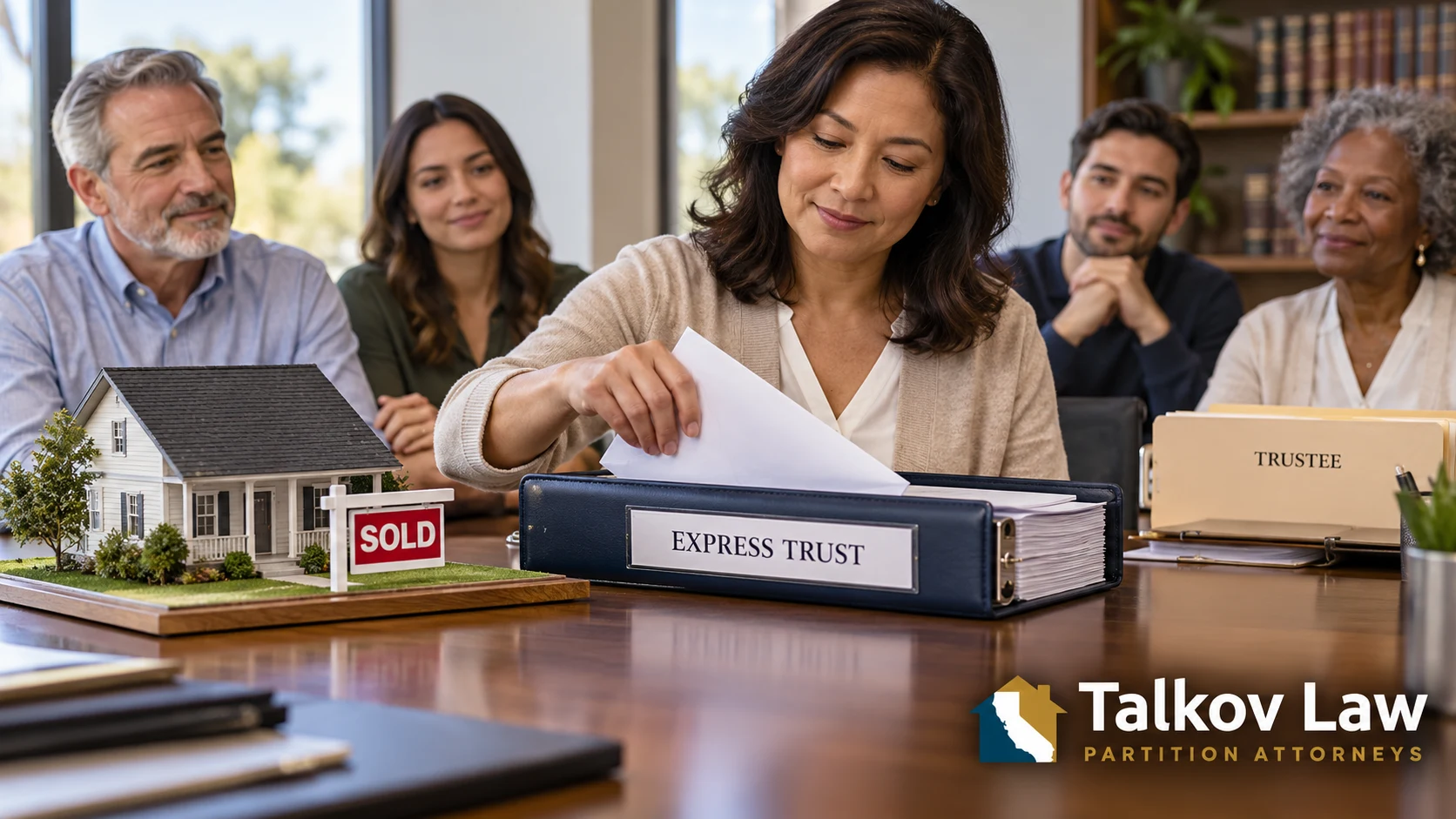
Code of Civil Procedure section 872.840 explains how property subject to an express trust can be divided or sold in a partition, and the trustee’s duties.
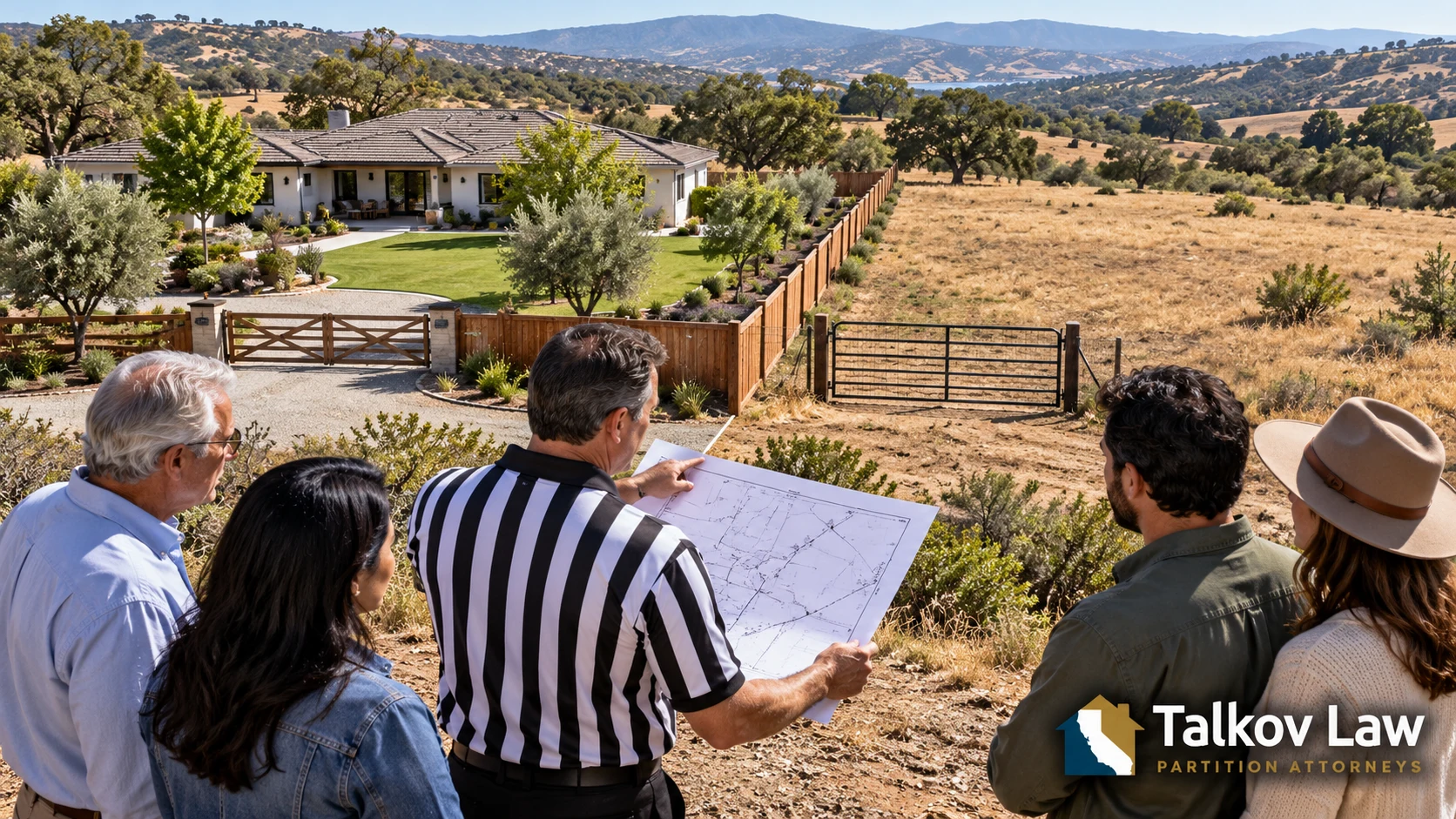
Code of Civil Procedure section 872.830 allows a rare type of partition where part of the property is sold and the rest is divided in kind.
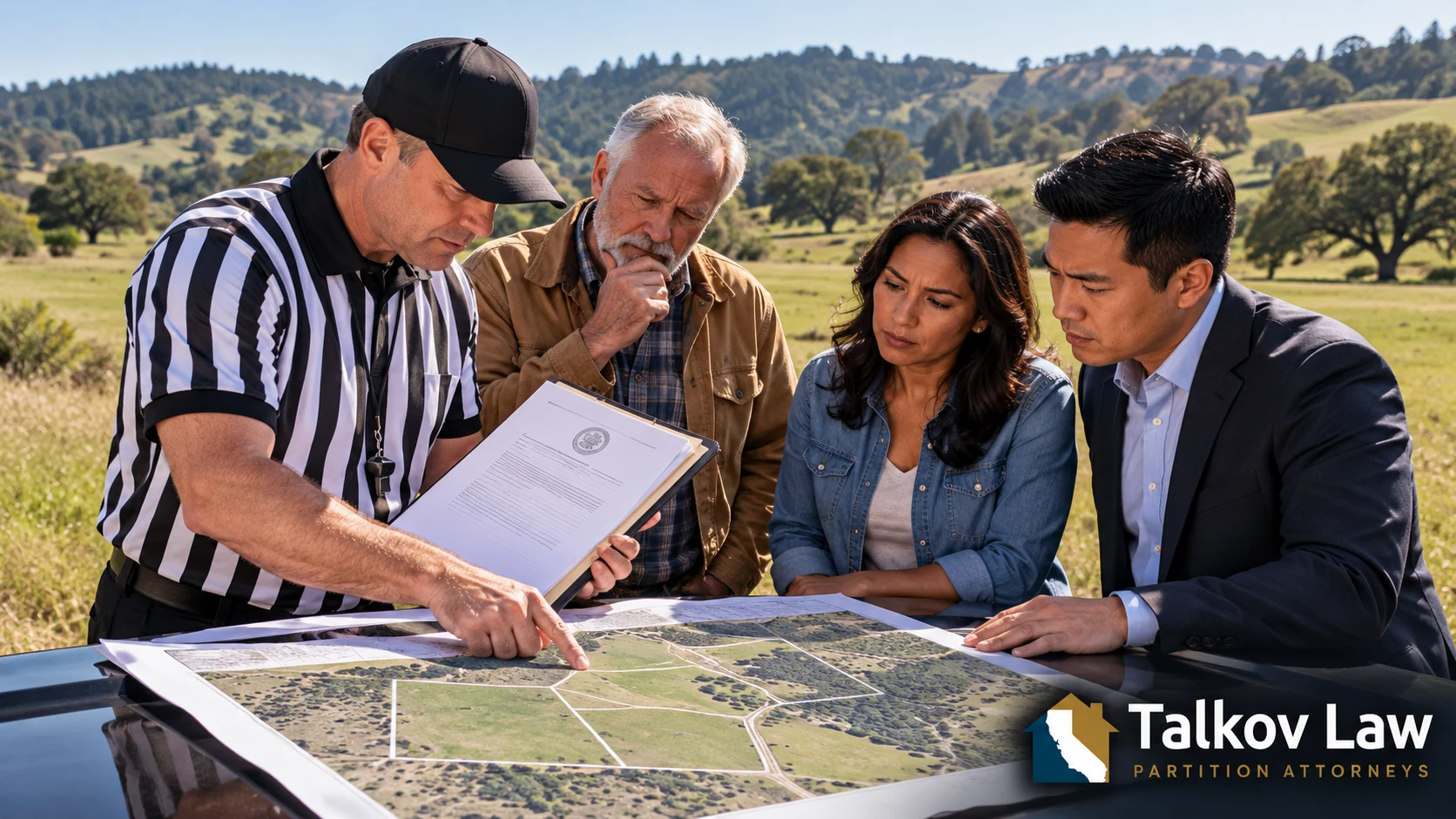
Code of Civil Procedure section 872.810 requires the property to be divided according to the parties’ interests as set in the interlocutory judgment.
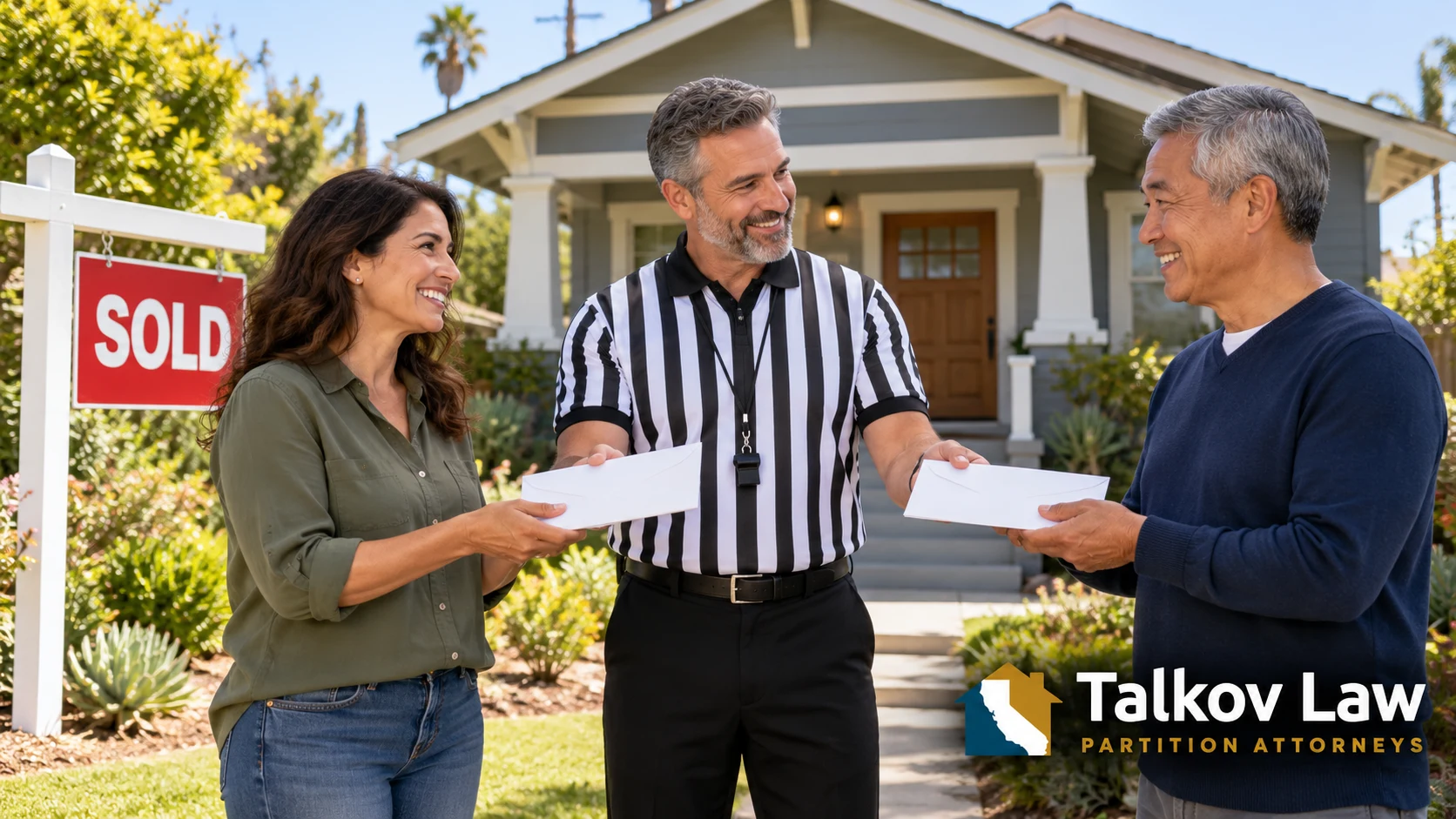
Code of Civil Procedure section 872.820 allows the court to order a partition by sale when a sale would be more equitable than dividing the property.
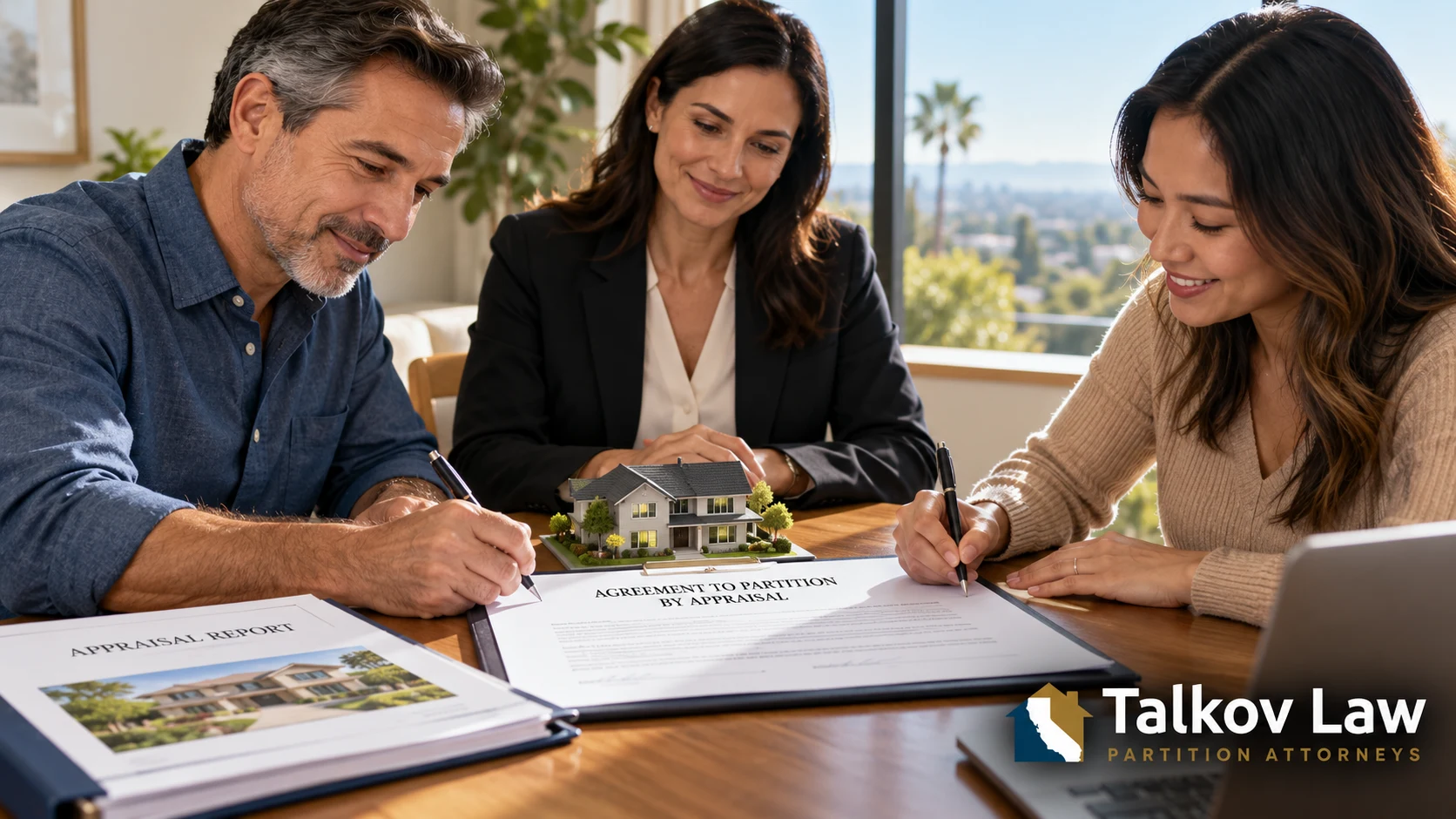
Code of Civil Procedure section 873.910 allows a partition by appraisal, but only when the parties agree to it.
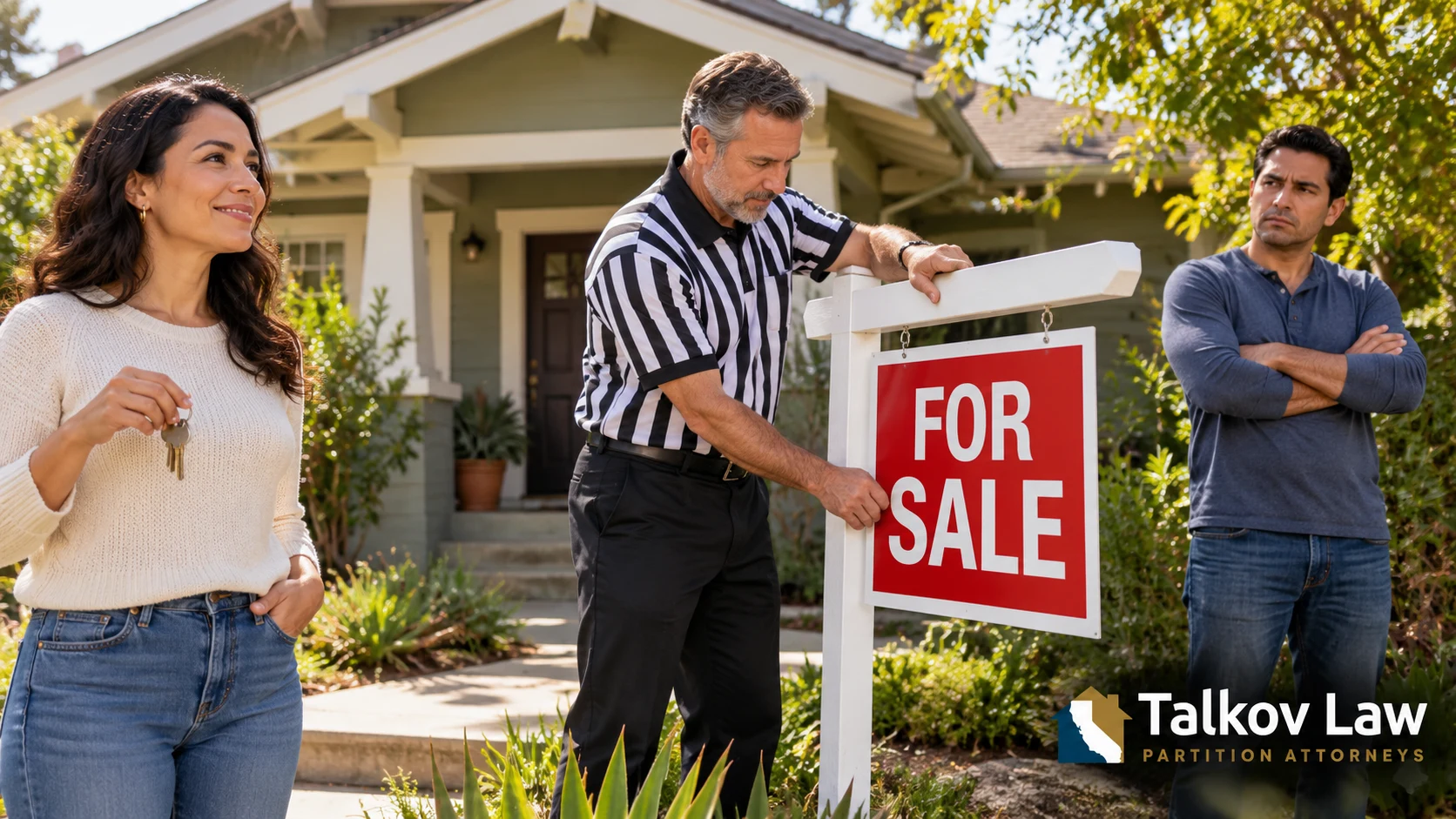
California co-owners can sell by agreement, complete a buyout, or use a partition action when an owner refuses. Learn the steps, costs, and timing.
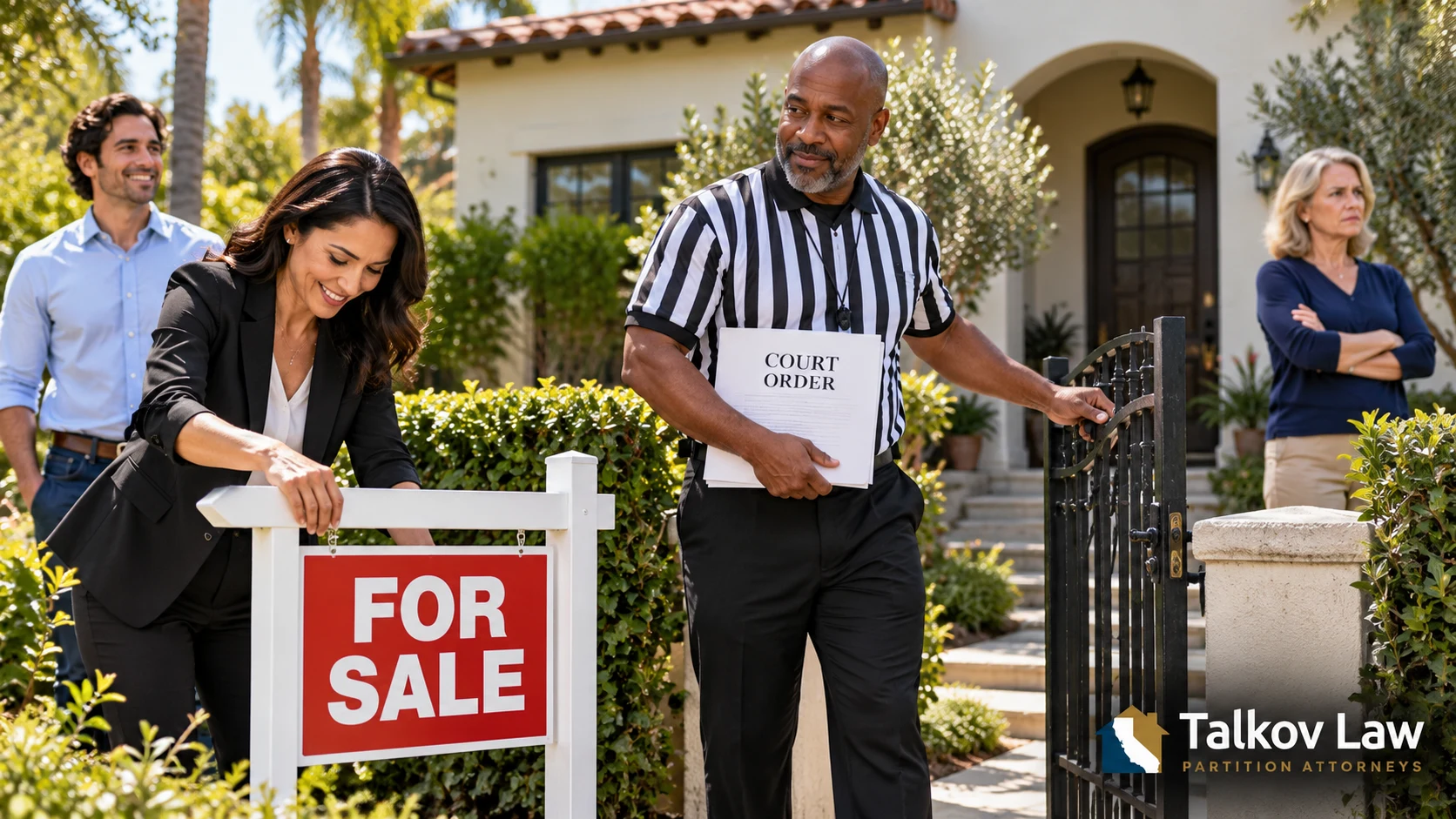
Co-owners of real estate in California have an absolute legal right to partition the property, thereby causing the property to be sold and the proceeds distributed.
150+ Five-Star Reviews Across Our California Offices.
Read our reviews →
Representing co-owners statewide. Find your nearest Talkov Law office.
10880 Wilshire Blvd Ste 1101
Los Angeles, CA 90024
4000 MacArthur Blvd Ste 655
Newport Beach, CA 92660
3610 Central Ave, Ste 400
Riverside, CA 92506
500 Capitol Mall, Ste 2350
Sacramento, CA 95814
11622 El Camino Real Ste 100
San Diego, CA 92130
50 California Street 15th Floor
San Francisco, CA 94111
99 S. Almaden Blvd Ste 600
San Jose, CA 95113
Partition Law Resources
Practical guides from attorneys who focus exclusively on California partition actions.
The information on this site, including the Talkov Law Blog, is intended for general information purposes only. By using this site, you agree that any information contained in the site does not constitute legal, financial or any other form of professional advice. Information on this site may be changed without notice and is not guaranteed to be complete, accurate, correct or up-to-date.







