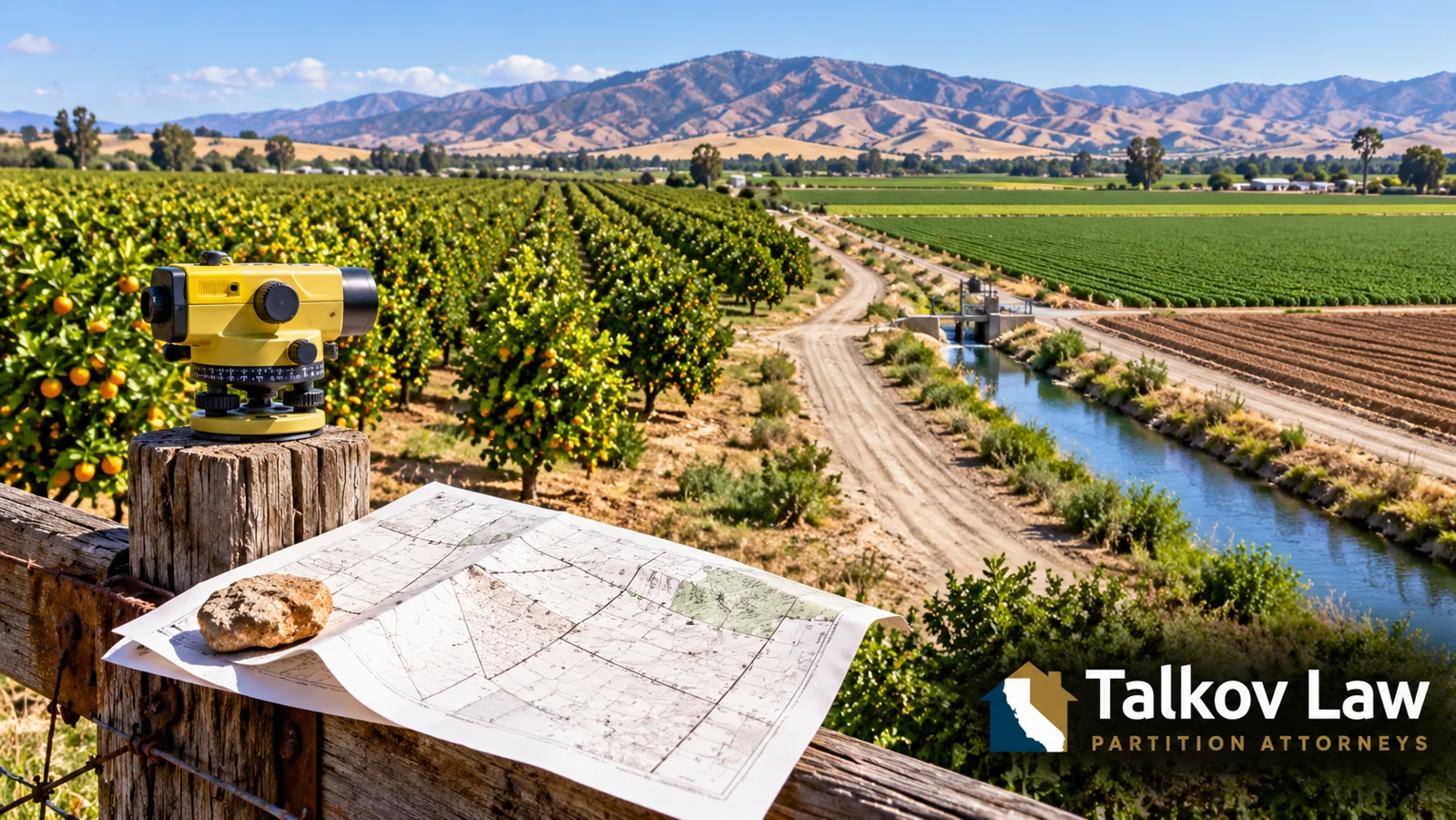
Are There Any Specific Rules for Partitioning Agricultural Land?
Agricultural land brings its own challenges in a partition action. Here is what co-owners of California farmland should know.
How a California court decides whether to divide, sell, or appraise co-owned property.
Agricultural land brings its own challenges in a partition action. Here is what co-owners of California farmland should know.

Yes. If your family or another co-owner won’t sell the cabin or beach house, or will only offer a low buyout, a California partition action can end the co-ownership through a court-supervised sale or a buyout at a court-set value.

Usually, yes. Most partitions end with an agreement to sell on the open market, and even sales run by a partition referee generally reach fair market value or better.
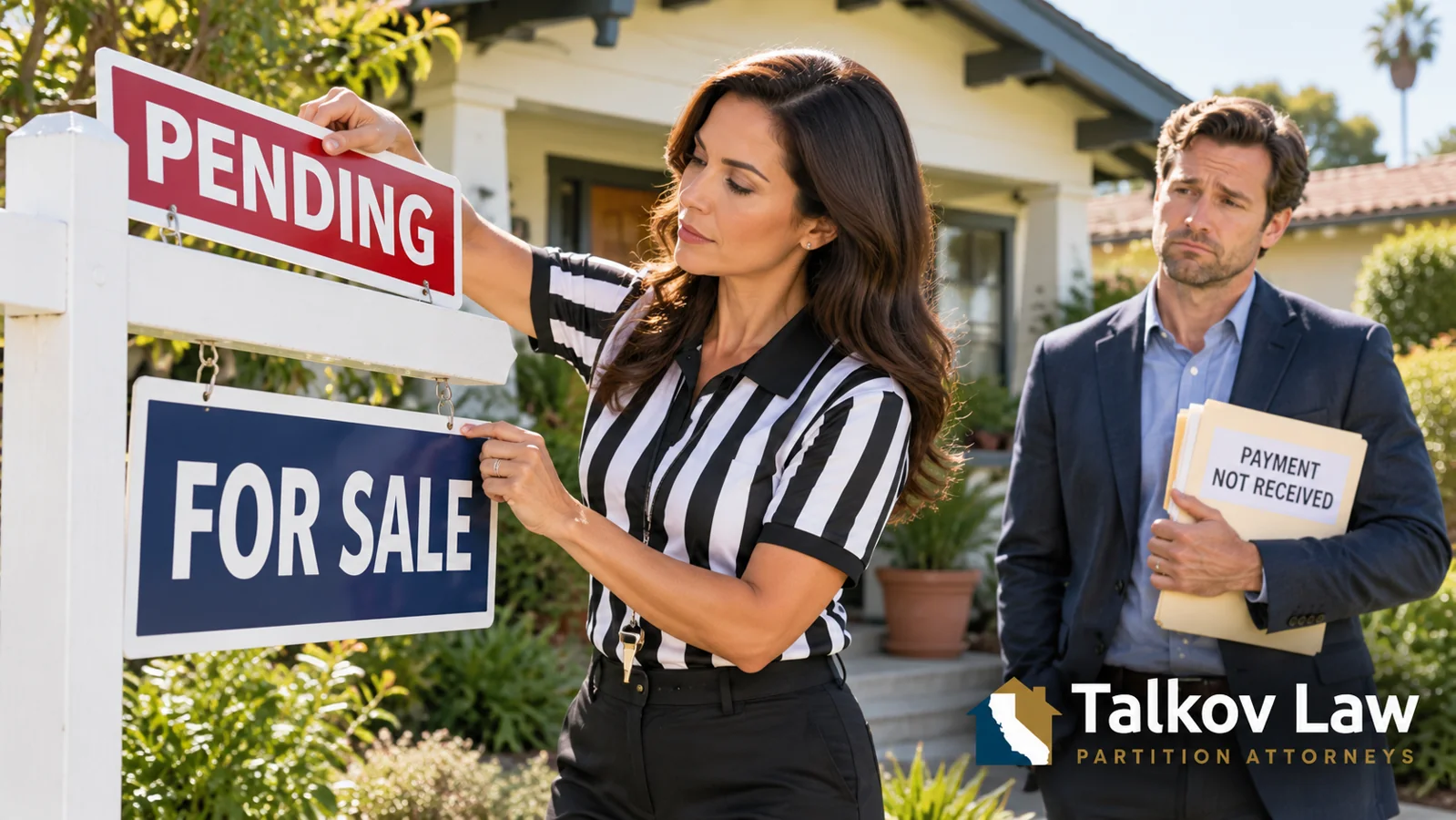
Code of Civil Procedure section 873.760 sets out what a party or the partition referee can do when a buyer fails to pay the sale price after the sale is confirmed.

Code of Civil Procedure section 873.750 gives the court authority to order the partition referee to complete the sale once the sale is confirmed.

Code of Civil Procedure section 873.745 gives the court authority to set, limit, or divide real estate agents’ commissions on a partition sale.

Code of Civil Procedure section 873.980 provides that the procedures for partition by appraisal are cumulative and do not replace other remedies.
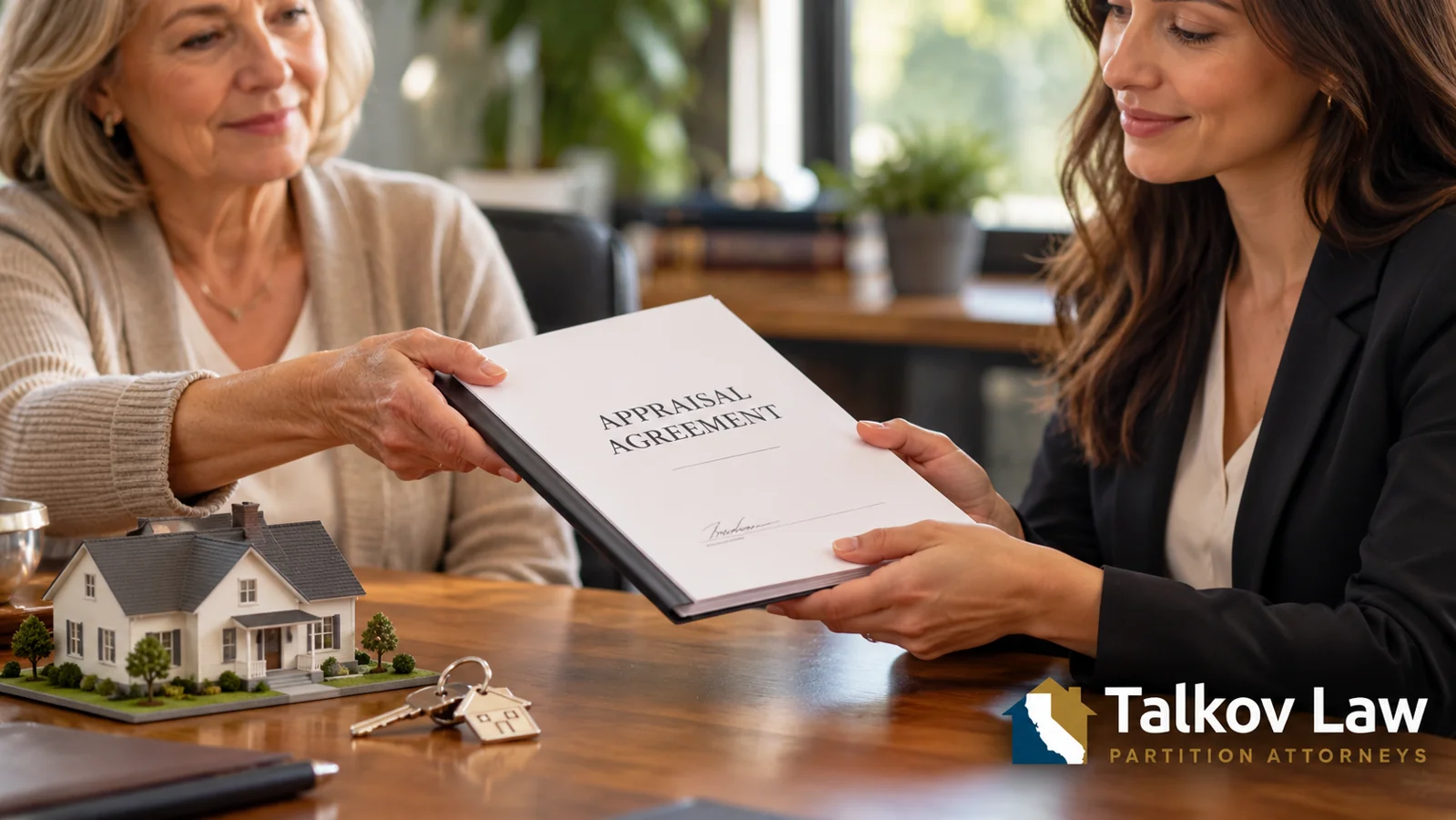
Code of Civil Procedure section 873.970 provides that an agreement between co-owners for a partition by appraisal binds their heirs, executors, administrators, and successors.
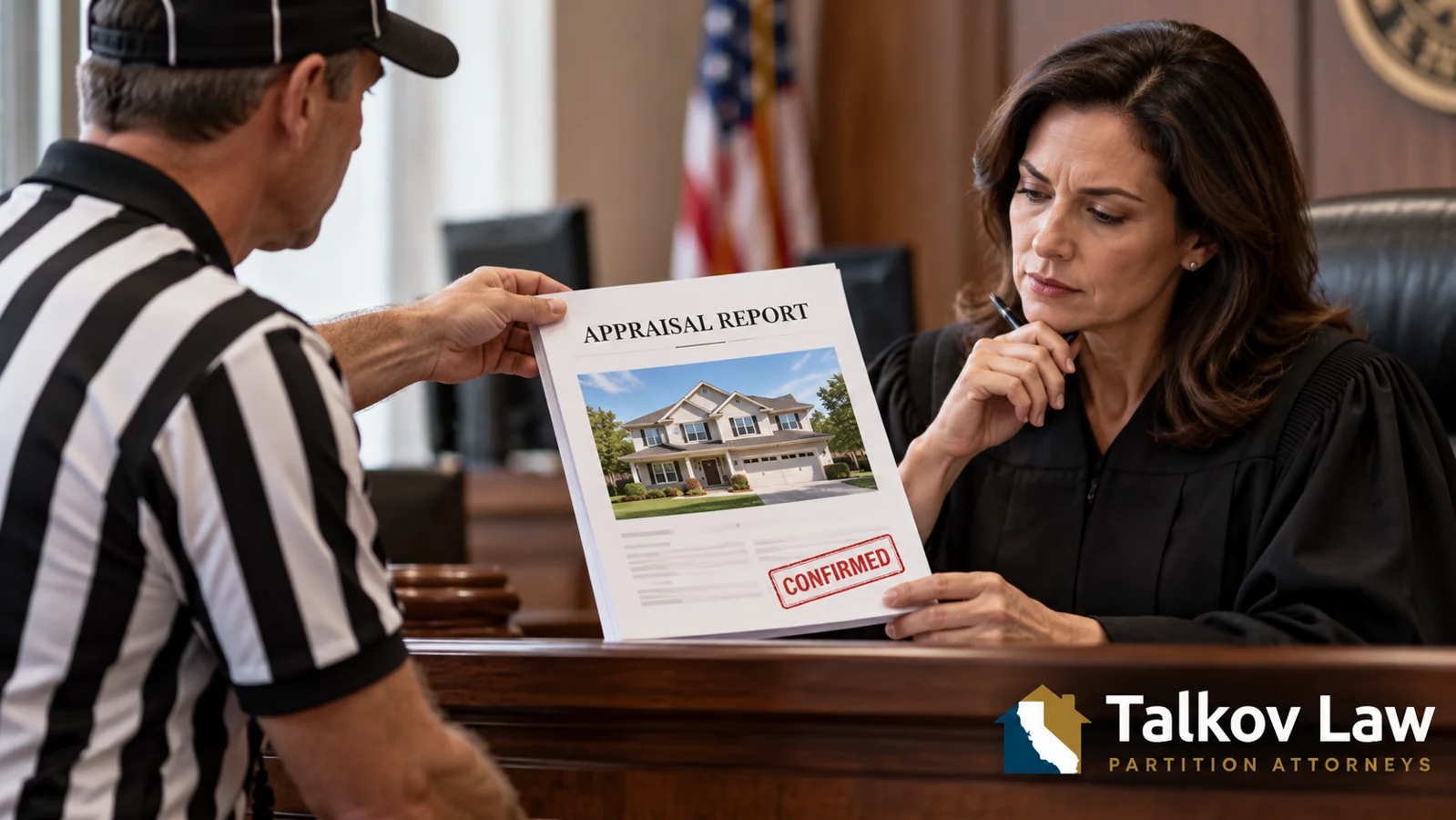
Code of Civil Procedure section 873.960 addresses the hearing at which the court examines and confirms the referee’s report in a partition by appraisal.
Code of Civil Procedure section 873.790 directs the partition referee to execute the conveyance and record it once the terms of the sale are met.
Code of Civil Procedure section 874.323 explains how California’s Partition of Real Property Act modifies, limits, and supersedes the federal Electronic Signatures in Global and National Commerce Act.

Code of Civil Procedure section 873.780 lets the court make orders about closing a partition sale after confirmation, including escrow and adjustments to the terms.

Code of Civil Procedure section 873.080 gives the partition referee authority to set aside part of the property for roads or other ways, or to close them, when selling or dividing the property.
Code of Civil Procedure section 874.240 makes a conveyance or transfer by the partition referee binding and conclusive in the same manner as a judgment.
Code of Civil Procedure section 873.280 sets what a partition referee’s report must contain and who must receive written notice of it.
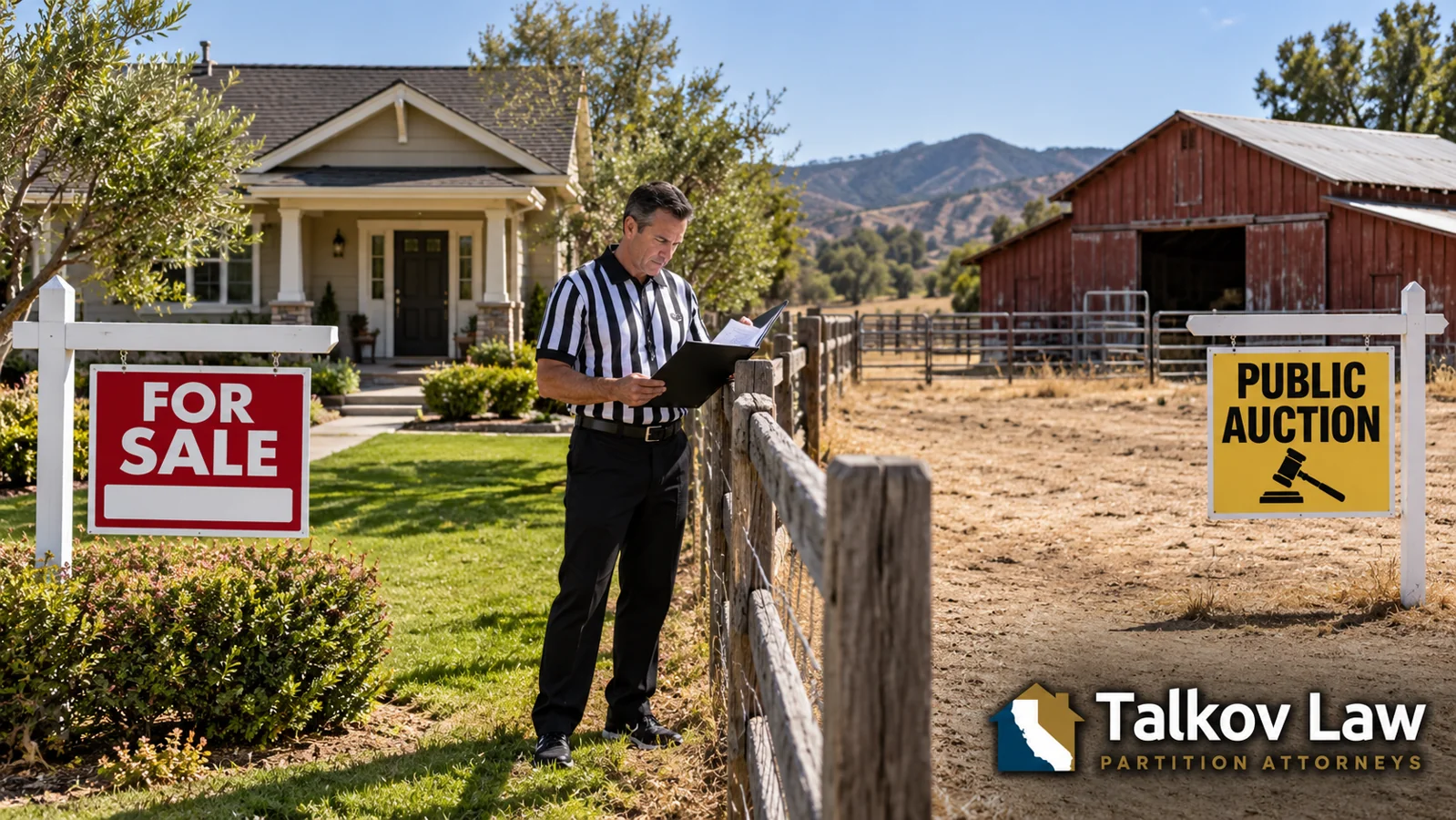
Code of Civil Procedure section 873.530 allows part of a property to be sold at public auction and part at private sale if that is more beneficial to the parties.
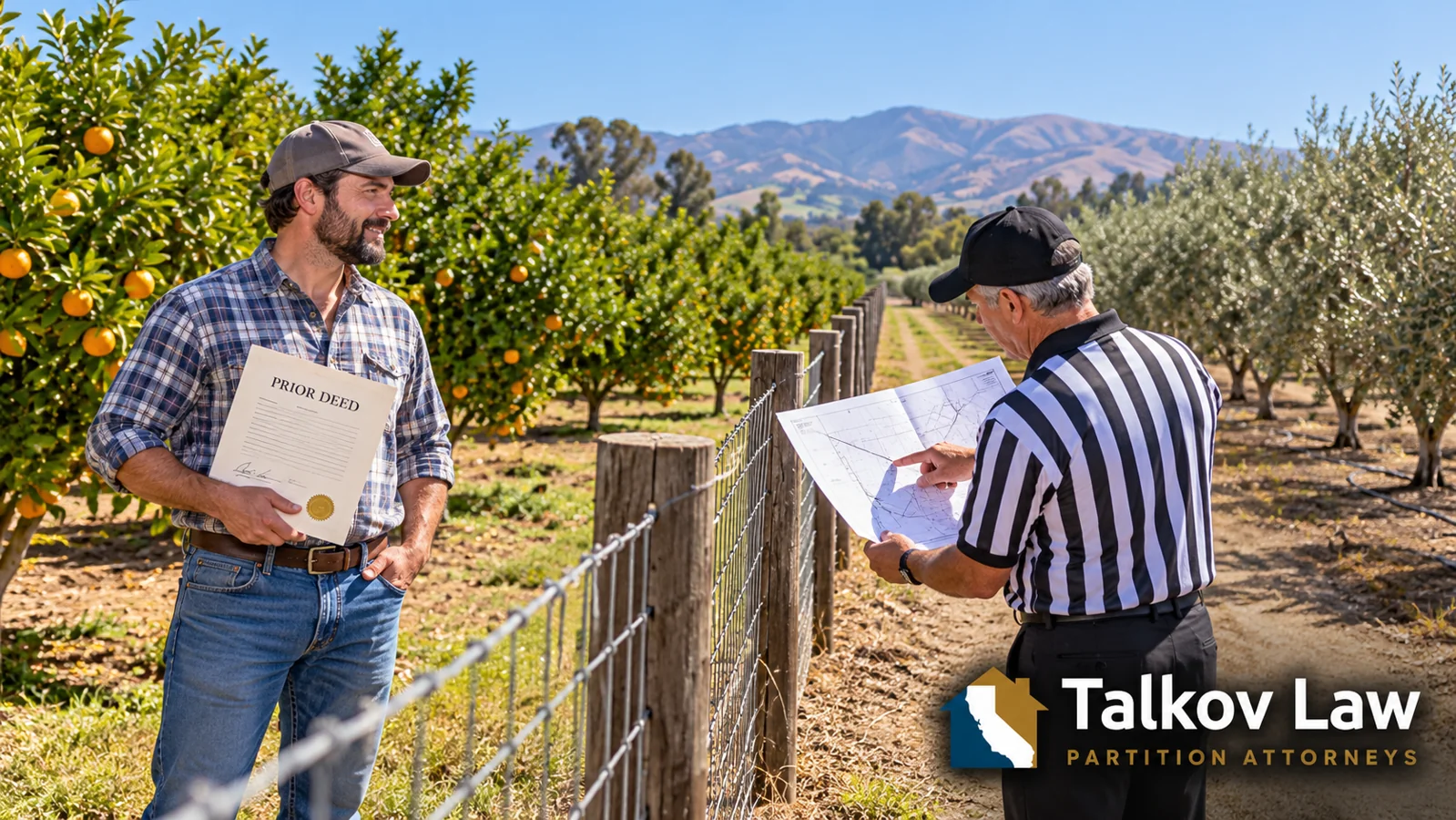
Code of Civil Procedure section 873.230 explains what happens in a partition in kind when a co-owner transferred part of the property to a buyer before the partition action was filed.
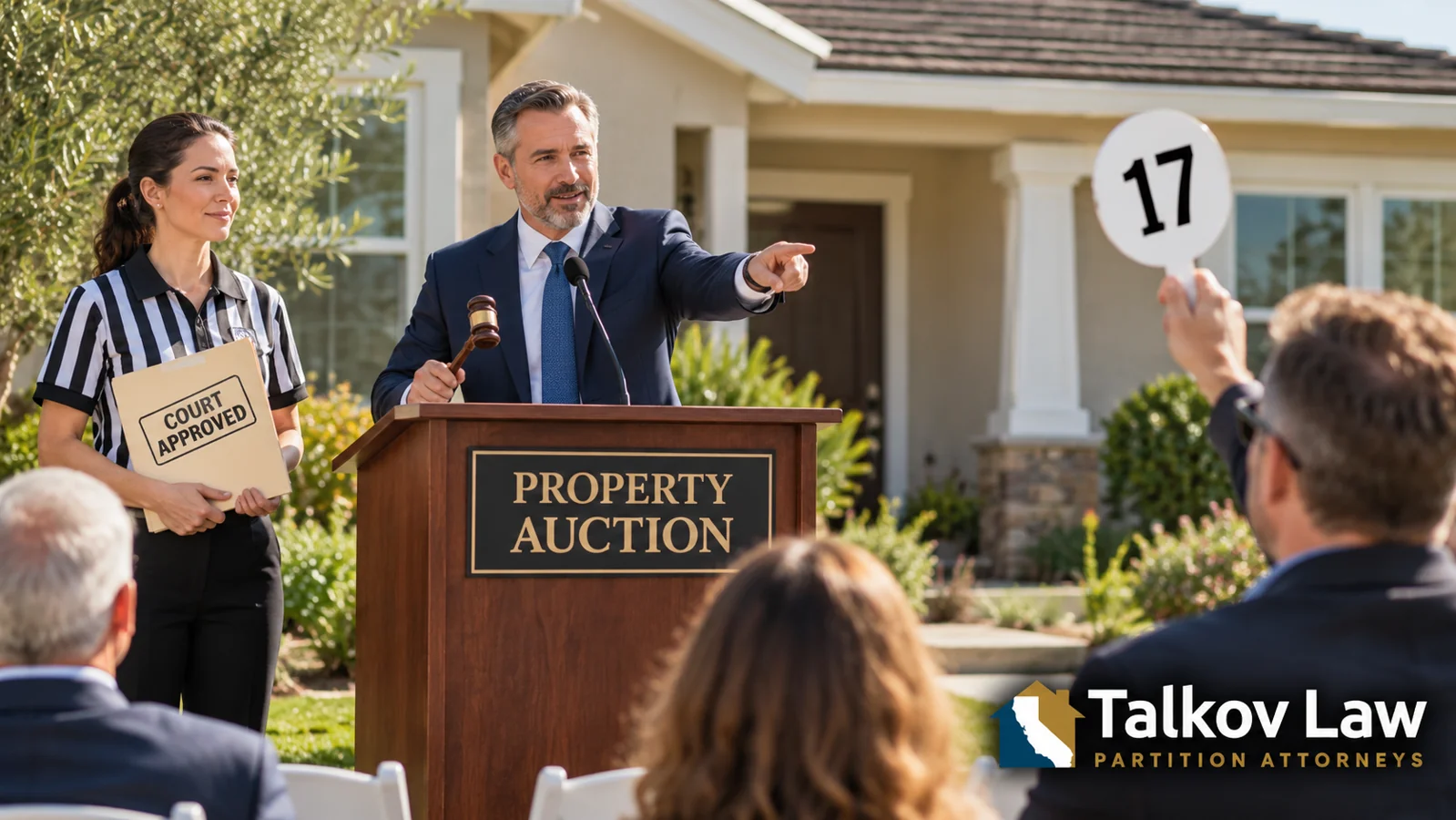
Code of Civil Procedure section 873.140 lets a partition referee, with the court’s approval, hire an auctioneer in a partition by sale.
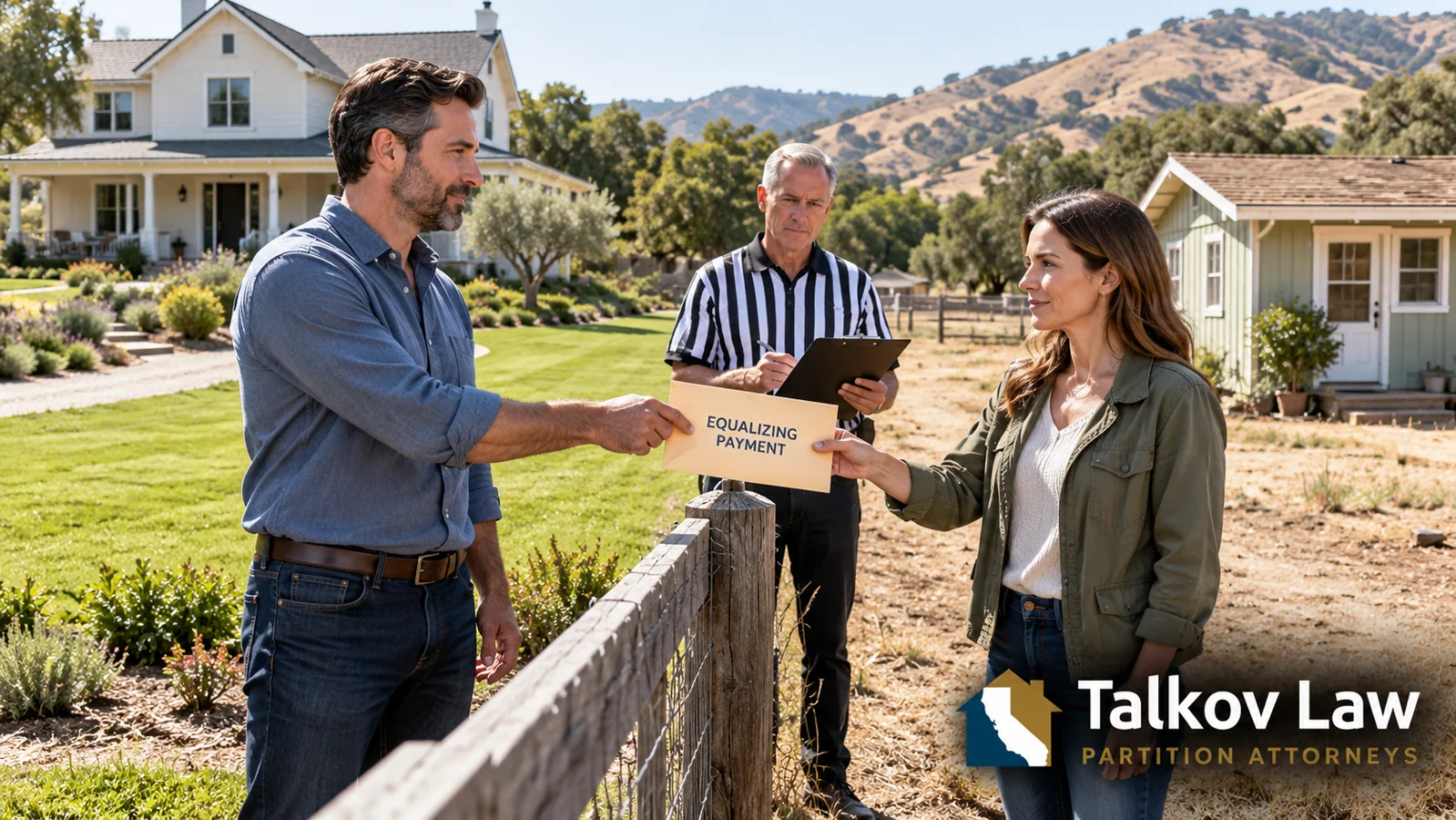
Code of Civil Procedure section 873.250 lets the court order owelty, a compensating payment between co-owners, when a partition in kind can’t divide the property equally.
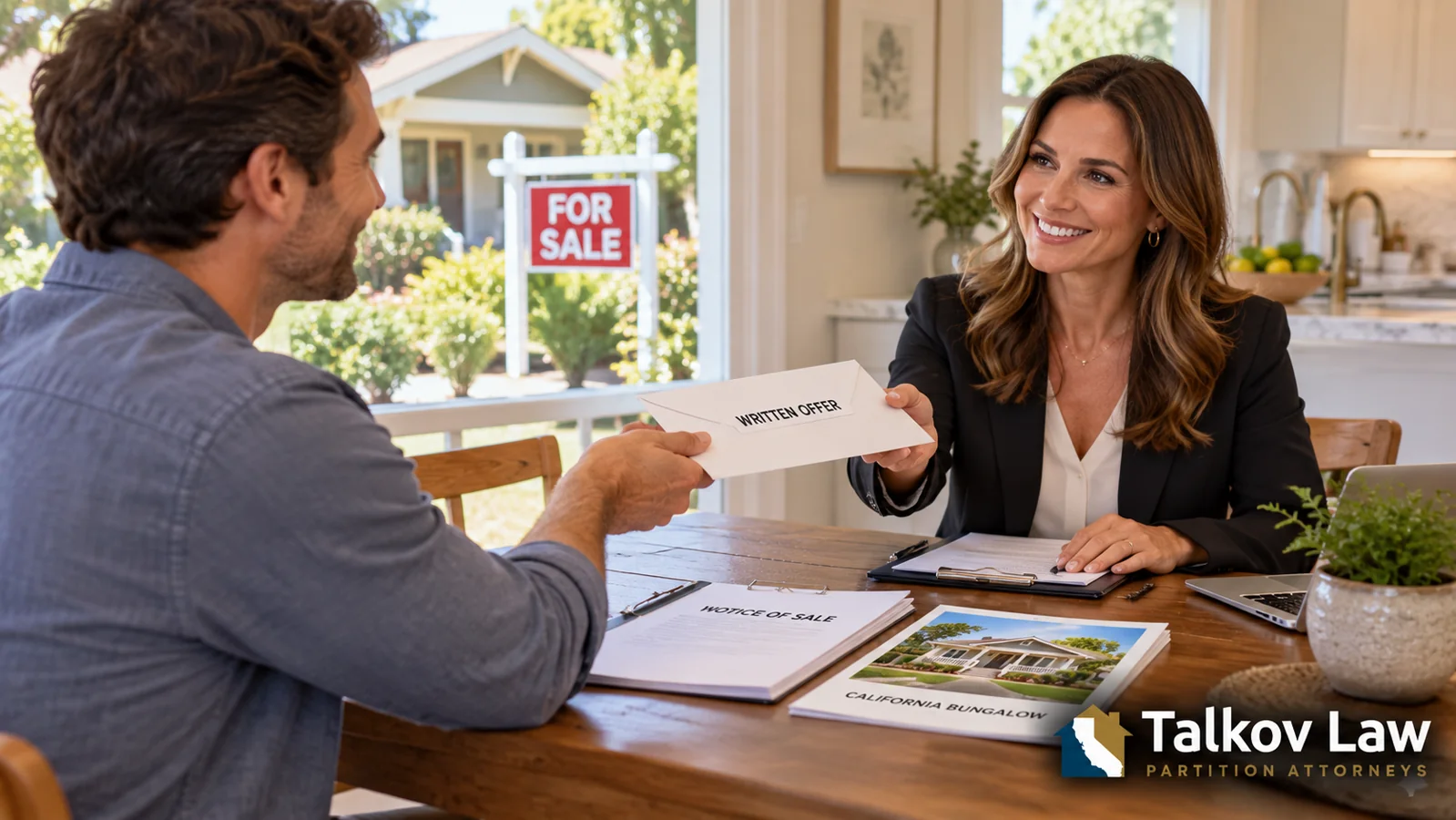
Code of Civil Procedure section 873.680 sets the procedure for a private sale in a partition action, including when the sale may be made and how bids are received.
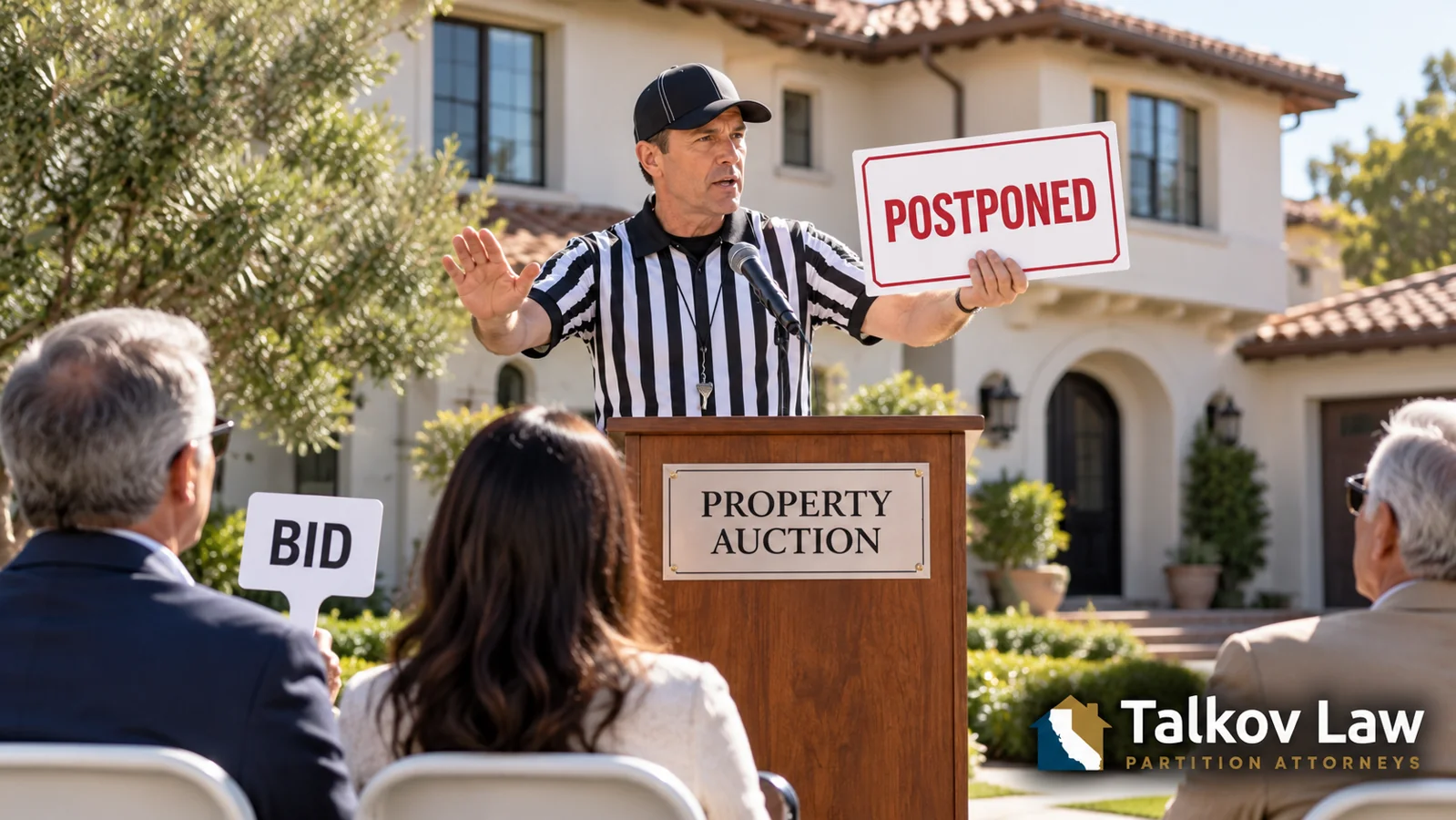
Code of Civil Procedure section 873.670 sets the rules for a partition sale at public auction, including where it is held and how it can be postponed.
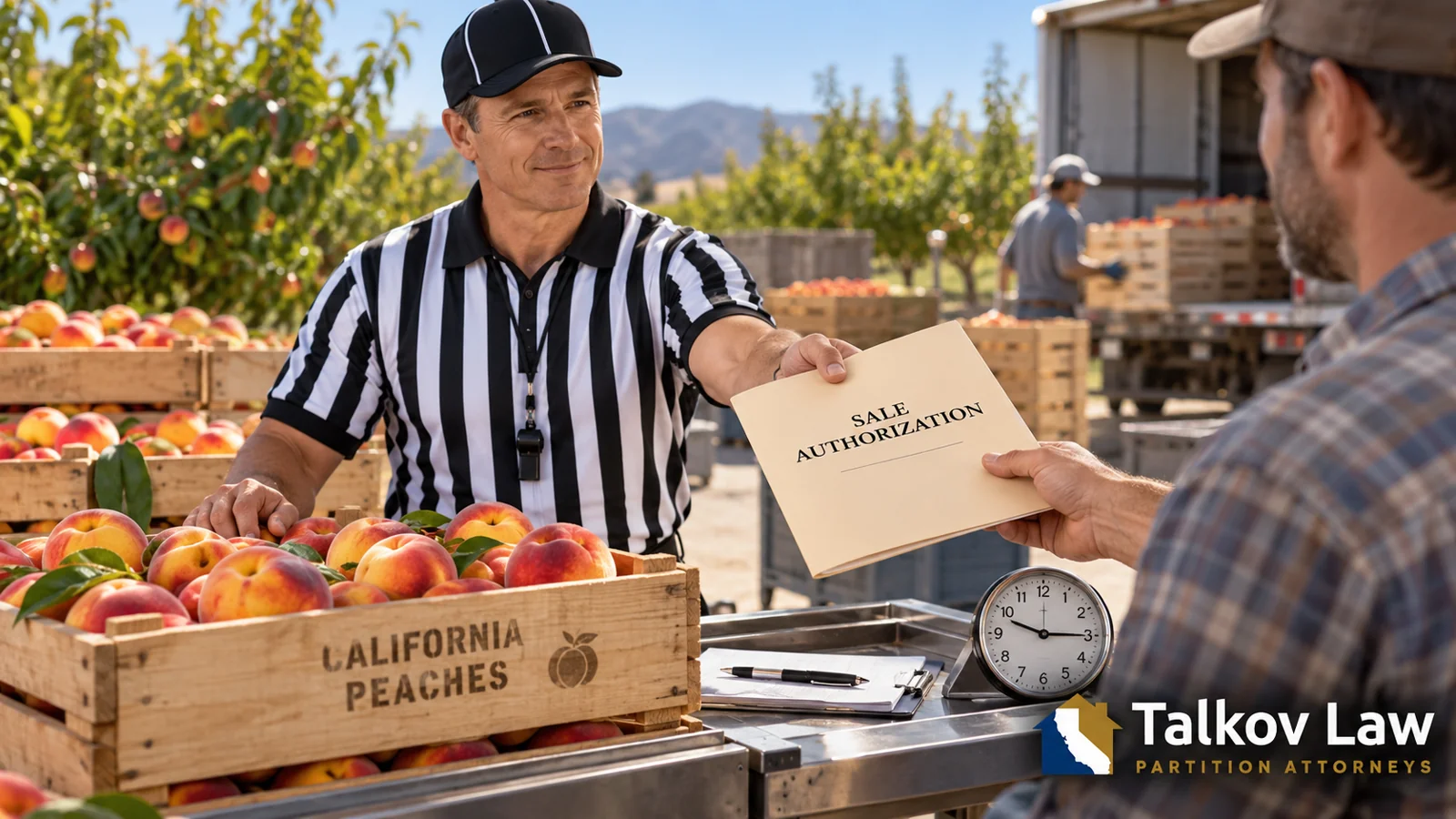
Code of Civil Procedure section 873.660 lets the court order a fast sale of listed stocks and bonds, and of perishable or costly-to-keep personal property, with title passing without court confirmation.

Code of Civil Procedure section 873.650 directs the court to set the contents of the notice of sale in a partition action.
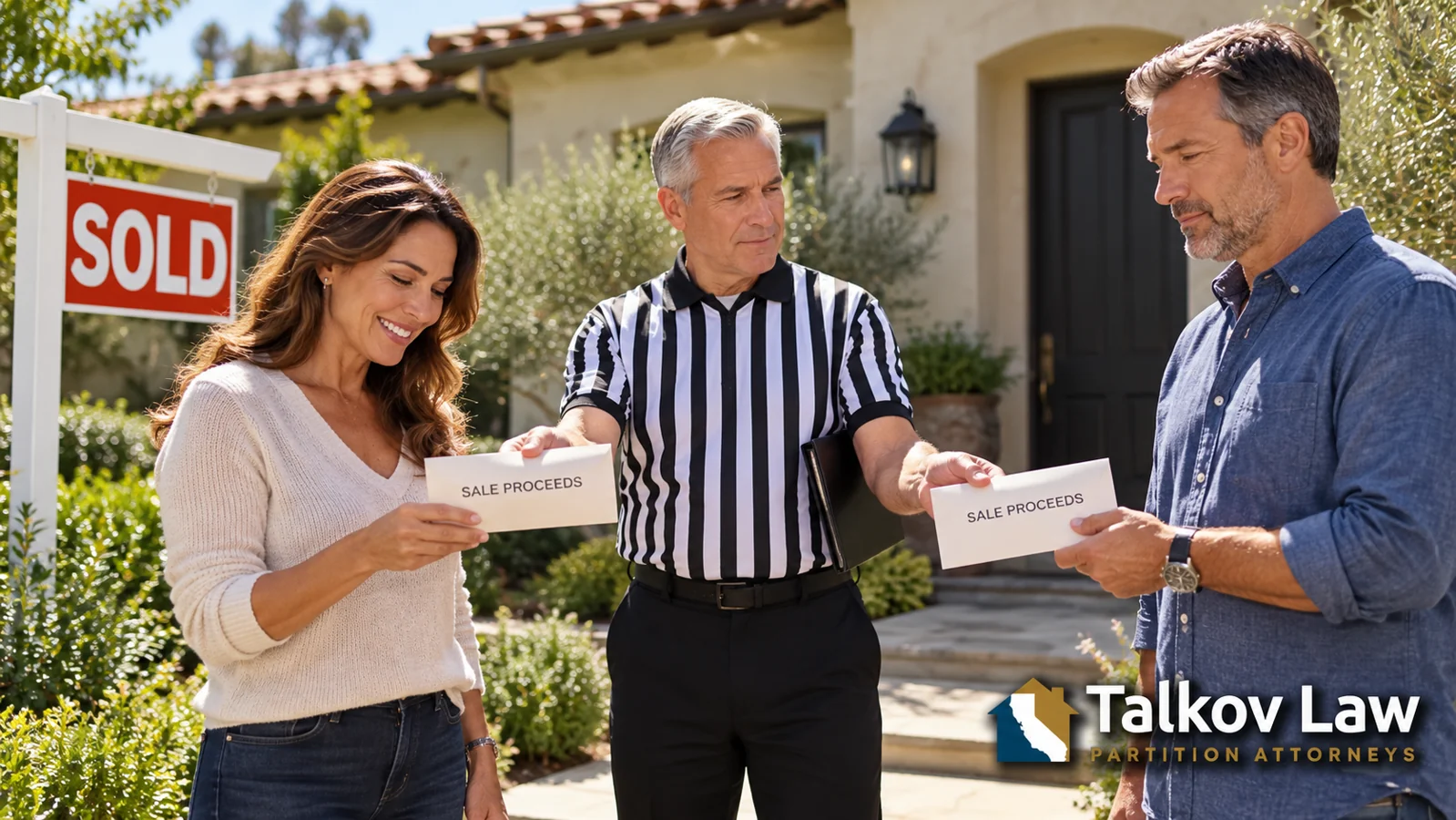
A partition action is a lawsuit in which a California court ends the co-ownership of real property by dividing it or ordering it sold and dividing the proceeds. A co-owner generally can force a sale without the other co-owners’ consent.

Code of Civil Procedure section 873.690 lists who may not buy property sold in a partition action and protects good-faith buyers.
150+ Five-Star Reviews Across Our California Offices.
Read our reviews →
Representing co-owners statewide. Find your nearest Talkov Law office.
10880 Wilshire Blvd Ste 1101
Los Angeles, CA 90024
4000 MacArthur Blvd Ste 655
Newport Beach, CA 92660
3610 Central Ave, Ste 400
Riverside, CA 92506
500 Capitol Mall, Ste 2350
Sacramento, CA 95814
11622 El Camino Real Ste 100
San Diego, CA 92130
50 California Street 15th Floor
San Francisco, CA 94111
99 S. Almaden Blvd Ste 600
San Jose, CA 95113
Partition Law Resources
Practical guides from attorneys who focus exclusively on California partition actions.
The information on this site, including the Talkov Law Blog, is intended for general information purposes only. By using this site, you agree that any information contained in the site does not constitute legal, financial or any other form of professional advice. Information on this site may be changed without notice and is not guaranteed to be complete, accurate, correct or up-to-date.







