
What to Do If a Majority Owner Refuses a Partition Action
A majority owner cannot stop a partition. Even a minority co-owner in California has the right to force a sale through a partition action.
A majority owner cannot stop a partition. Even a minority co-owner in California has the right to force a sale through a partition action.

A recession does not affect your right to partition, but it can affect when you should file. Home values, interest rates, and mortgage obligations all shape the best timing.
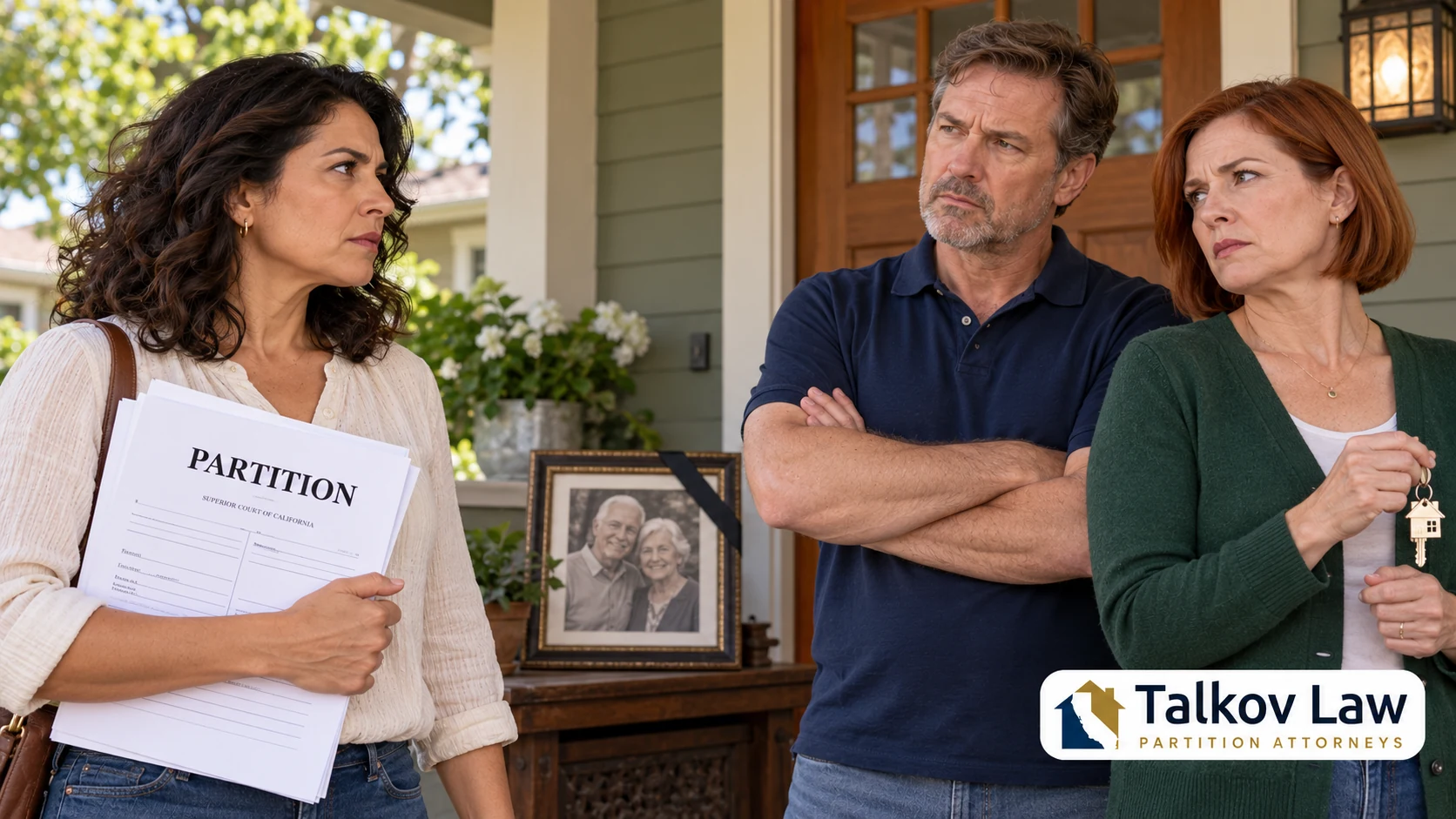
No. Many heirs assume everyone must agree before inherited property can be sold, but in California one heir can force a sale through a partition action.
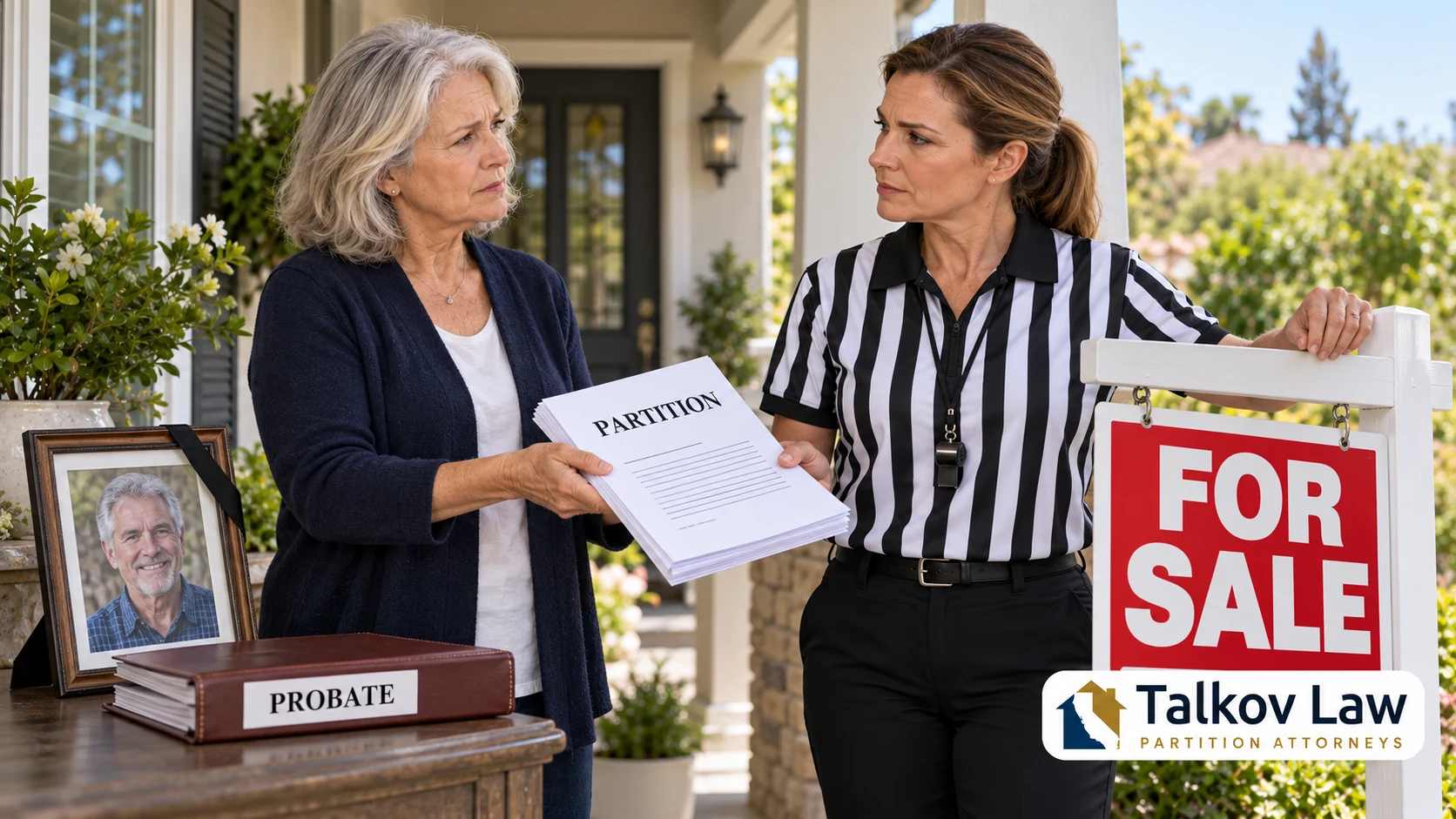
You don’t have to wait for probate. A California partition action can proceed by joining the deceased co-owner’s representative, successor, or estate, so the property can still be sold.

A co-owner who hoards can fill a property with clutter or hazards that cut its value. A California partition action can force a sale and address the cleanup.
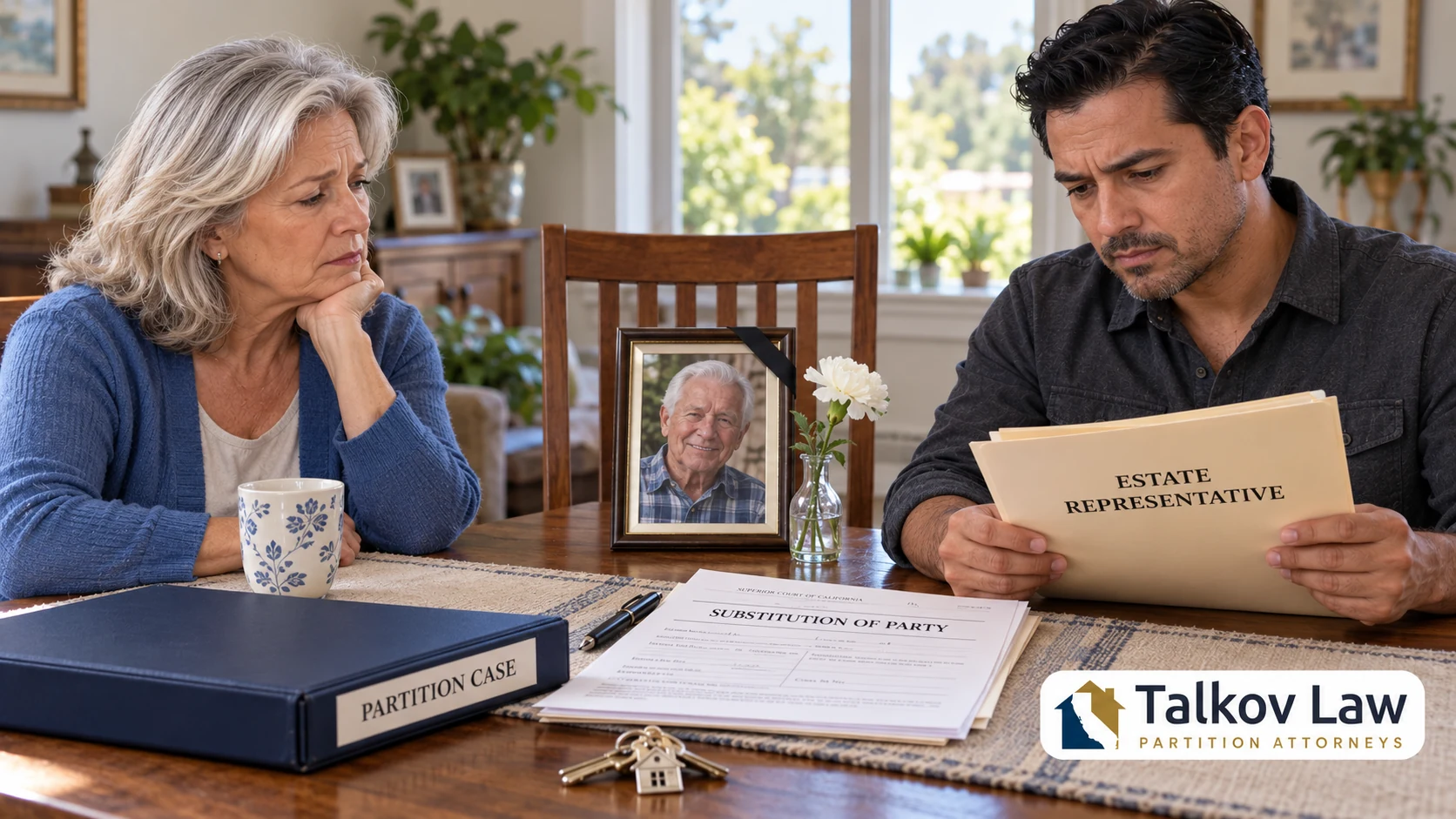
When a co-owner dies mid-case, your next steps depend on whether they had an attorney, how they held title, and where the case stands. Here is what to do, including when the co-owner was a trustee.

Wildfires often leave co-owners disagreeing about whether to rebuild or sell and how to split insurance money. A partition action can resolve these disputes.

No. Having both names on the deed does not mean your ex automatically gets half. In a California partition action, the co-owner who paid more is generally repaid first, with one major exception.

Parents and children often hold title as joint tenants so the property passes automatically to the survivor. But a joint tenancy can be severed, which can upend what the child expected.

Many heirs of co-owned California homes want to sell and move somewhere their money goes further. When a co-owner won’t agree, a partition action can force the sale.

Representing co-owners statewide. Find your nearest Talkov Law office.
Practical guides from attorneys who focus exclusively on California partition actions.
The information on this site, including the Talkov Law Blog, is intended for general information purposes only. By using this site, you agree that any information contained in the site does not constitute legal, financial or any other form of professional advice. Information on this site may be changed without notice and is not guaranteed to be complete, accurate, correct or up-to-date.







