
How to Sell Property After Co-owner’s Death
When a co-owner dies, the remaining co-owners in California can force a sale through a partition action. They don’t need to wait for probate or a successor trustee.
When a co-owner dies, the remaining co-owners in California can force a sale through a partition action. They don’t need to wait for probate or a successor trustee.

When you sell your share of a co-owned house, should you stay on the mortgage or get your name removed? Here are the risks and factors to weigh.
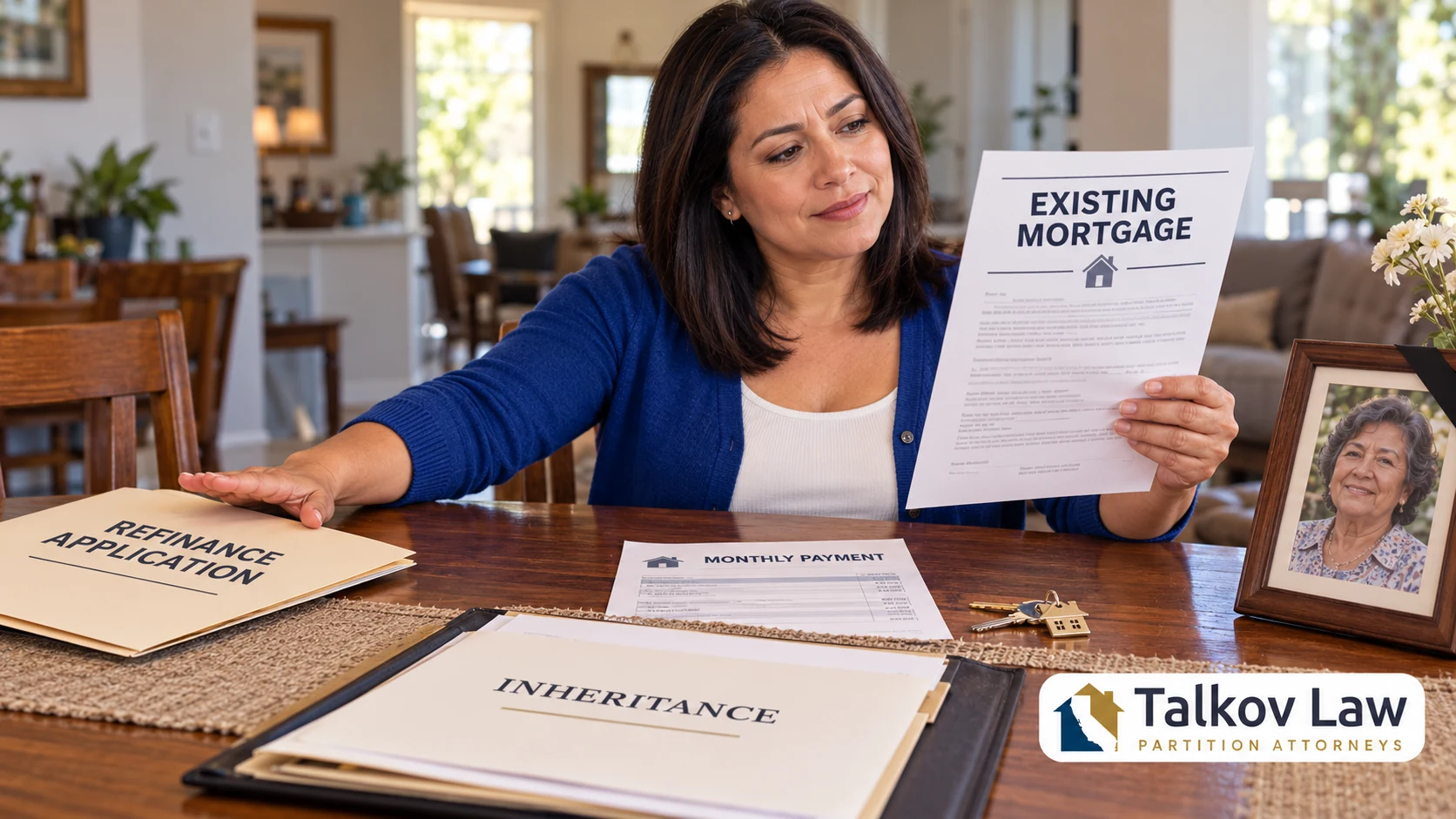
Generally, no. If you inherit a house or a share of one, you usually don’t need the lender’s approval to keep paying the loan, because the due on sale clause typically doesn’t apply to transfers at death.

Yes. California Code of Civil Procedure section 874.317 lets a co-owner buy out the co-owners who requested a partition by sale, at a price based on the court’s valuation.
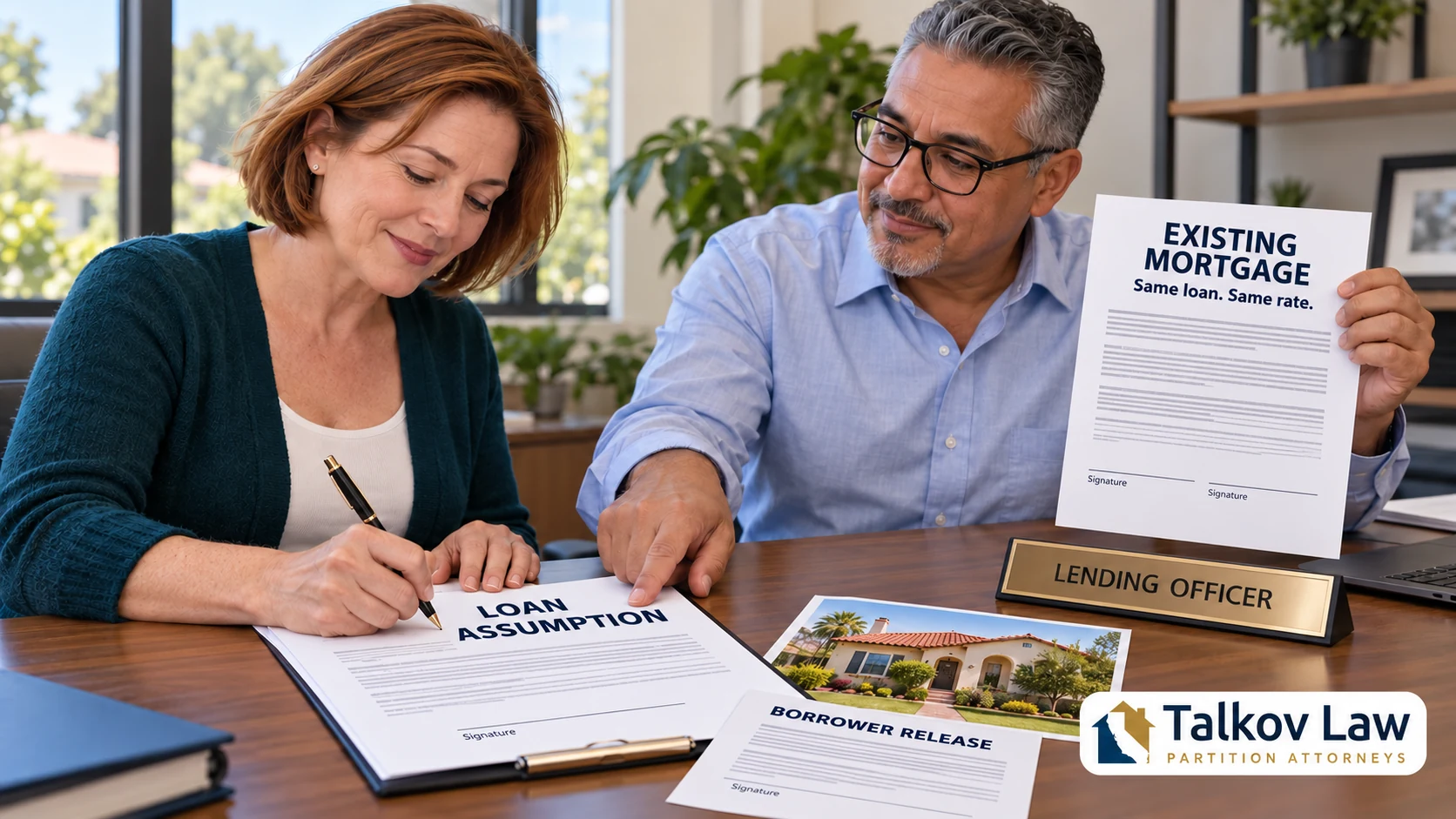
Being stuck on a mortgage with an uncooperative co-owner is hard. Here are the ways to separate yourself from the loan, including a refinance, a buyout, or a partition action.
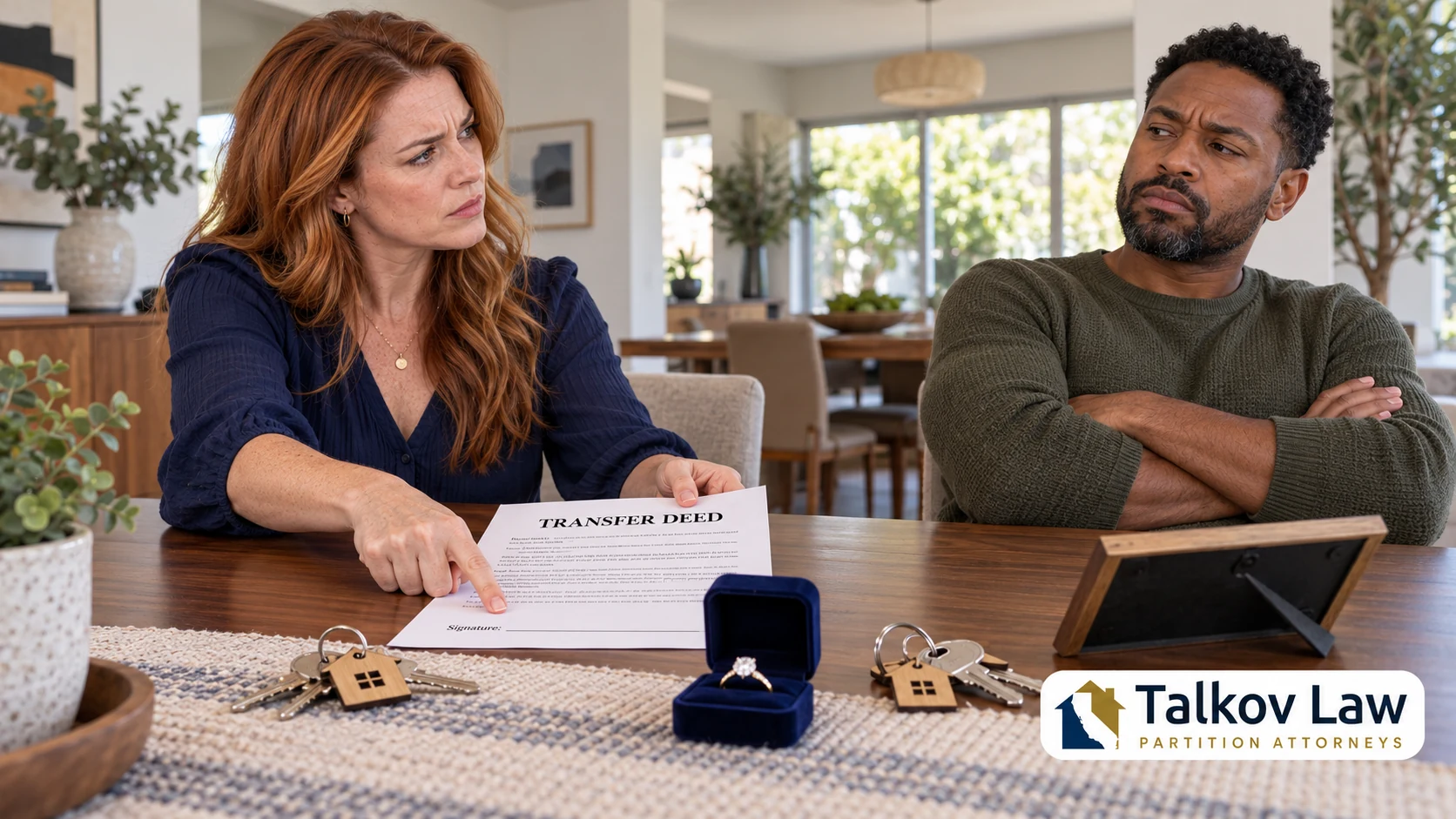
When an unmarried couple splits after buying a home, one partner usually can’t simply remove the other from title. Nearly half of partition cases involve unmarried couples, and a partition action can force a sale or buyout.

A co-owner who stops paying the mortgage is often an early sign of a larger dispute. A partition action can force a resolution and credit you for the payments you covered.
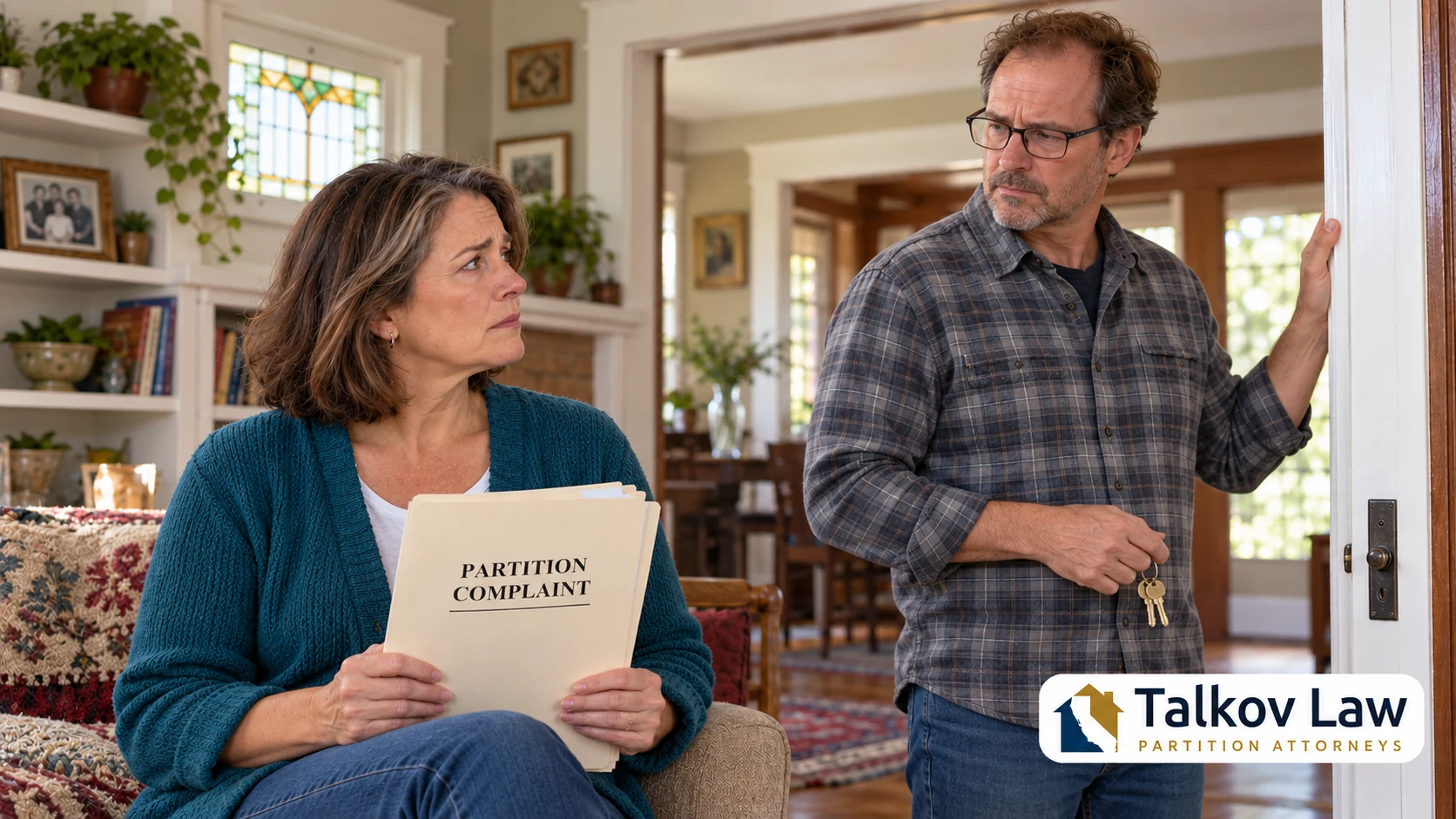
Heirs often disagree about inherited property, such as when one moves in and the others want to sell. If talks fail, a partition action may be the only way to get your share.
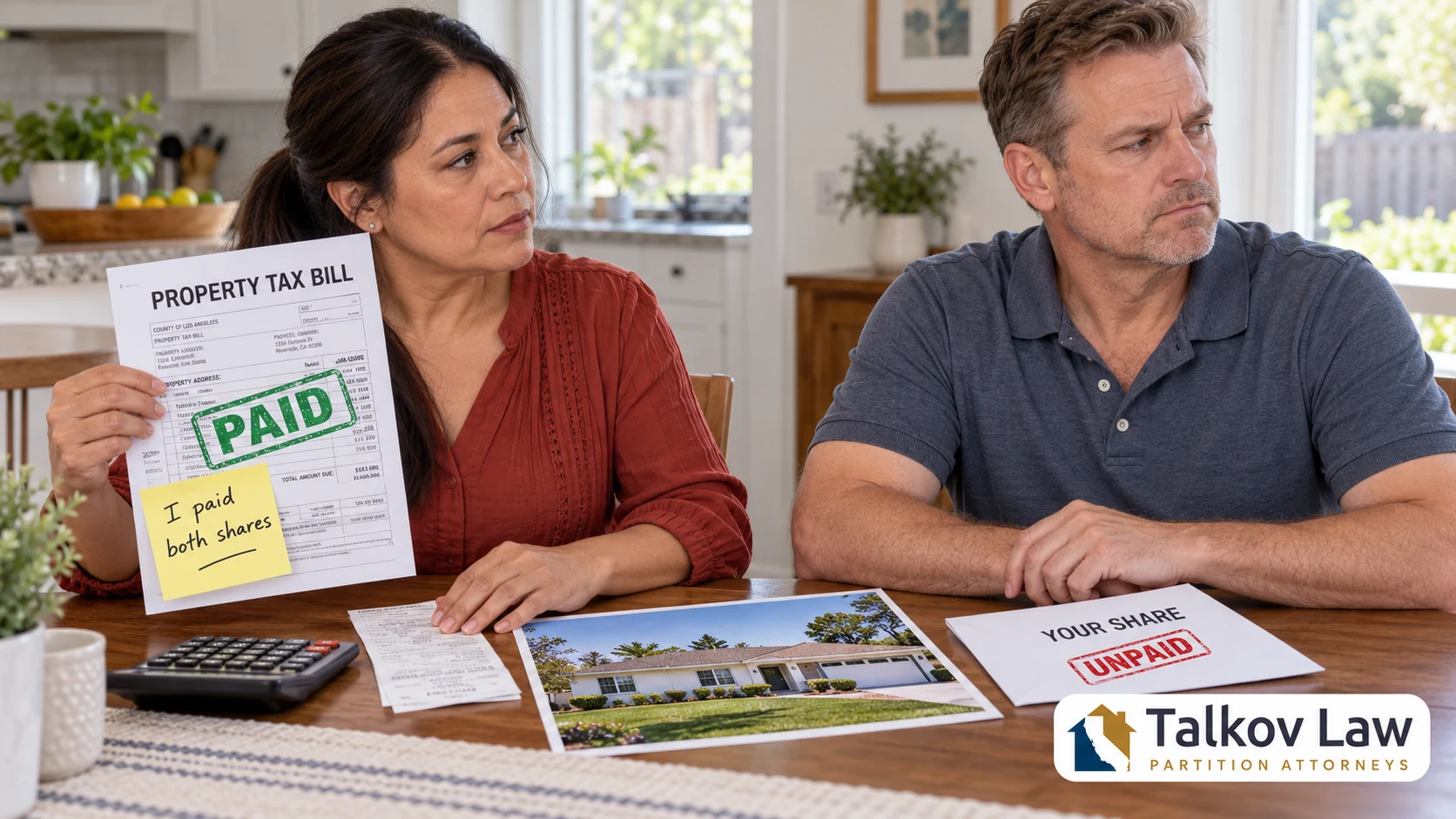
One co-owner often ends up paying all the property taxes, especially when another co-owner lives there. A partition action can credit the paying co-owner and end the dispute.
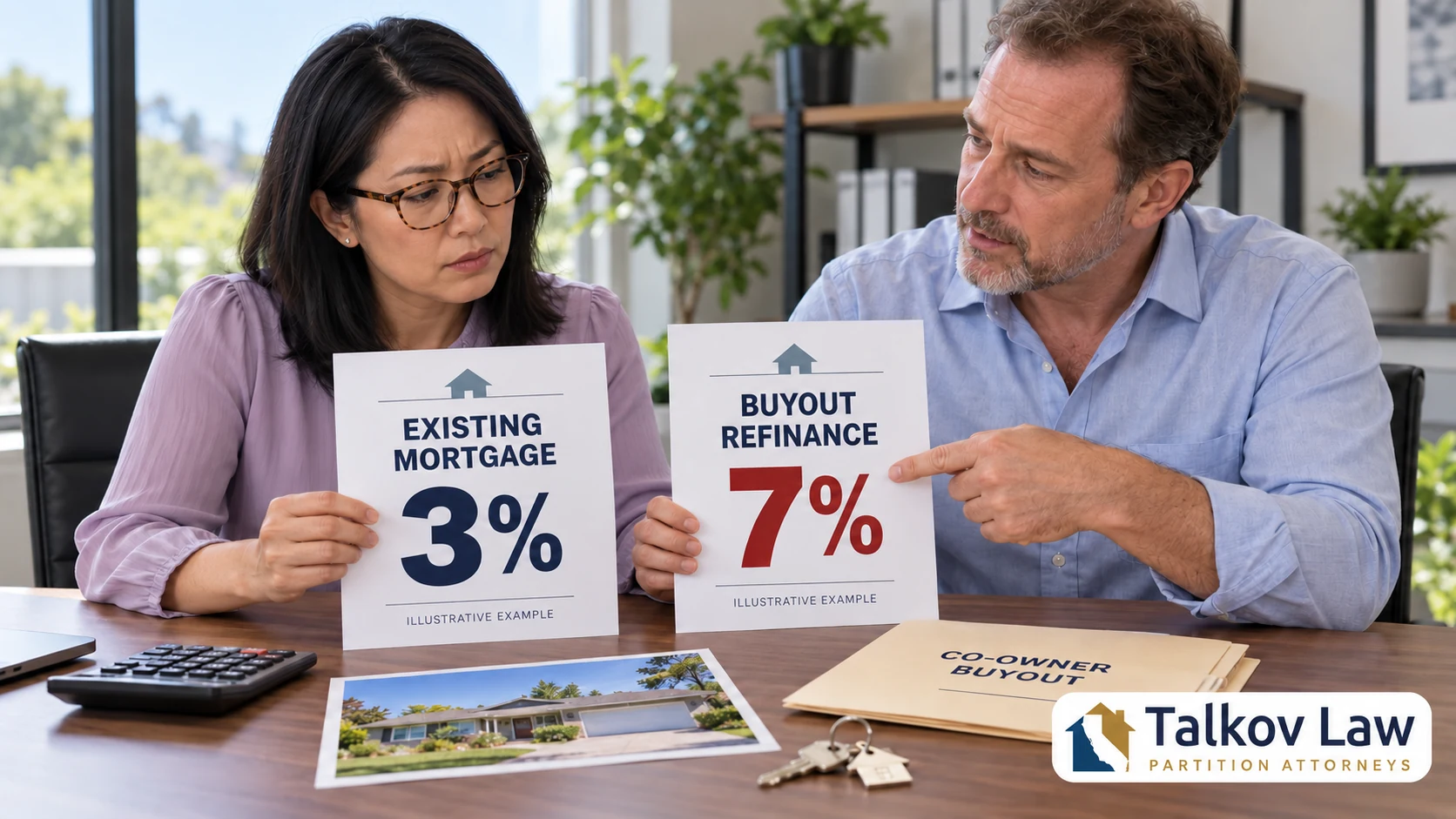
Higher interest rates make co-owner buyouts harder, because the buying co-owner must borrow at a higher cost. That changes partition strategy for both sides.

Representing co-owners statewide. Find your nearest Talkov Law office.
Practical guides from attorneys who focus exclusively on California partition actions.
The information on this site, including the Talkov Law Blog, is intended for general information purposes only. By using this site, you agree that any information contained in the site does not constitute legal, financial or any other form of professional advice. Information on this site may be changed without notice and is not guaranteed to be complete, accurate, correct or up-to-date.







