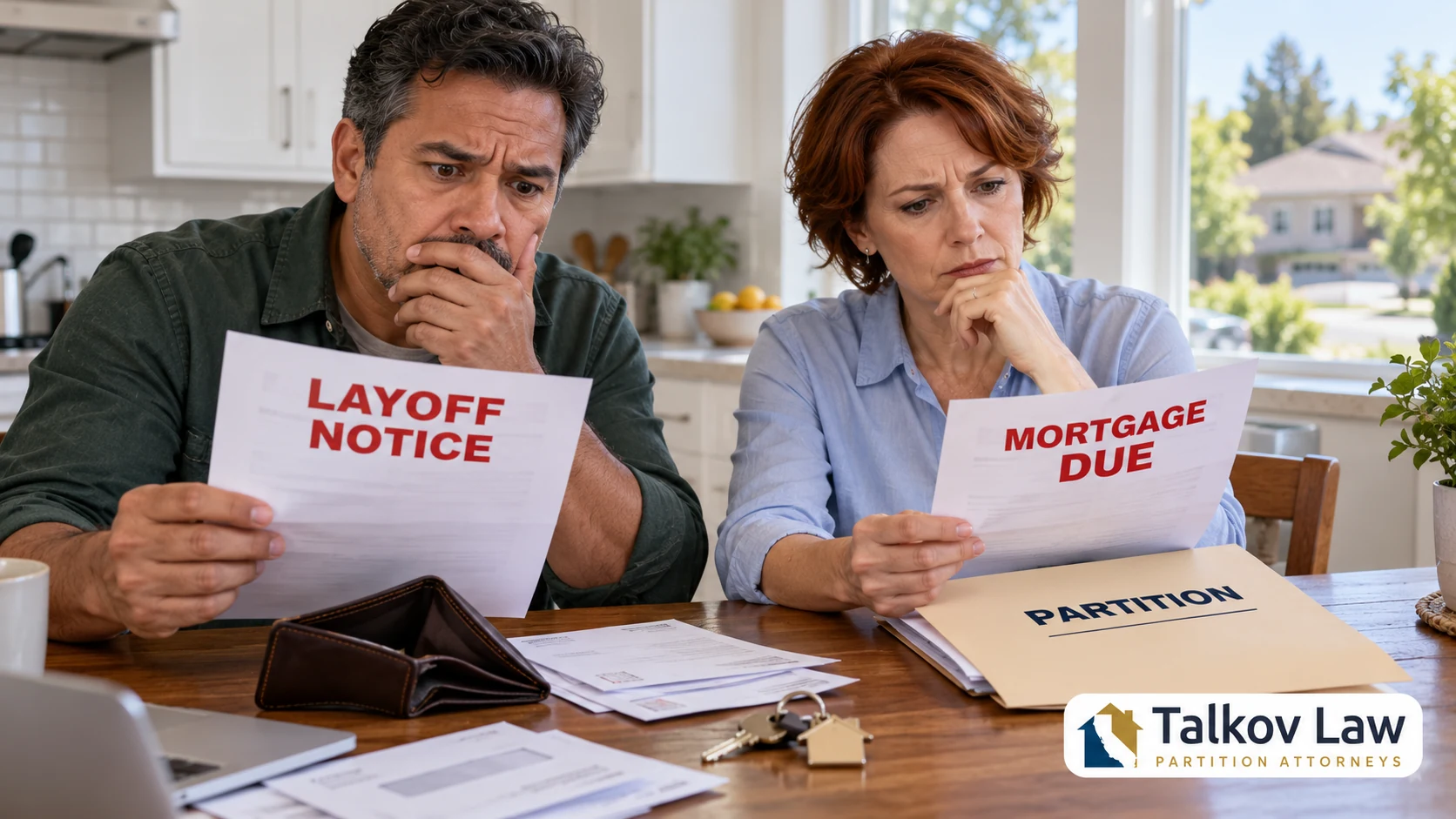
Want to Sell Before a Recession, but Your Co-Owner Refuses?
A recession does not affect your right to partition, but it can affect when you should file. Home values, interest rates, and mortgage obligations all shape the best timing.
A recession does not affect your right to partition, but it can affect when you should file. Home values, interest rates, and mortgage obligations all shape the best timing.

When co-owners agree to sell but can’t agree on a listing agent, co-listing lets each co-owner choose an agent they trust to handle the sale together.

A co-owner who paid more than their share of expenses or improvements can be reimbursed in a partition action. California courts use two methods to calculate those offsets.
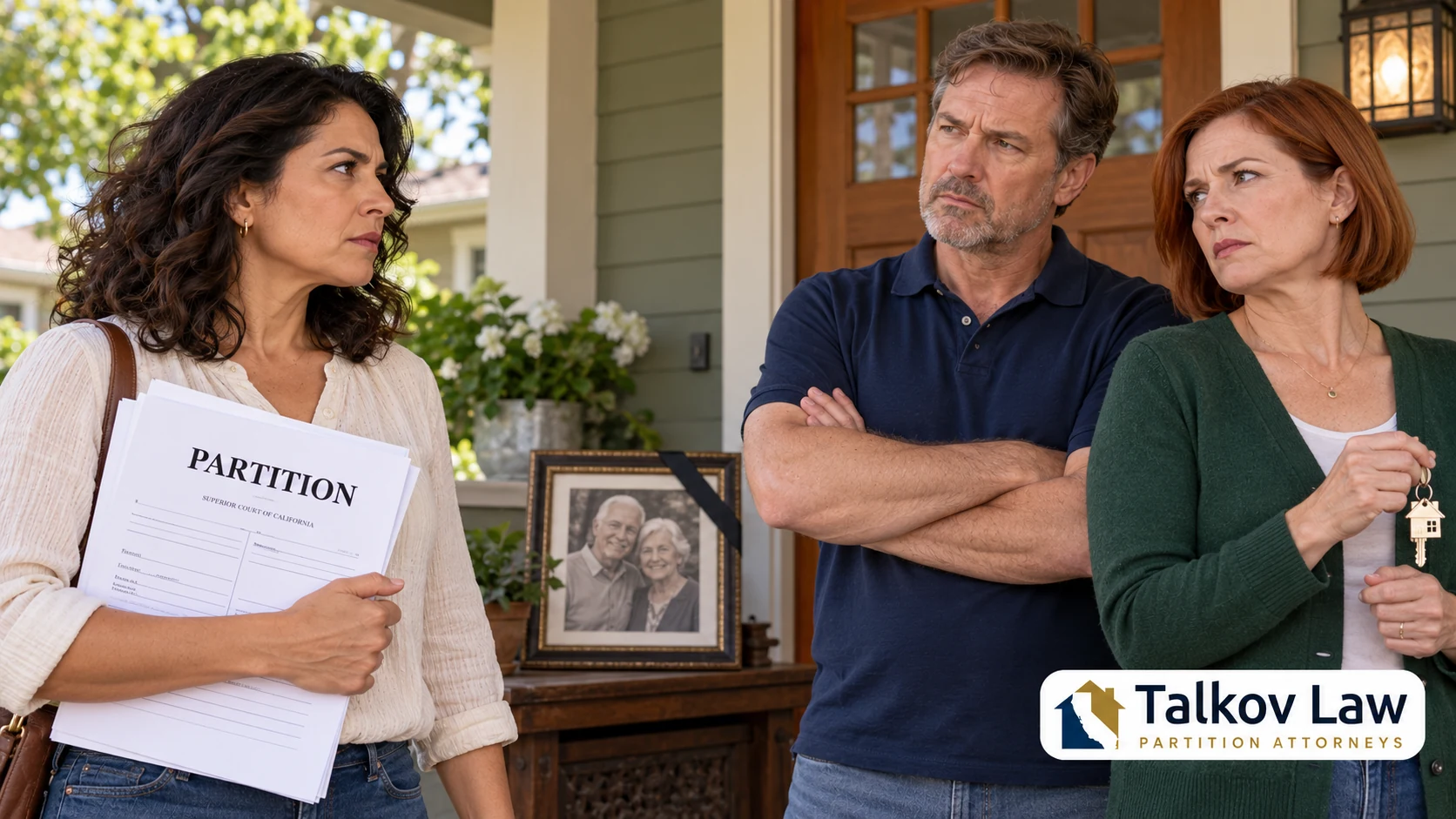
No. In California, the heirs do not all have to agree to sell inherited property: any one heir who co-owns the house can force a sale through a partition action, even when a sibling living there refuses to sell.
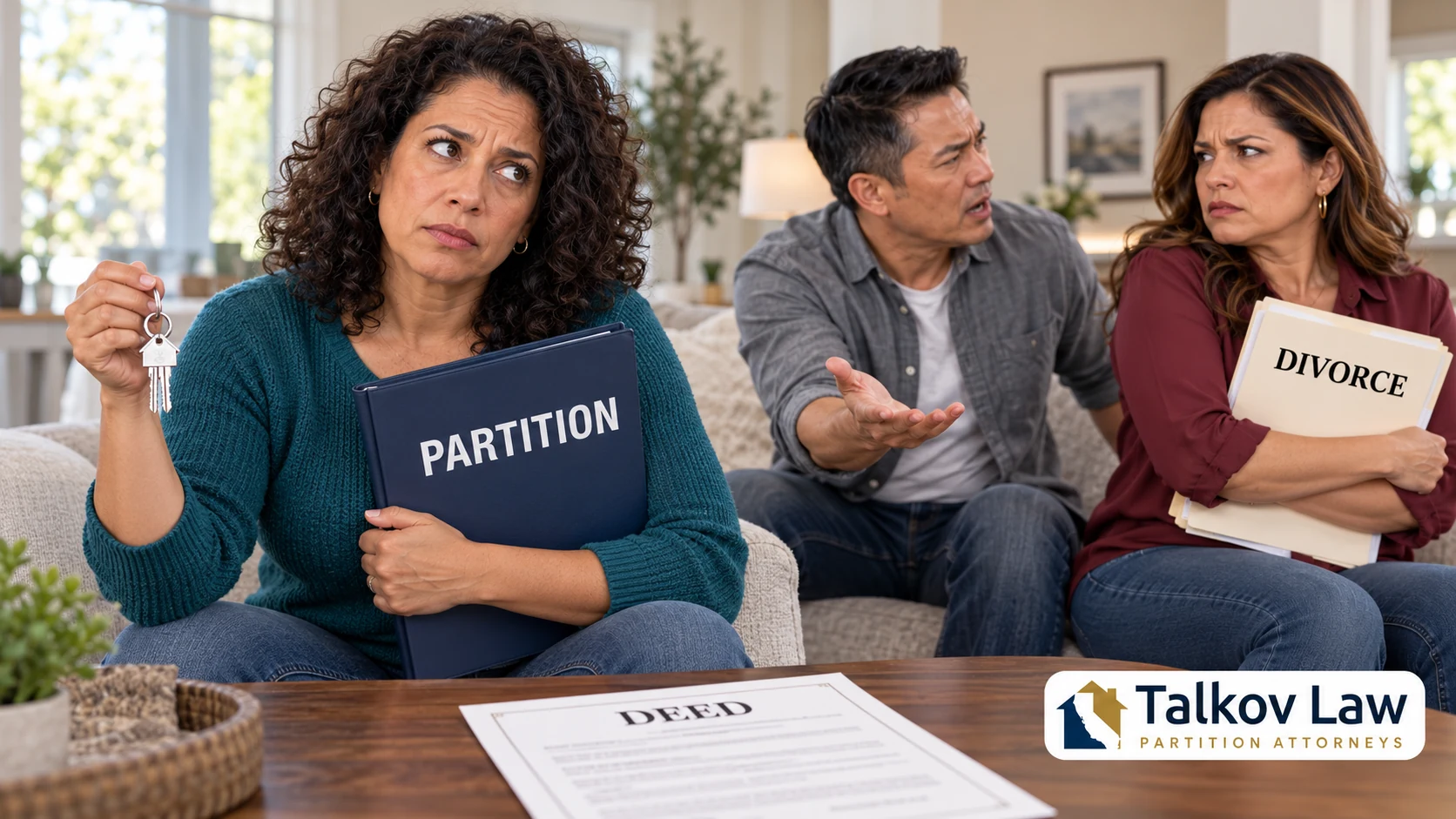
A sale of property co-owned with a married couple can be forced through a partition action by any co-owner, or through joinder in the family law case if the couple is divorcing.
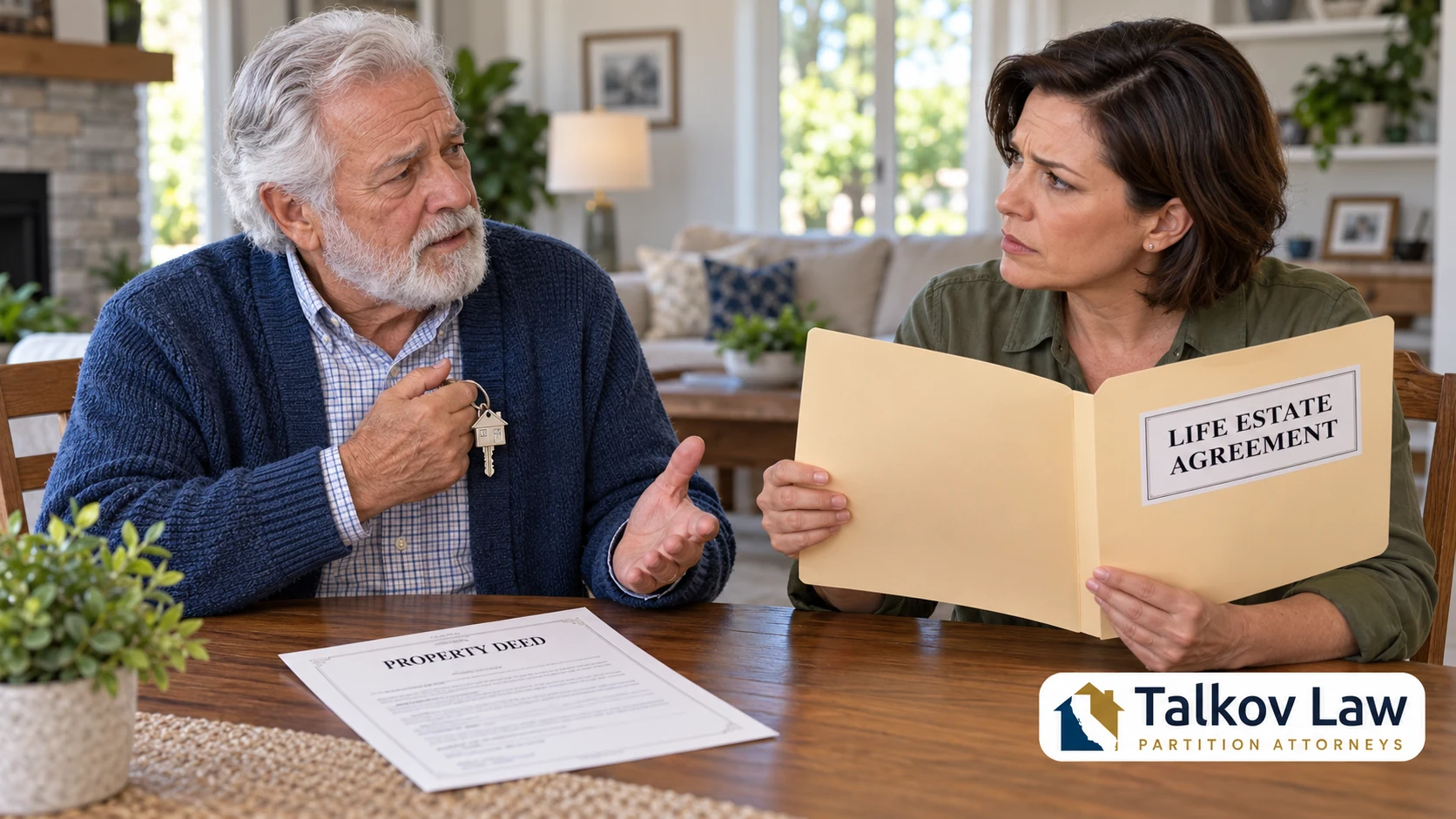
A life estate must be in writing to be enforceable in California. A verbal promise that someone can live in a property for life does not create a legal life estate.

Yes. Each co-owner of California real property must disclose known material defects that could affect its value, although some court-ordered sales are exempt from the statutory disclosure requirements.

Yes, if the co-owned property is an investment or business property. Sale proceeds held by the court do not by themselves defeat the exchange, but the court’s restriction should be documented, the money should go to an exchange company, and the 180-day deadline still needs attention.

A case management conference is a hearing to keep a California partition action moving. Contrary to what many co-owners expect, the judge does not rule on the merits there.

You can’t make a hoarding co-owner clean up, move out, or sell, but a California court can order the house cleared and sold and charge the cleanup to the hoarder’s share.

When a California divorce is filed, automatic temporary restraining orders limit what spouses can do with property. Here is whether a spouse can still sever a joint tenancy, and how that affects partition.

Whether you inherited a share of a property or co-own with a former partner, disagreements can trap your equity. A partition action or a sale of your fractional interest can unlock it.
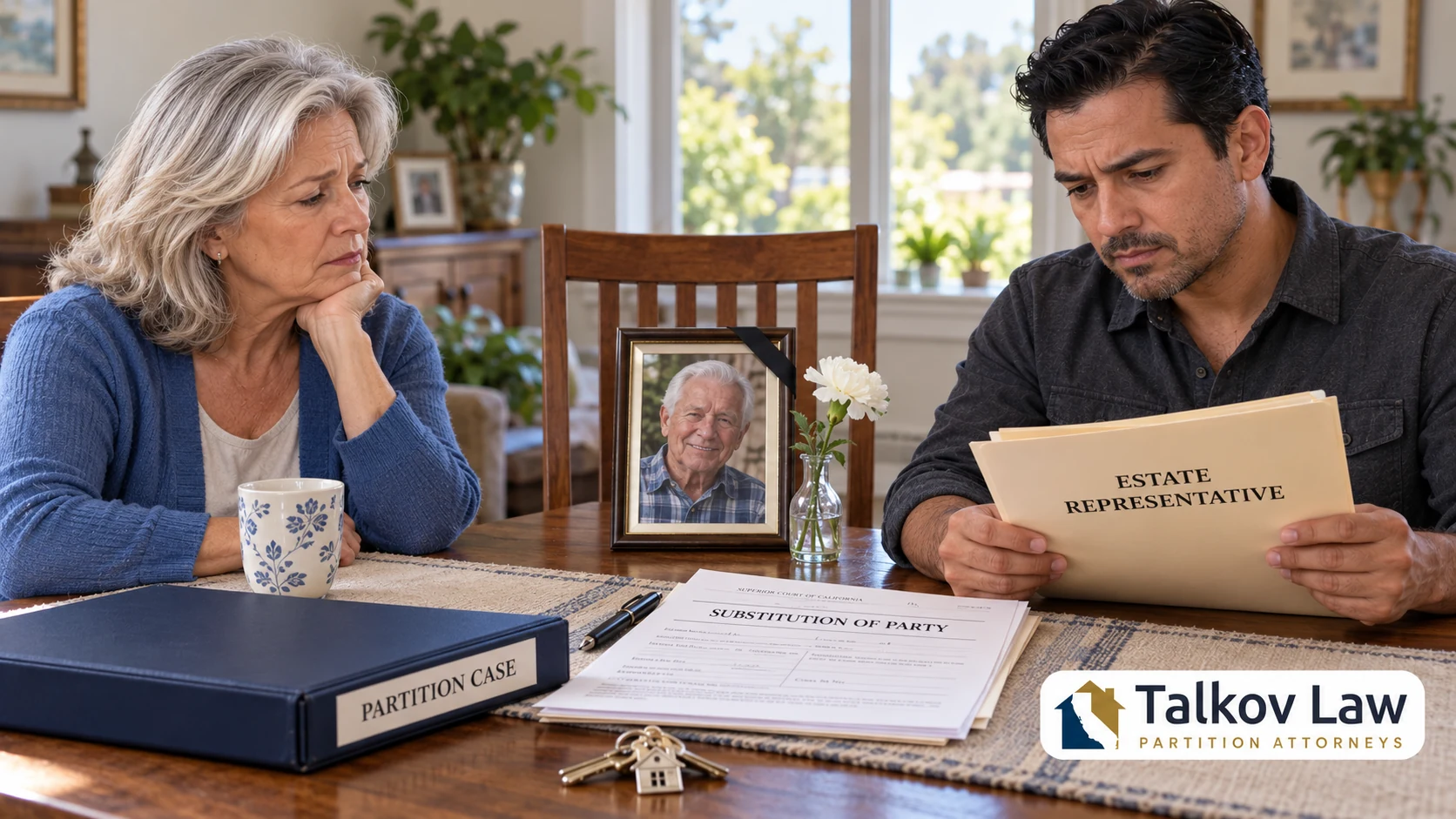
When a co-owner dies mid-case, your next steps depend on whether they had an attorney, how they held title, and where the case stands. Here is what to do, including when the co-owner was a trustee.

In California, a co-owner who wants to sell property damaged by fire, flood, or earthquake generally cannot be forced to fund a rebuild. A partition action lets you sell, even when your co-owner wants to rebuild.

Writing your own co-ownership settlement agreement can seem like a cheap way to avoid litigation. Without a partition attorney, co-owners often set themselves up for serious legal and financial problems.

No. Putting your girlfriend on the deed does not mean she gets half of what you paid. In a California partition action, the co-owner who paid more is generally repaid first, and a partition ends the co-ownership even if she won’t sign a quitclaim deed.
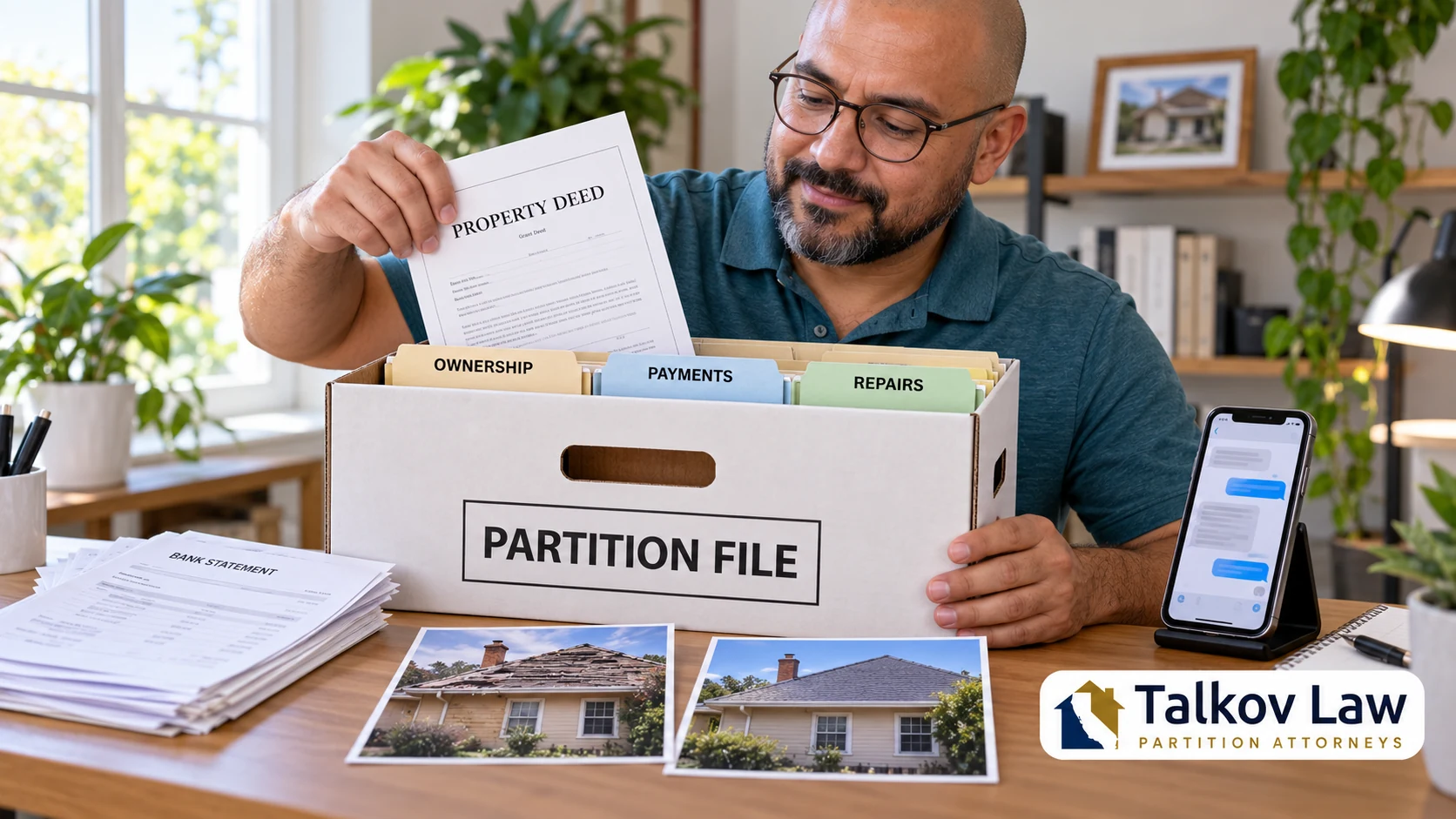
The evidence you gather can decide the offsets you receive and your credibility in a partition action. Here are the records co-owners should collect before filing.

When one co-owner’s family gives money toward the down payment, it can become a major dispute in a partition action. Here is how courts treat down payment gifts.

Co-owners can play an important role in choosing the Realtor in a partition sale, but they don’t necessarily have the final say. Here is how the choice gets made.

Parents and children often hold title as joint tenants so the property passes automatically to the survivor. But a joint tenancy can be severed, which can upend what the child expected.
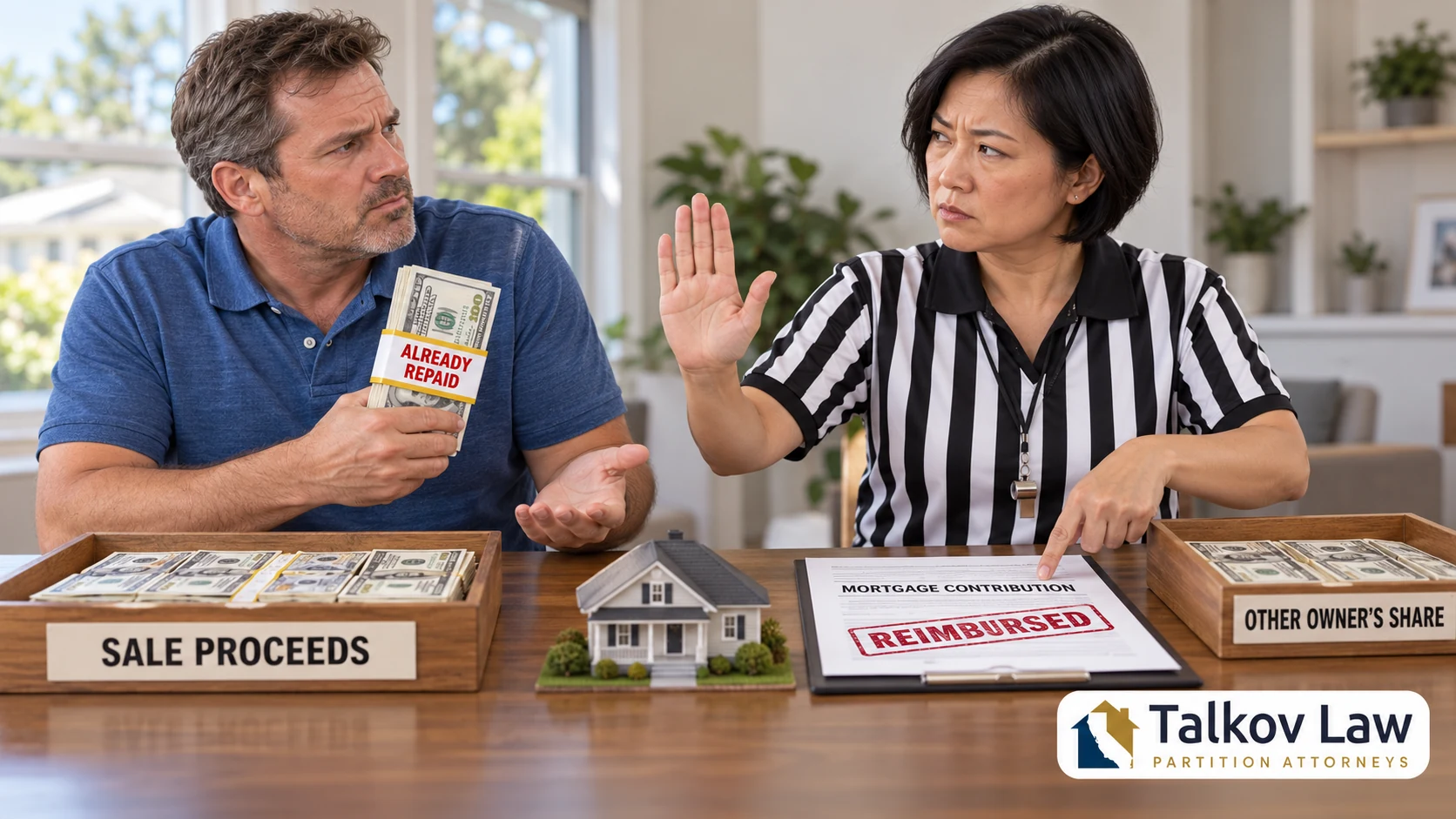
Partition accounting tracks costs, contributions, and reimbursements. One common mistake, double counting, can make the final judgment unfair if no one catches it.
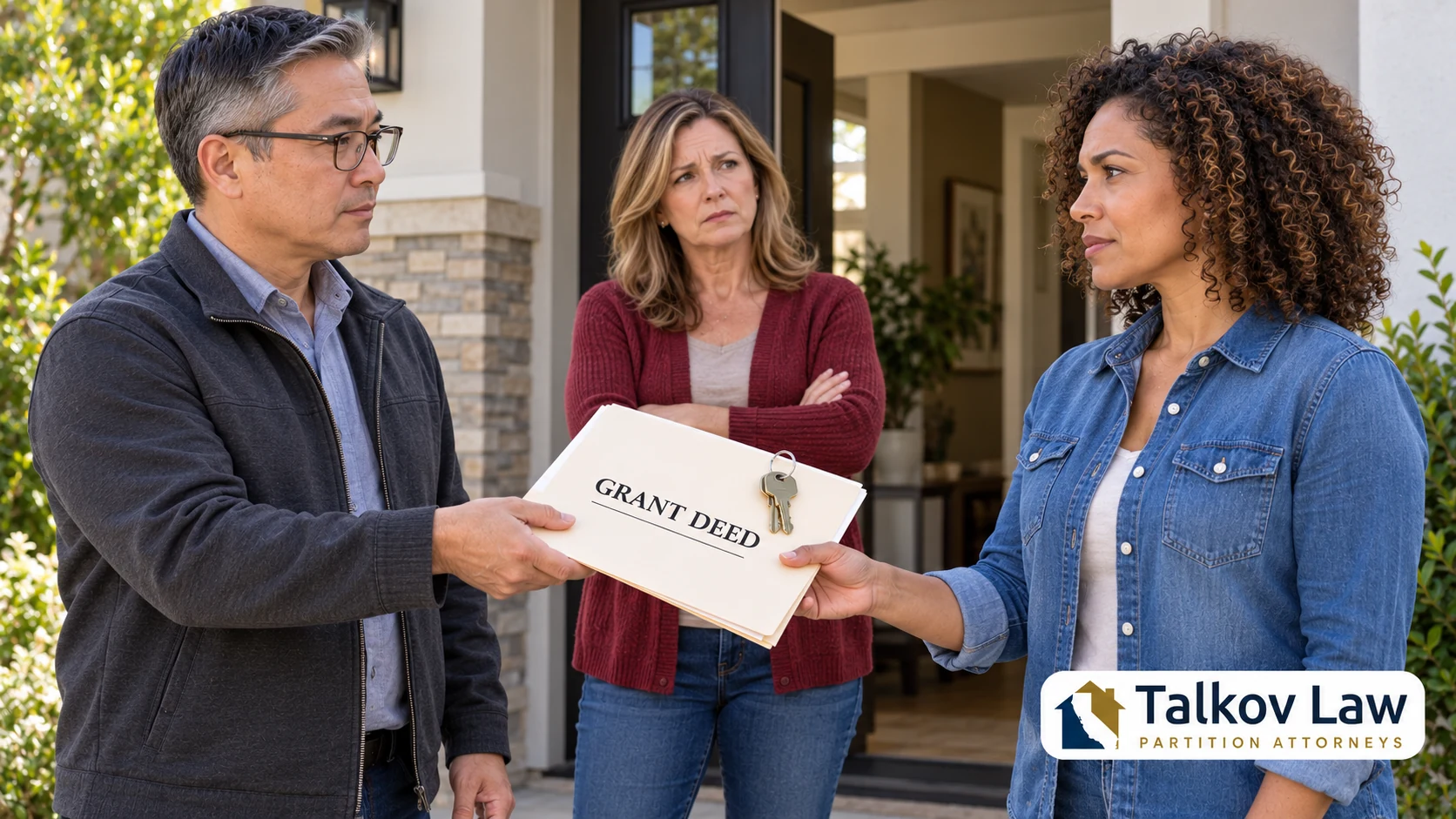
Joint tenancy includes the right of survivorship. But if one joint tenant transfers their interest during their lifetime, the joint tenancy is severed and survivorship is lost for that share.
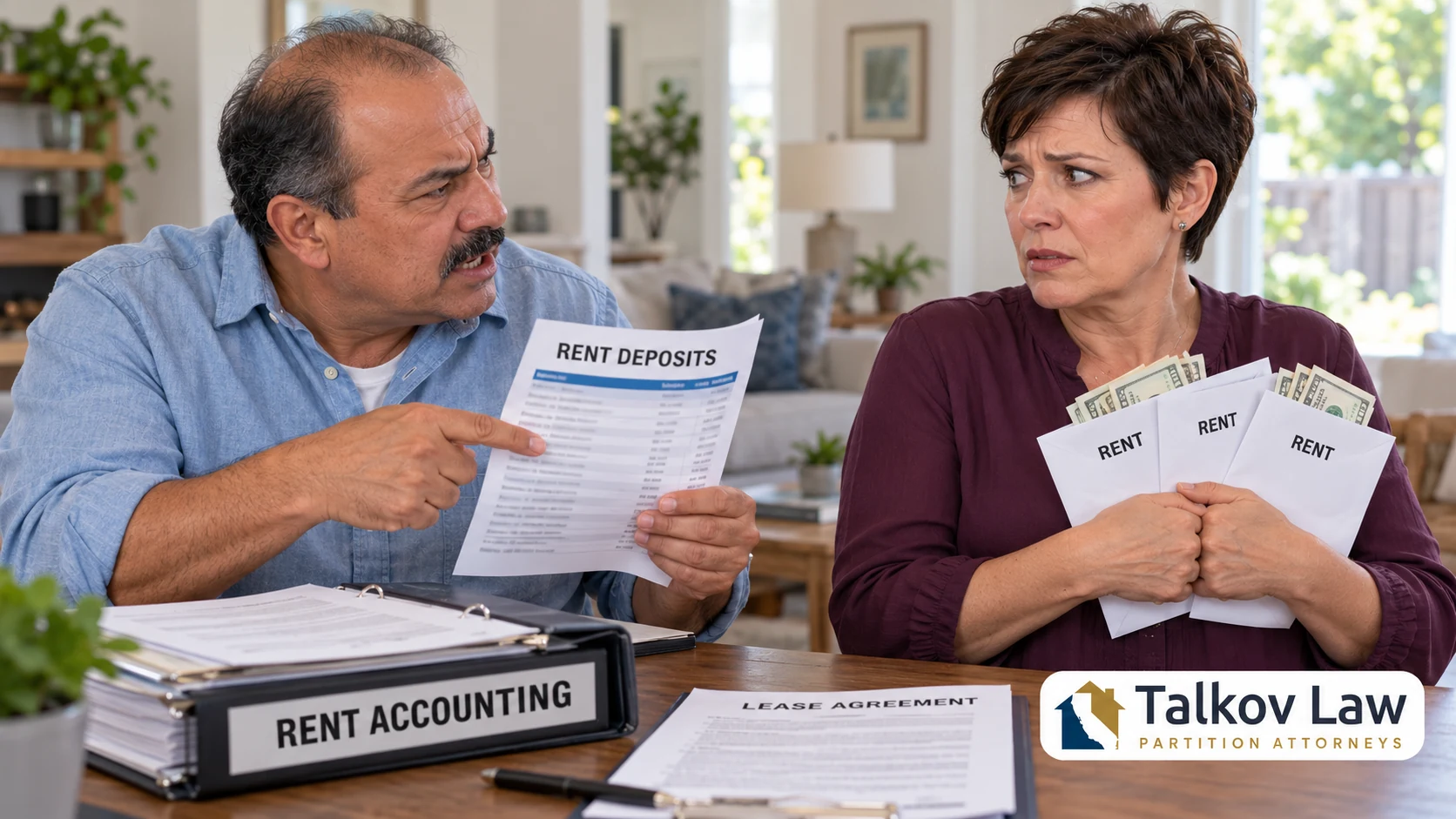
If a co-owner collected all the rent from a shared property, sometimes for years, a partition action lets you recover your share. Here is how to prove it.

The court or partition referee may need proof of who paid the mortgage to divide the sale proceeds. Here is how to gather and organize those records, including digital payments.
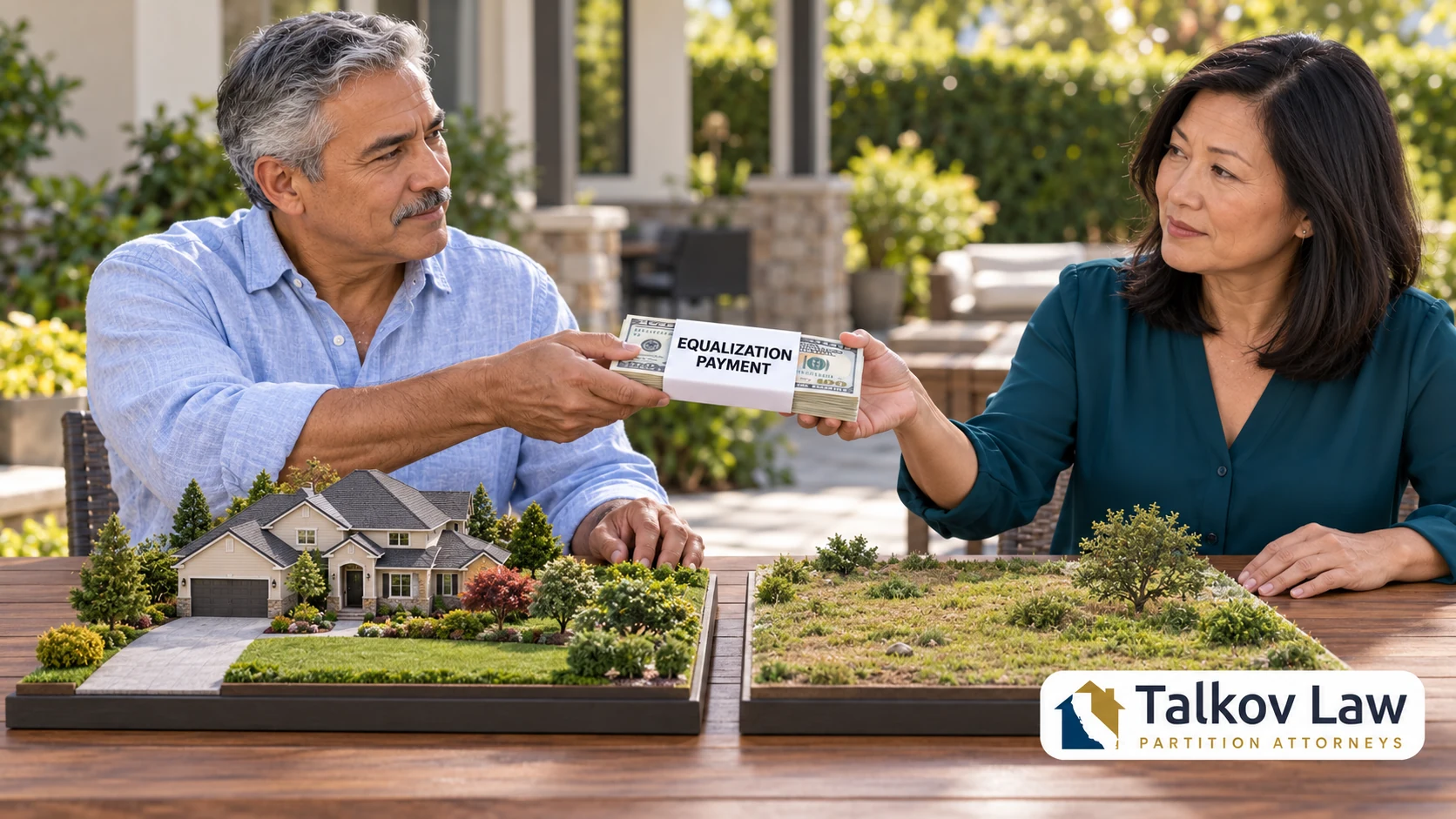
When a property can’t be divided into equal-value parts, the court can order owelty, a payment from the co-owner who receives more to the one who receives less.

Representing co-owners statewide. Find your nearest Talkov Law office.
Practical guides from attorneys who focus exclusively on California partition actions.
The information on this site, including the Talkov Law Blog, is intended for general information purposes only. By using this site, you agree that any information contained in the site does not constitute legal, financial or any other form of professional advice. Information on this site may be changed without notice and is not guaranteed to be complete, accurate, correct or up-to-date.







