
How Does a Partition Referee Sell Property in California?
When a court orders a partition by sale, a neutral partition referee carries it out, from hiring a broker to closing escrow. Here is how the referee must sell the property.
When a court orders a partition by sale, a neutral partition referee carries it out, from hiring a broker to closing escrow. Here is how the referee must sell the property.
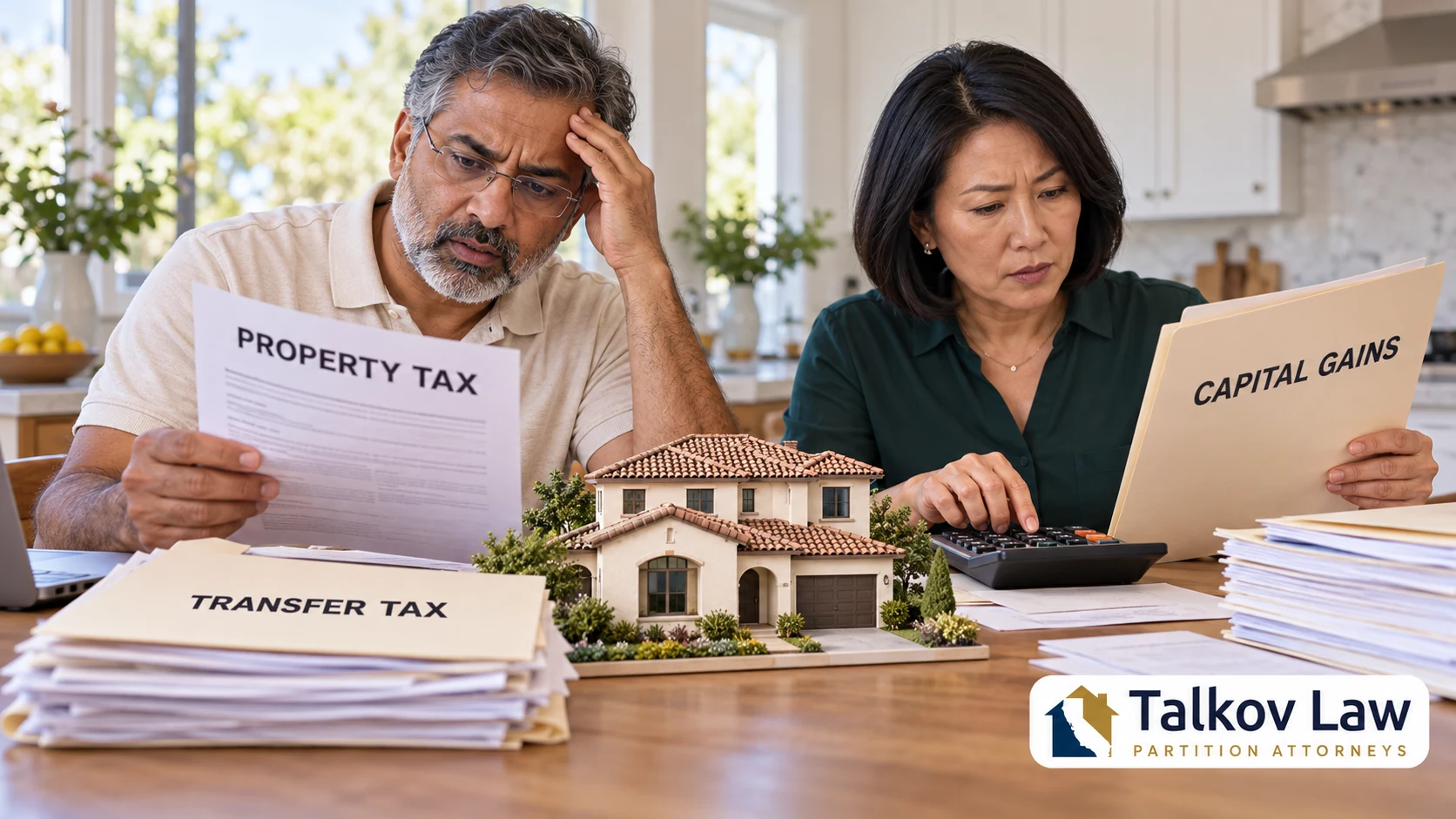
California real estate owners face property taxes, reassessment, capital gains, and transfer taxes. For co-owners, these taxes matter most when a dispute arises, a buyout is negotiated, or a partition forces a sale.
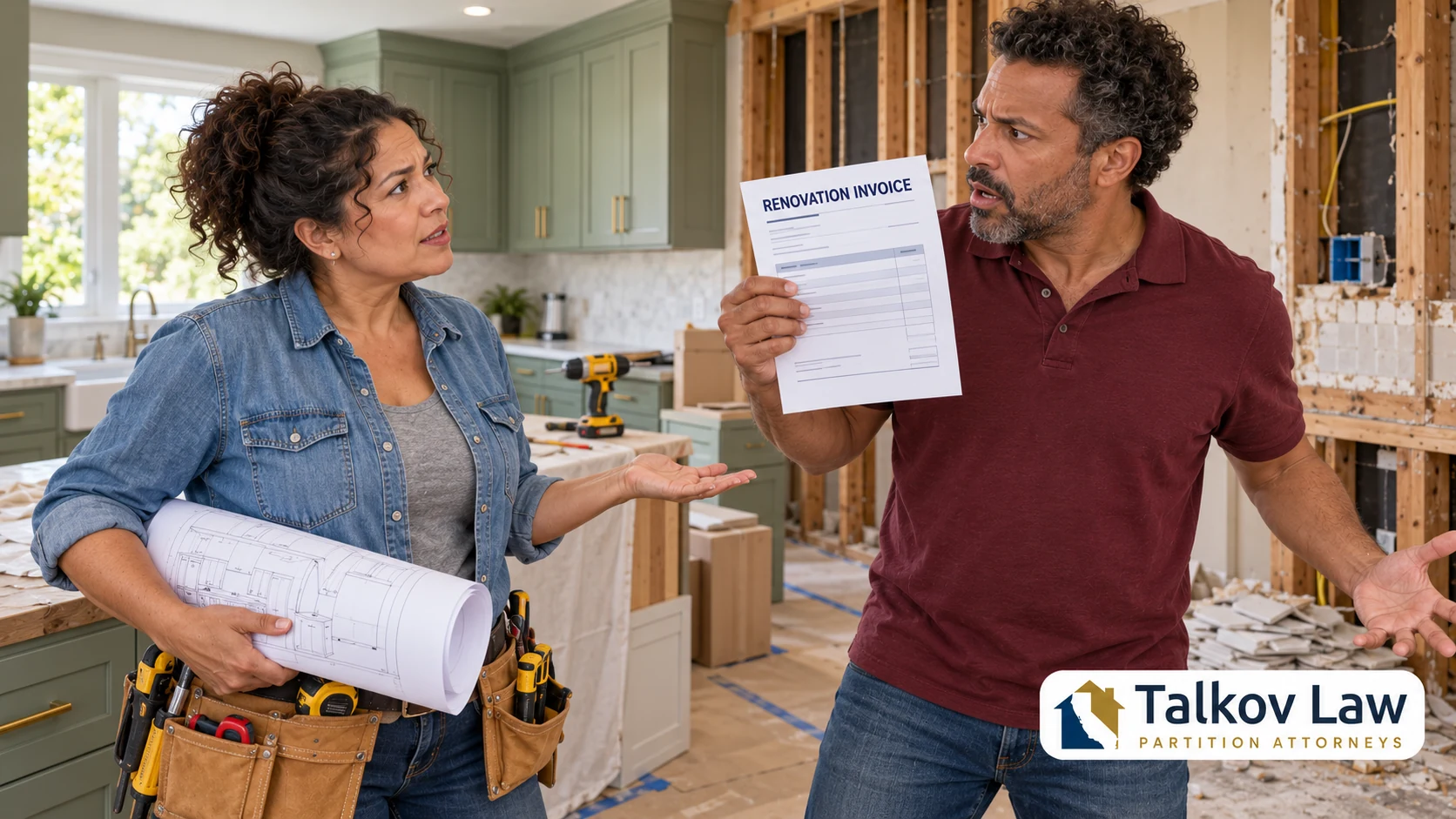
California law lets each co-owner use the property, but improvements one co-owner makes without the other’s agreement raise hard questions about who pays. A partition action sorts that out.
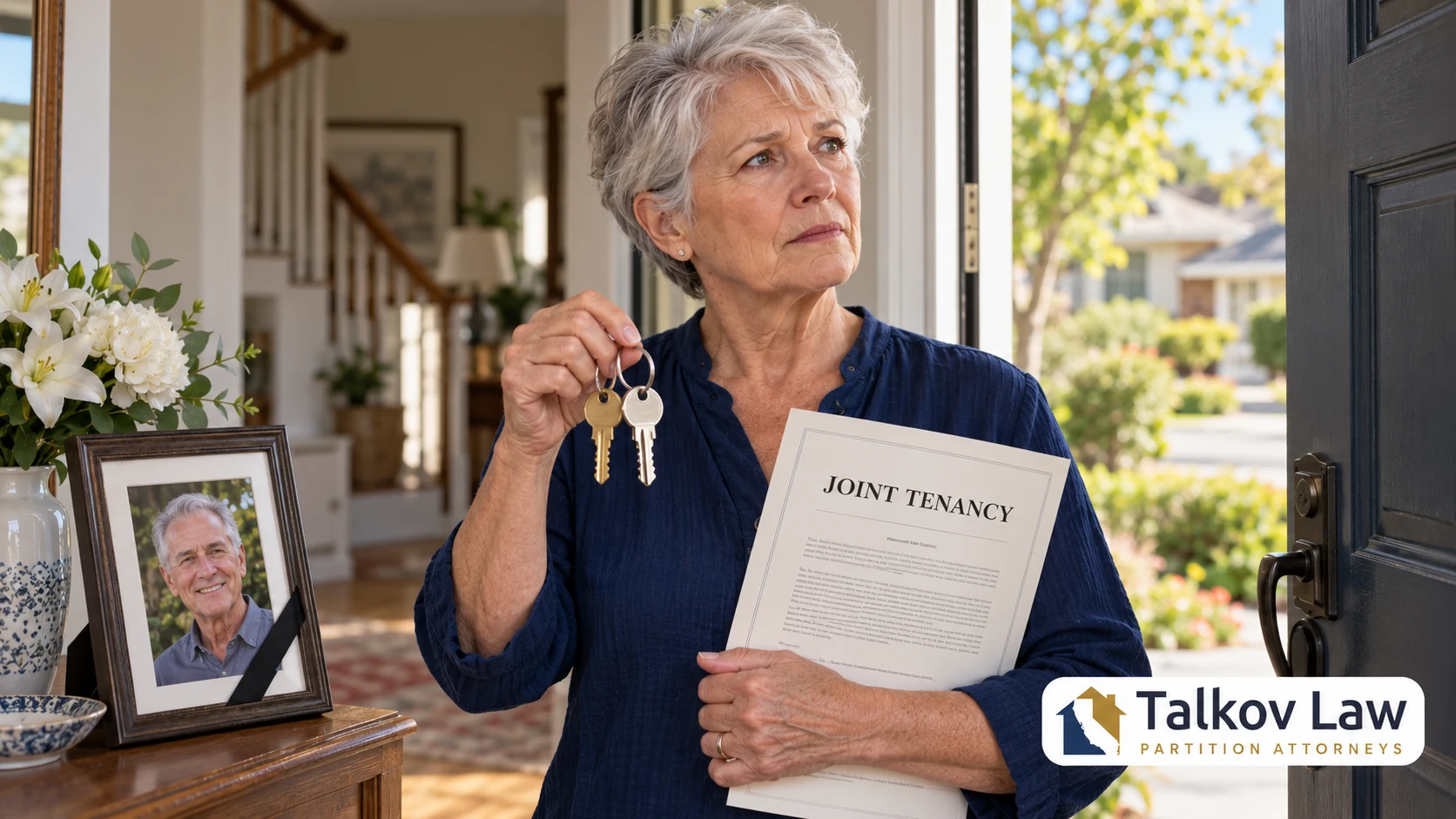
Right of survivorship lets a surviving co-owner automatically take a deceased co-owner’s share without probate, but only if title is held the right way. When the deed is unclear, disputes follow.

Delaying a partition action can turn a simple co-ownership dispute into an expensive legal problem. Falling values, mounting costs, and new complications all work against the co-owner who waits.
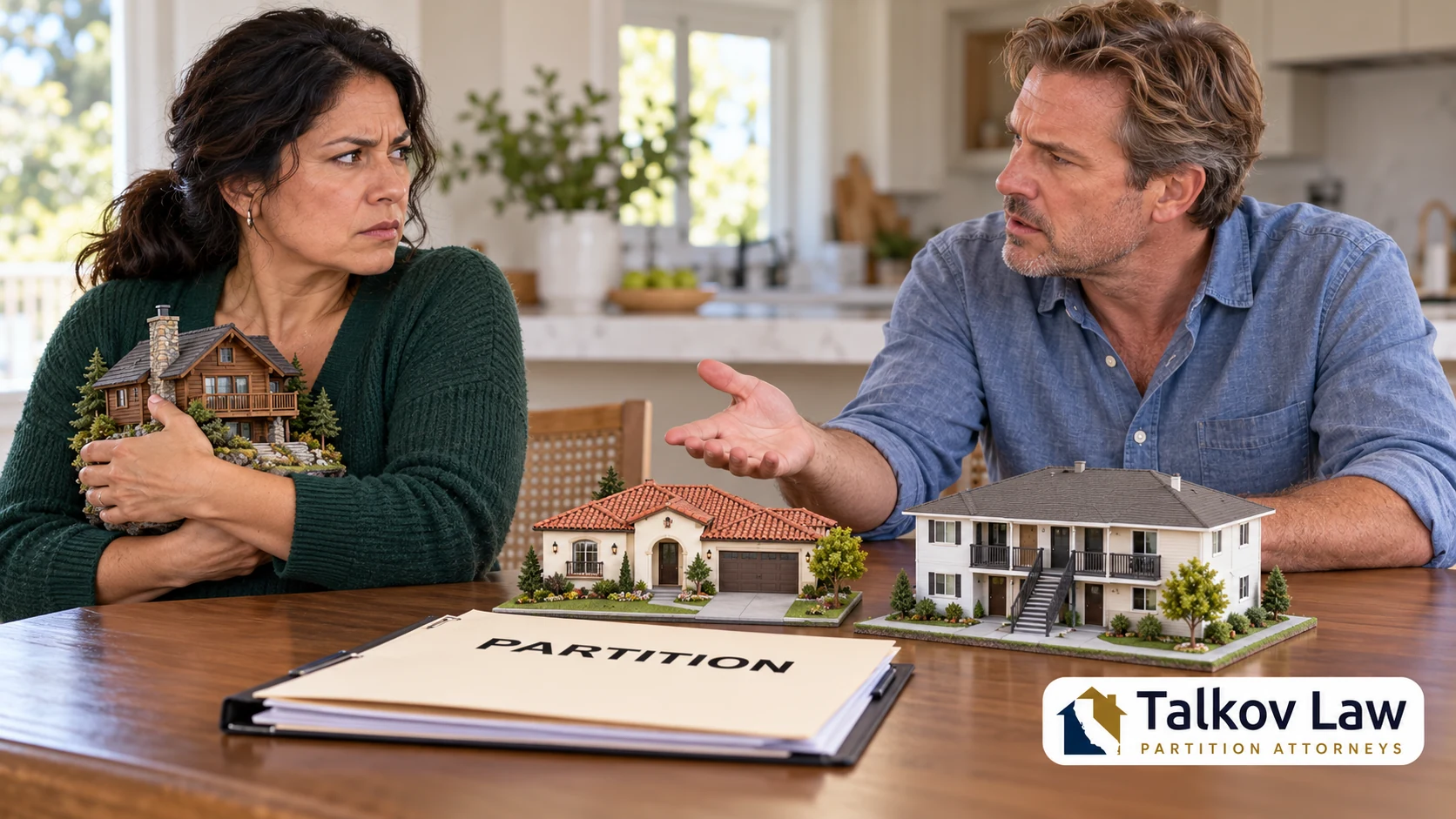
When co-owners share several properties, some may want to sell everything while others want to keep one. California courts have flexibility to sell, divide, or award specific properties in a partition.

When co-owners agree to sell but can’t agree on a listing agent, co-listing lets each co-owner choose an agent they trust to handle the sale together.
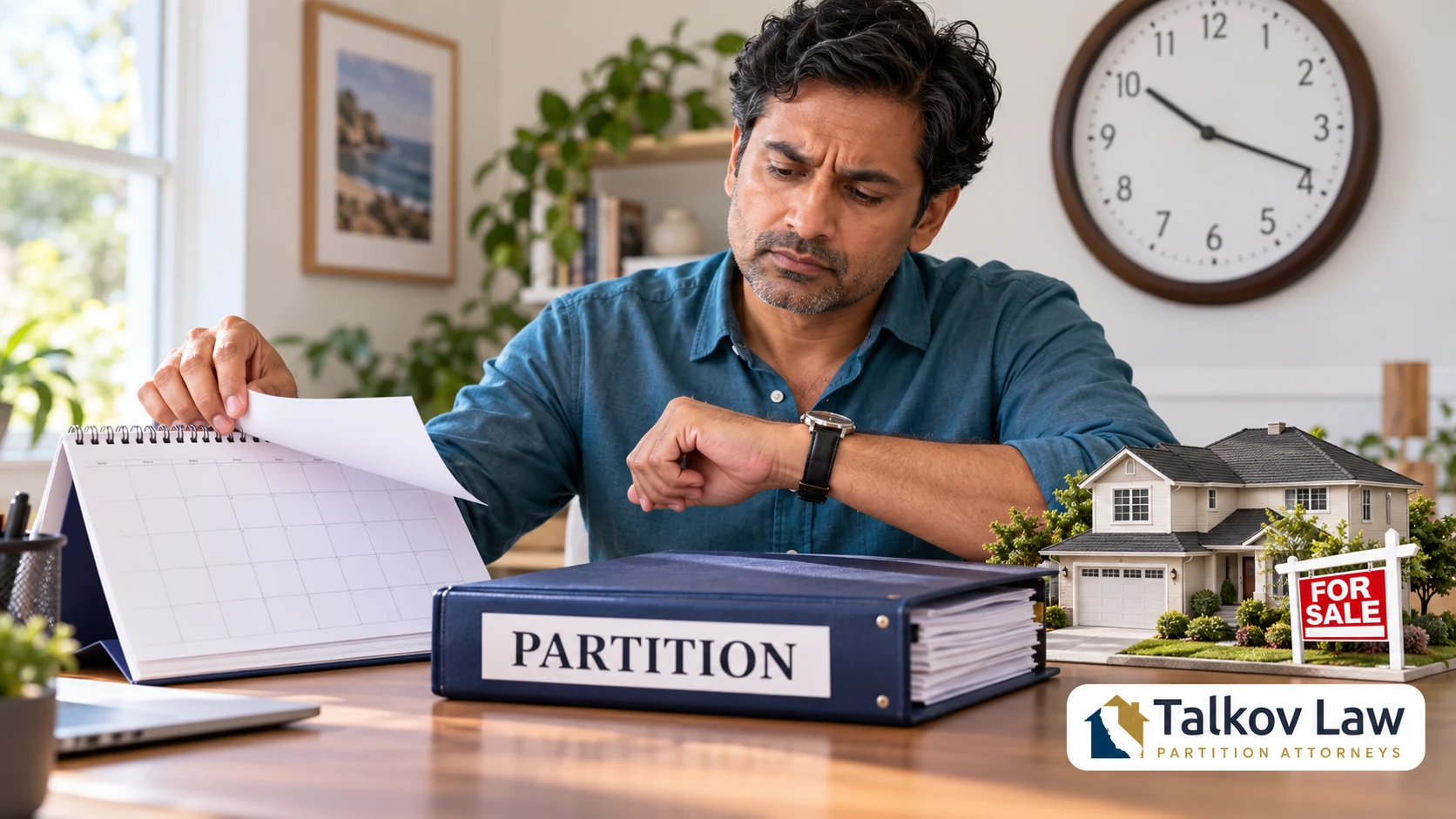
Talkov Law completes partitions in an average of about 7 months to reach a settlement or judgment, followed by a sale or refinance, without a trial. Here is what to expect at each stage.
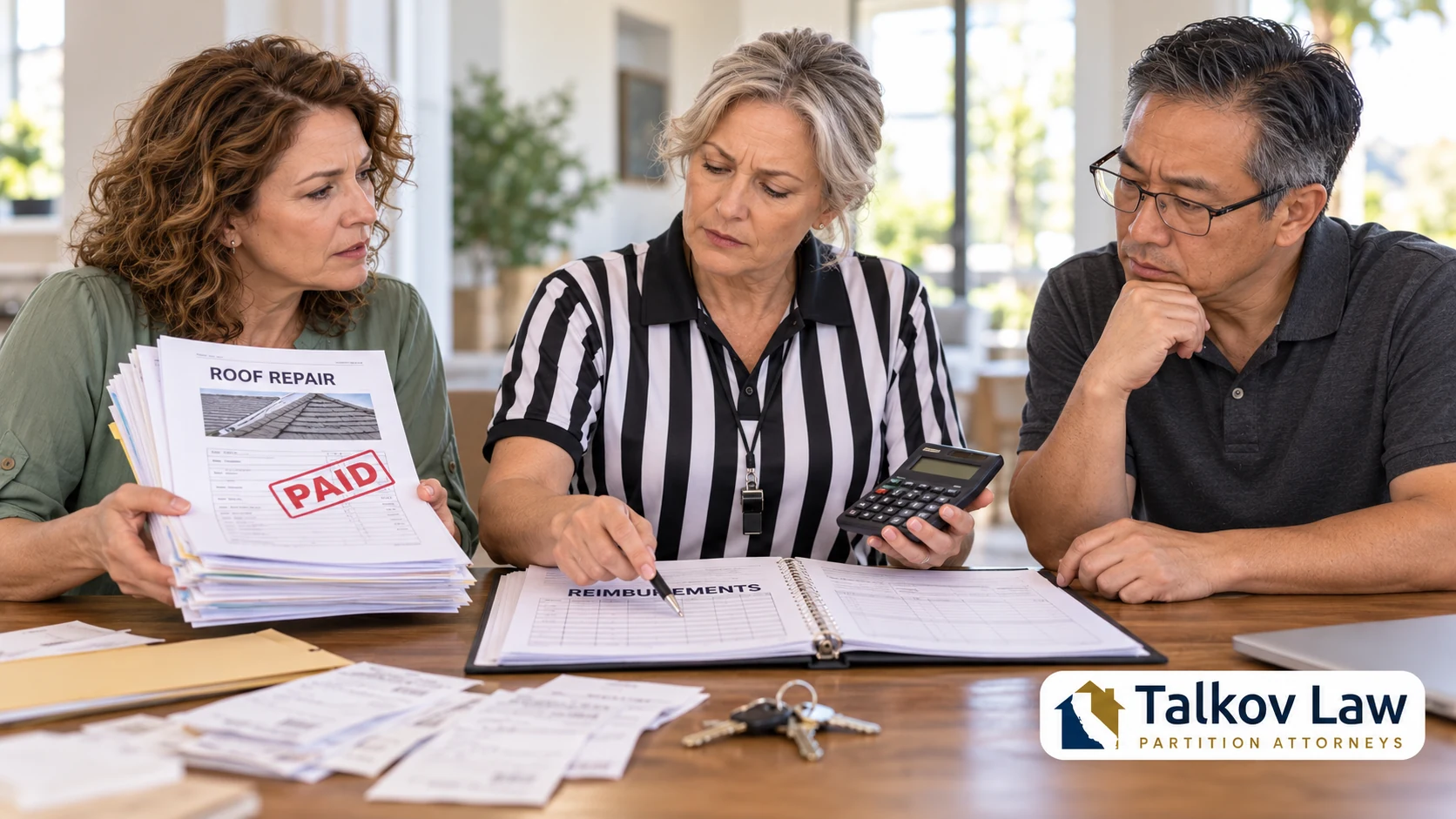
A co-owner who paid more than their share of expenses or improvements can be reimbursed in a partition action. California courts use two methods to calculate those offsets.
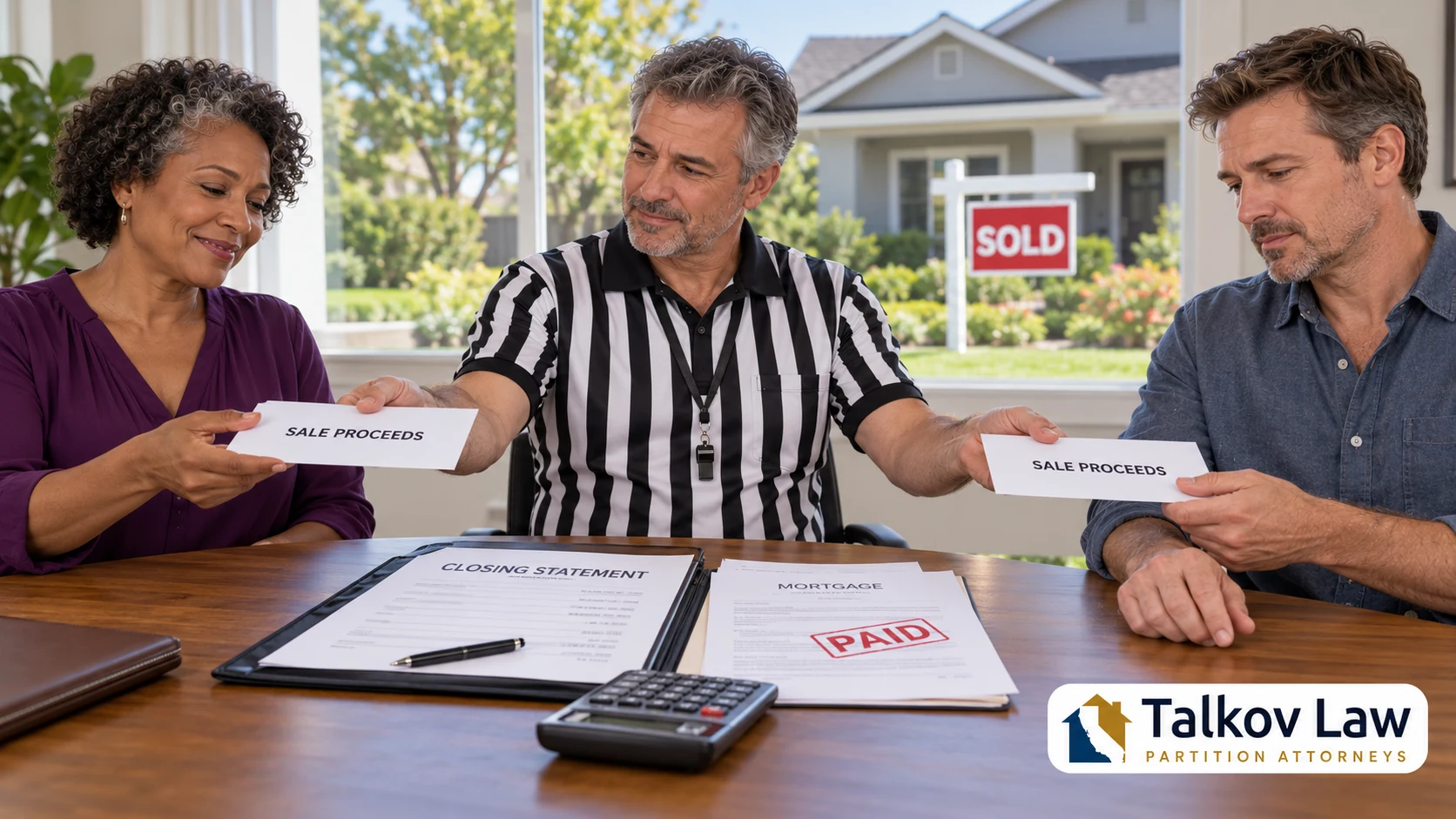
After a partition sale, proceeds are divided by each co-owner’s ownership share, adjusted for reimbursements and credits. Here is how California courts handle the distribution.

Representing co-owners statewide. Find your nearest Talkov Law office.
Practical guides from attorneys who focus exclusively on California partition actions.
The information on this site, including the Talkov Law Blog, is intended for general information purposes only. By using this site, you agree that any information contained in the site does not constitute legal, financial or any other form of professional advice. Information on this site may be changed without notice and is not guaranteed to be complete, accurate, correct or up-to-date.







